绿水青山就是金山银山

Search documents
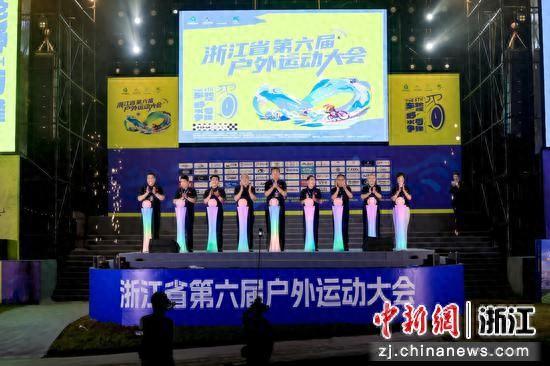
浙江省第六届户外运动大会在湖州安吉举行
Zhong Guo Xin Wen Wang· 2025-09-16 08:13
Core Viewpoint - The Zhejiang Province's Sixth Outdoor Sports Conference emphasizes the integration of ecological development and outdoor sports, aligning with the "Lucid waters and lush mountains are invaluable assets" philosophy, which marks its 20th anniversary this year [1][3]. Group 1: Event Overview - The conference features a theme of "Wheels in the Wild, Competing with Water," incorporating various activities such as competitions, exhibitions, salons, and music festivals, making it a significant event for outdoor sports enthusiasts in Zhejiang and the Yangtze River Delta region [3]. - The main venue is set at the Anji Yunshang Grassland Panda Tribe Adventure Park, hosting over ten sports and cultural activities from September 13 to 14 [3]. Group 2: Opening Ceremony Highlights - The opening ceremony consists of three chapters: "Era of Departure," "Vibrant Zhejiang," and "Symbiotic Future," showcasing various inaugural events and significant announcements [7]. - Key highlights include the launch of the "Zhejiang Walking Road Calligraphy," the release of the "Huzhou Sports Event Economic White Paper," and the awarding of titles to celebrity experience officers and chief publicity ambassadors [7]. Group 3: Recognition of Best Practices - The conference awarded exemplary cases of implementing the "Lucid waters and lush mountains are invaluable assets" philosophy in sports, including projects like the "Sports+" characteristic village in Jinhua and various outdoor sports centers [7]. - The event also features engaging leisure activities such as the "Panda Tribe" outdoor music festival and other fun events to attract participants of all ages [7]. Group 4: Regional Development and Economic Impact - Anji has positioned outdoor sports as a key driver for translating the ecological philosophy into practice, developing activities like hiking, skiing, and rafting, and creating regional sports brands and tourism destinations [10]. - The Anji Yunshang Grassland High Mountain Tourism Resort is highlighted as a model project, expecting to receive 2.28 million visitors and generate over 900 million yuan in tourism revenue in 2024, benefiting local communities significantly [10].

把握价值内涵 遵循制度逻辑 坚持多措并举 科学合理推动生态产品价值实现
Ren Min Ri Bao· 2025-09-16 03:01
Core Viewpoint - Establishing a sound mechanism for realizing the value of ecological products is a key path to implement the concept of "lucid waters and lush mountains are invaluable assets" and is essential for promoting the modernization of ecological environment governance systems and capabilities [1][3]. Group 1: Definition and Importance of Ecological Products - Ecological products are unique to China's ecological civilization construction, essential for human survival and development, including clean air, clean water, and pleasant climate [2]. - These products can be categorized into material supply, regulating services, and cultural services, with their connotations expanding as economic and social development progresses [2]. Group 2: Mechanism for Realizing Ecological Product Value - The mechanism for realizing ecological product value involves reflecting and achieving the ecological, economic, and social values of these products through compensation for ecological protection and market development [3][4]. - This mechanism connects the concepts of "lucid waters and lush mountains" with "invaluable assets," addressing externalities in ecological environments [3]. Group 3: Institutional Logic and Challenges - The basic process of realizing ecological product value involves transforming natural resources into ecological products and then into economic benefits, which requires complex institutional arrangements [4][5]. - Effective realization of ecological product value necessitates innovations in various systems, including resource registration, government performance evaluation, and green financial services [4]. Group 4: Multi-faceted Approach to Implementation - A multi-pronged approach is essential for advancing the realization of ecological product value, including optimizing policies based on local conditions and promoting standardized production and market operations [6]. - The ecological protection compensation mechanism should be optimized to ensure that those who benefit from ecological protection also contribute to it, integrating this with public financial policies [6]. Group 5: Practical Examples and Future Directions - Examples include developing eco-tourism in rural areas, enhancing the quality of rural tourism, and fostering competitive enterprises to promote ecological product value realization [7].
卫星视角见证吉林“十四五”生态蝶变 绘就“绿水青山就是金山银山”美好画卷
Yang Shi Wang· 2025-09-15 04:24
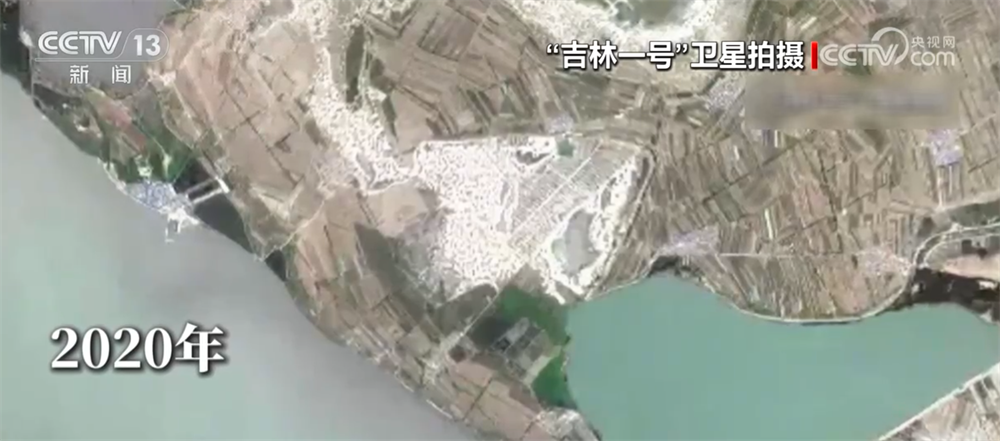
Core Insights - The article highlights the ecological restoration and protection efforts in Jilin Province during the "14th Five-Year Plan" period, emphasizing the integration of ecological initiatives with agriculture, energy, and tourism to support high-quality development [1][5]. Group 1: Ecological Restoration Efforts - Jilin Province has implemented a comprehensive ecological restoration action at Chagan Lake, increasing the water area to 420 square kilometers and improving water quality to Class IV, leading to a rapid growth in local fishery resources [1]. - The ecological restoration at Chagan Lake involved the construction of water conservancy projects, including water channels and reed planting, allowing for a complete water body replacement within three years [1]. - In Lishu County, the area of ecological restoration of former mining sites reached 3,800 acres, with over 800,000 trees transplanted to create ecological landscapes [5]. Group 2: Water Quality Improvement - During the "14th Five-Year Plan," Jilin Province eliminated all national assessment sections with water quality below Class V, achieving the best water environment quality in history [5]. - The comprehensive governance of the Yitong River included the construction of supporting facilities such as plastic tracks and bike paths, enhancing the ecological environment and promoting recreational activities [9]. Group 3: Biodiversity and Urban Ecology - The coverage of natural ecosystems in Jilin Province has been increasing, with the populations of wild Northeast tigers and leopards growing significantly since the establishment of the Northeast Tiger and Leopard National Park [7]. - The Yitong River area has been transformed into a green axis for the city, connecting parks and cultural tourism projects, contributing to a better urban living environment [9].
传达学习习近平总书记重要讲话精神
Zheng Zhou Ri Bao· 2025-09-15 01:00
Group 1 - The meeting emphasized the importance of adhering to Xi Jinping's thoughts and the implementation of the "Regulations on the Political Work of the Communist Party of China" to enhance ideological and political work [1] - The focus on environmental protection was highlighted, with a commitment to precise pollution control and the promotion of green production and lifestyle to improve air quality [1] - The meeting discussed the need for safety production measures and disaster prevention to ensure high-quality development and safety [1] Group 2 - The meeting addressed the development of the micro-short drama industry, advocating for innovation-driven growth and the establishment of Zhengzhou as a "micro-short drama creation capital" [2] - The "Action Plan for the Revitalization of Leading Agricultural Enterprises in Zhengzhou (2025-2030)" was reviewed, focusing on enhancing industry and brand development to support agricultural modernization [2] Group 3 - The meeting also covered other matters, including the planning for the 2025 Autumn Consumption Month activities [3]
好生态带来好生活!
Ren Min Ri Bao· 2025-09-14 04:04
Core Viewpoint - The ecological restoration of the Tohun River in Xinjiang has transformed it from a polluted waterway into a vibrant recreational area, enhancing both environmental quality and local economic opportunities [1][2][3] Group 1: Ecological Restoration Efforts - The Xinjiang government has prioritized the ecological governance of the Tohun River, leading to the approval of a comprehensive ecological restoration plan in May 2016 [2] - Collaborative efforts among Urumqi City, the 12th Division of the Xinjiang Production and Construction Corps, and Changji Prefecture have resulted in significant improvements, including the cleaning of over 90,000 cubic meters of waste and the filling of numerous illegal sand extraction pits [2] - The total investment for the ecological restoration project reached 3.817 billion yuan, culminating in the completion of the project in 2021 [2] Group 2: Environmental and Economic Impact - The restoration has led to the planting of over 70,000 trees and the establishment of various parks, resulting in a green coverage rate of 87% along the riverbanks [3] - The Tohun River has become a cultural and tourism hub, with the approval of a national 4A-level scenic area, attracting visitors and boosting local businesses [3] - The transformation of the river has improved the quality of life for residents, with local entrepreneurs reporting increased business due to the enhanced environment and infrastructure [3]
青海“社零”增速首超全国的背后
Sou Hu Cai Jing· 2025-09-13 04:55
Core Insights - Qinghai's retail sales growth in the first seven months of 2025 reached 57.725 billion yuan, a year-on-year increase of 4.9%, surpassing the national growth rate for the first time since 2024 [2] - The monthly growth rate in July was 15.8%, marking a 19-month high, indicating a significant recovery in consumer spending [2] Group 1: Consumption Upgrade - The growth in Qinghai's retail sales reflects a structural upgrade in consumption, characterized by a shift towards higher quality and green products [3] - Retail sales of automobiles turned positive for the first time this year, increasing by 18%, while sales of high-efficiency home appliances and smart devices saw substantial growth, with increases of 62.4%, 69.4%, and 179.3% respectively [3] Group 2: Key Products and Enterprises - Retail sales of household appliances and audio-visual equipment grew by 45.8%, while overall retail sales in Qinghai increased by 7.8%, outpacing the national average of 5.1% [4] - The introduction of 12 LNG private enterprises in Haixi Mongolian and Tibetan Autonomous Prefecture led to a remarkable 273.9% increase in LNG retail sales [4] Group 3: Policy and Market Dynamics - Qinghai's consumption growth is driven by a combination of precise policy guidance, the monetization of unique resources, and the release of market vitality [6] - The provincial government has implemented a series of targeted policies, including a consumption promotion fund totaling 57.571 million yuan, to stimulate market activity [6] Group 4: Resource Utilization - Qinghai has transformed its cold climate disadvantage into a consumption advantage by developing cold-chain logistics and enhancing agricultural standards, leading to increased income for farmers [7] - The province has completed over 3,800 smart greenhouse renovations and established significant cold storage facilities, reducing post-harvest losses [7] Group 5: Lessons Learned - Qinghai's experience illustrates the importance of leveraging local resources for high-quality development, emphasizing that unique ecological advantages can drive economic value [8] - The province's approach to activating internal market potential through targeted policies has effectively addressed the challenges of underdeveloped regions [9]
新疆头屯河流域治理成效明显 好生态带来好生活
Ren Min Ri Bao· 2025-09-13 01:01
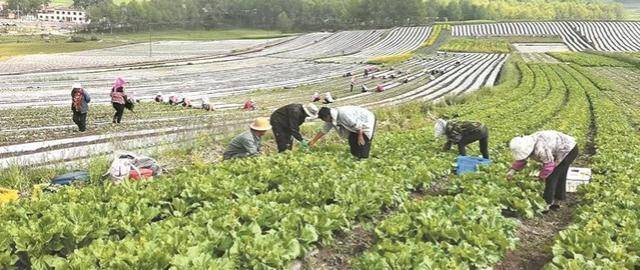
Core Viewpoint - The ecological restoration of the Tohun River in Xinjiang has transformed it from a polluted waterway into a vibrant recreational area, enhancing both environmental quality and local economic opportunities [1][2][3] Group 1: Ecological Restoration Efforts - The Xinjiang government has prioritized the ecological governance of the Tohun River, leading to the approval of a comprehensive ecological restoration plan in May 2016 [2] - The restoration project involved collaboration among Urumqi City, the 12th Division of the Xinjiang Production and Construction Corps, and Changji Prefecture, focusing on different sections of the river [2] - A total investment of 3.817 billion yuan was made over five years to complete the ecological restoration project in Changji City by 2021 [2] Group 2: Environmental and Community Impact - The restoration efforts have resulted in the planting of over 70,000 trees and 132 types of shrubs and flowers, achieving a green coverage rate of 87% across 2,000 acres [3] - The Tohun River has been transformed into a recreational area with parks and facilities, attracting tourists and enhancing local business opportunities [3] - The area has seen an increase in community activities and events, such as marathons and cultural festivals, contributing to a vibrant local economy [3]
好生态带来好生活(砥砺奋进七十载 天山南北谱华章)
Ren Min Ri Bao· 2025-09-13 00:17
Core Viewpoint - The ecological governance of the Tohun River in Xinjiang has significantly improved, transforming it from a polluted area into a vibrant ecological zone that enhances the quality of life for local residents [1][4]. Group 1: Ecological Restoration Efforts - The Tohun River, which spans 190 kilometers and has a drainage area of 2,885 square kilometers, faced severe pollution due to industrial activities since the 1960s, leading to its nickname "headache river" [1][2]. - In 2016, a comprehensive ecological restoration plan was approved, involving collaboration among Urumqi City, the 12th Division of the Xinjiang Production and Construction Corps, and Changji Prefecture [2]. - The restoration project, which took five years and cost 3.817 billion yuan, included cleaning up over 90,000 cubic meters of waste and filling in illegal sand extraction pits [2][3]. Group 2: Community and Economic Impact - The ecological improvements have led to the establishment of a 13.14-kilometer ecological green valley, featuring various parks that promote community engagement and tourism [2][3]. - The area has become a hub for cultural and tourism activities, with events like marathons and light shows attracting visitors from nearby cities [3]. - Local residents have reported improved livelihoods, with businesses thriving due to increased foot traffic and enhanced infrastructure [3][4]. Group 3: Future Prospects - The transformation of the Tohun River is seen as a new beginning, with ongoing efforts to convert ecological value into economic benefits for the community [4].
“两山”理念在河南丨诗承古韵 泉焕新颜——“诗中风光今又现”之安阳篇
He Nan Ri Bao· 2025-09-12 23:34
Core Viewpoint - The article highlights the revitalization of Nanhai Spring in Anyang, emphasizing its ecological significance and the integration of tourism and agriculture for rural revitalization [1][2][3] Group 1: Ecological and Tourism Development - Nanhai Spring, located in Anyang's Long'an District, is a key ecological resource that has been enhanced through government-led initiatives focusing on environmental protection and tourism development [1][2] - The local government has implemented comprehensive measures including legislation, ecological restoration, and advanced monitoring technologies to protect the spring and its surrounding environment [2] - The area aims to transform into an "ecological new town" and a "tourism stronghold," leveraging its natural resources to promote activities like fishing and camping, while also enhancing local cultural tourism [2] Group 2: Agricultural Integration - The development of the "Two Reservoirs and One Spring" ecological brand has facilitated the emergence of local agricultural products such as black jade sweet potatoes and "San Cang" apples, creating a new model of "ecology + tourism + agriculture" [3] - The integration of agriculture with tourism has led to increased economic opportunities for local residents, as seen in the success of local businesses like the Shanyuan Homestay, which has seen high demand since its opening [2][3]
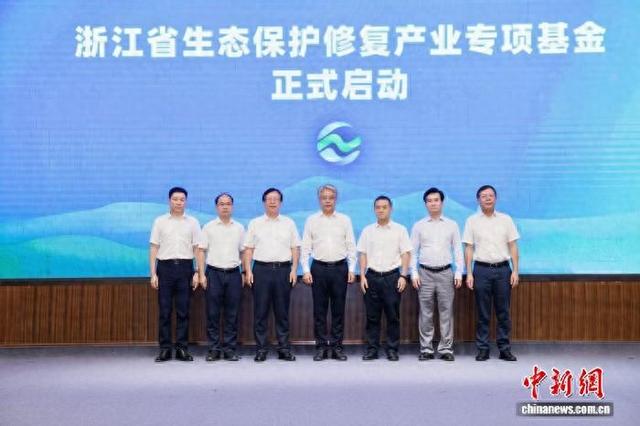
浙江设立生态保护修复产业专项基金 6个意向项目签约
Zhong Guo Xin Wen Wang· 2025-09-12 12:00
Core Viewpoint - The Zhejiang Provincial Ecological Protection and Restoration Industry Special Fund was launched to address funding shortages for ecological restoration projects, aiming to promote diversified investment mechanisms and enhance market-oriented solutions in ecological protection and restoration efforts [3][4]. Group 1: Fund Launch and Investment Projects - The special fund's launch event in Anji County included the signing of six intended investment projects, with a total investment exceeding 3 billion yuan, covering various ecological restoration fields such as farmland, marine, mining, and wetlands [1][3]. - The fund aims to alleviate the funding shortages for ecological restoration projects, which are often characterized by diverse restoration types and complex governance technologies, leading to high capital demands and long investment cycles [3]. Group 2: Integration of Ecological and Economic Benefits - The signed projects include initiatives in Anji, Lanxi, and Pujiang that combine public welfare-oriented ecological restoration projects with profit-generating industries like agricultural deep processing and cultural tourism, thereby enhancing both ecological and economic values [4]. - Projects in Shaoxing Keqiao, Wenling, and Yuhang focus on bundling ecological restoration solutions with natural resource asset configurations, utilizing resources from abandoned mines, coastal areas, and wetlands to create a dual benefit of increased ecological aesthetics and economic value [4]. Group 3: Long-term Vision and Policy Support - The initiative reflects Zhejiang's commitment to the "Green Mountains and Clear Water are Gold and Silver Mountains" philosophy, which has been in practice for 20 years, emphasizing integrated protection and restoration of natural resources [1][5]. - The event also featured the release of publications highlighting the province's efforts in implementing the ecological protection philosophy, showcasing successful case studies and mapping the progress over the past two decades [5].