自动驾驶

Search documents
未来10年,这18个赛道将带来48万亿美元收入
创业家· 2026-03-03 10:37
Group 1 - The core viewpoint of the article is based on McKinsey's report predicting that 18 industry sectors will significantly alter the global business landscape, potentially generating revenues between $29 trillion and $48 trillion by 2040, contributing 18-34% to global GDP growth [2] Group 2 - E-commerce is expected to account for 27%-38% of global retail revenue by 2040, up from approximately 20% currently, driven by market expansion in developing countries and new product categories in developed nations [3][4] - Significant investments are anticipated in customer acquisition and last-mile delivery within the e-commerce sector [5] Group 3 - Electric vehicles (EVs) are projected to exceed 50% of global passenger car sales by 2040, with advancements in battery technology and smart algorithms being key influencing factors [6][7] Group 4 - Cloud services are becoming increasingly essential as the world becomes more interconnected, with a compound annual growth rate (CAGR) of 17% from 2005 to 2020, expected to continue at a similar pace in the coming decades [9][10] Group 5 - The semiconductor industry is forecasted to grow at a CAGR of 6%-8% over the next decade, driven by demand across various sectors including computing, data storage, automotive, and industrial electronics [11] Group 6 - AI software services are rapidly evolving, with a growing number of users adopting AI assistants, leading to a competitive race among companies to develop advanced foundational models and applications [12][13] Group 7 - Digital advertising is expanding in value as more middle-class individuals gain internet access and spend more time online, with continuous algorithm improvements enhancing customer targeting and ad cost tracking [14] Group 8 - Streaming video platforms are expected to seek new revenue models due to increased investments in customer acquisition and content production, with a prediction that by 2040, households subscribing to long-form video services could exceed 1 billion [17][18] Group 9 - Shared autonomous vehicles may account for 25%-51% of shared mobility revenue by 2040, although the realization of this future may take longer than anticipated [19][20] Group 10 - The space economy is anticipated to emerge, with advancements in reusable rocket technology transforming the aerospace industry [21][22] Group 11 - Cybersecurity is becoming a priority as cybercrime caused approximately $950 billion in direct economic losses in 2020, with indirect losses potentially reaching $4-6 trillion [24][25] Group 12 - Battery technology has seen significant advancements, with energy density increasing threefold over the past decades, driven by the global energy transition and the rise of electric vehicles [26][27] - By 2040, electric vehicles are expected to represent over 80% of the battery market [28] Group 13 - The gaming industry is projected to have 40% of the global population as gamers by 2030, with mobile and cloud gaming driving substantial market growth [29][30] Group 14 - Robotics, particularly humanoid robots, are gaining attention as AI technology advances, with expectations that personal robots may become commonplace [33][34] Group 15 - Biotechnology is set to accelerate in areas such as agriculture and alternative proteins due to breakthroughs in gene editing [37] Group 16 - Modular construction methods are improving building efficiency, although global adoption remains limited despite success in regions with high labor costs [38] Group 17 - Nuclear fission power is being considered as a supplement to renewable energy, with commitments from over 20 countries to double nuclear energy output by 2050 [39][40] Group 18 - Innovations in air transportation, including electric vertical takeoff and landing vehicles, are expected to bring significant technological changes [41][42] Group 19 - The prevalence of obesity is projected to rise from 15% in 2020 to 24% by 2035, indicating a potential market for effective weight loss treatments [43][44]


质子汽车宣布完成数亿元B轮融资!
第一商用车网· 2026-03-03 09:03
Core Viewpoint - Proton Auto Technology Co., Ltd. has completed a multi-billion B round financing, with funds aimed at R&D in smart and autonomous driving, operational funding, and global market expansion, enhancing the company's momentum for future capital market entry [1] Group 1: Financing and Company Overview - Proton Auto has completed three rounds of financing, with shareholders including national funds, industrial capital, professional investment institutions, and local state-owned platforms [1] - Established in April 2022, Proton Auto is a key platform for Shaanxi Automobile Group's mixed-ownership reform and its focus on new energy and intelligence [1] Group 2: Technology and Product Development - The R&D system focuses on five dimensions: intelligence, safety, reliability, efficiency, and comfort, using "BAR" (Best Asset Return) as a measurement standard [3] - Proton Auto has delivered over 10,000 vehicles since its inception, with a product lineup that includes six major models tailored for various scenarios such as ports and mountainous areas [3] - The company has achieved L4 closed-road delivery in 2023 and plans to launch a zero-carbon unmanned concept heavy truck, "Yao Ling II," by August 2025, which increases cargo space by 38% [3] Group 3: Market Expansion and International Development - Proton Auto is actively pursuing overseas market development, having received certification for its hydrogen heavy truck in Japan and exporting its first batch of hydrogen tractors to Australia [5] - A strategic cooperation framework agreement was signed with Singapore's SATOMAS ENERGY PTE.LTD, setting a sales target of 300 units [5]
【快讯】每日快讯(2026年3月3日)
乘联分会· 2026-03-03 08:38
Domestic News - China has taken the lead in revising the international standard for intelligent vehicle headlights, marking a significant enhancement in its global automotive technology influence [4] - The China Automobile Dealers Association has initiated preparations to implement the "Automotive Industry Pricing Behavior Compliance Guidelines" to standardize pricing practices in the automotive sector [5] - XPeng Motors announced the launch of its second-generation VLA (Vision-Language-Action model), aiming to transition autonomous driving from niche to mainstream usage [6] - Xiaomi's robots have begun internships in automotive factories, with plans for mass deployment in the next five years [7][8] - Tengshi, a luxury brand under BYD, has officially entered the Philippine market with the opening of its first dealership [9] - Guoxuan High-Tech has completed the design of its 2GWh all-solid-state battery production line, with plans for pilot testing by mid-2025 [10] - SAIC-GM-Wuling has delivered the first batch of its Bingguo model to users in Malaysia [11] - Pony.ai's seventh-generation Robotaxi has achieved monthly profitability in Shenzhen, expanding its operational area significantly [12][13] International News - In February, new car sales in the U.S. are expected to reach 1.19 million units, a 3.4% decrease year-on-year but a 6.9% increase from January [14] - South Africa's new car sales grew by 11.4% year-on-year in February, reaching 53,455 units, marking the highest sales record for February since 2013 [15] - Vietnam will implement stricter vehicle emissions regulations starting March 1, 2026, to combat rising pollution levels [16] - Acura, Honda's luxury brand, will officially sell vehicles in Japan for the first time this year, marking a historic milestone for the brand [17] Commercial Vehicles - Five supercharging stations for heavy trucks have been launched in the Beijing-Tianjin-Hebei logistics corridor, featuring advanced charging capabilities [18] - New energy heavy truck manufacturer Zero One Automotive has completed its restructuring into a joint-stock company and plans to initiate a financing program for dealers in 2026 [19] - Yinchuan has released a management plan for testing and commercial demonstration of unmanned logistics delivery vehicles, aiming to reduce logistics costs [20][21] - FAW Jiefang's J7 model has successfully completed a 15,000-kilometer endurance test across diverse conditions in China [22]

完成超 1 亿美元融资,卡尔动力韦峻青:让无人重卡穿越大漠戈壁丨 L4 十人谈
雷峰网· 2026-03-03 06:14
Core Viewpoint - The article chronicles the journey of Wei Junqing in the autonomous driving industry, highlighting the evolution of technology and the establishment of Kargo Dynamics, a company focused on L4 autonomous trucking solutions, aiming to revolutionize logistics and transportation infrastructure [2][4][6]. Group 1: Background and Development - In 2005, the DARPA Grand Challenge sparked interest in autonomous driving, leading to significant advancements in the field and inspiring many, including Wei Junqing, who pursued a PhD at Carnegie Mellon University (CMU) [2][10]. - Wei Junqing's career progressed from founding Ottomatika, which was acquired by Delphi, to becoming the CTO of Didi's autonomous driving division, and eventually the CEO of Kargo Dynamics, focusing on L4 autonomous trucking [3][4][12]. Group 2: Kargo Dynamics and Its Innovations - Kargo Dynamics aims to achieve commercial operations with a fleet of 400 L4 autonomous trucks by the end of 2025, with a projected operational mileage exceeding 35 million kilometers and a freight volume of 1.2 billion ton-kilometers [4][6]. - The company has developed a "mixed intelligence" solution for autonomous trucking, which combines human-driven and autonomous vehicles to enhance safety and efficiency in logistics [4][32]. Group 3: Market Position and Strategy - Kargo Dynamics recently completed a $100 million Series B funding round, which will be used to accelerate the deployment of autonomous trucks, with plans to enable 1,000 trucks within the year and 10,000 in the coming years [6][28]. - The company focuses on bulk commodity transportation, which is less time-sensitive and more suited for autonomous operations compared to express delivery services [30][23]. Group 4: Competitive Landscape and Future Goals - The autonomous trucking sector is viewed as a less glamorous but economically significant field, with Kargo Dynamics positioning itself as a pioneer in this space, similar to how Google defined AI [58][60]. - The company aims to create a "transportation as a service" model, establishing a logistics network that optimizes costs and efficiency, with a vision to become a foundational infrastructure provider in the logistics industry [28][55].
英伟达官宣CPO两大投资;iPhone 17e发布升杯没涨价 | 科技风向标
2 1 Shi Ji Jing Ji Bao Dao· 2026-03-03 03:08
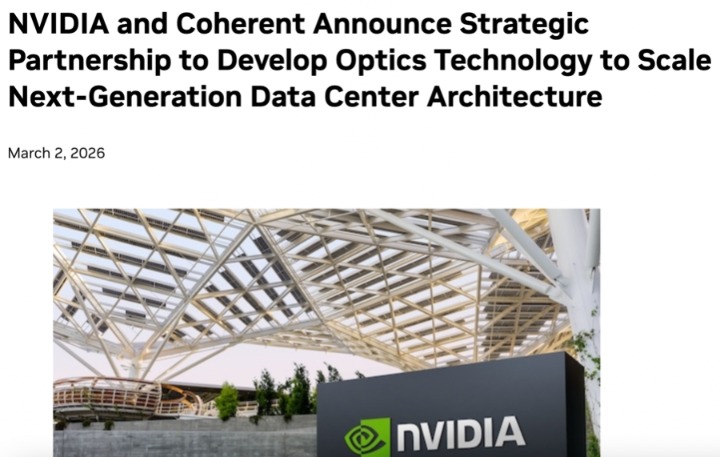
Group 1: Nvidia Collaborations - Nvidia announced a strategic agreement with Coherent to advance optical technology, including a multi-billion dollar procurement commitment and a $2 billion investment to support R&D and manufacturing capabilities in the U.S. [2] - Nvidia also entered a multi-year strategic agreement with Lumentum to accelerate innovation in optical technology, with a similar investment of $2 billion to enhance manufacturing capacity [2] Group 2: Xiaomi Robotics - Xiaomi's humanoid robots have begun "internships" in automotive factories, achieving a 90.2% success rate in self-installing self-tapping nuts over a continuous 3-hour operation [5] Group 3: Apple Product Launch - Apple launched the iPhone 17e and iPad Air M4, with starting prices of 4499 yuan and 4799 yuan respectively, maintaining the same price for the 256GB version of iPhone 17e as the previous generation's 128GB version [7][8] Group 4: Meizu's Future Plans - Meizu's CMO revealed that the Meizu 22 series and other models will not see price increases, and the Meizu 23 has completed development but will not be released to the market [8] Group 5: Alibaba's AI Model Branding - Alibaba unified its AI model branding under "Qwen," with significant user engagement, achieving a DAU of 73.52 million during the Spring Festival, marking a 940% increase [11] Group 6: ZTE's Network Experiment - ZTE and Turkey's telecommunications completed the world's first C+L integrated 1.6Tbps optical network trial, enhancing system capacity and supporting high-speed transmission [12] Group 7: Gree Electric's Dividend Policy - Gree Electric responded to rumors about discontinuing dividends, affirming its commitment to investor returns through cash dividends and share buybacks, with future plans based on strategic and financial assessments [13] Group 8: Qualcomm's Wearable Platform - Qualcomm introduced a new flagship wearable chip platform with significant performance improvements, including up to 5 times higher single-thread CPU performance and enhanced AI capabilities [16] Group 9: Pricing Adjustments in Semiconductor Industry - Xidian Micro announced price increases for some products due to structural supply-demand imbalances in the mature process sector, affecting consumer and automotive electronics [17] Group 10: MiniMax Financial Performance - MiniMax reported a revenue of $79.038 million for the year ending December 31, 2025, a 158.9% increase, with a gross profit of $20.079 million, reflecting a 437.2% growth in gross margin [21]

中泰国际每日晨讯-20260303
ZHONGTAI INTERNATIONAL SECURITIES· 2026-03-03 02:21
Market Performance - The Hang Seng Index closed at 26,059.85, down 2.1%, while the Hang Seng China Enterprises Index fell 1.8% to 8,701.91[1] - Total turnover in Hong Kong stocks was HKD 3,577 million, a decrease of 24.0% from HKD 2,884 million last Friday[1] - Energy, materials, and utilities sectors rose by 4.0%, 3.1%, and 0.1% respectively, while healthcare, financials, and consumer discretionary sectors fell by 3.4%, 3.3%, and 3.1% respectively[1] Stock Highlights - Xinyi Glass (868 HK) and China Hongqiao (1378 HK) led the gainers, rising by 12.4% and 7.2% respectively[1] - JD Health (6618 HK) and HSBC Holdings (5 HK) were the biggest losers, both down by 5.2%[1] Geopolitical Impact - Recent attacks by the US and Israel on Iran have heightened geopolitical tensions, affecting traditional energy supplies[2] - WTI crude oil prices rose to nearly USD 70, still below the USD 100-115 range seen during the 2022 Russia-Ukraine conflict[2] - Gold prices increased to USD 5,300, reflecting market reactions to the geopolitical situation[2] Sector Analysis - The "Big Three" oil companies saw stock increases between 2.6% and 5.6%, while gold mining stocks like Zhaojin Mining (1818 HK) rose by 6.0%[2] - Airline stocks, including Cathay Pacific (293 HK) and Air China (753 HK), declined by 4.1% to 5.3%[2] Economic Indicators - The US ISM Manufacturing PMI for February was reported at 52.4, slightly down from January's 52.6 but above the market expectation of 51.8[3] Automotive Sector - BYD (1211 HK) reported a 35.8% year-on-year decline in sales for the first two months of 2026, while its stock rose by 4.4%[4] - Geely (175 HK) saw a 1% increase in sales but its stock fell by 2.4%[4] Healthcare Sector - The Hang Seng Healthcare Index dropped by 3.4%, with Hansoh Pharmaceutical (3692 HK) only declining by 1.7%[5] - A clinical study confirmed Hansoh's core product, Fulaimei, showed significant improvements in blood sugar levels and weight loss in patients with severe obesity and type 2 diabetes[5]
神玑“单挑”英伟达:蔚来要赌AI时代算力话语权
2 1 Shi Ji Jing Ji Bao Dao· 2026-03-02 23:04
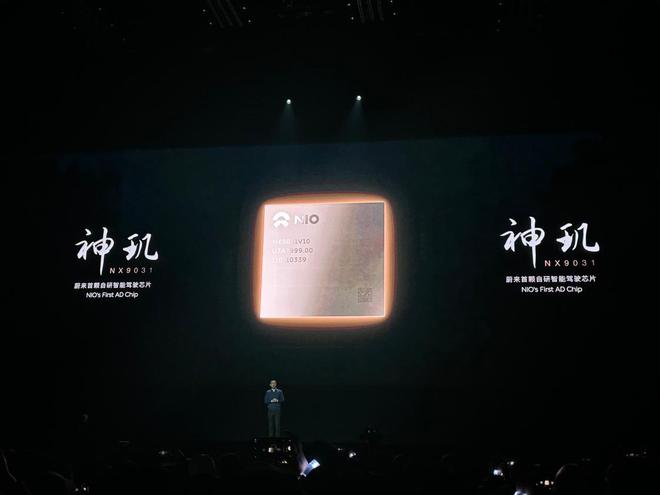
Core Insights - The automotive industry's shift towards "intelligentization" is accelerating, particularly in the chip sector, as evidenced by NIO's announcement of a successful financing round for its chip subsidiary, Anhui Shenji Technology Co., Ltd, raising over 2.2 billion RMB with a post-investment valuation nearing 10 billion RMB [1][11] - The financing round attracted a mix of local state-owned enterprises and industry capital, indicating strong confidence in the semiconductor sector and NIO's strategic direction in autonomous driving and embodied intelligence [1][2] - NIO retains a 62.7% stake in Anhui Shenji, while external investors hold 27.3%, with 10% allocated for management incentives, allowing NIO to maintain control over core technologies while alleviating financial pressure [1][3] Company Developments - Anhui Shenji's financing comes at a pivotal moment as the global supply chain is being reshaped and AI technology is rapidly advancing, positioning car-mounted chips as strategic assets for automakers [2][6] - The "Shenji NX9031" chip, the world's first mass-produced 5nm automotive-grade high-performance driving chip, exemplifies NIO's commitment to self-research and development, avoiding reliance on ARM's public licenses [3][4] - The NX9031 chip features over 50 billion transistors, a 32-core CPU architecture, and a self-developed ISP capable of processing 6.5G pixels per second, providing significant cost advantages and performance improvements for NIO vehicles [4][5] Industry Trends - The automotive industry is undergoing a transformation where AI capabilities and chip performance are becoming the core competitive advantages, moving beyond traditional vehicle components [8][9] - Major players in the automotive sector, including Xpeng and Li Auto, are also investing heavily in chip development, indicating a broader industry trend towards self-reliance in AI technology [7][10] - The successful financing of Anhui Shenji reflects a revaluation of technology investments in the automotive sector, highlighting the strong market demand for advanced semiconductor capabilities [11]

2026商用车开年“暗流涌动”!来看看资本都投向了谁?| 头条
第一商用车网· 2026-03-02 16:04
Group 1 - The commercial vehicle industry is experiencing significant capital movements, including financing, equity acquisitions, and joint ventures, indicating a new development phase [1] - DeepWay has completed a Pre-IPO financing round, raising 1.177 billion yuan, aimed at strengthening its position in the smart new energy heavy truck sector [2][3] - Shaanxi Automobile Datong has transferred its controlling stake and rebranded as Shanxi Tongxi New Energy Vehicle Co., reflecting a trend of resource integration in the new energy commercial vehicle sector [5][7] Group 2 - China FAW Group has established a new company, China Logistics Group Automotive Supply Chain Technology Co., to enhance supply chain resilience and reduce logistics costs [9][11] - "Dachedu" has secured several hundred million yuan in Series C financing to develop AI-driven services for commercial vehicle tire management [12][15] - FAW Jiefang has signed a strategic cooperation agreement with Cainiao Group to leverage logistics technology for global expansion [16][18] Group 3 - Foton Motor and Shandong Port International Logistics Group have formed a joint venture to integrate manufacturing and logistics, aiming to streamline supply chain processes [19][22] - Zero One Automotive has completed a share reform, setting a sales target of 8,000 units for 2026, driven by market demand and policy support [23][26] - Weidu Technology has raised over $100 million in Series C1 financing to accelerate its electric truck production and global delivery [26][27] Group 4 - Renault Group, Volvo Group, and CMA CGM have signed a binding equity acquisition agreement, with Renault set to fully acquire Flexis SAS [27][30] - CATL and Chery Automobile have established a joint venture with a registered capital of 2 billion yuan, focusing on battery manufacturing and sales [29][31] - NineSight Intelligent has completed over $300 million in new financing, becoming a unicorn in the RoboVan sector, following a strategic merger with Cainiao's autonomous vehicle business [34][36]

特斯拉,为何留不住高管?
36氪· 2026-03-02 13:50
Core Viewpoint - Tesla's recent launch of the Cybercab marks a significant step towards its ambitious "Robotaxi vision," which is crucial for the company's future valuation and growth [5][7]. Group 1: Cybercab Project and Management Changes - The Cybercab project is a major focus for Tesla this year, with efforts directed towards large-scale production and commercialization [8]. - The departure of Victor Nechita, the project manager for Cybercab, raises concerns about the project's future and highlights the ongoing trend of executive turnover at Tesla [9][11]. - Over the past two years, Tesla has experienced a significant loss of executives, including key figures from major projects like Cybertruck and Model Y, indicating a troubling trend in leadership stability [12]. Group 2: Reasons for Executive Turnover - The high-pressure work environment at Tesla, characterized by long hours and intense demands, contributes to the difficulty in retaining executives [15]. - Elon Musk's management style, which often involves direct intervention in projects, diminishes the authority and job satisfaction of executives, leading to a lack of security and fulfillment [16]. - Disparities in compensation, particularly the volatility of stock options, exacerbate the situation, creating a "high effort, low reward" scenario that drives executives to leave [17]. Group 3: Strategic Shifts and Future Implications - Tesla's strategic focus has shifted towards autonomous driving and AI, sidelining traditional automotive talent and causing anxiety among executives about their roles [19]. - The ongoing executive turnover reflects deeper issues within the company, including shifting goals and uncertainties about the future, which may impact morale and talent retention [20][21]. - Musk's dismissive attitude towards the departures suggests a potential underestimation of the impact these changes may have on the company's long-term success [23][28]. Group 4: Broader Industry Context - The current executive turnover at Tesla is seen as a significant challenge for the company, especially as it aims to compete in the AI sector, where team stability is crucial for success [26]. - While some fans believe that Musk's presence alone ensures the company's future, the frequent changes in leadership could pose risks to Tesla's operational effectiveness and strategic execution [28].


神玑单挑英伟达:蔚来拆分芯片业务,赌的是AI时代算力话语权
2 1 Shi Ji Jing Ji Bao Dao· 2026-03-02 10:56
Core Viewpoint - The automotive industry's shift towards "intelligentization" is accelerating, with a focus on chip technology as a critical battleground for competitive advantage in autonomous driving and AI applications [1][4]. Group 1: NIO's Strategic Moves - NIO's subsidiary, Anhui Shenqi Technology Co., Ltd., completed its first round of equity financing, raising over 2.2 billion RMB, with a post-investment valuation nearing 10 billion RMB [3]. - The financing will support the continued research and development of high-end, competitive chip products, aiding NIO's long-term strategy in autonomous driving and embodied intelligence [3][5]. - NIO retains a 62.7% stake in Shenqi, while external investors hold 27.3%, and 10% is held by management incentive entities, allowing NIO to maintain control over core technologies [3][6]. Group 2: Technological Advancements - The Shenqi NX9031 chip is the world's first mass-produced 5nm automotive-grade high-performance driving chip, showcasing significant technological advancements [6]. - The NX9031 features over 50 billion transistors, a 32-core CPU architecture, and a self-developed ISP capable of processing 6.5G pixels per second, with a latency of less than 5ms [7]. - NIO's strategy of self-research and development in chip technology aims to reduce costs significantly, with each vehicle potentially saving 10,000 RMB by replacing multiple purchased chips with a single self-developed chip [7]. Group 3: Industry Trends and Competition - The automotive industry is undergoing a transformation where AI technology is becoming essential, shifting from an optional to a mandatory focus for companies aiming to be leaders in the sector [9]. - Major players like Xpeng and Li Auto are restructuring their organizations to enhance their AI capabilities, indicating a broader trend of traditional automakers evolving into AI technology companies [9][10]. - The competition for AI chips is intensifying, as companies recognize that the core competitiveness of vehicles is shifting from traditional components to AI-driven capabilities [10][11]. Group 4: Future Prospects - The successful financing of Shenqi reflects a revaluation of technology investments in the automotive sector, emphasizing the importance of high-barrier, long-cycle technology [12]. - The ability of Shenqi to maintain stable supply to NIO while expanding into new markets, such as embodied robotics, will be crucial for its future success [12]. - The automotive AI competition is set to escalate in 2026, with NIO positioning itself at the forefront of this evolution through its advancements in chip technology [12].