
智慧农业

Search documents
*ST围海联合中标6.52亿元智慧农业项目 前三季归母净利3752万元扭亏为盈
Xin Lang Cai Jing· 2025-12-12 07:03
Core Viewpoint - *ST Weihai has recently secured significant contracts, indicating potential recovery in its business operations despite previous financial struggles [1][2]. Group 1: Recent Contracts - On December 9, *ST Weihai announced it won the bid for the "Yunnan Province Qujing City Luoping County Smart Agriculture Project Engineering General Contracting (EPC) Section 3," with a contract value of 652 million yuan, accounting for approximately 26.27% of the company's audited revenue for 2024 [1]. - Prior to this, the company was awarded the "Huaihe River to Sea Waterway Phase II Project (within Huai'an City) River Engineering Construction Section 14," with a contract value of 313 million yuan, representing about 12.6% of the company's projected revenue for 2024 [1]. Group 2: Financial Performance - From 2022 to 2024, *ST Weihai reported revenues of 2.56 billion yuan, 2.133 billion yuan, and 2.483 billion yuan, respectively, with net losses of 497 million yuan, 137 million yuan, and 151 million yuan over the same period [2]. - In the first three quarters of 2025, the company achieved a revenue of 1.29 billion yuan and a net profit of 37.52 million yuan, marking its first profit in the same period since 2022 [2]. Group 3: Risk Warnings - *ST Weihai has been under delisting risk warnings since 2019 due to issues such as illegal guarantees and fund occupation, with multiple warnings issued over the years for various financial discrepancies [3]. - The most recent warning was issued in April 2025, following the discovery of false financial disclosures in the annual report, leading to an administrative penalty notice from the Ningbo Securities Regulatory Bureau [3].


*ST围海联合中标6.52亿元智慧农业项目 前三季归母净利3752万元扭亏为
Chang Jiang Shang Bao· 2025-12-12 04:37
Core Viewpoint - *ST Weihai has recently secured significant contracts, indicating a potential recovery in its business operations despite past financial struggles [2][3]. Group 1: Recent Contracts - On December 9, *ST Weihai announced it won the bid for the "Yunnan Province Qujing City Luoping County Smart Agriculture Project Engineering General Contracting (EPC) Section 3," with a contract value of 652 million yuan, accounting for approximately 26.27% of the company's audited revenue for 2024 [2]. - Prior to this, the company also won the bid for the "Huaihe River to Sea Waterway Phase II Project (within Huai'an City) River Engineering Construction Section 14," with a contract value of 313 million yuan, representing about 12.6% of the company's projected revenue for 2024 [2]. Group 2: Financial Performance - From 2022 to 2024, *ST Weihai reported revenues of 2.56 billion yuan, 2.133 billion yuan, and 2.483 billion yuan, respectively, with net losses of 497 million yuan, 137 million yuan, and 151 million yuan over the same period [3]. - In the first three quarters of 2025, the company achieved a revenue of 1.29 billion yuan and a net profit of 37.52 million yuan, marking its first profit in the same period since 2022 [3]. Group 3: Cash Flow Concerns - Despite returning to profitability, the company's cash flow remains a concern, with a net cash flow from operating activities of -406 million yuan in the first three quarters of 2025, a decline of 110.54% year-on-year, primarily due to increased payments for engineering projects [3]. Group 4: Risk Warnings - *ST Weihai has been under delisting risk warnings since 2019 due to issues such as illegal guarantees and fund occupation, with multiple warnings issued over the years due to various financial irregularities [4]. - The most recent warning was issued in April 2025 after the company disclosed false financial indicators in its annual report, leading to administrative penalties from the Ningbo Securities Regulatory Bureau [4].


陕赣深化果业合作拓市场
Shan Xi Ri Bao· 2025-12-11 22:50
Core Viewpoint - The promotional event for Gannan navel oranges and Nankang sweet pomelos aims to enhance cooperation between Shaanxi and Jiangxi provinces, leveraging the market potential of Xi'an as a central city to expand the reach of these agricultural products [1] Group 1: Event Overview - The promotional event took place on December 6, focusing on Gannan navel oranges and Nankang sweet pomelos [1] - Representatives from various organizations, including the Shaanxi Provincial Jiangxi Ganzhou Chamber of Commerce and the Shaanxi Provincial Fruit Industry Center, attended the event [1] Group 2: Statements from Officials - Zhou Kui, Deputy District Mayor of Nankang District, expressed hopes that the products would add a fresh flavor to Xi'an's markets and emphasized the potential for their "sweet business" to grow [1] - Zhang Jingwei, Director of the Trade Promotion Department of the Shaanxi Provincial Fruit Industry Center, highlighted the desire for deeper cooperation with Jiangxi in areas such as variety cultivation, market expansion, and agricultural technology [1] Group 3: Agreements and Future Cooperation - A purchase and sales signing ceremony for Gannan navel oranges was held during the event [1] - The event aims to deepen cooperation between the fruit industries of Shaanxi and Jiangxi, fostering a new development pattern characterized by complementary advantages, resource sharing, and mutual benefits [1]
村里来了蔬菜经纪人
Jing Ji Ri Bao· 2025-12-11 21:37
一直以来,周口是河南省蔬菜生产大市,全市常年瓜菜种植面积超510万亩,产量达1500万吨以上,种 植面积与产量均位居全省首位。庞大的蔬菜产量,吸引了全国多个省市的工人前来"淘金"。在盐场村蔬 菜种植基地,前来从事蔬菜产业的外地工人占比已超过用工量的半数。 "我们来这里将近6年了,这里土壤条件好,农田水利等设施完善,产出的蔬菜品质高,在市场上也走 俏。"贵州省安顺市"菜客"经纪人韦兴付说,"我们平时用工量也大,很多村民在这里边打零工边学技 术。工人最高一天能拿到五六百元呢!技术学成之后,愿意单干的村民也不在少数。" 冬日里,位于河南省周口市淮阳区曹河乡盐场村的千亩供港蔬菜种植基地内,一垄垄绿油油的广东菜心 长势喜人。 53岁的李素霞双手戴着手套,蹲在菜地里,右手用掐尖拇指刀采摘迟菜心,左手臂弯很快码了整整两 排。基地里包括李素霞在内的60余名工人穿梭在田垄间采摘,一筐筐新鲜菜心经精心采收后迅速装车外 运。"这种菜心低热量、高营养,很受市场欢迎,根本不愁卖。"曹河乡农办负责人耿守鹏说。 生态种植,加上融入现代科技元素,曹河乡打造智慧农业新模式。目前,该种植基地配备了先进的灌溉 系统,根据农作物的生长需求和土壤湿度 ...
韩俊:补上农机装备短板,夯实农业强国根基
Xin Lang Cai Jing· 2025-12-11 10:22
近日,农业农村部党组书记、部长韩俊在《人民日报》发表署名文章《提升农业综合生产能力和质量效益》,深入阐述了农业机械化在推动农业现代化中 的关键作用。文章指出,"主要粮食作物耕种收基本实现全程机械化"是"十四五"时期我国农业现代化建设取得的重大成就之一,为"十五五"时期加快建设 农业强国奠定了坚实基础。 文章强调,提升农业综合生产能力和质量效益,根本出路在科技,而农机装备是农业现代化的重要支撑。韩俊指出,要"着力补上农机装备短板",实施农 机装备高质量发展行动,推进高端智能、丘陵山区适用农机装备研发应用,深入开展农机研发制造推广应用一体化试点,实行农机购置与应用补贴优机优 补,强化先进适用机具推广应用。 近年来,我国农机装备水平显著提升,农业科技进步贡献率超过63%,为粮食连年丰收提供了有力保障。2024年,我国粮食产量首次突破1.4万亿斤,人 均粮食占有量达到500公斤,这与农业机械化水平的提高密不可分。 韩俊在文章中表示,"十五五"时期,我国将深入实施新一轮千亿斤粮食产能提升行动,农机装备将发挥更加关键的作用。通过持续优化农机装备结构,加 强农机农艺融合,我国农业机械化水平将进一步提升,为保障国家粮食安全、 ...
(走进中国乡村)科技赋能中国粮仓 “冬闲”变“冬忙”
Zhong Guo Xin Wen Wang· 2025-12-11 08:44
Core Viewpoint - The article highlights the transformation of traditional agriculture in Hunan Province, China, through technological empowerment, leading to a shift from a "winter idle" period to a "winter busy" season for farmers [1]. Group 1: Technological Empowerment in Agriculture - Hunan Province, a major grain-producing area, utilizes technology to enhance agricultural productivity, with a focus on smart agriculture platforms that provide real-time monitoring data [5]. - The mechanization of agriculture has led to a significant increase in efficiency, with the comprehensive mechanization rate for crops reaching 60.8% [6]. - The integration of smart machinery and digital management in rice production can save water by 30% per acre and reduce fertilizer costs while increasing yields [6]. Group 2: Economic Impact and Youth Engagement - The shift to year-round agricultural management has changed the perception of farming among the youth, attracting more young people back to rural areas [5]. - E-commerce training initiatives are helping farmers expand their sales channels, allowing them to connect directly with broader markets and achieve better prices for their products [5]. - The establishment of high-standard farmland has reached 4,397 million acres during the 14th Five-Year Plan period, contributing to the overall modernization of agriculture in Hunan [6].

供销合作社深耕“三农”沃土
Jing Ji Ri Bao· 2025-12-10 22:26
近年来,全国供销合作社系统持续深化综合改革,不断拓展服务领域、创新服务机制、提升服务能力, 深耕"三农"沃土,以更强担当服务农业农村现代化。 筑牢粮食安全根基 农资是保障国家粮食安全的重要战略物资。总社农资与棉麻局相关负责人表示,近年来,全国供销合作 社系统以服务"三农"为根本宗旨,在保供稳价、绿色转型、网络升级等方面打出"组合拳",逐步搭建起 覆盖全国、上下联动、平急兼顾的农资流通服务体系,助力粮食稳产增产,推动农业高质量发展。 在近日举行的中华全国供销合作社第八次代表大会上,中华全国供销合作总社(以下简称"总社")有关 负责人表示,目前,全系统化肥供应量占全国七成,承担约五成国家化肥商业储备任务和八成省级储备 任务,年农业社会化服务规模超3亿亩次、销售农产品超3万亿元,在服务保障国家粮食安全、促进农民 增收致富、推动乡村全面振兴等方面发挥了积极作用。 构建农业服务网 无人机盘旋、智能农机轰鸣、数据在"云端"流转……传统农耕正向科技赋能的"智慧模式"转变。 为更好满足小农户与新型农业经营主体需求,各地供销合作社因地制宜发展多种农业社会化服务模式, 帮助小农户解决"一家一户干不了、干不好、干起来不划算"的问题 ...
“十五五”农业怎么干?增强粮食供给保障,强化科技装备支撑
2 1 Shi Ji Jing Ji Bao Dao· 2025-12-10 13:04
Core Viewpoint - The article emphasizes the importance of enhancing agricultural comprehensive production capacity and quality efficiency as a major task in building an agricultural power, highlighting five key tasks to achieve this goal [2][4]. Group 1: Key Tasks for Enhancing Agricultural Production Capacity - The five key tasks include: strengthening the supply guarantee capacity of important agricultural products, constructing a diversified food supply system, reinforcing farmland protection and quality improvement, enhancing technological support, and improving agricultural development quality and efficiency [2][4]. - The first task focuses on ensuring food security, with a projected national grain output exceeding 1.4 trillion jin in 2024, achieving a per capita grain availability of 500 kg [3][4]. Group 2: Measures for Grain Production and Supply - The article outlines measures to stabilize grain planting areas and enhance single crop yields, including optimizing the production layout and reinforcing production capacity by crop type and region [4]. - It also emphasizes improving grain storage, circulation, and processing capabilities, alongside developing infrastructure for grain logistics and initial processing [4]. Group 3: Agricultural Disaster Prevention and Technological Innovation - The article discusses the need to strengthen agricultural disaster prevention and mitigation capabilities, including enhancing monitoring and forecasting of meteorological disasters and improving irrigation infrastructure [5]. - It highlights the importance of agricultural technology innovation, advocating for a robust agricultural technology innovation system that integrates various research and educational institutions [7][8]. Group 4: Focus on Seed Industry and Agricultural Machinery - The article stresses the need for revitalizing the seed industry by promoting self-reliance in seed technology and protecting genetic resources [8]. - It also points out the necessity of addressing shortcomings in agricultural machinery, promoting high-quality development of agricultural equipment, and integrating machinery with agricultural practices [9].
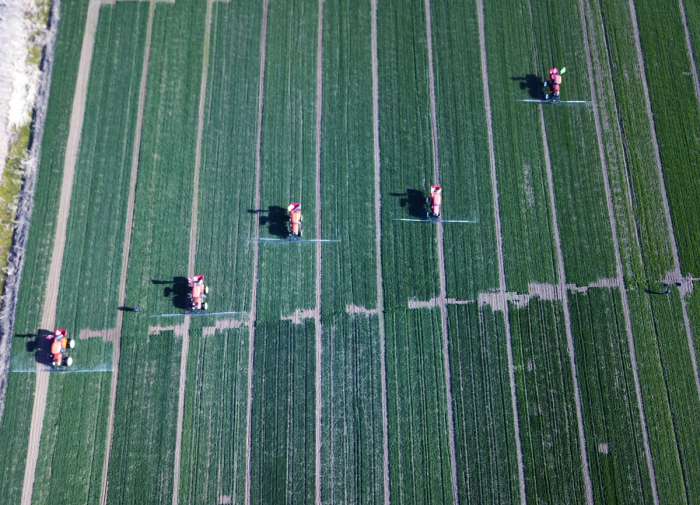
韩俊:大力发展智慧农业,拓展人工智能、大数据等应用场景
Xin Lang Cai Jing· 2025-12-09 23:25
Core Viewpoint - The article emphasizes the need to enhance agricultural comprehensive production capacity and quality efficiency, focusing on addressing the shortcomings in agricultural machinery and promoting high-quality development in this sector [1] Group 1: Agricultural Machinery Development - The implementation of high-quality development actions for agricultural machinery is crucial, with a focus on the research and application of high-end intelligent machinery suitable for hilly and mountainous areas [1] - There will be an integrated pilot program for the research, manufacturing, and promotion of agricultural machinery, along with a subsidy system that prioritizes the purchase and application of superior machinery [1] - The promotion and application of advanced and suitable agricultural tools will be strengthened to improve overall efficiency [1] Group 2: Smart Agriculture and Technology Integration - The development of smart agriculture is a priority, with an emphasis on expanding the application of artificial intelligence and big data [1] - The integration of quality seeds, farming methods, machinery, and ecological practices is essential to maximize the benefits of agricultural technology [1] - There is a need for comprehensive technical support that combines various agricultural practices, ensuring that technology is effectively implemented and matched with equipment [1] Group 3: Mature Technology Promotion - The article advocates for the large-scale promotion of mature agricultural technology models, including appropriate density planting, precision seeding, deep fertilization, and integrated water and fertilizer management [1] - The comprehensive utilization of crop straw and the management of livestock manure are highlighted as important practices to enhance sustainability [1] - Continuous improvement in the rate of technology implementation and equipment compatibility is necessary to achieve better agricultural outcomes [1]
政校研企羊城共探“头雁”高飞新路径!2025中山大学“头雁”发展论坛举办
Nan Fang Nong Cun Bao· 2025-12-09 13:08
政校研企羊城共 探"头雁"高飞新 路径!2025中山 大学"头雁"发展 论坛举办_南方 +_南方plus 12月7日,一场 围绕乡村产业振 兴核心动能 ——"头雁"人才 的深度对话在广 州中山大学南校 园展开。2025年 中山大学"头 雁"发展论坛暨 第二期贵州"头 雁"培育能力提 升集训班,汇聚 了湖北、湖南、 四川、贵州、云 南等省份的项目 实施代表,以及 中国农业大学、 浙江大学、上海 交通大学、西北 农林科技大学等 多所顶尖高校的 专家学者,旨在 总结"十四五"经 验,共商"十五 五"时期乡村领 军人才高质量发 展的系统方案。 2025年中山大学"头雁"发展论坛会场 论坛研讨环节直 指核心议题。与 会代表围绕 《"头雁"项目培 育机构典型模 式、服务机制与 优化路径研究》 这一总结性课 题,展开务实讨 论。中山大学副 校长邰忠智在致 辞中表示:"'头 雁'项目远不止 于技能培训,它 是一项旨在激活 乡村内生动力的 系统工程。" 在听取中山大学 课题负责人对课 题立项情况、研 究设计、预期成 果介绍后,贵州 省农业农村厅二 级巡视员、人事 处处长王文虹, 湖北省农业农村 厅科技与人才处 处长、一级调研 ...
