
消费者权益保护

Search documents
金融绘就七彩卷·共筑阳光同心梦——阳光人寿2025年金融教育宣传周活动即将开启
Qi Lu Wan Bao· 2025-09-16 06:01
Core Viewpoint - Sunshine Life Insurance is launching a nationwide financial education campaign titled "Financial Rights Protection, Supporting a Better Life" on September 15, focusing on delivering practical financial knowledge to households across the country [1] Group 1: Red Theme - Consumer Protection - The campaign integrates "Red Finance + Consumer Protection Education," promoting financial knowledge while emphasizing the importance of red culture [2] - Company executives and party members will lead initiatives to communicate financial policies and address customer concerns, positioning party values as central to consumer rights protection [2] Group 2: Orange Theme - Service for Key Groups - The focus will be on key demographics such as the elderly, children, disabled individuals, and foreign nationals, using customized materials to provide education on fraud prevention, rational consumption, and personal credit protection [3] - The initiative aims to enhance financial literacy and security among these groups, reflecting the company's social responsibility [3] Group 3: Yellow Theme - Integrity Promotion - The campaign will promote a culture of integrity, encouraging consumers and investors to honor commitments and fulfill disclosure obligations [4] - The company aims to establish integrity as a widely accepted behavioral standard, fostering a fair and trustworthy financial ecosystem [4] Group 4: Green Theme - Fraud Prevention - The focus will be on raising public awareness about personal information protection and fraud prevention, urging individuals to safeguard sensitive information and recognize fraudulent links and software [5] - The initiative aims to enhance the public's ability to prevent fraud and protect their financial assets [5] Group 5: Blue Theme - Product Suitability - The company will conduct education on the suitability of financial products, helping consumers understand product features and make informed choices based on their needs and financial capabilities [7] - Training will be emphasized to ensure compliance with the "three suitability" requirements regarding financial products, sales channels, and target customers [7] Group 6: Purple Theme - Combating Illegal Activities - The campaign encourages consumers to use legitimate channels for rights protection and warns against illegal "agent refund" schemes and false promises related to full refunds and debt evasion [8] - The company is committed to fulfilling its social responsibility and enhancing public awareness through diverse financial education activities [8]
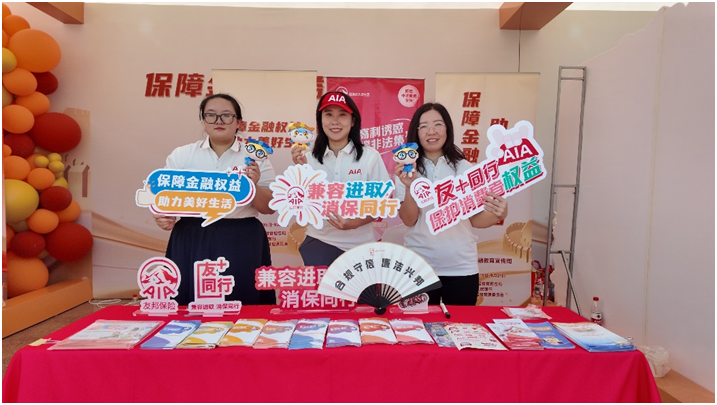
金融为民践初心,保障权益护民生——友邦人寿山东分公司参与行业集中宣传,绘就金融知识普及新图景
Qi Lu Wan Bao· 2025-09-16 06:01
Core Viewpoint - The event "Golden Horn · Financial Market" organized by Shandong Financial Regulatory Bureau aims to enhance financial literacy and consumer protection through interactive activities and professional services provided by AIA Life Insurance Shandong Branch [1][6]. Group 1: Event Overview - The event was held on September 15, featuring a service booth by AIA Life Insurance Shandong Branch that focused on delivering financial knowledge to the public [1]. - The booth served as a "financial knowledge station," promoting interaction and engagement among attendees [3]. Group 2: Educational Initiatives - Staff acted as "financial science ambassadors," distributing materials on consumer rights and fraud prevention, making complex financial terms more accessible [3]. - The event included interactive quiz sessions that integrated financial knowledge into fun activities, enhancing public participation and understanding [4]. Group 3: Target Audience Engagement - Special attention was given to elderly individuals and new citizens, with dedicated consultation channels addressing their specific concerns about insurance and financial processes [6]. - During the event, over 150 promotional materials were distributed, and more than 200 citizens were consulted, indicating strong community engagement [6]. Group 4: Future Plans - AIA Life Insurance Shandong Branch plans to continue its commitment to financial education through various innovative formats, including online videos and community outreach programs [6].


今年以来全省消费投诉举报同比降7.34%
Hai Nan Ri Bao· 2025-09-16 01:52
Core Insights - The overall consumer complaints in Hainan province have decreased by 7.34% year-on-year, indicating improved consumer satisfaction and market regulation [1][2] - The provincial market supervision department has recovered economic losses of 33.11 million yuan for consumers through timely complaint handling [2] Group 1: Consumer Complaint Management - The provincial market supervision bureau has received a total of 266,000 consumer complaints this year, with a 100% timely handling rate and a 3% increase in successful mediation rates [2] - A total of 6,420 cases of illegal activities have been investigated, resulting in fines exceeding 40.76 million yuan [1][2] - The bureau has conducted interviews with 173 businesses that received a high volume of complaints to ensure they fulfill their consumer rights responsibilities [2] Group 2: Regulatory Actions and Initiatives - The market supervision bureau has implemented a combination of regular supervision and special actions to maintain market order, focusing on key areas such as seafood markets, fruit markets, and tourist shopping venues [1] - The bureau has launched the "Safe Consumption in Hainan" initiative in collaboration with 29 provincial units to create a cooperative governance model involving self-discipline from businesses, government oversight, social supervision, and consumer participation [2] - The provincial market supervision bureau is working with the tourism and cultural department to promote a three-year action plan aimed at optimizing the consumption environment, leveraging the advantages of the free trade port policy [3]
拒餐厅“投喂”预制菜 消费者盼餐饮“于东来”
2 1 Shi Ji Jing Ji Bao Dao· 2025-09-16 00:09
Core Viewpoint - The ongoing debate surrounding pre-prepared meals (pre-cooked dishes) highlights consumer concerns about transparency and quality in the restaurant industry, with a call for industry leaders who prioritize consumer rights and operational efficiency [1] Group 1: Consumer Attitudes - Many consumers express strong opposition to being served pre-prepared meals in restaurants that offer freshly cooked dishes, indicating a desire for transparency in food sourcing [1] - A significant disparity exists in consumer acceptance of pre-prepared meals based on dining context; over 50% of consumers accept them in fast-food settings, while only 8.8% do so in high-end restaurants [8][9] - Consumers are not entirely resistant to pre-prepared meals; they prefer to choose them from retail channels rather than being served them in restaurants [9] Group 2: Industry Perspectives - Industry professionals argue that pre-prepared meals, when produced under proper standards, can enhance food safety and efficiency, countering negative perceptions [1][5] - The pre-prepared meal sector is seen as a solution to challenges faced by large-scale chain restaurants, such as high rental and labor costs [5][6] - The pre-prepared meal market in China is projected to reach 617.3 billion yuan by 2025, reflecting a 27.3% year-on-year growth [7] Group 3: Regulatory and Standardization Issues - Current regulations prohibit the use of preservatives in pre-prepared meals, ensuring their natural quality and safety through cold chain logistics [5] - There is a pressing need for clearer definitions and standards for pre-prepared meals to address consumer confusion and enhance trust [11][12] - The upcoming national standards for pre-prepared meals are expected to clarify their classification and usage in restaurants, marking a significant shift towards regulatory compliance in the industry [12] Group 4: Future Outlook - The future of the restaurant industry will likely see a coexistence of artisanal cooking and pre-prepared meal solutions, emphasizing the need for technological integration and robust regulations [13]
众安保险开展2025年“金融教育宣传周”活动 发布《2025消费者权益保护年度报告》
Jing Ji Guan Cha Wang· 2025-09-15 12:37
此外,众安保险将整合官方网站、APP、微信、小红书、抖音等全平台资源,打造"保障金融权益,助 力美好生活"系列专题内容。通过挂机短信、在线客服入口提示、有奖问答等多种形式,众安保险将风 险提示和金融知识深度融入客户服务全流程,让金融知识真正走进千家万户。 2025年9月15日至21日,众安保险积极响应国家金融监督管理总局、中国人民银行以及中国证监会的号 召,以"保障金融权益,助力美好生活"为主题,全面开展"金融教育宣传周"系列宣传活动。 在宣传周期间,众安保险将组建专业的"金融知识宣讲团",走进商圈和社区,开展一系列丰富多彩的活 动,如"风险提示上门送"、 "金融知识小课堂"等。 众安保险还与上海外滩街道山北小区、上海宝兴居民区等社区携手合作,举办公益集市、为民服务日等 互动活动,通过这些群众喜闻乐见的形式,将理性投资理念和防诈骗知识依照"社区网格化"的传播要求 传递给社区居民,切实增强公众金融风险防范意识。 众安保险还将在宣传周期间发布《2025消费者权益保护年度报告》。报告显示,2025年,众安保险 以"守护消费者权益"为核心,通过机制创新与科技赋能双轨驱动,推动消费者权益保护工作质效全面提 升。 今年, ...

多维发力筑牢消费者权益,“金融教育宣传周”启动
2 1 Shi Ji Jing Ji Bao Dao· 2025-09-15 12:08
Core Viewpoint - The "Financial Education Promotion Week" initiated by the National Financial Supervision Administration aims to enhance public financial knowledge and awareness of fraud prevention, while promoting service reforms in financial institutions [1][2]. Group 1: Event Overview - The event runs from September 15 to September 21, 2023, with the theme "Protecting Financial Rights and Supporting a Better Life" [1]. - This is the third nationwide financial education campaign organized by the National Financial Supervision Administration in collaboration with the People's Bank of China and the China Securities Regulatory Commission [1]. Group 2: Key Activities and Focus Areas - The campaign focuses on four main areas: promoting regulatory marketing behaviors, warning against internet loan issues and financial crimes, showcasing financial services for the public, and enhancing anti-fraud education [2][3]. - Financial institutions, including the Bank of Communications, are actively participating by reaching over 650 million consumers through various financial education activities [2]. Group 3: Local Initiatives - Local financial regulatory bodies are organizing diverse activities, such as risk warning campaigns and community outreach programs, to ensure comprehensive financial education coverage [3][4]. - In Tianjin, over 110 financial institutions participated in a public education event featuring interactive games and quizzes to engage the community [3]. - Agricultural Bank is utilizing both online and offline channels to promote financial education, including a series of community outreach programs [4].
中国人寿2025金融教育宣传周启幕:构建立体活动矩阵,守护金融消费安全
Qi Lu Wan Bao· 2025-09-15 07:51
Core Viewpoint - The "Financial Education Promotion Week" initiated by financial regulatory authorities aims to enhance public financial literacy and protect consumer rights through various educational activities [1] Group 1: Financial Education Activities - The event features a theme of "Protecting Financial Rights and Supporting a Better Life" and lasts for one week, focusing on educating consumers about financial products and risks [1] - China Life Insurance Company actively participates by launching a "online + offline" promotional model, including four major themed activities to educate the public on financial risks [1][5] Group 2: Consumer Protection Initiatives - The "Consumer Protection Energy Station" is set up in service centers nationwide, offering interactive games to teach financial knowledge and enhance risk awareness [2] - The "Risk Tips Delivered to Your Door" initiative expands outreach by combining community management with tailored financial education programs for various settings [3] Group 3: Combating Illegal Practices - A campaign titled "Say NO to Illegal Intermediaries" is launched, featuring short videos that highlight the dangers of illegal financial practices and provide guidance on legal rights [4] - The company encourages consumers to use official channels for legal recourse, thereby promoting a safer financial environment [4] Group 4: Commitment to Public Service - China Life emphasizes its commitment to enhancing public trust in the financial system through education and practical services, focusing on supporting enterprises, the elderly, and disabled individuals [5] - The company aims to integrate consumer rights protection with practical services, ensuring that financial knowledge is accessible and understandable for the public [5][6]

昆仑健康保险启动2025年“金融教育宣传周”,助力提升全民金融素养
Zhong Guo Jing Ji Wang· 2025-09-15 07:26
为深入贯彻中央金融工作会议精神,积极践行以人民为中心的发展思想,昆仑健康保险股份有限公司(以下简称"昆 仑健康保险")于2025年9月15日正式启动"金融教育宣传周"活动。本次宣传周以"保障金融权益,助力美好生活"为主 题,通过线上线下多元融合的宣传方式,面向不同人群开展针对性金融知识普及与风险教育,不断优化提升金融服务水 平,让金融行业发展更好满足人民群众美好生活需要。 精准响应政策要求,构建"大消保"教育新格局 昆仑健康保险积极响应国家金融监督管理总局相关部署,将消费者权益保护置于公司经营的核心位置,以"诚信守 护,健康同行"为本次活动口号。围绕群众普遍关注的金融常识、风险识别等内容,着力帮助消费者理性选择金融产品, 远离非法金融与诈骗侵害。 公司充分发挥总分联动、科技赋能的作用,推动教育宣传进一步向基层延伸,促进金融知识"下乡入户",切实提升 金融服务覆盖面和普惠性。 线上线下协同推进,提升宣传实效与参与感 活动期间,昆仑健康保险正式发布《金融教育宣传手册》,系统梳理从投保、理赔全流程知识及常见金融风险防范 指南,为客户提供实用操作参考,助力消费者提升自我防护能力。 昆仑健康保险将持续优化消费者权益保护 ...

“开锁刺客”乱象该如何规范?消费者该怎样保护自己的合法权益?
Yang Guang Wang· 2025-09-13 02:12
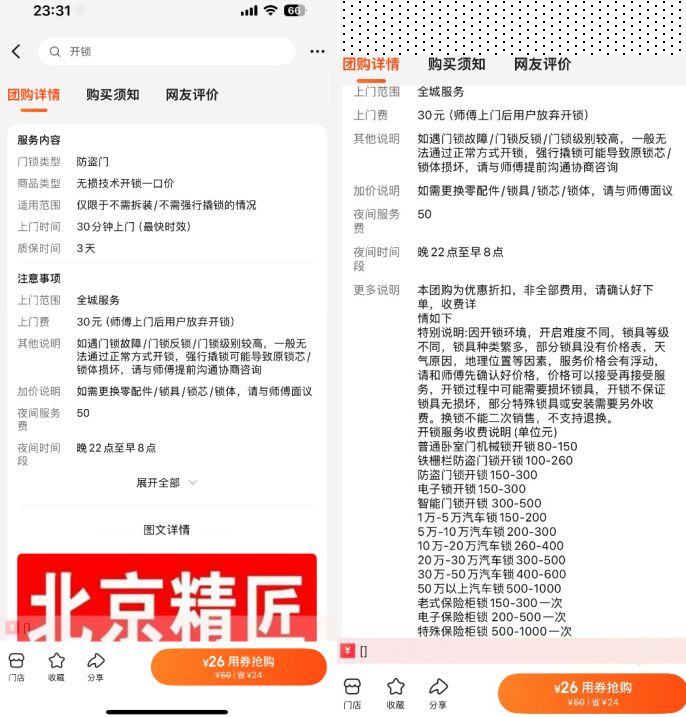
Core Viewpoint - The article highlights the issue of "sky-high locksmith fees" where consumers are misled by low initial prices advertised on local service platforms, only to face exorbitant charges upon service completion [2][4][10]. Group 1: Consumer Experiences - A consumer in Qingdao was quoted 50 yuan for a locksmith service but ended up paying 300 yuan due to additional charges [2]. - Another consumer in Shenzhen faced a charge of 2180 yuan for a service that was initially advertised at a much lower price [3]. - A consumer in Changsha thought they would only pay 30 yuan for a service but ended up with a bill of 828 yuan after various additional charges [4]. Group 2: Pricing Practices - Many locksmith services advertise low prices, such as 30 yuan, but do not disclose that this is only a part of the total cost, leading to confusion and unexpected charges [9][10]. - The average price for locksmith services in first and second-tier cities is around 100 yuan for standard services, while changing a lock cylinder typically costs no more than 300 yuan [10]. Group 3: Regulatory Concerns - There is a lack of regulatory oversight on these pricing practices, with many businesses not providing clear pricing information, which may violate consumer protection laws [11][12]. - Legal experts suggest that consumers can demand refunds for any undisclosed charges and should keep records of their transactions to support their claims [12].
绿茶餐厅外卖惊现辱客字条,外卖业务增长7成却难掩服务缺陷?
Guan Cha Zhe Wang· 2025-09-10 11:56
Core Viewpoint - The well-known restaurant chain, Green Tea Restaurant, is facing public backlash due to an incident where an employee insulted a customer, leading to significant reputational damage and potential financial implications for the company [1][3][7]. Company Response - On September 8, the involved employee was terminated, and the store manager and regional manager issued a written apology to the customer for the inappropriate behavior [7]. - Legal experts indicated that the employee's actions could constitute a violation of consumer rights and the company may be held liable for damages caused by the employee's conduct during the service process [7]. Impact on Business - Following the incident, the Green Tea Restaurant's Dongguan Guomao store received a surge of negative reviews on third-party delivery platforms, affecting its overall rating [7]. - The company had recently reported strong financial performance, with a revenue of 2.29 billion RMB for the first half of the year, a 23.1% increase year-on-year, and a profit of 234 million RMB, up 34.1% [10][11]. - The growth in revenue was partly attributed to a significant increase in the takeout business, which saw a 74.2% rise, contributing to 22.9% of total revenue [12]. Market Performance - Green Tea Group went public on the Hong Kong Stock Exchange on May 16, but the stock has struggled since its IPO, with a current share price of 7.06 HKD and a market capitalization of approximately 47.55 billion HKD [10][13]. - The IPO price was set at 7.19 HKD per share, but the stock quickly fell below this level, indicating a lack of market confidence [10].
