
金融服务实体经济

Search documents
兴业银行北京分行启动“明示企业贷款综合融资成本”工作 首批企业获“融资成本清单”
Xin Hua Cai Jing· 2025-08-21 08:08
Core Viewpoint - The article discusses the launch of a pilot program by Industrial Bank's Beijing branch aimed at enhancing transparency in corporate loan financing costs for technology-based small and medium-sized enterprises (SMEs) [1][2]. Group 1: Pilot Program Implementation - The pilot program focuses on technology-based SMEs, selecting two representative companies, Beijing Lukai Zhixing Technology Co., Ltd. and Beijing Ninghua Technology Co., Ltd., as initial participants [1]. - The program involves providing enterprises with a "comprehensive financing cost list," detailing various components such as principal, interest, guarantee fees, and assessment fees, to help them understand the full scope of financing costs [1]. Group 2: Training and Support Mechanisms - A "special training + one-on-one guidance" mechanism has been established to ensure effective implementation of the pilot program, including training for customer managers on policy interpretation and cost list preparation [1]. - Dedicated personnel will assist enterprises in understanding the sources and rationality of various fees, ensuring a seamless connection between the cost disclosure process and loan approval [1]. Group 3: Future Plans and Responsibilities - The bank plans to enhance customer engagement through multi-channel promotion of the importance of financing cost transparency, aiming to increase enterprise participation [2]. - A "collect-feedback-optimize" closed-loop mechanism will be established to gather and address feedback from participating enterprises, allowing for dynamic adjustments to service offerings [2]. - The bank aims to summarize pilot experiences to create a replicable service template for technology-based SMEs, extending the initiative to all financing enterprises, thereby fulfilling its social responsibility to reduce costs and benefit businesses [2].

兴业银行北分推动科技型中小企业“明示综合融资成本”试点工作
Xin Jing Bao· 2025-08-21 08:04
Core Viewpoint - The Industrial Bank Beijing Branch has launched a pilot program to enhance transparency in corporate loan financing costs, focusing on technology-based SMEs to improve financial services for the real economy [1][4]. Group 1: Pilot Program Launch - The pilot program commenced on August 15, targeting technology-based SMEs, with Beijing Lukai Zhixing Technology Co., Ltd. and Beijing Ninghua Technology Co., Ltd. as the first trial clients [2]. - The program provides a detailed "comprehensive financing cost list" to help companies understand the full scope of financing costs, including principal, interest, guarantee fees, and assessment fees [2]. Group 2: Expansion and Training - In August, the bank established a "special training + one-on-one guidance" mechanism to ensure effective communication of policy intentions and assist companies in understanding the cost list [3]. - Customer managers are trained to interpret policies and guide companies in filling out the cost list accurately, ensuring a seamless connection between the cost disclosure process and loan approval [3]. Group 3: Long-term Service Optimization - The bank plans to enhance customer engagement through multi-channel promotion of the importance of financing cost transparency and to establish a feedback loop for continuous service improvement [4]. - Regular summaries of pilot experiences will be conducted to create a replicable service model for technology-based SMEs, extending the initiative to all financing enterprises [4]. - The initiative aims to fulfill the social responsibility of financial institutions by reducing costs and benefiting enterprises and the public [4].
中国中信金融资产:纾困化险再发力 助力老字号企业焕发新生
Jin Rong Shi Bao· 2025-08-21 02:46
Core Viewpoint - The Qingdao turbine group, once a key player in China's turbine manufacturing, is undergoing a significant restructuring process to recover from financial difficulties, with the support of China CITIC Financial Assets, which has implemented a comprehensive financial rescue plan [1][2][6] Group 1: Company Background and Challenges - The Qingdao turbine group has over 1,200 employees and nearly 1,000 creditors, with total debts exceeding 6 billion yuan [1] - The company faced severe operational challenges due to equity disputes and management issues after 2010, leading to a court-ordered restructuring in 2022 [1] Group 2: Financial Rescue Actions - In early 2022, CITIC Financial Assets identified the group's debt issues and initiated a "breaking the ice" operation to understand the situation better [2] - In 2024, the project team launched a "dual-line operation" to facilitate the restructuring process, ensuring timely communication and approval of the restructuring plan [2] Group 3: Recovery Strategies - The recovery plan includes a "three-dimensional repair plan" focusing on financial support, management restructuring, and industry integration [3][4] - Financial support involved creating a trust structure and implementing debt restructuring to stabilize operations and resume production [3] - Management restructuring included optimizing procurement processes, real-time data monitoring, and establishing mentorship programs for skilled workers [4] Group 4: Broader Implications - The financial rescue not only aims to revive the turbine group but also reflects a broader commitment to supporting the high-end manufacturing sector in China [6] - The collaboration among various CITIC entities has provided a comprehensive financial service package, enhancing the group's innovation capabilities and operational efficiency [6]
涟水农商银行:行长走基层 金融解企忧
Jiang Nan Shi Bao· 2025-08-20 06:28
集中开展走访问需。该行围绕科技型企业首贷扩面、外贸企业首贷畅通、重大项目走访等融资对接工 作,组织对名单内企业"应走尽走""能贷尽贷",深入基层了解企业生产经营实际,传递惠企金融服务政 策温度和提升市场信心,行领导现场倾听企业关于金融服务"急难愁盼"诉求和意见建议。 全力助企纾困解难。行领导带队深入乡镇、企业、社区开展调研,企业诉求和意见建议直达高管层,针 对相关企业反映的堵点难点问题,现场落实,挂钩帮办,全力满足企业合理需求。对暂不符合授信条件 的企业,用好支持小微企业融资协调工作机制,主动向当地金融监管部门和县区专班反馈,推动问题协 调解决。 为深入做好金融"五篇大文章",进一步增强破难题、优服务、促发展能力,切实畅通基层金融服务实体 经济"微循环",日前,涟水农商银行在辖内常态化开展"行长走基层"活动。活动开展以来,客户满意度 提升25%,带动新增贷款投放超1亿元。 深入推进服务优化。在落实"行长走基层"过程中,该行聚焦惠企金融服务政策落实和业务开展情况,行 领导深入开展"换位办办看",站在企业视角,体验检视本行业务流程、材料要求和服务质量等,查找本 行服务和企业期盼之间的差距,重点审视惠企政策是否执行 ...
金融润泽牡丹之都 监管助力后来居上——菏泽金融监管分局以硬核举措护航高质量发展
Qi Lu Wan Bao· 2025-08-18 09:03
Core Viewpoint - The financial regulatory authority in Heze emphasizes the importance of serving the real economy, aiming to enhance financial services and support local economic development through various strategic initiatives [1]. Group 1: Financial Services and Economic Support - Heze's financial regulatory bureau has implemented measures to enhance financial service coverage and adaptability, resulting in a loan balance of 5288.98 billion yuan as of June, reflecting a growth of 6.87% since the beginning of the year [2]. - The bureau focuses on supporting the "231" industrial system and green projects, with respective loan balances of 873.1 billion yuan and 612.4 billion yuan, showing increases of 11.58% and 19.05% [2]. - The balance of loans for specialized and innovative enterprises reached 97.89 billion yuan, marking a significant growth of 27.94% since the start of the year [5]. Group 2: Support for Small and Micro Enterprises - A financing coordination mechanism has provided credit to 101,800 small and micro enterprises, with a total credit of 1144.7 billion yuan and disbursements of 789.44 billion yuan, while the balance of non-repayable loans reached 103.34 billion yuan, increasing by 71.66% [6]. - The average interest rate for newly issued corporate loans dropped to 4.35%, a year-on-year decrease of 0.44 percentage points, saving enterprises 7.09 billion yuan in interest expenses [8]. Group 3: Financial Inclusion and Consumer Protection - The bureau has developed a service brand focused on inclusive finance, integrating high-quality development into strategic planning and annual tasks, which has effectively stimulated the internal motivation of financial institutions [6]. - A new financial consumer dispute resolution framework has been established, resulting in the acceptance of 1978 mediation cases and successful resolutions for 1479 cases, thereby protecting consumer rights [10].

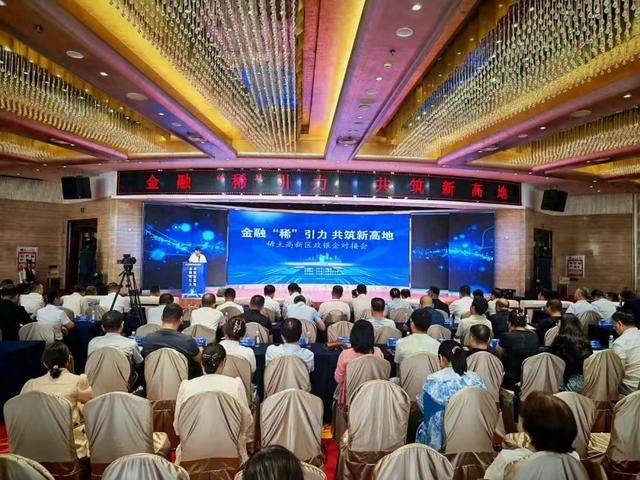
稀土高新区:政银企“联姻”同发展
Nei Meng Gu Ri Bao· 2025-08-17 10:27
Core Viewpoint - The article highlights the collaboration between government, banks, and enterprises in the Inner Mongolia Rare Earth High-tech Zone to enhance financial support for local businesses, particularly focusing on the rare earth industry and innovative financing solutions [4][5]. Group 1: Company Developments - Baotou Yingsite Rare Magnetic New Materials Co., Ltd. is a leading private enterprise in the rare earth sector, focusing on magnetic components for consumer electronics, and has become a key supplier for major brands like Huawei, Xiaomi, and Microsoft [2]. - The company aims to enhance its production lines, expand product offerings, and increase production scale, necessitating ongoing financial support [2]. - The company has already engaged with three banks that tailored financing products to meet its specific needs [2]. Group 2: Financial Initiatives - The Rare Earth High-tech Zone organized a "Government-Bank-Enterprise Connection Conference" to facilitate better communication and match financial services with the needs of over 150 enterprises and 19 financial institutions [4]. - The conference introduced over 20 innovative, unsecured credit products, including patent quick loans and order loans, aimed at transforming technology and patents into capital [4]. - A new action plan was established to create a comprehensive financial service system that includes online and offline interactions, ensuring continuous support for enterprises throughout their lifecycle [5]. Group 3: Financing Achievements - The Rare Earth High-tech Zone has successfully implemented a dual pledge model of "fixed assets + intellectual property," providing financing to 45 innovative entities, resulting in over 40 billion yuan in loans [8]. - In the first half of the year, 1.57 billion yuan was directed to enterprises, along with guidance to secure additional municipal funding [8]. - The zone aims to establish a regular "Government-Bank-Enterprise" connection mechanism, targeting 5 billion yuan in credit for enterprises and a 100% response rate to financing needs [8].
金融监管总局最新发布!释放重要信号→
Jin Rong Shi Bao· 2025-08-16 04:34
Core Viewpoint - The banking sector in China shows stable growth, optimized structure, and controllable risks as of Q2 2025, reflecting a robust performance in supporting the real economy and enhancing risk resilience [1][2]. Group 1: Banking Sector Performance - As of the end of Q2 2025, the total assets of banking financial institutions reached 467.3 trillion yuan, a year-on-year increase of 7.9% [1]. - The net profit of commercial banks for the first half of the year amounted to 1.2 trillion yuan [1]. - The non-performing loan (NPL) ratio for commercial banks was 1.49%, a decrease of 0.02 percentage points from the previous quarter [1][3]. Group 2: Loan Growth and Structure - The balance of inclusive loans to small and micro enterprises reached 36 trillion yuan, growing by 12.3% year-on-year [2]. - Inclusive agricultural loans increased by 1.1 trillion yuan since the beginning of the year, totaling 13.9 trillion yuan [2]. - Large commercial banks led the asset growth with a year-on-year increase of 10.4%, highlighting their pivotal role in the financial system [2]. Group 3: Risk Management and Asset Quality - The banking sector has seen a reduction in both the NPL balance and NPL ratio, with the NPL balance at 3.4 trillion yuan, down 24 billion yuan from the previous quarter [3][4]. - The provision coverage ratio rose to 211.97%, indicating enhanced financial buffers against risks [4]. - In the first half of the year, banks made new provisions of 1.1 trillion yuan, an increase of 579 billion yuan year-on-year, and disposed of 1.5 trillion yuan in non-performing assets, up 1.236 trillion yuan year-on-year [3]. Group 4: Operational Efficiency - The cost-to-income ratio for commercial banks improved to 30.2%, a decrease of 5.3 percentage points compared to the previous year [5]. - The net interest margin remained stable at 1.42%, with a slight decrease of 0.01 percentage points from the first quarter [5]. - The reduction in funding costs has contributed to a narrowing decline in net interest margin [5]. Group 5: Future Outlook - The banking sector must remain vigilant against potential challenges, including interest rate fluctuations that may pressure net interest margins and credit risks in certain economic recovery areas [6]. - There is a need for continued optimization of credit structures while supporting the real economy and enhancing risk management to promote a positive financial-economic cycle [6].
普惠、科技、服务消费,央行货政报告勾勒三大金融服务核心方向
Di Yi Cai Jing· 2025-08-15 12:46
Core Viewpoint - The People's Bank of China (PBOC) emphasizes a continued moderate easing monetary policy, focusing on optimizing the structure of financial resource allocation towards key sectors such as technological innovation and advanced manufacturing [1][5]. Group 1: Monetary Policy and Financial Structure - The PBOC's second-quarter monetary policy report highlights a shift in macroeconomic regulation, with a significant increase in the total social financing scale and broad money (M2) balance, surpassing 430 trillion yuan and 330 trillion yuan respectively [2][3]. - The report indicates a strategic focus on directing more financial resources towards technology innovation, advanced manufacturing, green development, and small and micro enterprises, reflecting a clear policy orientation [2][4]. - The structure of new loans has shifted significantly, with loans to technology, green, and inclusive finance now accounting for 60-70% of new loans, compared to a previous focus on real estate and infrastructure [3][4]. Group 2: Financial Services and Economic Development - The report outlines three key future directions for financial services: promoting inclusive finance, supporting technological innovation, and enhancing service consumption [4]. - The current service consumption in China is below 50% of per capita expenditure, indicating substantial growth potential, particularly in areas like elderly care and childcare services [4]. - The PBOC aims to improve the accessibility and sustainability of inclusive finance, while also increasing the volume and reducing the cost of loans for technological sectors [4]. Group 3: Policy Implementation and Coordination - The report stresses the importance of effective implementation of monetary policy measures to ensure liquidity remains ample, with a focus on continuous tracking of policy transmission and actual effects [5][6]. - There is a call for enhanced coordination among fiscal, monetary, and industrial policies to solidify and expand the positive momentum of economic recovery [6].
央行将落实落细适度宽松的货币政策 更注重金融服务实体经济质效
Xin Jing Bao· 2025-08-15 12:16
Core Viewpoint - The central bank emphasizes the implementation of a moderately loose monetary policy to support economic recovery and maintain a stable financial environment [1][5]. Group 1: Monetary Policy Implementation - The central bank's report highlights that the monetary policy has entered a phase of "moderate easing," with a focus on counter-cyclical adjustments and the use of various monetary policy tools to support high-quality economic development [2][3]. - A series of monetary policy measures have been implemented in the first half of the year, including interest rate cuts and adjustments to structural monetary policy tools, aimed at enhancing financial services for the real economy [2][3]. - As of June, the social financing scale and broad money supply (M2) grew by 8.9% and 8.3% year-on-year, respectively, indicating stable financial growth [3][4]. Group 2: Economic Environment and Challenges - The report acknowledges a complex and severe external environment, with weakening global economic growth and increasing trade barriers, while also noting the resilience and potential of the domestic economy [5][6]. - The central bank aims to maintain reasonable growth in financing and money supply, while also focusing on optimizing the structure of financial resources to support innovation and green development [6][7]. Group 3: Future Policy Directions - The central bank plans to continue implementing moderately loose monetary policies, ensuring the effective transmission of previous policies and enhancing flexibility in response to economic conditions [6][7]. - There is a strong emphasis on aligning macroeconomic policies, including fiscal and industrial policies, to create a cohesive approach to economic recovery [6][7].
股票回购贷款首单落地
Liao Ning Ri Bao· 2025-08-14 22:17
Core Viewpoint - The successful issuance of a 100 million yuan stock repurchase loan by Industrial Bank's Dalian branch to Dalian Baiao Chemical Co., Ltd. marks a significant breakthrough in supporting capital market innovation in Northeast China, aligning with national policy to enhance the synergy between the real economy and capital markets [1][3]. Group 1: Service Innovation - The stock repurchase loan was tailored to meet the specific needs of the enterprise, effectively addressing challenges related to funding arrangements and liquidity management during the repurchase process [1]. - The loan supports the optimization of the company's equity structure and stabilizes market expectations, providing robust financial backing [1]. Group 2: Safety and Flexibility - The company representative highlighted the efficiency and professionalism of Industrial Bank's Dalian branch, noting that the collaboration helped achieve the stock repurchase plan at a lower cost while demonstrating the financial institution's commitment to supporting the real economy [2]. - The bank's risk control measures, including repurchase limit management and closed-loop fund supervision, ensure a balance between safety and flexibility in financial services [2]. Group 3: Policy and Market Alignment - The promotion of stock repurchase loan tools is a crucial measure for the financial system to implement national strategies and facilitate the circulation between capital markets and the real economy [3]. - The successful launch of the stock repurchase loan reflects the proactive role of commercial banks in serving national strategies and demonstrates a deep alignment between financial policies and market demands [3]. - As more innovative tools are introduced, the capacity of capital markets to serve the real economy will continue to strengthen, contributing to the development of a regulated, transparent, open, and resilient capital market [3].
