
自主创新

Search documents
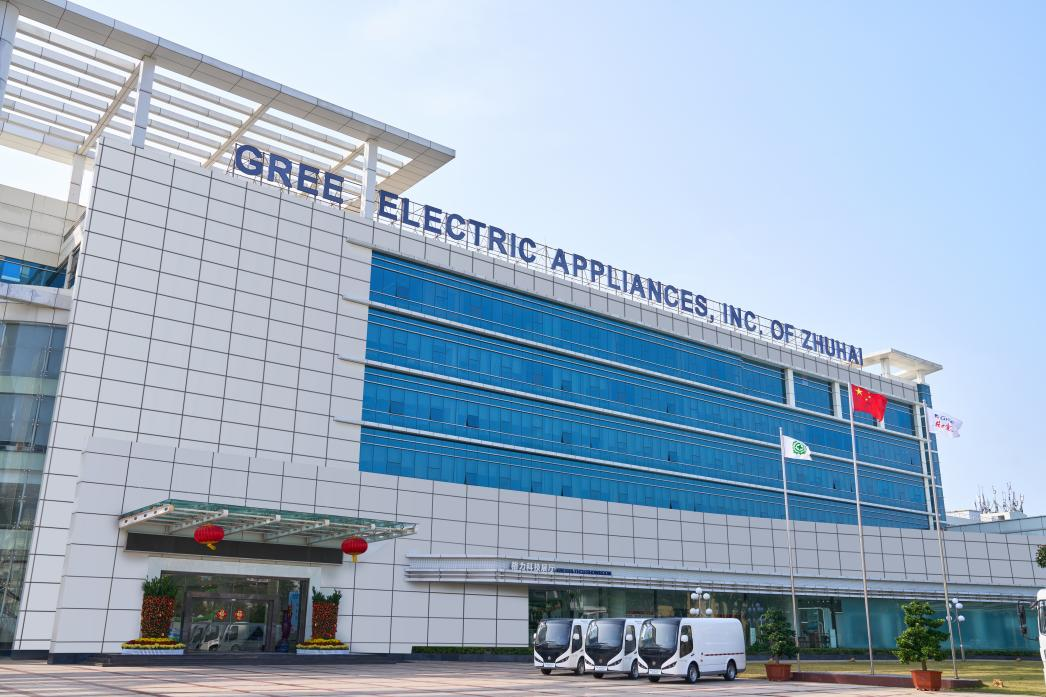
格力电器2025年三季报:单季利润率创历史同期新高 海外自主品牌占比跃升至70% 中期分红55.85亿元
Xin Lang Zheng Quan· 2025-11-03 08:14
Core Insights - Gree Electric's total revenue for the first three quarters of 2025 was 137.65 billion yuan, a year-on-year decrease of 6.62%, while net profit attributable to shareholders was 21.46 billion yuan, down 2.27% year-on-year, with a net profit margin of 15.59%, an increase of 0.69 percentage points [1][2] - The company plans to distribute a cash dividend of 10 yuan per 10 shares, totaling 5.585 billion yuan, which accounts for 26.02% of the net profit attributable to shareholders [1][13] Financial Performance - In Q3 2025, Gree achieved a net profit of 7.05 billion yuan, with a net profit margin of 17.61%, marking a historical high for the same period, up 1.01 percentage points year-on-year and 2.41 percentage points quarter-on-quarter [2] - The company has maintained a high dividend payout ratio, with cumulative dividends exceeding 177.6 billion yuan since its listing, reflecting a commitment to shareholder returns [13] Innovation and Product Development - Gree emphasizes independent innovation as a core value, with significant technological breakthroughs and product innovations in Q3 2025, including the launch of photovoltaic air conditioners and AI-enabled products [2][6] - New products such as the heat pump washing and drying machine and dual-system refrigerators showcase Gree's focus on energy efficiency, intelligence, and comfort [3] Market Position and Global Strategy - Gree's split air conditioner retail volume ranked first globally in 2024, with its self-owned brand market share rising from less than 30% in 2015 to 70% [1][9] - The company is expanding its market presence with over 1,012 stores nationwide, enhancing consumer awareness of its full range of smart home appliances [7][10] Long-term Growth Potential - Gree's commitment to core technology and user needs positions it well for long-term growth, with ongoing global expansion and a focus on high-quality development [11]


四中全会精神在基层丨陕西:锚定创新,拓出发展新空间
Xin Hua She· 2025-11-02 10:55
Group 1: Innovation and Development - Shaanxi is focusing on enhancing independent innovation capabilities to seize technological development opportunities and foster new productive forces [2] - Shaanxi Changhong Display Device Co., Ltd. has achieved a breakthrough in the production of substrate glass, a key material for display panels, through 20 years of dedicated R&D [1] - The company has fully mastered the complete set of equipment, core processes, and testing technologies for substrate glass, significantly improving efficiency and reducing costs [1] Group 2: Industry Performance - Shaanxi's automotive industry, particularly Shaanxi Automobile Group, has seen a 13.9% year-on-year increase in vehicle sales, exceeding 100,000 units in the first half of the year, with new energy vehicle sales growing over 200% [2] - The production efficiency in Shaanxi Automobile's smart factory has improved, reducing the assembly time from 6 minutes to 4.8 minutes per vehicle [2] - The Qin Chuan Machine Tool Group is a leading enterprise in China's machine tool industry, focusing on high-precision and high-efficiency product development [3] Group 3: Technological Advancements - Qin Chuan High-Precision Transmission Technology Co., Ltd. has expanded its market share in the domestic RV reducer sector through continuous technological innovation [3] - Companies in Shaanxi are actively pursuing technological upgrades in traditional sectors while also venturing into emerging fields such as drones and robotics [3] - As of 2024, 16 companies in Shaanxi have been recognized as national intelligent manufacturing demonstration factories, with 7 achieving excellence-level status [3]
四中全会精神在基层|陕西:锚定创新,拓出发展新空间
Xin Hua She· 2025-11-02 10:38
Group 1 - Shaanxi is a significant manufacturing base in western China, with a focus on enhancing independent innovation capabilities and seizing technological development opportunities [2][4] - Shaanxi Rainbow Display Device Co., Ltd. has achieved a breakthrough in the production of substrate glass, a key material for display panels, after 20 years of research and development [1] - The company has fully mastered the complete set of equipment, core processes, and testing technologies for substrate glass, contributing to the high-quality development of China's display industry [1] Group 2 - Shaanxi Automobile Group has optimized its production line, reducing the assembly time of vehicles from 6 minutes to 4.8 minutes, and has seen a 13.9% year-on-year increase in total vehicle sales, with over 200% growth in new energy vehicle sales [2] - Qin Chuan Machine Tool Group has established a subsidiary focused on high-precision and high-efficiency product development, expanding its market share in the domestic RV reducer sector [3] - The company is committed to upgrading its core competencies and enhancing its manufacturing capabilities in line with national development strategies [4] Group 3 - Several enterprises in Shaanxi are actively pursuing technological innovation and upgrading traditional industries while venturing into new fields such as drones and robotics [3] - As of 2024, 16 companies in Shaanxi have been recognized as national intelligent manufacturing demonstration factories, with 7 companies listed as national excellence-level intelligent factories [3]

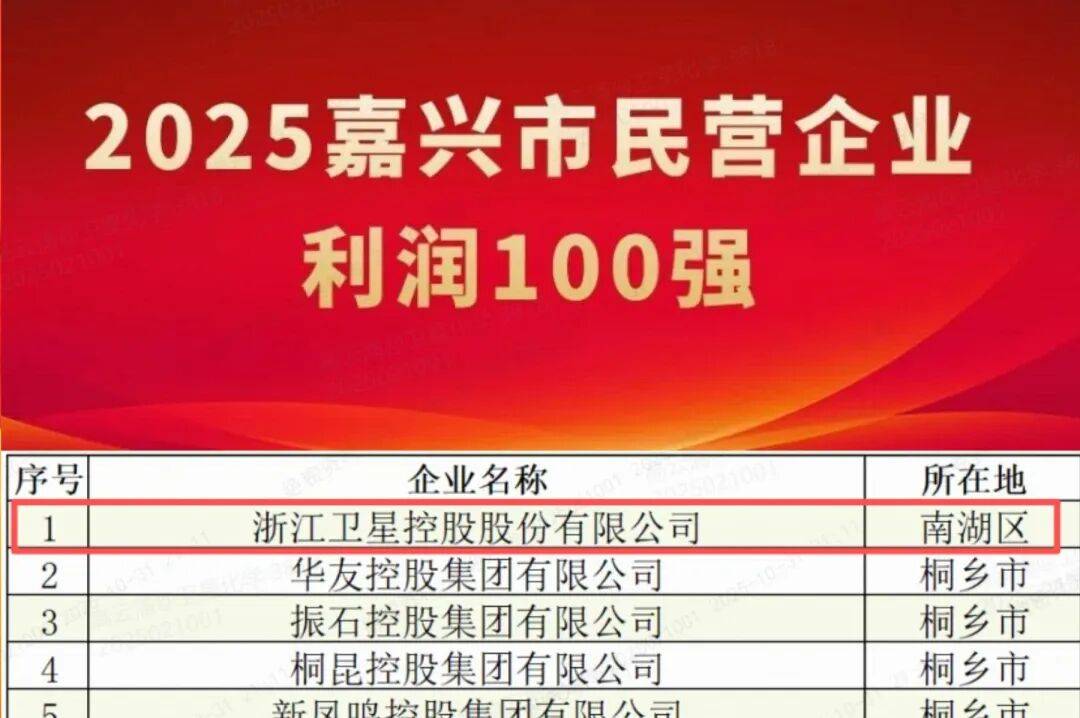
卫星集团领跑2025嘉兴市民营企业百强系列榜单!
Sou Hu Cai Jing· 2025-11-02 01:44
Core Insights - The Jiaxing Municipal Federation of Industry and Commerce released the "Top 100 Private Enterprises in Jiaxing for 2025," highlighting the Satellite Group's leading positions in multiple categories, including first in profit and tax contributions, and third in revenue [1][5]. Group 1: Company Performance - Satellite Group ranked first in both profit and tax contributions among private enterprises in Jiaxing, showcasing its strong financial performance [1][5]. - The company achieved a revenue of 456 billion yuan in 2024, reflecting a 10% year-on-year growth, and a net profit of 61 billion yuan [6]. - Satellite Group has applied for over 1,000 patents, placing it among the top industrial enterprises in Jiaxing [6]. Group 2: Industry Position - Satellite Group is recognized as a leading domestic and internationally known chemical new materials technology company, emphasizing its competitive edge in the industry [6]. - The company is part of a broader trend in Jiaxing, where innovative and technology-driven private enterprises are emerging as key players in the region's economic development [6][7]. Group 3: Research and Development - Satellite Group ranked second in R&D investment among private enterprises in Jiaxing, indicating a strong commitment to innovation [1][5]. - The company is constructing the "Satellite Future R&D Center," which marks a significant milestone in its innovation strategy [6]. Group 4: Economic Contribution - The "Top 100" lists reflect the competitive landscape and development potential of private enterprises in Jiaxing, with Satellite Group contributing significantly to the local economy [5]. - Jiaxing's private economy is characterized as its greatest asset, with companies like Satellite Group driving high-quality development [6].

抢安世只是试探?美西方的真正目标:中国10万亿美元海外资产!
Sou Hu Cai Jing· 2025-11-01 14:15
Core Viewpoint - The seizure of Nexperia, a Chinese-controlled semiconductor company, by the Netherlands is not merely a commercial dispute but part of a broader strategy by the U.S. and the West to target China's $10.2 trillion overseas assets, revealing their true ambitions [1] Group 1: Background of the Incident - Nexperia was revitalized with a $51 billion investment from Chinese capital when it was on the brink of bankruptcy, transforming it into the world's third-largest power semiconductor company [1] - The Netherlands used Cold War-era laws as a pretext to forcibly seize control, which is seen as a blatant violation of private property rights and contrary to the principles of globalization [1] Group 2: Impact on the Semiconductor Industry - The U.S. and Western countries strategically chose the Netherlands due to its control over ASML lithography machines, aiming to hinder China's semiconductor industry [3] - Nexperia's production capacity is heavily rooted in China, and any countermeasures from China could have immediate effects [3] - The European Automobile Manufacturers Association (ACEA) stated that the supply disruption of Nexperia chips has led to a critical inventory shortage for European car manufacturers, with some production lines facing shutdowns [3] Group 3: Dependency on Chinese Rare Earths - ASML's lithography machines are critically dependent on Chinese rare earths, with 92% of global heavy rare earth refining capacity located in China [5] - China holds 70% of rare earth refining patents, and the unique separation technology for key materials like neodymium and terbium is exclusively controlled by China [5] Group 4: Supply Chain Challenges - Following the upgrade of rare earth export controls in October 2025, ASML has experienced supply chain delays, with China accounting for 36% of ASML's projected revenue in 2024, making it a significant vulnerability [7] - The U.S. Department of Energy's CORE-CM initiative to promote domestic rare earth production has yet to yield results, as high-purity oxides remain unproduced [7] Group 5: Long-term Implications - China's rare earth reserves account for 36.7% of global totals, and it maintains a closed-loop control over the entire supply chain, with alternative overseas production taking 5 to 8 years to develop [9] - The aggressive actions by the Netherlands have backfired, leading to supply chain crises for ASML and pressure from European car manufacturers, impacting employment in the Netherlands [9] - The situation illustrates that those who violate global rules will face repercussions, emphasizing the importance of core energy and technology control [13] Group 6: Strategic Goals of China - China's objective extends beyond merely reclaiming Nexperia; it aims to dismantle technological hegemony and leverage rare earths as a strategic asset to counter monopolistic enterprises [11] - By focusing on independent innovation to address technological gaps, China seeks to reshape the industry landscape [11] - The narrative suggests that the era of being easily exploited is over, and the $10 trillion in overseas assets represents hard-earned wealth that cannot be easily seized [11]

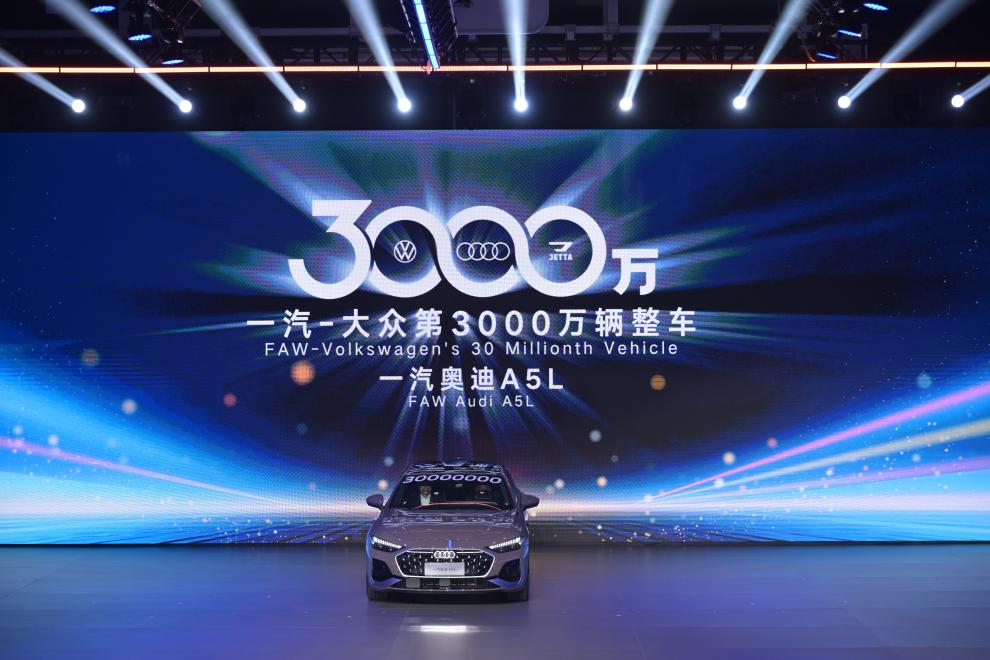
时光相册|34年,3000万辆!这本相册也是时代的缩影
Xin Hua Wang· 2025-10-30 15:42
Core Points - FAW-Volkswagen has achieved a significant milestone by producing its 30 millionth vehicle, an Audi A5L, marking it as the first passenger car manufacturer in China to surpass this production figure [3][36] - The company has evolved over 34 years, starting from the production of its first vehicle, the Jetta, in 1991, to becoming a symbol of China's automotive industry growth and international cooperation [3][27] Group 1 - The 30 millionth vehicle was unveiled in Changchun, Jilin, on October 30, 2025, highlighting the company's extensive production history [3][36] - FAW-Volkswagen's journey began with the establishment of the company in February 1991, leading to the first Jetta rolling off the assembly line in December of the same year [4][6] - The Jetta has been a significant part of many families' lives in China, representing an accessible entry into car ownership for many [6][15] Group 2 - The company has transitioned from manual assembly to automated production lines, achieving 100% automation in welding processes, which signifies advancements in precision, efficiency, and environmental standards in Chinese automotive manufacturing [18][27] - FAW-Volkswagen has created over 500,000 jobs and contributed more than 730 billion yuan in taxes, showcasing its economic impact [27] - The collaboration between German engineering and the dynamic Chinese market has led to the establishment of five major production bases across the country [27][28]
浩洋股份:新产品销售收入同比增长,研发投入持续加大
2 1 Shi Ji Jing Ji Bao Dao· 2025-10-30 09:13
Core Viewpoint - Despite a decline in revenue for the first three quarters of 2025, the company is experiencing an increase in the penetration rate of new technology products and a year-on-year growth in sales revenue from new products [1] Group 1: Company Strategy - The company will continue to adhere to independent innovation and increase R&D investment to promote the application and development of new products in the industry [1] - The company aims to further enhance its market share by optimizing product structure and service quality to address market challenges [1] - The focus on sustainable development is a key aspect of the company's future strategy [1]

艾可蓝通过基金份额间接参投两家企业
Zheng Quan Ri Bao Wang· 2025-10-30 07:40
Core Viewpoint - Anhui Aikelan Environmental Co., Ltd. has made strategic investments in semiconductor and GPU sectors through indirect participation in two technology funds, aiming to enhance its market competitiveness and profitability [1] Investment Details - The company invested 25 million yuan in Zhuhai Gejin Guangfa Xinde Phase III Technology Venture Capital Fund to indirectly invest in Muxi Integrated Circuit (Shanghai) Co., Ltd., which has potential in the semiconductor field [1] - Aikelan also invested 111 million yuan in Zhonghe Intelligent Automotive Fund to indirectly support Suzhou Denglin Technology Co., Ltd., a domestic general-purpose GPU company with fully self-developed core IP [1] Strategic Implications - The investments are expected to provide financial support for the development and business expansion of Muxi and Denglin Technology in their respective fields [1] - Long-term benefits may include increased investment returns for Aikelan if the invested companies perform well, thereby enhancing the company's profitability and market competitiveness [1] - Participation in these investments may also lead to potential business collaborations, promoting diversification of Aikelan's operations [1]

31899亿元、33446亿元、37858亿元……“数”里行间感知海洋经济新活力、新突破
Yang Shi Wang· 2025-10-30 05:02
Core Insights - The "China Marine Economy Development Report 2025" indicates that the national marine production value is expected to reach 10.5 trillion yuan in 2024, reflecting a continuous expansion of the marine economy [1][3] Marine Economic Growth - In 2024, the three major marine economic zones (Northern, Eastern, and Southern) are projected to have marine production values of 31,899 billion yuan, 33,446 billion yuan, and 37,858 billion yuan respectively, representing nominal growth of 33.1%, 37.7%, and 33.3% compared to 2020 [5] Marine Equipment and Technology - The 2025 China Marine Economy Expo, held from October 28 to 30 in Shenzhen, attracted over 300 leading industry and technology companies showcasing the latest marine equipment and technologies [5] - A newly designed underwater robot for marine engineering detection can counteract sudden ocean currents, demonstrating advanced capabilities with a weight of only 20 kilograms [7] - The "Jiaolong" manned submersible's mechanical arm features force feedback, showcasing improvements in domestic innovation and performance compared to imported equipment [11] Deep Sea Exploration Achievements - Since the 14th Five-Year Plan, China has made historic breakthroughs in deep-sea resource exploration, supported by modern oceanographic research vessels [14][16] - China has established a comprehensive deep-sea detection equipment system, with manned submersibles like "Jiaolong" and "Fendouzhe" leading in global capabilities [17] Communication and Resource Management - China has successfully developed core technologies for high-reliability submarine cable systems, creating a self-controlled "submarine information artery" that supports national information security and the Belt and Road Initiative [18] - The country has built the world's largest deep-sea microbial resource bank, discovering new species that contribute to breakthroughs in biomedicine and green agriculture [20] Environmental Protection and International Cooperation - China emphasizes balancing deep-sea resource development with environmental protection, advocating for international cooperation in marine environmental conservation [22] - The advancements in artificial intelligence are expected to provide new applications for deep-sea scientific exploration, resource development, and protection, supporting the leap in deep-sea technology industries [24]
自主创新与国际化双轮驱动可孚医疗第三季度扣非净利润增长62.68%
Xin Lang Cai Jing· 2025-10-29 21:11
Core Insights - The company reported a revenue of 902 million yuan for Q3 2025, representing a year-on-year growth of 30.72% [1] - The net profit attributable to shareholders reached 92.83 million yuan, with a year-on-year increase of 38.68% [1] Company Overview - The company has been a leading player in the home medical device industry for nearly two decades, establishing a comprehensive industrial chain in R&D, production, sales, and services [1] - Since its listing on the ChiNext board in 2021, the company has accelerated its transformation from a channel-driven model to a R&D-driven approach [1] R&D and Innovation - As of June 30, 2025, the company holds a total of 676 patents, which is four times the number at the time of its IPO [1] - The company has established three research institutes and has a R&D team of nearly 400 people, leading to a significant increase in innovative outcomes [1] Manufacturing Capabilities - The company's production bases in Changsha and Xiangyin have been fully constructed and operational, creating a modern intelligent manufacturing system covering multiple product categories [1] - Automation and digital upgrades have significantly improved production efficiency and product consistency [1] International Expansion - The company's overseas business revenue grew by over 200% year-on-year in the first half of 2025, with products now available in over 60 countries and regions globally [1] - Recent acquisitions of Shanghai Huazhou and Hong Kong Ximan have further expanded the company's market presence [1] Strategic Transformation - The company has successfully transitioned from a traditional agency model to a comprehensive medical device enterprise that integrates R&D innovation, intelligent manufacturing, and omnichannel marketing [1] - Future growth is expected to be driven by the continued expansion of core product categories, deepening of proprietary brands, and internationalization strategies [1]