
新型工业化

Search documents
跟着摩根、巴克莱抄作业!机器人唯一低估大龙头被锁定,还是军工隐形王炸
Xin Lang Cai Jing· 2025-12-26 05:16
Group 1 - The article discusses a company whose shareholder list includes top international investment banks, indicating potential credibility and interest in its business related to robotics and military applications [5][6][26] - The company reported a significant revenue increase of 46.87% year-on-year for Q3 2025, reaching 98.42 million yuan, surpassing the total revenue of the previous year [7][28] - The gross profit margin improved to 21.91%, reflecting enhanced product competitiveness and effective cost control [9][30] Group 2 - The company has a negative bad debt provision of -5.0465 million yuan, indicating strong asset quality and effective management of receivables [11][32] - The inventory balance increased by 5.93% to 1.082 billion yuan, suggesting robust order fulfillment and production readiness [13][34] - The company primarily focuses on intelligent equipment systems based on robotics and IoT technologies, with applications in automotive and agricultural sectors [14][35] Group 3 - The company claims to have a minor presence in military equipment, which does not currently contribute significantly to its revenue [17][37] - New customer orders amounted to 788 million yuan, showing a slight decline of 0.29% year-on-year, which may raise concerns about future growth [16][39] - Overall, the company is portrayed as a solid manufacturer in the robotics sector, with a focus on operational quality and growth potential [41][43]


中力股份跌2.05%,成交额7294.44万元,主力资金净流入178.99万元
Xin Lang Cai Jing· 2025-12-26 03:36
Group 1 - The core viewpoint of the news is that Zhongli Co., Ltd. has experienced fluctuations in its stock price and trading activity, with a current market value of 15.146 billion yuan and a year-to-date stock price increase of 8.19% [1] - As of December 26, Zhongli's stock price was 37.77 yuan per share, with a trading volume of 72.944 million yuan and a turnover rate of 1.21% [1] - The company has seen a net inflow of main funds amounting to 1.7899 million yuan, with large orders accounting for 14.32% of total purchases [1] Group 2 - For the period from January to September 2025, Zhongli Co., Ltd. achieved an operating income of 5.243 billion yuan, representing a year-on-year growth of 8.62%, and a net profit attributable to shareholders of 685 million yuan, up 5.46% year-on-year [2] - As of September 30, the number of shareholders of Zhongli Co., Ltd. was 18,200, a decrease of 9.15% from the previous period, while the average circulating shares per person increased by 10.07% to 2,834 shares [2] Group 3 - Since its A-share listing, Zhongli Co., Ltd. has distributed a total of 353 million yuan in dividends [3] - As of September 30, 2025, the top ten circulating shareholders included Southern CSI 1000 ETF, which held 479,500 shares, a decrease of 7,600 shares from the previous period, and Guangfa Jixuan Bond A, which entered the top ten with 380,000 shares [3]
重点突破着力打造“七个中心”
Zheng Zhou Ri Bao· 2025-12-26 00:47
Core Viewpoint - The article emphasizes the strategic importance of developing seven key centers in Zhengzhou to drive modernization and economic growth, aligning with national policies and local development goals [1][2][3][4][5] Group 1: Education, Technology, and Talent - Education, technology, and talent are identified as foundational elements for China's modernization, with a focus on integrating these areas to create a virtuous cycle [2] - Zhengzhou aims to enhance its status as a national pilot city for industry-education integration and improve the quality of higher education resources [2] Group 2: New Industrialization - The article highlights the need to understand new characteristics and trends in industrialization to build a strong material and technical foundation for modernization [2] - Zhengzhou plans to lead high-quality development in manufacturing through strategic emerging industries and aims to establish a modern industrial system centered on advanced manufacturing [2] Group 3: Financial Development - Financial services are crucial for supporting high-quality economic and social development, with Zhengzhou focusing on building a comprehensive financial center [3] - The city aims to enhance its financial infrastructure and foster collaboration with major global futures exchanges [3] Group 4: International Trade and Consumption - Zhengzhou is set to strengthen its role as an international trade hub by improving its transportation network and facilitating cross-border e-commerce [3] - The city plans to develop distinctive commercial areas and cultural centers to enhance its status as an international consumption center [4] Group 5: Cultural Heritage and Tourism - The integration of culture and tourism is emphasized as a means to develop a high-quality cultural industry, with Zhengzhou focusing on promoting its historical and cultural assets [4] - The city aims to establish itself as a center for the inheritance of Chinese civilization, enhancing its cultural tourism offerings [4] Group 6: Governance and Development - Effective governance is highlighted as essential for achieving high-quality development, with Zhengzhou implementing a grid-based governance model supported by data [5] - The city aims to modernize social governance and economic development through innovative practices and community engagement [5] Group 7: Overall Strategy - The construction of the seven centers is framed as a strategic initiative to leverage Zhengzhou's comparative advantages and drive development [1][5] - The article calls for focused efforts and clear objectives to ensure the successful implementation of the "1+7+7+7" work deployment [5]
“向实求新”巩固大国复兴之本
Sou Hu Cai Jing· 2025-12-25 21:02
Core Viewpoint - The emphasis on the real economy as the foundation of national wealth and value creation is reiterated, highlighting the need for technological innovation and industrial integration to ensure resilience in the face of challenges [2][3][5] Group 1: Importance of the Real Economy - The real economy is identified as the cornerstone of a nation's economic strength, providing tangible benefits to society and individuals [2][4] - Historical context shows that China's economic rise was built on a solid real economy and technological advancements, contrasting with the decline of developed nations that neglected their industrial bases [3][4] - The current global environment, characterized by geopolitical tensions and economic decoupling, necessitates a strong real economy to safeguard supply chain stability [4][5] Group 2: Technological Innovation and Industrial Upgrading - There is a call for strengthening core technological capabilities and promoting deep integration of technological and industrial innovation to enhance competitiveness [3][5] - The manufacturing sector is highlighted for its multiplier effect, where each manufacturing job can create additional jobs in the supply chain and other sectors, emphasizing the need for technological breakthroughs to enhance value [4] - The transition from a focus on quantity to quality in production is essential, requiring innovation to meet new demands and create new supply [4][5] Group 3: Challenges and Strategic Focus - Despite the growth of the real economy, issues such as "large but not strong" industries persist, indicating a need for improved innovation capabilities [5] - The strategy involves a continuous, stepwise approach to enhancing the real economy, requiring sustained effort and commitment from all levels of governance [5] - The current period is described as one of political stability and economic prosperity, providing a conducive environment for innovation and resilience in the real economy [5]
策划:泰安市委宣传部 泰安市新型工业化强市建设推进委员会办公室执行:齐鲁晚报·齐鲁壹点泰安融媒中心
Qi Lu Wan Bao· 2025-12-25 16:23
Core Insights - The article discusses the strategic implementation of a new industrialization initiative in Tai'an, focusing on enhancing industrial strength and innovation to address existing development bottlenecks [2][9]. Group 1: Industrial Strategy and Framework - Tai'an's new industrialization strategy is built on a "1+N" framework, which aims to create a robust organizational structure for industrial development, involving key leaders and specialized teams [2]. - The city has established a comprehensive planning system targeting four pillar industries: high-end equipment manufacturing, new materials, modern food, and high-end chemicals, along with several advantageous industries [3][4]. Group 2: Policy Support and Economic Impact - Tai'an has developed over 330 core policies to support industrial growth, including financial incentives and streamlined processes for businesses, resulting in significant tax refunds and funding for enterprises [4][12]. - The industrial value-added tax refunds reached 4.03 billion yuan, and the "Strong Industry Loan" program provided 69.527 billion yuan to 9,509 enterprises, fostering a substantial increase in the number of industrial enterprises [4][12]. Group 3: Pillar Industries Development - The four pillar industries have shown significant growth, with Tai'an's high-end equipment and new materials sectors achieving national competitiveness, including a 60% market share in certain steel products [3][5]. - The modern food industry has expanded from 119 to 204 regulated enterprises, with notable companies achieving over 1 billion yuan in revenue [7]. Group 4: Technological and Green Transformation - Tai'an is focusing on technological innovation and green transformation, with a reported 95.1% coverage of digital transformation among regulated industrial enterprises [10][11]. - The city has implemented numerous projects aimed at reducing energy consumption and increasing renewable energy capacity, with a 19.8% annual growth in installed renewable energy [10]. Group 5: Future Outlook and Goals - The city aims to further enhance its industrialization efforts during the "15th Five-Year Plan" period, focusing on smart, green, and integrated development to build a modern industrial system [14][15]. - Tai'an's industrial value added is projected to increase its share of GDP from 24.6% to 27.4% by 2024, indicating a strong commitment to industrial growth [14].
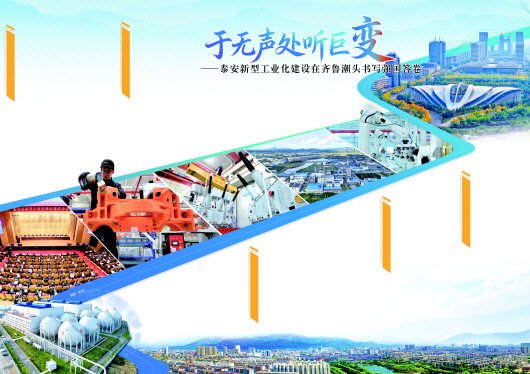
【甘快看】学习贯彻省委十四届九次全会精神|一步一个脚印把发展蓝图变为美好现实——省委十四届九次全会在全省引发热烈反响
Xin Lang Cai Jing· 2025-12-25 15:18
新甘肃·甘肃日报记者 12月22日,中国共产党甘肃省第十四届委员会第九次全体会议在兰州召开。会议总结2025年工作,部 署"十五五"时期全省发展重点任务。在全省党员和干部群众中引发热烈反响。 大家纷纷表示,要深入学习贯彻党的二十届四中全会精神,全面贯彻落实习近平总书记视察甘肃重要讲 话重要指示精神,认真学习贯彻省委十四届九次全会精神,保持定力、坚定信心,把行之有效的发展战 略延续好、深化好,把多重叠加的发展机遇把握好、利用好,把行业领域的发展潜能挖掘好、发挥好, 把向上向好的发展态势巩固好、拓展好,一步一个脚印把发展蓝图变为美好现实。 "我们将坚决落实全会精神,锚定打造全省新型工业化示范区目标,深入实施强工业行动,加速构 建'2+4+N'现代化产业体系。"金昌市发展改革委党组成员、副主任孟祥中表示,要聚力推动传统产业改 旧育新,推进有色金属新材料产业创新升级,发展高温合金、"三稀"金属、钛材深加工及钛合金材料等 产业,加快打造全国重要的镍铜钴战略性资源供应保障基地和全国区域性现代制造业基地。同时,聚力 推动新兴产业培优塑新,超前谋划未来产业,深入实施新技术、新产品、新场景大规模应用示范行动, 突出抓好高端材料 ...
生产性服务业发展报告
中国信通院· 2025-12-25 11:24
Investment Rating - The report does not explicitly provide an investment rating for the industry Core Insights - The development of the productive service industry is a strategic choice for high-quality growth, emphasizing the integration of modern services with advanced manufacturing [6][10] - The productive service industry has shown significant growth, with its value-added increasing from 19.8 trillion RMB in 2016 to 41.1 trillion RMB in 2024, representing a compound annual growth rate of 9.5% [6][43] - The report highlights five key characteristics of high-quality development in the productive service industry: integration, digital transformation, high-end upgrading, green transformation, and globalization [18][29][30] Summary by Sections Section 1: Importance of High-Quality Development - The productive service industry is defined as a specialized sector providing services to various industries, including manufacturing, agriculture, and construction [15][16] - The report identifies five transformative characteristics of the productive service industry: integration of services and manufacturing, digital transformation, high-end service development, green initiatives, and globalization [18][29][30] Section 2: Progress in the Productive Service Industry - The productive service industry has experienced a steady increase in scale, with its value-added growing significantly from 2016 to 2024 [43] - Key sectors such as information technology and technology services have seen substantial growth, with their value-added increasing by 14.2% and 17.7% respectively [43][44] - The number of operational entities in the productive service industry has reached approximately 38 million, with significant growth in sectors like human resource management and information services [46] Section 3: New Requirements and Challenges - The productive service industry faces challenges such as insufficient professional service capabilities and a need for strategic guidance to align with manufacturing upgrades [7][36] - The report emphasizes the necessity for a modern productive service system that meets the high-quality development requirements of the manufacturing sector [7] Section 4: Strategies for Promoting High-Quality Development - Recommendations include strengthening policy coordination, fostering internationally competitive enterprises, focusing on high-quality services in industrial sectors, and creating a conducive environment for the productive service industry [36][38][39]
业内人士共议AI与数智融合:重塑制造范式 赋能新型工业化
Zhong Guo Jing Ji Wang· 2025-12-25 09:42
Group 1 - Intelligent manufacturing is a key system project related to national industrial competitiveness and strategic security, requiring deep innovation practices and systematic planning [1] - The five key dimensions for advancing intelligent manufacturing include core technology breakthroughs, deepening supply-demand collaboration, adhering to green principles, stimulating entity vitality, and strengthening the system ecosystem [1] - Guangxi is integrating intelligent transformation into national strategic layouts, focusing on manufacturing as the foundation of the real economy and leveraging its unique geographical advantages and industrial base [3] Group 2 - Liuzhou, as a major industrial city, is committed to high-quality development through the promotion of intelligent transformation, with SAIC-GM Wuling as a benchmark enterprise leading the way [4] - The "Smart Island Manufacturing System" developed by SAIC-GM Wuling aims to enhance quality consistency and product diversity by restructuring traditional assembly lines into dynamic manufacturing islands [5] - The integration of AI and digital twin technologies is expected to evolve the Smart Island System, enhancing its capabilities and establishing a "mother factory" with output capabilities [6] Group 3 - The development of standards is crucial for empowering the intelligent transformation of manufacturing, with a focus on building a comprehensive ecosystem that includes standard system construction and enterprise capability enhancement [7] - Experts agree that intelligent manufacturing is a critical focus for promoting new industrialization, with the transition from "Made in China" to "Intelligent Manufacturing in China" being essential for global competitiveness [7][8] - The transformation journey of SAIC-GM Wuling serves as a vivid example of the systematic observation of China's manufacturing upgrade, emphasizing the importance of strategic planning, technological implementation, and ecosystem construction [8]
科瑞思涨2.11%,成交额1758.21万元,主力资金净流入89.68万元
Xin Lang Cai Jing· 2025-12-25 05:37
Group 1 - The core viewpoint of the news is that Korys has shown a mixed performance in its stock price and financial results, with a notable increase in stock price year-to-date but a decline in net profit [1][2]. - As of December 25, Korys' stock price increased by 2.11% to 42.65 CNY per share, with a total market capitalization of 2.356 billion CNY [1]. - The company has experienced a year-to-date stock price increase of 21.68%, but a decline of 4.42% over the past 20 days [1]. Group 2 - For the period from January to September 2025, Korys reported a revenue of 128 million CNY, reflecting a year-on-year growth of 2.88%, while the net profit attributable to shareholders decreased by 22.19% to 10.4288 million CNY [2]. - Korys has distributed a total of 90.44 million CNY in dividends since its A-share listing [3]. - As of September 30, 2025, Korys had 6,894 shareholders, a decrease of 4.21% from the previous period, with an average of 2,357 circulating shares per shareholder, an increase of 4.40% [2].

前11个月海南高技术制造业增加值增长33.2%
Sou Hu Cai Jing· 2025-12-25 00:39
Group 1 - The core viewpoint of the article highlights the positive industrial growth in Hainan, driven by the advantages of the free trade port policy and targeted measures, with a cumulative year-on-year increase of 10.4% in industrial added value from January to November [1] - High-tech manufacturing has seen significant growth, with a year-on-year increase of 33.2% in added value, contributing 3.6 percentage points to the overall industrial growth [1] - Among the 36 major industries in Hainan, 12 achieved double-digit growth, with key contributors including the petroleum and natural gas extraction industry, which grew by 49.7%, and the computer, communication, and other electronic equipment manufacturing industry, which saw a staggering 42-fold increase [1] Group 2 - In terms of regional performance, the fastest-growing areas include Lingao County with a growth of 47.3%, Ding'an County at 27.3%, and Qionghai City at 24.5% [2] - By economic type, state-owned enterprises experienced a 23% increase in added value, outperforming the average growth rate of the province's industrial enterprises by 12.6 percentage points [2] - Among the 19 major industrial products monitored, 11 saw production increases, with notable growth in fiber optic production at 105.5%, automobile production at 79.9%, and finished sugar production at 23.8% [2]