生态文明建设

Search documents
邵阳以绿为笔书写“十四五”生态华章
Zhong Guo Huan Jing Bao· 2025-12-01 02:15
Core Viewpoint - Since the "14th Five-Year Plan," Shaoyang City in Hunan Province has focused on improving ecological environment quality, achieving significant progress in green low-carbon development and pollution prevention, with 10 out of 29 planning indicators completed ahead of schedule and 19 expected to meet targets by the end of 2025 [3][14]. Green Low-Carbon Development - Shaoyang has set a "dual carbon" goal, increasing the proportion of non-fossil energy in primary energy consumption from 21% in 2020 to 26% by 2025 [4][16]. - The city plans to recommend 24 enterprises for provincial-level green factory certification and over 10 enterprises for voluntary clean production audits by 2025 [4][16]. - The New Shao Que Tang Circular Economy Industrial Park has been approved as a national-level circular economy standardization pilot, enhancing resource utilization rates by 15 percentage points [4][16]. - A total of 46 high-energy-consuming enterprises have been eliminated, and 126 sets of air pollution control facilities have been upgraded, achieving a 2.2% reduction in energy consumption per unit of GDP ahead of provincial targets [4][16]. Water Quality Improvement - During the "14th Five-Year Plan," 52 national and provincial monitoring points in Shaoyang maintained water quality at Class II or above [5][17]. - In 2022, the city ranked 24th nationally for surface water quality assessment, achieving a historical best [5][17]. - Investments of 32.969 billion yuan have led to the construction of 107 sewage treatment plants, increasing daily sewage treatment capacity by 12.523 million tons and improving urban sewage collection rates to 64.7% [5][17]. Air Quality Enhancement - In 2022, Shaoyang's urban air quality reached national secondary standards for the first time, eliminating moderate and severe pollution days [6][18]. - By 2024, the average PM2.5 concentration in urban areas is expected to drop to 36.5 micrograms per cubic meter, with all nine counties meeting air quality standards [6][18]. - The city has implemented a smart control system for open burning and completed upgrades for two cement plants and 120 VOCs-related enterprises, achieving significant reductions in nitrogen oxides and volatile organic compounds emissions [6][18]. Soil Quality Protection - The safe utilization rate of contaminated arable land has increased from 90% in 2020 to 94.66% in 2024, with key construction land utilization rates maintained at 100% [7][18]. - The city has completed comprehensive environmental remediation in 275 villages and prioritized pollution control in 84 key sites, with rural sewage treatment rates expected to exceed 40% by the end of 2025 [7][18]. Ecological Restoration Efforts - Shaoyang has invested 1.3 billion yuan to address historical mining pollution issues, successfully closing 10 coal mines and treating 3,000 tons of mining wastewater daily [8][19]. - Since 2017, 81.43% of 237 prominent ecological environment issues assigned by central and provincial authorities have been rectified [8][19]. - The city has completed ecological restoration of 993.61 hectares of historical mining sites, promoting economic activities such as oil tea and traditional Chinese medicine cultivation [8][19]. Public Participation and Future Plans - Shaoyang has achieved national and provincial-level ecological civilization demonstration zone designations, fostering a strong public participation atmosphere in environmental protection [21]. - The city aims to address remaining challenges in pollution control and continue promoting green low-carbon transformation as it plans for the "15th Five-Year Plan" [21].

人、河、城的协奏曲(现场评论)
Ren Min Ri Bao· 2025-11-30 22:01
Core Insights - The reconstruction of the relationship between people and rivers reflects an increased awareness of ecological civilization and an upgraded governance concept [1][2][4] - The integration of leisure, commerce, and culture along riverbanks enhances the quality of urban life and promotes a harmonious coexistence between people and rivers [3][4] Group 1: Ecological and Urban Development - The transformation of urban rivers is a response to historical pollution and neglect, leading to a revitalization that enhances the relationship between people and their environment [1][2] - The shift from large-scale urban expansion to improving existing urban spaces emphasizes the importance of water ecology, water life, and water economy [3][4] Group 2: Community Engagement and Governance - The implementation of user-friendly infrastructure, such as new rotating doors for accessibility, demonstrates a commitment to addressing community needs and enhancing public spaces [4] - Collaborative governance involving multiple departments and stakeholders is essential for effective urban river management and sustainable development [3][4]
广东生态工程职业学院2025年“森林音乐会”奏响生态育人新乐章
Nan Fang Nong Cun Bao· 2025-11-28 15:00
Core Viewpoint - The "Forest Concert" held by Guangdong Ecological Engineering Vocational College showcases the integration of ecological education and cultural activities, emphasizing the importance of ecological civilization in the context of the "Green Beautiful Guangdong" initiative [2][21]. Group 1: Event Overview - The third "Forest Concert" took place on November 27, 2023, with the theme "Green Beautiful Guangdong, Youth Resonance" [3][4]. - The event featured collaboration with other institutions, including Guangdong Transportation Vocational Technical College and Guangdong Arts Vocational College, highlighting innovative practices in promoting ecological civilization and campus culture [5][12]. Group 2: Educational and Cultural Integration - The concert incorporated the "Ecology+" concept throughout, utilizing the campus's natural forest landscape to create an immersive artistic space [8][15]. - Performances focused on themes of ecological civilization, showcasing original programs that reflect the schools' commitment to ecological education and sustainable development [9][10][11]. Group 3: Community Engagement and Awareness - The event included interactive booths to promote ecological knowledge through engaging activities, enhancing environmental awareness among students and faculty [17][18]. - The concert served as a platform to instill a sense of responsibility and mission for building a beautiful China among participants [19]. Group 4: Future Directions - The success of the concert aligns with the goals of the 20th National Congress and the 14th Five-Year Plan, representing a significant step in comprehensive educational reform [21][22]. - The college plans to deepen the "Ecology+" cultural brand and continue innovating campus cultural activities, aiming to cultivate high-quality technical talents for ecological development [30][31][32].

沙窝子成了“幸福窝”
Ren Min Ri Bao· 2025-11-27 22:30
Core Points - The article highlights the transformation of ecological and cultural practices in Uxin Banner, Inner Mongolia, emphasizing the importance of ecological civilization and its impact on local livelihoods [1][3]. Group 1: Ecological Transformation - Uxin Banner has achieved a forest coverage rate of 32.92% and a vegetation coverage rate of 80%, indicating significant ecological improvement [2]. - Local farmers have shifted from traditional practices to sustainable ones, such as planting sea buckthorn on 500 acres, generating an annual income of over 300,000 yuan while protecting the environment [1]. Group 2: Cultural and Economic Development - The community has adopted simplified customs for weddings and funerals, promoting economic savings that are reinvested into local production, with some individuals reporting annual incomes exceeding 100,000 yuan [3]. - The introduction of a "civilization points" system encourages community participation in environmental and social initiatives, allowing residents to exchange points for daily necessities, thereby fostering a harmonious community [3]. - Uxin Banner's tourism revenue exceeded 15.8 billion yuan during the 14th Five-Year Plan period, with local hospitality businesses providing employment for over 2,300 people [3].
扎根、奉献、远行,一颗“全能豆”的新征程
Zhong Guo Shi Pin Wang· 2025-11-27 13:38
Core Insights - The oil safflower bean industry in Xinjiang has experienced significant growth, transforming from a struggling agricultural sector to a thriving market with strong consumer demand in the Greater Bay Area [3][20] - The "Xinjiang products southbound, Guangdong products northbound" initiative has facilitated direct sales channels for oil safflower beans, enhancing employment and promoting cultural exchange among various ethnic groups [3][20] Industry Development - The introduction of oil safflower beans, a drought-resistant and salt-tolerant crop, has led to a remarkable increase in agricultural productivity in the region, with yields rising from 200 kg per mu to 530 kg, and the planting area expanding from 20,000 mu to 50,000 mu [6][8] - The ecological benefits of oil safflower bean cultivation include a reduction in strong wind days from 27 to 9 annually and an increase in soil organic matter content to 1.4 g/kg [8] Economic Impact - The establishment of a modern agricultural industrial park for oil safflower beans has attracted investments of 40 million yuan, generating an estimated annual output value of 150 million yuan and creating over 200 new jobs [11] - The number of market entities in the region has surged from 4 to 411, with total production value increasing from 10.93 million yuan to 289 million yuan, representing a growth of over 26 times [17] Market Expansion - Oil safflower bean products have gained popularity in the Greater Bay Area, with significant sales growth, including over 10 million yuan in annual sales for products developed by Xinjiang Sanli Technology Group [12][18] - The brand-building efforts have resulted in the registration of 13 trademarks and participation in various national exhibitions, enhancing the market influence of oil safflower bean products [14][15] Cultural Exchange - The collaboration between Xinjiang and Guangdong has fostered deeper cultural ties, with consumers expressing interest in the unique agricultural practices of Xinjiang after tasting oil safflower bean products [22] - The initiative has not only improved economic conditions but also strengthened the sense of community among different ethnic groups through shared agricultural and cultural experiences [20][22]
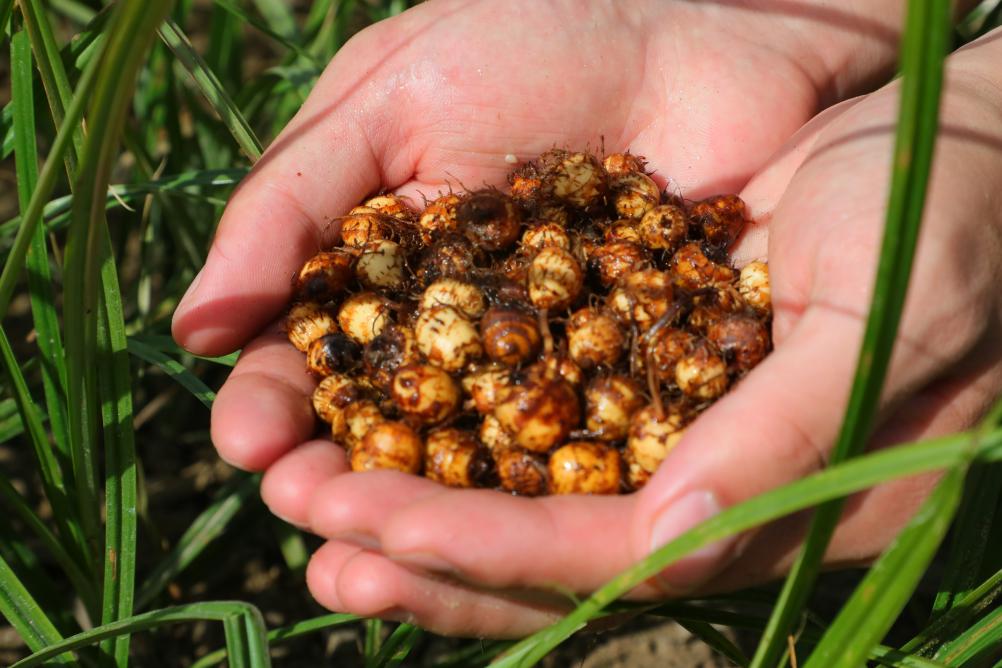
郑州和成都开展植物交换 引进了74个新品种
Zhong Guo Xin Wen Wang· 2025-11-26 03:31
Core Points - Zhengzhou and Chengdu have successfully exchanged 74 new plant varieties, enhancing the genetic resources in the Central Plains region [1][2] - The exchange includes rare protected plants such as the national first-class protected species, the Davidia involucrata, and the southern yew [2][3] - Zhengzhou Botanical Garden aims to strengthen domestic botanical garden cooperation and resource sharing for ecological civilization [3] Group 1 - Zhengzhou Botanical Garden has introduced 74 plant varieties, including 30 seedlings and 44 seeds, from Chengdu Botanical Garden [2] - The exchange features rare species like the national first-class protected Davidia involucrata and southern yew, as well as second-class protected plants [2][3] - Zhengzhou Botanical Garden provided 42 plant seedlings to Chengdu, facilitating a two-way flow of plant resources [2] Group 2 - The exchange enriches the living plant collection at Zhengzhou Botanical Garden, laying a solid foundation for species conservation and scientific research [3] - Future plans include the acclimatization and conservation management of the introduced plants to ensure their healthy growth [3] - The initiative supports the presentation of diverse plant landscapes to the public and contributes to ecological civilization efforts [3]
当好自然资源“大管家”和美丽中国“守护者”(权威访谈·学习贯彻党的二十届四中全会精神)
Ren Min Ri Bao· 2025-11-25 22:42
Core Viewpoint - The construction of a beautiful China is a crucial goal for the comprehensive modernization of the socialist nation, emphasizing the harmonious coexistence of humans and nature [1] Group 1: Natural Resource Management - The natural resources are the material basis, spatial carrier, and energy source for high-quality development, as highlighted in the 20th Central Committee's Fourth Plenary Session [1] - The Ministry of Natural Resources will optimize the national spatial development pattern by balancing population, resources, and environment, and enhancing the implementation of the main functional area strategy [2][3] - The Ministry aims to maintain the stability of urbanization areas, major agricultural production areas, and key ecological function areas while optimizing the functional positioning of certain regions [2] Group 2: Land and Space Planning - The Ministry will improve the land spatial planning system and conduct dynamic assessments to optimize land use, integrating various special planning projects into a unified management framework [3] - Strict adherence to the protection of arable land, permanent basic farmland, ecological protection red lines, and urban development boundaries is emphasized [3] Group 3: Resource Allocation and Economic Development - The Ministry will enhance the quality and efficiency of natural resource allocation, focusing on solving local economic development issues and promoting the redevelopment of low-efficiency land [4] - The development of the marine economy and the protection of marine ecological environments are prioritized, with plans to strengthen top-level design and encourage social capital participation [5][6] Group 4: Security and Risk Management - The Ministry will focus on ensuring the safety of natural resources, including food and energy security, by implementing strict land protection measures and enhancing strategic mineral resource exploration [7] - A comprehensive approach to disaster monitoring and prevention is being established to safeguard public safety [8] Group 5: Ecological Protection and Restoration - The Ministry is committed to enhancing ecological system diversity and stability, with a focus on establishing a natural protection area system centered on national parks [9][10] - Efforts will be made to promote large-scale land greening actions and improve the quality of forests and grasslands [10]
学习贯彻四中全会精神在基层|青海:打造青藏高原生态文明高地 内蒙古:以更高标准守护好祖国北疆绿水青山
Yang Shi Xin Wen Ke Hu Duan· 2025-11-25 04:13
Group 1 - The core viewpoint of the article emphasizes the importance of accelerating the comprehensive green transformation of economic and social development to build a beautiful China, as highlighted in the 20th Central Committee's Fourth Plenary Session [2] Group 2 - Qinghai has completed a total of 26.3356 million acres of land greening since the 14th Five-Year Plan, including 10.1903 million acres of afforestation and 16.1453 million acres of grassland restoration, achieving a comprehensive vegetation coverage of over 60% [3] - Qinghai aims to enhance the effectiveness of the Sanjiangyuan National Park construction and solidly promote the natural protected area system centered on national parks to create an ecological civilization highland on the Qinghai-Tibet Plateau [3] Group 3 - Inner Mongolia has completed afforestation of 27.85 million acres, grass planting of over 10 million acres, and desertification control of 6.688 million acres during the 14th Five-Year Plan, with the forest coverage rate increasing to 21.98% [4] - Inner Mongolia plans to continue efforts in desertification control, management, and utilization to strengthen the ecological safety barrier in northern China [4]
【学习贯彻四中全会精神在基层】青海:打造青藏高原生态文明高地 内蒙古:以更高标准守护好祖国北疆绿水青山
Yang Shi Wang· 2025-11-24 12:07
Group 1 - The core message emphasizes the acceleration of comprehensive green transformation in economic and social development, aiming to build a beautiful China, as highlighted by the 20th Central Committee's Fourth Plenary Session [1] Group 2 - Qinghai is actively conducting land change surveys and monitoring of forests, grasslands, wetlands, and deserts, utilizing remote sensing and field investigations to update data on vegetation coverage and land greening [2] - Since the 14th Five-Year Plan, Qinghai has completed a total of 26.34 million acres of land greening, including 10.19 million acres of afforestation and 16.15 million acres of grassland restoration, achieving over 60% comprehensive vegetation coverage [2] - Qinghai aims to enhance the effectiveness of the Sanjiangyuan National Park construction and advance the natural protection system centered around national parks to establish an ecological civilization highland on the Qinghai-Tibet Plateau [2] Group 3 - Inner Mongolia is witnessing the harvest of 70,000 acres of seabuckthorn, a result of reforestation efforts on previously cultivated and barren lands, with an expected yield of over 700 kilograms per acre this year [3] - Since the 14th Five-Year Plan, Inner Mongolia has completed afforestation of 27.85 million acres, grass planting of over 10 million acres, and desertification control of 6.688 million acres, increasing the forest coverage rate to 21.98% [3] - Inner Mongolia plans to continue efforts in sand control, management, and utilization to strengthen the ecological safety barrier in northern China, as outlined in the Fourth Plenary Session's call for large-scale land greening actions [3]
铜川│筑牢生态屏障 绘就绿色答卷
Zhong Guo Huan Jing Bao· 2025-11-24 00:46
Core Viewpoint - The ecological environment protection efforts in Tongchuan City during the "14th Five-Year Plan" period have yielded significant results, with continuous improvement in ecological quality and various environmental indicators exceeding targets [1][13]. Group 1: Ecological Environment Improvement - The city has achieved a 100% safety utilization rate of arable land, with no pollution in farmland and rural black and odorous water bodies [1][16]. - Key ecological indicators show a decrease in GDP energy consumption, water usage, and carbon dioxide emissions by 18%, 25.5%, and 20% respectively, all exceeding targets [1][13]. - The ecological quality index improved from 59.76 in 2021 to 61.79 in 2024, and public satisfaction with the ecological environment rose from 98.03% to 99.12% [1][13]. Group 2: Air Quality Improvement - The air quality index improved by 27.1% since the end of the "13th Five-Year Plan," with PM2.5 and PM10 concentrations decreasing by 32.6 µg/m³ and 33.8 µg/m³ respectively [2][14]. - The city has implemented a "75311" command and dispatch mechanism for air pollution control, leading to a significant increase in the number of enterprises with improved pollution control capabilities [2][14]. Group 3: Water Quality Management - A total investment of 12.65 billion yuan has been made for water environment governance, with significant improvements in water quality, including the transformation of the Shichuan River from a poor quality to a national leading improvement rate [3][15]. - The city achieved a 100% compliance rate for drinking water source protection areas, ensuring safe drinking water for the population [3][15]. Group 4: Soil and Waste Management - The city has established a hazardous waste smart supervision system, achieving a 100% standardized disposal rate for hazardous waste, which has improved economic efficiency for waste-producing enterprises by 10% [4][16]. - The city has completed rural sewage treatment tasks in 140 administrative villages, ensuring no polluted farmland or black and odorous water bodies [4][16]. Group 5: Green Development Initiatives - The city has made strides in green development, with significant reductions in four major pollutants and the establishment of four national green mines [5][17]. - The forest area has reached 2.2 million acres, with urban greening coverage rates of 42.62% and green space rates of 38.13% [5][17]. Group 6: Reform and Innovation in Environmental Services - The city has implemented a series of reforms to enhance environmental service efficiency, achieving a 100% on-time completion rate for environmental assessments and permits [6][18]. - The approval time for environmental assessments has been reduced by 70%, and the city has established a one-on-one assistance mechanism for environmental law enforcement [6][18]. Group 7: Future Plans - The city aims to continue its efforts in pollution prevention and green low-carbon transformation, laying a solid ecological safety foundation for future development [20].