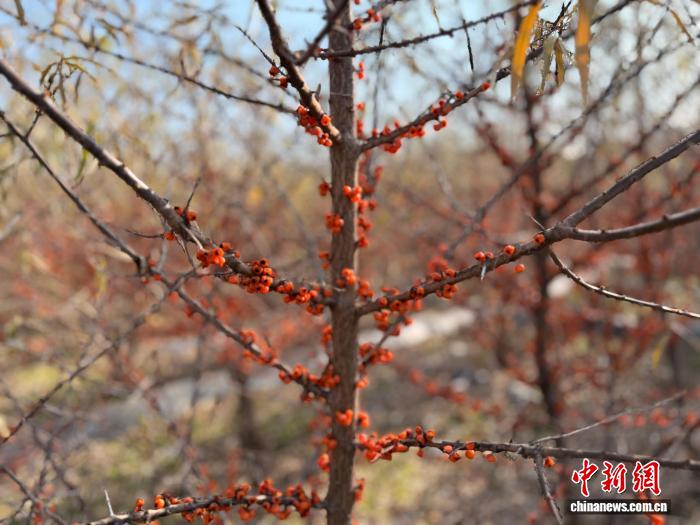
沙棘

Search documents
治沙播绿兴产富民
Xin Lang Cai Jing· 2026-02-07 22:52
Core Viewpoint - The article highlights the ecological transformation of Aohan Banner, Inner Mongolia, showcasing its journey from high desertification to becoming a national model for ecological civilization, significantly improving both the environment and local livelihoods [2][3][4][5]. Group 1: Ecological Transformation - Aohan Banner has achieved a forest coverage rate of 40.6% over 8300 square kilometers, recovering from a desertification rate of 76% at the founding of New China [2]. - The region has implemented innovative drought-resistant afforestation techniques, increasing tree survival rates from below 30% to over 95% [2]. - Over the past five years, Aohan Banner has completed sand control tasks covering 171,700 acres, leading to a qualitative leap in the ecological environment [3]. Group 2: Economic Benefits - The local economy has benefited from the ecological initiatives, with the forestry and grassland industry expected to reach a value of 1.696 billion yuan by 2025, providing income opportunities for nearly 10,000 households [3][4]. - The Aohan Banner has created job opportunities for over 4000 people through the sand thorn industry, with an average income increase of over 15,000 yuan per person during the harvesting season [4]. - The transformation of barren land into productive areas has led to increased agricultural yields, with grain production per acre rising from 200 to over 800 jin [5]. Group 3: Sustainable Practices - Aohan Banner has adopted a comprehensive governance model combining engineering and biological methods to combat desertification, focusing on the last 61,500 acres of shifting sand [5]. - The region's approach emphasizes the integration of ecological value into economic value, creating a virtuous cycle of ecological beauty, industrial prosperity, and increased wealth for the local population [4][5]. - The local government is committed to maintaining a long-term strategic vision for ecological and economic benefits, ensuring a unified approach to achieving ecological, economic, and social outcomes [5].

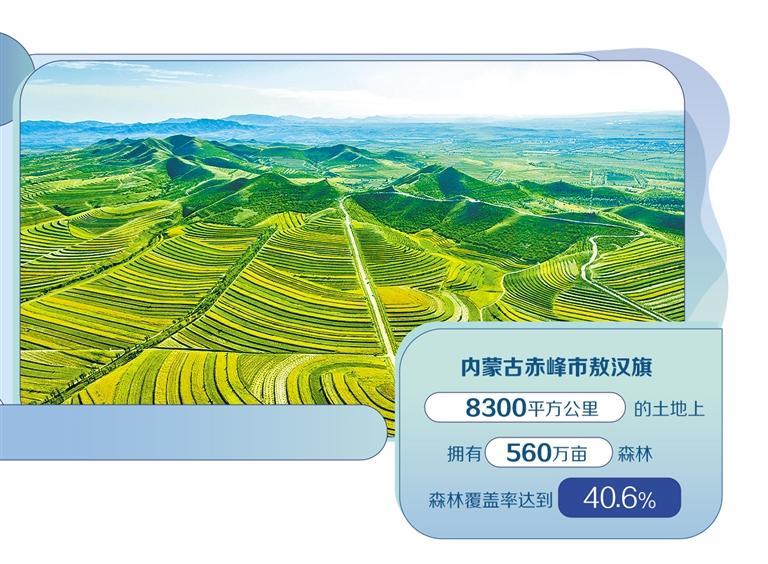
内蒙古赤峰市敖汉旗—— 治沙播绿兴产富民
Jing Ji Ri Bao· 2026-02-07 22:17
Core Viewpoint - The ecological transformation in Aohan Banner has led to significant improvements in both environmental conditions and local economic benefits, culminating in the recognition as a "National Ecological Civilization Construction Demonstration Zone" Group 1: Ecological Achievements - Aohan Banner has 5.6 million acres of forest with a forest coverage rate of 40.6%, a significant increase from a desertification rate of 76% and less than 10% natural vegetation coverage at the founding of New China [1] - The "Three-North Shelter Forest Program" initiated in the 1970s has been pivotal in increasing tree survival rates from below 30% to over 95% through innovative drought-resistant planting techniques [1] Group 2: Economic Impact - The ecological restoration efforts have resulted in the completion of 171,700 acres of sand control and afforestation in the past five years, leading to a qualitative leap in the ecological environment [2] - The forestry and grassland industry in Aohan Banner is projected to reach a value of 1.696 billion yuan by 2025, benefiting nearly 10,000 households through planting, harvesting, and employment opportunities [2] Group 3: Community Involvement - The local company has planted nearly 10,000 acres of seabuckthorn, providing employment for over 200 villagers during the harvest season, with an average income increase of over 15,000 yuan per person [3] - The integration of ecological value into economic value has created a virtuous cycle of ecological beauty, industrial prosperity, and increased wealth for the local population [3] Group 4: Sustainable Practices - Aohan Banner is implementing a comprehensive governance model combining "engineering sand fixation and biological foundation," targeting the last 61,500 acres of shifting sand to transform barren land into productive areas [3] - The successful transformation of 32,000 acres of eroded land into productive agricultural areas has significantly increased grain yields and attracted nearly 100,000 tourists annually [4] Group 5: Future Vision - The local government aims to maintain a consistent strategic focus on ecological and economic benefits, ensuring the unity of ecological, economic, and social benefits [4]
(新春走基层)三代人接续奋斗 塞北“沙窝子”变“绿海洋”
Zhong Guo Xin Wen Wang· 2026-02-06 08:09
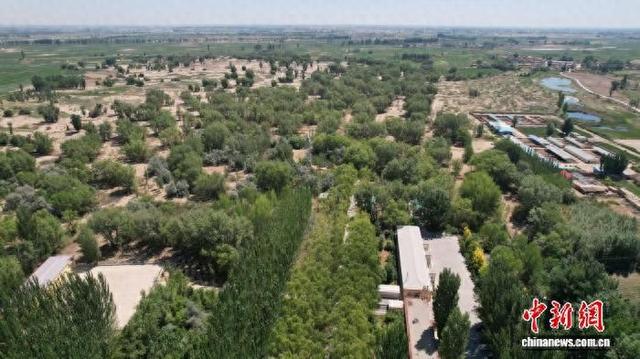
Core Viewpoint - The article highlights the transformation of the XinHua Forest Farm in Inner Mongolia from a desertified area to a thriving green ecosystem through over 60 years of continuous efforts in afforestation and ecological restoration [1][3]. Group 1: Historical Context - The XinHua Forest Farm was established in the 1960s to combat severe desertification, with initial conditions characterized by sand dunes and saline-alkali soil [3]. - The area faced significant challenges, including frequent sandstorms that obstructed daily life, necessitating the establishment of a dedicated workforce for afforestation [3]. Group 2: Ecological Achievements - Over the past 60 years, the forest farm has planted 7.55 million trees across 46,600 acres, achieving a forest coverage rate of 88% [3]. - The farm has successfully fixed 6.36 million tons of sand and sequestered 146,300 tons of carbon, while the surrounding lakes have expanded from 500 acres to 700 acres [5]. - The number of sandstorm days has drastically reduced from 136 in 1960 to just 19 in 2023, and the diversity of wildlife has increased to over 80 species [5]. Group 3: Technological Innovations - The introduction of mechanized equipment has significantly improved the efficiency of afforestation efforts, with new machines outperforming manual labor by several times [7]. - Collaboration with research institutions has led to the establishment of expert workstations focused on ecological restoration and the development of resilient tree species [7]. Group 4: Economic Development - The forest farm has implemented models that integrate local communities into its operations, resulting in an average annual income increase of approximately 5,000 yuan per person for over 2,000 villagers involved in various projects [9]. - The integration of photovoltaic systems with afforestation efforts has created a dual benefit of ecological restoration and economic gain, covering 24,000 acres [9].
粤新两地双向赋能,绘就富民兴疆新图景丨我们的2025
Nan Fang Nong Cun Bao· 2026-02-04 12:06
Core Viewpoint - The collaboration between Guangdong and Xinjiang is fostering economic development and creating a new model for mutual empowerment, focusing on job creation and sustainable growth in the region [4][10][100]. Group 1: Project Developments - The first integrated demonstration project in Kashgar, supported by Guangdong, combines photovoltaic power generation, hydrogen production, storage, and refueling [2][3]. - The 5 MW distributed photovoltaic hydrogen production and storage project in Bachu County has been officially launched and is successfully producing hydrogen [7][3]. - Guangdong's investment in Xinjiang has exceeded 50 billion yuan, creating stable employment for 20,000 people and indirectly benefiting around 200,000 individuals [10][11]. Group 2: Economic Initiatives - The "Xinjiang products going south, Guangdong products going north" initiative has activated a market worth billions, enhancing trade between the two regions [12][20]. - The establishment of a sales cooperation platform has facilitated the circulation of products between Guangdong and Xinjiang, promoting sustainable economic connections [22][20]. - The bilateral trade of specialty products has reached 18.2 billion yuan, with Guangdong's exports to Central Asia growing by 26% in the first 11 months of 2025 [33][35]. Group 3: Employment and Community Impact - The introduction of Guangdong enterprises in Xinjiang has led to significant job creation and increased local incomes, with farmers reporting higher profits from their produce [15][11]. - The establishment of modern logistics facilities has improved delivery times, addressing local residents' needs for efficient e-commerce services [40][41]. Group 4: Agricultural and Industrial Development - The oilseed industry in Xinjiang has seen substantial growth, with the area under cultivation expanding from 3,000 mu to 60,000 mu by 2025, creating over 200 jobs [66][68]. - The introduction of new agricultural practices and crops, such as sea buckthorn, has led to increased yields and economic benefits for local farmers [90][89]. Group 5: Cultural and Technological Exchange - The collaboration has also fostered cultural exchanges, with local artisans producing traditional crafts that reflect regional heritage [73][76]. - Guangdong's support has included technical training and resource exploration, enhancing local capabilities in various industries [74][88].

党建引领聚合力 产业升级强动力
Xin Lang Cai Jing· 2026-01-30 19:41
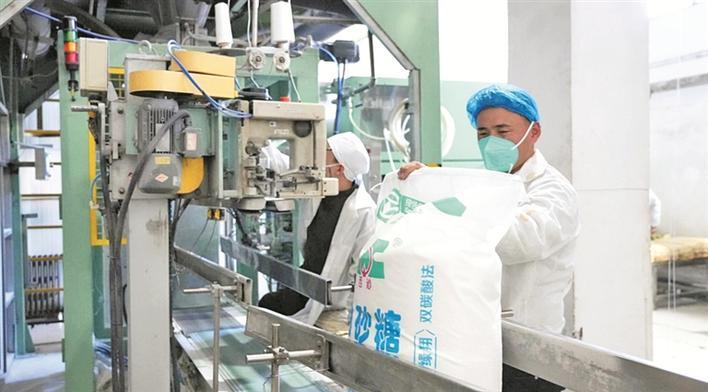
Group 1: Industry Development - The introduction of mechanized harvesting in the sea buckthorn industry has significantly improved efficiency, with a machine capable of harvesting 5 acres per hour and a loss rate of less than 10% [2] - The shift from scattered planting to large-scale, standardized development of sea buckthorn has been driven by the integration of land resources and the establishment of a leading industry that boosts income for workers [2][3] Group 2: Party Leadership and Organizational Structure - The integration of party organizations into the industrial chain has enhanced the development model, with the party playing a key role in coordinating production and stabilizing income for workers [3] - The livestock industry in the region has seen revitalization under party leadership, with a standardized cattle breeding base that has led to the production of 3,371 cattle and an average annual income increase of over 30,000 yuan for participating workers [4] Group 3: Production Efficiency and Management - The sugar production facility has implemented a party committee that focuses on integrating party work with production management, resulting in a daily processing capacity of around 5,500 tons and a sugar yield of over 600 tons with a premium product rate of 98% [5] - The organizational work in the region has been structured into 28 key projects, enhancing the clarity of responsibilities and effectiveness of the initiatives [5][6] Group 4: Community and Grassroots Engagement - The establishment of various grassroots organizations, such as党员先锋岗 (Party Pioneer Posts) and红色服务站 (Red Service Stations), has fostered a sense of community and engagement among workers, contributing to a cohesive development effort [6] - The focus on integrating party work into frontline development has been emphasized, with a framework that includes project-based approaches and a commitment to enhancing the capabilities of party members [6]
法治为纲“绘”青绿
Xin Lang Cai Jing· 2026-01-14 19:41
Core Viewpoint - The article emphasizes the importance of ecological protection and legal enforcement in Qinghai Province, highlighting the ongoing efforts to implement the Forest Law and enhance forest resource management, which are crucial for maintaining the ecological security of the region [4][11]. Group 1: Legislative and Regulatory Framework - The Qinghai Provincial People's Congress has initiated a four-month special enforcement inspection of the implementation of the Forest Law across eight cities and states, guided by Xi Jinping's ecological civilization thought [4]. - Since the revision of the Forest Law in 2019, Qinghai has integrated it into its legal education planning, establishing a comprehensive legal framework involving party leadership, legislative supervision, government initiative, and social participation [5][7]. Group 2: Forest Resource Management and Ecological Restoration - As of 2025, Qinghai aims to achieve a forest area of 1.791 million hectares and a forest coverage rate of 2.57%, reflecting a 0.8 percentage point increase since 2019 [5]. - The province has implemented a "Green Land" initiative, achieving a 90% participation rate in voluntary tree planting, with innovative models like "cloud planting" attracting over 800,000 participants [6]. Group 3: Ecological and Economic Benefits - The province has established a compensation system for ecological protection, benefiting over 1.2 million households through various funding initiatives totaling 4.5 billion yuan for forest ecological benefits and 357 million yuan for returning farmland to forest [9]. - Qinghai has developed 30,000 hectares of specialty economic forests, creating the world's largest organic goji berry production base and generating employment for over 200,000 people [9]. Group 4: Challenges and Future Directions - Despite significant achievements, challenges remain, including discrepancies between planning and implementation, and a shortage of professional enforcement personnel in high-altitude areas [10]. - The province aims to address these challenges by enhancing grassroots enforcement capabilities and improving equipment, while continuing to promote ecological civilization and legal compliance as foundational elements for sustainable development [11].
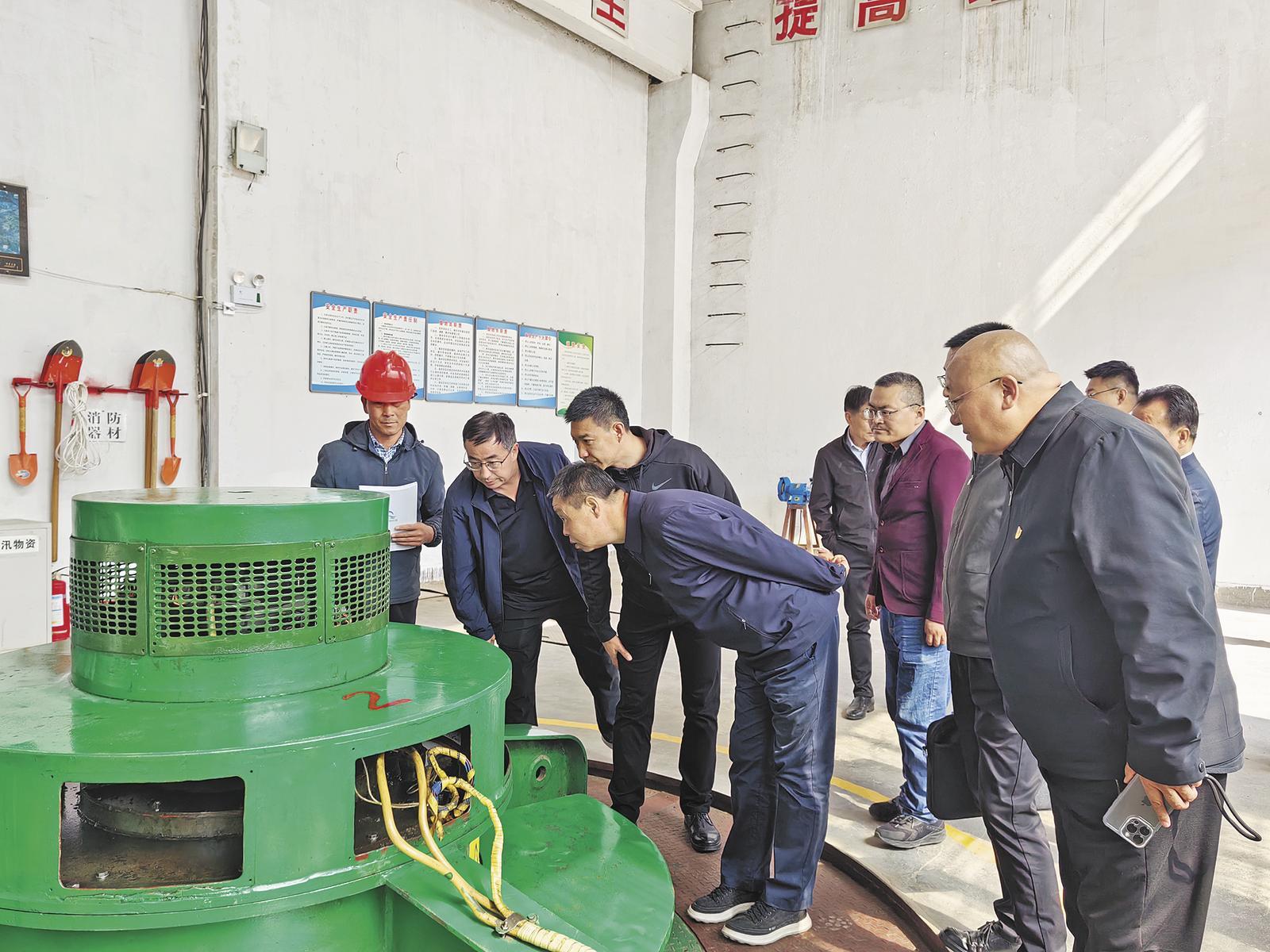
荒原育“金果” 致富路更宽
Xin Lang Cai Jing· 2026-01-14 18:39
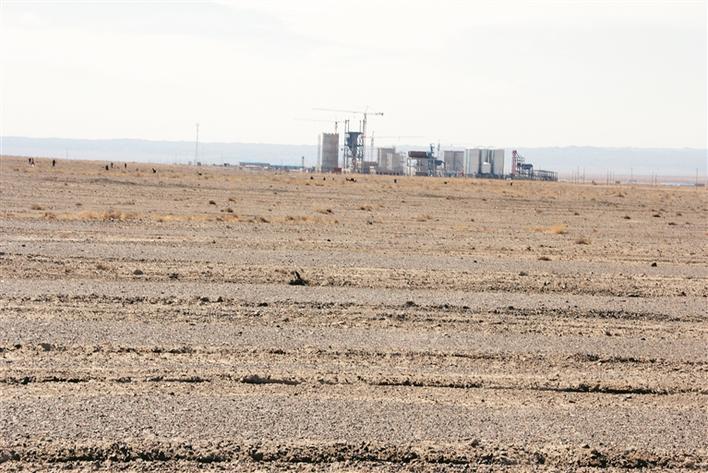
Core Insights - The article highlights the successful development of the seabuckthorn industry in the 170th Regiment, showcasing its transformation from a barren land to a thriving ecological and economic resource [3][4][5] Group 1: Industry Development - The 170th Regiment initiated a seabuckthorn planting project in 2007, securing an investment of 32 million yuan, which led to the cultivation of 700 acres of seabuckthorn [3] - The survival rate of the cultivated seabuckthorn varieties, such as "Deep Autumn Red" and "Zhuangyuan Yellow," has stabilized at over 85% [3] - The seabuckthorn industry has been established as a leading industry post the comprehensive reform in 2018, focusing on land integration and high-standard demonstration gardens [3][4] Group 2: Economic Impact - The average yield of seabuckthorn is reported to be between 400 to 500 kilograms per acre, contributing to increased income for local workers [3] - The area of seabuckthorn cultivation has expanded significantly, with 52,000 acres now planted, leading to improved living conditions for the workers [5] - The annual production of seedlings from the 400-acre nursery is 12 million, meeting local demand and supplying other regions, thus driving regional development [4][5] Group 3: Environmental Improvement - The land has seen a significant increase in forest coverage from 20% to 60%, and the number of days with severe sandstorms has decreased from approximately 218 to 127 days per year [5] - The ecological environment has improved, with increased rainfall and the return of wildlife such as wild sheep and hares, demonstrating a successful balance between ecological and economic benefits [4][5]
农业新质生产力 绘就粮仓新图景|黑土珍味多佳品 寒地浆果产业兴
Xin Lang Cai Jing· 2025-12-24 22:54
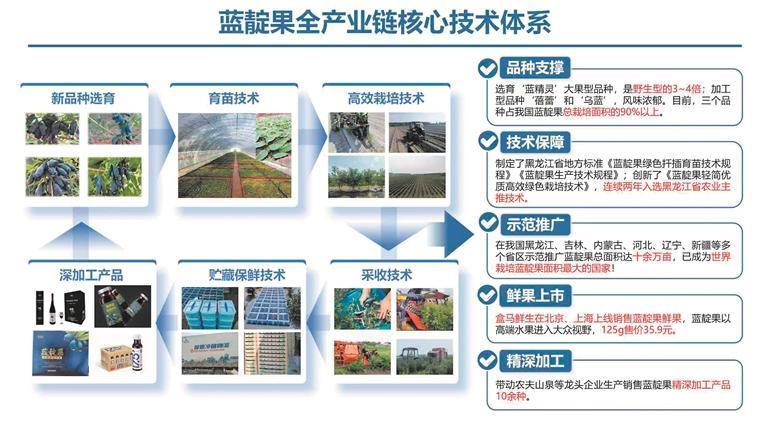
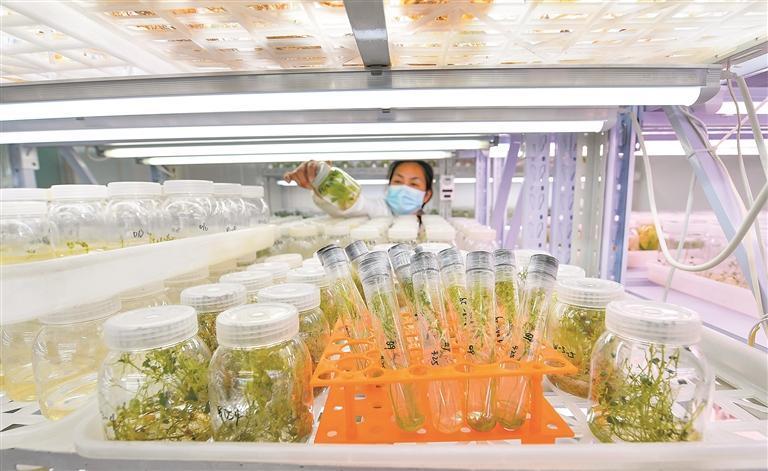
Core Viewpoint - The article highlights the development and commercialization of cold-climate berry agriculture in Heilongjiang Province, emphasizing the successful cultivation, innovation, and market entry of various berry species, particularly the blue honeysuckle and its new varieties. Group 1: Berry Cultivation and Resources - Heilongjiang Province is positioned in the world's northern latitude "golden berry belt," making it the largest area for cold-climate berry cultivation in China, with significant advantages in land, climate, and ecology [20] - The province has established a modern agricultural technology innovation system for cold-climate berries, achieving breakthroughs in germplasm innovation, cultivation techniques, and rural revitalization [20][21] - The province maintains the largest germplasm resource banks for blue honeysuckle and currants in China, with over 300 and 200 germplasm resources respectively, and has developed numerous new varieties with strong cold resistance and high yield [21][23] Group 2: Technological Innovations - The province's cold-climate berry system has formed cross-disciplinary research teams to address cultivation, seedling, harvesting, preservation, and processing challenges, leading to a series of innovative results with independent intellectual property rights [24] - Efficient cultivation techniques have been developed, increasing the marketable fruit rate by 23% and improving overall economic benefits by 24% [24] - New preservation technologies have extended the shelf life of berries from 10 days to 90 days, addressing the short shelf life issue that has hindered market access [25] Group 3: Market Entry and Product Development - Blue honeysuckle has recently entered high-end markets, with fresh fruit being sold at 35.9 yuan for 125 grams in Beijing's Hema Fresh, marking a significant step for the industry [28] - The new varieties "Blue Elf" and "Black Blue" have gained recognition, with "Blue Elf" topping the berry price list in Shanghai and achieving a 165% increase in sales [28] - The province has attracted major companies like Nongfu Spring to participate in the blue honeysuckle processing sector, enhancing product offerings and market presence [28] Group 4: Rural Revitalization and Economic Impact - The cold-climate berry system supports rural revitalization by establishing a model that integrates government guidance, system support, cooperative promotion, and farmer participation, leading to increased income for local farmers [29] - In Qiqihar City, raspberry cultivation has generated significant income for local residents, with projected earnings of nearly 639 million yuan from raspberry harvesting [30] - The province's focus on high-quality sea buckthorn production has resulted in over 80,000 acres of cultivation, contributing to local economic development and recognition as a geographical indication product [31]
以创新驱动书写高质量发展新篇章
Xin Lang Cai Jing· 2025-12-21 21:43
Group 1: Technological Innovation and Achievements - Qinghai Province has made significant breakthroughs in key core technologies, including a major project that addresses the global challenge of magnesium chloride dehydration and the development of the "Qingshu 9" potato variety, which has set a new domestic record for yield at over 10,000 jin per mu [4][5] - The average vegetation coverage in the demonstration area has increased to 80%, showcasing successful low-cost ecological restoration in fragile alpine mining regions [4] - The "Qingshu 9" potato variety has a promotion area of 7.47 million mu, ranking first in the national promotion area for four consecutive years [5] Group 2: Innovation-Driven Development - The province has implemented an innovation-driven development strategy since the 14th Five-Year Plan, focusing on integrating technological research and development with industrial innovation [4][8] - Qinghai's agricultural technology innovation roadmap has been effectively promoted, enhancing the quality of the plateau potato industry and increasing the province's international influence in potato breeding [7] Group 3: Corporate Innovation and Economic Growth - Enterprises play a crucial role in technological innovation, with 66.2% of R&D investment coming from companies and 54% of R&D personnel working in enterprises [10] - Qinghai Kangpu Biotechnology Co., Ltd. is recognized as a national high-tech enterprise, focusing on the deep development of highland specialty plants and converting ecological resources into high-value products [10][11] - The province has initiated a "Technology Commissioner Service for Enterprises" mechanism to enhance corporate innovation capabilities [10] Group 4: Policy and System Reforms - Qinghai has completed 15 key tasks in its three-year action plan for technological system reform, with new measures being deployed to further enhance innovation resource allocation [8] - The province has streamlined the application and management processes for provincial scientific plans, reducing the budget reporting forms by 50% and achieving "zero-run" approvals for scientific achievements [8] Group 5: Collaborative Innovation and Regional Development - Qinghai has expanded its collaborative innovation efforts, establishing a "Science and Technology Innovation Base" in Beijing to facilitate a model of "Beijing R&D + Qinghai Transformation" [13] - The province is actively integrating into the national innovation system, with significant projects like the Cold Lake world-class astronomical observation research base and the establishment of a national sustainable development agenda innovation demonstration zone [13]
青海:着力破解沙棘产业发展瓶颈
Zhong Guo Xin Wen Wang· 2025-11-26 13:50
Core Viewpoint - The development of the seabuckthorn industry in Qinghai is crucial for promoting ecological protection and economic growth, with efforts focused on overcoming existing bottlenecks to achieve sustainable development [1][3]. Industry Overview - The seabuckthorn industry is a representative of Qinghai's green, ecological, and health-oriented economic initiatives, with 2.45 million acres currently dedicated to seabuckthorn cultivation [3]. - Qinghai Kangpu Biotechnology Co., Ltd. has significantly contributed to poverty alleviation, with the company helping over 5,000 households increase their income by 10,000 yuan per person annually [3]. Challenges - The seabuckthorn industry faces several challenges, including a resource utilization rate of less than 5%, shortages in quality seed supply, labor shortages for harvesting, and delays in market development and standard system establishment [3][4]. Strategic Initiatives - The primary focus is on strengthening the industry foundation by improving harvesting base construction, with a target to complete the construction of 29,000 acres by 2025 [4]. - The province aims to reduce reliance on primary processing by expanding high-value product lines and enhancing cold chain infrastructure to ensure raw material quality [4]. - Marketing strategies will include integrating the "Qing" brand and utilizing international exhibitions and online live streaming to promote "Qinghai seabuckthorn" in high-end markets outside the province [4]. Research and Development - Qinghai plans to establish a comprehensive seed supply system by collaborating with research institutions and seed bases, addressing the seedling shortage issue [4]. - The development of local technical standards and systematic training for grassroots will support the standardized growth of the industry [4].