二手车出口

Search documents
上海:力争到2027年 全市二手车出口规模达到50000台/年
Zheng Quan Shi Bao Wang· 2025-09-12 10:04
Core Insights - The Shanghai Municipal Commission of Commerce has issued the "Shanghai Action Plan for Promoting Used Car Exports" to enhance the used car export service capabilities and innovate export models [1] - The plan aims to create a comprehensive service platform for international trade in used cars, facilitating the upgrade of the automotive industry consumption in Shanghai and supporting the construction of an international trade center [1] - By 2027, the goal is to cultivate 3 to 5 leading used car export enterprises, with an annual export scale of 50,000 vehicles [1]
“零公里”二手车,中东有资金盘狂囤货
Di Yi Cai Jing· 2025-09-07 13:22
Core Viewpoint - The Chinese used car export market is shifting from "zero kilometer" vehicles to "long kilometer" vehicles due to international policy changes and market demands, with a focus on sustainable and quality-driven growth in the industry [1][6][8]. Group 1: Market Trends - The export volume of used cars from China has surged from approximately 3,000 units in 2019 to 436,000 units in 2024 [1]. - "Zero kilometer" used cars, which are essentially new cars sold at a discount, have become a popular choice for dealers looking to boost sales and profits [1][3]. - However, the rise of "zero kilometer" exports has led to market disruptions, affecting the normal trade of new and used cars and raising concerns about the competitive image of Chinese automotive brands abroad [1][4]. Group 2: Regulatory Environment - The Ministry of Commerce announced that it will implement regulations and procedures for used car exports starting February 2024, aiming to ensure quality and safety for overseas consumers [2]. - The government is expected to continue guiding the used car export sector to promote healthy and orderly development [2]. Group 3: Industry Challenges - The competitive landscape for used cars in China is intensifying, with over 50% of new car dealers currently operating at a loss, leading them to collaborate with used car exporters to alleviate financial pressures [4]. - The "zero kilometer" export model has been criticized for creating a "grey" market where cars are hoarded and sold at inflated prices, further squeezing the margins of compliant dealers [4]. Group 4: Future Directions - The industry is moving towards "long kilometer" used cars, which are better suited to meet international market demands for quality and practicality [6][7]. - "Long kilometer" vehicles are characterized by their adaptability to international standards and are seen as the key to unlocking global market potential [6][7]. - Industry leaders believe that with a strategic approach, "long kilometer" used cars could dominate the export market, potentially capturing 50% of the global share within a decade, equating to 5 million units [8].


“零公里”二手车,中东有资金盘狂囤货!
第一财经· 2025-09-07 11:03
Core Viewpoint - The article discusses the shift in China's used car export market from "zero-kilometer" vehicles to "long-kilometer" vehicles, highlighting the challenges and opportunities in this transition as the industry matures and seeks sustainable growth [1][8]. Group 1: Current State of Used Car Exports - China's used car exports have surged from approximately 3,000 vehicles in 2019 to 436,000 vehicles projected for 2024, with "zero-kilometer" cars being a significant part of this growth [1]. - "Zero-kilometer" used cars, which are essentially new cars with low mileage sold at a discount, have become a popular choice for exporters due to their appealing price point, often around 80% of the new car price [3][5]. - However, the export of "zero-kilometer" vehicles has raised concerns about market order, the quality of after-sales service, and the competitive image of Chinese automotive brands abroad [1][6]. Group 2: Regulatory and Market Dynamics - The Ministry of Commerce announced plans to standardize used car export procedures, aiming to ensure quality and safety while promoting healthy development in the sector [2]. - The competitive landscape for new cars in China has led to over 50% of dealers operating at a loss, prompting them to collaborate with used car exporters to alleviate financial pressures [5]. Group 3: Transition to Long-Kilometer Vehicles - Industry experts emphasize the need to transition to "long-kilometer" used cars, which are better suited to meet international market demands and are characterized by their quality and adaptability [8]. - The challenges in this transition include sourcing vehicles from individual owners and small dealers, high costs of vehicle condition certification, and inefficiencies in logistics and distribution [8]. - The potential for "long-kilometer" vehicles to dominate the export market is significant, with projections suggesting that China could capture 50% of the global market share for this category within a decade, equating to 5 million vehicles [9].
中东有资金盘狂囤货!“零公里”二手车乱象何解?
Di Yi Cai Jing· 2025-09-07 10:43
Core Viewpoint - The Chinese used car export market is shifting from "zero kilometer" vehicles to "long kilometer" vehicles to better meet international market demands and address emerging challenges in the industry [1][6]. Group 1: Market Trends - The export volume of used cars from China has surged from approximately 3,000 units in 2019 to 436,000 units in 2024 [1]. - "Zero kilometer" used cars, which are essentially new cars sold at a discount, have been a popular choice for exporters but are increasingly seen as a temporary solution [1][5]. - The Ministry of Commerce has initiated regulations for used car exports, aiming for a healthy and orderly development of the sector [2]. Group 2: Challenges in the Industry - The competitive pricing of new cars has negatively impacted the profitability of used car businesses, with over 50% of dealers currently operating at a loss [4]. - The "zero kilometer" used car exports have created market disruptions, affecting both new and used car export trades and leading to increased competition in overseas markets [4][6]. - Issues such as the lack of standardized vehicle conditions and high certification costs are significant barriers to the growth of the used car export market [6]. Group 3: Transition to Long Kilometer Used Cars - The industry is moving towards "long kilometer" used cars, which are better suited for international markets and meet the demand for quality and price [6]. - The transition requires addressing challenges such as sourcing vehicles, standardizing vehicle conditions, and improving logistics efficiency [6]. - Industry leaders believe that with proper strategies, "long kilometer" used cars could dominate the export market, potentially capturing 50% of the global share within a decade, equating to 5 million units [7].
中国二手车出口狂飙:从“卖车”转向“卖服务”
2 1 Shi Ji Jing Ji Bao Dao· 2025-08-27 14:59
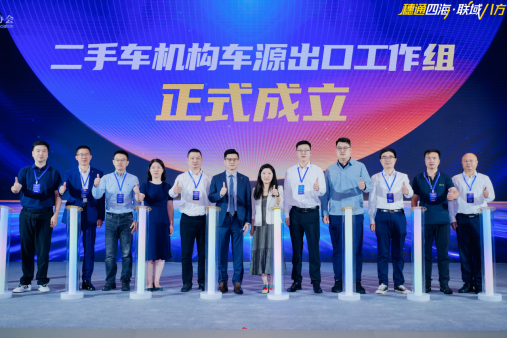
Core Insights - The Chinese used car export market is experiencing explosive growth, with exports expected to exceed 436,000 units in 2024, a year-on-year increase of 46.5% [2] - The market is currently benefiting from a combination of policy advantages and surging demand, supported by a robust supply chain and a large vehicle ownership base of over 400 million [2][4] - The industry is moving towards standardization and collaboration to address challenges such as fragmented supply sources and high costs associated with vehicle inspection and after-sales service [3][12] Market Demand and Supply - There is a significant demand for used cars in emerging markets, particularly in countries like Nigeria, Pakistan, and Indonesia, where economic growth is driving up vehicle ownership [5] - The average price of a Chinese used car is approximately 106,000 yuan, with a substantial portion being domestic brands and a high proportion of new energy vehicles [6][7] - The used car export market is projected to reach 5 million units annually within the next decade, with a target of increasing the global share of Chinese used car exports from less than 8% to 50% [6] Challenges in Exporting - The used car supply is highly fragmented, making it difficult to meet the demands of overseas buyers who often require uniformity in vehicle models [9] - Quality inconsistency and lack of transparency in vehicle conditions pose significant barriers to export, leading to increased costs for inspections and certifications [10] - After-sales service remains a critical issue, with complaints from overseas buyers regarding the lack of support and warranty fulfillment [11] Strategic Initiatives - The establishment of the "Used Car Source Export Working Group" aims to unify standards, enhance transparency, and create a comprehensive service ecosystem for used car exports [12][14] - The working group will focus on four key areas: establishing vehicle standards, promoting product standardization, ensuring transparency in vehicle conditions, and building a robust overseas service network [14] - Companies are encouraged to shift from merely selling cars to providing comprehensive services, integrating supply chains, and enhancing customer trust through reliable information [12][14]
二手车出海迎来新风口
Jing Ji Ri Bao· 2025-08-26 21:59
Core Viewpoint - China's used car exports are at a pivotal moment, benefiting from policy incentives and market growth, supported by a robust automotive ownership base of over 400 million vehicles and a mature supply chain [1] Group 1: Market Dynamics - In 2024, China's used car export volume exceeded 400,000 units, reaching over 160 countries and regions, becoming a new force in driving automotive consumption and promoting industry upgrades [1] - The global automotive trade is being accelerated by China's dual output of "technology + production capacity," reshaping trade flows and market structures [2] - The demand for used cars is shifting from developed countries to emerging markets, with Chinese brands performing strongly in regions like Russia, Central Asia, and the Middle East [4] Group 2: Strategic Initiatives - The establishment of a collaborative development framework involving government guidance, enterprise leadership, and association empowerment is essential for overcoming barriers in overseas markets [1] - Key strategies for enhancing China's used car export competitiveness include proactive international expansion, resource integration, and standardization of non-standard used cars [2] - A new used car export working group has been formed, comprising 23 manufacturers, 7 financial leasing institutions, and various other stakeholders, aiming to create a unified network for used car exports [3] Group 3: Regional Insights - Guangdong province, as one of the largest automotive markets in China, has seen a significant increase in used car exports, with 46,000 units exported in the first seven months of the year, surpassing the total for the previous year [4] - The integration of a full-chain ecosystem by major rental companies, including purchasing, renting, repairing, and selling, is crucial for enhancing the used car export landscape [4]
从“躺赚”到“内卷”,中国车商在俄这5年
第一财经· 2025-08-11 06:53
Core Viewpoint - The article discusses the shift in the Russian automotive market from new cars to used cars, highlighting the challenges faced by Chinese car manufacturers and the emerging opportunities in the used car export sector [2][3]. Group 1: Market Dynamics - Since 2025, the Russian automotive market has seen a decline in new car sales, with total sales dropping by 29% to 600,000 units, while the market share of Chinese brands has reached approximately 55% [3][10]. - In the first half of 2025, Chinese car exports to Russia fell by 59.2% to 171,000 units, marking the largest decline among the top ten export markets [3][10]. - The used car market in Russia is experiencing growth, with a significant increase in the import of used vehicles, which accounted for 55% of total imports, up from 30% the previous year [13]. Group 2: Transition from New to Used Cars - The initial phase of the market was characterized by high profits from new car sales, but as competition intensified, margins decreased significantly, leading to a shift towards the used car market [5][6]. - The demand for used cars is driven by lower prices and favorable tax conditions for vehicles aged 3-5 years, which have a significantly lower scrappage tax compared to new cars [13][14]. - The article notes that the average profit from exporting a used car is around $1,000 to $1,500, with rare models yielding profits of up to 20,000 to 30,000 RMB [14]. Group 3: Challenges and Opportunities - The Russian market has become increasingly competitive, with many Chinese car dealers exiting due to high costs and low margins, leading to a significant reduction in the number of Chinese dealerships [7][8]. - Regulatory changes, including increased scrappage taxes and stricter import policies, are impacting the feasibility of new car exports, pushing companies to adapt their strategies towards used car exports [10][11]. - The article emphasizes the need for Chinese car manufacturers to establish local production facilities in Russia to navigate the evolving market landscape and mitigate risks associated with policy changes [11][12].

上半年内蒙古鄂尔多斯市汽车出口同比增长20.5%
Zhong Guo Chan Ye Jing Ji Xin Xi Wang· 2025-07-30 00:38
Group 1 - The core viewpoint highlights the strong growth of the automotive export industry in Ordos, driven by the development of logistics channels and supportive government policies [1][2] - Ordos has positioned itself as a logistics hub for automotive exports, facilitating connections with the China-Europe Railway Express and benefiting from tax refund policies [1][2] - The automotive industry in Ordos is undergoing transformation, attracting well-known companies and supporting industries such as electric motors and batteries [1] Group 2 - In the first half of the year, Ordos's automotive exports reached 598 million yuan, marking a year-on-year increase of 20.5%, with exports to Belt and Road countries growing by 61.96% [2] - The customs authority has implemented convenient measures such as appointment customs clearance, which has significantly improved the efficiency of the export process [2] - The customs has helped automotive exporters enjoy a tax reduction of approximately 21.47 million yuan in the first half of the year [2] Group 3 - The second-hand car export sector has also shown remarkable performance, with a total export value of 176 million yuan, accounting for 29.4% of the city's total automotive exports [3] - A notable achievement includes the delivery of a high-end customized vehicle to a client in the UAE, setting a new record for the export price of domestic luxury cars [3] - Policies have been introduced to support the growth of second-hand car exports, including logistics subsidies and market development initiatives [3]

中国边城满洲里打造二手车出口新高地
Zhong Guo Xin Wen Wang· 2025-07-18 08:21
Core Insights - The cross-border used car export base in Manzhouli, Inner Mongolia, has become a regular venue for Russian customers to inspect and purchase Chinese brand vehicles, with various transaction modes available [1][2] - The base officially started operations on May 20, 2024, and currently hosts 15 qualified used car export enterprises, providing a one-stop service for vehicle transactions [1][2] - From January to June 2024, approximately 1,600 used cars were exported from Manzhouli, generating a trade value of 240 million yuan, surpassing the total export value from June to December of the previous year by nearly 80 million yuan [1] Summary by Categories Export Modes - Three primary modes of used car export are identified: on-site selection and transaction, establishment of showrooms in Russia for centralized sales, and online ordering through platforms [1] - The base facilitates a streamlined process where vehicle transfer, inspection, display, and shipping can all occur in one location, enhancing operational efficiency [1] Policy and Logistics - Policy adjustments, such as the transition from a pilot system to a licensing system for used car exports, have significantly boosted export activities [2] - Manzhouli's geographical advantages allow for reduced transportation distances and costs, with a savings of 3,000 kilometers and 5,000 yuan in shipping costs compared to other routes [2] - The port operates 24-hour cargo customs clearance, providing stable logistics support for enterprises [2] Economic Impact - The Manzhouli used car export base is experiencing a gathering effect, showcasing increasing foreign trade vitality and positioning itself as a key player in China-Russia economic cooperation [2]
中国公司全球化周报|比亚迪搁置墨西哥建厂计划/瑞幸在美国首开两店,单杯最高57元
3 6 Ke· 2025-07-06 04:14
Group 1: Company Developments - Luckin Coffee has opened its first two stores in the United States, with drink prices ranging from $3.45 (approximately ¥24.71) to $7.95 (approximately ¥56.94) [3] - BYD has suspended its plan to build a large factory in Mexico due to geopolitical tensions and uncertainties from U.S. trade policies, although it still aims to expand in the Americas [3] - Jin Jiang International Hotel has submitted its IPO application to the Hong Kong Stock Exchange, with plans to use the funds for capital expenditures to enhance its overseas hotel business [4] - TikTok has launched an in-app shopping feature in Japan, allowing users to buy products directly through shopping videos and live streams [4] - Genki Forest has entered the Indonesian market with its iced tea series, expanding its global footprint [7] Group 2: Industry Trends - The Ministry of Commerce of China will strengthen guidance on the export of used cars to promote healthy and orderly development in this sector [8] - Former U.S. President Trump announced that new tariffs will begin on August 1, with rates potentially ranging from 10% to 70% [9] - Hong Kong's IPO fundraising has ranked first globally this year, reflecting strong market dynamics [9] - Saudi Arabia's foreign direct investment inflow reached $6.4 billion in the first quarter, marking a 24% year-on-year increase [9] Group 3: Investment and Financing - Zhihui Technology has secured a strategic investment of 1 billion yuan from Pudong Venture Capital and Zhangjiang Group [10] - Shinke Industrial has completed a financing round exceeding 100 million yuan, aimed at technology upgrades and international expansion [10] - Lingchuan Technology has raised several hundred million yuan in its Series A financing round, focusing on next-generation chip development [10]