以存代算

Search documents
专家:2026年手机、电脑等主要消费电子产品涨势已定
2 1 Shi Ji Jing Ji Bao Dao· 2025-12-16 00:27
Core Insights - The global memory chip market has experienced an "epic" price surge since Q3, with prices for DRAM and NAND Flash increasing by over 300% from September to now [1] Industry Summary - The current price increase is driven by the rise of artificial intelligence and the adoption of "compute-to-storage" technology, differing from previous price surges [1] - Experts indicate that the market supply gap is unlikely to be filled in the next one to two years [1] Company Impact - Consumer electronics companies are expected to implement a combination of strategies, including structural price increases, product downgrades, and cost-sharing with the supply chain [1] - The timing for these strategies is anticipated to coincide with the upcoming New Year [1]
“以存代算”引爆存储涨价周期 专家:2026年手机、电脑等主要的消费电子产品涨势已定
Zheng Quan Shi Bao Wang· 2025-12-15 23:54
Core Insights - The global memory chip market has experienced an "epic" price surge since Q3, with spot prices for DRAM and NAND Flash increasing by over 300% since September [1] Industry Summary - The current price increase is driven by the rise of artificial intelligence and the adoption of "compute-to-storage" technology, differing from previous price hikes [1] - The market supply gap is expected to remain unfilled for the next one to two years, indicating a prolonged period of high prices [1] Company Actions - Consumer electronics companies are likely to implement a combination of structural price increases and cost-sharing strategies with the supply chain, with potential announcements around the upcoming New Year [1]
“以存代算”引爆存储涨价周期 消费电子产品涨势已定?
Zheng Quan Shi Bao· 2025-12-15 18:30
Core Viewpoint - The global memory chip market is experiencing an unprecedented price surge, with DRAM and NAND Flash prices increasing over 300% since September 2023, driven by the rise of AI and the "compute-in-memory" technology [1][2][3] Group 1: Market Dynamics - The current price increase is fundamentally different from previous surges, as it is driven by the shift in the role of memory products in AI applications, rather than just increased demand from mobile devices [2][3] - AI servers require significantly more memory than traditional servers, with DRAM demand being approximately eight times and NAND Flash demand three times higher, leading major manufacturers to prioritize AI-related products over consumer electronics [4] - The supply-demand imbalance has led to panic buying and hoarding behavior among downstream manufacturers, exacerbating the price increase [4] Group 2: Future Projections - The structural imbalance in the memory market is expected to persist, with significant price increases anticipated for consumer electronics like smartphones and laptops by 2026, potentially leading to a 2% reduction in production volumes for both categories [6][7] - Companies are likely to implement a combination of price increases, product adjustments, and cost management strategies to cope with rising costs, rather than fully passing costs onto consumers [7][8] Group 3: Strategic Responses - Companies are expected to reduce specifications or delay upgrades as a necessary measure to balance costs, with mid-range smartphones likely to shift from 12GB to 6GB or 8GB of DRAM [8] - Dynamic inventory management and prioritizing popular models for storage supply are recommended strategies to navigate the current market conditions [8][9] - The ongoing price surge will test the resilience of supply chains and accelerate the need for technological upgrades and domestic alternatives in the industry [9]
手机电脑“被迫涨价”,供应链“生死线”浮现
2 1 Shi Ji Jing Ji Bao Dao· 2025-12-09 13:58
Core Insights - The electronic consumer industry is facing a significant price increase driven by a "storage super cycle" initiated by the AI boom, leading to a severe cost challenge for downstream PC and smartphone manufacturers [1] - The price adjustments in the market are not straightforward, with companies employing various strategies to manage the impact of rising storage costs [2][3] Group 1: Price Adjustments - The PC industry is experiencing the first signs of price increases, with estimates suggesting a rise of approximately 10% to 20% for laptops and commercial PCs due to soaring DRAM and SSD costs [2] - In the smartphone market, manufacturers are adopting "stealth price hikes" by reducing initial discounts or promotional offers rather than increasing the official retail prices [3] Group 2: Supply Chain Dynamics - The current price surge is structurally driven by AI demand, which is causing a "capacity squeeze" as manufacturers prioritize high-margin AI-related products over traditional consumer electronics [4] - Major storage manufacturers like Samsung, SK Hynix, and Micron are shifting their production focus towards high-end storage solutions, leading to a significant reduction in the supply of consumer-grade memory [4] Group 3: Manufacturer Strategies - Companies are divided in their strategies to cope with rising costs; for instance, Xiaomi has publicly warned about the pressure on BOM costs, while Lenovo has increased its inventory levels by 50% to mitigate the impact [5][6] - Lenovo's strategy includes long-term supply agreements and proactive inventory management, allowing it to maintain a competitive edge during price fluctuations [6] Group 4: Future Outlook - The structural imbalance caused by AI demand is expected to persist for the next 6 to 12 months, with storage prices likely remaining high until 2026 [7] - The ability to adapt supply chains and diversify sourcing will be crucial for manufacturers to control costs in the evolving market landscape [7] - Lenovo's acquisition of Infinidat is a strategic move to enhance its control over high-end storage solutions, reflecting a shift in the industry where storage is becoming a strategic asset rather than just a cost component [8]

存储猛涨的“冰与火”:AI服务器高增 消费电子承压
2 1 Shi Ji Jing Ji Bao Dao· 2025-12-06 00:43
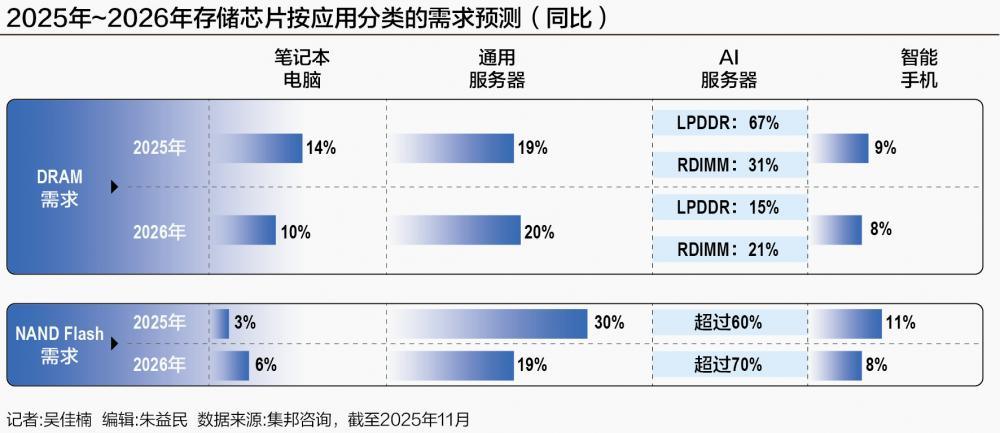
Core Viewpoint - The storage industry is experiencing a significant price surge, driven by strong demand from AI applications, leading to a structural shift in the market dynamics [1][5][10]. Price Increases - SK Hynix announced a contract price increase of up to 30% for DRAM and NAND in Q4 [1]. - SanDisk raised NAND flash contract prices by approximately 50%, marking the largest single price increase in this round [1]. - The price of LPDDR4 is expected to rise significantly due to supply shortages, with projections indicating that its market share will drop to 26% by 2026, while LPDDR5 will increase to 73% [1][6]. Market Dynamics - The surge in storage prices is attributed to the booming demand for AI servers, which has led manufacturers to shift production capacity towards high-end products like HBM and DDR5, resulting in a shortage of traditional storage chips [1][5][6]. - The demand for DRAM in AI servers is eight times that of regular servers, and the demand for NAND is three times higher, further straining supply [5]. Impact on Consumer Electronics - The ongoing price increases are expected to affect consumer electronics, with smartphone prices likely to rise as manufacturers adjust to increased component costs [1][5]. - Retail prices for smartphones and laptops are already being adjusted in response to rising storage costs, with expected declines in shipment growth for these devices in 2026 [7][9]. Future Projections - By 2026, the DRAM market is projected to grow by 20% in supply volume, with revenue reaching $300.6 billion, an 85% increase year-over-year [9]. - NAND Flash market supply is expected to grow by 21%, with revenue reaching $110.5 billion, a 58% increase [9]. - Capital expenditures for major manufacturers like Samsung, SK Hynix, and Micron are anticipated to increase significantly, with growth rates of 17%, 25%, and 40% respectively by 2026 [10][11]. Supply Chain Challenges - New production capacities being built by major manufacturers will have limited impact on supply in 2026, leading to continued tightness in the market [11]. - Smaller manufacturers may face increased pressure and need to adopt flexible strategies to secure storage components [11].

存储猛涨的“冰与火”:AI服务器高增,消费电子承压
2 1 Shi Ji Jing Ji Bao Dao· 2025-12-04 14:05
Core Viewpoint - The storage industry is experiencing a significant price surge, driven by strong demand from AI applications and a structural shift in production capacity towards high-end products [1][3][5]. Group 1: Price Increases - SK Hynix announced a contract price increase of up to 30% for DRAM and NAND in Q4 [2]. - SanDisk raised NAND flash contract prices by approximately 50%, marking the largest single price increase in this round [3]. - The price surge is expected to continue, with consumer electronics, particularly smartphones, facing increased costs due to tight supply [3][4]. Group 2: Supply and Demand Dynamics - The demand for AI servers is significantly higher, with one AI server requiring eight times the DRAM and three times the NAND compared to a regular server [4]. - Major storage manufacturers like Samsung, SK Hynix, and Micron are shifting production capacity from traditional DRAM to high-value products like HBM and DDR5, leading to a shortage of LPDDR4 [5][6]. - By 2026, the supply of LPDDR4 is expected to drop to 26%, while LPDDR5's share will rise to 73% [5][6]. Group 3: Market Impact - The price of LPDRAM is projected to increase by over 50% in the second half of 2025, impacting smartphone and laptop pricing strategies [6]. - The growth in AI infrastructure investment is expected to lead to negative growth in smartphone and laptop shipments by 2026, contrasting with the high growth in AI server demand [7][8]. - The DRAM market is forecasted to reach $300.6 billion in revenue by 2026, an 85% increase year-on-year, with NAND Flash revenue expected to hit $110.5 billion, a 58% increase [8]. Group 4: Future Production Capacity - New production facilities from major manufacturers will have limited impact on supply in 2026, despite increased capital expenditures [10]. - The ongoing price increases and supply constraints may force smaller manufacturers to adopt more flexible sourcing strategies [10][11]. - The storage market is expected to remain tight for an extended period, presenting both opportunities and challenges for storage module manufacturers [10][11].
AI存力需求高景气度有望延续
Zheng Quan Ri Bao· 2025-11-30 16:07
Core Insights - The global storage product market has experienced unprecedented price increases since September, driven by the rising demand for storage in AI applications [1] - Storage products have transitioned from being a cost component in AI deployment to a strategic necessity in AI infrastructure, particularly for inference tasks [1] - Forecasts suggest that the average price of DRAM will increase by 58% year-on-year by 2026, indicating a prolonged cycle of high demand and pricing in the storage industry [1] Industry Trends - The storage industry is entering a "super cycle," with expectations of tight supply and demand conditions continuing through 2026 [1] - There is a surge in demand for innovative solutions to address AI inference storage challenges, with some clients already negotiating supply agreements extending to 2027 [1] - Companies are actively adapting to market trends, focusing on product innovation and expanding their market presence to maintain profitability [2] Company Developments - Companies like 澜起科技股份有限公司 are leading in the DDR5 memory interconnect chip sector, with significant sales growth in their third-generation RCD chips [2] - 深圳佰维存储科技股份有限公司 is experiencing rapid growth in enterprise-level products and has secured key supplier qualifications with major server manufacturers and internet companies [2]
存储价格暴涨!明年电子产品或更贵
Shen Zhen Shang Bao· 2025-11-28 21:59
Core Insights - The current surge in storage chip prices is expected to lead to increased costs for consumer electronics, with predictions that prices will rise further in 2024 [1][2] - The storage chip market is experiencing unprecedented price increases, with DDR4 and DDR5 prices rising significantly, indicating a strong upward cycle [1][2] Group 1: Market Trends - The price of DDR4 1Gx8 chips has increased by 158% since early September, while DDR5 2Gx8 chips have surged by 307% in the same period [1] - The current market conditions have led to extreme price volatility, with prices changing multiple times within a single day [1] Group 2: Industry Impact - The rising costs of storage chips are putting pressure on electronic product manufacturers, including those producing smartphones and laptops [2] - The strong correlation between storage and AI technologies is driving demand, as storage is becoming essential for cost reduction and efficiency improvements in AI applications [2]
民生证券:受益AI需求拉动 25Q4存储价格有望持续看涨
智通财经网· 2025-11-04 07:04
Core Viewpoint - The report from Minsheng Securities indicates that due to limited allocation of advanced process capacity to high-end server DRAM and HBM, the overall DRAM prices are expected to continue rising in Q4. Trendforce forecasts a 8-13% quarter-on-quarter increase in general DRAM prices by Q4 2025. Additionally, the shortage of HDD supply and extended lead times are driving CSPs to rapidly shift storage demand towards QLC eSSD, leading to significant market fluctuations and an anticipated 5-10% increase in NAND Flash contract prices across all product categories by Q4 2025 [1]. Demand Side - The transition from HDD to SSD/DRAM is accelerated by the AI era, where data volume is rapidly expanding from MB to EB/ZB levels. Applications like Sora 2 are further driving this growth. AI is transforming "cold data" into frequently accessed "warm/hot data," which enhances storage needs. The core of inference is shifting towards "storage-based computing," optimizing throughput and energy efficiency through a layered storage system involving HBM/DRAM+CXL+SSD [1]. Supply Side - The introduction of CBA and HBF technologies aims to overcome the limitations imposed by the "memory wall" on computing power. CBA technology significantly increases storage density per unit area and optimizes internal interconnect paths, being applied in next-generation DRAM and NAND technologies. Domestic leaders like Hefei Changxin and Yangtze Memory Technologies are also accelerating their advancements. HBF technology, inspired by HBM packaging design, offers 8-16 times the storage capacity and non-volatile storage advantages, alleviating heat management and energy cost pressures in AI data centers [2]. Equipment - The storage industry is expected to face a tight supply-demand situation, benefiting from increased capital expenditure (Capex) driven by AI demand and ongoing storage price increases. According to SEMI, the global NAND equipment market is projected to reach $13.7 billion and $15 billion in 2025 and 2026, respectively, representing year-on-year growth of 42.5% and 9.7%. Innovations in storage architectures like 4F2 DRAM and 3D NAND are creating new opportunities for etching, deposition, and bonding equipment [3]. Investment Targets - Suggested companies to focus on include: 1) Demand side: Demingli (001309.SZ), Jiangbolong (301308.SZ), Shannon Semiconductor (300475.SZ), and Zhaoyi Innovation (603986.SH) 2) Logic die foundry driven by CBA: Jinghe Integration (688249.SH) and Huahong (688347.SH) 3) Storage manufacturers benefiting from increased Capex: Tuojing Technology (688072.SH), Northern Huachuang (002371.SZ), Zhongwei Company (688012.SH), Huahai Qingke (688120.SH), Jingzhida (688627.SH), Huafeng Measurement and Control (688200.SH), and Changchuan Technology (300604.SH) [4].
存储行业深度报告:新周期,新机遇
Minsheng Securities· 2025-11-04 01:26
Investment Rating - The storage industry is expected to enter a "prosperity cycle" with a recommendation to focus on specific companies such as Demingli, Jiangbolong, and Zhaoyi Innovation [4][72][74]. Core Insights - The demand for storage is driven by AI, with a significant shift from HDD to SSD/DRAM due to the increasing data volume and the need for faster access [2][18][72]. - The supply side is innovating with CBA and HBF technologies to overcome the limitations of traditional memory, enhancing storage density and performance [3][40][52]. - The semiconductor equipment market is projected to benefit from increased capital expenditure by storage manufacturers, with NAND equipment market size expected to reach $13.7 billion in 2025 [4][61][72]. Summary by Sections Storage Cycle - The storage industry exhibits clear cyclical characteristics, with the current cycle driven by AI demand and supply optimization from major manufacturers [9][12]. Demand Side - The transition from cold data to warm data is accelerating the replacement of HDDs with SSDs, as AI applications require more frequent data access [2.2][28]. - The data generated by AI applications is expected to grow exponentially, with projections indicating a shift from megabytes to exabytes and zettabytes [2.1][21]. Supply Side - CBA technology is crucial for achieving high density and performance in storage solutions, with applications in next-generation DRAM and NAND technologies [3.1][40]. - HBF technology offers significant advantages in capacity and energy efficiency, positioning it as a key solution for AI applications [3.2][52]. Semiconductor Equipment - The semiconductor equipment market is anticipated to grow significantly, with NAND equipment sales projected to increase by 42.5% in 2025 [4.1][61]. - Innovations in etching and deposition equipment are essential for advancing storage density and performance [4.2][68]. Investment Recommendations - The report suggests focusing on companies that are well-positioned to benefit from the storage industry's growth, including Demingli, Jiangbolong, and Zhaoyi Innovation [4][72][74].