健康中国2030战略

Search documents
加加食品“减盐战略”出成效 上半年归母净利润增长128.64%
Zheng Quan Shi Bao Wang· 2025-08-28 12:01
Core Viewpoint - The company, known as the "first stock of soy sauce," has achieved significant performance improvement and profit growth through a focus on health-oriented and high-end product transformation after seven years of promoting the "low-salt" concept [1][2]. Financial Performance - In the first half of 2025, the company reported operating revenue of 733 million yuan, total profit of 12.39 million yuan, a year-on-year increase of 142.35%, and a net profit attributable to shareholders of 8.35 million yuan, achieving a turnaround with a year-on-year growth of 128.64% [1]. - The substantial growth in performance is attributed to a focus on core business, promotion of high-margin products, and effective cost management, leading to an increase in overall operational capability and a rise in product gross margin [1]. Product Development - The company pioneered the "low-salt" concept in the domestic seasoning industry in 2018 and launched its first low-salt soy sauce in March 2019, followed by a series of low-salt products [2]. - The low-salt product line utilizes DSX physical salt-reduction technology, achieving over 35% salt reduction while retaining essential nutrients, supported by four national invention patents [2]. Sales and Market Strategy - The company is expanding its sales channels while solidifying traditional distribution, achieving online revenue of 25.97 million yuan in the first half of the year, a year-on-year increase of 37.32% [3]. - The "Healthy China 2030" strategy has integrated the "three reductions" (reducing salt, oil, and sugar) into the national nutrition plan, positioning the company's low-salt concept for accelerated market acceptance and broader development opportunities [3].

药师帮发布中期业绩 股东应占溢利7811.7万元 同比增长258%
Zhi Tong Cai Jing· 2025-08-20 08:49
Core Viewpoint - The company reported a revenue of RMB 9.843 billion, representing a year-on-year growth of 11.7%, and a net profit attributable to shareholders of RMB 78.117 million, which is a significant increase of 258% [1] Group 1: Industry Overview - The Chinese pharmaceutical and healthcare industry faces both opportunities and challenges in the first half of 2025, driven by ongoing efforts to enhance grassroots medical systems and social security [1] - The "Healthy China 2030" strategy and policies promoting accessible healthcare are leading to structural changes in the pharmaceutical industry, aligning with the company's long-term strategy to improve drug accessibility [1] - Economic downturns and adjustments in medical insurance policies are causing a temporary slowdown in growth within the pharmaceutical and healthcare sectors, emphasizing the need for quality improvement and efficiency [1] Group 2: Company Strategy and Performance - The company has navigated a challenging market environment by leveraging its leading omnichannel strategy and focusing on core business areas [2] - Innovations and service upgrades across the pharmaceutical supply chain have been implemented, enhancing collaboration with upstream and downstream partners to reach a broader and more diverse user base [2] - The company is committed to upgrading user experience and reducing costs within the industry, driving value creation and collaboration through a strategy centered on "technology-driven + ecological collaboration" [2]
京东健康2025年上半年Non-IFRS净利润达35.7亿元
Qi Lu Wan Bao Wang· 2025-08-14 12:51
Core Insights - JD Health reported a total revenue of RMB 35.3 billion for the first half of 2025, representing a year-on-year growth of 24.5%, with a Non-IFRS net profit of RMB 3.57 billion, up 35% [1] - The company has surpassed 200 million annual active users and has over 150,000 third-party merchants on its platform [1] - JD Health is enhancing its supply chain capabilities and solidifying its position as the leading online health consumption platform [1][3] Financial Performance - Total revenue for the first half of 2025 reached RMB 35.3 billion, a 24.5% increase compared to the previous year [1] - Non-IFRS net profit was RMB 3.57 billion, reflecting a 35% year-on-year growth [1] User Engagement and Market Position - As of June 30, 2025, JD Health has over 200 million annual active users and more than 150,000 third-party merchants [1][3] - The average daily consultation volume at JD Internet Hospital exceeded 500,000 [5][6] Supply Chain and Product Offerings - JD Health is strengthening its omni-channel supply chain capabilities, collaborating with leading pharmaceutical companies to expand product offerings [3] - The company launched over 30 innovative drugs online, reinforcing its position as the first stop for new specialty drugs [3][4] Service Integration and Healthcare Model - JD Health is enhancing its "medical, testing, diagnosis, and medication" service loop, focusing on personalized health needs [5][6] - The company has developed a five-specialty system in areas such as dermatology and mental health, providing tailored treatment plans [6] Technological Innovation - JD Health is leveraging AI technology to enhance healthcare services, with over 50 million users served by its AI products [7] - The company has introduced AI-driven solutions for both patients and healthcare professionals, improving service efficiency [7] Social Responsibility and Market Trends - JD Health is actively involved in social responsibility initiatives, supporting rare disease patients and disaster relief efforts [8] - The company is positioned to capitalize on the growing health consumption market as public health awareness increases [8] Future Outlook - JD Health aims to deepen its omni-channel layout and enhance the accessibility of health products and services [9] - The company plans to expand its professional resources and further integrate AI applications in healthcare services [9]

京东健康2025年上半年总收入353亿元 年度活跃用户数突破2亿
Zheng Quan Ri Bao Wang· 2025-08-14 11:46
Core Insights - JD Health reported a total revenue of 35.3 billion yuan for the first half of 2025, representing a year-on-year growth of 24.5%, with a Non-IFRS net profit of 3.57 billion yuan, up 35% [1] - The company has surpassed 200 million annual active users and has over 150,000 third-party merchants on its platform as of June 30, 2025 [1] - JD Health is focusing on enhancing its supply chain capabilities and integrating online and offline services to meet diverse health needs [1][5] Group 1: Financial Performance - Total revenue for the first half of 2025 reached 35.3 billion yuan, a 24.5% increase year-on-year [1] - Non-IFRS net profit was 3.57 billion yuan, reflecting a 35% growth compared to the previous year [1] Group 2: User Engagement and Market Position - The number of annual active users exceeded 200 million, indicating strong user engagement [1] - The platform has over 150,000 third-party merchants, enhancing its market presence [1][3] Group 3: Supply Chain and Product Offerings - JD Health is strengthening its supply chain through collaborations with leading pharmaceutical companies and health product suppliers [3] - The company launched over 30 innovative drugs online, reinforcing its position as the first stop for new specialty drugs [3] Group 4: Service Integration and User Experience - JD Health is enhancing its "medical, testing, diagnosis, and medication" service loop to cater to personalized health needs [5] - The average daily consultation volume at JD Internet Hospital exceeded 500,000, showcasing its service capacity [5] Group 5: AI Integration in Healthcare - The company is advancing AI applications in healthcare, with over 50 million users served by its AI products [6] - JD Health has launched the "JD Zuo Yi" AI product for hospitals, improving patient service processes [6] Group 6: Social Responsibility Initiatives - JD Health has engaged in various public welfare projects, providing support to over 31,000 rare disease patients [8] - The company donated over 170,000 medical care products to support earthquake relief efforts in Tibet [8] Group 7: Future Outlook - JD Health aims to enhance its supply chain and expand its healthcare service offerings while promoting AI applications for smarter healthcare solutions [8]
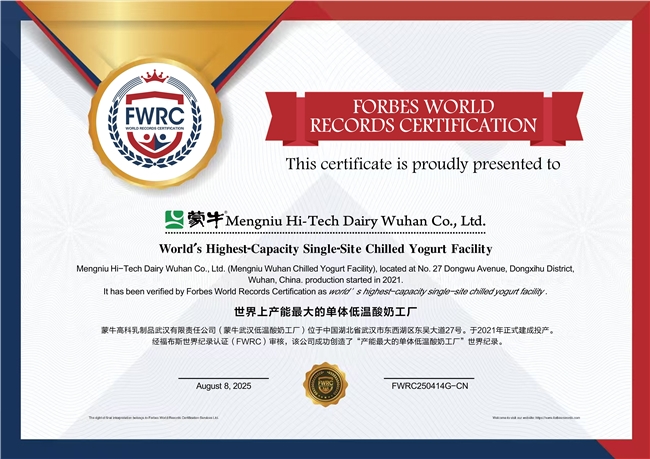
全球乳业新标杆! 蒙牛低温武汉工厂荣膺FWRC福布斯世界之最桂冠
Zhong Jin Zai Xian· 2025-08-09 10:36
Core Viewpoint - Mengniu's low-temperature Wuhan factory has been certified as the "largest single low-temperature yogurt factory in the world," marking a significant achievement in China's dairy industry and showcasing its innovation-driven development [1][3][12]. Group 1: Factory Capacity and Certification - The Mengniu low-temperature Wuhan factory, which began operations in 2021, has a planned production line of 22 and a daily capacity of 1,432.16 tons [3]. - The factory underwent a rigorous certification process by FWRC, confirming its world-class scale and intelligent production capabilities [3][7]. - The factory's capacity was initially the largest in Asia and has now set a new world record, highlighting its leadership in global production capacity [3][12]. Group 2: Smart Manufacturing and Supply Chain - The factory focuses on "smart," "flexible," "innovative," and "green" production, utilizing advanced intelligent flexible production lines to enhance efficiency [5][7]. - It has established a 72-hour golden supply chain, ensuring high-speed flow and precise control from raw materials to consumers [7]. - The factory's logistics network covers 22 provinces with 105 delivery routes, ensuring agile responses to diverse market demands [7]. Group 3: Research and Development - Mengniu has set up nine R&D bases globally, with a 13.4% increase in R&D investment over the past three years [9]. - The company has developed a proprietary resource library with over 18,000 strains of probiotics, achieving international leadership in probiotic research [9][11]. - Mengniu's proprietary strain PC-01 has an 88% improvement rate for digestive discomfort, aligning with the "Healthy China 2030" strategy [9][11]. Group 4: Quality Standards and Consumer Health - Mengniu has established a comprehensive 4Q quality management system, with all products, including those from the Wuhan factory, certified under EU food safety standards [12][15]. - The factory is recognized as a key producer of student milk, with an annual production capacity of 94,000 tons, making it the largest single low-temperature yogurt production base for student milk in China [12][15]. - Mengniu's commitment to quality is supported by a network of 35 laboratories and a significant investment in testing equipment, ensuring rigorous quality control throughout the production process [15][17]. Group 5: Future Outlook - Mengniu aims to continue enhancing its world-class factory, R&D, and quality standards to lead the high-quality development of China's dairy industry [17]. - The company serves 70 million families annually, providing 9 billion cups of yogurt, reflecting its commitment to consumer health and satisfaction [17].


官方减重方案已出,照做就能瘦!
GLP1减重宝典· 2025-07-22 07:56
Core Viewpoint - The article emphasizes the urgent need for weight management in China due to the rising obesity rates among both adults and children, which poses significant health risks and economic burdens [3][4][5]. Summary by Sections Obesity Trends - Over the past decade, China's obesity population has surged, making it the country with the highest number of obese individuals globally. Adult obesity numbers rose from 190 million in 2015 to 230 million in 2024, with the obesity rate increasing from 14% to 16.4% during the same period. Projections suggest that by 2030, the obesity rate could reach 25%, with over 350 million obese individuals [3]. Child Obesity - The number of obese children has also increased from 18 million to 27 million. The obesity rates for preschool children (under 6 years) rose from 3.6% in 2015 to 5.8% in 2024, while school-age children (6-17 years) saw an increase from 7.9% to 11.3%. Notably, 70%-80% of obese adolescents are likely to remain obese into adulthood, heightening chronic disease risks [4]. Economic and Health Impacts - The economic burden of obesity-related healthcare costs exceeded 300 billion yuan in 2024, accounting for 15% of total national medical expenditures. This figure is expected to rise to 418 billion yuan by 2030, representing 21.5% of total spending. Additionally, 89.1% of obese individuals suffer from at least one chronic disease, with cardiovascular disease mortality rates linked to obesity reaching 11.98% [4]. Weight Management Initiatives - In response to the obesity crisis, the National Health Commission, along with 16 other departments, launched a "Weight Management Year" initiative from 2024 to 2026. The initiative aims to reduce disease risks associated with obesity through effective weight management strategies [5]. Recommendations for Weight Management - The article outlines that successful weight management relies on a combination of diet and exercise, with a suggested ratio of three parts exercise to seven parts diet. Practical tips include eating slowly to reduce calorie intake and engaging in regular physical activity, with recommended exercise times being between 4 PM and 7 PM [6].
重磅中国肥胖报告:41.1%男性超重,九成肥胖者伴有脂肪肝、糖尿病前期等并发症
GLP1减重宝典· 2025-07-16 04:12
Core Viewpoint - The article highlights the increasing prevalence of obesity in China, emphasizing the need for effective weight management strategies in response to the "Healthy China 2030" initiative [1][4]. Summary by Sections Obesity Prevalence - A recent study reveals that among 15.8 million adult participants, 34.8% are overweight (BMI 24-28 kg/m²) and 14.1% are obese (BMI ≥28 kg/m²) [5]. Age and Gender Differences - Obesity rates show significant gender differences, with 41.1% of men being overweight compared to 27.7% of women, and 18.2% of men being obese versus 9.4% of women [6]. - The peak age for overweight men is between 50-54 years, while for women it is 65-69 years. The highest obesity rates for men occur at 35-39 years, while for women it peaks at 70-74 years [6]. Geographic Disparities - Individuals in northern China are more prone to obesity than those in the south, with Inner Mongolia, Shandong, and Hebei showing the highest rates of overweight and obesity [8]. Comorbidities Associated with Obesity - Nearly 90% of obese individuals have comorbidities, with the most common being fatty liver (34.9%), prediabetes (27.6%), dyslipidemia (24.9%), and hypertension (17.6%) [9]. - The likelihood of having comorbidities increases with higher BMI, indicating a direct correlation between weight and health issues [10]. Trends in Younger Populations - The report indicates a rising trend in overweight and obesity rates among younger populations, stressing the importance of self-discipline in maintaining a healthy lifestyle [11]. Effective Weight Management Strategies - Recommendations for effective weight management include maintaining a balanced diet, engaging in regular physical activity, monitoring weight regularly, managing hunger, and adopting a gradual approach to weight loss [12][15][18][20][21]. - The World Health Organization suggests a weight loss target of 0.5-1 kg per week to ensure health and sustainability [22].

健康中国再提速:三年体重管理新政全解!国家战略升级,从“吃饱”迈向“吃好”,从“治已病”走向“防未病”
GLP1减重宝典· 2025-07-13 04:49
Core Viewpoint - The article emphasizes the importance of weight management as a core health indicator for the Chinese population, highlighting the government's initiative to promote awareness and skills related to weight management to prevent chronic diseases [6][12][14]. Group 1: Government Initiatives - The National Health Commission announced the "Weight Management Year" initiative, aiming to enhance public awareness and capabilities in weight management starting in 2024, with a focus on chronic disease prevention [6][7]. - The initiative targets all age groups and emphasizes the family as a fundamental unit for health management, urging families to take responsibility for their health [6][12]. - The goal is to establish a supportive environment for weight management, improve public awareness and skills, and promote healthy lifestyles over three years [7][12]. Group 2: Health Statistics - Over 50% of Chinese residents aged 18 and above are overweight or obese, with obesity rates among children and adolescents reaching nearly 20% and 10% respectively [12][13]. - The rise in obesity is linked to an increase in chronic diseases, with over 200 million people in China suffering from obesity-related conditions, including diabetes and hypertension [13][14]. Group 3: Weight Management Strategies - Effective weight management requires a multi-faceted approach involving personal responsibility, social support, and government policies [15][16]. - Key strategies include promoting balanced diets, regular physical activity, adequate sleep, and positive mental health [20][21][22]. - The article outlines specific recommendations for weight management, such as monitoring weight and waist circumference, maintaining a balanced diet, and engaging in regular exercise [19][20][21]. Group 4: Importance of Family Involvement - Family support is crucial for successful weight management, as dietary and exercise habits within the family significantly influence individual behaviors, especially in children and adolescents [24].

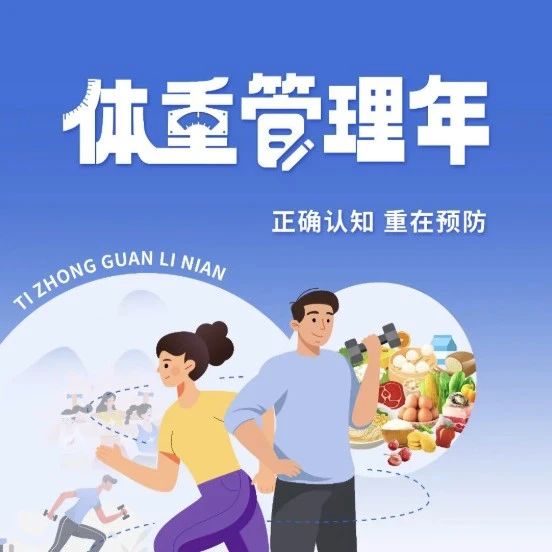
聚焦体重管理,国家行动来了!内附权威知识与实用海报
GLP1减重宝典· 2025-06-30 07:46
Core Viewpoint - The article emphasizes the importance of weight management as a critical aspect of public health, particularly in combating chronic non-communicable diseases in China, aligning with the "Healthy China 2030" strategy [3][4]. Group 1: Chronic Disease Prevention and Weight Management - The main risk factors affecting residents' health in China are chronic non-communicable diseases, closely linked to lifestyle habits, dietary structure, and exercise, particularly abnormal weight issues [3]. - The initiative will focus on three main areas: community involvement, knowledge dissemination, and personalized services for weight management [4][5][6]. Group 2: Weight Management Guidelines - Weight is a core indicator of nutrition and health, and both high and low weights can lead to health risks; thus, a preventive approach through balanced diet and regular exercise is essential [7]. - Maintaining an ideal weight significantly reduces the risk of various chronic diseases, making weight management a lifelong commitment [8]. - Regular monitoring of weight and body metrics is crucial, with the Body Mass Index (BMI) being the standard for assessing weight status [10][11]. Group 3: Dietary and Lifestyle Recommendations - Recommended dietary practices include choosing low-calorie, high-nutrition foods, limiting high-calorie items, and developing good eating habits [19]. - Regular physical activity is vital for weight management, with suggestions for integrating exercise into daily routines [20]. - Quality sleep and a positive mindset are important for maintaining a healthy weight, with adults advised to get 7-8 hours of sleep [21]. Group 4: Family Involvement in Weight Management - Weight management should involve the entire family, with each member taking responsibility for their health and supporting one another in adopting healthy lifestyles [23]. Group 5: Intervention and Treatment for Overweight and Obesity - Personalized weight loss goals should be set gradually, with specific recommendations for different BMI categories [24]. - Lifestyle interventions, medical treatments, and innovative management systems are essential for effective weight management [27].

央视重磅发布:体重管理年正式启动 三年行动全面推进
GLP1减重宝典· 2025-06-22 07:21
Core Viewpoint - The article emphasizes the importance of weight management as a national health strategy, highlighting the rising obesity rates in China and the associated health risks, urging individuals to take proactive steps towards maintaining a healthy weight [3][10][11]. Group 1: National Health Strategy - The "Weight Management Year" initiative is part of the "Healthy China 2030" strategy, aiming to combat the obesity crisis and promote public health [3][10]. - By 2030, it is projected that the overweight and obesity rates among adults and children in China will reach 70.5% and 31.8% respectively if no action is taken [10][11]. Group 2: Health Risks Associated with Obesity - Chronic diseases such as hypertension, diabetes, cardiovascular diseases, and even cancer are linked to uncontrolled weight, making obesity a significant health threat [3][7]. - The article warns that the increase in weight is associated with various health issues, including fatty liver, metabolic disorders, and joint damage [7]. Group 3: Recommended Actions for Individuals - Individuals are encouraged to make small dietary adjustments, such as reducing oil and salt intake and increasing physical activity by walking an extra 1,000 steps daily [7]. - The article suggests practical dietary changes, including substituting white rice with whole grains, ensuring a nutritious breakfast, and avoiding high-energy foods [11]. Group 4: Community and Professional Support - The initiative calls for community participation in weight management and offers resources such as professional nutritionists and health coaches to help individuals create personalized dietary plans [7][10].