全球经济治理

Search documents
详讯 | 习近平同特朗普举行会晤
财联社· 2025-10-30 06:29
Core Points - The meeting between Chinese President Xi Jinping and U.S. President Donald Trump emphasized the importance of maintaining stable U.S.-China relations, highlighting the need for cooperation despite differences [1][4] - Xi noted China's economic growth rate of 5.2% in the first three quarters of the year, with a 4% increase in global trade, showcasing resilience in the face of challenges [2] - Both leaders agreed to enhance cooperation in trade, energy, and cultural exchanges, and to maintain regular communication [5][6] Summary by Sections U.S.-China Relations - Xi emphasized the necessity for both countries to act as partners and friends, acknowledging that while differences exist, cooperation is essential for mutual benefit [1] - The leaders discussed the importance of economic ties as a stabilizing force in their relationship, advocating for a focus on long-term benefits rather than retaliatory actions [3] Economic Performance - China's economy demonstrated a growth rate of 5.2% in the first three quarters, with a notable 4% increase in global trade, indicating strong economic fundamentals [2] - The Chinese government plans to deepen reforms and expand openness, aiming for qualitative and quantitative improvements in economic development [2] Cooperation and Dialogue - Both leaders agreed on the importance of dialogue over confrontation, with a focus on enhancing communication across various channels to foster understanding [3] - The potential for collaboration in areas such as combating illegal immigration, telecommunications fraud, and public health was highlighted as a positive avenue for U.S.-China relations [3] Future Engagements - Trump expressed his desire to visit China in the near future and extended an invitation for Xi to visit the U.S., indicating a commitment to ongoing engagement [6] - The upcoming APEC and G20 summits were mentioned as opportunities for both nations to support each other and achieve positive outcomes for global economic governance [3][4]

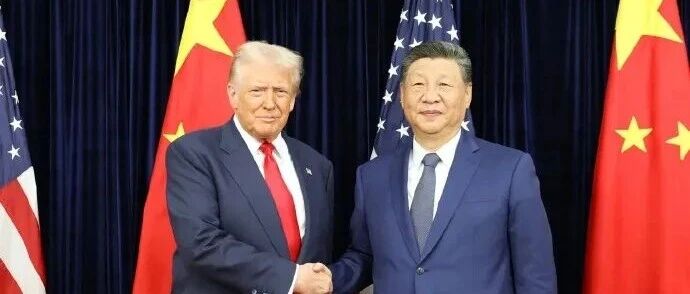
习近平同美国总统特朗普在釜山举行会晤
Xin Hua She· 2025-10-30 06:21
Group 1 - The meeting between Chinese President Xi Jinping and U.S. President Donald Trump emphasizes the importance of maintaining stable U.S.-China relations, recognizing the need for cooperation despite differences [1][4] - Xi highlighted China's economic growth rate of 5.2% in the first three quarters of the year and a 4% increase in global trade, showcasing China's resilience and potential [2] - Both leaders agreed to enhance cooperation in trade, energy, and cultural exchanges, indicating a commitment to mutual benefits [5] Group 2 - The economic teams from both countries have reached a consensus on key trade issues, aiming to implement practical outcomes to stabilize U.S.-China relations [3] - Xi stressed the importance of dialogue over confrontation, advocating for continued communication across various channels to foster understanding [3] - Trump expressed optimism about the future of U.S.-China relations, highlighting the potential for significant achievements through collaboration [4][6]
构建开放型世界经济的中国担当
Xin Hua Wang· 2025-10-23 06:22
Group 1: China's Economic Contribution - China maintains an average contribution rate of approximately 30% to global economic growth during the "14th Five-Year Plan" period, with its economic total share of the world economy increasing from 11.3% in 2012 to 17.1% in 2024 [2] - China's goods trade volume has consistently ranked first globally for several years, and it remains a leading destination for foreign investment and outward investment [2] - The country is expected to continue being the largest contributor to global economic growth over the next decade, driven by its large economic scale and ongoing industrial transformation [2] Group 2: Domestic Market Dynamics - With a population exceeding 1.4 billion and over 400 million middle-income individuals, China's domestic market is a significant driver of global opportunities, boasting nearly 50 trillion yuan in consumption and over 20 trillion yuan in imports annually [3] - China has been the second-largest consumer market and the largest online retail market globally for over a decade, with a shift towards service consumption and structural upgrades in the market [3] - The country's innovation landscape is thriving, with significant advancements in emerging industries such as artificial intelligence, 5G, and renewable energy, contributing to both domestic economic transformation and global development [3] Group 3: International Cooperation and Trade - China actively engages in international cooperation to enhance global economic connectivity, exemplified by the establishment of trade links with countries like Peru through initiatives such as the Belt and Road [6] - The country has signed numerous free trade agreements and expanded its trade partnerships, becoming a key trading partner for over 150 countries and regions [7] - China's commitment to multilateral trade systems and regional trade arrangements is evident through its participation in various trade agreements and initiatives aimed at fostering global economic collaboration [7] Group 4: Global Economic Governance - China is taking proactive steps to reform the global economic governance system, aligning its high-level opening-up policies with international trade rules to facilitate trade and investment [8] - The establishment of free trade zones and the reduction of foreign investment restrictions reflect China's strategy to enhance its global economic integration and cooperation [8] - China's advocacy for a more inclusive and balanced global governance framework is underscored by its support for developing countries and its participation in multilateral platforms [9] Group 5: Future Outlook - As the "14th Five-Year Plan" concludes, China is poised to continue its trajectory of high-quality development, contributing to global economic stability and growth [10] - The country's open and inclusive approach aims to expand global market opportunities and enhance collaborative mechanisms for shared prosperity [10] - China's role as a stabilizing force in the global economy is increasingly recognized, with its commitment to multilateralism and global cooperation being pivotal in addressing contemporary economic challenges [10]
2025虹桥论坛八大筹办亮点抢先看
Xin Hua Cai Jing· 2025-09-26 14:17
Group 1 - The eighth Hongqiao International Economic Forum is themed "Open Cooperation for New Opportunities, Shared Future" and aims to address global governance challenges while promoting multilateralism [2][10] - The forum will feature 25 sub-forums and multiple closed-door meetings, incorporating over a hundred suggestions from various stakeholders to ensure a balance of macro perspective and practical value [3][9] - The event is expected to gather over 400 representatives from governments, international organizations, and top scholars, including nearly 10 Nobel laureates, marking a historical high for the forum [4][9] Group 2 - The forum will release significant reports, including the "World Open Report 2025," co-authored by Nobel laureates and experts from the UN Industrial Development Organization, highlighting global openness and China's high-level openness [5] - A multi-dimensional communication platform will be established to facilitate networking among attendees, enhancing interaction before, during, and after the forum [6] - The forum will leverage the simultaneous hosting with the China International Import Expo to optimize resource interaction, including tailored exhibition routes for guests [7][9] Group 3 - The forum is co-hosted by eight national ministries and six international organizations, ensuring professional content and a global perspective [9] - A comprehensive promotional matrix has been established, integrating various media channels to enhance visibility and engagement for the forum's initiatives [10]
商务部:中国发展中国家的地位和身份没有改变
Qi Huo Ri Bao· 2025-09-25 16:08
Core Viewpoint - China announced at the 80th United Nations General Assembly that it will not seek new special and differential treatment in current and future World Trade Organization negotiations, emphasizing its role as a responsible developing country [1] Group 1: China's Position in Global Trade - China reaffirms its status as the largest developing country, maintaining its identity and position within the global South [1] - The announcement reflects China's commitment to true multilateralism and support for a rules-based multilateral trading system [1] Group 2: Development Agenda - China aims to place development at the center of the World Trade Organization's agenda, seeking to bridge the development gap between the Global North and South [1] - The country emphasizes the importance of improving global economic governance and building an open world economy [1]
从百姓视角看全球经济治理变革
Guo Ji Jin Rong Bao· 2025-09-12 12:51
Group 1 - Offshore finance serves as a "convenient window" for international business, simplifying cross-border transactions for companies [2][3] - In 2024, a Chinese new energy vehicle company financed its Hungarian factory through Hong Kong's offshore financial center, reducing costs by 2%, which led to a price drop of 3,000 yuan for domestic models [4] - The average price of consumer goods financed through offshore financial channels decreased by 8% in 2024, benefiting consumers directly [4] Group 2 - Offshore finance enhances the usability of the renminbi abroad, with over 60% of Southeast Asian merchants supporting direct renminbi settlement, reducing exchange fees from 1.5% in 2019 to 0.3% in 2024 [5] - By the end of 2024, the renminbi's deposit scale in offshore markets reached 1.2 trillion USD, facilitating easier transactions for more countries [5] Group 3 - Offshore finance helps companies establish secure supply chains abroad, with a high-tech company setting up a research center in Singapore to avoid technology restrictions, stabilizing 2,000 domestic engineering jobs [6] - Companies utilizing offshore strategies have a 37% higher job stability compared to those without such strategies [6] Group 4 - A robust offshore financial system enhances China's risk resistance, with over 50 billion USD repatriated during global financial fluctuations in March 2024, stabilizing the renminbi exchange rate [7] - The fluctuation of gasoline prices in 2023 was controlled within 3%, significantly lower than the 15% during the 2008 financial crisis, showcasing the strength of the financial system [7] Group 5 - Global economic governance issues can directly impact ordinary people's lives, as seen in Sri Lanka's debt crisis affecting medicine availability and EU carbon tariffs increasing car prices [9][10] - The price of Thai jasmine rice in supermarkets is influenced by the USD exchange rate, with a 10% increase in 2024 due to the Federal Reserve's interest rate hikes [10] Group 6 - Trade rules significantly affect consumer prices, with direct renminbi purchases of Russian oil reducing costs by 0.3 yuan per liter compared to USD transactions, saving drivers nearly 20 billion yuan annually [11] - Simplifying import processes for essential goods like cancer drugs could reduce prices by up to 40% [11] Group 7 - The establishment of free trade agreements, such as the African Continental Free Trade Agreement, has led to a 50% increase in sales for Chinese machinery in Africa, resulting in wage increases for workers [12] - The semiconductor supply chain's restrictions have led to a 15% production cut for some domestic brands, affecting employment [12] Group 8 - China's participation in global governance reforms aims to ensure fair rules that benefit its citizens, focusing on protecting the interests of workers in manufacturing and agriculture [21][24] - The introduction of "zero barriers" in digital trade could enhance access to overseas services and reduce costs for consumers [16]
不服就干!印度打响反击第一枪,通告全球,断的就是特朗普退路
Sou Hu Cai Jing· 2025-08-11 02:00
Group 1 - India is at the center of global trade dynamics, facing significant pressure from the U.S. due to Trump's tariff policies aimed at addressing trade deficits, with tariffs reaching up to 50% on Indian goods starting August 2025 [2] - The trade conflict reflects deeper geopolitical considerations, as India utilizes historical data to challenge the U.S. on its perceived double standards, particularly regarding agricultural market barriers and energy imports from Russia [4][5] - India's strategic response includes a careful balance of retaliatory measures and diplomatic maneuvers, such as submitting a proposal for retaliatory tariffs to the WTO without immediate implementation, allowing room for negotiation [7][8] Group 2 - The conflict highlights the complexities of global economic governance, with emerging economies like India demanding fair rules rather than unilateral concessions, signaling a potential end to the era of unilateral pressure [8] - India's actions, including the revival of tourism visas for Chinese citizens and easing restrictions on Chinese investments, indicate a strategic pivot towards the East amidst Western pressures [7] - The situation underscores the challenges faced by the Trump administration, as the reliance on tariffs may not effectively resolve trade deficits, especially given India's large population and significant energy and agricultural needs [8]

扩大高水平对外开放的丰富内涵和实施重点
Jing Ji Ri Bao· 2025-08-05 22:19
Group 1 - The core viewpoint emphasizes that expanding high-level opening-up is essential for China's economic high-quality development and modernization, guided by Xi Jinping's economic thought [1][2] - High-level opening-up is characterized by aligning with international high-standard economic and trade rules, which includes comprehensive market openness and the removal of trade barriers [3] - The current global economic landscape is undergoing significant changes, necessitating a proactive approach to international economic cooperation and rule alignment [3][4] Group 2 - High-level opening-up serves to construct a new development pattern that integrates domestic and international markets, enhancing the interdependence and mutual promotion of both [4][5] - The development of new quality productivity is crucial, requiring a favorable international environment facilitated by high-level opening-up [5][6] - The need for cooperation and mutual benefit in global economic engagement is highlighted, advocating for a shared approach to global market expansion [6][7] Group 3 - Key tasks for expanding high-level opening-up include focusing on critical areas and weak links, such as reforming state-owned enterprises and enhancing the business environment for foreign investment [8][9] - Optimizing trade structures and expanding cooperation spaces are essential, with an emphasis on integrating domestic and foreign trade [9][10] - Establishing a robust security framework for an open economy is necessary to manage risks associated with foreign investment and cross-border capital flows [10][11]
G20财长和央行行长第三次会议在南非开幕
news flash· 2025-07-17 20:46
Core Viewpoint - The G20 finance ministers and central bank governors meeting emphasizes the need for global cooperation to address the challenging economic environment [1] Group 1 - The South African finance minister, Godongwana, highlighted multiple challenges facing the global economy, including weak recovery, increasing trade barriers, and structural imbalances [1] - The G20 is recognized as a crucial platform for global economic governance, with a call to reform and improve the international financial architecture [1]

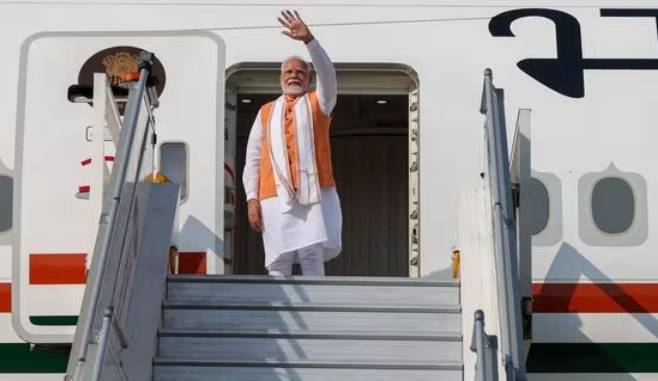
面对特朗普关税威胁,莫迪为何选择向中国靠拢?金砖合作引发全球关注
Sou Hu Cai Jing· 2025-07-05 18:54
Group 1 - The core viewpoint is that the U.S. is attempting to maintain its economic dominance through high tariffs on Chinese goods while facing challenges from globalization and the rise of other economic powers [1][6]. - India is positioned as a key player in reshaping global trade rules, with Modi's diplomatic efforts aimed at strengthening ties with non-Western countries to counter U.S. pressure [3][8]. - The BRICS nations, accounting for half of the global GDP, are becoming increasingly significant in the formulation of future international economic rules, highlighting India's strategic autonomy and its potential for greater influence in global affairs [3][8]. Group 2 - China's stance against using its interests as negotiation leverage provides support for Modi in negotiations with the U.S., allowing for a more confident approach [5]. - India's reliance on rare earth resources reflects a need to maintain a good relationship with China to ensure resource security and economic stability amid external pressures [6]. - The U.S. trade policies are likely to face backlash, as the zero-sum game mentality may not align with the realities of global economic interdependence, potentially harming U.S. interests in the long run [6][8].