
全链条监管

Search documents
守护食品安全只有进行时
Jing Ji Ri Bao· 2025-10-09 00:09
Core Viewpoint - Food safety is essential for public health and is a key component in building a modern socialist country, with the recent 2025 National Food Safety Publicity Week emphasizing the importance of safeguarding food safety [1] Group 1: Regulatory Developments - Since the 14th Five-Year Plan, China has placed significant emphasis on food safety, enhancing regulatory measures across the entire supply chain to prevent risks and maintain safety standards [1] - The release of the "Opinions on Further Strengthening Food Safety Full-Chain Regulation" marks a new phase in China's food safety governance, focusing on comprehensive regulation across all stages and elements [2] - The draft amendment to the Food Safety Law introduces stricter regulations for key liquid foods and emphasizes severe penalties for violations, reflecting the increasing demands for food safety from the public [2] Group 2: Industry Challenges - The complexity of the food safety chain, with numerous stakeholders, means that any lapse in control can lead to safety risks, especially with the emergence of new technologies and business models [1] - The rising living standards of the population have led to heightened expectations for food safety, necessitating a shift towards a more rigorous regulatory approach [2] Group 3: Preventive Measures and Community Involvement - The government is moving from reactive measures to proactive prevention, encouraging food industry employees to report safety risks through an internal whistleblower system [3] - The launch of the "You Point, I Test" public opinion collection system aims to enhance community involvement in food safety governance, promoting a collaborative approach to ensuring food safety [3]
以“全链条治理”重塑消费信任新生态
Xiao Fei Ri Bao Wang· 2025-09-05 02:40
Core Viewpoint - The article highlights the significant regulatory reforms in China's health food industry over the past five years, emphasizing the low non-compliance rate and the establishment of a comprehensive regulatory framework aimed at enhancing consumer trust and ensuring product safety [1][2]. Regulatory Achievements - The National Market Supervision Administration has conducted over 175,000 product inspections in five years, maintaining a non-compliance rate below 0.6% [1]. - A total of 31,000 illegal cases have been investigated, resulting in fines amounting to 540 million yuan and the resolution of 12,000 criminal cases [1]. - The self-inspection report and issue rectification rates for production companies have reached 100%, indicating thorough oversight at every production stage [1]. Regulatory Framework - The regulatory approach employs a "full-chain supervision" model, which includes pre-registration checks, dynamic monitoring during production, and random inspections in the market [1]. - Innovations in regulation, such as the "You Shoot, I Check" initiative, empower consumers to act as watchdogs by reporting illegal activities through mobile devices [1]. - The introduction of a "responsibility list" for direct sales companies extends regulatory oversight to sales terminals, enhancing accountability [1]. Consumer Trust and Market Impact - Continuous low non-compliance rates and effective curtailment of false advertising have led to a gradual increase in consumer confidence in domestic health food products [2]. - Surveys indicate that most respondents prefer purchasing health foods through legitimate channels, reflecting the trust built over five years of regulatory efforts [2]. - The regulatory reforms are seen as a critical step in constructing a vibrant and orderly health food market, contributing to the broader goal of a "Healthy China" initiative [2].
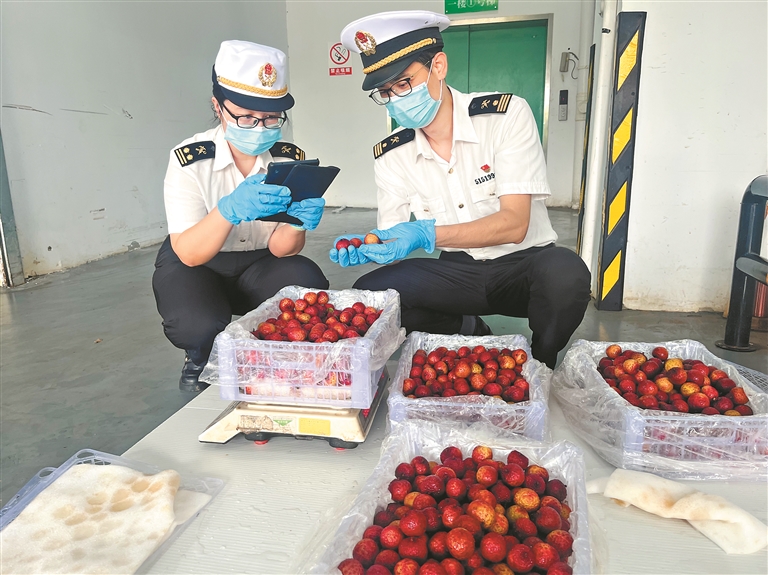
从化:十项措施助“荔”产销 “甜蜜果”变“致富果”
Guang Zhou Ri Bao· 2025-08-28 02:08
Core Insights - The article highlights the innovative measures taken by the Conghua District to enhance the production and sales of lychee, focusing on a comprehensive management system that integrates various stages of the supply chain [1][4][6]. Group 1: Production Management - The Conghua District has implemented a "two flowers and three fruits" management strategy, which includes precise control during critical growth periods, covering a planting area of 300,000 acres [4]. - Agricultural technicians have been deployed for on-site guidance, with 219 visits made by agricultural specialists to support local farmers [4][5]. - The use of plant growth regulators and appropriate irrigation techniques has helped mitigate the impact of fluctuating temperatures on lychee flowering, resulting in a production yield of approximately 20,000 pounds from a 300-acre base [1]. Group 2: Sales and Export - The district has established a "green channel" for lychee exports, enabling 24-hour rapid customs clearance, which has significantly boosted international sales [6]. - In June, prior to the lychee harvest, over 47,000 tons of lychee orders were secured, accounting for more than 60% of the total production [5]. - By mid-July, approximately 4,000 tons of lychee were exported, generating a revenue of 85 million yuan [5]. Group 3: Market Expansion Strategies - The district is focusing on expanding sales through three main markets: international, domestic, and local, with initiatives such as live-streaming sales events that attracted over 16.21 million views [6]. - A cultural tourism season has been launched to promote local lychee varieties, enhancing consumer engagement and sales [6]. - A robust cold chain logistics network has been established, connecting 143 cold storage facilities to improve lychee preservation and reduce losses [6].

规范文旅业态,让暑期游玩更安心(民生一线)
Ren Min Ri Bao· 2025-08-18 22:31
Core Insights - The summer tourism market is thriving, but issues such as low-price tactics, street operations, regulatory blind spots, and safety hazards are affecting visitor experiences and the high-quality development of the cultural tourism industry [2] Group 1: Travel Photography - The travel photography industry is facing challenges with unregulated pricing and management, leading to negative impacts on tourist experiences [3][4] - Some scenic spots in Zhejiang have begun implementing management measures, such as dividing shooting areas into free and paid zones, and requiring reservations to limit crowding [3] - The establishment of unified pricing standards and improved management in areas like Tongzhou Island has enhanced visitor experiences while increasing local revenue [4] Group 2: Immersive Experiences - Immersive experience activities like escape rooms are growing in popularity but face issues of unregulated growth and safety concerns [6] - A collaborative regulatory mechanism has been established in Jin City to address the challenges of traditional oversight, involving multiple departments for better coordination [7] - Recommendations for the immersive experience sector include developing content classification guidelines and enhancing brand culture [7] Group 3: Water Sports Safety - The safety of water sports is a top priority during peak tourist seasons, with measures in place to ensure visitor safety at popular locations like Wanpingkou Scenic Area [8] - A comprehensive emergency response system has been established, integrating resources from police, fire, and medical services to ensure rapid response to incidents [9] - The scenic area has implemented proactive measures, including the construction of a safety observation tower and real-time monitoring of weather conditions to manage risks effectively [9]

针对旅拍、沉浸式体验、水上运动等存在的问题 一些地方出台举措 规范文旅业态 让暑期游玩更安心(民生一线)
Ren Min Ri Bao· 2025-08-18 22:12
Group 1: Tourism Market Insights - The summer tourism market is vibrant, but issues such as low pricing tactics, street operations, regulatory blind spots, and safety hazards are affecting visitor experiences and the high-quality development of the tourism industry [1] - Tourists express a desire for enjoyable and worry-free experiences, highlighting the need for effective governance in the tourism sector [1] Group 2: Travel Photography Regulation - In Hangzhou, a travel photography studio's misleading pricing led to a final bill of 1800 yuan, raising concerns about the impact of commercial photography on tourist experiences [2] - The West Xixi Wetland scenic area has implemented a management guideline that includes free and paid photography zones, requiring reservations and limiting the number of commercial photography teams to ten per day [2][3] - The local government has taken steps to standardize fees and improve management in areas like Tongzhou Island, enhancing both revenue and visitor experiences [2] Group 3: Immersive Experience Regulation - The rise of immersive experiences like escape rooms has boosted tourism consumption but also led to unregulated growth and safety concerns [5] - A collaborative regulatory framework has been established in Jin City, involving multiple departments to ensure comprehensive oversight of new tourism enterprises and projects [5][6] - Ongoing inspections focus on safety measures and compliance with regulations, particularly in venues that may pose fire hazards [6] Group 4: Water Sports Safety Measures - The Wanpingkou scenic area has developed a comprehensive safety management system for water sports, including a 24-hour monitoring and response mechanism [7] - The area has established a rescue team and equipped it with various emergency response tools, ensuring quick action in case of incidents [7][8] - The scenic area collaborates with meteorological and public safety departments to monitor weather conditions and adjust safety measures accordingly [8]
陕西省四部门联合打击黄河非法采砂
Shan Xi Ri Bao· 2025-07-22 06:35
Core Viewpoint - The joint action "Bright Sword Protect River 2025" aims to comprehensively address illegal sand mining in the Yellow River basin of Shaanxi Province, establishing a robust ecological safety barrier [1][2] Group 1: Key Tasks and Measures - Focus on four key tasks to combat illegal sand mining, including strict management of planning and permits, accelerated development of new sand mining management plans, and clear delineation of allowable and prohibited areas [1] - Implementation of an electronic management system for sand and gravel transportation to ensure traceability throughout the entire process [1] - Targeting key river sections such as the Yellow River mainstream, Weihe, and Wudinghe for strict enforcement against illegal activities, including unlicensed mining and excessive extraction [1] Group 2: Collaborative Enforcement and Public Involvement - Establishment of a collaborative mechanism involving water resources, prosecution, public security, and transportation departments to create a comprehensive regulatory system [2] - The initiative aims to maintain river stability and ensure safety for flood control, ecology, and infrastructure, encouraging public participation in reporting illegal sand mining activities [2]
提升尾气治理成效需全链条“打假”
Zhong Guo Huan Jing Bao· 2025-07-16 00:14
Core Viewpoint - The article highlights the importance of strict regulation and accountability in the vehicle exhaust emission testing industry, emphasizing the need for a comprehensive approach to tackle fraudulent practices across all related sectors [1][2]. Group 1: Incident Overview - An environmental department discovered that a vehicle emission testing company issued a false compliance report for a heavy diesel truck lacking a catalytic converter, which is essential for exhaust purification [1]. - The investigation revealed that the truck owner had received a substandard exhaust pipe replacement from a repair shop, which did not contain a catalytic converter [1]. - The environmental authorities took action against the testing company and traced the issue back to the manufacturer of the defective exhaust pipes, leading to investigations and penalties for all involved parties [1]. Group 2: Regulatory Recommendations - The article suggests establishing a robust information-sharing and enforcement mechanism among regulatory bodies to ensure comprehensive oversight of all links in the vehicle exhaust management chain [2]. - It emphasizes the need for coordinated efforts to address multi-link fraudulent activities, ensuring that any violations are thoroughly investigated from all angles [2]. - The use of media for public exposure of fraudulent practices is recommended to deter potential offenders and promote awareness among industry participants about the consequences of engaging in deceitful activities [2].
全链条监管!上半年64家券商收超200张罚单,剑指投行、经纪业务“痼疾”
Xin Lang Cai Jing· 2025-07-07 00:05
Group 1 - The core viewpoint of the article highlights the intensified regulatory scrutiny on the brokerage industry in the first half of 2025, with over 200 penalties issued to 64 brokerages, indicating a robust regulatory framework focusing on both institutions and individuals [1][2][3] - The "dual penalty" system, which penalizes both institutions and individuals for violations, has become a norm, aiming to enhance internal management and compliance within brokerages [1][3] - There has been a notable increase in penalties against key executives within brokerage firms, reflecting a shift towards holding senior management accountable for compliance failures [1][2] Group 2 - The regulatory approach has evolved to a comprehensive oversight of the entire investment banking process, with specific focus on due diligence and internal controls, as evidenced by multiple penalties issued for inadequate practices [2][3] - The enforcement of stricter internal control measures is expected to drive the industry towards a healthier development ecosystem, with leading brokerages needing to enhance their compliance and risk management practices [3][4] - The ongoing issues of employee misconduct in brokerage firms, particularly in trading activities, highlight the need for improved internal controls and compliance training [4][5] Group 3 - The China Securities Regulatory Commission (CSRC) has proposed revisions to the classification evaluation regulations for securities companies, emphasizing a "strike hard" approach to major violations, which could impact the market reputation and operational capabilities of non-compliant firms [5] - The adjustments in penalty scoring systems aim to create a clearer distinction between compliant and non-compliant firms, thereby enhancing market fairness and investor confidence [5]

我省在全国首推校园大宗食材电子化追溯管理
Liao Ning Ri Bao· 2025-07-06 01:15
Group 1 - The province has implemented a comprehensive electronic traceability management system for bulk food ingredients in schools, becoming the first in the country to do so [1][2] - As of the spring semester, over 3.023 million traceability records have been generated, with a school cafeteria system application rate of 51.88%, and 82.95% for primary and secondary schools [1] - The traceability management system aims to ensure the safety of food served to students by tracking the source, destination, and quality of food ingredients [1][2] Group 2 - The traceability management system includes four main entities: producers, purchasers, suppliers, and sellers of food products, as well as all school cafeterias and external catering units [2] - Key food products under traceability include vegetables, livestock, aquatic products, and pre-packaged foods like rice, flour, oil, and milk [2] - The system utilizes the "Food Safety Liaoning Code" throughout the procurement process in school cafeterias to ensure compliance and safety [2] Group 3 - All 48 agricultural wholesale markets in the province have adopted the "Food Safety Liaoning - Food Quality Safety Traceability System," achieving 100% electronic records for sellers and safety agreements [3] - The traceability system is supported by a mechanism that combines "certificates of conformity" with traceability to ensure comprehensive management [3] - Electronic documentation for food safety, including inspection reports and certificates, is being implemented to facilitate the traceability of food ingredients [3]
整治车检乱象当“蛇打七寸”
Guang Zhou Ri Bao· 2025-05-27 07:09
Core Insights - The investigation reveals rampant fraud in vehicle emissions testing, with third-party testing agencies engaging in deceptive practices to profit from falsified data [1][2] - The existence of a complete gray industry chain for emissions cheating, involving both hardware and software, allows for easy manipulation of vehicle data [1] - Current anti-cheating technologies are inadequate, and the penalties for violations are insufficient to deter fraudulent activities [2] Group 1: Emissions Testing Fraud - Numerous third-party testing agencies are found to be cheating by providing "guaranteed pass" services, often using OBD spoofing devices to falsify vehicle emissions data [1] - A specific case highlighted involved 13,000 identical OBD codes, indicating a lack of scrutiny in the testing process [1] - The shift of some agencies from merely assisting in fraud to actively profiting from it raises concerns about the integrity of vehicle emissions testing [1] Group 2: Challenges in Regulation - The current OBD system has vulnerabilities, such as inadequate anti-tampering features and a lack of real-time data upload mechanisms, which facilitate cheating [2] - The low cost of illegal gains compared to the penalties for violations leads to a lack of deterrence for fraudulent practices [2] - A multi-regional approach is necessary to combat the widespread nature of emissions testing fraud effectively [2] Group 3: Recommendations for Improvement - Immediate upgrades to testing equipment's anti-tampering capabilities are essential, including the promotion of OBD anti-rewriting features and pollution control device tampering alarms [2] - Establishing a comprehensive regulatory framework that includes stricter qualification standards for testing agencies and a blacklist system for fraudulent entities is crucial [2] - Enhanced collaboration among various departments and the establishment of a joint enforcement mechanism are vital for effective emissions regulation [3]