
公共文化服务

Search documents
从“守宝”到“传薪” 环县博物馆架起文物与时代连心桥
Xin Lang Cai Jing· 2025-12-30 09:46
从"守宝"到"传薪" 从文物保护的精耕细作到展览形式的创新突破,环县博物馆以实际行动践行文化使命,以守正创新传播 文明力量。"未来,我们将继续深耕文物保护与社会教育,推出更多优质展览与特色活动。"环县博物馆 馆长沈浩注说,博物馆将进一步扩大宣教服务范围,推进馆校、馆企深度合作,持续推动馆藏珍贵文物 走出展馆、走向公众,让文物真正"活起来""火起来",让更多人感受到环县文化的独特魅力。 环县博物馆架起文物与时代连心桥 责任编辑:顾洋 通讯员 刘红霞 环县博物馆跳出"围墙思维",将公共文化服务延伸至社会各个角落,近一年来充分利用"博悟课堂"社教 品牌,累计开展各类社教活动30场(次)、研学实践3次、"四进"活动20场(次)及学术讲座3场。"红 色经典诵读,励志当代少年""考古文化进校园"等主题活动,将红色基因与考古知识融入青少年成长历 程;"簪花入鬓 芳华共赏""香囊巧韵 彩绳编福"等节日限定活动,让传统习俗在亲子互动中代代相 传。"烽火台畔忆峥嵘:红色精神研学行""探寻农耕根脉,乐享丰收之喜"等研学实践活动走出展厅,实 现了"从博物馆到生活"的场景延伸。流动展览"灵蛇献瑞——乙巳蛇年生肖文物大联展"走进14所基 ...
“湾区之眼”感受“书香中国”
Xin Lang Cai Jing· 2025-12-20 19:01
(来源:工人日报) 作为"深圳新时代重大文化设施之一","湾区之眼"标志着深圳公共文化服务能级的一次飞跃。未来,湾 区书城与深圳图书馆的借阅系统有望实现互联互通,市民看到心仪的书籍,不但可以购买,也可以扫码 借阅。 视觉中国 供图 12月13日,深圳"湾区之眼"书店。这座获得缪斯设计奖铂金奖的全球最大实体书城,形似"双玉盘",面 积达13.1万平方米,藏书量超30万册。为方便读者探索这片广阔的知识天地,书城还提供了中英文版电 子导览地图。 ...
2026年度南京市公共文化服务项目对接活动吸引各区文化“买手”
Xin Lang Cai Jing· 2025-12-20 00:33
Core Insights - The 2026 Nanjing Public Cultural Service Project matching event attracted cultural "buyers" from various districts, resulting in 326 transactions, showcasing a strong demand for cultural offerings [1][4] Group 1: Event Overview - The event, titled "Cultural Flourish, Happy Nanjing," was organized by the Nanjing Municipal Bureau of Culture and Tourism and took place in the Qinhuai District, featuring over 100 cultural teams and service organizations [3] - Three thematic performance areas were set up: "Music and Dance Stage," "Elegant Music Workshop," and "Opera Pavilion," highlighting a diverse range of cultural products including performances, lectures, training, and aesthetic experiences [3] Group 2: Participation and Engagement - The event saw significant public engagement, with long queues at the folk experience area where citizens participated in hands-on activities to appreciate Nanjing's traditional culture [3] - A total of 326 cooperation intentions for 2026 cultural activities were reached, including 180 city-level performances, 84 lectures and training sessions, 46 district-level performances, and 16 district-level lectures and training sessions [4] Group 3: Cultural Experience and Community Impact - The folk experience area featured over 20 interactive projects, allowing families to engage in traditional crafts, thereby achieving the goal of "bringing culture home" [4] - The event also included a reading service area, where the "Yishulai" project from Jinling Library attracted citizens to participate in a book recycling initiative [4] Group 4: Strategic Importance - This matching event is part of Nanjing's ongoing efforts to enhance its public cultural service system, aiming to extend cultural resources to grassroots levels and deepen cultural benefits for the community [4]

文明华彩映琼州 和谐家园满目新
Hai Nan Ri Bao· 2025-12-16 01:47
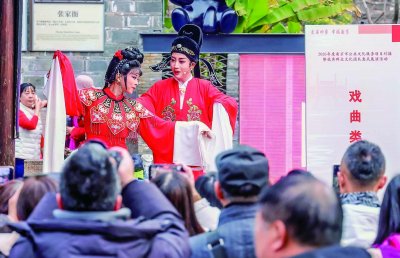
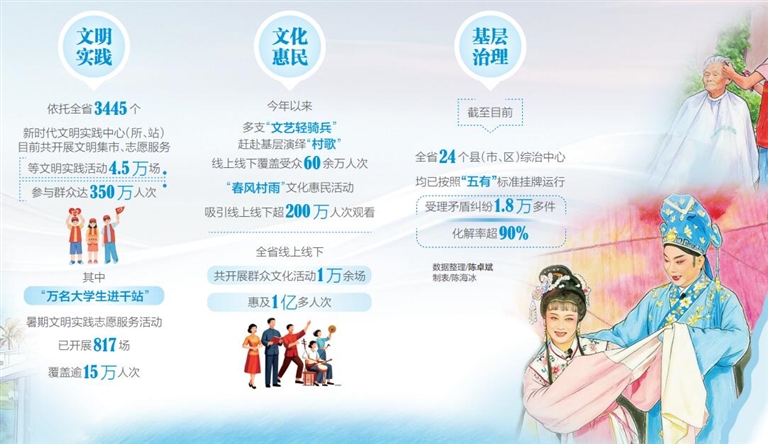
Core Viewpoint - Hainan is focusing on strengthening spiritual civilization, enriching cultural life for the masses, and deepening grassroots social governance, aiming to create a harmonious and stable society that enhances the sense of gain, happiness, and security for its residents [4]. Group 1: Spiritual Civilization and Cultural Life - The province is actively promoting the core socialist values and conducting mass spiritual civilization initiatives to enhance residents' cultural literacy and social civility [7]. - Various cultural activities, such as music festivals and community service, have attracted over 250,000 participants, showcasing the vibrant cultural scene in Hainan [4][8]. - The establishment of 3,445 new era civilization practice centers has facilitated 45,000 cultural events, engaging around 3.5 million people [8]. Group 2: Public Cultural Services - Hainan is enhancing public cultural services to improve the quality of life for its residents, with initiatives like the development of new cultural spaces and virtual exhibitions [10]. - The provincial government emphasizes the importance of public cultural services as a means to ensure cultural rights and improve living standards [10]. - Recent cultural events, such as the "Spring Village Evening" and various performances, have reached over 1 million participants, demonstrating the effectiveness of cultural outreach [12]. Group 3: Grassroots Social Governance - Hainan is advancing the establishment of comprehensive social governance centers to address community disputes efficiently, achieving a resolution rate of over 90% for more than 18,000 cases [14]. - The integration of data from 26 departments into a social management information platform enhances real-time monitoring and response capabilities for social governance [15]. - The provincial government is committed to maintaining safety and stability, focusing on crime prevention and risk management as critical components for the success of the Hainan Free Trade Port [16].
发展文化事业和文化产业
Ren Min Ri Bao· 2025-12-13 01:12
Group 1 - The core task of the 15th Five-Year Plan is to stimulate cultural innovation and development, emphasizing the importance of cultural prosperity and the development of the cultural industry [1][2] - The development of cultural undertakings and industries is crucial for enhancing the spiritual strength of the Chinese nation and meeting the new expectations of the people for cultural life [3][4] Group 2 - The cultural industry is recognized as a vital sector of the national economy, with recent years seeing a rapid integration of culture and technology, leading to new business models and consumption scenarios [11] - The plan emphasizes the need for a robust cultural industry system, including supportive economic policies and the cultivation of excellent cultural enterprises and brands [11][12] Group 3 - The proposal highlights the importance of high-quality public cultural services as a means to enhance the cultural rights and interests of the people, with a focus on improving service quality and accessibility [9][10] - The development of tourism is positioned as a key area for cultural and economic growth, with an emphasis on integrating cultural and tourism sectors to enhance the overall experience and quality of services [13][14]
我们需要更多的公园文艺队
Bei Jing Ri Bao Ke Hu Duan· 2025-12-10 02:23
Core Viewpoint - The article highlights the growing trend of public art performances in Beijing's parks, emphasizing the importance of making culture accessible and engaging for the general public, which in turn fosters community spirit and economic growth [1] Group 1: Cultural Engagement - The viral video of young artist Sun Chubo performing in a Beijing park illustrates the public's enthusiasm for accessible art, with large crowds expressing appreciation for the performance [1] - The initiative has been supported by local government departments, which have facilitated grassroots cultural events, enhancing public engagement with the arts [1] Group 2: Economic Impact - Beijing's cultural industry development index has ranked first for nine consecutive years, with the cultural sector's contribution to GDP consistently leading the nation [1] - The article notes that as the post-industrial era progresses, there is a growing emphasis on cultural and spiritual fulfillment, which is becoming a core variable in economic and social development [1] Group 3: Future Directions - There is a need for more inclusive cultural offerings that cater to diverse audience preferences, particularly for the elderly demographic, indicating a gap in "age-friendly" cultural products [1] - The article suggests that future public cultural services should focus on both universal needs and specific audience tastes, creating a more varied cultural landscape [1] - Collaboration among cultural, tourism, and educational sectors is essential to enhance the cultural experience and stimulate economic activity through art [1]
【铜川】今年已举办368场“戏曲进乡村”文化活动
Shan Xi Ri Bao· 2025-11-30 22:36
Core Insights - The article highlights the efforts of Tongchuan City in enhancing public cultural services through various initiatives aimed at improving cultural accessibility and quality for the community [1] Group 1: Cultural Activities and Events - Tongchuan has organized 368 performances under the "Cultural Activities in Villages" program this year through government-funded initiatives [1] - The city has conducted over 300 public benefit performances during the 32nd Summer Cultural Activities, attracting more than 200,000 attendees [1] Group 2: Infrastructure and Facilities - Continuous improvements are being made to public cultural venues, including libraries, cultural centers, and museums, with plans to build 8 new cultural courtyards by 2025, bringing the total to 60 [1] Group 3: Future Plans and Community Focus - The Deputy Director of the Tongchuan Cultural and Tourism Bureau emphasized the commitment to addressing community needs by enhancing public cultural facilities, enriching service offerings, and innovating operational mechanisms to improve resource allocation and service efficiency [1]
1.97万亿元、370亿元……数说“十四五”期间我国文化事业投入力度空前
Yang Shi Wang· 2025-11-30 02:37
Core Insights - The Chinese government has committed a total of 1.97 trillion yuan to cultural, tourism, sports, and media expenditures during the 14th Five-Year Plan period, averaging over 390 billion yuan annually from 2021 to 2025, significantly supporting the development of cultural undertakings and industries [1][2][3]. Group 1: Cultural Heritage Protection - Over the past five years, central government funding for cultural heritage protection has exceeded 37 billion yuan, leading to substantial improvements in the preservation and utilization of cultural relics [2][3]. - A systematic protection mechanism for cultural heritage has been established, with 373.34 billion yuan allocated for the protection and restoration of key cultural heritage sites and non-material cultural heritage projects during the 14th Five-Year Plan [3]. Group 2: Public Cultural Services - The central government has actively supported the construction of public cultural service systems, ensuring that quality cultural resources reach grassroots levels, including free museums and public libraries [4][5]. - A total of 1.22 billion yuan has been allocated to support local governments in implementing national public cultural service standards, facilitating free access to nearly 50,000 public cultural facilities across the country [4][5].

1.97万亿元、370亿元…… 数说“十四五”期间我国文化事业投入力度空前
Yang Shi Wang· 2025-11-29 12:27
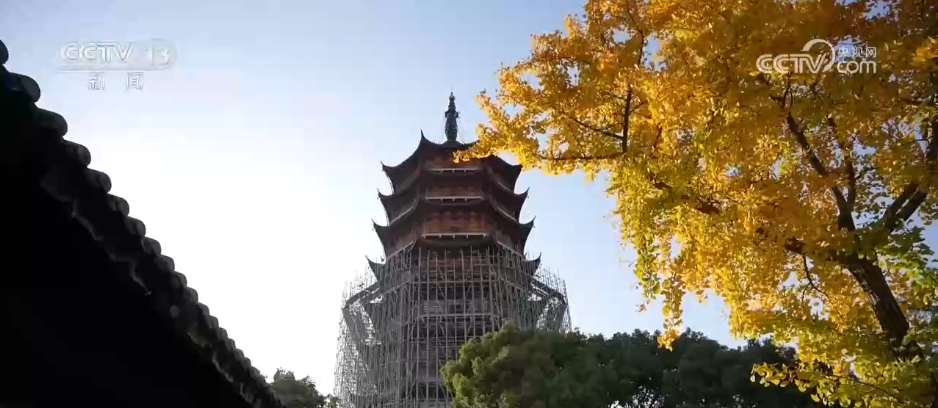
Group 1 - During the "14th Five-Year Plan" period, the national fiscal general public budget for cultural tourism, sports, and media expenditures reached a cumulative total of 1.97 trillion yuan, averaging over 390 billion yuan annually from 2021 to 2025, significantly supporting the development of cultural undertakings and industries in China [1] - Central fiscal funding for cultural heritage protection exceeded 37 billion yuan over the past five years, leading to comprehensive improvements in the protection of cultural relics and more vibrant utilization and inheritance [1] Group 2 - In Jiangsu, the North Temple Tower, a landmark with a history of over a thousand years, is undergoing a new round of restoration after 20 years, with workers currently dismantling scaffolding around the tower [3] - The restoration of cultural relics requires meticulous sourcing and verification by experts, which incurs significant costs, prompting the North Temple Tower to apply for national-level cultural heritage protection special subsidy funds [5] Group 3 - A multi-source funding guarantee system has been established for the protection of the North Temple Tower, combining national subsidies, local matching funds, and social donations, allowing the protection efforts to extend beyond just the tower to rejuvenate the entire ancient city [7] - The central government has established a systematic protection mechanism for cultural heritage, with a cumulative allocation of 37.334 billion yuan during the "14th Five-Year Plan" to support the protection and restoration of key cultural relics and archaeological projects [9] Group 4 - The central government actively implements national basic public service standards, supporting the construction of local public cultural service systems through various funding channels, ensuring quality cultural resources reach grassroots levels [9] - In Mianyang, Sichuan, local fiscal investment exceeded 41.77 million yuan over five years for public cultural facility construction and free activities, resulting in the establishment of 21 community reading spaces and a "15-minute reading circle" [11] Group 5 - Nationwide, during the "14th Five-Year Plan," the central government allocated 122.19 billion yuan to support local implementation of national basic public cultural service standards, enabling nearly 50,000 public cultural facilities to offer free services to the public [13] - The initiative also supports the opening of over 3,000 public sports venues and fitness centers to the public for free or at low cost, promoting cultural and sports accessibility [13]
“十四五”期间我国文化事业投入力度空前 公共文化服务普惠千家万户
Yang Shi Wang· 2025-11-29 07:45
Core Viewpoint - During the "14th Five-Year Plan" period, the central government actively implements national basic public service standards, supporting the construction of local public cultural service systems through various funding channels [1] Group 1 - The central government provides financial support for quality cultural resources to reach grassroots levels [1] - Initiatives include free museums, memorials, public libraries, and grassroots cultural stations, all backed by national support [1]