可再生能源发展

Search documents
化石燃料时代落幕成“过去式”?IEA:全球油气需求仍将持续增长25年
Hua Er Jie Jian Wen· 2025-11-12 07:14
Core Insights - The International Energy Agency (IEA) warns that global demand for oil and gas will continue to rise over the next 25 years if current energy policies remain unchanged, raising alarms for global climate goals [1][2] - The IEA's new "Current Policies" scenario indicates that under the current trajectory, global oil demand will increase from approximately 100 million barrels per day in 2024 to 113 million barrels per day by 2050, primarily driven by aviation, trucking, and petrochemicals [2] Group 1: Policy Changes and Implications - IEA Executive Director Fatih Birol states that the focus on climate change in international energy policy is rapidly declining, coinciding with predictions that 2024 will be the hottest year on record [2] - The introduction of the "Current Policies" scenario reflects changes in countries' positions on climate goals, an increasing desire for secure and affordable energy, and a slowdown in electric vehicle growth [2][3] - The IEA's adjustment to its predictive model comes amid external pressures, particularly from U.S. Energy Secretary Chris Wright, who criticized the IEA's previous peak oil narrative [3] Group 2: Energy Demand Projections - The report emphasizes a significant increase in electricity demand, projected to grow by about 40% by 2035 under both the "Current Policies" and "Announced Commitments" scenarios [4] - Up to 80% of the growth in energy consumption is expected to come from regions well-suited for solar power generation, indicating substantial potential for renewable energy development [4]
共护地球家园——从巴西亚马孙到中国绿色实践看全球气候行动丨新漫评
Zhong Guo Xin Wen Wang· 2025-11-11 05:59
Core Points - The 30th Conference of the Parties (COP30) to the United Nations Framework Convention on Climate Change will be held from November 10 to 21 in Belém, Brazil, with approximately 60,000 participants from governments, international organizations, and civil society [1] - This conference marks the first time the UN climate conference is held in the Amazon rainforest, coinciding with the 10th anniversary of the Paris Agreement, highlighting a critical transition from "conceptual consensus" to "action implementation" in global climate governance [1] - China's commitment to achieving carbon peak by 2030 and carbon neutrality by 2060 is particularly noteworthy, as it has established the world's largest and fastest-growing renewable energy system, with wind and solar power installations reaching significant milestones [1] Group 1 - COP30 will focus on greenhouse gas reduction, climate adaptation, climate financing, renewable energy development, and biodiversity conservation [1] - China accounts for nearly half of the global total installed capacity for wind and solar energy, with new installations representing about 60% of the global total [1] - The share of renewable energy in China's total power generation capacity has increased to approximately 60%, demonstrating a strong commitment to energy structure transformation [1] Group 2 - The conference serves as an important opportunity for humanity to reassess the relationship between development and nature, emphasizing the need for cooperation and decisive action [2] - The interconnectedness of ecosystems, from the Amazon rainforest to polar ice caps, underscores the global nature of climate challenges [2]
AES(AES) - 2025 Q3 - Earnings Call Transcript
2025-11-05 16:00
Financial Data and Key Metrics Changes - Adjusted EBITDA for Q3 2025 was $830 million, up from $698 million in the previous year, driven by growth in renewables projects and rate-based investments in U.S. utilities [12][14] - Adjusted EPS increased to $0.75 per share from $0.71 year-over-year, influenced by similar drivers as adjusted EBITDA [12][14] Business Line Data and Key Metrics Changes - Renewables EBITDA saw a 46% increase year-to-date, primarily due to the addition of 3 gigawatts of new capacity and cost reductions [5][15] - The utilities segment reported higher adjusted pre-tax contributions driven by $1.3 billion in rate-based investments over the past year [16] Market Data and Key Metrics Changes - The U.S. backlog for renewables stands at 7.5 gigawatts, with an additional 4 gigawatts in the pipeline, all of which are safe harbored [7] - AES Indiana is positioned as one of the lowest-cost providers in Indiana and Ohio, with expectations to maintain this position post-rate case resolution [8] Company Strategy and Development Direction - The company aims to sign 4 gigawatts of new Power Purchase Agreements (PPAs) in 2025, with 2.2 gigawatts already signed and expectations for an additional 1.8 gigawatts [4] - The focus is on profitable growth with attractive returns, emphasizing fewer but larger projects in renewables [32] Management's Comments on Operating Environment and Future Outlook - Management remains confident in achieving the full-year 2025 guidance and long-term growth rates, reaffirming a 5-7% growth rate for adjusted EBITDA through 2027 [18][22] - The company is well-positioned to meet the growing demand for reliable, low-cost power due to its advanced pipeline of development projects and strong domestic supply chain [7][24] Other Important Information - The company has achieved significant cost savings, realizing the majority of a $150 million target for the year and aiming for a $300 million annual run rate by 2026 [12][17] - A partial settlement agreement was filed in Indiana, reducing the original revenue increase request by 53% [9][68] Q&A Session Summary Question: Long-term growth guidance and asset sales impact - Management reaffirmed the 5%-7% long-term growth guidance, indicating that the $400 million in EBITDA expected beyond 2027 comes from projects already in the backlog [27][28] Question: Parent funding and balance sheet capacity - The focus is on strengthening the balance sheet and maintaining investment-grade ratings, with no plans to issue equity through 2027 [32] Question: Demand acceleration in data centers - There is strong interest from data centers, with a focus on larger, more profitable projects rather than just the number of gigawatts [37][39] Question: Utility opportunities and IRP update - Advanced negotiations are ongoing for potential deals in Indiana, with expectations to announce agreements soon [45][46] Question: Powered land opportunity - The powered land solution involves co-locating data centers with renewable projects, providing a unique value proposition [48][75] Question: Renewables segment growth expectations - The renewables segment is expected to grow significantly, with adjustments made for prior year comparisons [78]

Clearway Energy(CWEN) - 2025 Q3 - Earnings Call Transcript
2025-11-04 23:02
Financial Data and Key Metrics Changes - For Q3 2025, Clearway delivered Adjusted EBITDA of $385 million and cash available for distribution (CAFD) of $166 million, with year-to-date figures of $980 million in Adjusted EBITDA and $395 million in CAFD [23] - The 2025 CAFD guidance range has been narrowed to $420-$440 million, with a new 2026 CAFD guidance range set at $470-$510 million [24][25] - The company aims for a CAFD per share target of $2.90-$3.10 by 2030, reflecting a 7%-8% compound annual growth rate (CAGR) from the 2025 guidance midpoint [5][20] Business Line Data and Key Metrics Changes - The renewables and storage segment saw wind resources tracking close to median expectations, while solar benefited from the execution and timing of growth investments [24] - The company has executed 1.8 gigawatts of power purchase agreements (PPAs) to support data center loads over the last year [11] Market Data and Key Metrics Changes - Clearway Group's development program for 2028 and 2029 includes over 6.5 gigawatts of project volume, significantly exceeding the requirements to meet the 2030 goals [9] - The company has established a strong position in the market for flexible generation resources, particularly in California, where it has a proven track record [73] Company Strategy and Development Direction - Clearway is focused on delivering growth through a combination of retained cash flow, prudent debt usage, and modest equity issuances, targeting a long-term payout ratio of less than 70% [6][29] - The company is developing multi-technology generation complexes to serve gigawatt-class co-located data centers, with commercial operations expected to begin as early as 2028 [11][12] - Clearway aims to maintain a competitive dividend growth strategy while achieving a long-term growth target of 5%-8% [15][29] Management's Comments on Operating Environment and Future Outlook - Management expressed confidence in meeting growth targets through 2030, citing a strong pipeline of projects and favorable market conditions [30] - The company anticipates that rising power prices will benefit its operating portfolio, particularly as initial PPAs expire [13][14] - Management emphasized a systematic approach to setting and achieving growth goals, with a focus on maintaining financial prudence [52][54] Other Important Information - Clearway has executed $50 million in opportunistic equity issuances since the last earnings call, reflecting its commitment to capital discipline [24] - The company has identified the Roseland Solar project as a significant investment opportunity following a 20-year PPA [18] Q&A Session Summary Question: Development of flexible gas paired with renewables - Management noted that the development of flexible gas resources is aimed at meeting the needs of co-located data centers, with expected risk-adjusted returns comparable to traditional renewables [34][35] Question: Timing and contribution of repowering projects - The majority of repowering investments are expected to occur in 2027, with significant CAFD contributions anticipated in 2028 [40][41] Question: Potential for PPA renewals - Management indicated that opportunities for PPA extensions may arise, particularly as power prices increase, contributing to long-term cash flow growth [44][47] Question: M&A opportunities and funding - Management highlighted a favorable M&A environment and emphasized the importance of ensuring that any incremental investments are accretive and within the company's financial capacity [57][61] Question: Asset disposition strategy - Management clarified that while asset dispositions are not a core part of the funding strategy, they remain open to selectively disposing of assets that may be more valuable to other buyers [67][69] Question: Update on flexible generation portfolio - Management expressed confidence in the value of the flexible generation portfolio, with expectations for it to contribute positively to the 2030 CAFD targets [83][84]

Clearway Energy(CWEN) - 2025 Q3 - Earnings Call Transcript
2025-11-04 23:00
Financial Data and Key Metrics Changes - Clearway Energy reported Adjusted EBITDA of $385 million for Q3 2025 and $980 million year-to-date, with cash available for distribution (CAFD) of $166 million for the quarter and $395 million year-to-date [23][24] - The company narrowed its 2025 CAFD guidance range to $420-$440 million and established a 2026 CAFD guidance range of $470-$510 million, reflecting strong performance and growth strategy execution [24][25] Business Line Data and Key Metrics Changes - The renewables and storage segment showed wind resources tracking close to median expectations, while solar benefited from growth investments [24] - The company has executed 1.8 gigawatts of power purchase agreements (PPAs) to support data center loads in the past year, indicating strong demand in this segment [11] Market Data and Key Metrics Changes - Clearway Group's late-stage pipeline has grown four times since 2017, positioning the company favorably in the market for future growth opportunities [7][8] - The company is developing multi-technology generation complexes to serve gigawatt-class co-located data centers across five states, with commercial operations expected to begin as early as 2028 [11][12] Company Strategy and Development Direction - Clearway aims for a CAFD per share target of $2.90-$3.10 by 2030, reflecting a 7%-8% compound annual growth rate (CAGR) from the 2025 guidance midpoint [5][29] - The company plans to fund growth through retained cash flow, prudent debt use, and modest equity issuances, targeting a long-term payout ratio of less than 70% [5][28] Management's Comments on Operating Environment and Future Outlook - Management expressed confidence in meeting growth targets through 2030, citing strong traction in supporting energy needs for digital infrastructure and reindustrialization [4][5] - The company anticipates low single-digit annual growth in cash flow from its existing portfolio, with additional growth from new project investments [14][15] Other Important Information - Clearway has made significant progress in its growth pathways, including the construction of new projects and the advancement of long-term PPAs [17][18] - The company has executed three M&A transactions this year at cap yields above 12%, enhancing its portfolio and positioning for future growth [19][20] Q&A Session Summary Question: Development of flexible gas paired with renewables - Management noted that projects are being developed to complement existing renewable assets, targeting risk-adjusted returns comparable to traditional renewables [32][34] Question: Timing and contribution of repowering projects - Most repowering contributions will be reflected in 2028, with attractive PPA terms enhancing cash flow longevity [36][37] Question: Potential for PPA renewals - Management indicated that opportunities for PPA extensions could enhance cash flow and reduce variability, particularly for wind assets [39][40] Question: M&A opportunities and funding strategies - The company is seeing a favorable M&A environment and plans to ensure that any incremental investments are accretive and manageable within its capital allocation framework [45][46] Question: Asset disposition strategy - While not a core strategy, management remains open to selectively disposing of assets that may be more valuable to other buyers [49][50] Question: Update on flexible generation portfolio - Management is optimistic about the value of flexible generation assets, which are expected to contribute positively to the CAFD per share target [60][61]
摩洛哥自发电并网进展缓慢
Shang Wu Bu Wang Zhan· 2025-10-31 08:25
Core Insights - Morocco has established a legal framework (Loi 82-21) in 2023 to encourage self-generation of electricity by businesses and individuals, allowing for self-use or sale of excess electricity to the grid, aimed at promoting renewable energy development [1] Regulatory Framework - Self-generation projects with a capacity of less than 11 kW can connect at low voltage with simple declarations; projects between 11 kW and 5 MW require an "access permit"; and projects exceeding 5 MW must go through an "authorization" process to connect to medium or high voltage grids [1] Challenges - The promotion of self-generation could alleviate pressure on centralized power plants, enhance the resilience of the energy system, and foster renewable energy development; however, there are multiple challenges including a limit of 20% on the sale of excess electricity, complex connection procedures, lack of storage facilities, and unclear compensation and pricing mechanisms [1] Economic Viability - For small and medium enterprises and household users, while the procedures for small projects are simplified, the economic returns from selling excess electricity remain limited [1] Overall Assessment - The self-generation sector in Morocco faces a reality of "established legal framework but slow practical implementation" [1]
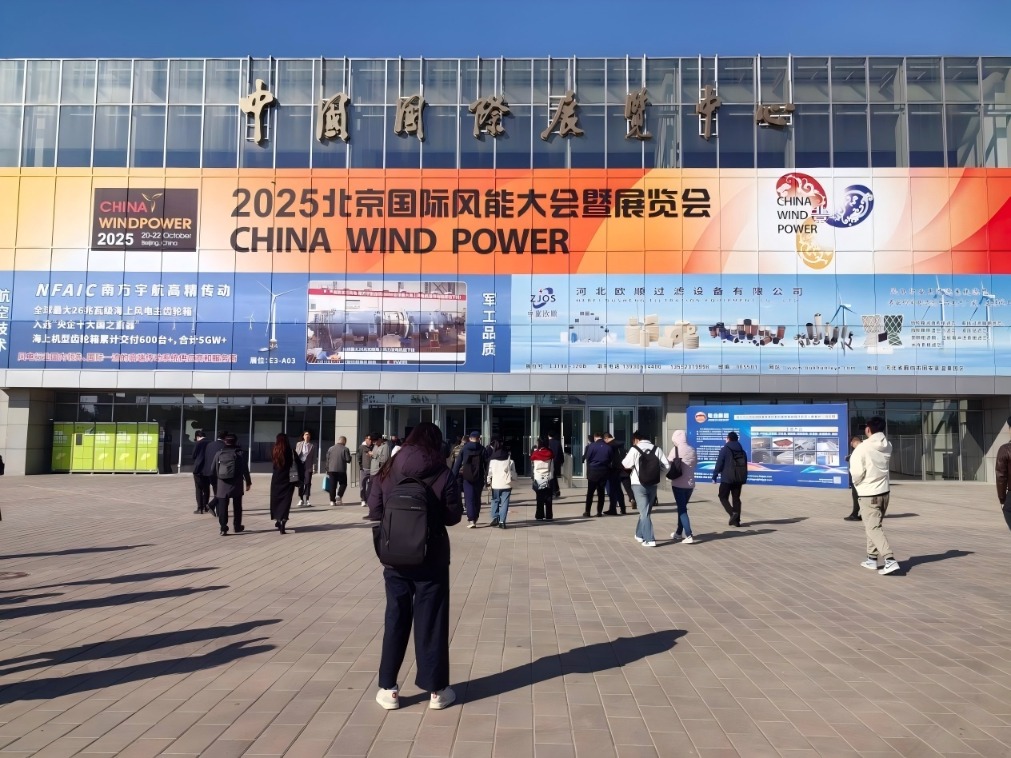
《风能北京宣言2.0》发布:“十五五”风电年新增装机不低于1.2亿千瓦
Zhong Guo Jing Ying Bao· 2025-10-20 09:43
Core Insights - The 2025 Beijing International Wind Energy Conference released the "Beijing Wind Energy Declaration 2.0," setting ambitious targets for China's wind power capacity during the 14th Five-Year Plan, including an annual addition of at least 120 million kilowatts of new installed capacity, with offshore wind power contributing at least 15 million kilowatts annually [1][2] - By 2030, China's cumulative wind power installed capacity is expected to reach 1.3 billion kilowatts, increasing to at least 2 billion kilowatts by 2035, and 5 billion kilowatts by 2060, supporting the country's goal of achieving carbon neutrality in the energy sector [1][2] - The declaration emphasizes the critical role of wind power in meeting national climate action goals, highlighting China's rich wind energy resources and significant development potential [2] Industry Development - The declaration indicates that the economic and technical development potential of onshore wind energy resources in the "Three North" regions exceeds 750 million kilowatts, while the southeastern regions have over 250 million kilowatts available for development [2] - Offshore wind energy resources within 300 kilometers are estimated to have over 2.7 billion kilowatts of economic and technical development potential, entering a phase of large-scale commercialization [2] - The industry is entering a new era of adding over 100 million kilowatts of new installed capacity annually, necessitating a comprehensive market-oriented development approach during the 14th Five-Year Plan [2] Policy Recommendations - The declaration calls for the improvement of the industrial policy system to facilitate the comprehensive marketization of wind power, urging national authorities to enhance institutional mechanisms and deepen power system reforms [2] - It advocates for the establishment of a market mechanism that truly accommodates a high proportion of wind power, leveraging market-oriented methods to promote wind energy development [2] - The declaration also encourages the integration of wind power with other energy sources and industries, recommending the development of supportive policies for green hydrogen, ammonia, and zero-carbon parks to accelerate technological maturity [3]

《德黑兰时报》编译版:伊朗总统宣布启动新的太阳能电站建设计划
Shang Wu Bu Wang Zhan· 2025-10-20 06:43
Core Insights - Iran has launched a new solar power plant project with a total investment exceeding $150 million, aimed at enhancing the country's renewable energy capacity [1] - The new solar power plant will have a capacity of 250 megawatts, increasing Iran's total renewable energy capacity to 2,550 megawatts upon completion [1] - Funding for the project is sourced from private sector investments, the National Development Fund, and domestic bank financing [1]

“十四五”成绩单 | 央视新闻 保供应、强民生、转低碳 能源强国之路越走越宽广
国家能源局· 2025-10-13 04:35
Core Viewpoint - The article emphasizes the significant advancements in China's renewable energy sector during the "14th Five-Year Plan" period, highlighting the transition towards a clean, low-carbon, and efficient energy system that ensures energy security and supports economic growth [2][4]. Group 1: Renewable Energy Development - China has constructed the world's largest and fastest-growing renewable energy system, with new energy storage capacity reaching approximately 95 million kilowatts, a nearly 30-fold increase over five years, and the share of renewable energy generation capacity rising from 40% to around 60% [6]. - The "Shagao Desert" has emerged as a new frontier for renewable energy construction, adding over 130 million kilowatts of installed capacity, transforming previously barren land into an "energy oasis" [8]. Group 2: Energy Supply and Consumption - During the "14th Five-Year Plan," energy consumption in China increased by 1.5 times compared to the total consumption during the "13th Five-Year Plan," while maintaining a stable energy self-sufficiency rate of over 80% [10]. - The country has effectively addressed challenges in electricity transmission in weak grid areas and high-altitude regions, exemplified by the "Xinjiang Power to Chongqing" project, which can transmit electricity over 2,000 kilometers in just 0.007 seconds [10]. Group 3: Infrastructure and Electric Vehicles - China has built the world's largest electric vehicle charging network, with two charging stations for every five electric vehicles, enhancing the energy infrastructure [12]. Group 4: Global Leadership in Energy Transition - With over 1.4 billion people's energy security effectively guaranteed, China is recognized as a global leader in renewable technologies and low-carbon development, positioning itself as a key driver of the global energy transition [14].
IEA国际能源署:2025年可再生能源报告-分析和预测至2030(英文版
Sou Hu Cai Jing· 2025-10-11 03:35
Core Insights - The IEA's 2025 Renewable Energy Report predicts a global renewable power capacity increase of 4,600 gigawatts (GW) from 2025 to 2030, equivalent to the combined capacity of China, the EU, and Japan, with solar PV accounting for nearly 80% of this growth [26][28][30] - The report indicates a slight downward revision of the growth forecast by 5% compared to last year, primarily due to policy changes in the US and China, with the US forecast revised down by nearly 50% [28][30][31] - Despite financial struggles among solar and wind manufacturers, there remains strong demand from developers, with one-fifth of large developers increasing their deployment targets for 2030 [32][33] Global Capacity Growth - Global renewable power capacity is expected to reach 2.6 times its 2022 level by 2030, but will fall short of the COP28 tripling pledge [31] - Solar PV is projected to dominate the growth, with annual additions expected to exceed 80% of total renewable capacity increases [27][62] - Wind power capacity is expected to nearly double to over 2,000 GW by 2030, despite facing supply chain issues and rising costs [27][28] Regional Developments - India is forecasted to become the second-largest growth market for renewables, with capacity expected to rise by 2.5 times by 2030 due to higher auction volumes and supportive policies [30] - The Middle East and North Africa region sees a 25% upward revision in forecasts, driven by rapid solar PV growth in Saudi Arabia [30] - The EU's growth forecast has been slightly revised upwards due to strong corporate power purchase agreement (PPA) activity, offsetting weaker offshore wind prospects [30] Financial Health and Supply Chain - Major solar PV and wind manufacturers are facing significant financial losses, with cumulative losses reaching nearly USD 5 billion for Chinese solar companies since 2024 [32] - Supply chain concentration remains a critical issue, with over 90% of key production segments for solar PV and wind turbine components concentrated in China [35] - The report highlights the need for increased investment in grid infrastructure and flexibility to accommodate the growing share of variable renewables in electricity supply [36] Renewable Energy in Transport and Heat - The share of renewables in the transport sector is expected to rise from 4% to 6% by 2030, with significant growth driven by electric vehicles [39] - In the heat sector, renewables are projected to account for 18% of global heat demand by 2030, up from 14% today, largely due to increased use of renewable electricity in industry and buildings [40]