品牌增长

Search documents
2025 Worldpanel消费者指数客户会 | 上海 • 8.21 锁定席位,共破增长困局!
凯度消费者指数· 2025-08-18 03:52
Core Insights - The rapid consumer goods market in China is facing unprecedented changes due to shifts in population structure and economic transformation, leading to challenges for brands in achieving effective investment and growth [2] - The conference aims to explore how brands can leverage consumer insights to drive sustainable growth amidst these changes, focusing on the essence of demand and the dynamics of growth [2][6] Group 1: Market Dynamics - The Chinese fast-moving consumer goods (FMCG) market is undergoing significant restructuring influenced by consumer segmentation and generational shifts, necessitating brands to identify stable growth paths [2] - Global and Chinese markets confirm that penetration rate is a key driver of brand growth, with discussions planned on how to effectively identify and enhance the dimensions requiring brand focus [3] Group 2: Consumer Behavior - Consumers are increasingly shopping across multiple channels, averaging seven channels per year, which highlights the need for brands to meet both price sensitivity and convenience demands while building a collaborative growth network [5] - The challenge of product innovation in a low-growth FMCG market is emphasized, focusing on balancing the quantity and quality of new products and planning suitable launch paths to ensure both short-term sales and long-term brand value [6] Group 3: Event Details - The 2025 Worldpanel Consumer Index Client Conference will feature discussions on market changes, growth opportunities, and the release of the 2025 Brand Footprint Report, showcasing brands that have successfully navigated challenges and achieved growth [9]

2025 Worldpanel消费者指数客户会 | 上海 • 8.21 锁定席位,共破增长困局!
凯度消费者指数· 2025-08-12 03:53
Core Insights - The rapid consumer goods market in China is undergoing unprecedented changes due to shifts in population structure and economic transformation, leading to challenges for brands in achieving effective growth and innovation [2][6] - The conference aims to explore how brands can leverage consumer insights to drive growth and navigate the complexities of consumer behavior and market dynamics [2][3] Group 1: Market Dynamics - The Chinese fast-moving consumer goods (FMCG) market is experiencing significant restructuring influenced by consumer segmentation and generational shifts, necessitating brands to identify stable growth paths amidst volatility [2] - Global and Chinese markets confirm that penetration rate is a core driver of brand growth, with discussions focused on how to effectively identify and enhance the dimensions that require brand focus [3] Group 2: Consumer Behavior - Consumers are increasingly shopping across multiple channels, averaging seven channels per year, highlighting the need for brands to meet both price sensitivity and convenience demands while building a collaborative growth network [5] - The challenge of product innovation in a market characterized by low growth rates requires brands to balance the quantity and quality of new products, ensuring they contribute to both short-term sales and long-term brand value [6] Group 3: Event Details - The 2025 Worldpanel Consumer Index Client Conference will feature discussions on market changes, growth opportunities, and the release of the 2025 Brand Footprint Report, showcasing brands that have successfully navigated market cycles [9] - The agenda includes insights from industry leaders on how to translate consumer insights into actionable growth strategies and decode consumer behavior across channels [9]
ABG否认出售锐步给安踏;千名GUCCI员工威胁罢工;Crocs股价大跌30%|品牌周报
36氪未来消费· 2025-08-10 07:26
Group 1: ABG and Reebok - Authentic Brands Group (ABG) denies rumors of selling Reebok to Anta, stating no plans to divest the brand now or in the future [3] - Reebok, acquired by Adidas for $3.8 billion in 2006, has struggled to compete in the North American market, leading to its eventual sale to ABG for $2.5 billion in 2021 [4][5] - ABG's initial forecast for Reebok's global retail sales to reach $5 billion in 2023 has been exceeded, with a target of $10 billion by 2027 [5] Group 2: Labor Issues at Gucci - Approximately 1,000 Gucci employees in Italy threaten to strike over the refusal of parent company Kering to pay bonuses for 2022-2024 [6] - This labor dispute comes at a sensitive time for Gucci, which is facing declining sales and is under new CEO Luca de Meo's leadership [7] Group 3: Crocs Financial Struggles - Crocs' stock plummeted by 29.2% after the company projected a 9%-11% decline in Q3 revenue, marking its lowest stock price in nearly three years [8] - The company reported a nearly $500 million net loss in Q2, largely due to a $700 million goodwill impairment from its $2.5 billion acquisition of HEYDUDE [8] - Rising tariffs are expected to increase costs by $40 million in the second half of 2025, further challenging Crocs' low-cost business model [8] Group 4: Ralph Lauren's Growth - Ralph Lauren's quarterly revenue exceeded Wall Street expectations, with projected sales growth of low to mid-single digits for the fiscal year [19] - Sales in Asia and Europe saw double-digit growth, while North America grew by 8%, with China showing the highest growth at 30% [19] Group 5: Anta's Joint Venture with Musinsa - Anta has formed a joint venture with Korean e-commerce platform Musinsa, with Anta holding 40% and Musinsa 60% [22] - Musinsa aims to open over 100 stores in China by 2030, with the first store set to launch in Shanghai in Q4 of this year [22]


消费洞察集锦 | 2025年第六期
凯度消费者指数· 2025-08-06 03:52
Core Insights - The article highlights the recovery trend in the sugar-free carbonated beverage market, identifying three key opportunities for brands to seize the market advantage [1] - Despite the ongoing trend of declining birth rates, the baby and children's skincare market demonstrates strong resilience [1] - The article emphasizes the importance of consumer insights in driving brand growth, with a focus on the upcoming Worldpanel Consumer Index Annual Client Meeting scheduled for August 21 in Shanghai [1][2] Retail Market Overview - The article presents a retail market snapshot for the first half of 2025, analyzing the development trends of both online and offline retail formats [1] - It includes insights into consumer behavior and market dynamics, particularly in the context of changing demographics and consumption patterns [1] Category Insights - The sugar-free carbonated beverage market is highlighted as a significant area of growth, with brands encouraged to capitalize on emerging opportunities [1] - The baby and children's skincare segment is noted for its robust performance despite demographic challenges, indicating a potential area for investment [1] Consumer Group Insights - The article introduces a special feature on consumer group insights, focusing on the structure of the single economy demographic [1][6] - It suggests that understanding consumer segments is crucial for brands aiming to enhance their market positioning [1] Channel Insights - A dedicated section on channel insights is mentioned, indicating a comprehensive analysis of various retail channels and their performance [1][7] - The article implies that channel strategy will play a vital role in brand growth and market penetration [1]
2025 Worldpanel消费者指数客户会 | 上海 • 8.21 锁定席位,共破增长困局!
凯度消费者指数· 2025-07-29 03:05
Group 1 - The core viewpoint of the article highlights the challenges faced by brands in the fast-moving consumer goods (FMCG) market in China due to demographic shifts and economic transformation, leading to a "growth fog" where investments yield unclear results and new products struggle to gain traction [1][2] - The article emphasizes the importance of understanding consumer insights to drive brand growth, focusing on the need to identify key dimensions for enhancing brand penetration rates [3][6] - It discusses the necessity for brands to adapt to the multi-channel shopping behavior of consumers, who now typically engage with an average of seven shopping channels annually, balancing price sensitivity and convenience [5][6] Group 2 - The article raises questions about how product innovation can break through the homogenization of competition in the FMCG market, suggesting a need for a strategic approach to product launches that balances quantity and quality [6] - It mentions the release of the 2025 China market brand rankings based on the "Global Brand Footprint Report," which will reveal the growth strategies of leading brands that have successfully navigated market cycles [6][8] - The event aims to explore collaborative growth strategies across channels, providing insights into how brands can achieve sustainable development amidst market volatility [2][5]
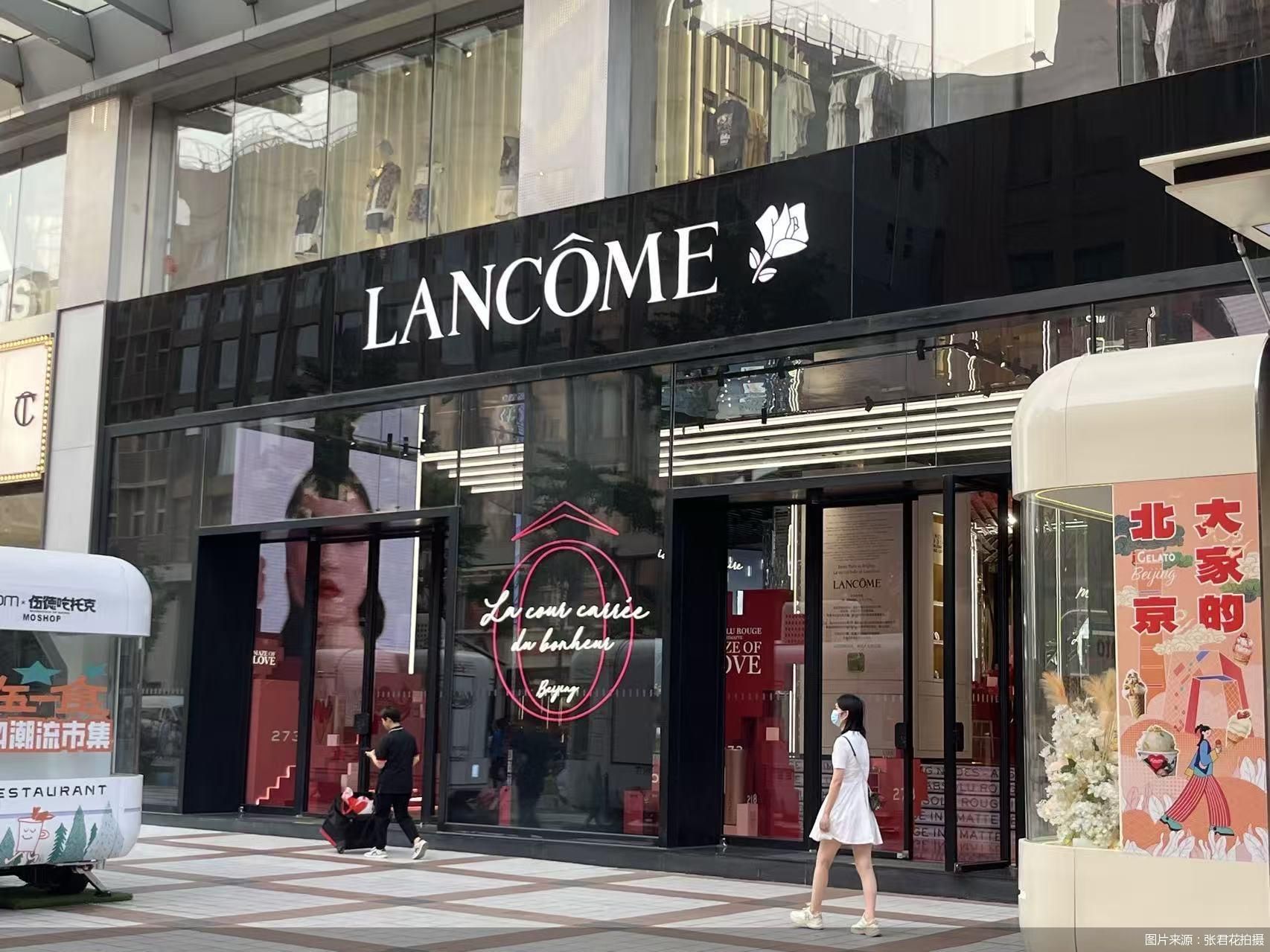
兰蔻换帅,欧莱雅“救火”
Bei Jing Shang Bao· 2025-05-27 12:41
Core Viewpoint - The appointment of Vania Lacascade as the new president of Lancôme is seen as a strategic move by L'Oréal to address the slowdown in growth within its high-end cosmetics division, which has been underperforming in recent years [1][4][5]. Group 1: Management Changes - Françoise Lehmann, the current global brand president of Lancôme, will step down, with Vania Lacascade taking over the role [3]. - This change is part of a broader restructuring within L'Oréal, which has seen multiple management adjustments over the past year, indicating a significant overhaul of the leadership team [3][4]. - Other notable changes include Richard Pinabel moving to Armani Beauty and Vincent Boinay becoming the North Asia President and CEO for China [3]. Group 2: Financial Performance - Lancôme is a key brand within L'Oréal's high-end cosmetics division, projected to achieve global sales of €2.36 billion in 2024, contributing approximately 30%-40% of the division's revenue [4]. - The high-end cosmetics division has faced challenges, particularly in the Chinese market, where sales have declined, with a reported drop of "negative double digits" in recent quarters [5][6]. - L'Oréal's overall performance has also slowed, with a noted decrease in consumer willingness to pay premium prices and increased competition from domestic brands [6]. Group 3: Strategic Importance of New Leadership - Vania Lacascade has a strong background in the beauty industry, having previously led the successful transformation of the skincare brand Vichy, achieving double-digit sales growth during her tenure [4][6]. - The leadership change is expected to inject new energy and perspectives into Lancôme, which is crucial for maintaining competitiveness in the global market [7]. - Lacascade's experience as L'Oréal's Chief Innovation Officer will aid in aligning Lancôme with the company's broader innovation strategies [7].

Carter’s(CRI) - 2025 Q1 - Earnings Call Transcript
2025-04-25 13:30
Financial Data and Key Metrics Changes - The company reported net sales of $630 million in Q1 2025, down 5% from the previous year [17] - Adjusted operating income was $35 million, representing an adjusted operating margin of 5.6%, with adjusted EPS at $0.66 compared to $1.40 in Q1 2024 [18][21] - Gross margin declined to 46.2%, a decrease of 140 basis points year-over-year, primarily due to pricing investments in U.S. Retail and negative foreign exchange impacts [18][19] Business Segment Data and Key Metrics Changes - U.S. Retail net sales declined 4%, with comparable sales down about 5%, although March showed significant improvement [23][27] - U.S. Wholesale sales also decreased by 5%, with operating margin at 22.1%, down from 24% a year ago [28] - International segment sales fell 5%, impacted by unfavorable foreign currency exchange rates, but showed strong comparable sales growth in Canada and Mexico [30] Market Data and Key Metrics Changes - The company faced a tumultuous market backdrop due to proposed record tariffs, leading to concerns about inflation and consumer confidence [12][13] - The pricing investments in U.S. Retail were approximately $12 million for Q1, with plans to maintain a total of $20 million for the first half of the year [24] Company Strategy and Development Direction - The new CEO emphasized a focus on sustainable, long-term growth rather than short-term sales boosts through discounts [5][6] - The company is suspending forward-looking guidance due to leadership transition and economic uncertainty related to tariffs [8][41] - A clear strategy is being developed to return the brand to accretive growth, with a focus on financial efficiency and product quality [9][11] Management's Comments on Operating Environment and Future Outlook - Management acknowledged the challenges posed by the current tariff situation and its impact on financial forecasting [9][41] - The leadership team is optimistic about the company's long-term prospects despite current market challenges [41] Other Important Information - The company has a solid balance sheet with total liquidity exceeding $1 billion and cash on hand of over $300 million [31] - Capital expenditures were $10 million, primarily for new stores and distribution network improvements [32] Q&A Session Summary Question: Initial thoughts on the business and opportunities for financial performance improvement - The new CEO expressed optimism about the brand's strength and market distribution, looking forward to sharing a revised strategy [44] Question: Clarification on estimated annual effective tariff rates - Management clarified that the tariff rates presented were hypothetical and based on proposed reciprocal tariffs, which would significantly increase product costs if implemented [46] Question: Potential for reducing reliance on China for production - Management indicated that while reliance on China has decreased significantly, some production, particularly for accessories, remains [52] Question: Timing of tariff-impacted goods hitting shelves and mitigation efforts - The first imports subject to tariffs are expected around May, but existing inventory provides some buffer [56] Question: Visibility on other costs such as cotton, freight, and labor - Cotton prices are favorable, while labor costs are expected to see some inflation, and transportation costs are manageable due to successful renegotiations [80][83]

品牌的未来,藏在这些细节里
36氪· 2025-03-28 14:50
Core Insights - The growth of quality original brands continues, with over 4,100 brands on Tmall achieving over 100 million in transactions in 2024, maintaining a growth rate of 20% [1] - Tmall's strategic resource allocation focuses on merchant incentives, new product support, brand membership, quality live streaming, and user growth to expand the business ecosystem and ensure sustainable development [1][3] Group 1: Brand Support Strategies - Tmall's support for quality merchants is a long-term strategy aimed at maintaining high-value supply in the ecosystem amidst industry profit erosion due to market competition [4] - By the end of March, 90% of brands in beauty, apparel, and outdoor sports achieved double-digit growth targets through commission trials [5] - Tmall's systematic support strategy for quality brands is set to expand across all industries with high-frequency coverage throughout the year [6] Group 2: New Product Launches - Tmall launched 4,500 super new products in 2024, generating a total transaction of 100 billion, with 34,000 super single products achieving over 10 million in sales [10] - The competition for new products is fundamentally a battle for consumer attention, with the probability of new products becoming bestsellers decreasing [11][13] - Tmall has lowered the entry barriers for new products, allowing emerging brands with limited budgets to participate in the market [16] Group 3: User and Membership Growth - There are still 11.8 billion user relationships that have not become members, indicating significant potential for membership growth [27] - Tmall's data shows that over 50% of business from top brands is contributed by brand members, highlighting the importance of membership in driving sales [29] - The platform is enhancing membership operations to convert private domain activity into public domain traffic, creating a positive cycle of membership growth and sales increase [34] Group 4: Market Trends and Consumer Behavior - The consumer market is witnessing a shift towards value-driven consumption, with brands focusing on product innovation rather than low prices [46][48] - Tmall's internal observations indicate that the growth in the sports category is primarily driven by female consumers, suggesting a shift in target demographics [48] - The platform aims to create real value for users rather than being driven by short-term sales anxiety, indicating a long-term vision for brand growth [51]