地方政府专项债券

Search documents
全域土地综合整治项目申请专项债券
Sou Hu Cai Jing· 2025-11-16 06:37
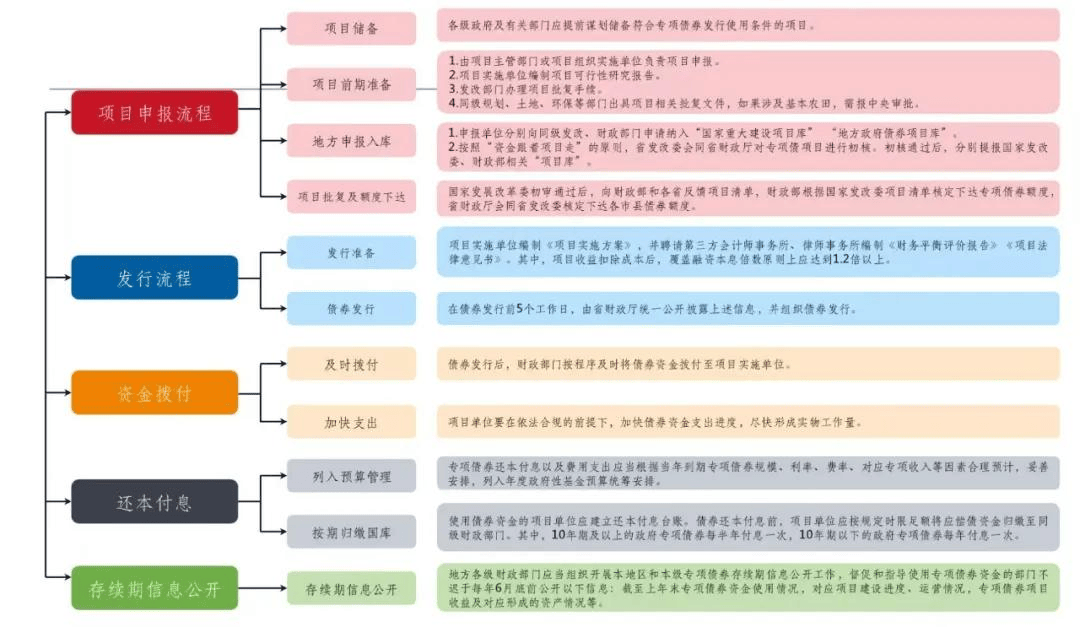
Core Viewpoint - The article emphasizes the strategic importance of special bonds in supporting comprehensive land remediation projects, highlighting their role in financing large-scale public projects while addressing local fiscal constraints. Group 1: Special Bonds and Land Remediation - Special bonds serve as a crucial financing channel for local governments, aligning with the characteristics of comprehensive land remediation projects, which require significant investment and have public welfare aspects [1][2]. - Successful application for special bonds can provide long-term, relatively low-cost construction funds, effectively addressing the issue of insufficient local fiscal investment [1]. Group 2: Application Process for Special Bonds - The application process for special bonds involves a systematic approach, encapsulated in seven key stages: planning, preparation, reporting, issuance, utilization, management, and repayment [3]. - The initial planning phase ("mou") is critical, ensuring that the project aligns with the support direction of special bonds and has a feasible revenue balance model [3]. Group 3: Key Considerations for Project Implementation - Projects must accurately identify policy support areas, ensuring they fall within the key sectors for special bond funding, such as agriculture, ecological protection, and urban infrastructure [4][5][6][7][8]. - A scientifically constructed revenue self-balancing model is essential, with core revenue sources including land indicator revenues, resource management revenues, and rental income from constructed assets [9][10][11][12]. Group 4: Documentation and Compliance - High-quality application materials are vital for project approval, including feasibility studies, implementation plans, financial assessment reports, and legal opinions [15][16][17][18][19][20]. - The preparation of these documents must adhere to principles of authenticity, consistency, rigor, and compliance with regulatory requirements [22][23][24]. Group 5: Lifecycle Performance Management - Establishing a unified performance management mechanism throughout the lifecycle of the project is crucial, encompassing borrowing, usage, management, and repayment [31]. - Detailed performance indicators should be set, and a regular monitoring mechanism established to ensure alignment with project goals [32]. Group 6: Risk Management and Compliance - Ensuring that project revenues are genuinely derived from the project itself is essential to avoid the creation of hidden government debts [42]. - A comprehensive audit and supervision framework must be in place to address all aspects of project management, from decision-making to fund utilization and debt repayment [44]. Group 7: Cross-Departmental Collaboration - Effective cross-departmental collaboration is necessary for the successful implementation of comprehensive land remediation projects, involving various governmental departments [46]. - Engaging with the community and ensuring transparency in project planning and execution can foster public support and mitigate social instability [49].

国家发改委:新增2000亿元专项债券额度支持部分省份投资
2 1 Shi Ji Jing Ji Bao Dao· 2025-10-31 04:49
Core Insights - The National Development and Reform Commission (NDRC) has successfully allocated 500 billion yuan in new policy financial tools, supporting over 2,300 projects with a total investment of approximately 7 trillion yuan, focusing on digital economy, AI, and urban infrastructure [1][2] - The NDRC is accelerating the implementation of effective investment policies, including an additional 200 billion yuan in special bonds to support local government investments [2] - China's GDP grew by 5.2% year-on-year in the first three quarters, maintaining a leading position among major global economies [2][3] Investment and Economic Support - The NDRC, in collaboration with various ministries, has facilitated the rapid deployment of 500 billion yuan to support key sectors and projects, particularly in economic provinces and private investment [1] - An additional 200 billion yuan in special bonds has been allocated to enhance local government financial capacity and stimulate effective investment [2] Economic Performance - In the first three quarters, China's industrial added value increased by 6.2%, marking the highest growth since 2022, with significant contributions from equipment and high-tech manufacturing sectors [2][3] - The retail sales of consumer goods rose by 4.5%, reflecting a 1.2 percentage point acceleration compared to the previous year [2] Innovation and Industry Growth - China's innovation index has entered the global top ten, supporting the development of emerging industries [3] - The added value of the equipment manufacturing and high-tech manufacturing industries grew by 9.7% and 9.6%, respectively, indicating a strong industrial performance [3] Export and Market Resilience - Despite external challenges, China's goods exports maintained a growth rate of 7.1%, with high-tech and high-value-added products seeing significant demand [5] - Exports to Belt and Road countries increased by 12.4%, showcasing a diversified export strategy [5] Future Outlook - The NDRC is confident in achieving annual economic and social development goals, supported by positive forecasts from international economic organizations [6] - Continuous policy implementation and adjustments are expected to further enhance economic performance and investment opportunities [6]
专项债发行接近尾声,增量资金有望加速到位
Sou Hu Cai Jing· 2025-10-31 00:16
Core Insights - Local government special bonds play a crucial role in stabilizing growth and investment, with over 89% of the annual issuance and planned issuance limits reached as of October 30 this year [1] - The Ministry of Finance has announced that the new local government debt limit for 2026 will be issued in advance, indicating proactive fiscal measures [1] - Several local governments have already begun preparing projects for next year, suggesting an acceleration in the allocation of incremental funds [1] - The influx of these funds is expected to provide strong support for infrastructure investments [1]
中证报:专项债发行接近尾声,增量资金有望加速到位
Sou Hu Cai Jing· 2025-10-30 23:13
Core Viewpoint - Local government special bonds play a crucial role in stabilizing growth and investment, with over 89% of the annual issuance limit already reached as of October 30 this year [1] Group 1: Special Bonds Issuance - The total amount of special bonds issued and planned for issuance has exceeded 89% of this year's limit [1] - The Ministry of Finance has announced that the new local government debt limit for 2026 will be allocated in advance [1] Group 2: Future Projects and Investment - Some local governments have already initiated project reserve work for the upcoming year [1] - Experts believe that the influx of incremental funds is expected to accelerate, providing strong support for infrastructure investment [1]
前三季度地方政府专项债券、超长期特别国债等资金共支出4.21万亿元
Xin Hua Cai Jing· 2025-10-17 08:15
Core Insights - The Ministry of Finance's Treasury Payment Center reported that in the first three quarters, local government special bonds, ultra-long-term special national bonds, and special national bonds for central financial institution capital injection totaled 4.21 trillion yuan, enhancing economic development momentum and promoting a sustained recovery in the economy [1] Group 1 - The total expenditure from various bond types reached 4.21 trillion yuan [1] - The funding is aimed at boosting economic development and supporting a positive economic recovery trend [1]
⊙【永业行观察】专项债新规17号文:资金核算、资产信息填报要点浅析及思考
Sou Hu Cai Jing· 2025-09-22 20:29
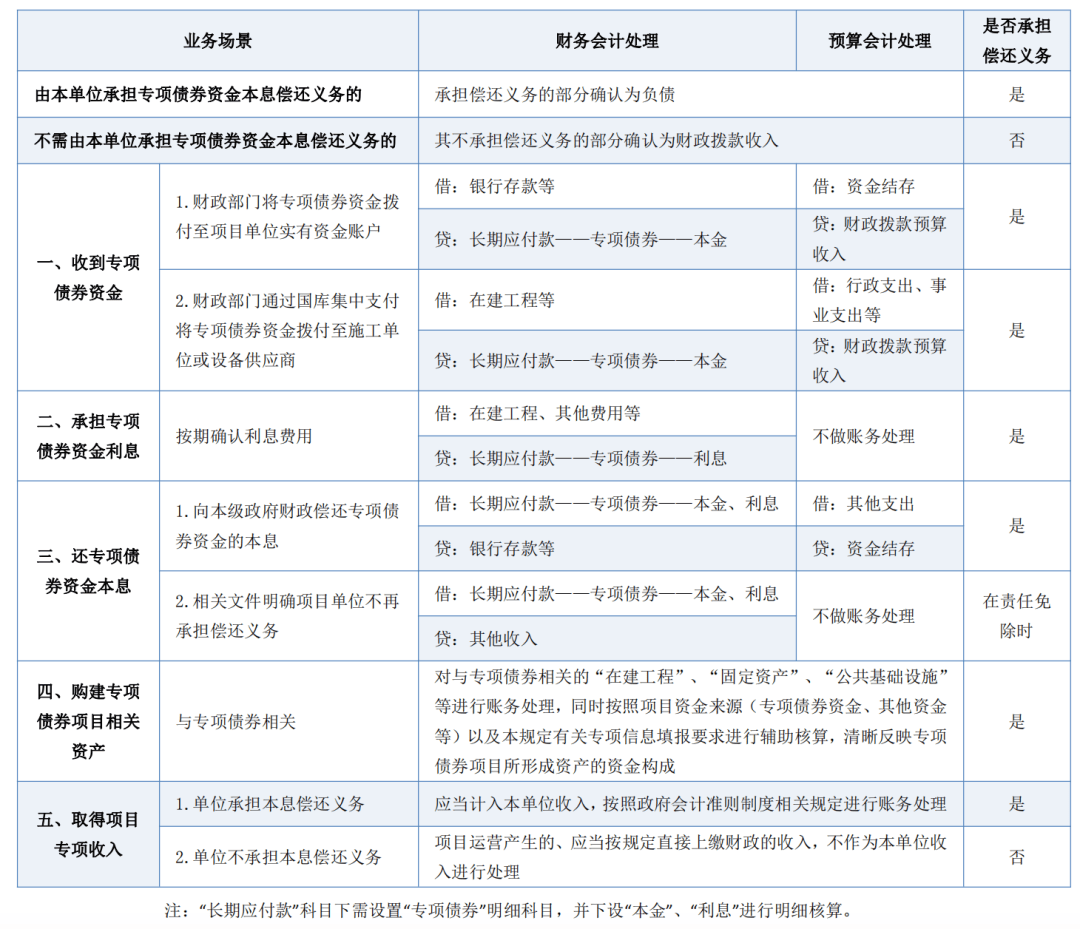
Background - Local government special bonds are important policy tools for stabilizing investment, addressing shortcomings, and preventing risks. The issuance scale of special bonds in China has increased significantly from less than 100 billion yuan in 2015 to over 4 trillion yuan in 2022, with an expected increase to approximately 4.4 trillion yuan by 2025. The management and utilization of special bond funds have become increasingly important due to the expansion of their scale [1] Main Content and Interpretation - The new regulations clarify the boundaries of repayment responsibilities for special bonds, accounting treatment for different types of project units, information reporting requirements, and the handling of new and old accounting methods [2] Clarification of Repayment Responsibility Boundaries - The new regulations categorize project units into administrative and enterprise types, determining repayment responsibilities based on project implementation plans or financing balance agreements. This change clarifies that repayment obligations are not automatically assigned based on the identity of the project unit, thus reducing the risk of hidden debts [3] Accounting Treatment for Different Types of Project Units - The regulations specify accounting treatments for administrative and enterprise project units regarding the acquisition of special bond funds, asset construction, and project income [4] Reporting Requirements for Special Bond Projects - Project units are required to submit "Special Bond Project Investment Tables" and "Repayment Situation Tables" to enhance transparency and accountability in the management of special bond funds [8] New and Old Accounting Method Transition - Administrative project units must transition existing special bond funds to comply with the new regulations, ensuring proper accounting treatment and reporting [9] Impact on Special Bond Projects and Recommendations Financial Risk Visibility - The regulations enhance the visibility of financial risks, compelling local governments to conduct thorough project planning and risk assessments before selecting project units. This shift emphasizes the need for careful management and oversight to mitigate repayment risks [10][11] Lifecycle Management of Project Assets - The regulations promote comprehensive lifecycle management of project assets, requiring detailed reporting on the status of special bond projects, funding sources, and repayment situations. This approach aims to improve asset quality and funding efficiency [12] Stricter Debt Management in High-Risk Areas - High-risk regions will face stricter debt management requirements, necessitating careful monitoring of debt levels and repayment obligations. This increased transparency will aid in dynamic supervision by higher-level governments [13][14] Visualization of Funding Utilization Efficiency - The use of special bond funds has diversified, with allocations now extending to debt resolution, land reserves, and other areas. In the first eight months of 2025, the issuance of new special bonds reached 3.26 trillion yuan, with a significant portion allocated for various purposes [15][16] Shift from Scale Expansion to Quality Improvement - The regulations encourage local governments to shift their focus from merely expanding the scale of special bond issuance to enhancing the quality and precision of fund allocation, ultimately improving the efficiency and effectiveness of public investments [17]
完整版|2025年超长期特别国债、地方专项债、中央预算内资金对比全解析
Sou Hu Cai Jing· 2025-09-12 12:42
Core Viewpoint - Local government special bonds, ultra-long-term special treasury bonds, and central budgetary funds are the three core funding sources for promoting major projects, each with distinct characteristics and requirements for application and approval processes. Funding Source Comparison Ultra-Long-Term Special Treasury Bonds - Support areas include national strategic directions, regional coordinated development, food production enhancement, technological self-reliance, and ecological safety projects. Specific investment focuses on technology research, green infrastructure, and public welfare systems [1]. Local Government Special Bonds - Key support directions include traditional infrastructure, energy projects, municipal infrastructure, social services, and new infrastructure projects. The core requirement is that projects must generate stable government revenue to cover bond principal and interest, with a coverage ratio of at least 1.2 [2]. Central Budgetary Investment - Focuses on public welfare projects, rural development, major infrastructure, social services, and ecological civilization projects. The requirement is for projects to be purely public welfare with significant social benefits but not necessarily economic returns [3]. Application Requirements and Processes Special Treasury Bonds Application Process - The application process involves several steps, including notification from the state, project selection by provincial departments, preparation of application materials, and approval by national departments. A new feature for 2025 is the establishment of a separate application channel with a "report and review" mechanism [4]. Special Bonds Application Process - Applications are conducted throughout the year with three batch submissions. The process includes project planning, inclusion in national and local project databases, and joint reviews by provincial departments [6]. Central Budgetary Investment Application Process - Applications are typically submitted in two batches each year. The process includes notification from the National Development and Reform Commission, preparation of materials, initial reviews by local departments, and final approval by national authorities. In 2025, an online approval platform will be fully implemented [7]. Application Considerations - Applications for special treasury bonds must align with policy requirements, ensure sufficient preparatory work, and avoid overlap with central budgetary investments [8]. - Projects must be new or under construction, with new projects expected to start by the end of 2025, and existing projects must be nearing completion [9]. - Projects should not include prohibited content such as real estate development or performance projects [10]. - A clear funding plan must be presented to ensure complete funding closure for the project [10]. Successful Case Studies Special Treasury Bonds - A project for high-standard farmland construction received 800 million yuan in special treasury bonds, aligning with national food security strategies [78]. Special Bonds - A smart parking project with a total investment of 500 million yuan successfully issued 300 million yuan in special bonds, demonstrating a clear revenue model [78]. Central Budgetary Investment - A new compulsory education school project received 50 million yuan in central budgetary investment, addressing urgent educational needs [78]. Choosing Funding Channels - Projects with stable revenue should consider special bonds, while those with no revenue but strategic importance should look at special treasury bonds. Purely public welfare projects should apply for budgetary investments [79]. - For large projects, a combination of funding sources may be beneficial, such as using budgetary investment for public welfare components and special bonds for revenue-generating parts [79]. 2025 Application Recommendations - Stay updated on national policy trends, prepare project materials in advance, and enhance communication with supervisory departments to improve application success rates [79].
财政部:这两年安排超长期特别国债1.5万亿元推动“两重”建设
Bei Jing Shang Bao· 2025-09-12 09:18
Group 1 - The Ministry of Finance has arranged a total of 1.5 trillion yuan in special long-term bonds over the past two years to promote "dual heavy" construction [1] - In the past five years, a total of 19.4 trillion yuan in local government special bonds has been allocated to support 150,000 construction projects [1] - The central budget has invested 3.3 trillion yuan to support infrastructure construction in areas such as water conservancy and transportation, effectively leveraging government investment to stimulate social investment [1]
财政部部长蓝佛安:我国财政政策空间进一步打开
Sou Hu Cai Jing· 2025-09-12 08:48
Core Viewpoint - The Chinese government has significantly increased its fiscal policy measures since the start of the 14th Five-Year Plan, focusing on both short-term economic stabilization and long-term development goals [1][2]. Group 1: Fiscal Policy Measures - The deficit rate has risen from 2.7% to 3.8% since the beginning of the 14th Five-Year Plan, with a further increase to 4% this year [1]. - A total of 19.4 trillion yuan in new local government special bonds has been allocated [1]. - Over 1 trillion yuan in new tax reductions and deferred tax payments have been implemented, expanding fiscal policy space [1]. Group 2: Policy Tools and Focus - The fiscal policy toolbox has become more diverse, utilizing government bonds, tax incentives, fiscal subsidies, and special funds to enhance the multiplier effect of policies [1]. - The government has creatively issued ultra-long special bonds to support comprehensive domestic demand expansion [1]. - Fiscal measures are increasingly targeted at addressing economic bottlenecks, such as a one-time allocation of 6 trillion yuan for replacing existing hidden debts, alleviating local debt repayment pressures [1]. Group 3: Future Fiscal Policy Outlook - The government plans to maintain a balance between risk prevention and development promotion, ensuring that there is still ample room for future fiscal policy actions [2]. - Continuous policy stability and flexibility will be prioritized, with an emphasis on proactive measures and timely adjustments based on economic conditions [2].
重磅信号!刚刚,财政部发声!
券商中国· 2025-09-12 08:15
Core Viewpoint - The Chinese government is committed to maintaining a proactive fiscal policy to support high-quality economic development, with sufficient room for future fiscal policy adjustments [1][4]. Group 1: Fiscal Policy and Debt Management - The Minister of Finance, Lan Fo'an, stated that the government's debt level is within a reasonable range, with a total debt of 92.6 trillion yuan and a debt-to-GDP ratio of 68.7% as of the end of last year [1]. - The government plans to issue 5 trillion yuan in special bonds to inject capital into large commercial banks, which is expected to leverage approximately 6 trillion yuan in credit [2]. - Over the past two years, 1.5 trillion yuan in long-term special bonds have been allocated to promote "two重" construction [3]. Group 2: Fiscal Strength and Expenditure - Since the beginning of the "14th Five-Year Plan," the fiscal deficit ratio has increased from 2.7% to 4%, with new local government special bond quotas totaling 19.4 trillion yuan and tax reductions exceeding 1 trillion yuan [4]. - The national fiscal strength has significantly increased during the "14th Five-Year Plan," with general public budget revenue expected to reach 106 trillion yuan, a 19% increase from the previous five-year period [6]. - Total public budget expenditure is projected to exceed 136 trillion yuan, marking a 24% increase compared to the "13th Five-Year Plan" [6]. Group 3: Social Welfare and Public Spending - During the "14th Five-Year Plan," nearly 100 trillion yuan has been allocated for social welfare, with significant investments in education (20.5 trillion yuan), social security (19.6 trillion yuan), healthcare (10.6 trillion yuan), and housing security (4 trillion yuan) [7]. - The government has also allocated 1 billion yuan for childcare subsidies and 200 million yuan for gradually implementing free preschool education [7]. Group 4: Economic Contribution and Stability - Over the past four years, China's contribution to global economic growth has remained around 30%, with an average economic growth rate of 5.5% [8]. - The central government has arranged nearly 50 trillion yuan in transfer payments to local governments during the "14th Five-Year Plan," ensuring stable local fiscal operations [9].