
财政赤字率

Search documents
未知机构:野村证券中国两会财政方案亮点凸显更大力度聚焦提振投资-20260306
未知机构· 2026-03-06 02:40
Summary of Key Points from the Conference Call Industry Overview - The conference call focuses on the Chinese government's fiscal policies and economic growth targets as outlined in the 2026 government work report presented by Premier Li Qiang during the National People's Congress [1][2]. Core Insights and Arguments - **GDP Growth Target**: The GDP growth target for 2026 has been adjusted from the previous "around 5%" to a range of "4.5%-5.0%" [1][2]. - **Fiscal Deficit Rate**: The official fiscal deficit target remains unchanged at 4.0% of GDP, consistent with the previous year [1][2]. - **Special Bond Financing**: The net financing amounts for central and local government special bonds are maintained at last year's levels, specifically 1.3 trillion yuan and 4.4 trillion yuan, respectively [1][2]. - **New Financing Policy Tool**: The government has approved an additional 800 billion yuan for a "new financing policy tool," aimed at boosting investment through policy banks [2][5]. - **Subsidy Adjustments**: The budget for consumer subsidies for replacing old products has been reduced from 300 billion yuan to 250 billion yuan, while 100 billion yuan has been allocated for interest rate subsidy projects [2][3]. - **Investment Funding Increase**: Central government budgeted investment is set to increase from 735 billion yuan in 2025 to 755 billion yuan in 2026 [4]. Additional Important Content - **Economic Downward Pressure**: The adjustment of the GDP growth target is seen as reasonable due to downward pressures from the real estate sector and the diminishing effects of the old-for-new policy [3]. - **Investment Strategy**: The government plans to focus on areas with high efficiency in fund usage and sufficient reserves for investment projects, indicating a strategic approach to local government special bonds [4][5]. - **Long-term Economic Outlook**: Despite the adjusted growth target, achieving even the lower end of the range (4.5%) may be challenging, with a maintained GDP growth forecast of 4.3% for 2026 [3].
2026年全国“两会”政府工作报告要点解读
Dong Fang Jin Cheng· 2026-03-05 06:23
Economic Growth Targets - The GDP growth target for 2026 is set at "4.5%-5%", adjusted from the previous "around 5.0%" over the past two years, aligning with market expectations[1] - The adjustment reflects a natural decline in growth rates as the economy matures and aims to balance growth, structural adjustment, and risk control[1] Consumer Price Index (CPI) Goals - The target for the CPI increase is set at "around 2%", consistent with last year, which is significant given the 0% cumulative CPI increase in 2025[2] - This target aims to guide macroeconomic policy towards a reasonable recovery of price levels and avoid hidden deflation, which could hinder consumption and investment growth[3] Fiscal Policy Measures - The target fiscal deficit rate is proposed at "around 4%", with no increase in the issuance of special government bonds and local government bonds compared to last year[4] - The nominal fiscal deficit is expected to rise from 5.66 trillion yuan in 2025 to 5.89 trillion yuan in 2026, reflecting an expanding nominal GDP[4] Monetary Policy Outlook - The monetary policy will maintain an "appropriately loose" stance, with potential for interest rate cuts of 0.2 to 0.3 percentage points throughout the year[5] - The central bank is expected to utilize various tools to ensure liquidity remains ample, supporting economic growth and price stability[6] Domestic Market Development - The report emphasizes "building a strong domestic market" as a top priority, with 250 billion yuan allocated for consumption incentives, although this is a reduction from last year[7] - New policy financial tools worth 800 billion yuan are expected to drive an additional 9 trillion yuan in overall investment over three years, stabilizing investment growth[7] Risk Management in Real Estate - The report outlines strategies to stabilize the real estate market, focusing on supply-side measures and encouraging the acquisition of existing properties for affordable housing[9] - A significant increase in loan quotas for "white list" projects in real estate is anticipated, rising to 7 trillion yuan, to support housing stability[10] Local Government Debt Management - The focus will shift towards managing operational debt risks of local government financing platforms, with strategies including debt restructuring and optimizing repayment methods[11] - The report indicates a transition from addressing hidden local government debts to managing market-driven operational debts of financing platforms[12]
热点思考 | IEEPA关税被判违法,后续如何演绎?——“关税压力测试”系列之十三(申万宏观·赵伟团队)
赵伟宏观探索· 2026-02-24 16:03
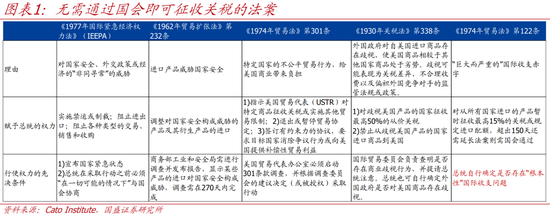
Core Viewpoint - The U.S. Supreme Court ruled on February 20, 2026, that tariffs imposed by the Trump administration under the IEEPA are illegal, including the equal tariffs and fentanyl tariffs, leading to potential changes in the tariff landscape [1][7][47]. Group 1: Supreme Court Tariff Ruling - The Supreme Court's ruling deemed IEEPA tariffs illegal due to violations of the principles of clear authorization and significant issues, affecting fentanyl tariffs (20% for China, 25% for Canada and Mexico) and global equal tariffs (10% base tariff) [1][7][47]. - The actual execution of the ruling may be delayed until late March to early April, with the ruling's effective date being February 20 [1][7][47]. - The probability of full refunds for IEEPA tariffs is low, but partial refunds are more likely, depending on how lower courts handle the relief scope [1][9][48]. Group 2: Trump's Response Strategy - Trump may seek to maintain the current tariff framework to avoid losing tariff gains, but significant upgrades may not occur due to electoral pressures [3][10][49]. - Following the ruling, Trump announced a global tariff increase from 10% to 15%, exempting key products, which may serve as a transitional measure for future tariffs [3][10][14][49]. - A potential gap in tariffs may arise in July, with the expiration of the 122 tariffs, leading to possible adjustments in existing 301 tariffs [3][10][15][49]. Group 3: Future Tariff Landscape - The invalidation of IEEPA tariffs could increase the federal deficit rate by 0.5-0.6 percentage points, with IEEPA tariffs accounting for 47.8% of U.S. tariff revenue in FY2025 [4][17][50]. - Without alternative measures, the effective U.S. tariff rate could decrease by approximately 7 percentage points, with the rate for China dropping from 31% to 15.4% [4][29][50]. - The tariff landscape may evolve into a new phase characterized by increased uncertainty, a gradual exit from universal tariffs, and a shift towards more targeted measures [6][42][51].


特朗普关税被判违宪,影响几何?【国盛宏观熊园团队】
Xin Lang Cai Jing· 2026-02-22 12:47
Core Conclusion - The U.S. Supreme Court ruled that Trump's IEEPA tariffs were unconstitutional, leading to the immediate termination of reciprocal tariffs and fentanyl tariffs, which aligns with market expectations. The handling of previously collected tariffs will be determined by lower courts [1][5][22]. Group 1: Tariff Changes - Following the Supreme Court's ruling, Trump announced a new 10% tariff under Section 122 as a temporary measure, which he later suggested could increase to 15%, pending formal confirmation [2][27][28]. - The Section 122 tariffs are intended as a stopgap, with expectations that the tariff framework will shift back to Sections 301 and 232 in the medium term [11][30][32]. - If the new 15% tariff is implemented, the effective tariff rate on China would decrease by 8.4 percentage points to 28.6%, potentially increasing U.S. exports to China by 9.1% and overall exports by 0.6% [23][35][37]. Group 2: Economic Impact - The ruling is expected to benefit U.S. stocks due to improved profitability from reduced tariffs, while concerns over deteriorating U.S. fiscal conditions have led to rising bond yields and a weaker dollar [4][18][25]. - The potential return of IEEPA tariff revenues could increase the U.S. deficit rate by 0.55 percentage points, with significant implications for fiscal policy [3][39][40]. - The market's reaction to the ruling included a rise in U.S. stocks, a decline in bonds and the dollar, and fluctuations in gold prices, which initially fell before rebounding [6][18][25].
【1月策略简评】流动性宽松,债券市场有望保持平稳运行
Sou Hu Cai Jing· 2026-02-03 10:32
Economic Growth and Investment - The GDP growth for the year 2025 is projected at 5.0%, achieving the annual economic growth target, characterized by a "high first, low second" structure and stronger external demand compared to internal demand [2] - In December 2025, industrial production accelerated, particularly in new momentum sectors such as pharmaceuticals, specialized equipment, and computer communications [2] - Fixed asset investment continued to decline throughout 2025, recording negative growth, but is expected to rebound in 2026 due to new policy financial tools and increased special bond investments [2] Consumer and Price Trends - In December, the Consumer Price Index (CPI) rose by 0.8%, reaching the highest level since March 2023, primarily driven by increased food prices [3] - The Producer Price Index (PPI) also turned positive, supported by improved supply-demand order from "anti-involution" policies and rising commodity prices [3] - Retail sales growth slowed to a new low for 2023, but service consumption showed improvement, indicating a potential bottoming out of certain consumer goods [2][3] Fiscal and Monetary Policy - Fiscal revenue saw a significant decline at year-end, with major tax categories dropping, while fiscal expenditure decreased at a slower rate [3] - The fiscal deficit rate for 2026 is expected to remain at a high level of 4.0%, ensuring that expenditure efforts will not diminish [3] - The central bank announced a reduction in the interest rates of structural monetary policy tools and expanded their scope, indicating ongoing targeted support for key sectors [3] External Environment and Market Trends - The Federal Reserve maintained its benchmark interest rate at 3.5%-3.75% in January, aligning with expectations, while continuing its asset purchase program [4] - Global stock markets experienced a broad rally in January, with emerging markets performing particularly well, and A-share indices all rising [4] - The bond market is expected to remain stable under conditions of liquidity easing and policy support, with certain bonds still holding investment value [5]

财政能为“开门红”增色几许?【华福宏观·陈兴团队】
陈兴宏观研究· 2026-01-21 14:44
Key Points - The fiscal policy in 2025 remains strong, but the effectiveness of fiscal expansion in driving economic growth has decreased, reflecting a lower "cost-effectiveness" of fiscal measures due to structural transformation, slow spending of special government bonds, and low price levels impacting fiscal efficiency [2][6][13] Group 1: Fiscal Strength and Effectiveness - The fiscal policy maintains a strong expansionary stance, with total fiscal expenditure as a percentage of GDP showing a recovery in 2025 after a decline from Q3 2022 to the end of 2024 [5][6] - The fiscal multiplier effect has weakened, with the fiscal effect coefficient dropping below 1, indicating that fiscal spending is less effective in driving GDP growth compared to 2024 [6][10] - Structural transformation has led to a shift in fiscal spending towards areas with higher capital retention and longer effectiveness cycles, reducing the expected impact on traditional infrastructure [7][10] Group 2: Changes in Policy Focus - The 2026 fiscal policy aims to maintain a stable budget deficit rate while expanding fiscal spending, with a focus on domestic demand, technological innovation, and strengthening social welfare [15][18] - The emphasis on domestic demand has shifted to a strategic priority of "domestic demand-led" growth, highlighting the importance of increasing residents' income [18][20] - The standardization of tools and policies is aimed at enhancing efficiency, with a focus on preventing local subsidy competition and creating a unified national market [20][21] Group 3: Government Debt and Financing - The issuance of government bonds in Q1 2026 is expected to remain stable compared to the previous year, with a slight increase in net financing scale [24][26] - Local government debt issuance is primarily focused on special refinancing bonds, with a more uniform pace of debt issuance anticipated in 2026 compared to 2025 [26] - The overall growth rate of government debt in Q1 2026 is expected to be lower than in the same period in 2025, indicating a more moderate approach to fiscal expansion [26]

【冠通期货研究报告】焦炭日报:短期偏震荡-20260121
Guan Tong Qi Huo· 2026-01-21 11:59
Report Industry Investment Rating - The short - term investment rating for the coke industry is "sideways" [1] Core Viewpoint - The overall supply - demand of coke is weak during the seasonal inventory accumulation phase, with relatively stable downstream steel mill hot - metal production and on - demand restocking. The real - estate investment growth decline continues to widen, and long - term demand continues to decline. With a generally positive macro - environment, the coke market will mainly show wide - range fluctuations. In the short term, attention should be paid to the support performance near the previous low, and a low - buying strategy can be adopted [2] Summary by Related Catalogs Market Analysis - Coke Inventory: As of January 16th, independent coke enterprise inventory decreased by 4.95% month - on - month to 81.81 tons, steel mill inventory increased to 650.33 tons, port inventory increased by 6.41% to 265.07 tons, and the comprehensive coke inventory increased by 16.31 tons to 997.21 tons, reaching a 7 - month high, with a year - on - year decrease of over 2% [1] - Profit: The average profit per ton of coke for 30 independent coking plants nationwide is -65 yuan/ton. The average profit of Shandong quasi - first - grade coke is -53 yuan/ton, -7 yuan/ton in another record, Inner Mongolia second - grade coke average profit is -105 yuan/ton, and Hebei quasi - first - grade coke average profit is -12 yuan/ton [1] - Downstream Demand: The blast furnace operating rate of 247 steel mills decreased by 0.47 percentage points to 78.84%, a year - on - year increase of 1.66 percentage points. The blast furnace iron - making capacity utilization rate decreased to 85.48%, and the daily hot - metal output decreased by 1.49 tons month - on - month to 228.01 tons, a year - on - year increase of 3.53 tons [1] Upstream Coking Coal - Coking coal inventory in coal mines decreased by 7.66%, independent coke enterprise coking coal inventory increased by 5.71% to 1132.85 tons, steel mill coking coal inventory slightly increased to 802.2 tons, and port imported coking coal inventory continued to increase. The comprehensive coking coal inventory increased by nearly 2% month - on - month to 2769.85 tons, lower than the previous year's level [2] News - In 2025, the fiscal deficit ratio was about 4%, up one percentage point from the previous year, and the new government debt scale was 11.86 trillion yuan, an increase of 2.9 trillion yuan from the previous year. In 2026, the total fiscal deficit, debt, and expenditure will be maintained at a necessary level. Five departments including the Ministry of Finance announced a loan interest subsidy policy for small, medium, and micro - enterprises. The Minister of Housing and Urban - Rural Development stated that efforts will be made to stabilize the real - estate market this year and support the reasonable financing needs of real - estate enterprises [2]
2026年财政总体支出力度“只增不减”!财政部发声
Sou Hu Cai Jing· 2026-01-20 09:49
Group 1 - The Chinese government plans to issue 1.3 trillion yuan in ultra-long special bonds to support consumption and economic transformation, with 300 billion yuan allocated for consumer subsidies, expected to boost related sales by approximately 2.6 trillion yuan [1] - The government aims to enhance consumption by implementing personal consumption loan and service industry loan interest subsidy policies, as well as supporting new consumption models and international consumption environment [1] - The fiscal deficit rate for 2025 is projected to be around 4%, an increase of 1 percentage point from the previous year, with new government debt expected to reach 11.86 trillion yuan, reflecting a significant rise compared to previous years [3] Group 2 - The government will continue to arrange ultra-long special bonds in 2026 for "two heavy" and "two new" projects, optimizing policies and improving the effectiveness of bond funds [4] - The Ministry of Finance will maintain a more proactive fiscal policy, ensuring that total expenditure increases while optimizing structure and improving efficiency [5] - Local government debt risks are gradually being mitigated, with an average interest cost reduction of over 2.5 percentage points after debt replacement [6] Group 3 - The cancellation of export tax rebates for photovoltaic and electronic products is aimed at promoting efficient resource utilization and addressing "involution" in competition, thereby fostering high-quality economic development [7] - A new policy will provide risk-sharing funds from the central government to support private enterprises and private equity investment institutions in issuing bonds, offering credit support to mitigate investor losses [8] - Preliminary data suggests that the fiscal revenue and expenditure for 2025 may achieve balance, with strong budgetary support for economic and social development [9][10]
中国宏观数据点评:四季度经济增速符合预期,但12月数据反映内需仍弱
SPDB International· 2026-01-19 09:40
Economic Growth - China's Q4 2025 real GDP growth slowed to 4.5%, in line with market expectations, down 0.3 percentage points year-on-year[2] - Nominal GDP growth slightly increased by 0.1 percentage points to 3.8% in Q4, after two consecutive quarters of decline[2] - Quarterly economic growth rose by 0.1 percentage points to 1.2%, slightly better than the market expectation of 1.1%[2] Domestic Demand and Consumption - December retail sales growth continued to decline for seven consecutive months, dropping from 1.3% in November to 0.9% in December, below the market expectation of 1.0%[3] - Fixed asset investment cumulative year-on-year growth fell by 1.2 percentage points to -3.8% in December, worse than the market expectation of -3.1%[4] - Cumulative per capita disposable income growth for urban residents decreased by 0.1 percentage points to 4.3%, a smaller decline than the real economic growth rate[2] Industrial Production and Exports - Industrial production value year-on-year growth rebounded by 0.4 percentage points to 5.2% in December, exceeding market expectations of 5.0%[5] - December export growth increased from 5.9% in November to 6.6%, significantly surpassing the market expectation of 3.1%[7] - Net exports contributed 1.4% to economic growth in Q4, up from 1.2% in Q3, while investment and consumption contributions declined[2] Employment and Inflation - The unemployment rate remained stable at 5.1% in December, better than the market expectation of 5.2%[5] - December CPI inflation rose by 0.1 percentage points to 0.8%, driven mainly by increases in food and gold prices[6] Policy Outlook - The focus of policy may need to continue on improving domestic demand, with expectations for additional stimulus measures post the National People's Congress[6] - The central bank is unlikely to implement rate cuts or reserve requirement ratio reductions before the Spring Festival, with such actions potentially delayed until after the National People's Congress[8]
证券时报2025年四季度经济学家问卷调查显示:经济预期进一步改善 看好2026年A股表现
Zheng Quan Shi Bao Wang· 2026-01-11 23:32
Group 1 - The survey conducted by Securities Times indicates an improvement in economic expectations for China, with "stability" being a frequently mentioned term among economists [1][2] - Over 70% of surveyed economists believe that China's economic growth in the past year met expectations, with 21% stating it exceeded them [2][3] - The "Securities Times Economic Expectation Heat Index" has risen for three consecutive quarters, reflecting a sustained improvement in economic outlook [2] Group 2 - Economists expect the international economic and trade situation to remain stable, with 61% believing its impact on China's economy will be manageable [3] - The primary focus for economic work in the coming year is to expand domestic demand, with 75% of respondents anticipating stabilization or improvement in price levels [3][6] - The majority of respondents (96%) rated the stock market's outlook positively for the first half of 2026, indicating strong confidence in market performance [4] Group 3 - The report suggests that the fiscal deficit rate may have room for increase, with over 60% of respondents expecting it to remain above 4% [6] - Economists recommend implementing more policies to stabilize the real estate market, including the establishment of a national housing acquisition fund and lowering mortgage rates [7] - The overall sentiment is that despite global economic slowdowns, China's growth advantages remain, providing potential for income growth and industrial upgrades [7]