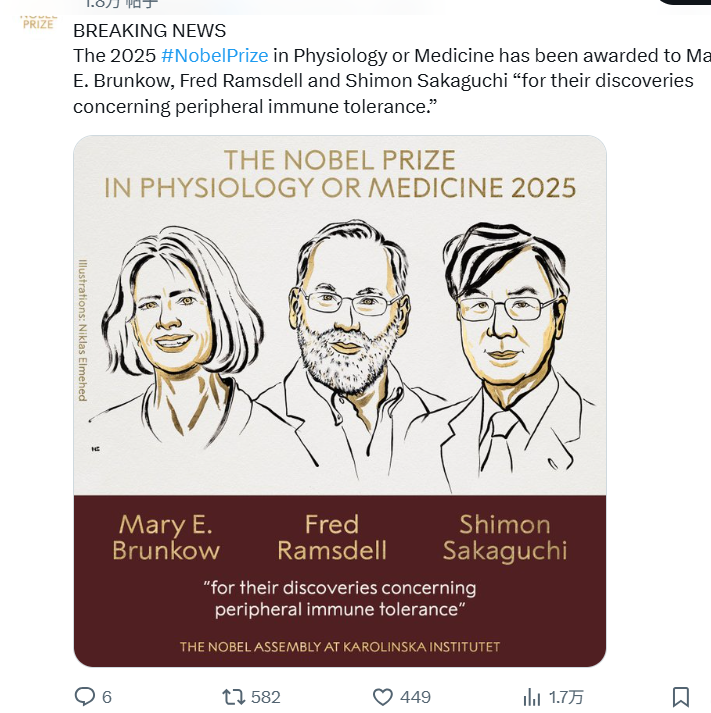
外周免疫耐受

Search documents
他们找到了免疫系统的“安全卫士”
Zhong Guo Qing Nian Bao· 2025-10-07 01:46
Core Insights - The 2025 Nobel Prize in Physiology or Medicine was awarded to Mary E. Brunkow, Fred Ramsdell, and Shimon Sakaguchi for their groundbreaking discoveries in peripheral immune tolerance, which have opened new research avenues and advanced therapies for cancer and autoimmune diseases [1][6]. Group 1: Immune System Functionality - The immune system protects humans from thousands of viruses and bacteria daily, and its ability to distinguish between pathogens and self-cells is crucial for survival [1]. - T cells possess a unique protein called T cell receptors that act as sensors to identify whether the body is under attack, with the potential to create over 10^15 different T cell receptors [1][2]. Group 2: Research Breakthroughs - In the 1980s, researchers identified a selection process called "central tolerance" that eliminates T cells that mistakenly attack the body's own tissues during their maturation in the thymus [2]. - Shimon Sakaguchi proposed the existence of "regulatory T cells" as a mechanism to calm other T cells, leading to the discovery of this new T cell type after over a decade of research [2][5]. Group 3: Genetic Discoveries - In the 1940s, researchers discovered "scurfy" mice that suffered from severe immune system issues due to T cell attacks on their organs, leading to the investigation of the underlying genetic causes [3][4]. - Mary E. Brunkow and Fred Ramsdell identified the Foxp3 gene, which is linked to the IPEX autoimmune disease and is crucial for the development of regulatory T cells [4][5]. Group 4: Therapeutic Implications - The findings regarding regulatory T cells have spurred the development of potential new therapies, including the isolation and amplification of these cells from patients to enhance their immune response [6]. - Researchers are exploring methods to modify regulatory T cells to target specific organs, thereby protecting them from immune system attacks [6].
2025年诺贝尔奖生理学或医学奖,为何授予这三位科学家?
生物世界· 2025-10-07 01:03
Core Viewpoint - The article discusses the groundbreaking discoveries by Mary Brunkow, Fred Ramsdell, and Shimon Sakaguchi, who were awarded the 2025 Nobel Prize in Physiology or Medicine for their work on regulatory T cells (Treg cells) and their role in peripheral immune tolerance, significantly enhancing the understanding of immune regulation and its implications for autoimmune diseases and cancer [3][11][19]. Group 1: Key Discoveries - The researchers identified and defined CD4+ CD25+ FOXP3+ regulatory T cells (Treg cells) and their critical role in controlling self-reactive responses, leading to the establishment of a new field of study in immune tolerance [3][11][19]. - Shimon Sakaguchi made the first key discovery in 1995, demonstrating that immune tolerance is more complex than previously thought, revealing a previously unknown T cell type that protects against autoimmune diseases [11][14]. - In 2001, Brunkow and Ramsdell discovered a gene mutation in specific mouse strains that made them prone to autoimmune diseases, naming the gene Foxp3, which is also linked to a severe autoimmune disease in humans known as IPEX syndrome [14][18]. Group 2: Implications and Future Directions - The findings of these researchers have opened new avenues in the treatment of cancer and autoimmune diseases, with potential to improve organ transplant success rates, as therapies based on their discoveries are currently in clinical trials [19][20]. - There are over 200 clinical trials involving Treg cells aimed at treating common diseases such as asthma, inflammatory bowel disease, and skin-related conditions, or improving organ transplant outcomes [23]. - The achievements of Brunkow, Ramsdell, and Sakaguchi highlight the importance of scientific perseverance and the integration of clinical observations with basic research, paving the way for enhanced understanding and therapeutic applications of Treg cells [24].

最高23亿港元!千亿巨头,拟大手笔回购
Zhong Guo Zheng Quan Bao - Zhong Zheng Wang· 2025-10-07 00:19
Company News - Tencent Holdings announced a share buyback of 5.503 billion HKD, repurchasing 815,000 shares on October 6 [3] - Geely Automobile's board approved a share buyback plan of up to 2.3 billion HKD, which will be executed through an automated mechanism in the open market [3] - As of October 6, Geely Automobile's stock price was 19.03 HKD per share, with a total market capitalization of 192.6 billion HKD [4]
专家解读诺奖生理学或医学奖:调节性T细胞可助力治疗免疫疾病
Xin Jing Bao· 2025-10-06 19:58
Core Viewpoint - The Nobel Prize in Physiology or Medicine for 2025 is awarded to Mary E. Brunkow, Fred Ramsdell, and Shimon Sakaguchi for their significant contributions to the discovery of peripheral immune tolerance through regulatory T cells (Tregs) [1][2]. Group 1: Contributions of Awardees - Shimon Sakaguchi first reported the marker molecule CD25 for regulatory T cells in 1995, establishing the CD4+CD25+ cells as Tregs and demonstrating their critical role in preventing autoimmune diseases [2]. - Mary E. Brunkow linked mutations in the Foxp3 gene to the rare autoimmune disease IPEX in 2001, identifying Foxp3 as the "master switch" for Treg function and advancing the field significantly [2]. - Fred Ramsdell contributed to the understanding of the molecular mechanisms of Tregs, revealing the relationship between Foxp3 mutations and IPEX syndrome, thus confirming the importance of Tregs in maintaining immune tolerance [2]. Group 2: Importance of Regulatory T Cells - Regulatory T cells are present in very low numbers but are crucial for maintaining health; even slight changes in their numbers can disrupt immune balance, leading to various diseases [3]. - A decrease in Treg numbers can result in autoimmune or allergic diseases, while an increase can lead to tumors and infections, indicating the potential for targeted therapies to treat immune-related diseases [3][4]. - Compared to most drug treatments, Tregs offer specificity and can minimize side effects associated with treatment toxicity, which may be a significant reason for the Nobel recognition [4]. Group 3: Clinical Application and Challenges - Despite the advantages of Tregs in therapeutic interventions, there are limitations in their clinical application, such as the unclear mechanisms of immune tolerance induction and the potential risk of increased infections or tumors with high doses of Tregs [4]. - The discoveries related to peripheral immune tolerance and cancer immunotherapy provide promising avenues for disease treatment and will further promote research in immune mechanisms and therapies [4].
重磅!2025年诺贝尔生理学或医学奖揭晓
合成生物学与绿色生物制造· 2025-10-06 15:43
Core Insights - The 2025 Nobel Prize in Physiology or Medicine will be awarded to scientists Mary E. Brunkow, Fred Ramsdell, and Shimon Sakaguchi for their contributions to peripheral immune tolerance research, with a total prize of 11 million Swedish Krona (approximately 8.32 million RMB) [2][7][8] Group 1: Nobel Prize Announcement - The Nobel Prize recognizes the significant impact of the winners' research on understanding immune system regulation, particularly the role of regulatory T cells in immune tolerance, which opens new avenues for treating autoimmune diseases and excessive immune responses [7][8] - The award ceremony will take place on December 10 in Stockholm, Sweden, highlighting the importance of basic medical research in improving human health [8] Group 2: Research Contributions - Mary E. Brunkow, born in 1961, has a background in molecular biology and focuses on the intersection of biomedical, immunology, and systems biology [7] - Fred Ramsdell, born in 1960, is active in both basic research and the biotechnology industry, working on translating immunological discoveries into therapeutic strategies for autoimmune diseases and cancer [7] - Shimon Sakaguchi, born in 1951, is a professor at Osaka University and has received multiple awards for his pioneering work in immune regulation, contributing to the foundation of precision medicine and biotechnology [8] Group 3: Industry Events - The 5th Non-Grain Biomass High-Value Utilization Forum will be held in Hangzhou, Zhejiang from November 27 to 29, focusing on non-grain biomass chemical products and materials, as well as biomass energy [10] - The forum will feature various specialized sessions, including green pretreatment of biomass, sustainable aviation fuel, and a showcase of over 100 technological achievements [10]
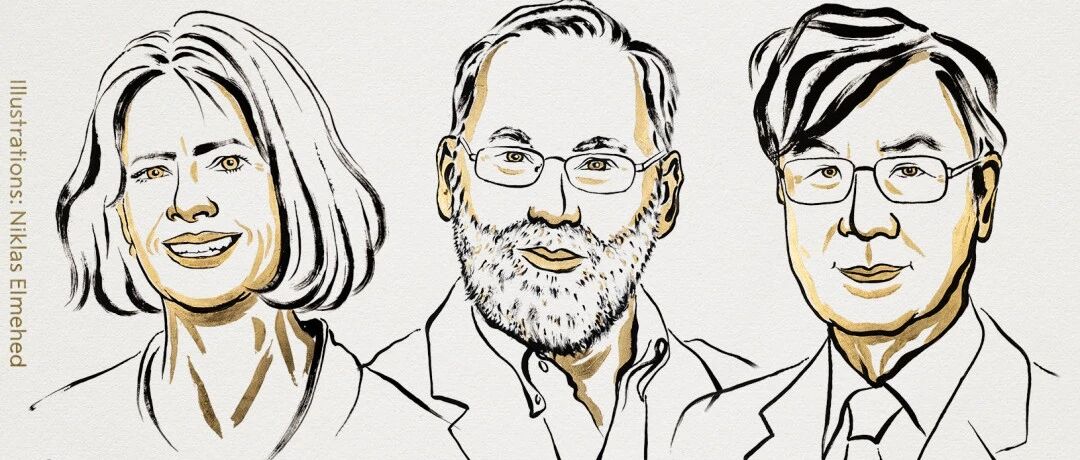
2025年诺贝尔生理学或医学奖揭晓,这些国内药企已布局相关领域
Zhong Guo Zheng Quan Bao· 2025-10-06 15:11
Group 1 - The Nobel Prize in Physiology or Medicine for 2025 was awarded to scientists Mary E. Brunkow, Fred Ramsdell, and Shimon Sakaguchi for their contributions to peripheral immune tolerance research, specifically the discovery of regulatory T cells [1][3] - The prize amount is 11 million Swedish Krona, approximately 8.32 million RMB, which will be equally divided among the three winners [1] - Their discoveries are expected to lead to new directions in the treatment of autoimmune diseases and the improvement of cancer immunotherapy [1][5] Group 2 - Domestic companies are actively engaging in the field of regulatory T cell therapy, with collaborations and clinical projects underway [5][6] - On May 29, 2025, Haier International Cell Bank and Cellxin Biotech initiated a clinical application project focused on regulatory T cell therapy for conditions like Amyotrophic Lateral Sclerosis (ALS) [5] - Cellxin Biotech announced that its clinical research project on the safety and tolerability of regulatory T cell therapy for neurodegenerative diseases received ethical approval from Zhengzhou University First Affiliated Hospital [5] - He Yuan Biological signed a strategic cooperation agreement with Cellxin Biotech to provide clinical trial sample preparation and testing services for Treg cell therapy [5] - Binoji Biotech, established in November 2021, focuses on innovative T cell therapies for solid tumors and autoimmune diseases, with its product BEN-301 aimed at treating autoimmune diseases currently in preclinical development [6]
诺贝尔生理学或医学奖出炉!十年内第三位日本科学家获奖 免疫领域“梅开二度”
Di Yi Cai Jing· 2025-10-06 13:34
Core Points - The Nobel Prize in Physiology or Medicine was awarded to Shimon Sakaguchi and two American scientists for their discoveries in peripheral immune tolerance [1][2] - This recognition highlights the importance of immune system regulation in preventing autoimmune diseases while combating pathogens [2][3] Group 1: Research Findings - The research revealed key mechanisms by which the immune system avoids attacking its own tissues, paving the way for new treatments for autoimmune diseases, cancer, and organ transplantation [2][4] - Sakaguchi discovered a previously unrecognized subset of T cells, challenging the traditional view that immune tolerance is achieved solely through the elimination of abnormal T cells in the thymus [2][3] Group 2: Clinical Applications - Despite the groundbreaking discoveries, the transition to clinical applications remains a significant challenge due to the complexity of human diseases and the heterogeneity of regulatory T cells [4][5] - Current research is focused on inducing immune tolerance and addressing rejection in organ transplantation, with several therapies based on regulatory T cells in clinical trials [5] Group 3: Future Prospects - There is optimism that as understanding of disease mechanisms deepens, immune therapies will evolve towards more precise regulatory approaches [5] - However, challenges such as ensuring the stability and specificity of regulatory T cells in clinical settings persist, which may limit their application compared to other therapies like CAR-T cell treatments [5]

诺贝尔生理学或医学奖出炉!十年内第三位日本科学家获奖,免疫领域“梅开二度”
Di Yi Cai Jing· 2025-10-06 13:05
Group 1 - The Nobel Prize in Physiology or Medicine was awarded to Japanese scientist Shimon Sakaguchi and two American scientists, Mary Brunkow and Fred Ramsdell, for their discoveries in peripheral immune tolerance [1][2] - Shimon Sakaguchi is the third Japanese scientist to receive this award in the last decade, following Yoshinori Ohsumi in 2016 and Tasuku Honjo in 2018, with both previous awards also related to immune regulation [1] - The research of the awardees reveals key mechanisms by which the immune system avoids attacking its own tissues, opening new directions for treatments of autoimmune diseases, cancer, and organ transplantation [2][3] Group 2 - The findings of the awardees establish a foundation for new research areas and promote the development of new therapies targeting cancer and autoimmune diseases [2] - Sakaguchi's research identified a previously unrecognized subset of T cells, challenging the traditional understanding that immune tolerance is achieved solely through the elimination of abnormal T cells in the thymus [3] - The role of regulatory T cells as "peacekeepers" in the immune system is emphasized, as they suppress abnormal immune responses to maintain self-tolerance and prevent autoimmune diseases [3][4] Group 3 - Despite the significant findings, the clinical application of these discoveries is still a long way off, with challenges in translating the research into effective therapies for autoimmune diseases and organ transplantation [4][5] - The complexity of human diseases, involving interactions between genes and the environment, complicates the clinical application of therapies based on regulatory T cells [5] - Current research is underway to induce immune tolerance and address rejection reactions in organ transplantation, but the path to successful clinical application remains challenging [4][5]
他们找到调控人体免疫系统的“秘密武器”!解读2025年诺贝尔生理学或医学奖
Huan Qiu Wang Zi Xun· 2025-10-06 12:50
Core Insights - The article discusses the groundbreaking research on "peripheral immune tolerance" by Mary E. Brunkow, Fred Ramsdell, and Shimon Sakaguchi, which has led to their joint award of the 2025 Nobel Prize in Physiology or Medicine [1][3][10] - Their findings reveal how the immune system avoids attacking its own tissues, highlighting the role of regulatory T cells in maintaining immune balance and preventing autoimmune diseases [3][9] Group 1: Research Breakthroughs - The research challenges the previous consensus that immune tolerance primarily relies on "central tolerance" in the thymus, introducing the concept of regulatory T cells as a crucial component in peripheral immune tolerance [5][7] - Brunkow and Ramsdell identified a mutation in the Foxp3 gene in a mouse model that leads to severe autoimmune diseases, establishing a link between this gene and the function of regulatory T cells [5][7] - Sakaguchi later connected these findings, demonstrating that Foxp3 is essential for the development and function of regulatory T cells, which are vital for preventing systemic autoimmune responses [7][9] Group 2: Clinical Implications - The research has significant implications for the treatment of autoimmune diseases and cancer, with therapies based on regulatory T cells being actively explored for conditions like type 1 diabetes and rheumatoid arthritis [9][10] - The work of these scientists has paved the way for advancements in organ transplantation, potentially leading to more successful procedures by understanding immune tolerance mechanisms [9][10]
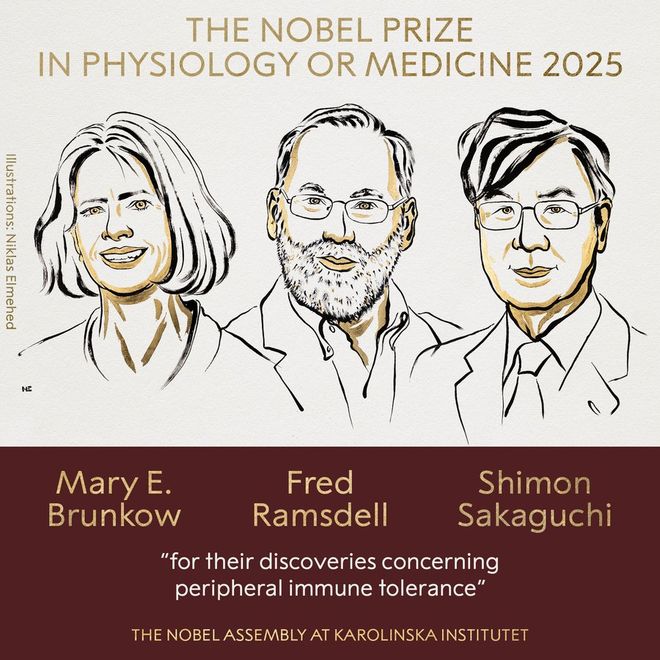
2025诺贝尔医学奖揭晓:三位科学家共享殊荣
Hu Xiu· 2025-10-06 11:15
Core Points - The 2025 Nobel Prize in Physiology or Medicine was awarded to Mary E. Brunkow, Fred Ramsdell, and Shimon Sakaguchi for their foundational contributions to the field of immune tolerance [2][5] - Their work identified regulatory T cells as "guardians" of the immune system, preventing it from harming the body [3][6] - The discoveries have paved the way for potential therapies currently under clinical evaluation, which may treat or cure autoimmune diseases and improve cancer therapies [7][6] Group 1 - The Nobel laureates provided decisive insights into the mechanisms behind autoimmune diseases [8] - In 2001, Brunkow and Ramsdell made a key discovery explaining why a specific mouse strain (scurfy) is particularly prone to autoimmune diseases, linked to a mutation in the Foxp3 gene [9][10] - Sakaguchi discovered a new class of T cells, demonstrating the complexity of the immune system beyond the previously believed central tolerance process [11][12][13] Group 2 - The announcement of the award marks the beginning of the 2025 Nobel Prize season, which runs from October 6 to 13 [22] - The Nobel Prize in Physiology or Medicine has been awarded 115 times since 1901, with a total of 229 laureates, none of whom have won the award more than once [22] - The Nobel Prize season is viewed as an important window for insights into future industry trends, with a growing emphasis on interdisciplinary research [23][24][25]