
数字孪生水利体系

Search documents
安徽“十四五”水利发展交出亮眼答卷
Xin Hua Wang· 2025-12-04 08:43
Core Insights - During the "14th Five-Year Plan" period, Anhui's investment in water conservancy construction has reached new heights, significantly improving disaster prevention capabilities and enhancing rural water supply security [1][2] Investment and Financing - Anhui's water conservancy system has adopted a dual approach of government and market efforts, leading to a continuous increase in water conservancy investment, which has cumulatively reached 275.4 billion yuan, a 43% increase compared to the "13th Five-Year Plan" period [1] - The investment in water conservancy infrastructure has consistently surpassed 50 billion yuan and 60 billion yuan annually [1] Modern Water Network Construction - The first phase of the Yangtze River to Huaihe River project has been completed, with 820 million cubic meters of water transferred, and two major north-south arteries connecting the Yangtze and Huaihe river systems have been fully connected [1] - The implementation of "Artificial Intelligence + Water Conservancy" has led to the establishment of a digital twin water conservancy system across various types of water management areas [1] Rural Water Supply Security - The comprehensive implementation of the "High-Quality Development Plan for Rural Water Supply in Anhui Province" aims to improve water supply in northern Anhui and enhance rural water supply security for over 30 million residents by the end of this year [2] - The new water supply framework includes large water sources, large water plants, and large pipelines to ensure quality water supply [2] Water Resource Utilization - Anhui has established a rigid constraint index system for water resource allocation, achieving zero growth in total water consumption while supporting an average economic growth of 5.8% during the "14th Five-Year Plan" [2] - By 2024, water consumption per unit of GDP and industrial added value is expected to decrease by 22.2% and 36.6%, respectively, compared to 2020, promoting the efficient and safe use of water resources [2]
新华网:2025年度水利科学技术研究五大前沿热点词发布
Shui Li Bu Wang Zhan· 2025-11-28 10:21
Core Insights - The National Science and Technology Terminology Approval Committee held its 2025 annual work meeting, announcing 68 frontier research hot terms across 11 disciplines, including five key terms related to water conservancy technology [1][3] Water Conservancy Technology Hot Terms - "National Water Network" refers to a comprehensive water conservancy engineering system that integrates water resource optimization, flood prevention, and ecological protection, utilizing natural rivers and lakes as a foundation [2] - "Smart Dam" represents the integration of new information technologies with traditional dam engineering, focusing on IoT, big data, AI, and digital twin technologies for enhanced management throughout the dam's lifecycle [2] - "Digital Twin Water Conservancy System" involves the digital mapping and intelligent simulation of physical water conservancy elements, enabling real-time interaction and optimization [2] - "Drought-Flood Transition" describes the extreme weather phenomenon where a region experiences severe drought followed by sudden heavy rainfall, necessitating urgent flood prevention measures [2] - "Happy Rivers and Lakes" emphasizes maintaining ecological stability and promoting high-quality development in river and lake systems, ensuring safety and satisfaction for local communities [2] Institutional Framework - The National Science and Technology Terminology Approval Committee, authorized by the State Council, is responsible for the authoritative approval and publication of scientific terminology, with a dedicated committee for water conservancy terminology [3] - Starting in 2024, the committee will regularly collect and publish annual frontier research hot terms to enhance the development of scientific disciplines and showcase advancements in science and technology [3]

从五个前沿热点词看2025年度水利科学技术研究亮点
Xin Hua She· 2025-11-25 23:59
Core Insights - The National Water Resources Technology Terminology Committee has identified five key research hotspots in water resources technology for 2025, including "National Water Network," "Smart Dams," "Digital Twin Water Resources System," "Drought-Flood Rapid Transition," and "Happy Rivers and Lakes" [1][2] Group 1: Research Hotspots - "National Water Network" refers to a comprehensive system that integrates water resource optimization, flood disaster reduction, and ecosystem protection, based on natural rivers and lakes [1] - "Smart Dams" are the result of integrating new information technologies with traditional dam engineering, focusing on IoT, big data, AI, and digital twin technologies for enhanced management throughout the dam's lifecycle [1] - "Digital Twin Water Resources System" involves digital mapping and intelligent simulation of physical water resources, utilizing spatial data and mathematical models for real-time interaction and optimization [2] Group 2: Extreme Weather Events - "Drought-Flood Rapid Transition" describes the extreme event where a region experiences worsening drought conditions followed by sudden heavy rainfall, necessitating immediate flood prevention and disaster response [2] Group 3: Ecological and Community Well-being - "Happy Rivers and Lakes" emphasizes maintaining the ecological stability of river and lake systems while ensuring community safety and promoting high-quality development, leading to a harmonious relationship between people and water [2] Group 4: Institutional Framework - The National Science and Technology Terminology Committee, authorized by the State Council, is responsible for the authoritative approval and publication of scientific terminology, with the National Water Resources Technology Terminology Committee focusing specifically on water resources terminology [2]
2025年度水利科学技术研究五大前沿热点词发布
Zhong Guo Xin Wen Wang· 2025-11-24 08:44
Core Insights - The National Committee for the Standardization of Scientific and Technological Terms has released five key frontier hot topics in water conservancy science and technology for 2025, reflecting current trends and future directions in the field [1][2]. Group 1: Key Hot Topics - "National Water Network" integrates water resource optimization, flood disaster reduction, and ecosystem protection, utilizing natural rivers and lakes as a foundation [2]. - "Smart Dams" combine new information technologies with traditional dam engineering, focusing on IoT, big data, AI, and digital twin technologies for comprehensive lifecycle management [2]. - "Digital Twin Water Conservancy System" involves digital mapping and intelligent simulation of physical water conservancy elements, enabling real-time interaction and optimization [2]. - "Drought-Flood Rapid Transition" describes extreme weather events where a region experiences severe drought followed by sudden heavy rainfall, necessitating emergency flood response [2]. - "Happy Rivers and Lakes" emphasizes maintaining ecological stability and promoting high-quality development in river and lake systems, ensuring safety and satisfaction for local communities [2]. Group 2: Institutional Background - The National Committee for the Standardization of Scientific and Technological Terms is an authoritative body authorized by the State Council, responsible for the approval and publication of scientific and technological terms [3]. - The National Water Conservancy Technology Terminology Committee, guided by the Ministry of Water Resources, aims to establish a comprehensive and scientifically standardized terminology system to support innovation and development in water conservancy [3].
“十四五”时期 中国建成世界上规模最大水利基础设施体系
Ren Min Ri Bao Hai Wai Ban· 2025-09-30 01:27
Core Viewpoint - China has established the world's largest water conservancy infrastructure system, contributing significantly to flood control, water supply, food security, and ecological safety during the 14th Five-Year Plan period [4][2]. Infrastructure Development - Since the beginning of the 14th Five-Year Plan, 172 major water conservancy projects have been initiated, optimizing the layout, structure, function, and system integration of water conservancy infrastructure [3]. - By the end of 2024, China will have built 95,000 reservoirs, 200 large and medium-sized water diversion projects, 6,924 large and medium-sized irrigation areas, and 318,000 kilometers of embankments [3]. - Water conservancy investment has exceeded 1 trillion yuan for three consecutive years from 2022 to 2024, with total investment during the 14th Five-Year Plan expected to surpass 5.4 trillion yuan, 1.6 times that of the 13th Five-Year Plan [3]. Disaster Prevention and Response - The country has successfully managed floods exceeding warning levels in 3,981 rivers and has not experienced any major dam failures since 2022, demonstrating enhanced flood and drought disaster prevention capabilities [3]. - Effective measures have been taken to ensure water supply for both drinking and irrigation in drought-affected areas, particularly in the Yangtze and Pearl River basins [3]. Environmental Improvement - The 14th Five-Year Plan has led to significant improvements in the ecological conditions of key rivers and lakes, achieving a 98.6% compliance rate for ecological flow standards [5]. - Initiatives such as the Mother River Revival Action have resulted in the restoration of over 1,300 square kilometers of water area in major lakes [5]. Water Resource Efficiency - During the 14th Five-Year Plan, China's total water consumption has remained stable despite an average economic growth rate of 5.5% [6]. - The water usage per unit of GDP and industrial added value has decreased by 17.7% and 23.6%, respectively, compared to 2020 [7]. Technological and Institutional Advancements - The development of a digital twin water conservancy system has been prioritized to enhance flood prevention and water resource management [9]. - New laws and regulations, including the Yangtze River Protection Law and the Groundwater Management Regulations, have been implemented to strengthen water resource management [9].
我国形成世界上规模最大水利基础设施体系
Ren Min Ri Bao· 2025-09-30 00:13
Core Insights - The article highlights the significant achievements in China's water conservancy development during the "14th Five-Year Plan" period, emphasizing improvements in flood control, water supply, food security, and ecological safety [2][3]. Investment and Infrastructure - Water conservancy investment has reached a historical high, with over 1 trillion yuan invested annually for three consecutive years, totaling 13,529 billion yuan in 2024, which is 1.6 times that of the previous five-year plan [3]. - By the end of 2024, China will have built 95,000 reservoirs, 200 major water diversion projects, and 31.8 million kilometers of embankments, establishing the world's largest and most comprehensive water conservancy infrastructure system [3]. Disaster Management and Response - The proportion of flood disaster losses to GDP has decreased from 0.28% during the "13th Five-Year Plan" to 0.18% during the current plan [3]. - The capacity for flood control in reservoirs is 185.6 billion cubic meters, protecting 660 million people, and the country has effectively managed severe droughts in major river basins [3]. Water Resource Management - The total water usage has achieved zero growth despite significant economic growth, with water usage per unit of GDP and industrial output decreasing by 17.7% and 23.6% respectively compared to 2020 [5]. - The area of effective irrigation has increased to 6.38 million acres, with unconventional water usage reaching 25.1 billion cubic meters [5]. Agricultural Support - Modern irrigation districts have been developed to enhance grain production, with significant investments in water source projects and irrigation area improvements [6]. - The area of irrigated farmland is expected to reach 109 million acres by the end of the "14th Five-Year Plan" [5]. Rural Water Supply - The rural water supply standardization model aims for a 96% coverage rate of tap water in rural areas by the end of the current plan [7]. Ecological Restoration - The area affected by soil erosion in the Loess Plateau has been reduced by over half, with significant improvements in river and lake ecosystems [8][9]. - The implementation of the "Mother River Revival Action" has led to the restoration of several historically significant rivers, with a focus on ecological flow standards [8].
外交部:中方将增设青年科技人才签证;美国白宫公布特朗普关于结束加沙冲突的计划;国庆前上百只基金启动大额限购|早报
Di Yi Cai Jing· 2025-09-30 00:11
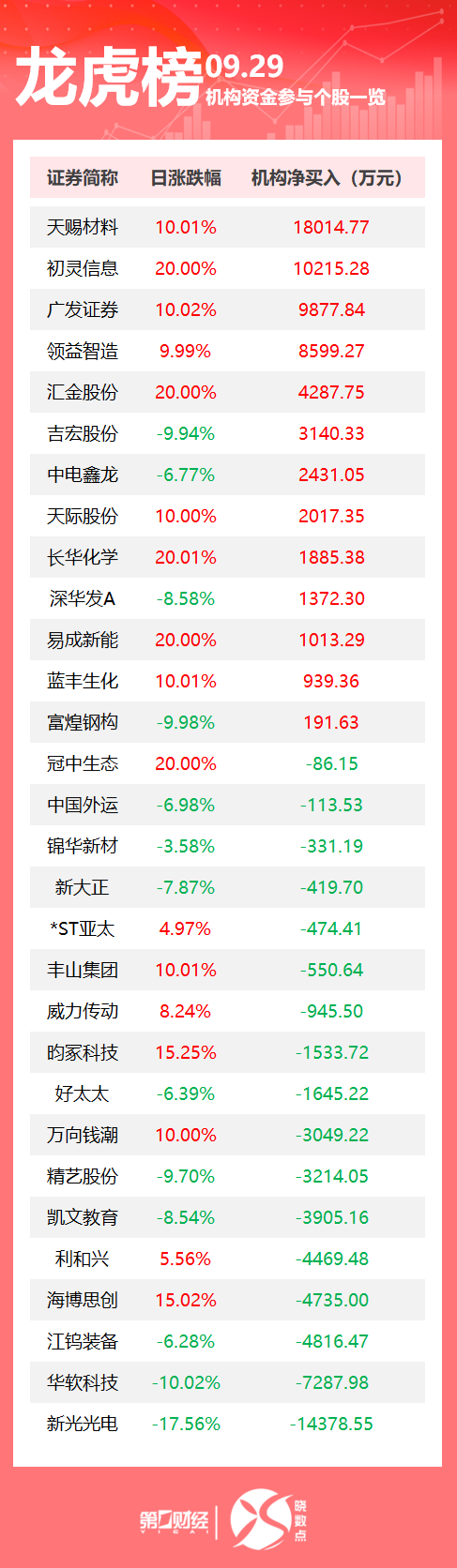
Group 1 - China will introduce a new visa category for young scientific and technological talents, named the "K visa," to promote international exchange and cooperation [2] - The U.S. White House has released a plan proposed by Trump to end the Gaza conflict, which includes an immediate ceasefire and the withdrawal of Israeli troops to agreed borders [3][18] - Over a hundred mutual funds in China have initiated large-scale purchase restrictions ahead of the National Day holiday, primarily to manage liquidity risks and protect existing investors' returns [4] Group 2 - The National Development and Reform Commission announced a new policy financial tool with a total scale of 500 billion yuan, aimed at supporting project capital [5] - The Ministry of Commerce of China criticized the U.S. for its new export control rules, which impose additional sanctions on subsidiaries of companies on the U.S. entity list [6] - Five departments in China have issued a plan to support Beijing in implementing the WTO e-commerce agreement, enhancing trade services and data management [7] Group 3 - The State Taxation Administration of China will enforce strict regulations on internet platform companies regarding tax obligations, ensuring they do not transfer tax responsibilities to gig workers [8] - The Ministry of Water Resources is advancing the construction of a digital twin water management system to enhance flood prevention and resource management [9] - In 2024, China's total R&D expenditure is projected to reach 36,326.8 billion yuan, with Guangdong province leading with over 500 billion yuan in investment [10] Group 4 - Shanghai is promoting high-quality development of offshore bonds through financial reforms and international cooperation [11] - DeepSeek has launched a new model that significantly reduces costs by over 50%, enhancing its competitive position in the market [22] - Jaguar Land Rover is set to resume production after a month-long halt due to a cyberattack, indicating a recovery in operations [23] Group 5 - OPPO plans to enter the handheld smart imaging device market, targeting a product launch in 2026 to compete with established brands like GoPro and DJI [24] - The U.S. stock market saw a slight increase, with the Nasdaq China Golden Dragon Index rising over 2%, indicating positive investor sentiment towards Chinese tech stocks [25] - Institutional investors showed significant buying activity in stocks like Tianqi Materials and Chuling Information, while New Light Optoelectronics faced substantial selling pressure [26][28]

我国形成世界上规模最大水利基础设施体系(权威发布·高质量完成“十四五”规划)
Ren Min Ri Bao· 2025-09-29 22:30
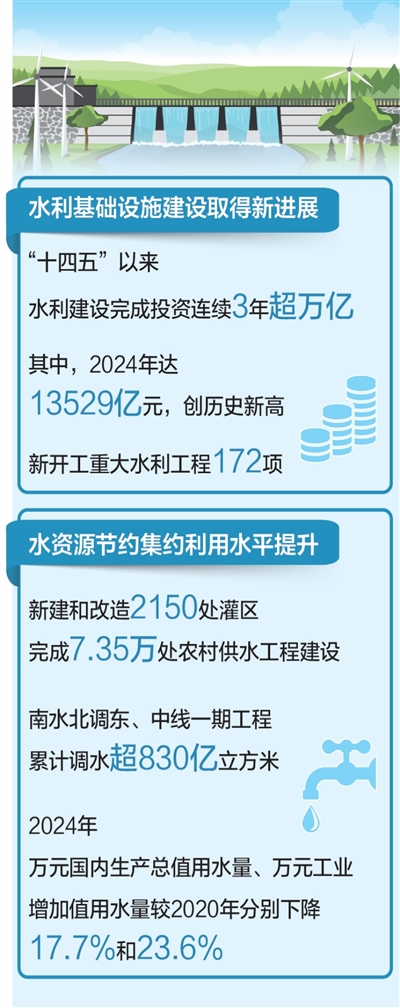
Core Insights - The Chinese government has made significant progress in water conservancy development during the "14th Five-Year Plan" period, enhancing flood safety, water supply security, food security, and ecological safety [4][5]. Investment and Infrastructure - Water conservancy construction investment has exceeded 1 trillion yuan for three consecutive years, reaching a historical high of 1.3529 trillion yuan in 2024, with a total expected investment of 5.4 trillion yuan during the "14th Five-Year Plan," which is 1.6 times that of the "13th Five-Year Plan" [5]. - A total of 172 major water conservancy projects have commenced since the beginning of the "14th Five-Year Plan," with 95,000 reservoirs, 200 large and medium-sized water diversion projects, and 6,924 large and medium-sized irrigation areas completed by the end of 2024 [5]. Disaster Management and Water Resource Allocation - The proportion of flood disaster losses to GDP has decreased from 0.28% during the "13th Five-Year Plan" to 0.18% during the "14th Five-Year Plan" [5]. - The national water network coverage is expected to reach 80.3% by the end of this year, with significant projects like the South-to-North Water Diversion and other major water diversion projects enhancing water resource allocation [6]. Water Conservation and Efficiency - Water resource utilization has improved, achieving zero growth in total water consumption despite economic growth, with water usage per unit of GDP and industrial output decreasing by 17.7% and 23.6% respectively compared to 2020 [7]. - The area of effective irrigation has increased to 6.38 million hectares, with unconventional water utilization reaching 25.1 billion cubic meters [7]. Agricultural Support and Rural Water Supply - The government has focused on modernizing irrigation systems and ensuring rural water supply, with a target of 96% for rural tap water coverage by the end of the "14th Five-Year Plan" [8]. - The construction of 30 major water diversion and key water source projects has been prioritized to support food production in major grain-producing areas [8]. Ecological Restoration and Soil Conservation - The area affected by soil erosion in the Loess Plateau has been reduced by over half, with significant measures taken to improve vegetation and soil conservation [11]. - The ecological environment of rivers and lakes has improved, with a focus on restoring flow in historically dried rivers and enhancing ecological water flow standards [10].
保障防洪安全、供水安全、粮食安全、生态安全 我国形成世界上规模最大水利基础设施体系(权威发布·高质量完成“十四五”规划)
Ren Min Ri Bao· 2025-09-29 21:58
Core Insights - The Chinese government has made significant progress in water resources management and infrastructure development during the "14th Five-Year Plan" period, focusing on flood control, water supply, food security, and ecological safety [1][2]. Investment and Infrastructure Development - Water infrastructure investment has exceeded 1 trillion yuan for three consecutive years, reaching a historical high of 1.3529 trillion yuan in 2024, with a total expected investment of 5.4 trillion yuan during the "14th Five-Year Plan," which is 1.6 times that of the previous five-year period [2]. - A total of 172 major water conservancy projects have commenced since the beginning of the "14th Five-Year Plan," with 95,000 reservoirs, 200 large and medium-sized water diversion projects, and 31,800 kilometers of embankments constructed by the end of 2024 [2]. Flood and Drought Management - The proportion of flood disaster losses to GDP has decreased from 0.28% during the "13th Five-Year Plan" to 0.18% during the current period, with flood control capacity significantly enhanced [2]. - The water storage capacity of reservoirs is 185.6 billion cubic meters, protecting 660 million people, and the country has effectively managed severe droughts in major river basins [2]. Water Resource Allocation - The national water network coverage is expected to reach 80.3% by the end of this year, with significant projects like the South-to-North Water Diversion and other major water diversion projects enhancing water resource allocation [3]. - The East and Middle Line of the South-to-North Water Diversion Project has delivered over 83 billion cubic meters of water, benefiting 195 million people in 48 major cities [3]. Water Conservation and Efficiency - Water usage has achieved zero growth despite economic expansion, with water efficiency improving significantly; water consumption per unit of GDP and industrial output has decreased by 17.7% and 23.6% respectively compared to 2020 [4]. - The area of water-saving irrigation has reached 63.8 million acres, with the effective utilization coefficient of irrigation water increasing to 0.58 [4]. Agricultural Support and Rural Water Supply - The government has focused on modernizing irrigation systems and enhancing agricultural water efficiency, with over 2 million acres of irrigation area restored or improved [5]. - Rural water supply initiatives aim for a 96% coverage rate of tap water by the end of the "14th Five-Year Plan," implementing standardized construction and management models [5]. Ecological Restoration - The ecological environment of rivers and lakes has improved, with a 98.6% compliance rate for ecological flow standards in key rivers and lakes [7]. - The area affected by soil erosion on the Loess Plateau has been reduced by over half, with significant investments in soil conservation measures [8].
水利部:预计“十四五”时期水利建设完成投资超5.4万亿元
Zheng Quan Ri Bao Wang· 2025-09-29 13:07
Core Insights - Since the start of the 14th Five-Year Plan, China has significantly advanced its water conservancy infrastructure, with investments exceeding 1 trillion yuan for the first time in 2022 and projected to reach 1.3529 trillion yuan in 2024, totaling over 5.4 trillion yuan during the entire period, which is 1.6 times that of the 13th Five-Year Plan [1][2] Investment and Financing - The central government has prioritized water conservancy as a key area for infrastructure investment, implementing various supportive policies, including the issuance of 1 trillion yuan in government bonds in 2023, with water conservancy as a focus area [1] - Average annual non-fiscal funding for water conservancy during the first four years of the 14th Five-Year Plan reached 395.7 billion yuan, which is 2.3 times that of the 13th Five-Year Plan [2] - Social capital participation has been encouraged, with average annual investment from social capital reaching 104 billion yuan, 1.8 times that of the previous plan [2] Infrastructure Development - By the end of 2024, China is expected to have built 95,000 reservoirs, 200 large and medium-sized water diversion projects, 6,924 large and medium-sized irrigation areas, and 318,000 kilometers of embankments, creating the world's largest and most comprehensive water conservancy infrastructure system [2] Safety and Modernization - The water conservancy department emphasizes dam safety, aiming to construct safe, ecological, and intelligent dams, with 12 intelligent dam pilot projects initiated [3] - A modern reservoir management matrix has been established, with 11,814 reservoirs participating, enhancing safety monitoring capabilities significantly [3] Water Resource Management - Despite economic growth, China's total water consumption has remained stable, attributed to efficient water resource management and strict regulations [4] - Water usage per unit of GDP and industrial output has decreased by 17.7% and 23.6% respectively compared to the end of the 13th Five-Year Plan, while the effective utilization coefficient of irrigation water has improved from 0.565 to 0.58 [4]