数字生态

Search documents
暑期出境游微信支付境外消费涨了三成多,杭州厦门成香港人新宠
Sou Hu Cai Jing· 2025-08-30 01:34
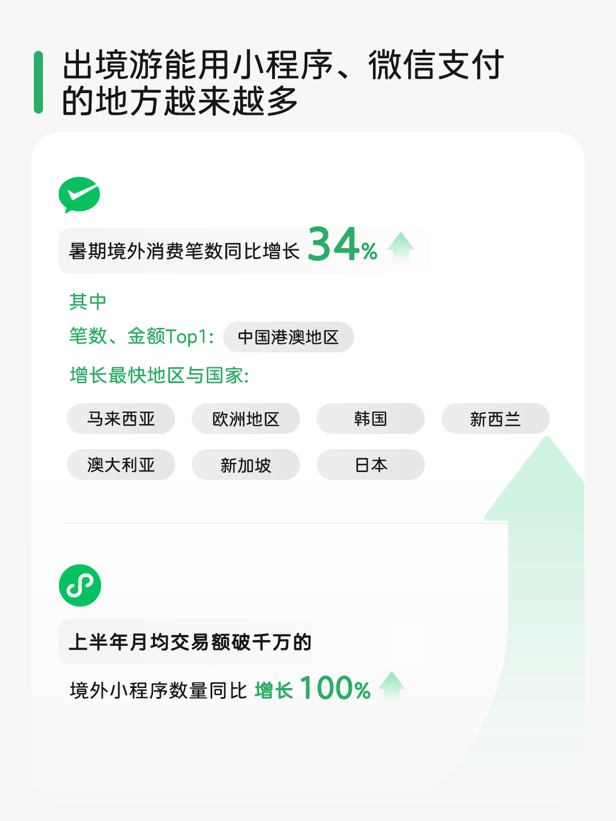
Group 1 - The core viewpoint of the article highlights the growing popularity of WeChat's ecosystem among overseas merchants, driven by the increase in cross-border travel and the adoption of WeChat Mini Programs and WeChat Pay to enhance the experience for Chinese tourists [1][3] - During the summer vacation period (July 1 - August 20), the number of overseas offline consumption transactions increased by 34%, and the number of active overseas Mini Programs rose by 30% year-on-year, with the number of Mini Programs achieving an average monthly transaction volume exceeding 10 million doubling year-on-year [1][6] - WeChat Mini Programs have now covered 92 countries and regions globally, spanning 103 sub-industries, becoming a digital standard for overseas merchants serving Chinese tourists [3][4] Group 2 - In the transportation sector, there was a notable growth of over 40%, with the introduction of Mini Programs like Japan's GO Taxi and Uber facilitating easier travel for Chinese tourists [4][7] - The Hong Kong and Macau regions saw a 26% year-on-year increase in WeChat Pay transaction amounts, with popular travel destinations expanding beyond the Greater Bay Area to cities like Hangzhou and Xiamen [3][4] - The fashion sector remains a key focus for cross-border tourism, with transaction volumes for fashion brands in Europe and Japan growing by 29% and 44% respectively, while Chinese Hong Kong fashion brands saw a 20% increase [7][8] Group 3 - The number of overseas merchants supporting WeChat Pay surged by 64% in the first half of the year, enhancing the convenience of cashless transactions for tourists [8][10] - Notable growth in transaction volumes was observed in various sectors, including dining, retail, and transportation, with some local businesses experiencing transaction volume peaks of up to five times compared to earlier periods [8][10] - WeChat's ecosystem is increasingly penetrating various industries and scenarios abroad, providing Chinese tourists with a seamless experience while exploring international destinations [10]


丝路数智化高峰发展论坛举行
Huan Qiu Wang· 2025-08-25 11:57
Group 1 - The forum "Silk Road Digitalization Development Summit and Zande Store 2.0 Digital Ecosystem Platform Press Conference" was held in Tai'an, focusing on innovative paths for the digital economy and ecological co-construction, marking a new stage in digital economic development [1] - The integration of Silk Road spirit and digitalization is expected to create new development paradigms, with the forum serving as a platform for industry wisdom and collaboration opportunities [3] - Digital ecological construction is rapidly reshaping China's economic landscape, with policy guidance and innovative practices identified as key breakthrough points [3][4] Group 2 - The emphasis on digitalization as a core driver for cross-border trade and industrial collaboration in the context of a new global landscape [3] - The importance of legal supervision, data security, and algorithm fairness in safeguarding public interests within the digital economy [3] - The Zande Store aims to break down scene barriers and optimize industrial chain collaboration through technology empowerment, promoting service upgrades and ecological win-win in the digital economy era [4][5]

存量竞争时代 银行APP如何突围?
Jing Ji Guan Cha Wang· 2025-08-22 09:49
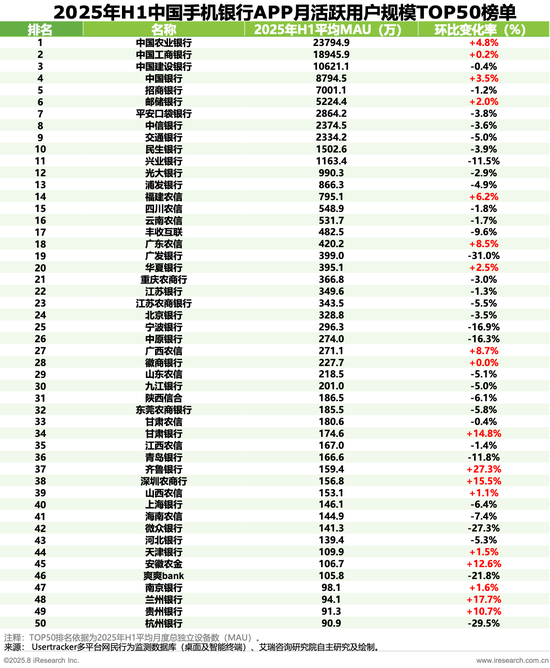
Core Insights - The Chinese mobile banking app market has entered a phase of stock competition in the first half of 2025, with monthly active users (MAU) fluctuating between 650 million and 700 million, showing low growth rates between -1.2% and 4.6% [1] - User engagement is declining significantly, with daily effective usage time dropping from 4.93 minutes to 2.70 minutes and daily usage frequency decreasing from 4.54 times to 2.86 times from 2023 to 2025 [1] - Private banks, particularly WeBank and MYbank, are facing severe challenges, with MYbank's MAU plummeting by 64.7%, failing to make it into the top 50 rankings [1] Group 1: Performance of Major Banks - The six major state-owned banks maintain a dominant position in the mobile banking landscape, with Agricultural Bank of China leading with 238 million MAU, a year-on-year increase of 4.8% [2][3] - Industrial and Commercial Bank of China and China Construction Bank follow with 189 million and 106 million MAU, respectively, forming the top tier of the industry [3] - China Bank and Postal Savings Bank also saw slight increases in MAU, while Bank of Communications experienced a decline of 5.0% [3] Group 2: Challenges Faced by Joint-Stock Banks - Joint-stock commercial banks are generally experiencing a decline in user activity, with China Merchants Bank leading among them but still seeing a 1.2% decrease in MAU [4] - Other banks like Ping An Pocket Bank, CITIC Bank, and Minsheng Bank also reported declines ranging from 2.9% to 11.5%, with Guangfa Bank suffering the largest drop at 31.0% [4] - The challenges stem from increased competition from state-owned banks and local rural commercial banks, as well as a lack of differentiation in financial products [4] Group 3: Performance of City Commercial Banks - City commercial banks show a mixed performance, with 17 entering the top 50 MAU rankings, indicating strong regional influence [6] - Jiangsu Bank leads city banks with 349.6 million MAU, while Qilu Bank saw a significant increase of 27.3% [6] - However, some banks like Ningbo Bank and Hangzhou Bank experienced declines exceeding 16% [6] Group 4: Decline of Private Banks - Private banks like WeBank and MYbank are facing drastic declines, with WeBank's MAU at 141.3 million, down 27.3%, and MYbank dropping out of the top 50 [7] - The decline is attributed to traditional banks enhancing their digital capabilities, regulatory changes, and significant gaps in service offerings compared to traditional banks [7] Group 5: Future Outlook - The competition in the mobile banking sector is shifting from scale expansion to value cultivation, emphasizing the importance of integrating financial services into high-frequency scenarios like education and public services [9][10] - State-owned banks are successfully leveraging their resources to create an ecosystem that enhances user engagement, while joint-stock banks need to focus on specific customer segments to avoid internal competition [9] - The future of mobile banking will likely revolve around comprehensive financial ecosystems and customer insights rather than just app functionalities [10]





Yalla Group第二季度净利润同比增长16.4%
Zheng Quan Ri Bao Wang· 2025-08-12 07:46
Core Insights - Yalla Group reported strong financial performance for Q2 2025, with revenues exceeding expectations and a significant increase in net profit margin [1] - The company is focused on expanding its product offerings and enhancing user engagement in the MENA region [1] Financial Performance - For Q2 2025, Yalla Group achieved total revenue of $84.564 million, with social services contributing $53.635 million and gaming services $30.650 million [1] - The net profit for the quarter was $36.502 million, representing a year-over-year growth of 16.4% and a net profit margin of 43.2%, an increase of 4.6 percentage points from the previous year [1] Strategic Initiatives - The company plans to accelerate its stock repurchase program, reflecting confidence in future growth and commitment to enhancing shareholder value [1] - Yalla Group is set to launch two match-3 games in Q3 2025 and a rogue-lite game in Q4 2025, along with preparations for a co-published heavy game [1] Market Outlook - Yalla Group anticipates Q3 2025 revenues to be between $78 million and $85 million, indicating continued growth expectations [2]

智利成拉美第二大数据中心市场
Shang Wu Bu Wang Zhan· 2025-07-29 15:19
Core Insights - Chile has become the second-largest data center market in Latin America with an operational capacity of 242.7 MW, surpassing Mexico and only behind Brazil's 700 MW [1] - The capital region hosts 41 operational centers, primarily consisting of colocation centers rented by enterprises [1] - Over the past decade, Chile's data center capacity has doubled, attracting investments totaling $1.66 billion [1] - Although no new facilities were added in the first half of 2025, Ascenty's Santiago 3 center is set to launch in the second half, contributing an additional 16 MW, raising total capacity to 258.7 MW [1] - By 2031, Chile's data center capacity is projected to exceed 500 MW, with 49 operational centers, including 12 in the northern Santiago corridor, which is a key digital hub in the country [1] - This growth trend reinforces Chile's strategic position as a critical node in the Latin American digital ecosystem [1]
提升数字要素 推动县域城乡融合发展
Xin Hua Ri Bao· 2025-07-24 23:39
Core Viewpoint - The development of digital rural areas is crucial for promoting urban-rural integration in counties, with a focus on enhancing digital elements to achieve the goals set for the 14th Five-Year Plan by 2025 [1] Group 1: Digital Economy - Digital economy serves as an accelerator for urban-rural economic integration in counties, necessitating the enhancement of digital elements [2] - There is a significant disparity in digital economic development across counties, with eastern regions showing advanced levels due to better infrastructure and policies [2] - Western regions, such as Gansu, Ningxia, Xinjiang, and Tibet, need to improve their digital economic policies and increase government-enterprise cooperation to foster local brand development [2] Group 2: Digital Livelihood - Digital investment in livelihood is essential for urban-rural integration, focusing on sectors like agriculture, education, and healthcare [3] - County governments should leverage digital platforms to enhance agricultural training and connect it with employment opportunities [3] - Increased investment in rural education and healthcare is necessary to meet the diverse needs of different age groups and improve overall health services [3] Group 3: Digital Governance - Digital governance is key to breaking down regional barriers and enhancing grassroots governance [4] - Establishing a unified digital platform can help governments better understand and meet the needs of urban and rural residents [4] - Utilizing big data and cloud computing can optimize resource allocation in various sectors, including agriculture and public services [4] Group 4: Digital Culture - Digital technology can promote and preserve local cultural heritage, which is vital for cultural integration in counties [5] - County governments should develop unique media platforms to disseminate local cultural content and enhance tourism through cultural industries [5] - Ongoing digital transformation of public cultural spaces is necessary to improve service quality in urban and rural areas [5] Group 5: Digital Ecology - Digital elements are essential for achieving ecological integration in counties, particularly in sustainable agricultural practices [6] - Increased financial investment in agriculture and related sectors is needed to integrate digital technology into production processes [6] - Promoting sustainable development concepts among farmers can enhance their engagement in green practices and improve agricultural productivity [6]
环迅支付:构建数字生态,以多元服务赋能商业革新
Jin Tou Wang· 2025-07-21 09:11
Core Insights - Huanxun Payment has established itself as a pioneer in the domestic third-party payment industry since its inception in 2008, focusing on customer-centric digital ecosystem development to facilitate the digital transformation of physical businesses [1] Group 1: Business Model and Services - Huanxun Payment has developed a diversified platform matrix, with two core platforms, Haoda and Xunyi Tong, each offering unique advantages and forming a service loop [2] - The Haoda platform, serving merchants, integrates various functions such as aggregated payment, smart store management, digital marketing, and live streaming sales, covering over 600 cities and more than 2 million merchants, with an annual transaction volume exceeding 1 trillion [2] - The Xunyi Tong platform focuses on digital entrepreneurship services, providing knowledge training and market expansion support to partners, thereby empowering offline commercial services [2] Group 2: Application Scenarios - Huanxun Payment's products have penetrated various industries, including smart dining, where features like "tap to order," paperless kitchen management, and precise member marketing enhance efficiency for brands like Hualaishi and Chuangweihuang [3] - In the smart retail and supermarket sector, the company offers digital operational support through inventory management and omnichannel marketing systems for clients such as Meiyijia and Yuanfuda Supermarket [3] - The public service sector is also served, with applications in ticketing for scenic spots and management for gas stations and community properties, exemplified by the ticketing system used at the Shenjian Stone Forest Scenic Area in Guangxi [3] Group 3: Future Outlook - Huanxun Payment plans to deepen its digital ecosystem construction, focusing on precise merchant demand response and broader cross-industry collaboration, aiming to provide customized solutions for merchants of various sizes and types [5]

2025得利斯全国经销商大会暨战略客户高端峰会圆满成功
Zhong Guo Zhi Liang Xin Wen Wang· 2025-07-21 06:56
Core Insights - The 2025 Delisi Group National Dealer Conference and Strategic Customer Summit was held in Shandong Zhucheng, focusing on the theme "All Competition Improvement, Steady Progress" [1] - The conference gathered outstanding dealer representatives and strategic partners from across the country to discuss future development and cooperation opportunities [1] Group 1: Development and Cooperation - The conference commenced with a meeting of core dealers, where Chairman Zheng Simin expressed gratitude to long-term partners and emphasized the importance of dealers in Delisi's growth [3] - Zheng introduced the company's strategy, national layout, and resource integration advantages, highlighting growth opportunities in current market demand [3][5] - The atmosphere was lively, with dealer representatives actively discussing market issues and suggestions, laying a solid foundation for future strategic initiatives [5] Group 2: Strategic Layout and Empowerment - On July 18, the national dealer conference emphasized a management approach centered on "budget leading, target first, assessment driven," focusing on strengthening product and sales aspects [7] - Delisi initiated three major initiatives: building a "digital ecosystem," creating a "value highland," and sharing "growth dividends" to foster high-quality development [9] - The marketing strategy for 2025 was detailed, focusing on a customer-centric approach and enhancing product, sales, and organizational capabilities [9][10] Group 3: Product Strategy and Market Expansion - Delisi's product strategy is market-oriented, focusing on high value, health, and differentiation, with a plan to cultivate strategic flagship products [10] - The production management center aims to respond quickly to market demands and optimize supply chain collaboration to support marketing efforts [10] - The conference included sharing of practical experiences by outstanding dealer representatives and strategic partnership agreements [12] Group 4: Recognition and Future Outlook - Awards were presented to dealers, recognizing them as "Gold Partners," "Excellent Partners," and "Strategic Partners" [18] - Delisi aims to continue driving innovation and quality while deepening cooperation with dealers to seize market opportunities and face industry challenges [22]


助力打造更普惠、更安全、更智慧的数字之城
Xi An Ri Bao· 2025-07-21 02:49
Core Viewpoint - The event aims to enhance digital literacy and skills among citizens in Xi'an, promoting the theme "Digital Empowerment, Shared by All" through various interactive activities and educational initiatives [1][2]. Group 1: Event Overview - The first event of the 2025 Xi'an Digital Literacy and Skills Improvement Month was held on July 18, organized by the Municipal Cyberspace Administration [1]. - The event featured a variety of engaging content, including a theme video, a situational drama, and interactive sharing sessions, designed to encourage citizens to embrace digital technology [1][2]. Group 2: Activities and Engagement - A situational drama performed by the Xi'an Rap Art Troupe highlighted common online scams, educating the audience on fraud prevention in an accessible manner [1]. - A themed market focused on four areas: digital life, work, learning, and innovation, attracted many citizens, showcasing various robotic demonstrations and interactive experiences [2]. Group 3: Educational Initiatives - The event included a call to action from representatives of citizens, digital enterprises, and students to promote responsible digital behavior and innovation [1]. - Educational sessions on artificial intelligence and its implications were conducted by a professor from Xi'an Jiaotong University, providing insights into opportunities and challenges in the digital age [1]. Group 4: Future Plans - During the improvement month, volunteers will conduct practical skills training in rural and community settings, covering topics like smartphone usage and digital financial security [3]. - Online courses aimed at enhancing youth awareness of internet safety and combating misinformation will also be launched [3].
乌兹别克斯坦电商蓝海:中国玩家如何在这片热土上书写增长传奇?
Sou Hu Cai Jing· 2025-06-14 15:34
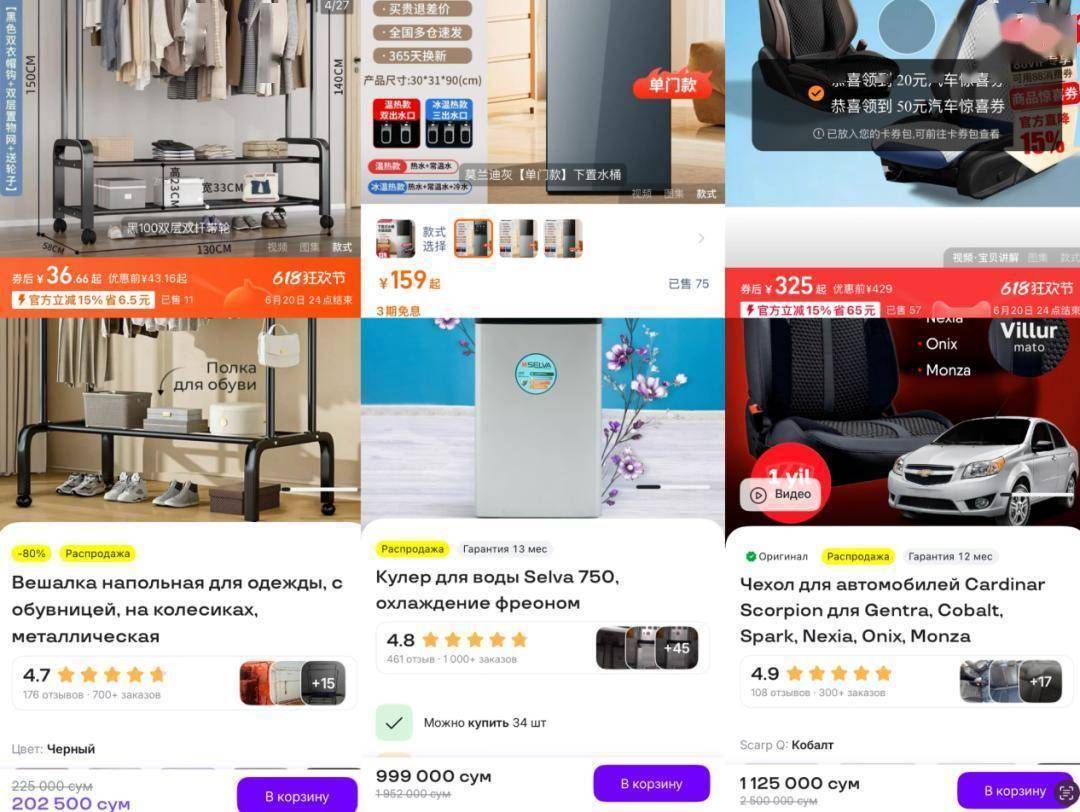
Core Insights - The e-commerce market in Uzbekistan is experiencing a significant transformation, with Uzum, the largest local platform, predicting a fivefold revenue increase by 2027 [1] - The e-commerce sector has shown an impressive compound annual growth rate (CAGR) of 122% in recent years, with expectations of maintaining over 40% annual growth in the coming years [1] - The penetration rate of online shopping has surged from 1%-2% in 2020 to 7%-8% in 2023, indicating substantial growth potential compared to China's over 64% [1] Market Dynamics - Uzum's product variety has recently surpassed one million, while Chinese platforms had significantly higher SKU counts a decade ago, highlighting the growth trajectory of Uzbekistan's e-commerce [1] - The high-profit margins in Uzbekistan's e-commerce sector are notable, with some products priced significantly higher than in China, creating a lucrative environment for local entrepreneurs [3] - Entrepreneurs in sectors like baby products and small appliances report gross margins exceeding 100%, with net margins around 50%, showcasing the profitability of the market [3] Historical Context - The e-commerce landscape in Uzbekistan faced challenges from 2017 to 2020, with limited success from local supermarkets and competition from Russian platforms hindered by inefficient logistics and payment systems [3] - The COVID-19 pandemic acted as a catalyst for e-commerce growth, allowing Uzum to leverage existing infrastructure and improve payment success rates significantly [3] Competitive Landscape - Uzum is actively enhancing its logistics, developing price monitoring tools, and implementing policies to attract Russian sellers, aiming to expand its product offerings and market share [5] - New entrants like Yandex and Temu are emerging, with Yandex targeting the high-end market and Temu employing aggressive strategies to penetrate the market [5] Future Outlook - Local entrepreneurs express optimism about Uzum's future, emphasizing the importance of leveraging Chinese supply chain experience to capture market opportunities [7] - The potential for long-term value lies in aligning product offerings with local consumer preferences, as there is a demand for better choices in the market [7]