
文化创新创造

Search documents
学习贯彻党的二十届四中全会精神 “十五五”任务书④丨激发全民族文化创新创造活力 繁荣发展社会主义文化
He Nan Ri Bao· 2025-10-29 23:43
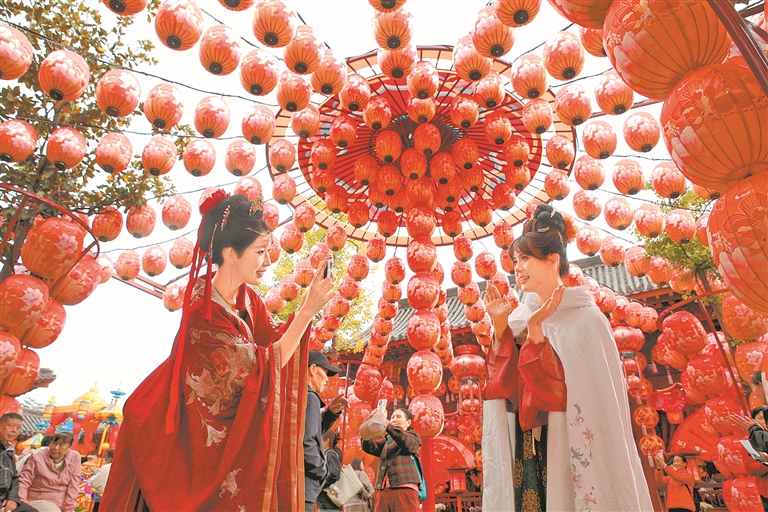
Core Viewpoint - The article emphasizes the importance of promoting high-quality development in the cultural tourism industry in Henan Province, aligning with the goals set by the 20th National Congress of the Communist Party of China [3][4]. Group 1: Policy and Strategic Goals - The provincial cultural and tourism system will prioritize the implementation of the spirit of the 20th National Congress, focusing on cultural prosperity and high-quality development as core objectives [3]. - The 15th Five-Year Plan highlights the need for significant improvements in social civilization, setting new requirements for the development of the cultural tourism industry [4]. - The strategic positioning of Henan as a crucial birthplace of Chinese civilization will guide the development of the cultural and tourism sector [4]. Group 2: Cultural and Tourism Development Initiatives - The article outlines initiatives to protect and utilize cultural heritage, including the implementation of major archaeological projects and the construction of key cultural institutions [4][5]. - There is a focus on enhancing public cultural services and creating new cultural spaces to meet the growing needs of the population [5]. - The integration of cultural resources and tourism is emphasized, with plans to develop a world-class tourism destination centered around the Yellow River and ancient capitals [5]. Group 3: Innovation and Technology in Cultural Tourism - The article discusses the use of technology to enhance cultural experiences, such as immersive performances and high-tech attractions that engage younger audiences [6][7]. - The integration of traditional culture with modern technology is seen as a key to attracting visitors and fostering cultural identity [7]. - The success of the Kaifeng Qingming Riverside Landscape Garden in transforming from a passive viewing experience to an interactive cultural hub is highlighted, with projected visitor numbers exceeding 8 million in 2024 and total tourism revenue reaching 1 billion yuan [7].

二十届四中全会公报解读:“十五五”的20个关键词
Yong Xing Zheng Quan· 2025-10-27 06:53
Overall Insights - The 20th Central Committee's Fourth Plenary Session approved the "Suggestions" for the 15th Five-Year Plan, highlighting the need for strategic investment opportunities during this period[1] - Key focus areas include maintaining economic stability, enhancing domestic demand, and promoting high-quality development[3] Key Themes - The "Four Advantages" emphasize China's strong economic foundation, large market, complete industrial system, and rich talent resources, which are crucial for technological and industrial advancements[11] - The "Seven Major Goals" for the 15th Five-Year Plan include significant improvements in high-quality development, technological self-reliance, and social welfare[16] - By 2035, the goal is to achieve a per capita GDP of $22,443 or $21,295, depending on annual growth rates of 5.0% or 4.5% respectively, reflecting a 26.7% increase from 2019[17] Investment and Risk Considerations - Investment strategies should focus on the implications of the 20 keywords from the plan, which are expected to create strategic investment opportunities[42] - Risks include potential technological disruptions, challenges in industrial upgrades, geopolitical conflicts, and intensified international strategic competition[43][44]
苏州广大党员干部群众认真学习领会党的二十届四中全会精神
Su Zhou Ri Bao· 2025-10-26 00:36
Group 1 - The core idea of the articles revolves around the implementation of the 15th Five-Year Plan, emphasizing the importance of building a modern people-oriented city as a key aspect of China's modernization efforts [1][2] - The articles highlight the need for urban development to focus on enhancing livability, innovation, and sustainability, aligning with the principles of a "people's city" [2][6] - The integration of industry and urban development is emphasized, with a focus on upgrading traditional industries and fostering new and future industries to drive economic growth [6][11] Group 2 - The articles discuss the importance of cultural preservation and innovation, with initiatives aimed at enhancing cultural heritage and promoting tourism as part of urban development [7][8] - There is a strong emphasis on agricultural modernization and rural revitalization, with Suzhou aiming to set a national example in these areas [8][9] - The articles outline the commitment to ecological sustainability, with plans for green transformation and environmental protection as foundational elements of urban development [11][12][13]
不懈努力接续奋斗,续写新篇章开创新局面——党的二十届四中全会精神在山东广大党员干部群众中引发热烈反响
Da Zhong Ri Bao· 2025-10-24 01:04
Group 1 - The Fourth Plenary Session of the 20th Central Committee of the Communist Party of China was held from October 20 to 23, focusing on the work report by General Secretary Xi Jinping and the proposal for the 15th Five-Year Plan [1][2] - The session emphasized the importance of the 15th Five-Year Plan period as a critical time for achieving socialist modernization and outlined a strategic vision for national development [3][4] - The meeting highlighted the significant achievements during the 14th Five-Year Plan period, showcasing improvements in national strength and the quality of life for citizens [2][5] Group 2 - The session called for a scientific approach to planning and implementing the Five-Year Plan, which is seen as a key political advantage of socialism with Chinese characteristics [4][5] - There is a strong focus on advancing industrial modernization, emphasizing intelligent, green, and integrated development in the industrial sector [4][6] - The meeting underscored the need for high-level technological self-reliance and innovation, particularly in agricultural biotechnology and energy systems [6][7] Group 3 - The session stressed the importance of cultural innovation and the promotion of socialist culture, rooted in Marxism and Chinese civilization [7] - Local leaders expressed readiness to implement the strategies outlined in the 15th Five-Year Plan, focusing on community development and agricultural modernization [2][7] - The overall sentiment reflects a commitment to national development goals and a proactive approach to local governance and economic growth [5][6]
团省委征集青年网络文化作品
Shan Xi Ri Bao· 2025-10-20 22:43
Group 1 - The core idea of the news is the launch of a youth network cultural work collection activity by the Shaanxi Provincial Youth League to stimulate cultural innovation and creativity among young people in the province [1][2] - The collection includes various categories such as cultural product design, online columns, images, videos, H5 pages, and articles, emphasizing originality and artistic quality [1] - The works should reflect the correct political direction, focusing on the deep interpretation and vivid dissemination of the Party's innovative theories, showcasing Shaanxi's achievements in modernization [1][2] Group 2 - Selected outstanding network cultural works will be showcased on the "Sanqin Youth" public account and recommended to the Central Youth League [2] - Some excellent cultural products will be exhibited offline, and the Shaanxi Provincial Youth League will collaborate with creators to develop related products and provide rewards for the selected designs [2]
“阅读新时代”理论热点面对面 阅读分享活动走进中国移动
Huan Qiu Wang· 2025-09-30 01:28
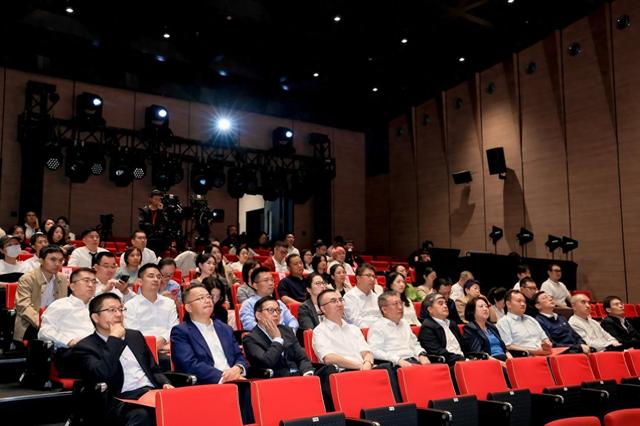
Core Points - The "Reading New Era" event was co-hosted by China News Publishing Media Group, Learning Publishing House, and China Mobile, focusing on theoretical discussions and practical applications in reading and education [1][5] - The event featured the "New Power" presentation team from China Mobile, showcasing their responses to contemporary societal questions and their innovative practices in various fields [3][5] - A donation ceremony for the book "Innovation and Practical Development" was held, with participation from major state-owned enterprises, emphasizing the importance of promoting reading and theoretical exchange [5][8] Group 1 - The "Theoretical Hotspot Face-to-Face" series aims to make abstract theories accessible through practical examples, enhancing political education and theoretical learning [3] - The event included discussions on cultural innovation, urban-rural integration, grassroots governance, and the role of artificial intelligence in development [3][5] - The "Reading New Era" essay competition was launched to encourage theoretical exchange and promote understanding of China's development path [5] Group 2 - The event was broadcasted through various video platforms, expanding its reach and engagement with a wider audience [7] - Attendees visited the new content production exhibition hall of China Mobile's Migu Company, highlighting advancements in cultural and technological integration [8]

大力发展文化产业,促进区域经济增长
Xin Hua Ri Bao· 2025-09-24 23:50
Group 1 - The cultural industry is experiencing new opportunities for development due to the increasing demand for cultural consumption as living standards improve, aligning with the pursuit of a better life and promoting high-quality economic development [1] - The government should optimize top-level design and create a favorable policy environment to enhance regional cultural influence through planning, platform building, and rule formulation [2] - A comprehensive policy and support system should be established, including financial support, tax incentives, and the development of cultural financial products to lower operational costs for cultural enterprises [2] Group 2 - Adjusting the spatial layout of the cultural industry involves evaluating regional cultural resources and infrastructure to identify potential development areas and establish functional zones with core industries [3] - Cultural cooperation mechanisms between regions can enhance market competitiveness through resource sharing and collaborative project development [3] Group 3 - Deeply exploring and refining core cultural resources is essential for regional cultural industry development, with a focus on creating original cultural IP and developing related products to attract younger demographics [4] - Utilizing advanced technologies like holography and virtual reality can create immersive cultural experiences, expanding economic growth opportunities [4] Group 4 - Cultivating professional talent is crucial for the innovative development of the cultural industry, with educational institutions needing to adapt curricula to meet industry demands [5] - Collaboration between universities and enterprises can enhance talent training, ensuring graduates are prepared for relevant roles in the cultural sector [5] Group 5 - Improving talent incentive mechanisms is necessary to attract high-level and scarce talents, addressing issues such as housing and education to foster a sense of belonging [6] - Encouraging enterprises to use equity and profit-sharing incentives can promote active participation in cultural innovation, driving regional economic growth [6]
持续激发文化创新创造活力
Shan Xi Ri Bao· 2025-08-26 00:06
Group 1: Cultural and Tourism Development in Shaanxi - Shaanxi is accelerating the promotion of cultural prosperity and the integration of culture and tourism, aiming to contribute to the construction of a culturally strong province [1] - The province received 460 million domestic tourists in the first half of the year, indicating a robust development trend in the cultural tourism industry [1] - The combination of cultural IP value release and immersive experience scenarios is injecting strong vitality into the cultural tourism sector, leading to new trends in cultural consumption [1] Group 2: Digital Management and Preservation of Cultural Heritage - The Xi'an City Wall has implemented a digital management platform that includes modules for cultural preservation, tourism, emergency response, and flood control, shifting from reactive to preventive protection [2] - The City Wall features over 3,000 deformation monitoring points and 1,300 smart sensors, utilizing a comprehensive monitoring system and AI algorithms for real-time data analysis [2] - This digital practice exemplifies the commitment to protecting cultural heritage and enhancing the management of cultural resources in Shaanxi [2] Group 3: Cultural Production and Community Engagement - The completion of the TV series "Protagonist," based on a literary award-winning work, showcases the rich cultural heritage and regional characteristics of Shaanxi [4] - The provincial government emphasizes the importance of optimizing cultural services and products to meet the spiritual and cultural needs of the community [4][5] - The number of times individuals receive cultural venue services in Shaanxi has increased from 1.4 times in 2021 to 3.47 times in 2024, reflecting a growth of 147.86% [4]
文化创新创造活力充分迸发
Jing Ji Ri Bao· 2025-08-11 00:08
Group 1: Cultural Heritage and Achievements - China's cultural heritage has been recognized globally, with the inclusion of the Western Xia Tombs in the World Heritage List, bringing the total to 60 heritage sites, maintaining a leading position worldwide [2] - The cultural and tourism sectors have seen significant growth, with over 7,046 registered museums and 14.9 billion visitors in the past year, reflecting a strong public interest in cultural heritage [2][3] - The establishment of a six-tier public cultural service network has enhanced cultural accessibility, contributing to increased cultural satisfaction among the populace [3] Group 2: Cultural Industry Growth - The cultural industry has shown robust growth, with revenues from large-scale cultural enterprises reaching 71,292 billion yuan in the first half of the year, a 7.4% increase year-on-year [5] - New cultural business models, particularly in the realms of "cultural + tourism" and "cultural + technology," have emerged, with 16 sub-sectors generating 31,564 billion yuan, marking a 13.6% increase and contributing 76.8% to the overall growth of cultural enterprises [6] Group 3: Global Cultural Influence - The inclusion of the Spring Festival in UNESCO's intangible cultural heritage list has enhanced the global recognition of Chinese culture, with 44 projects listed, the highest in the world [7] - Chinese cultural elements are increasingly popular among foreign tourists, with over 60% of visitors citing cultural experiences as their primary reason for traveling to China [8]
创意普惠化 生产数智化 场景多样化 以人工智能技术提升文化创新创造活力
Ren Min Ri Bao· 2025-06-22 22:09
Core Viewpoint - Artificial intelligence (AI) is a driving force behind a new round of technological revolution and industrial transformation, significantly enhancing cultural production and consumption in China [1] Group 1: AI's Role in Cultural Development - AI is increasingly integrated into various aspects of life, empowering industries and benefiting households, thus contributing to high-quality cultural development in China [1] - The Chinese government emphasizes the need to adapt to digital industrialization trends and enhance traditional cultural sectors through AI [1] Group 2: Enhancing Cultural Innovation - AI can democratize creativity, allowing non-professionals to engage in cultural creation through tools like AI drawing and music composition [1][2] - There is a need to improve cultural data resource sharing and develop a comprehensive cultural big data system to support the transformation and application of cultural data [2] Group 3: Improving Production Efficiency - AI enhances cultural innovation by reducing costs and time in content creation, allowing creators to focus on high-level tasks [3] - The integration of AI in content production provides diverse perspectives and insights, supporting innovation and quality control in cultural content [3] Group 4: Training and Talent Development - There is a call to improve AI literacy and skills among cultural industry professionals through educational reforms and interdisciplinary courses [3][4] - Training programs and international exchanges are essential to enhance the capabilities of cultural talent in the context of rapid AI development [4] Group 5: New Cultural Experiences - AI is driving the emergence of new cultural scenes, such as immersive performances and virtual exhibitions, transforming cultural consumption from one-way to interactive experiences [4][5] - The use of AI in cultural heritage projects fosters a deeper connection between audiences and historical artifacts, enhancing cultural pride and belonging [5] Group 6: Future Directions - There is a focus on leveraging AI to identify and present Chinese cultural elements, enhancing the integration and sharing of cultural resources [5] - The development of smart cultural institutions, such as libraries and museums, is crucial for meeting the evolving spiritual and cultural needs of the public [5]