
新污染物治理

Search documents
生态环境部答21:瞄准印染、涂料等行业启动新污染物治理试点
2 1 Shi Ji Jing Ji Bao Dao· 2025-11-28 09:01
Core Viewpoint - The Ministry of Ecology and Environment is making significant progress in the assessment and management of environmental risks associated with new pollutants, focusing on the prevention and control of these substances through various regulatory measures and pilot projects [2][3][4]. Group 1: New Pollutant Management Progress - Since 2022, a total of 802 new chemical substances have been registered, with 1,365 environmental risk control measures proposed to prevent the generation of new pollutants [4][5]. - The Ministry has implemented prohibitions, restrictions, and limits on 14 categories of key controlled new pollutants, particularly targeting industries such as dyeing and coatings [4][5]. - Three batches of 27 pilot projects for new pollutant management have been initiated, focusing on high-risk substances like perfluorinated compounds and antibiotics [5][6]. Group 2: Collaborative Governance and Regulatory Framework - A joint inter-ministerial coordination group has been established, comprising 15 national departments, to enhance collaboration in new pollutant governance [3][4]. - Each province has developed its own new pollutant management work plan, creating a framework where the national government coordinates, provinces take overall responsibility, and local governments implement actions [3][4]. - The Ministry is working on establishing a national monitoring network for new pollutants and enhancing risk warning systems [6]. Group 3: Challenges and Future Directions - The Ministry acknowledges that the governance of new pollutants in China is still in its early stages, facing challenges such as weak foundational work, incomplete regulatory frameworks, and insufficient financial support [5][6]. - Future efforts will focus on accelerating the construction of a collaborative governance and environmental risk control system for new pollutants [5][6].

生态环境部:严格涉新污染物建设项目环评审批
Xin Jing Bao· 2025-11-28 07:32
Core Viewpoint - The implementation of the "New Pollutant Governance Action Plan" is reaching its conclusion this year, with a focus on advancing new pollutant management during the 14th Five-Year Plan period [1] Group 1: Progress and Achievements - Over 1,000 chemical substances have been initially screened as targeted substances for environmental risk assessment related to new pollutants [2] - Since the issuance of the "New Pollutant Governance Action Plan" in May 2022, the Ministry of Ecology and Environment has effectively promoted its implementation, achieving expected goals [2] - A comprehensive survey of chemical substance production and usage has been conducted across 122 industries involving over 70,000 enterprises, identifying more than 1,000 chemical substances with potential high environmental risks [2] Group 2: Regulatory Measures and Initiatives - Since 2022, 802 new chemical substances have been approved for registration, and 1,365 environmental risk control measures have been proposed to prevent the generation of new pollutants [3] - Key control measures have been implemented for 14 categories of new pollutants, including bans, restrictions, and discharge limits [3] - Pilot projects for new pollutant governance have been initiated, focusing on critical industries such as dyeing and coating, with 27 projects launched across three batches [3] Group 3: Future Directions - The Ministry of Ecology and Environment plans to establish a national environmental monitoring network for new pollutants, addressing challenges such as weak foundational work and inadequate regulatory frameworks [4] - Future efforts will include strict management of new chemical substances and environmental impact assessments for projects related to new pollutants [4] - The ministry aims to conduct current environmental risk assessments and implement governance projects to effectively mitigate environmental risks [4]
第三批优先控制化学品名录酝酿,涉石化塑料橡胶等领域
Di Yi Cai Jing· 2025-11-22 03:26
Core Insights - The Ministry of Ecology and Environment has initiated the process to include another batch of chemical substances in the priority control list to enhance the management of new pollutants and ensure ecological safety and public health [1][2] Group 1: Priority Control Chemical List - The third batch of the priority control chemical list includes 24 types of chemical substances, primarily affecting industries such as petrochemicals, plastics, rubber, pharmaceuticals, textiles, dyes, coatings, pesticides, leather, and electroplating [1] - The previous two batches of the priority control chemical list included a total of 40 types of chemical substances, which encompass hazardous materials like short-chain chlorinated paraffins, formaldehyde, mercury and its compounds, hexavalent chromium compounds, lead compounds, and various carcinogens [1][2] Group 2: Environmental Risk Management - The "New Pollutant Management Action Plan" aims to complete environmental risk screening and assessment for high-concern and high-usage chemical substances by 2025, and to establish a regulatory framework for managing toxic and harmful chemical substances [2][5] - The priority control chemical list focuses on substances that pose significant environmental and health risks, considering factors such as persistence, bioaccumulation, and toxicity to aquatic environments [2][3] Group 3: Implementation and Compliance - Companies are required to provide detailed information on the production and usage of chemicals listed in the priority control list, including quantities, types, and applications, as part of their environmental impact assessments [4] - Facilities involved in the production or storage of priority control chemicals must implement measures to prevent soil and groundwater contamination, including the installation of monitoring devices [4]
构建多元科普体系 助力美丽中国建设——深圳环科院新污染物治理科普实践探索
Zhong Guo Huan Jing Bao· 2025-11-12 01:05
Core Viewpoint - The article emphasizes the transition of ecological environment protection in China from addressing visible pollution issues to managing new pollutants, which are less perceptible but pose long-term risks. This shift is essential for achieving the "Beautiful China" goal and requires a robust scientific outreach and innovation strategy [1]. Group 1: New Pollutants and Public Awareness - New pollutants include persistent organic pollutants, endocrine disruptors, antibiotics, and microplastics, characterized by strong biological toxicity and environmental persistence. Public awareness is low, with about 80% of respondents unaware of perfluorinated compounds and 60% underestimating the pollution risks of daily chemicals [2]. - The Shenzhen Environmental Science Research Institute (Shenzhen ESI) has developed a strategy focusing on "cognitive enlightenment—behavior guidance—co-governance participation" to enhance public understanding and involvement in new pollutant management [2]. Group 2: Innovative Communication Strategies - Shenzhen ESI has implemented three innovative strategies: modular content, scenario-based formats, and targeted communication. This includes breaking down complex knowledge into relatable themes, utilizing online and offline platforms for engagement, and customizing content for different audiences such as businesses, schools, and communities [2]. - The institute has created engaging IP characters like "New Xiao Wei" and the "Four Families of New Pollutants" to simplify complex scientific concepts and enhance public engagement [4]. Group 3: Multimedia and Educational Initiatives - The "Unveiling New Pollutants" video series, produced in collaboration with the National Key Laboratory of Environmental Benchmarking and Risk Assessment, has gained significant traction, with over one million views and multiple awards for its educational impact [5]. - Various educational activities have been organized for different age groups, including lectures for government and universities, training for businesses, and interactive events for students, fostering a culture of participation in environmental protection [6]. Group 4: Achievements and Future Directions - Shenzhen ESI has established a comprehensive science popularization system that has reached over one million people, significantly enhancing public awareness and willingness to act on new pollutants [8]. - The institute plans to continue expanding its efforts in scientific innovation and public education, aiming to create a collaborative governance model involving government, enterprises, and the public for effective new pollutant management [8].

“十五五”生态环保工作要抓住哪些关键点?2025年中国环境战略与政策学术年会提出建议
Zhong Guo Huan Jing Bao· 2025-11-10 23:20
Group 1: Core Perspectives - The construction of a Beautiful China is a long-term strategic task and systematic project, with a focus on achieving harmony between humans and nature by 2035 [2][5] - The "14th Five-Year Plan" period is identified as a critical window for comprehensive green transformation in China's economy and society, emphasizing the need for systemic solutions [3][5] Group 2: Green Development and Innovation - Green development is highlighted as a distinctive feature of Chinese modernization, necessitating the acceleration of green productivity and the promotion of systemic governance of ecological pollution [3][6] - The need for a high-level ecological environment technology innovation system is emphasized, focusing on integrating research, technology breakthroughs, and practical applications [12] Group 3: Pollution Prevention and Control - Continuous advancement in the governance of new pollutants is essential for pollution prevention and the construction of a Beautiful China, requiring a full lifecycle risk management approach [4][7] - The implementation of solid waste comprehensive governance actions is necessary to promote source reduction and address solid waste issues in key areas [7] Group 4: Climate Change and Carbon Neutrality - The "14th Five-Year Plan" period is a strategic period for achieving carbon peak and carbon neutrality goals, with a focus on transitioning the energy structure and promoting low-carbon development across various sectors [10][11] - The establishment of a carbon market is seen as a significant institutional innovation to control greenhouse gas emissions and facilitate a comprehensive green low-carbon transition [11] Group 5: Policy and Institutional Reforms - Deepening ecological civilization system reforms is crucial to address complex environmental challenges and enhance the ecological environment governance system [8][9] - The development of green finance is essential for supporting the construction of a Beautiful China, with an unprecedented demand for financing during the "14th Five-Year Plan" period [4][9]
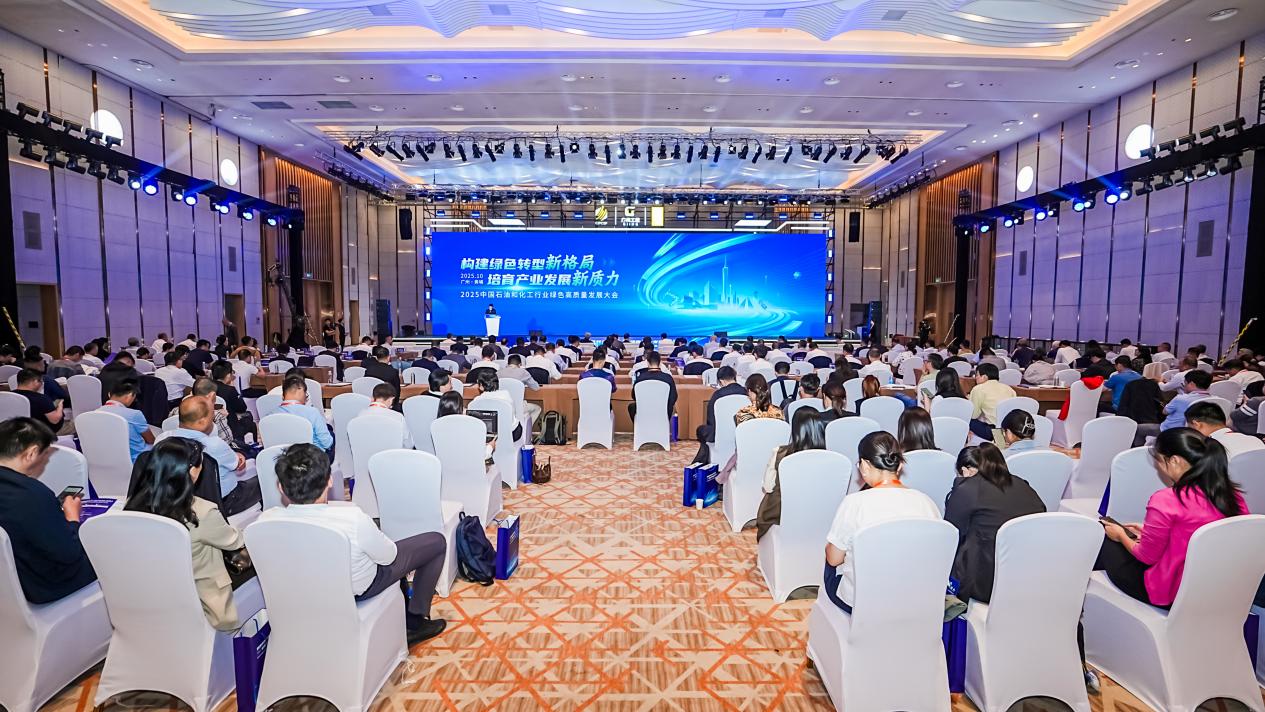
共探“十五五”石化行业高质量发展路径——2025中国石油和化工行业绿色高质量发展大会在广州举办
Zhong Guo Jin Rong Xin Xi Wang· 2025-10-29 11:48
Core Viewpoint - The 2025 China Petroleum and Chemical Industry Green High-Quality Development Conference was successfully held in Guangzhou, focusing on the theme of building a new pattern for green transformation and cultivating new quality power for industrial development during the 14th Five-Year Plan period [1] Group 1: Industry Development Direction - The 20th Central Committee of the Communist Party emphasized the need to focus economic development on the real economy, with a direction towards intelligent, green, and integrated development for the petroleum and chemical industry [3] - Guangzhou Industrial Control Group has established seven national-level green factories and is developing a cluster of green manufacturing [3] - The Guangzhou government aims to accelerate innovation breakthroughs in key areas such as special engineering plastics and new energy battery materials, while enhancing energy management systems [3] Group 2: Key Strategies for Transformation - The industry should focus on five key areas: innovation-driven high-end breakthroughs, systematic thinking for green transformation, digital empowerment for intelligent upgrades, ecological construction through circular economy concepts, and standard upgrades for high-quality development [4] - The establishment of a carbon footprint management system and entry into carbon trading markets are essential for promoting green low-carbon transformation in the petrochemical industry [4] - The main theme for the "14th Five-Year Plan" in the petrochemical industry is optimizing capacity structure, with core development paths including high-end, internationalization, and avoiding excessive competition [4] Group 3: Collaborative Efforts and Achievements - The conference released important results such as typical case practices, industry blue papers, and ESG evaluation reports to support green development in the industry [6][7] - A strategic cooperation agreement was signed between Guangzhou Industrial Control Group and China Petroleum and Chemical Corporation to deepen collaboration in industrial synergy, technological innovation, and green development [6] - The conference included discussions on the development paths of green petrochemicals and new materials, with a focus on transforming the industry from scale expansion to value enhancement [7]

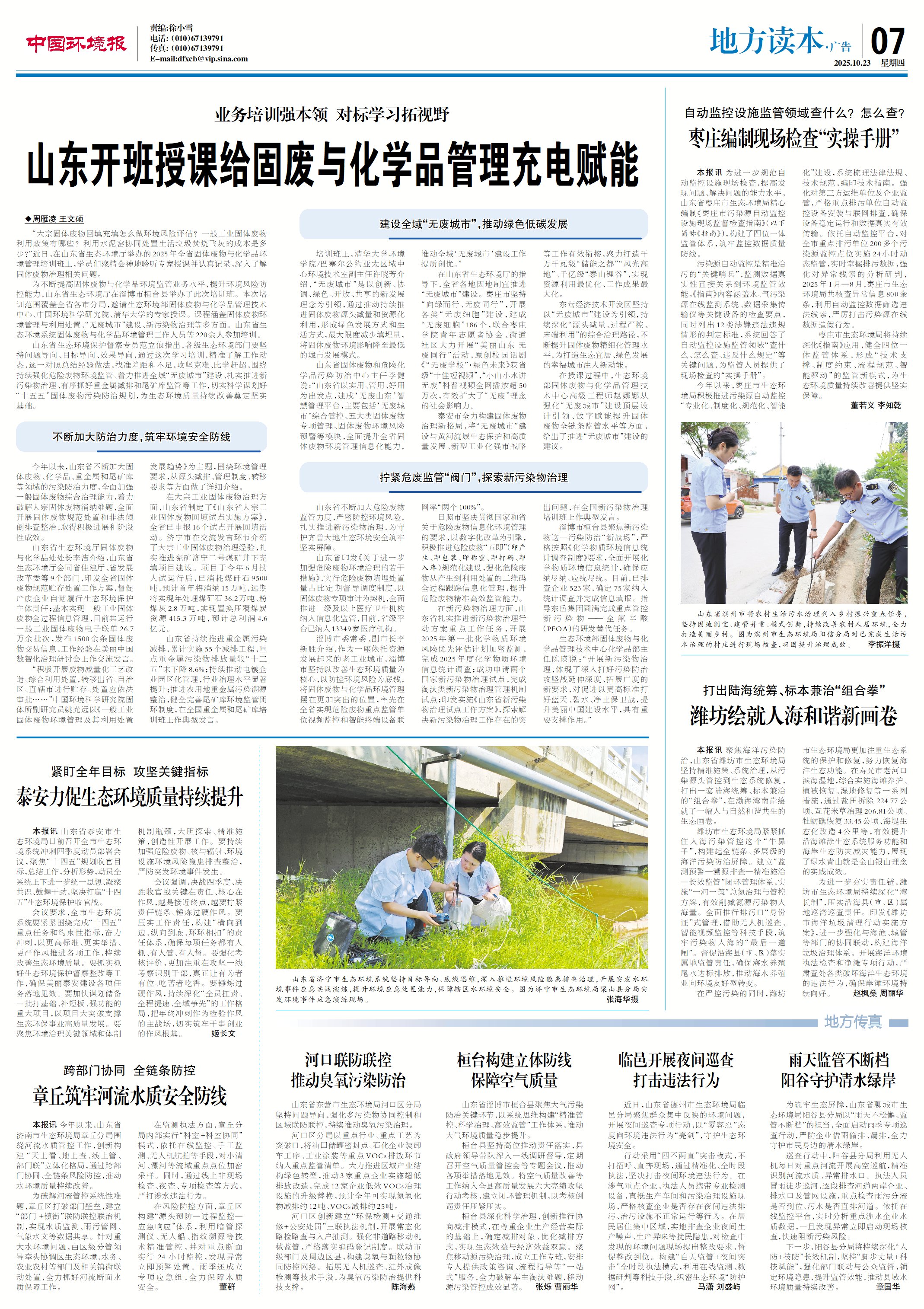
山东开班授课给固废与化学品管理充电赋能
Zhong Guo Huan Jing Bao· 2025-10-23 02:33
Core Viewpoint - The training session held by Shandong Province's ecological environment department aims to enhance the regulatory capabilities and environmental risk prevention related to solid waste and chemical management, focusing on the construction of a "waste-free city" and new pollutant governance [2][3][15]. Group 1: Training and Capacity Building - The training covered various topics including solid waste management, utilization, "waste-free city" construction, and new pollutant governance, with participation from over 220 staff members from ecological environment systems across the province [2][13]. - Experts from the Ministry of Ecology and Environment, Chinese Academy of Environmental Sciences, and Tsinghua University provided insights into solid waste management and environmental risk assessment [2][13]. Group 2: Solid Waste Management Initiatives - Shandong Province has implemented a comprehensive solid waste management plan, including the issuance of a work plan for the standardized storage and disposal of solid waste, which involves collaboration among nine departments [4][16]. - The province has launched 16 pilot projects for the backfilling of industrial solid waste, with significant expected outcomes in terms of resource recovery and profit generation [5][17]. Group 3: Pollution Prevention and Control - The province has intensified efforts in pollution prevention across solid waste, chemicals, heavy metals, and tailings, achieving notable progress in the standardized disposal of solid waste and illegal dumping investigations [4][16]. - Heavy metal pollution reduction initiatives have been implemented, resulting in an 8.6% decrease in emissions compared to the end of the 13th Five-Year Plan [5][17]. Group 4: "Waste-Free City" Development - The concept of a "waste-free city" is promoted as a model for urban development that minimizes landfill use and environmental impact through innovative and sustainable practices [18][19]. - Shandong Province has established a "Waste-Free Shandong" smart management platform to enhance information management capabilities in solid waste governance [18][19]. Group 5: Hazardous Waste Management - The province has strengthened hazardous waste regulation, implementing a monitoring system for hazardous waste disposal and integrating over 13,349 medical institutions into an information management platform [20][21]. - New pollutant governance actions are being prioritized, with plans for environmental risk assessments and the establishment of pilot projects for managing new pollutants [21].
高质量完成“十四五”规划丨“十四五”期间全国政协共举办各类协商活动279场次
Xin Hua She· 2025-08-18 09:45
Group 1 - The National Committee of the Chinese People's Political Consultative Conference (CPPCC) has held 279 various consultation activities during the "14th Five-Year Plan" period, enhancing the quality of political consultation [1] - A total of 41,043 proposals were filed, with many recommendations being transformed into policy measures [1] - The CPPCC has established 229 institutional documents to improve the institutionalization, standardization, and proceduralization of its consultation and political duties [1] Group 2 - The CPPCC emphasizes the importance of research and investigation, implementing a "research-consultation-research" approach to deeply analyze issues and propose actionable recommendations [2] - A total of 84 in-depth research projects have been conducted on significant strategic and forward-looking topics, resulting in high-quality research outcomes [2] - CPPCC members have conducted 148 learning and research sessions at the units where committee members are located [2]
“十四五”期间全国政协共举办各类协商活动279场次
Xin Hua Wang· 2025-08-18 05:50
Core Points - The National Committee of the Chinese People's Political Consultative Conference (CPPCC) has conducted 279 consultation activities during the "14th Five-Year Plan" period, enhancing the quality of political consultation [1] - A total of 41,043 proposals were filed, with many suggestions being transformed into policy measures [1] - The CPPCC has established 229 institutional documents to improve the institutionalization and standardization of consultation and political participation [1] Group 1 - The CPPCC emphasizes the importance of research and investigation, implementing a "research-consultation-research" approach to address issues deeply and propose actionable recommendations [2] - A new system for specialized research has been created, focusing on strategic and forward-looking topics, resulting in 84 in-depth research projects [2] - CPPCC members have conducted 148 learning and research activities at the units where they serve [2]
高质量完成“十四五”规划|“十四五”期间全国政协共举办各类协商活动279场次
Xin Hua She· 2025-08-18 05:00
Group 1 - The National Committee of the Chinese People's Political Consultative Conference (CPPCC) has conducted 279 various consultation activities during the "14th Five-Year Plan" period, enhancing the quality of political consultation [1] - A total of 41,300 proposals were filed, with 25,043 officially registered, leading to significant policy measures being implemented [1] - The CPPCC has held 10 special meetings on high-level socialist market economy system construction and ecological environment protection, and 57 bi-weekly consultation meetings on optimizing regional education and medical resource allocation [1] Group 2 - The CPPCC emphasizes the foundational role of research and investigation, implementing a "research-consultation-research" approach to develop targeted and actionable policy recommendations [2] - A total of 84 in-depth studies have been conducted on major strategic and forward-looking topics, including new productive forces and governance of new pollutants [2] - CPPCC members have engaged in 148 learning and research activities within their respective units to enhance understanding and collaboration [2]