
普惠保险

Search documents
2025普惠金融报告|普惠保险:供需失衡待解
Bei Jing Shang Bao· 2025-12-14 12:18
Core Viewpoint - Inclusive insurance is becoming a key pillar in China's financial sector, aiming to enhance social equity and provide comprehensive risk protection across various demographics and sectors [1][4]. Group 1: Development and Innovation - Inclusive insurance is evolving from broad coverage to quality enhancement, responding to diverse demands through policy support and product innovation [1]. - New product innovations in inclusive insurance include comprehensive insurance plans for new economy workers in Fujian and financial service centers in Jiangsu, addressing specific needs such as medical coverage and accident insurance [4]. - The introduction of specialized products for vulnerable groups, such as high-coverage accident insurance for the elderly, has provided significant risk protection, with over 310 million elderly individuals covered by Taiping Insurance [4][5]. Group 2: Challenges and Issues - Despite advancements, challenges such as supply-demand mismatch and structural imbalance persist, with 62% of risk protection needs still unmet [6]. - The existing products are primarily short-term and do not adequately address the needs of the elderly and chronic illness patients, leading to a lack of long-term insurance options [6]. - The high risk of "insurance exhaustion" poses sustainability concerns for insurance companies, necessitating strategies to enhance the viability of inclusive insurance [7]. Group 3: Solutions and Recommendations - Addressing the supply-demand imbalance requires collaboration among policy, market, and social sectors, with government support through tax incentives and data sharing to improve actuarial precision [8]. - Insurance companies should focus on refining risk management, enhancing operational efficiency, and improving consumer awareness to ensure sustainable operations [8]. - Product design should emphasize modularity and standardization, allowing customers to tailor coverage to their needs, while risk management practices should be strengthened to reduce costs [8][9].


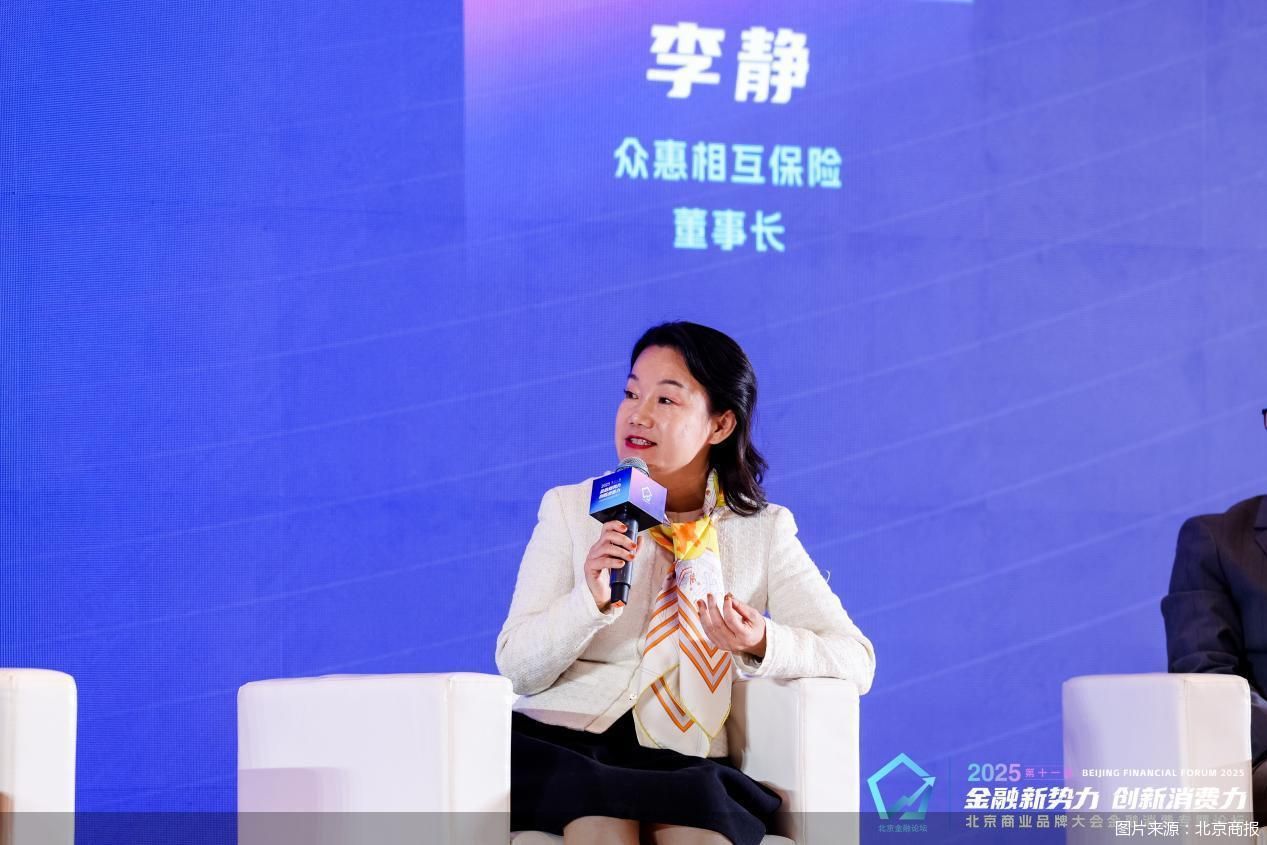
众惠相互李静:普惠保险需要“长久守护者”,以坚持回应真实的需求
Bei Jing Shang Bao· 2025-12-11 12:49
Group 1 - The core theme of the forum is how inclusive finance can move out of the "red sea" and assist in creating a "new blue ocean" for consumption [1] - The China Banking and Insurance Regulatory Commission will release guidelines in 2024 to promote high-quality development of inclusive insurance, emphasizing the responsibility of insurance companies to support social welfare [1] - The mutual insurance model, exemplified by Zhonghui Mutual Insurance, shows strong resilience during industry transformation, focusing on providing accessible and affordable insurance services, particularly for vulnerable groups [1] Group 2 - There are over 20 million truck drivers in China, facing high risks, particularly from accidents, with inadequate risk coverage [2] - Zhonghui Mutual Insurance has focused on providing risk management for underinsured groups like truck drivers since its establishment in 2017, collaborating with leading platforms to enhance risk protection services [2] - The company has launched medical and accident insurance products for truck drivers and their families, reaching over a million participants and impacting more than ten million in the freight industry [2] Group 3 - Technological advancements are crucial for the development of mutual insurance, enabling precise and efficient risk management [3] - Innovations in mobile internet and big data are facilitating the spread of high-value insurance products, enhancing coverage and fostering long-term trust with clients [3] - Zhonghui Mutual Insurance is developing health management solutions for specific patient groups, such as liver disease patients, integrating online and offline health services to reduce risks [3]
保障、投保、理赔全解答
Jin Rong Shi Bao· 2025-12-10 02:03
Core Viewpoint - The article provides a practical guide to understanding inclusive home property insurance (普惠家财险), highlighting its coverage, eligibility, and key considerations for consumers. Group 1: Coverage of Inclusive Home Property Insurance - Inclusive home property insurance generally covers both homeowners and renters, protecting against risks such as fire, explosion, water leakage, theft, and damage from pipe bursts [2] - Coverage includes family property losses and family liability for third-party injuries or property damage caused by incidents like fire or negligence [2] - Some products extend coverage to include responsibilities for falling objects, children's actions, accidents involving domestic workers, pet liabilities, and income loss insurance for new urban residents like delivery workers [2] Group 2: Eligibility and Purchase Guidelines - There are no residency restrictions for purchasing inclusive home property insurance; both owned and rented residential properties are eligible, provided they meet local housing regulations [3] - The insurance is limited to residential properties constructed with specific materials, excluding commercial properties and those made of bamboo, wood, or mixed materials [3] - Multiple policies can be purchased for the same property, with limits varying by region; for example, Shenzhen allows up to five policies while Henan permits three [4] Group 3: Policy Management and Consumer Considerations - Policyholders can cancel their insurance before the coverage starts and request a refund; however, post-coverage cancellation may incur fees [5] - Consumers can access value-added services through official channels, with variations in services offered across different regions [6] - Important considerations for consumers include carefully reading policy terms, focusing on compensation ratios, limits, deductibles, and any special requirements related to property characteristics [7]
六年普惠路:元保如何用AI重塑健康险叙事?
Bei Jing Shang Bao· 2025-12-09 03:39
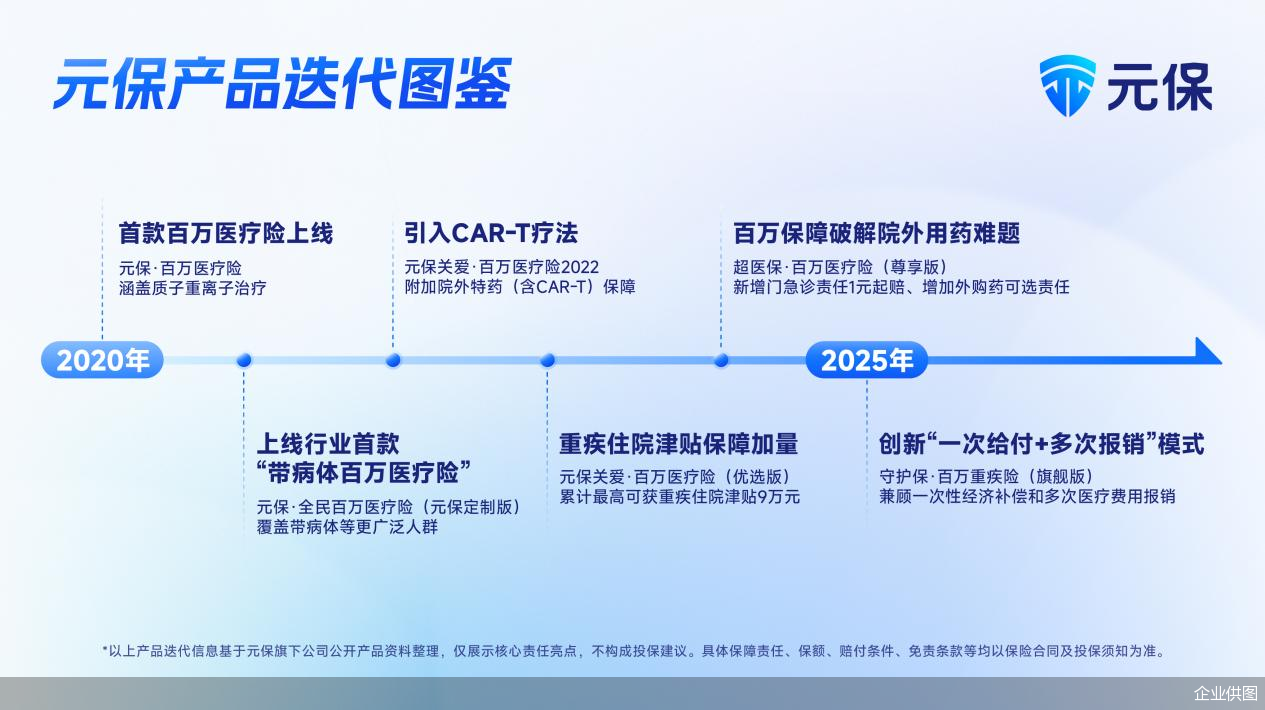
在中国保险业的版图上,"普惠"二字正以前所未有的速度被重新定义。国家层面持续释放创新信号,政策红利不断涌现,近日首个商保创新药目录也重磅落 地,一批批保险机构前仆后继投入到普惠保险的"蓝海"之中。然而,商业价值与社会价值的统筹兼顾,从来不是易事,真正能够在"普惠"与"可持续"之间走 通道路的公司,屈指可数。 在这场看似艰难的博弈中,一家仅约500人规模的互联网保险科技平台却脱颖而出——其精准把握了普惠健康险的机遇,短短5年多就成功上市,并成为人身 险市场第二大独立分销商——它是如何做到的? 元保,是国内领先的互联网保险科技平台,旗下拥有全国性的保险经纪牌照和保险代理牌照(以下统称"元保")。2025年11月,元保迎来成立六周年,回望其 产品迭代史不难发现,这家以"技术驱动"著称的创新急先锋,在互联网自带的流量属性和规模效应之外,突围之道不外乎"跟随用户"的朴素逻辑。 从旗下百万医疗险的"0免赔"升级,到百万重疾险以"百元保费撬动百万保额",再到AI驱动的精准匹配与极速理赔,元保的每一步迭代,都直击用户痛点、 对准真实需求。以元保最新推出的"守护保·百万重疾险(旗舰版)"为例,该产品以"一次给付+多次报销"并行 ...
近三成带病体因健康告知被拒保 水滴保AI驱动破解投保难题
Sou Hu Cai Jing· 2025-12-03 02:47
Core Insights - The report indicates a rapid growth in the chronic illness insurance market in China, with the market size surpassing 12 billion yuan in 2024, reflecting a 50% year-on-year increase [1] - Waterdrop Insurance plans to launch 214 innovative chronic illness insurance products by 2025, leveraging AI technology to promote inclusivity in insurance coverage [1] Group 1: Market Demand and Challenges - The elderly population in China has reached 310 million, accounting for 22% of the total population, with 75% suffering from at least one chronic illness [2] - The prevalence of chronic diseases among the youth is alarming, with their rates being twice that of the elderly, highlighting a significant gap in insurance coverage for this demographic [2] - The average treatment cost for chronic patients is 87,000 yuan, which is 2.1 times the national annual disposable income, indicating a substantial protection gap [2] Group 2: Insurance Accessibility Issues - Nearly 30% of chronic illness patients face rejection due to inability to pass health disclosures, with 52.4% feeling there are limited insurance options available [4] - A strong willingness to pay for coverage exists, with 75.4% of respondents willing to pay extra premiums for coverage of pre-existing conditions, averaging 4,049 yuan annually [4] Group 3: AI and Product Innovation - Waterdrop Insurance has launched 214 chronic illness insurance products, including 34 that are industry-firsts, and 37 that allow for coverage without health disclosures [6] - The use of AI and big data is emphasized as crucial for improving underwriting, pricing, and health management capabilities, making risk assessment more accurate [6][8] - The AI underwriting tool "KEYI.AI" significantly reduces the average processing time for health insurance applications by 80%, enhancing user experience [8] Group 4: Collaborative Efforts for Inclusive Insurance - Waterdrop Insurance has initiated a "Inclusive Product Alliance" with 18 insurance companies to focus on the insurance needs of chronic patients, the elderly, and maternal groups [8] - The goal is to create affordable and accessible insurance products that meet the needs of various demographics, ensuring that insurance serves its fundamental purpose of protection [8]
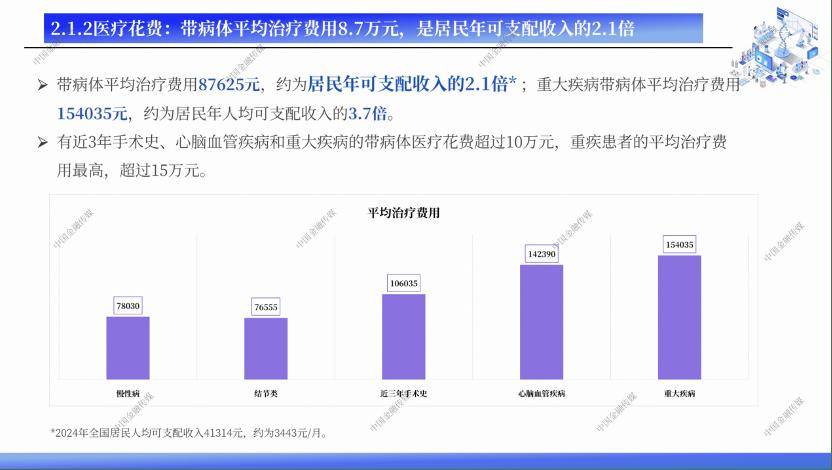
带病体保险保障缺口明显 《报告》:六成以上重疾患者自付疾病花费超10万元
Zhong Guo Jing Ying Bao· 2025-12-01 14:12
Core Insights - The report highlights the growing demand for insurance among individuals with pre-existing conditions due to rising treatment costs and a significant protection gap [1][2] - The health insurance sector in China is facing challenges in product restructuring and meeting the needs of the aging population and younger individuals with chronic diseases [1][2] Group 1: Market Trends - The average treatment cost for individuals with pre-existing conditions in China is 87,000 yuan, which is 2.1 times the annual disposable income of residents [2] - Over 60% of severe disease patients incur out-of-pocket expenses exceeding 100,000 yuan, indicating a clear protection gap [2] - The growth rate of health insurance from property insurance companies reached 9.08% in the first half of 2025, while life insurance companies only saw a growth of 0.15% [1] Group 2: Product Development - Waterdrop Insurance has launched 214 new insurance products for individuals with pre-existing conditions by 2025, averaging one new product every 1.14 days [3] - The use of AI technology has significantly improved efficiency, reducing the average processing time for complex health insurance underwriting by 80% and achieving a 99.8% accuracy rate [3] Group 3: Industry Recommendations - The report suggests that government departments should enhance policy support and integrate pre-existing condition insurance into the inclusive insurance framework [3] - Companies are encouraged to invest more resources into the development of pre-existing condition insurance, leveraging big data and AI to improve risk assessment and underwriting capabilities [3] - A "Inclusive Product Alliance" has been initiated by Waterdrop Insurance in collaboration with 18 insurance companies to promote the implementation of inclusive insurance [3]

水滴保加速带病体保险普及,AI核保准确率达99.8%
Xin Jing Bao· 2025-12-01 02:34
Core Insights - The conference highlighted the importance of "chronic illness insurance" as a critical topic in the insurance industry, emphasizing the significant treatment costs faced by individuals with chronic conditions in China [1][2][3] - The report indicates that the average treatment cost for chronic illness patients is 87,000 yuan, which is 2.1 times the average disposable income of residents, revealing a substantial protection gap [1] - The development of chronic illness insurance aligns with national goals of high-quality development and expanding insurance coverage to better serve public welfare [1][2] Group 1: Market Demand and Challenges - The youth demographic is increasingly facing health risks, with the prevalence of sub-health and chronic diseases being twice that of the elderly, indicating a shift in disease patterns that necessitates product innovation [2][3] - Despite the growing insurance demand among the chronic illness population, they encounter barriers such as high costs, lack of awareness, and stringent underwriting requirements [2][3] - Nearly 30% of individuals are denied coverage due to health disclosures, and 20% are unaware that they can apply for insurance despite having chronic conditions [2][3] Group 2: Technological Innovations - The integration of AI and smart underwriting technologies is transforming the insurance product development and pricing models, allowing for a more inclusive approach to risk acceptance [6][7] - Waterdrop Insurance has launched 214 chronic illness insurance products in the past year, with 34 being first-of-their-kind in China, indicating a rapid evolution in product offerings [6] - The AI underwriting system "KEYI.AI" significantly enhances the efficiency of the underwriting process, reducing processing time by 80% and achieving a 99.8% accuracy rate [6][7] Group 3: Industry Collaboration and Future Directions - The establishment of the "Inclusive Product Alliance" by Waterdrop Insurance and 18 insurance companies aims to create affordable and accessible insurance products for the public [8][9] - The shift from a risk exclusion model to a risk acceptance model is being driven by policy changes and technological advancements, marking a new era in the insurance industry [9] - The focus is now on improving claims processing transparency and speed, which is crucial for ensuring that chronic illness insurance serves its intended purpose of providing real protection [10][11]
办好金融服务的“关键小事”——金融惠民的三个镜头(财经眼)
Ren Min Ri Bao· 2025-11-30 22:52
Core Viewpoint - The 20th Central Committee of the Communist Party emphasizes the importance of enhancing public welfare and addressing urgent issues faced by the populace, with financial institutions focusing on improving accessibility to financial services for the public [1] Group 1: Financial Services Improvement - Financial institutions have launched initiatives to enhance financial service accessibility, aiming to protect the public's financial interests [1] - Recent policy changes have simplified the process for inheriting small deposits, raising the limit for simplified withdrawals from deceased accounts to 50,000 RMB, and including various financial products in this category [4] - The banking sector is required to implement these changes by the end of the year, ensuring that all financial institutions, including rural banks, comply [4] Group 2: Consumer Experience and Feedback - Consumers have expressed concerns regarding the ease of accessing financial services, particularly in relation to small deposit inheritance and insurance claims [5] - The insurance industry has introduced platforms to facilitate easier insurance processes for consumers, particularly for electric vehicle owners facing challenges in obtaining coverage [5] Group 3: Fraud Prevention Measures - Financial institutions are increasingly utilizing technology, such as AI and big data, to enhance fraud prevention efforts, exemplified by the "Victim Warning Protection Model" that detects potential fraud cases [9] - Collaborative efforts between banks and law enforcement have successfully protected consumers from fraud, as demonstrated in a case where a bank employee intervened to prevent a customer from falling victim to a scam [8] Group 4: Elderly Care and Insurance Initiatives - The "Silver Age Home Care" project has been implemented to provide safety monitoring for elderly individuals, including the installation of alert systems in their homes [12] - The insurance industry is focusing on providing targeted coverage for elderly individuals, which has resulted in significant growth in the number of insured elderly people and the establishment of community care projects [12][13] Group 5: Overall Industry Impact - The insurance sector is increasingly collaborating with government agencies to enhance social governance and ensure the safety and well-being of the public, demonstrating the industry's commitment to social responsibility [13] - The insurance industry has reported substantial growth in health insurance policies and payouts, indicating a positive trend in addressing the needs of the aging population [12]
带病体投保难有解?水滴联合18家保司成立 “普惠产品联盟” 补缺口
Huan Qiu Wang· 2025-11-28 12:35
Core Insights - The report highlights the growing challenge of providing insurance for individuals with pre-existing conditions in the context of an aging population and increasing chronic diseases among younger people [1][2] - The average treatment cost for this group is approximately 90,000 yuan, which is 2.1 times the annual disposable income of residents, indicating a significant financial burden [1] - The insurance industry is viewing the development of insurance products for individuals with pre-existing conditions as a key area for innovation and inclusive coverage [1][4] Group 1: Market Demand and Challenges - Nearly 30% of individuals with pre-existing conditions are denied coverage due to health disclosures, while others face exclusions or significantly higher premiums [2] - Over 75% of this group desires insurance that covers their existing conditions and is willing to pay extra for such targeted coverage, indicating a substantial unmet demand in the market [2] - Medical insurance has become a necessity for 44.5% of individuals with pre-existing conditions, with specialized products for cancer recurrence and disability risks emerging rapidly [2] Group 2: Differentiated Needs Among Subgroups - The elderly with pre-existing conditions have a stronger demand for long-term stable coverage due to higher treatment costs and longer illness duration [3] - Younger individuals are more affected by sub-health and chronic diseases, preferring insurance products with lower entry barriers and flexible coverage [3] - There is a significant need for insurance covering pregnancy-related health issues among certain segments of the mother and baby demographic [3] Group 3: Role of AI in Insurance Innovation - AI is driving systemic changes across the insurance service chain, addressing the challenges faced by individuals with pre-existing conditions [4][6] - The integration of AI and big data has accelerated product innovation, with 214 insurance products for individuals with pre-existing conditions launched by Waterdrop Insurance by 2025, including 34 first-of-their-kind products [4] - AI has improved user experience and operational efficiency, with AI-driven customer service and underwriting processes significantly reducing response times and increasing accuracy [6] Group 4: Industry Collaboration and Future Directions - The establishment of the "Inclusive Product Alliance" by Waterdrop Insurance and 18 other insurance companies aims to transform isolated innovations into scalable inclusive coverage [7] - The collaboration emphasizes the need for policy, industry, and technology to work together to enhance the quality of insurance for individuals with pre-existing conditions [7] - The insurance sector is encouraged to expand from mere compensation to comprehensive risk management, integrating prevention and recovery services [7][8]

水滴保举办2025服务生态大会 携手18家险企成立“普惠产品联盟”
Zheng Quan Ri Bao Wang· 2025-11-28 10:46
Core Insights - The second Waterdrop Insurance Service Ecosystem Conference was successfully held, where Waterdrop Insurance, in collaboration with various organizations, released a report on the insurance needs of individuals with pre-existing conditions [1][2] - The establishment of the "Inclusive Product Alliance" by Waterdrop Insurance and 18 insurance companies aims to promote the accessibility of insurance services [1][2] Group 1: Industry Developments - The former vice chairman of the China Insurance Regulatory Commission emphasized that developing insurance for individuals with pre-existing conditions is crucial for expanding coverage and improving public welfare [1] - The insurance industry is encouraged to leverage AI and big data to enhance underwriting, pricing, and health management capabilities, making risk assessment for individuals with pre-existing conditions more accurate [1] Group 2: Company Initiatives - Waterdrop Insurance has focused on underserved groups such as the elderly and those with pre-existing conditions, utilizing AI and large model technology to create a health protection ecosystem covering millions of families [2] - By 2025, Waterdrop Insurance plans to launch 214 insurance products for individuals with pre-existing conditions, averaging one new product every 1.14 days, thereby creating a "universe of innovative insurance products" [2] - The "Inclusive Product Alliance" aims to collaborate with various insurance companies to develop affordable and accessible insurance products for the public [2]