智能体AI

Search documents
中国AI 最新趋势来了!
Shang Hai Zheng Quan Bao· 2026-01-28 16:25
Core Insights - The article outlines the rapid development of artificial intelligence (AI) in China, highlighting over 6,000 AI companies and a core industry scale expected to exceed 1.2 trillion yuan, with a year-on-year growth of nearly 30% [2] - China has become the largest holder of AI patents globally, accounting for 60% of the total [2] - The shift in AI technology is moving from a "chat" paradigm to a more functional "intelligent agent" era, focusing on practical applications [2][4] Industry Trends - The number of AI companies in China has surpassed 6,000, with significant growth in the core AI industry expected to reach 1.2 trillion yuan [2] - The cumulative download of domestic open-source large models has exceeded 10 billion [2] - The AI industry is witnessing a transition from a focus on scale to a focus on efficiency and intelligence density, with companies like DeepSeek leading the way in addressing memory and stability challenges in large model training [4][5] Technological Advancements - The concept of "density law" is emerging, emphasizing the need for AI models to evolve in both capability and cost efficiency, moving from a scale-based approach to a density-based approach [5][6] - Innovations in algorithm architecture, such as sparse attention mechanisms, are becoming crucial for enhancing model inference efficiency [5] - The development of intelligent agents is accelerating, with these agents expected to possess autonomy, long-term memory, and the ability to understand complex tasks [10][11] Data Utilization - The focus is shifting from quantity to quality in data collection, with high-quality industry-specific datasets becoming essential for training AI models [21][24] - The data annotation industry is evolving from labor-intensive to knowledge-intensive, requiring specialized expertise to create high-quality datasets [20][21] - China's data production accounts for over a quarter of the global total, providing a rich resource for AI development [22][27] Application in Manufacturing - AI is increasingly being integrated into traditional industries, driving transformation and efficiency improvements [28][30] - The application of AI in manufacturing is expanding across research and development, production, and operational management, with significant growth expected in the coming years [31][33] - The Chinese government is actively promoting AI integration in manufacturing through various initiatives and policies [33][34] Social Impact - AI is transforming governance and public services, enhancing efficiency and responsiveness in urban management [37][38] - The integration of AI into consumer services is reshaping how businesses interact with customers, moving towards more personalized experiences [39][40] - The potential of AI to redefine human value and capabilities is being recognized, with a focus on fostering innovation and creativity [41]

中国AI,最新趋势来了!
Xin Hua She· 2026-01-28 05:55
Core Insights - The number of AI companies in China has exceeded 6,000, with the core AI industry expected to surpass 1.2 trillion yuan, reflecting a nearly 30% year-on-year growth [1] - China has become the largest holder of AI patents globally, accounting for 60% of the total [1] - The trend indicates a shift from a "chat" paradigm to an "intelligent agent" era, focusing on practical applications of AI [1][3] Industry Development - In January, several domestic AI companies, including Zhipu, Tianshu Zhixin, and MiniMax, have gone public, indicating a surge in AI enterprise listings [1] - The "15th Five-Year Plan" suggests that China will integrate AI with various sectors, enhancing productivity across industries [1] Technological Paradigms - AI is transitioning from a focus on "chatting" to "doing," emphasizing the development of intelligent agents capable of task execution [3][10] - The concept of "density law" is emerging, where AI models will evolve to enhance efficiency and reduce costs, moving away from merely increasing scale [6][24] Application and Market Trends - Major companies like Tencent and Baidu are accelerating the deployment of AI in real-world scenarios, with Tencent integrating its self-developed models into over 900 applications [7][34] - The AI market is witnessing a consolidation of foundational models, with a focus on high-quality data and application effectiveness in various sectors [7][27] Data Utilization - The data annotation industry is shifting from labor-intensive to knowledge-intensive, requiring high-quality industry-specific datasets for AI training [22][25] - China's data production accounts for over a quarter of the global total, providing a rich resource for AI development [26] Manufacturing Transformation - AI is becoming a crucial driver for the transformation of traditional industries, with applications in R&D, production, and operational management [31][34] - The integration of AI in manufacturing is expected to enhance efficiency and product quality, with significant growth anticipated in sectors like automotive and robotics [34][38] Social Impact - AI is reshaping governance and public services, enabling smarter and more efficient urban management [39][42] - The technology is also transforming consumer experiences, with AI-driven recommendations becoming more prevalent in retail and service sectors [43][44]
2026年中国AI发展趋势前瞻
Xin Hua Wang· 2026-01-28 03:56
Core Insights - The number of AI companies in China has exceeded 6,000, with the core AI industry expected to surpass 1.2 trillion yuan, reflecting a nearly 30% year-on-year growth [1] - China has become the largest holder of AI patents globally, indicating a significant advancement in AI technology and innovation [1] - The shift from a "Chat" paradigm to an "intelligent agent" era is recognized, emphasizing the need for AI to solve real-world problems [2] Industry Development - The AI sector is experiencing a dual advancement: technological breakthroughs and application integration into various industries [2] - Major companies like Tencent and Baidu are rapidly deploying AI in real-world scenarios, with Tencent integrating its self-developed models into over 900 applications [2] - The competition in AI is now focused on who can effectively address specific problems, marking a transition in the industry [2] Computational Power - China has established 42 intelligent computing clusters, with a total computing power exceeding 1,590 EFLOPS, ranking among the top globally [5] - The development of computing power is characterized by a dual drive of government planning and market innovation, moving towards a more integrated national framework [6] - The "East Data West Computing" project has created eight major hub nodes, which account for over 80% of the national intelligent computing capacity [6] Data Utilization - The data annotation industry is evolving from labor-intensive to knowledge-intensive, focusing on high-quality industry-specific datasets [9] - High-quality data is becoming the focal point of AI competition, essential for training industry models to solve deep sector-specific issues [10] - China possesses a vast amount of data across various industries, which is seen as a valuable resource for AI development [10] Application in Traditional Industries - AI is increasingly being integrated into traditional industries, driving transformation and modernization [13] - The rapid growth in AI applications is reflected in the significant increase in daily token consumption, indicating widespread adoption [14] - AI applications are expanding across manufacturing, with notable increases in research, production, and operational management [16] Social Impact - AI is transforming governance and public services, enhancing efficiency and responsiveness in urban management [18] - The integration of AI into consumer services is changing how businesses understand and meet customer needs [18] - The focus on AI is shifting towards meeting societal demands, with initiatives aimed at fostering a comprehensive ecosystem of smart products [19] Safety and Regulation - The rise of AI-generated low-quality content has raised concerns about safety and ethical challenges, prompting discussions on regulatory frameworks [24][25] - The Chinese government is implementing policies to strengthen AI governance, emphasizing the need for a balanced approach to innovation and risk management [25]


新华深读丨2026年中国AI发展趋势前瞻
Xin Hua Wang· 2026-01-28 03:14
Core Insights - The article outlines the rapid development of AI in China, highlighting over 6,000 AI companies and a core industry scale expected to exceed 1.2 trillion yuan, with a year-on-year growth of nearly 30% [1] - China has become the largest holder of AI patents globally, with significant advancements in open-source models and a shift from chat-based AI to task-oriented intelligent agents [1][2] - The "14th Five-Year Plan" emphasizes integrating AI with various sectors, enhancing productivity across industries [1] Group 1: Technological Paradigm Shift - AI is transitioning from a "chat" model to a "doing" model, focusing on practical applications that solve real-world problems [2] - The industry is witnessing a divergence in AI technology routes, with a push towards lighter models and more efficient architectures [2] - Major companies like Tencent and Baidu are rapidly deploying AI in real-world scenarios, indicating a shift towards practical applications [2] Group 2: Computing Power Development - China's computing power has reached over 1,590 EFLOPS, positioning it among the global leaders in AI infrastructure [6] - The development of a national integrated computing network is underway, with significant government and market collaboration [6] - The "East Data West Computing" project has established major hubs that account for over 80% of the national computing capacity [6] Group 3: Data Quality and Utilization - The focus of data mining is shifting from quantity to quality and specialization, with a growing need for high-quality industry-specific datasets [8][9] - The establishment of data labeling bases in seven cities aims to create over 500 high-quality datasets across various sectors by Q3 2025 [10][11] - The data economy is expected to leverage China's comprehensive industrial system, creating a virtuous cycle of data generation and AI training [11] Group 4: Industrial Empowerment - AI is becoming a crucial driver for the transformation and upgrading of traditional industries, with applications in R&D, production, and operational management [12][13] - The daily token consumption in China has surged from 1 trillion to over 30 trillion in just a year and a half, reflecting rapid AI application growth [13][14] - AI applications are increasingly prevalent in manufacturing, with significant growth in production processes expected [15] Group 5: Social Value and Governance - AI is enhancing public service efficiency, enabling quicker responses to emergencies and improving urban governance [17][18] - The integration of AI into consumer platforms is transforming how businesses understand and meet consumer needs [19][20] - The governance of AI is evolving, with a focus on establishing ethical standards and legal frameworks to address potential risks [25]
新华深读|2026年中国AI发展趋势前瞻
Xin Hua She· 2026-01-28 03:12
Core Insights - The article outlines the rapid development of AI in China, with over 6,000 AI companies and a core industry scale expected to exceed 1.2 trillion yuan, reflecting a nearly 30% year-on-year growth [1] - China has become the largest holder of AI patents globally, indicating a significant shift towards an "open-source innovation" path distinct from Silicon Valley [1] - The AI competition is transitioning from a "chat" paradigm to an era focused on practical applications and intelligent agents capable of performing tasks [1][2] Industry Trends - AI development is advancing along two main lines: technological breakthroughs and practical applications addressing real-world issues [2] - The focus is shifting towards lighter models, smarter architectures, and more efficient solutions, with a consensus that algorithmic innovation will be a key breakthrough point for future AI development [2] - Major companies like Tencent and Baidu are rapidly deploying AI in real-world scenarios, with Tencent integrating its self-developed models into over 900 applications [2] Technological Evolution - AI is evolving towards intelligent agents that can autonomously set tasks, plan paths, and learn from feedback, moving beyond simple chatbots [3] - The dual transformation of "technological evolution" and "scene implementation" is expanding AI's reach into broader domains [3] Computing Power Development - China has established 42 intelligent computing clusters, with a total computing power exceeding 1,590 EFLOPS, positioning it among the global leaders [3] - The development of computing power is characterized by a dual-drive model of government planning and market innovation, moving towards a more integrated national framework [4] Data Utilization - The data annotation industry is transitioning from labor-intensive to knowledge-intensive, emphasizing the need for high-quality industry-specific datasets [6] - The focus on high-quality data is becoming crucial as AI technology matures, with a significant shift towards industry-specific data sets for training models [6][7] Industrial Empowerment - AI is increasingly seen as a driver for the transformation and upgrading of traditional industries, with applications in sectors like battery manufacturing demonstrating its potential [8] - The integration of AI into manufacturing processes is expected to enhance efficiency and product quality, reflecting a broader trend of AI adoption across various industries [9] Social Impact - AI is reshaping governance and public service delivery, enabling more intelligent and precise urban management [11] - The integration of AI into everyday life is enhancing consumer experiences, with platforms leveraging AI to better understand and meet user needs [11][12] Safety and Regulation - The rapid advancement of AI technology raises concerns about data privacy, security, and ethical challenges, prompting calls for a robust governance framework [13][14] - The Chinese government is actively working on establishing legal and ethical guidelines to ensure the responsible development and application of AI technologies [14]
阿里发布千问最强模型,多项测试获全球第一
Guan Cha Zhe Wang· 2026-01-27 04:21
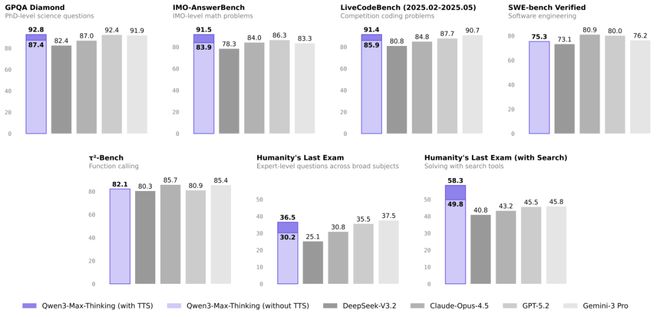
Core Insights - Alibaba has officially launched its flagship reasoning model Qwen3-Max-Thinking, which boasts over 1 trillion parameters and a pre-training data volume of 36 trillion tokens, making it the largest and most capable model in the Qwen series [1][2] - The model has set new state-of-the-art (SOTA) records in 19 recognized benchmark tests, demonstrating performance comparable to leading models such as GPT-5.2-Thinking, Claude Opus 4.5, and Gemini 3 Pro [1][4] Model Capabilities - Qwen3-Max-Thinking introduces adaptive tool invocation capabilities, allowing the model to autonomously select and utilize built-in functions like search, memory, and code interpreter without manual user input [3] - The model employs a testing expansion technique that reduces computational waste from repetitive tasks by focusing on unresolved uncertainties, enhancing context utilization efficiency [3] Performance Metrics - In the C-Eval Chinese authoritative assessment, Qwen3-Max-Thinking achieved a score of 93.7, ranking first globally and outperforming foreign models in understanding complex Chinese contexts [6] - The model scored 90.2 in the Arena-Hard v2 adversarial interaction test, significantly ahead of GPT-5.2's 85.3 and Gemini 3 Pro's 81.7, showcasing its ability to capture user subtleties and provide human-like responses [6] - In the intelligent agent tool search test (HLE (w/tools)), Qwen3-Max-Thinking scored 49.8, surpassing GPT-5.2-Thinking, demonstrating its capability to autonomously solve problems [6] Application Integration - The Qwen APP is set to integrate the new model, allowing all users to experience its capabilities, with over 400 AI service functions being launched [7] - The app has already connected with Alibaba's ecosystem, enabling functionalities such as food delivery, shopping, and flight booking, enhancing user interaction with AI [7] - The "Task Assistant" feature has been initiated for testing, which includes multi-step planning capabilities across various applications, with plans for broader user access post-testing [8] Future Developments - Alibaba plans to expand its AI capabilities globally through an overseas version, with significant investments in AI infrastructure anticipated by 2025 [9] - The company is mobilizing over a hundred developers to support the project, reflecting its commitment to both service development and the underlying technology infrastructure [9]

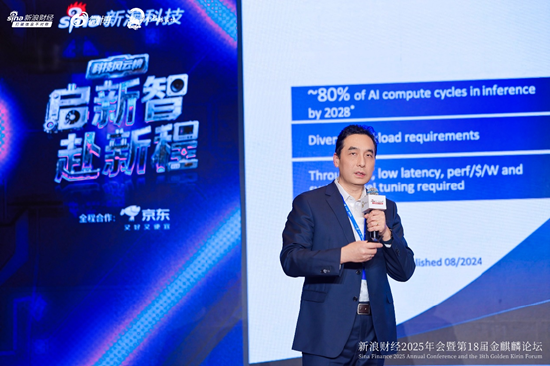
英特尔副总裁宋继强:智能体AI带来算力挑战,异构计算将成为构建AI基础设施的重要方向
Xin Lang Cai Jing· 2026-01-15 10:41
Core Insights - The development of AI capabilities is transitioning from foundational large models to intelligent agents, focusing more on providing specific functions to build workflows [3][7] - Embodied intelligence, as a significant form of physical AI, integrates digital intelligence into physical devices for interaction with the real world, primarily emphasizing reasoning applications [3][7] Group 1: AI Capability Development - AI capability is evolving towards intelligent agents that emphasize specific functionalities for workflow construction [3][7] - Industry analysts predict a shift in AI computing power demand from training to inference, which will consume a corresponding proportion of computational resources [3][7] Group 2: Heterogeneous Computing Infrastructure - The need for heterogeneous infrastructure arises from the requirement for multi-agent systems to build complete workflows and operate multiple streams in parallel [3][7] - AI agents require support from various models, schedulers, and preprocessing modules, necessitating different hardware to provide optimal energy efficiency and cost-effectiveness [3][7] - A flexible heterogeneous support capability is needed at three levels: an open AI software stack at the top, infrastructure adaptable to small and medium enterprises in the middle, and a diverse hardware integration at the bottom [3][7] Group 3: Embodied Intelligence Robotics - In the field of embodied intelligent robotics, various methods for achieving intelligent tasks are being explored, with no optimal solution currently established [4][8] - Traditional industrial automation focuses on reliability, real-time performance, and computational accuracy, while large language model-based approaches lean towards neural network solutions requiring differentiated computing architectures [4][8] - The era of embodied intelligent robots is anticipated to bring challenges in computing power and energy consumption, with heterogeneous computing becoming the core architecture of AI infrastructure [4][8] Group 4: Multi-Agent Systems - The future of robotics, when scaled to millions, is expected to transcend industrial limitations and support widespread commercial and personalized applications, necessitating multi-agent systems [4][9] - The technical stack for multi-agent systems operating on physical AI devices faces numerous challenges, with heterogeneous computing being a key pathway to address system reliability issues [4][9]

办公场景进入Agent时代,打工人的「工作文件夹」,终于要被AI接管了?
3 6 Ke· 2026-01-14 01:07
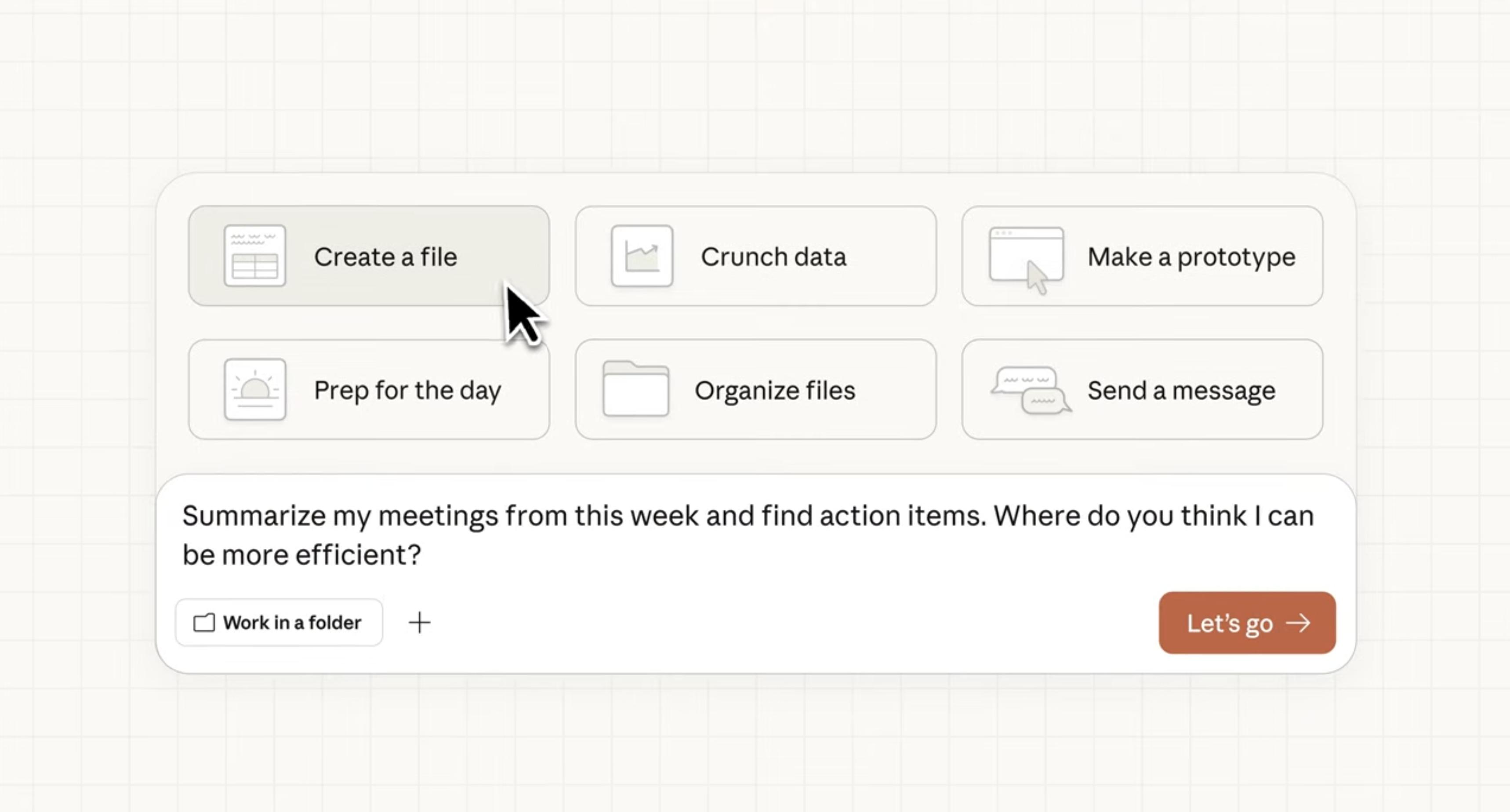
Core Insights - Claude Cowork, launched by Anthropic, is an extension of the Claude Code model, designed to enhance productivity in PC work environments by automating tasks related to file management and content generation [1][3][4] - The tool aims to address common office tasks such as file organization, document editing, and project maintenance, which are essential for knowledge workers [3][4] Industry Perspective - The introduction of Claude Cowork marks a significant shift in the discussion around PC-based AI agents, moving from cloud-centric capabilities to a more integrated approach within local operating systems [3][4] - This development highlights the ongoing challenges in privacy, efficiency, and user experience associated with existing AI office solutions [3][4] Functionality and Use Cases - Claude Cowork operates by managing files within designated folders, allowing users to create, read, and modify documents without requiring manual intervention [4][9] - A notable example of its functionality includes organizing unpublished articles by cross-referencing local files with online content, showcasing its ability to handle complex tasks beyond simple file management [5][7] Unique Features - Unlike traditional AI office tools that rely heavily on user input and cloud processing, Claude Cowork maintains a focus on local file management while integrating with cloud services like Google Drive and Notion [8][12] - The tool's design minimizes user risk by confining its operations to authorized folders, thus avoiding broader system-level access that could lead to privacy concerns [16] Market Positioning - Currently, access to Claude Cowork is limited to subscribers of Claude Max on macOS, with plans for Windows compatibility in development [13] - The tool represents a middle ground in the AI office assistant landscape, contrasting with other solutions that either fully operate in the cloud or attempt to take over local systems entirely [15][16]
“生成式AI”转向“智能体AI” 联想透露擎天引擎今年将实现三大能力升级
Zheng Quan Shi Bao Wang· 2026-01-08 06:44
Core Insights - The transition from "Generative AI" to "Agent AI" marks a significant evolution in artificial intelligence, with a focus on creating intelligent agents capable of executing tasks rather than merely answering questions [1] - Lenovo's hybrid AI strategy, showcased at CES 2026, includes the "One Engine, Four Ships" framework, which aims to meet the diverse AI application needs of Chinese government and enterprise clients [1][2] Group 1 - Lenovo's hybrid AI advantages consist of a comprehensive technical framework that includes hybrid infrastructure, enterprise data and knowledge bases, model factories, agent platforms, and AI services [2] - The "Qingtian Engine" is central to Lenovo's hybrid AI strategy, facilitating the development of Lenovo xCloud, Lenovo Baiying, Lenovo Qingtian Agent Solutions, and Lenovo AI full-cycle services to support various AI needs across different scenarios [2][3] Group 2 - The Qingtian Engine is designed to drive self-evolution through data intelligence, upgrade key modules for flexible assembly and efficient deployment, and enhance R&D delivery capabilities through silicon-carbon integration [3] - The Qingtian Engine has undergone four iterations, evolving from a cloud-native and platform-based version (1.0) to incorporating discriminative AI (2.0), generative AI (3.0), and now integrating agent AI (4.0) [3]

骁龙数字底盘强势领跑,高通智能体 AI 重塑未来驾乘生态
Huan Qiu Wang· 2026-01-07 11:05
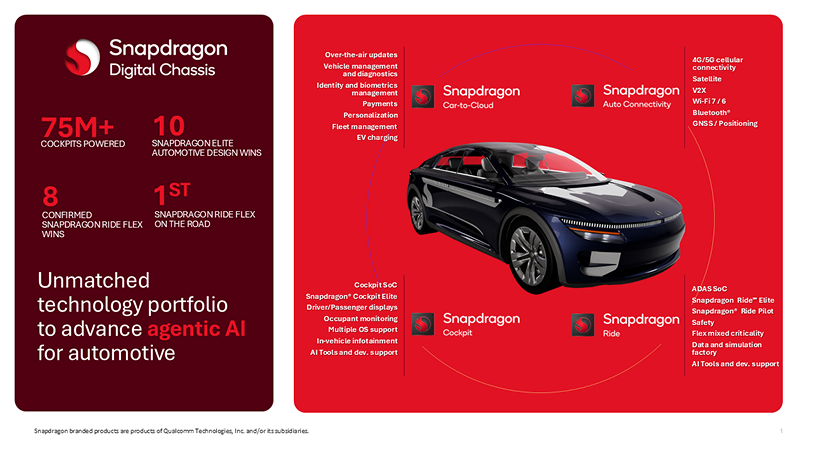
Core Insights - Qualcomm solidified its industry leadership at CES 2026 with the global adoption of its Snapdragon digital chassis solutions, integrating AI and high-performance computing into the automotive sector, thus accelerating the transition to software-defined vehicles [1][3] Group 1: Partnerships and Collaborations - Qualcomm announced a deepened long-term collaboration with Google to integrate Snapdragon digital chassis solutions with Google automotive software, facilitating faster market deployment of new AI features for automakers [3] - The company has established new or expanded collaborations with several automotive manufacturers, including Li Auto, Leap Motor, Geely, Great Wall Motors, NIO, and Chery, achieving a total of 10 model designations [4] - Qualcomm is collaborating with leading driving assistance software providers such as Yuanrong Qixing, Momenta, and others to create a diverse competitive ecosystem for AI technologies [5] Group 2: Product Innovations - Qualcomm's Snapdragon cockpit platform and Snapdragon Ride platform have gained widespread recognition among global automakers for their high-performance computing capabilities and AI acceleration [4] - The Snapdragon Ride Flex chip, which supports both digital cockpit and advanced driver assistance system workloads, has been successfully deployed in eight production vehicle projects globally [4] - The Snapdragon Ride platform has secured 20 model designations, becoming one of the most trusted and efficient driving assistance platforms in the industry [5] Group 3: AI Integration and User Experience - Qualcomm's integration of AI technology into its cockpit platform has enhanced the in-car experience, supporting over 75 million vehicles globally by mid-2025 [6] - The new generation Snapdragon cockpit platform will be featured in Toyota's RAV4 model, utilizing AI to anticipate driver and passenger needs for real-time adjustments [6] - Qualcomm introduced the A10 5G modem, designed for automotive applications, which offers low power consumption and cost advantages while supporting critical vehicle services [6]