
智能出行

Search documents
九号达成1000万台里程碑,见证中国智能两轮出行新阶段
Xin Lang Cai Jing· 2026-01-24 08:37
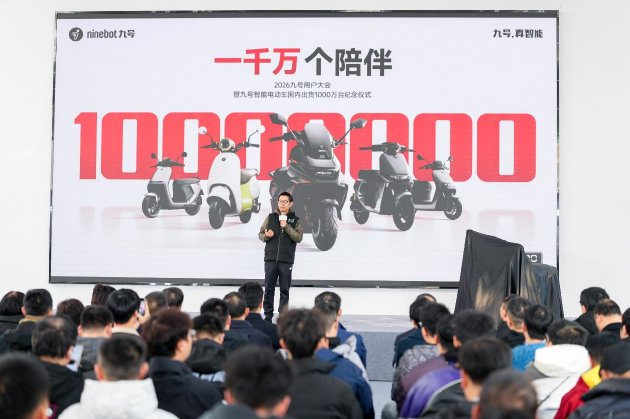
Core Insights - Ninebot has achieved a significant milestone by surpassing a cumulative domestic shipment of 10 million smart two-wheeled electric vehicles, marking a transition from product scaling to a focus on long-term user value [1][14] - The company aims to establish a deeper connection with users, moving from merely delivering vehicles to providing comprehensive user support throughout the vehicle's lifecycle [2][16] User Engagement and Community Connection - Ninebot emphasizes user co-creation, inviting users to participate in product design and community culture, thereby transforming the riding experience into a social and lifestyle connector [5][19] - The company launched the "Ten Millionth Companion" documentary and user story shorts to celebrate its journey and showcase diverse user experiences [5][19] Service and Safety Enhancements - Ninebot is upgrading its service and user operation systems, transitioning from a sales-focused model to one that emphasizes ongoing user support and experience [2][16] - The company is implementing a tiered service system through its app, allowing users to self-service or access direct support, while also enhancing product safety features [3][17] User Appreciation Initiatives - In celebration of reaching 10 million units, Ninebot initiated a user appreciation campaign, distributing over 110,000 exclusive gifts to enhance user experience and safety [6][20] - The campaign focuses on long-term user concerns such as safety, quality, and service, aiming to convert the milestone into tangible benefits for users [6][20] Product Launches - To commemorate the milestone, Ninebot introduced the M5 P Ten Millionth Edition model, limited to 1,999 units, featuring advanced performance and safety specifications [7][21] - The M5 P model includes a 10kW rated motor, a peak power of 16kW, and a range of 185 km, showcasing the company's commitment to high-quality electric vehicles [7][21] Future Strategy and Global Expansion - Ninebot plans to leverage robotics technology to evolve its products into personal mobility terminals, enhancing user interaction and connectivity [12][24] - The company aims to expand its global presence, operating in over 100 countries, and will continue to develop its dual-brand strategy with Ninebot and Segway [12][24]

首驱与中央广播电视总台签署战略合作协议,成为2026央视春晚智能出行战略合作伙伴
Xin Lang Cai Jing· 2026-01-23 12:56
Core Insights - Company "Shouqu" has signed a strategic cooperation agreement with the China Central Television (CCTV), becoming the official smart mobility strategic partner for the 2026 CCTV Spring Festival Gala [1][2] - The smart mobility robot developed by Shouqu, which features environmental perception, autonomous decision-making, and precise execution capabilities, will be showcased as a technological element during the gala [1][2] - Shouqu aims to integrate smart mobility into family life, emphasizing its role in safely transporting children and assisting the elderly, thus becoming more than just a tool [1][2] Company Developments - By 2025, Shouqu plans to complete its layout in technology research and development, smart manufacturing, channel construction, and brand accumulation [1][2] - The company has signed a partnership with Tsinghua University to establish a cutting-edge technology laboratory, focusing on next-generation mobility technologies such as low drag and self-balancing [1][2] - Shouqu has collaborated with two global esports IPs, "Fearless Tour" and "League of Legends," reaching over 200 million young users worldwide [1][2] - A smart manufacturing base in Liuzhou, with a total investment of 1.521 billion yuan and an annual production capacity of 1.5 million units, has been established [1][2] - The company has completed the establishment of over 1,000 flagship stores across the country within four months [1][2]
以AI之翼托举出行变革 奇瑞向全球AI科技公司加速跃迁
Yang Zi Wan Bao Wang· 2026-01-19 00:42
Core Insights - The automotive industry is undergoing a transformation from "transportation tools" to "intelligent mobile spaces," with Chery Auto announcing its AI strategy at the 2026 AI Night event, marking its transition to a global AI technology company [1] Strategic Leadership - Chery has been a pioneer in automotive intelligence since 2003, establishing a comprehensive intelligent system covering R&D, manufacturing, supply chain, sales, and service [2] - The company's chairman emphasized the necessity for AI to reconstruct all industries, focusing on three key areas: product equity, emotional equity, and industrial equity [2] Technological Breakthroughs - Chery showcased a range of AI achievements, highlighting its comprehensive empowerment system across smart cockpits, smart driving, chassis, and power systems [3] - The Falcon Smart Driving family has evolved, with the Falcon 500 breaking barriers between new energy and fuel vehicles, and the Falcon 700 offering over 200 TOPS computing power and a 0.16-second emergency response time [3] - The Lingxi Smart Cockpit features a humanoid memory framework for personalized service, while the Kunpeng Power and Feiyu Smart Chassis enhance driving experiences [3] Inclusive Implementation - Chery introduced AI-enabled models such as the Fengyun T9L, Fengyun A9, and iCAR V27, emphasizing accessibility to intelligent travel [4] - The company committed to rolling out upgrades for smart cockpits, driving assistance, and battery life by 2026, addressing core user needs [4] Industry Extension - Chery is expanding its reach beyond automotive, leveraging AI in humanoid robots and quadruped robotic dogs, showcasing its commitment to industrial responsibility [6] - The AI employee "Mo Yin," a humanoid robot, has been deployed in over 100 scenarios globally, marking a new growth trajectory for the company [6] Conclusion - Chery's two-decade technological foundation and comprehensive AI strategy aim to enhance quality of life and provide valuable insights for the Chinese automotive industry's technological self-reliance and high-quality development [7]
天有为总经理吕冬芳:“屏”硬核实力 打造全球汽车电子新标杆
Shang Hai Zheng Quan Bao· 2026-01-16 18:28
Core Viewpoint - The company aims to establish itself as a leading provider of smart mobility solutions by leveraging core technologies, intelligent manufacturing, and capital empowerment to enhance its competitiveness in the global automotive electronics market [1][6]. Group 1: Company Overview - Founded in 2003, the company specializes in the research, design, production, and sales of automotive instruments, including electronic combination instruments and full LCD combination instruments [2]. - The company has established long-term partnerships with major automotive manufacturers, including Hyundai and BYD, and has become a core supplier for various domestic and international automotive OEMs [2][3]. Group 2: Technological Advancements - The company emphasizes the importance of core technology in the automotive electronics industry, stating that without it, there is no competitive edge [2]. - It has developed proprietary technologies such as composite screen technology and low-temperature optical bonding technology, which have broken foreign monopolies and are crucial for entering cold climate markets [2][3]. - The company has received 139 authorized patents and has successfully completed the technical transformation of over 1,000 products [3]. Group 3: Capital Empowerment and Global Expansion - The company plans to go public on the Shanghai Stock Exchange in April 2025, aiming to raise 3.74 billion yuan to support its technological research and global expansion [4]. - In the first half of 2025, the company's R&D expenses reached 109 million yuan, a year-on-year increase of 50.29%, reflecting its commitment to innovation [4]. - Recent significant orders include a central display project for a well-known international car manufacturer, expected to start mass production in 2027, and an instrument project for a domestic brand, set to begin production within the year [5]. Group 4: Strategic Transformation - The company is transitioning from being an automotive instrument supplier to a smart mobility solution provider, focusing on AR interaction, scenario-based smart cockpits, and vehicle-road collaboration ecosystems [6]. - It is advancing in the full LCD instrument sector with new products like naked-eye 3D and OLED instruments, with its first 2.5K ultra-thin full LCD instrument nearing mass production [6]. Group 5: Community Impact - The company has created nearly 5,000 jobs and collaborates with local educational institutions to train thousands of technical talents, contributing to the industrial cluster in its hometown [6]. - The company aims to drive local development while maintaining its leadership in the Chinese automotive instrument industry and expanding its influence in the global automotive electronics sector [7].
赵长江发文回应入职智界;问界下线第100万辆整车丨汽车交通日报
创业邦· 2026-01-13 10:35
Group 1 - Zhao Changjiang announced his new role as Executive Vice President at Zhijie Automotive, emphasizing the importance of user value, technological innovation, and industry advancement, while expressing gratitude for his experience at BYD and acknowledging contributions from other Chinese automakers and Huawei [2] - BYD has maintained its position as the leading exporter of new energy buses for three consecutive years, exporting 4,234 units in 2025, representing an 18.2% year-on-year growth and capturing a 24% market share [2] - The AITO brand reached a significant milestone with the production of its one-millionth vehicle at the Seres Super Factory in Chongqing, with plans to achieve the next million in two years [2] Group 2 - GAC Trumpchi has undergone a leadership change, with He Xianqing stepping down as the legal representative and chairman, succeeded by Huang Jian, alongside other executive changes [2]


阿布扎比启动“Barq”超高速电动车充电网络
Shang Wu Bu Wang Zhan· 2026-01-13 09:20
Core Viewpoint - The Abu Dhabi Energy Authority, in collaboration with TAQA Distribution, has launched the "Barq" ultra-fast electric vehicle charging network project, aiming to support the 2050 net-zero target and promote a low-carbon, smart mobility system [1] Group 1 - The initial phase of the project will deploy over 50 charging stations with a capacity of 360 kW each [1] - The charging stations will enable a charging time of just 3 minutes for a range of 100 kilometers [1] - An intelligent app will be developed to manage the charging network [1] Group 2 - The project is set to go live in January 2026 [1] - The initiative aligns with Abu Dhabi's goals for sustainable energy and infrastructure development [1]
岚图汽车与华为子公司引望联手打造智能汽车
Chang Jiang Ri Bao· 2026-01-13 01:07
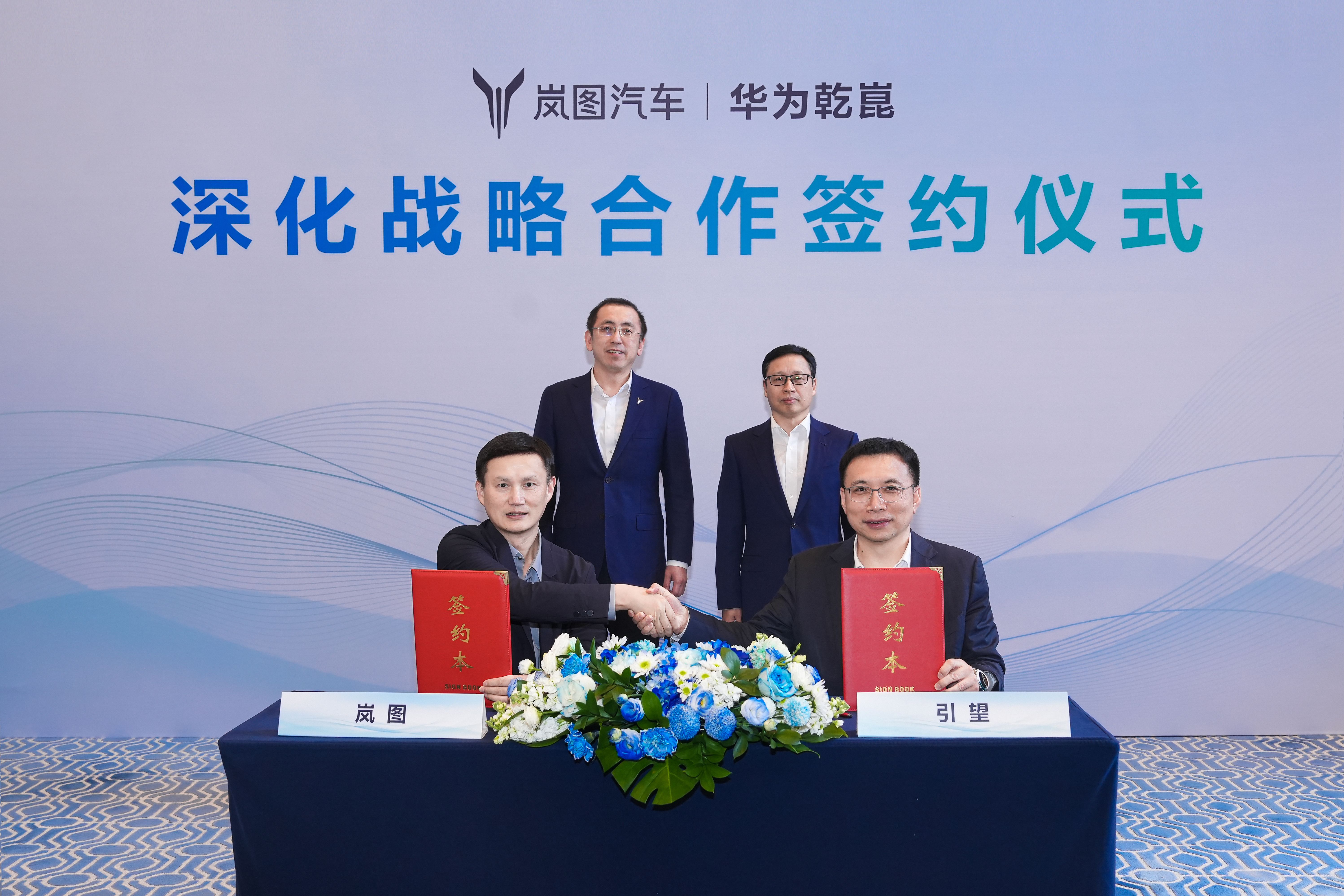
Core Viewpoint - Lantu Automotive has signed a strategic cooperation agreement with Huawei's subsidiary, Yiwang, to enhance collaboration in smart driving and smart cockpit development, aiming to set a new benchmark for smart vehicles in the global market [1][6]. Group 1: Strategic Cooperation - The partnership will focus on innovative development models, resource sharing, and complementary advantages to enhance development efficiency and accelerate vehicle launch timelines [4]. - A joint team will be established to create new application scenarios, aiming to develop popular applications and improve user experience [4]. Group 2: Software and Market Expansion - Both companies will form a joint operation team for ToC software, covering the entire value chain from product planning to user operation, to accelerate the marketization of software services [4]. - The collaboration will also extend to marketing and brand standardization to boost vehicle sales and expand market size [4]. Group 3: Future Plans and Achievements - Starting in 2025, Lantu Automotive will implement an ALL-in smart strategy, with models like Lantu FREE+, 2026 Lantu Dreamer, Lantu Taishan, and Lantu Zhaiguang featuring Huawei's advanced driving and cockpit technologies [11]. - In 2025, Lantu Automotive delivered a total of 150,169 vehicles, marking an 87% year-on-year increase, and has filed nearly 5,400 patents, with 85% being invention patents, leading the growth rate among new energy vehicle companies [11].
京东方首发HERO 2.0智能座舱 科技创新助力智能出行
Ke Ji Ri Bao· 2026-01-12 11:49
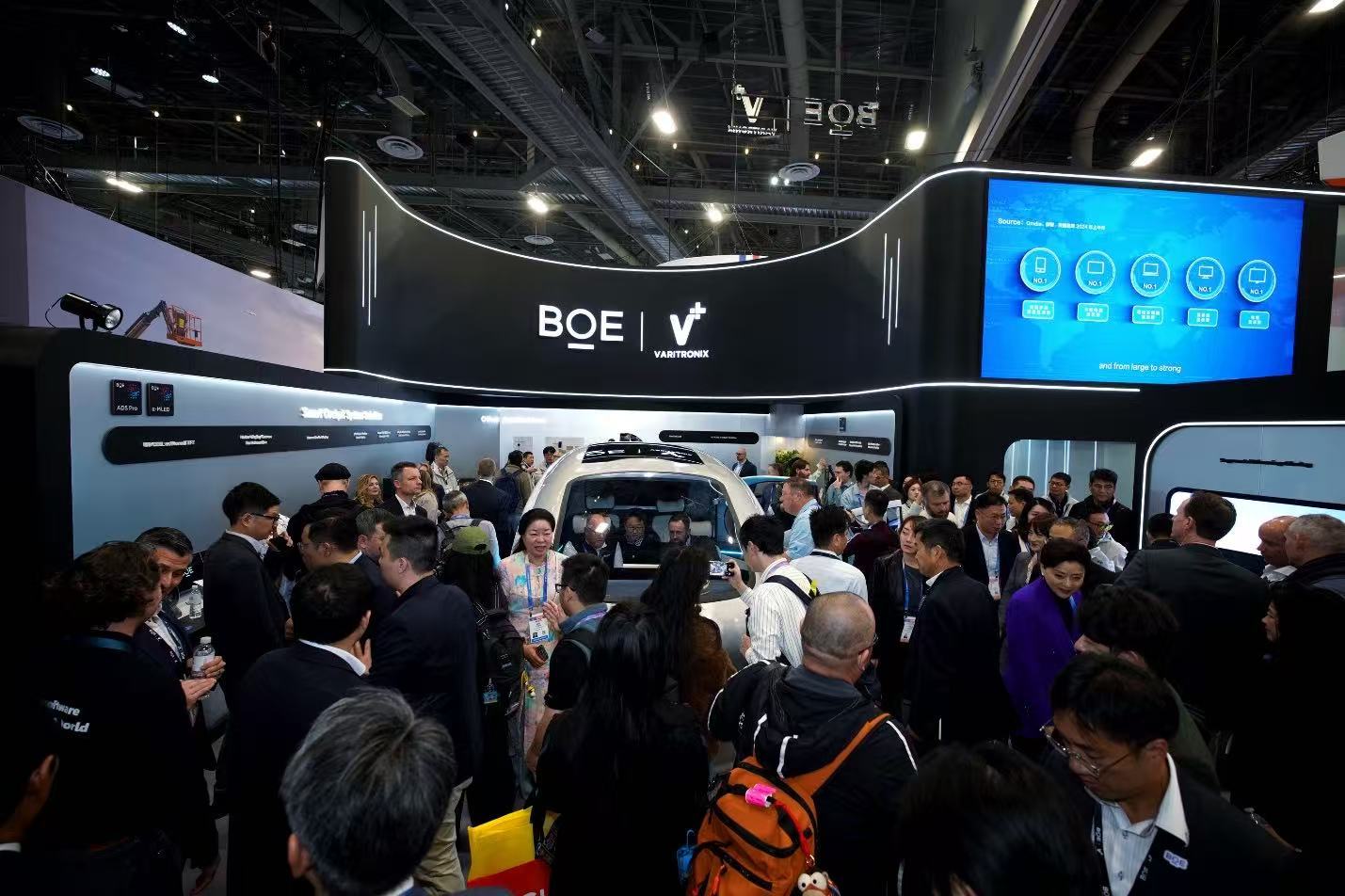
Group 1 - The core focus of the article is on the innovations showcased by BOE (京东方) at CES 2026, particularly in the fields of automotive intelligence and green technology [1][3] - BOE presented over 60 advanced display technologies and IoT solutions, aiming to foster collaborative innovation and ecological win-win scenarios with over 40 global partners [1] - The introduction of the HERO 2.0 smart cockpit marks a significant advancement in interactive experiences, emphasizing audio-visual enhancements and connectivity between vehicles and homes [1][3] Group 2 - HERO 2.0 incorporates AI technology for smart voice and gesture control, achieving a complex command recognition rate of 98% [3] - The cockpit features a central control screen that allows users to manage various functions such as sunroof control, food ordering, and home monitoring, facilitating "car-home" and "car-business" connectivity [3] - The world's first smart, independent vehicle amplifier with real-time AI sound quality restoration technology offers a high-fidelity audio experience, while the digital broadcasting system ensures quality audio and image transmission even without 4G or 5G signals [3]

岚图汽车与华为引望深化战略合作 联合开发智能座舱
Xin Hua Cai Jing· 2026-01-12 06:30
Group 1 - Lantu Automotive and Huawei's subsidiary, Shenzhen Yiwang Intelligent Technology, signed a strategic cooperation agreement to enhance collaboration in smart driving and smart cockpit development, as well as ToC software operations [1] - The partnership aims to innovate development models, establish joint teams, and create new application scenarios to improve development efficiency and accelerate vehicle launch timelines [1] - A joint ToC software operation team will be formed to collaborate across the entire value chain from product planning to user operations, enhancing the marketization of software services and improving user experience [1] Group 2 - In 2025, Lantu Automotive is projected to deliver a cumulative total of 150,000 vehicles, representing an 87% year-on-year increase, making it the first high-end new energy brand among central state-owned enterprises to reach a production and sales scale of 300,000 vehicles [2]
湾财周报 人物 郁亮退休;毛戈平家族减持“毛戈平”
Nan Fang Du Shi Bao· 2026-01-11 14:27
Group 1 - The 2025 Chinese capital market is characterized by the rise of new players amidst deep adjustments in traditional industries, highlighting a trend where both veteran leaders and new generations must embrace innovation and risk management to thrive [13][12] - Notable figures in the capital market include Zhu Jiusheng, Lei Jun, Wang Chuanfu, and others, whose experiences reflect personal turning points and broader industry cycles [13] - The ongoing power struggle within the Double Star Group, marked by the founder's public declaration to sever ties with his son, exposes governance crises and challenges for the century-old brand [14] Group 2 - The 毛戈平 family plans to cash out over 1.4 billion HKD through a collective share reduction, indicating significant financial maneuvers within the company [15] - Huawei and GAC Group have signed a comprehensive cooperation framework agreement to jointly innovate in areas like AI and smart vehicles, aiming to enhance competitiveness in the global automotive market [18] - The real estate sector is entering a critical transformation phase, with experts emphasizing the need for policies that stabilize market expectations and improve conditions for second-hand housing [19] Group 3 - The appointment of seasoned executives at 招商银行 reflects a strategy focused on stability and internal talent development, as the bank promotes experienced individuals to its leadership team [24] - The recent passing of Liu Hui, a prominent fund manager at 银华基金, marks a significant loss for the investment community, highlighting the impact of individual contributions to the industry [25]

