
材料科学

Search documents
十家资管公司入选港投公司“新计划”投资组合2025组别资管公司名单
Xin Hua Cai Jing· 2025-12-02 11:30
Group 1 - The Hong Kong Investment Management Company announced the selection of ten asset management firms under the "New Capital Investor Entry Scheme" for the "2025 Fund" category [2] - Selected firms include a diverse range of strategies such as venture capital, private equity, private credit, and hedge funds, with firms like Pan Shih Capital, Skywide Ventures, CMC Capital, and others [2] - The selected asset management companies presented specific plans to expand their business in Hong Kong, contributing to the long-term development of the local economy and competitiveness [2] Group 2 - The Hong Kong SAR government will announce details of the "New Scheme" in 2024, with applications starting on March 1, 2024, requiring a minimum investment of HKD 30 million in approved assets [3] - The "2025 Fund" is estimated to have a scale of at least HKD 3 billion by the end of this year, which will be evenly distributed among the selected asset management firms, with investment activities starting in the first quarter of 2026 [3]

创新成果加速产出和落地!高交会深圳光明展区何以“吸睛”?
Nan Fang Du Shi Bao· 2025-11-15 10:20
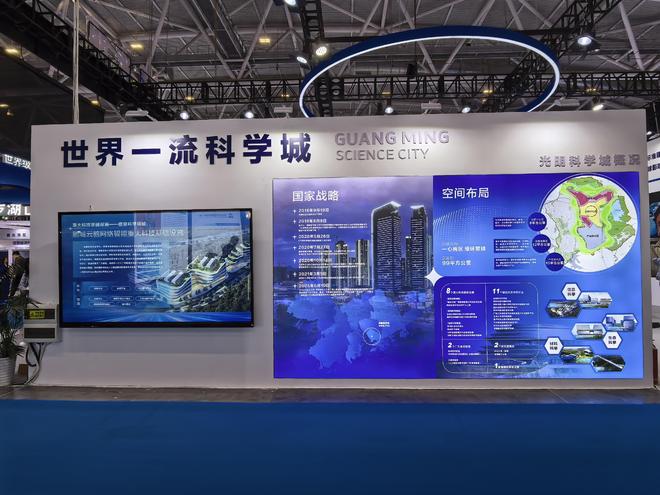
Core Insights - The 27th China International High-tech Achievements Fair (CIHTAF) has commenced in Shenzhen, showcasing the technological strength and innovation vitality of Guangming Science City, which is expected to attract more tech enterprises to the area [1][3] Group 1: Event Overview - CIHTAF serves as a significant platform for displaying cutting-edge technological innovations and facilitating the exchange and transaction of high-tech achievements, known as "China's No. 1 Technology Exhibition" [3] - Guangming District aims to build a world-class science city and a comprehensive national science center in the Greater Bay Area, featuring over 20 research institutions and tech companies in a strong exhibition group [3][5] Group 2: Innovations and Achievements - Notable research institutions such as the China North Industries Group Intelligent Innovation Research Institute and the Southern University of Science and Technology Guangming Institute showcased their latest research achievements, including industrial inspection robots and advanced agricultural technologies [5][9] - Guangming's focus on the "smart+" sector includes innovations like the L4-level intelligent system MasterAgent and the Panda70 quadruped robot, which can perform complex tasks [9] - In the "bio+" sector, advancements include a high-throughput organ 3D printer and a high-purity biological extraction technology [11] - The "materials+" segment features innovations like efficient heat management solutions and the conversion of agricultural waste into bio-based materials [11] Group 3: Visitor Engagement - The Guangming exhibition area attracted significant visitor interest, with interactive experiences such as mind-controlled claw machines and competitive robotics drawing attention from attendees [13] - Visitors expressed optimism about the future of Guangming Science City, highlighting the visible achievements and innovations presented at the fair [13]
AI与材料科学深度融合,MDPI第二届材料学科峰会共绘智能研发新图景
Yang Shi Wang· 2025-11-07 11:06
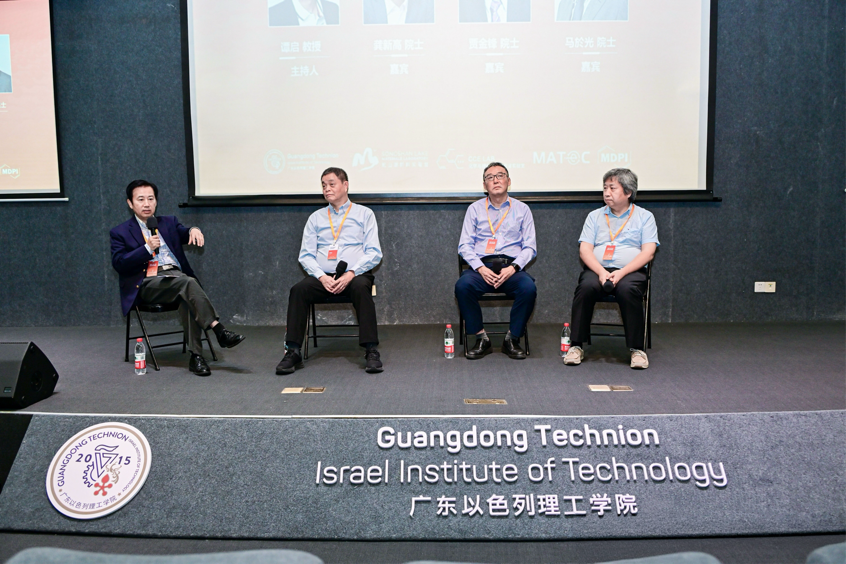
Core Insights - The integration of artificial intelligence (AI) with materials science is creating new opportunities for innovation in material research [1][2] - The second Materials Science Summit focused on the intersection of AI and materials science, highlighting the importance of AI as a core driver of research and development [1][2] - The summit featured discussions on how AI is reshaping the paradigms of materials research, moving from experience-driven to data and intelligence-driven approaches [4][5] Group 1: Summit Overview - The summit was hosted by MDPI and held at the Guangdong Technion-Israel Institute of Technology, attracting top scholars and industry representatives from around the world [1] - Keynote speeches emphasized the need for AI to redefine materials research fundamentally, rather than merely serving as a supportive tool [1][2] - The event included the announcement of the Michele Parrinello Award and the launch of new journals focused on AI and materials research, indicating a commitment to advancing this interdisciplinary field [2] Group 2: Academic Contributions - Prominent academicians shared insights on the groundbreaking applications of AI in materials science during the summit [2] - A high-level forum featured discussions on AI's role in empowering materials research and nurturing young scientists, showcasing the collaborative spirit of the academic community [2][4] - The consensus among participants was that AI is becoming the "new language" and "new tool" in materials science, facilitating a shift towards more efficient research methodologies [4] Group 3: Future Directions - The convergence of AI models, automated experiments, high-performance computing, and materials databases is expected to significantly enhance the efficiency of materials development [5] - MDPI plans to continue supporting the global materials science community through open-access publishing, academic platform development, and international conference organization [5]
德媒:与中国合作,欧洲才能跟上时代步伐
Huan Qiu Wang Zi Xun· 2025-11-06 23:30
Core Insights - China is emerging as a new technological powerhouse, with Chinese scientists taking a leading role in nearly half of all collaborative research projects with the US in 2023, indicating a significant increase in China's scientific influence [1][2] - The analysis of nearly 6 million research papers shows that 45% of the leadership in Sino-American research collaborations is now held by Chinese researchers, suggesting that by 2027-2028, China could match the US in key strategic fields such as artificial intelligence, semiconductor research, and materials science [1][2] Group 1 - China is making substantial investments in the scientific field and placing science at the core of its development strategy, expanding research openness and actively organizing international cooperation [2] - The country is developing a robust international scientific collaboration network by encouraging students and scientists to study and work globally, while also attracting talent from around the world [2] - China's strategic advantages include speed, strategic investment, and a state-led research system, although international research collaboration is becoming increasingly challenging due to geopolitical tensions [2] Group 2 - While the US remains a leader in artificial intelligence, China is rapidly catching up and is playing a crucial role in AI patent applications [2] - European institutions are lagging significantly behind their Chinese and American counterparts in global comparisons, indicating a shift in the global economic and geopolitical order [2] - For Europe, one potential strategy to keep pace with advancements is to consciously collaborate with Chinese teams in order to stay relevant in the evolving technological landscape [2]
美媒:研究显示,中国在全球科学领域“逼近”美国,将在多领域成为领军者
Huan Qiu Wang· 2025-10-29 02:32
Core Insights - The analysis of nearly 6 million research papers indicates that Chinese scientists have taken a leading role in nearly half of the Sino-American scientific collaboration projects, highlighting China's growing influence in setting the global research agenda [1][3] Group 1: Leadership in Research - In 2023, the proportion of Chinese scientists in leadership roles for Sino-American joint research projects reached 45%, a significant increase from 10% in 2010. This trend suggests that by 2027 or 2028, China may achieve parity with the U.S. in research leadership [3] - The study provides insights into the changing power dynamics of Chinese scientists in international scientific collaborations, indicating that China is not only producing more scientific results but is also leading the production process [3] Group 2: Strategic Areas of Growth - Chinese researchers are expected to achieve leadership parity with the U.S. in 8 out of 11 key areas identified by the National Science Foundation, including artificial intelligence, semiconductors, energy, and materials science, by 2030 [3] Group 3: Context of U.S. Research Environment - The publication of this research coincides with significant turmoil in U.S. research institutions, characterized by substantial budget cuts and large-scale layoffs in federal research agencies, leading to an outflow of American researchers [3]
就看科技股这口气能憋多长
猛兽派选股· 2025-10-28 04:30
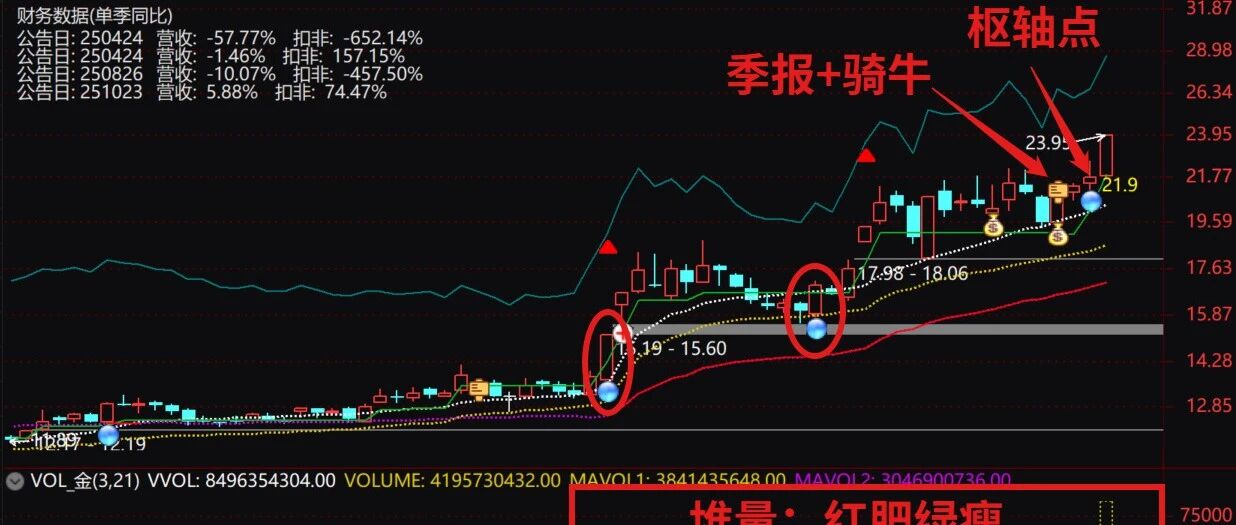
Core Viewpoint - The recent surge in technology stocks is attributed to pivotal points and positive earnings reports, particularly in sectors related to computing, storage, PCB, optical connections, and power equipment [1]. Group 1: Market Trends - The computing, storage, PCB, optical connection, and power equipment sectors continue to shine, indicating strong performance in related technology stocks [1]. - Energy storage-related stocks have also seen significant increases, driven by quarterly reports [1]. Group 2: Stock Selection and Analysis - Pivot points are effective for timing but cannot replace stock selection, which remains crucial [2]. - The stock of Dongfang Tantalum Industry has experienced consecutive gains, showcasing a specific trading pattern [3]. - The analysis of trends should focus on daily K-line developments and structural formations, rather than solely on short-term trading methods [5]. Group 3: Financial Data and Indicators - Companies in the materials sector, such as Dongyangguang, Nanjing Julong, and Western Superconducting, are highlighted for their potential due to advancements in hard technology and materials science [6]. - Emphasis is placed on understanding industry dynamics rather than superficial themes or concepts, as the latter do not drive long-term stock performance [6]. Group 4: Methodology and Tools - A bottom-up methodology is recommended, starting from individual stocks to industry analysis, which helps in confirming stock selection [7]. - The use of specific functions, such as CALCSTOCKINDEX, is suggested for integrating industry indicators with individual stock metrics [7][9]. - Understanding the principles behind indicators is essential for effective application, rather than merely following rigid methodologies [10].
萨克斯:五大力量正在重塑世界格局
Di Yi Cai Jing· 2025-10-24 06:36
Group 1 - The core argument presented by Sachs is that five major forces are reshaping the global landscape, leading to instability [1][2] - The five forces identified are geopolitical power, ecological crises, interconnected technological revolutions, the intersection of geopolitics and technology, and demographic changes [1][2] - Geopolitical power is significantly influenced by China's return to a central role in the global economy, finance, technology, and politics [1] - Ecological crises consist of three interrelated issues: climate change caused by human activity, loss of biodiversity, and large-scale pollution [1] - The technological revolution is described as a major driver of international turmoil, with advancements in AI, computing, biotechnology, and materials science having dual purposes [1] Group 2 - The intertwining of geopolitics and technology has led to unprecedented power concentration [2] - Demographic changes are seen as a decisive factor, with global population growth reaching its peak in most regions except Africa, which is expected to add approximately 2 billion people [2] - By the end of the century, the global population is projected to reach around 9 to 9.5 billion, with Africa potentially accounting for 25% to 30% of this total [2] - These demographic shifts will have profound implications, particularly in enhancing Africa's role in global economic, political, and cultural affairs [2]

两江新区组团赴北京高校开展 “才聚两江・渝见未来”招才引智活动
Zhong Guo Xin Wen Wang· 2025-10-17 09:00
Core Insights - The event organized by Liangjiang New Area aimed to attract high-quality talent from top universities in Beijing, receiving 1,980 resumes, with 96% being master's and doctoral candidates, including 315 PhDs [1][3][4] Group 1: Talent Acquisition Activities - Liangjiang New Area conducted talent recruitment activities at four major universities, focusing on aligning job openings with academic strengths, resulting in over 1,800 job positions identified in various fields such as artificial intelligence and mechanical engineering [3][4] - The recruitment strategy included a multi-faceted approach combining on-site promotions, campus recruitment, online job fairs, and live-streaming sessions, attracting over 13,000 online viewers [4][5] Group 2: Policy and Support Framework - The "Liangjiang Talent" policy framework provides comprehensive support for talent, covering aspects from housing to innovation and entrepreneurship, aimed at creating a favorable environment for young professionals [4][5] - The establishment of the Chongqing Modern Manufacturing Talent Innovation and Entrepreneurship Service Port offers over 200 integrated services to address concerns such as education and healthcare for talent and their families [4][5] Group 3: Brand Development and Future Plans - The "Talent Gathering Liangjiang" initiative has successfully expanded to multiple cities and universities, creating a nationwide talent acquisition network and enhancing the brand's impact on industrial upgrades and regional development [5][6] - Future plans include broadening recruitment channels and promoting Liangjiang New Area's favorable talent policies and living conditions to attract both domestic and international talent [6]
第33届国际高速成像与光子学大会开幕 13位院士领衔名誉主席团
Shen Zhen Shang Bao· 2025-10-16 23:40
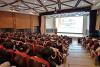
Core Insights - The ICHSIP-33 conference, co-hosted by the Xi'an Institute of Optics and Precision Mechanics and Shenzhen University, highlights China's growing academic influence in the field of high-speed imaging and photonics, marking its return to China after previous events in 1988 and 2006 [1] - The conference has attracted over 300 experts and scholars globally, featuring more than 200 academic presentations across various formats, showcasing cutting-edge advancements in high-speed imaging, ultrafast laser science, new light sources and detectors, as well as interdisciplinary applications in biomedical, materials science, and artificial intelligence [1] - The event is described as the "Olympics" of high-speed imaging and photonics, with a strong academic leadership team including 13 academicians and an international advisory committee of 38 experts from 16 countries, ensuring a high standard of academic discourse [1] - Notable speakers include 2018 Nobel Prize winner Gérard Mourou and Chinese Academy of Engineering member Deng Jianjun, who will discuss significant breakthroughs and future directions in the field [1] Industry Context - The conference is positioned as a platform for innovation and academic exchange, aligning with Shenzhen's reputation as a vibrant technology innovation center, which provides an ideal environment for such discussions [2] - Shenzhen University’s role as a co-host underscores the increasing importance of Chinese universities in the fields of fundamental research and cutting-edge technology applications, particularly within the Guangdong-Hong Kong-Macao Greater Bay Area [2]
AI推动材料研究的时代来了?
Ke Ji Ri Bao· 2025-10-15 01:32
Core Insights - The integration of AI in materials research is seen as a transformative force, with significant advancements made by companies like DeepMind and Microsoft in discovering new materials [1][2][3] - Despite the enthusiasm, there are criticisms regarding the originality and practicality of AI-generated compounds, highlighting the need for collaboration with experimental chemists [1][4][6] Group 1: AI Advancements in Materials Research - DeepMind's GNoME AI system discovered 2.2 million new crystal materials, including 52,000 graphene-like compounds and 528 lithium-ion conductors [2] - The A-Lab robotic system by Lawrence Berkeley National Laboratory synthesizes compounds predicted by DFT, demonstrating the ability to create previously unmade materials [2] - Microsoft's MatterGen tool generates materials based on specified mechanical, electrical, and magnetic properties, enhancing targeted research [3] Group 2: Criticism and Controversies - Critics argue that some AI-generated compounds lack originality and practical value, with examples of rare radioactive elements being included in predictions [4] - A-Lab's results faced scrutiny, with claims of inaccuracies in synthesized compounds, although the lab defended its findings [4][5] - MatterGen's recommendations included materials that were already known, raising questions about the novelty of its outputs [4] Group 3: Future Directions and Challenges - Most researchers believe that with continuous optimization, AI models can significantly advance materials science [6] - Microsoft is developing MatterSim to validate the stability of structures proposed by MatterGen under real conditions, addressing reliability concerns [7] - The demand for new materials to tackle societal challenges is driving ongoing exploration of AI in this field, with companies like Citrine Informatics customizing AI systems to enhance material optimization [7]
