注意力经济

Search documents
“蛋神”流量退去,今天我们需要啥样的互联网大厨?
Xin Lang Cai Jing· 2026-01-16 14:58
Core Insights - The rise and fall of the "Egg God" phenomenon reflects the complex needs of contemporary internet users, showcasing a blend of novelty, control, and community engagement in the culinary space [1][2][3] Group 1: The Rise of the "Egg God" - The "Egg God" gained immense popularity, amassing over 4 million followers in a short period due to a unique persona and extreme claims, such as eating 40 boiled eggs a day [1] - The appeal of the "Egg God" lies in the extreme narrative and the ability to provide precise cooking techniques, which resonate with users seeking expertise in a saturated food content market [1][2] - The phenomenon illustrates a shift in user engagement, where cooking skills transform into social symbols, driven by user-generated content (UGC) and algorithmic promotion [2] Group 2: The Decline of the "Egg God" - The rapid rise of the "Egg God" was followed by a swift decline as authenticity was questioned, highlighting the transient nature of internet fame [2] - The emergence of other food personalities, such as "Rice God" and "Dumpling God," indicates a pattern of fleeting attention in the digital space, reinforcing the notion of quick fame and short-lived relevance [2][3] - Despite the decline of individual influencers, the public's appetite for genuine culinary content remains strong, with a shift towards more relatable and practical cooking advice [3] Group 3: The Broader Culinary Landscape - The increasing popularity of takeout and pre-prepared meals has transformed cooking from a necessity to a choice, allowing individuals to engage with cooking as a form of personal expression [3] - Online cooking resources provide accessible knowledge, enabling users to replicate recipes without requiring professional training, thus democratizing culinary skills [3][4] - The focus on simple, heartfelt cooking experiences offers a sense of comfort and connection to daily life, contrasting with the fleeting nature of viral trends [4][5][6]
2026年,品牌该认真对待AI GEO了
Tai Mei Ti A P P· 2026-01-08 10:32
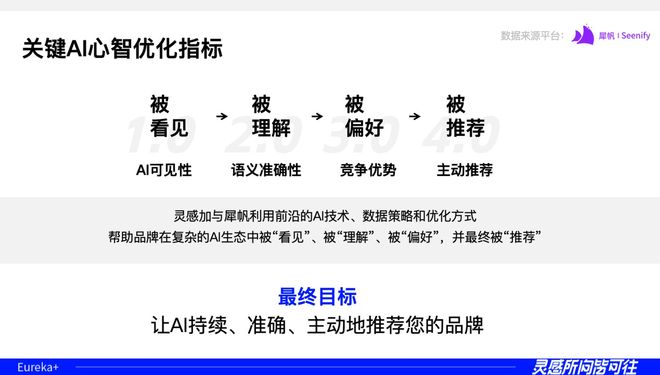
Core Insights - The article discusses the transformative impact of AI chat assistants on consumer behavior and brand marketing strategies, emphasizing a shift from passive information search to active dialogue with AI [2][3][4]. Group 1: AI's Role in Consumer Decision-Making - AI chatbots are becoming the primary advisors for consumers, with over 60% of young consumers consulting AI before making significant purchasing decisions [6][10]. - This shift indicates a fundamental change in how brands communicate their value, as AI now mediates the relationship between brands and consumers [7][18]. - The "reduction" capability of AI simplifies the decision-making process for consumers, allowing them to receive tailored recommendations quickly [14][16]. Group 2: Brand Strategy in the AI Era - Brands must redefine their value propositions to ensure they are visible, recognized, and chosen by consumers who primarily interact with AI [3][4][33]. - The concept of "intent economy" replaces the traditional "attention economy," focusing on understanding consumer needs rather than competing for attention [28][30]. - Brands need to provide specific, verifiable information that AI can easily process and relay to consumers, moving away from vague marketing language [22][23][64]. Group 3: Marketing Methodology Transformation - The marketing focus is shifting from capturing attention to understanding consumer intent, requiring brands to adapt their strategies accordingly [35][65]. - Brands must establish a clear mapping of scenarios, problems, and solutions to effectively respond to consumer inquiries through AI [61]. - The ability to compress information into impactful, context-specific messages is crucial for brands to succeed in the AI-driven marketplace [39][40]. Group 4: The Three Levels of AI Engagement - Brands must achieve three levels of engagement with AI: being seen, being recognized, and being recommended [41][46][52]. - The first level involves ensuring that brand information is indexed and understood by AI, which is essential for visibility [41][42]. - The second level requires brands to provide credible, relevant, and valuable information that AI can trust and relay to consumers [44][45]. - The final level is about being prioritized in AI recommendations, necessitating a deep understanding of specific consumer scenarios [47][48]. Group 5: Future Outlook and Strategic Preparedness - The article concludes that 2026 will mark a significant turning point for brands that adapt to these changes, emphasizing the need for ongoing dialogue with consumers and AI [66][67]. - Companies that can effectively navigate this new landscape will likely outperform those relying on traditional marketing methods [68][69].

品牌策划公司如何靠全域打法实现2025年霸屏?
Sou Hu Cai Jing· 2026-01-02 15:41
Core Insights - The article discusses the emerging "attention economy" where user attention is a scarce resource, emphasizing the need for brands to adopt a comprehensive marketing strategy to achieve significant visibility and engagement [1][10] - It highlights the shift from traditional advertising methods to an integrated approach that combines creativity, data insights, and platform operations to dominate brand presence across various channels [1][10] Group 1: Full-Spectrum Strategy - The "full-spectrum strategy" is not merely about multi-platform advertising but involves intelligent collaboration based on user behavior paths, as proposed by Google and BCG [2] - Brands must break down data silos across platforms using Customer Data Platforms (CDPs) to create unified user profiles and allocate advertising budgets dynamically for precise targeting [2] Group 2: Practical Implementation - A leading company achieved over 800 million exposures in a month and reduced conversion costs by 37% through the integration of search ads, short video sales, and private community operations [5] - This success is attributed to the deep tracking of user behavior and dynamic optimization by the brand planning company, which has developed proprietary algorithms for precise coverage across major platforms [5] Group 3: Content and Algorithm Synergy - Achieving "dominant visibility" requires not just quantity but quality, necessitating the training of content models to produce highly relevant and interactive content [6] - The ranking of search results for brand names combined with industry keywords reflects the brand's mental occupation in the market, with a successful example showing a brand occupying three out of five top positions in search results [6] Group 4: Execution and Strategy - The execution of brand planning is crucial, with a methodology that starts from the end goal of achieving "category mental dominance" and works backward to design strategies [9] - Continuous review of channel data and dynamic adjustments to content strategies are essential for maintaining long-term visibility, as demonstrated by a food brand that became synonymous with "healthy snacks" through strategic content optimization [9] Group 5: Future Outlook - The full-spectrum strategy is set to become a standard in brand marketing by 2025, requiring companies to develop three core capabilities: cross-platform operational integration, data-driven content optimization, and dynamic, scenario-based advertising strategies [10] - The reliance on algorithmic collaboration and intelligent decision-making will increase as AI models become more integrated into content production and distribution, enabling brands to achieve sustainable category mental dominance [13]

2026,与君共赴价值的山海
盐财经· 2026-01-01 02:03
Core Viewpoint - The article reflects on the 40-year journey of the publication "Southern Window," emphasizing its commitment to social value and the importance of deep engagement with the evolving societal landscape [4][12][20]. Group 1: Historical Context - The publication was founded in 1985 with the aim of recording the times, promoting trends, and facilitating change for public benefit, witnessing significant economic and social transformations over the decades [4][6]. - It has served as a mirror to the country's modernization journey, capturing the rise and fall of various thoughts and movements [4][6]. Group 2: Current Challenges - The era is characterized as a "breaking wall" time, where technological advancements, particularly generative AI, challenge traditional thinking and the media landscape [7][10]. - The overwhelming influx of information, especially through short videos and fragmented reading, has led to a sense of intellectual poverty despite the vast consumption of content [9][10]. Group 3: Social Value and Responsibility - The article highlights the importance of social value, which is rooted in practical engagement and responsibility, as demonstrated by the twelve individuals honored for their contributions to society [12][15]. - True social value is found in professional dedication, resilience in life, cultural authenticity, and the building of knowledge bridges, all aimed at public welfare [15][17]. Group 4: Future Directions - The publication aims to adapt to the changing media landscape while maintaining its core values of rational discourse and public interest [20][22]. - It emphasizes the need for deep understanding and insight in a fragmented information environment, positioning itself as a key player in providing thoughtful content [20][23]. - The commitment to innovation and self-renewal is crucial for the publication to continue fulfilling its mission in a rapidly evolving world [27][25].

广告不乱“跳” 消费更舒心
Ren Min Wang· 2025-12-31 02:53
Group 1 - The core issue revolves around the problematic "shake to jump" advertising method, which has been criticized for causing user frustration due to accidental ad page redirects [1] - "Shake to jump" ads utilize device sensors to determine user intent, streamlining user interaction and increasing ad engagement rates, thus becoming a significant advertising format in recent years [1] - The internet economy is characterized as an "attention economy," where selling advertising based on scarce user attention is a fundamental profit model for software service providers [1] Group 2 - Regulatory bodies have initiated measures to address the chaos surrounding "shake to jump" ads, including the establishment of standards by the Ministry of Industry and Information Technology and the China Academy of Information and Communications Technology [2] - Despite regulatory efforts, some businesses continue to exploit loopholes, leading to the emergence of new deceptive practices, such as hidden options to disable "shake to jump" features [2] - User feedback indicates that while these ads may increase traffic, they generate user resentment rather than goodwill, highlighting the importance of trust in business operations [2] Group 3 - The "14th Five-Year Plan" emphasizes the need to boost consumption, indicating that a favorable consumption environment is essential for stimulating domestic demand [3] - The digital economy is advancing rapidly in China, necessitating innovative policies to enhance consumer experience and address existing challenges in information consumption [3] - Creating a safe, efficient, and fair information consumption environment is crucial for ensuring consumer satisfaction and leveraging the internet to improve quality of life [3]
2025思想市场年度话题|#注意力危机与重塑专注的方式
Xin Lang Cai Jing· 2025-12-29 05:21
Core Insights - The article discusses the ongoing "attention crisis" as a global issue, exacerbated by digital technology that overwhelms individuals with information, making deep reading and learning increasingly difficult [3][4] - It highlights the transformation of attention into a form of currency in the digital age, where platforms and content creators compete for users' limited attention, which can be monetized [3][4] - The Z Generation, having grown up in a digital environment, exemplifies the dynamics of attention economy, where their engagement on social media and content creation drives economic influence [4][5] Group 1: Attention Crisis - The attention crisis is characterized by excessive information saturation from digital technologies, leading to diminished quality of life and autonomy [3] - The internet's explosion of content has made it impossible for individuals to consume all available information, creating a scarcity of valuable attention rather than information itself [3] - Attention has become a capital form that can be accumulated and monetized, influencing social impact and visibility opportunities [3][4] Group 2: Z Generation and Attention Economy - The Z Generation's behavior is central to the attention economy, as their social interactions and learning are deeply intertwined with digital platforms [4] - Their contributions to attention through social media and content creation create a feedback loop where attention drives economic power, affecting various sectors from consumption to politics [4][5] Group 3: Historical Perspective on Attention - The article emphasizes that the ability to focus is not innate but rather a socially learned behavior, shaped by historical context and media evolution [5] - The modern fascination with binge-watching and multi-episode podcasts indicates a shift in how attention is directed rather than a loss of the ability to concentrate [5] Group 4: Strategies for Managing Attention - Suggestions for addressing the attention crisis include establishing rest plans, reducing screen time, and being mindful of attention peaks and troughs [4] - The concept of "good work" is introduced as a means to reshape attention training, emphasizing creative engagement with reality through various forms of labor [5][6]

陆洪磊、蒙昕晰:短视频靠“引战”引流,无异于饮鸩止渴
Huan Qiu Wang Zi Xun· 2025-12-28 22:53
Core Viewpoint - The term "rage bait" has been selected as the 2025 word of the year by Oxford University Press, defined as online content deliberately designed to provoke anger or strong aversion, aimed at increasing traffic and interaction, highlighting a shift towards a more emotional and confrontational phase in the competition for online attention [1] Group 1: Nature of "Rage Bait" - "Rage bait" is not a new concept but has become more prevalent in everyday information streams, often disguised as "exposés" or "blackmail," using sharper headlines and extreme narratives to provoke conflict rather than persuade [1] - The rise of "rage bait" content is attributed to the ease of generating controversy compared to creating original ideas, as well as its lower costs and replicable nature, leading to an increase in quantity, topicality, and subtlety of such content [1] Group 2: Impact on Public Discourse - The distribution logic and algorithmic recommendations of platforms can exacerbate negative emotions like anger and ridicule, leading to a cycle of emotional mobilization and attention economy that amplifies misunderstandings and polarizes public discourse [2] - The blurring lines between online and offline realities mean that the effects of "rage bait" spill over into real life, reducing people's patience and emotional tolerance for discussions, making it harder to return to fact-checking and rational dialogue [2] Group 3: Responsibilities of Creators and Platforms - The self-discipline of content creators is crucial in managing "rage bait," as emotional expression in the short video era must not equate to emotional manipulation or incitement, emphasizing the need for fact-checking and contextual integrity [2] - Platforms must take responsibility by adjusting incentive structures to reduce the promotion of highly confrontational and provocative content while increasing the distribution of high-quality information and constructive discussions [3] - Ultimately, "rage bait" commodifies human emotions, leading to a depletion of patience for facts, understanding of others, and judgment on public issues, which is unsustainable [3]
美国顶尖法学家论“榨取时代”
财富FORTUNE· 2025-12-25 13:06
Core Viewpoint - The modern American capitalism has devolved into a system characterized by the accumulation of market power and extraction, leading to a profound sense of economic resentment across the nation [2][3]. Group 1: Shift in Corporate Goals - The core issue is the shift in corporate objectives from creating quality products that people want to buy to seeking control over others and extracting value from them [3]. - This shift is attributed to a lack of discipline, where companies are allowed to lower the quality of products and services without facing consequences [3][6]. - The trend challenges the fundamental ideals of American progress, particularly in the technology sector, which is expected to drive improvements [3][4]. Group 2: NFL as a Model - The NFL serves as a clear example of a market structure that maintains discipline and does not allow for the degradation of quality, ensuring that even the worst teams have opportunities to compete [4][5]. - The NFL's mechanisms, such as salary caps and drafts, promote fairness and balance, contrasting with the MLB, which suffers from distorted spending and resource misallocation [5]. Group 3: Economic Model and Wealth Distribution - The current economic model focuses on accumulating market power and extraction, leading to a redistribution of wealth upwards [6]. - Industries that once supported the middle class are being suppressed, while a few high-return sectors, including concentrated intermediaries and certain parts of finance and technology platforms, are favored [6]. Group 4: Attention Economy and Internet Neutrality - Tim Wu's contributions include the concept of "net neutrality," which mandates that internet service providers must treat all content equally, a significant victory as relevant laws remain effective [7]. - His earlier work on the "attention economy" highlighted how human attention has become a commodity that is increasingly exploited [8]. Group 5: Political Engagement and Economic Discourse - Wu reflects on his time in the Biden administration, expressing a desire for more action on children's privacy issues, noting the strong influence of large tech companies on politics [9][10]. - He engages in economic debates within leftist circles, indicating a tension regarding economic issues and expressing concern over the current political climate fueled by economic resentment [10][11].

以新姿态争取属于文学的时间
Xin Lang Cai Jing· 2025-12-23 22:11
Core Insights - The article emphasizes the importance of literary journals as cultivators of literary ecology, recorders of the spirit of the times, and cultural bridges connecting writers and readers [1] Group 1: Attention Economy and Digital Trends - The concept of "attention economy" suggests that in an era of information overload, attention has become a valuable economic commodity, necessitating literary journals to compete for readers' attention against various online content [1] - As of mid-2023, China's mobile internet monthly active users reached a record 1.267 billion, with the average daily smartphone usage approaching 8 hours by 2025, indicating a shift in entertainment consumption [1] - By the end of 2024, the number of online audio-visual users in China is projected to reach 1.091 billion, with a market size exceeding 12,226.49 billion yuan, highlighting the significance of live streaming in this sector [1] Group 2: Innovative Marketing Strategies - Guangdong's "Works" magazine has successfully utilized short videos for marketing, with its editor-in-chief actively promoting the magazine through engaging content and incentives [2] - Traditional literary journals like "People's Literature" and "Harvest" have entered live streaming, effectively reaching a broader audience and marking a significant milestone in contemporary literary dissemination [2] - Initiatives such as "Literature Three Missing" by "People's Literature" magazine aim to engage audiences through cultural discussions, reflecting a shift towards modern communication methods [2] Group 3: Evolving Relationships with Authors and Readers - Literary journals are adopting a service-oriented approach towards authors, exemplified by "Tianya" magazine's initiatives to promote new writers and facilitate discussions on publishing and literary challenges [3] - Many literary journals are striving to break the stereotype of being "highbrow" by adopting a more approachable stance, as seen in "Works" magazine's advocacy for "popular literature" and community engagement [3] - Editors and publishers are encouraged to step out of traditional roles and connect with the public, fostering a more inclusive literary culture [3]
用激励“双创”的思路促进全民阅读
经济观察报· 2025-12-18 14:02
Core Viewpoint - The article emphasizes the importance of promoting nationwide reading through collective societal efforts and creating more experiential opportunities for individuals to understand the value and joy of reading [2][5]. Group 1: Legislative and Policy Initiatives - The "National Reading Promotion Regulations" will be implemented starting February 1, highlighting the urgency of improving reading habits in the context of the AI era [2]. - Encouraging the creation of more excellent books is essential, which requires supporting authors financially to ensure writing is not merely seen as a passion project [3]. Group 2: Supply-Side Strategies - A comprehensive and diverse book evaluation system should be established to reward outstanding authors and provide libraries with sufficient budgets to purchase new and quality books [3]. - Tax incentives, such as personal income tax exemptions on royalties and manuscript fees, could attract more talented individuals to writing [3]. Group 3: Demand-Side Strategies - The article suggests that the government should subsidize organizations or individuals that help cultivate public reading habits, such as physical bookstores and offline reading clubs [4]. - A proposed tax deduction of 1,000 yuan for book purchases and 10,000 yuan for supporting physical bookstores could encourage contributions from higher-income groups [5]. Group 4: Community Engagement - The article advocates for broad societal participation in promoting reading, suggesting that creating sustainable communities around reading can help establish reading habits among the public [5].