混合式AI

Search documents
物理AI,联想先行
2 1 Shi Ji Jing Ji Bao Dao· 2026-01-16 14:32
Core Insights - The term "Physical AI" has become a hot topic in 2026, with significant discussions around the practical application of AI in real-world scenarios, particularly highlighted at CES where Huang Renxun mentioned it 17 times [1][2] - The challenge of implementing AI in practical settings, referred to as the "last mile," is being addressed more effectively in China compared to Silicon Valley, due to its rich application scenarios and mature AI infrastructure [2] Company Strategies - Lenovo has developed a "Human-Centric AI" strategy, focusing on personalized AI solutions for both individuals and enterprises, emphasizing that a one-size-fits-all approach is no longer viable [3][6] - The introduction of Lenovo's hybrid AI strategy aims to provide scalable AI solutions that can be industrially delivered, leveraging Lenovo's extensive computing device manufacturing capabilities [3][17] Product Innovations - Lenovo unveiled the personal AI super agent, Lenovo Qira, which connects various devices and learns user preferences to provide seamless task execution and privacy protection [6][9] - The Lenovo Personal AI Hub Concept Project Kubit allows users to run complex AI models locally, addressing concerns about computational power and data privacy [10] Industrial Applications - Lenovo's AI cloud super factory aims to streamline the deployment of AI infrastructure for enterprises, significantly reducing the time required for AI model implementation [17] - The company has developed liquid cooling technology to manage the energy consumption and heat generated by large AI models, positioning it as a potential industry standard [19] AI in Sports - Lenovo is collaborating with FIFA to introduce the Football AI Pro, an enterprise-level AI system that will provide data analysis and insights during the 2026 FIFA World Cup [20][21] - Various AI technologies, including 3D visualization and enhanced video systems, will be tested during the World Cup to improve decision-making and viewer experience [24][25] Conclusion - The ultimate goal of Physical AI is to enhance human experiences, making AI as accessible and essential as utilities like water and electricity, as emphasized by Lenovo's leadership [26]


如何构建下一代AI生态?联想:个人AI与企业AI双轮驱动
Zhong Guo Jin Rong Xin Xi Wang· 2026-01-16 12:17
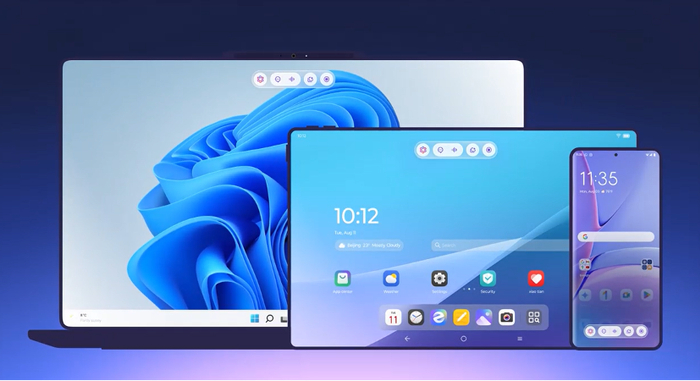
Core Viewpoint - The trend of hybrid AI is becoming inevitable, as it aims to create personalized and diverse AI solutions, accelerating the transition of AI into practical applications [1] Group 1: Hybrid AI Concept - Hybrid AI combines personal AI, enterprise AI, and public AI for collaborative and complementary use [2] - Lenovo has launched its first global personal super-intelligent agent, Lenovo Qira (known as "Tianxi Intelligent Agent" in China), along with new AI PCs, AI smartphones, and wearable devices [2] - Lenovo Qira enables seamless switching across various devices and has the capability to connect and coordinate multiple intelligent agents, remembering user preferences and predicting needs while ensuring privacy [2] Group 2: Market Insights and Projections - The Tianxi Intelligent Agent ecosystem in China has reached 10,000 developers and 5,000 intelligent agent partners, with plans to upgrade to version 4.0 by 2026 [2] - Research indicates that by 2025, AI PCs will account for over 30% of the PC business, with Lenovo aiming for over 50% by 2026 [2] Group 3: Enterprise AI Applications - Lenovo plans to collaborate with NVIDIA in 2025 to release a hybrid AI advantage set, providing essential capabilities for enterprise AI applications [2] - The core technology module, Qingtian Engine, will support the development of Lenovo xCloud Smart Cloud, Lenovo Baiying, Lenovo Qingtian Intelligent Agent solutions, and Lenovo's full-cycle AI services to meet the diverse AI application needs of government and enterprise clients in China [2] Group 4: Case Study and Internal Efficiency - Lenovo has assisted Yili Group in integrating AI into its production system, resulting in significant reductions in transportation costs and maintaining a 98% on-time delivery rate [3] - The company has developed an enterprise super-intelligent agent, Lenovo Lexiang, which has integrated over 200 intelligent agents into its internal processes, enhancing operational efficiency and achieving cost reduction [3]
在CES窥见中国智造未来
Xin Lang Cai Jing· 2026-01-11 21:22
Core Insights - The CES 2026 showcased Chinese manufacturing enterprises transitioning from being scattered participants to becoming core players, highlighting advancements in humanoid robots, embodied intelligence solutions, and hybrid AI technologies, marking a shift from "follower" to "leader" in AI technology [1][4] - The future of Chinese manufacturing lies in the value reconstruction from "technical breakthroughs to scenario inclusivity," focusing on technology serving human needs rather than merely competing on technical parameters [1][2] Group 1: Technological Advancements - The breakthrough of the Q1 robot emphasizes miniaturization of core components, enabling humanoid robots to move from laboratories to everyday scenarios like homes and education, transforming from "professional equipment" to "consumer products" [1][2] - Chinese enterprises are no longer showcasing single product innovations but are presenting comprehensive solutions addressing industry pain points, such as a closed-loop system for urban infrastructure that includes inspection, warning, and response capabilities [2] Group 2: Systemic Solutions - The intelligent charging network addresses the energy challenges posed by the surge in AI computing power, providing a full-chain solution from home energy supply to large-scale fleet charging and cloud-based operations [2] - This systemic capability reflects the long-term technical accumulation of Chinese enterprises and their problem-oriented innovation mindset, positioning them as leaders in practical technology application [2] Group 3: Global Collaboration - The exploration of hybrid AI by Chinese enterprises has led to not only technological breakthroughs but also the establishment of an open and win-win ecosystem, emphasizing global collaboration in technology development [3] - In the personal AI sector, the "one body, multiple ends" strategy has engaged thousands of developers and partners, evolving AI assistants into collaborative teammates [3] Group 4: Future Outlook - The rise of Chinese manufacturing is not coincidental but a result of technological accumulation, innovation orientation, and an open collaborative framework, allowing them to seize opportunities in global technology competition [4] - The display at CES signifies a new starting point for global technology development, with Chinese wisdom and solutions contributing to a more inclusive, efficient, and collaborative technological future [4]
联想集团董事长兼CEO杨元庆:AI时代不存在“单打独斗”,更不可能出现“赢者通吃”
Mei Ri Jing Ji Xin Wen· 2026-01-11 12:31
Core Insights - The CEO of Lenovo, Yang Yuanqing, emphasized that in the AI era, collaboration is essential, and no single company can dominate the entire value chain from computing power to applications [3][4] - Lenovo focuses on personal and enterprise intelligence, which complements the public intelligence provided by large model companies, highlighting the importance of end-user devices in delivering personalized AI [3][4] Collaboration in AI Industry - Yang reiterated the importance of cooperation among hardware manufacturers, chip companies, and large model firms, stating that no single entity can cover all aspects of AI [4][5] - Lenovo's partnerships are based on the strengths of different chip manufacturers, such as NVIDIA for AI cloud, Intel and AMD for PC terminals, and Qualcomm for mobile and wearable devices [5] Concept of Hybrid AI - At CES 2026, Yang introduced the concept of "Hybrid AI," which focuses on personalization rather than just large models, suggesting that every individual and enterprise will have their own dedicated AI [6] - The company aims to empower individuals and businesses through AI, enhancing operational efficiency and creating a collaborative ecosystem [6] Business Impact and Growth Expectations - Lenovo's AI PC business accounted for approximately 30% of its revenue last quarter, with expectations to exceed 50% by the end of the year, indicating a significant shift towards AI-driven solutions [7] - The company believes that AI will transform all business operations and drive future growth [7]
【环球财经】美消费电子展上演讲嘉宾如何谈AI
Xin Hua She· 2026-01-10 05:13
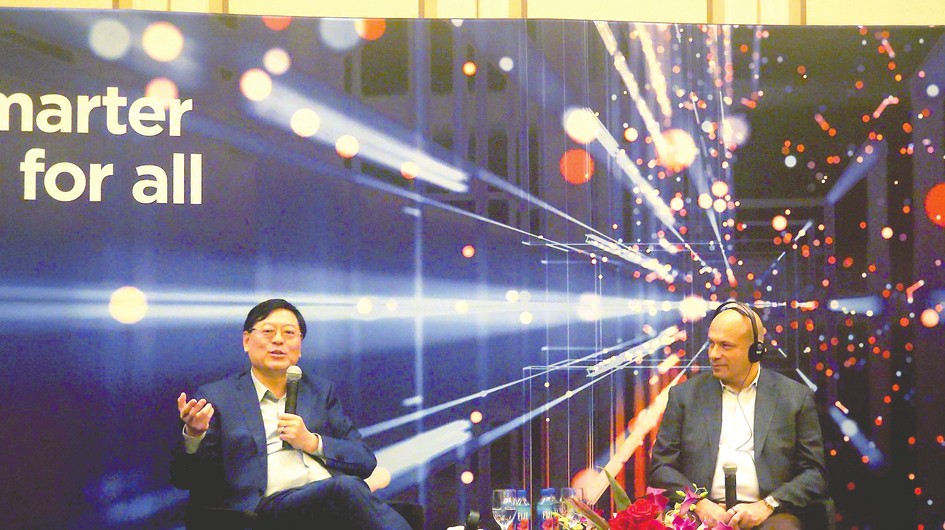
Core Insights - The 2026 CES highlighted the next phase of AI development, focusing on breakthroughs in computing power, the transition from "cloud virtual" to "physical AI," and personalized services driven by intelligent agents [1] Group 1: Computing Power Breakthroughs - The CEO of AMD, Lisa Su, stated that the number of active global AI users has surpassed 1 billion and is expected to exceed 5 billion in the future. Current computing power is insufficient to support the vision of ubiquitous AI, necessitating a 100-fold increase in global computing power over the next few years [2] - The industry is evolving from traditional methods of enhancing chip performance to a full-stack collaborative design approach, integrating chips, networks, and storage into a unified AI computing platform [2] - NVIDIA's CEO, Jensen Huang, introduced the "Vera Rubin" platform, a system-level computing platform comprising six chips, designed to significantly reduce model training time and inference costs [2] Group 2: Physical AI Implementation - Huang emphasized the evolution of AI towards "physical AI," which will understand the physical world, marking a pivotal moment for AI akin to the "ChatGPT moment" [3] - The transition from passive systems to interactive systems capable of understanding and assisting human interaction with the world is underway, with applications in autonomous driving, robotics, and industrial automation [3] - Siemens' chairman highlighted the shift towards AI-driven products and industries, indicating that industrial AI is becoming a transformative force rather than just a functional tool [3] Group 3: Development of Intelligent Agents - The co-founder of Liquid AI, Ramin Hasani, predicted that this year will be the year of "proactive intelligent agents," moving beyond reactive assistants to systems that can understand complex goals and autonomously take action [4] - Lenovo introduced its first personal super intelligent agent, Lenovo Qira, which operates across platforms and devices, enhancing user experience through context awareness and preference prediction [4] Group 4: Hybrid AI and Human-Centric Development - Lenovo's CEO, Yang Yuanqing, emphasized that hybrid AI, integrating personal, enterprise, and public intelligence, is crucial for personalized and diverse AI development [5] - The CEO of Havas Group stressed that AI should serve as a collaborative partner in human creativity rather than a replacement, reinforcing the importance of keeping humans at the center of technological advancements [5]


中国科技闪耀国际消费电子展
Sou Hu Cai Jing· 2026-01-09 21:23
Group 1 - The CES 2026 showcased a transformation in the Chinese tech industry, highlighting a shift from traditional home appliance giants to a diverse representation of both established and emerging companies, reflecting the industry's ecological vitality and innovative resilience [2][3][4] - Major Chinese companies like Hisense and TCL are focusing on technological breakthroughs to redefine industry standards, with Hisense launching a new RGB-Mini LED display technology, predicting a shipment of 500,000 units by 2026 [2] - Companies are moving from showcasing individual products to demonstrating systematic capabilities, with firms like Lens Technology and Guangdong Lingyi demonstrating comprehensive AI hardware ecosystems [4] Group 2 - The integration of AI with hardware is a key highlight, with numerous humanoid robot companies participating, indicating a significant advancement in the execution capabilities of robots, which is expected to drive commercialization in this sector [5] - The CES 2026 featured 23 AI glasses booths, with 16 from Chinese brands, showcasing their innovation in AR/VR hardware and interaction experiences [5] - Chinese companies are pursuing deep localization and compliance in their global operations, moving away from a simplistic export model to a more integrated approach, as seen with Aiper's strategy of local R&D and distribution [6] Group 3 - The competition in the AI sector is intensifying, with a focus on practical applications and the efficiency of chips, as companies like NVIDIA, Intel, AMD, and Qualcomm compete for advancements in AI computing [7][8] - The emergence of embodied intelligence is reshaping the participation landscape, with a significant presence of humanoid robot companies at CES, indicating a structural change in the representation of Chinese enterprises [8] - The CES serves as a platform for showcasing the future of technology, where the integration of AI with physical products is expected to drive growth engines for the next decade [8]
热点问答丨美消费电子展上演讲嘉宾如何谈AI
Xin Hua She· 2026-01-09 14:03
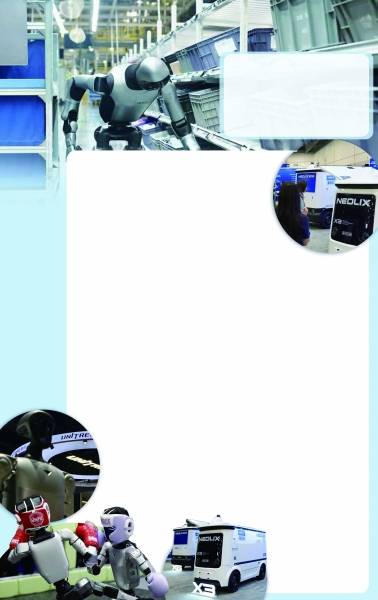
Group 1: AI Development Trends - The 2026 CES highlighted the evolution of AI from cloud-based virtual systems to physical applications in real-world scenarios [1] - AI's next phase includes breakthroughs in computing power, with a need to increase global computing capacity by 100 times in the coming years to support widespread AI adoption [2] - The concept of "Physical AI" is emerging, focusing on AI systems that not only understand but also interact with the physical world, with applications in autonomous driving and industrial automation [3] Group 2: Computing Power and Infrastructure - The current global AI user base exceeds 1 billion and is expected to surpass 5 billion, necessitating significant advancements in computing capabilities [2] - Companies like NVIDIA are developing integrated AI computing platforms, such as the "Vera Rubin" system, which includes six chips designed to enhance model training efficiency and reduce inference costs [2] - The industry is shifting towards a full-stack collaborative design approach, integrating chips, networks, and storage to create comprehensive AI solutions [2] Group 3: Intelligent Agents and Personalization - The year is anticipated to be significant for "proactive intelligent agents," which can autonomously perform tasks and understand complex goals, moving beyond traditional reactive AI [4] - Lenovo introduced its first personal super intelligent agent, Lenovo Qira, which connects various devices and supports context awareness and user preference prediction [5] - The integration of personal, enterprise, and public intelligence through hybrid AI is seen as a key pathway for personalized and diverse AI development [5]
热点问答|美消费电子展上演讲嘉宾如何谈AI
Xin Hua She· 2026-01-09 13:08
Core Insights - The 2026 Consumer Electronics Show (CES) highlighted the next phase of AI development, focusing on breakthroughs in computing power, the transition of "physical AI" into real-world applications, and personalized services driven by intelligent agents [1] Group 1: AI Computing Power - The CEO of AMD, Lisa Su, stated that the number of active AI users globally has surpassed 1 billion and is expected to exceed 5 billion in the future. Current computing power is insufficient to support the vision of ubiquitous AI, necessitating a 100-fold increase in global computing power in the coming years [1] - The industry is evolving from traditional methods of enhancing chip performance to a full-stack collaborative design approach, integrating chips, networks, and storage into a unified AI computing platform [2] - NVIDIA's CEO, Jensen Huang, introduced the "Vera Rubin" platform, a system-level computing platform comprising six chips, designed to significantly reduce model training time and inference costs [2] Group 2: Physical AI Implementation - Huang emphasized the evolution of AI from perception and generation to "physical AI," which understands the physical world, predicting that the "ChatGPT moment" for physical AI is imminent [2][3] - The application of "physical AI" will be prominent in fields such as autonomous driving, robotics, and industrial automation, utilizing technologies like simulation and digital twins for interaction with the real world [3] Group 3: Development of Intelligent Agents - The co-founder of Liquid AI, Ramin Hasani, declared that this year will be the year of "proactive intelligent agents," which can operate continuously and perform tasks in the background, moving beyond reactive AI assistants [4] - Lenovo introduced its first personal super intelligent agent, Lenovo Qira, capable of cross-platform and cross-device collaboration, enhancing user experience through context awareness and preference prediction [4] - The integration of personal, enterprise, and public intelligence through hybrid AI is seen as a crucial path for personalized and diverse AI development [4] Group 4: Human-Centric AI - The CEO of Havas Group, Yannick Bolloré, emphasized that AI should serve as a collaborative partner in human creativity rather than a replacement for it, reinforcing the importance of keeping humans at the center of technological advancements [5]
联想集团副总裁阿木:正研发面向企业的“个人超级智能体”
Xin Lang Cai Jing· 2026-01-09 06:54
Core Insights - Lenovo is developing an enterprise-focused "personal super intelligent agent" named "Tianxi AI Pro" to enhance smart collaboration from individuals to enterprises [1][4][7] - The launch of Lenovo Qira, known as Tianxi AI in China, marks the global implementation of Lenovo's personal AI strategy, which is part of a broader hybrid AI initiative [3][6] - The integration of personal and enterprise AI aims to create a smart network that connects individual creativity with corporate intelligence, evolving from "using AI" to "co-creating AI" [3][6] Group 1 - Lenovo's Tianxi AI represents a personal intelligent agent that aligns with individual interests, while enterprises will deploy enterprise-level intelligent agents to enhance employee efficiency and external communication [3][6] - The intersection of personal and enterprise intelligent agents occurs at AI terminals purchased by enterprises, allowing personal agents to leverage enterprise capabilities alongside individual knowledge [3][6] - Tianxi AI can utilize personal data for AI services and will eventually integrate with Lenovo's enterprise-level intelligent agent, "Lexiang," to assist in decision-making processes [3][6] Group 2 - Lenovo has been developing and testing the Tianxi AI Pro version since last year, enabling enterprises to purchase and assign work versions of personal intelligent agents to employees [4][7] - The company's hybrid AI strategy, significant R&D investment, and open ecosystem are foundational for deep collaboration between personal and enterprise AI [4][7]
史上最大规模Tech World,联想开启“混合式AI新纪元”
Tai Mei Ti A P P· 2026-01-09 06:16
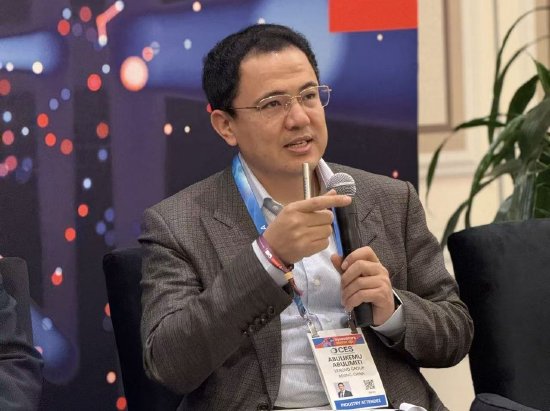
Core Insights - Lenovo hosted the largest Tech World event at CES 2026, emphasizing the importance of hybrid AI in personal and enterprise applications [2] - The company aims to enhance AI capabilities through strategic partnerships with NVIDIA and AMD, focusing on AI infrastructure and deployment efficiency [3][5] - Lenovo's hybrid AI strategy integrates personal and enterprise AI, with the launch of Lenovo Qira, a personal super-intelligent agent, and Lenovo Lexiang, an enterprise super-intelligent agent [15][18] Group 1: Event Highlights - Lenovo rented the Sphere venue in Las Vegas, accommodating 15,000 attendees for Tech World, featuring discussions on AI with industry leaders [2] - CEO Yang Yuanqing highlighted that hybrid AI will enhance human capabilities and transform enterprises into self-learning entities [2] Group 2: Strategic Partnerships - Lenovo and NVIDIA announced the "Lenovo AI Cloud Super Factory" to reduce AI deployment time and scale up to 100,000 GPUs [5] - The collaboration aims to eliminate uncertainties in AI deployment, making it more predictable and manageable [5] - Lenovo will also be among the first to adopt AMD's Helios AI architecture for enterprise applications [5] Group 3: Product Innovations - Lenovo introduced the Aura Edition AI PC in collaboration with Intel, featuring the latest Core Ultra 300 processors [8] - The new AI PCs will include Smart Modes for automatic system optimization and Smart Share for enhanced sharing capabilities [9] - Lenovo's AI-driven products, including the ThinkPad Rollable XD and AI Glasses, showcase innovative designs and functionalities for various user scenarios [10][11] Group 4: AI Ecosystem Development - Lenovo's hybrid AI strategy includes the integration of personal and enterprise AI needs, with a focus on intelligent model orchestration and multi-agent collaboration [15][16] - The Lenovo Qira personal super-intelligent agent will operate seamlessly across devices, enhancing user experience [16] - Lenovo Lexiang serves as a unified interface for customer interactions, improving operational efficiency across various business functions [18] Group 5: Upcoming Opportunities - Lenovo's AI initiatives will be tested during the 2026 FIFA World Cup, where the company will apply its AI technologies to enhance the event experience [20] - The World Cup, expected to attract over 6 billion viewers, will serve as a platform to showcase Lenovo's AI capabilities in a high-stakes environment [20]