
红利资产配置

Search documents
红利国企ETF(510720)涨1.4%,关注上市以来连续分红18个月,可月月评估分红的红利国企ETF
Mei Ri Jing Ji Xin Wen· 2025-11-03 02:52
Core Insights - The article emphasizes that during the balance sheet reduction cycle, the cost-effectiveness of stocks versus bonds is limited, with a higher probability favoring value-oriented styles [1] - Dividend stocks should exhibit three main characteristics: no balance sheet expansion, strong profitability, and sustainability [1] - The focus for dividend combinations is on industries such as banking, telecommunications, oil and petrochemicals, and transportation, which have stable dividend characteristics and currently low valuations relative to historical levels [1] Industry Analysis - The large-scale debt issuance has reduced local government financing costs and default risks, enhancing overall societal expectations [1] - The central bank's policy to prevent fund idling has strengthened the allocation value of dividend assets [1] ETF Insights - The Dividend State-Owned Enterprise ETF (510720) tracks the State-Owned Dividend Index (000151), which selects stocks with high dividend characteristics, stable dividends, and good liquidity, primarily covering traditional sectors like finance, energy, and industry [1] - Notably, the Dividend State-Owned Enterprise ETF (510720) has achieved monthly dividends since its listing, maintaining this for 18 consecutive months, making it one of the few ETFs to consistently distribute dividends since inception [1]
上银国企红利混合发起式A:2025年上半年利润51.1万元 净值增长率2.61%
Sou Hu Cai Jing· 2025-09-05 10:50
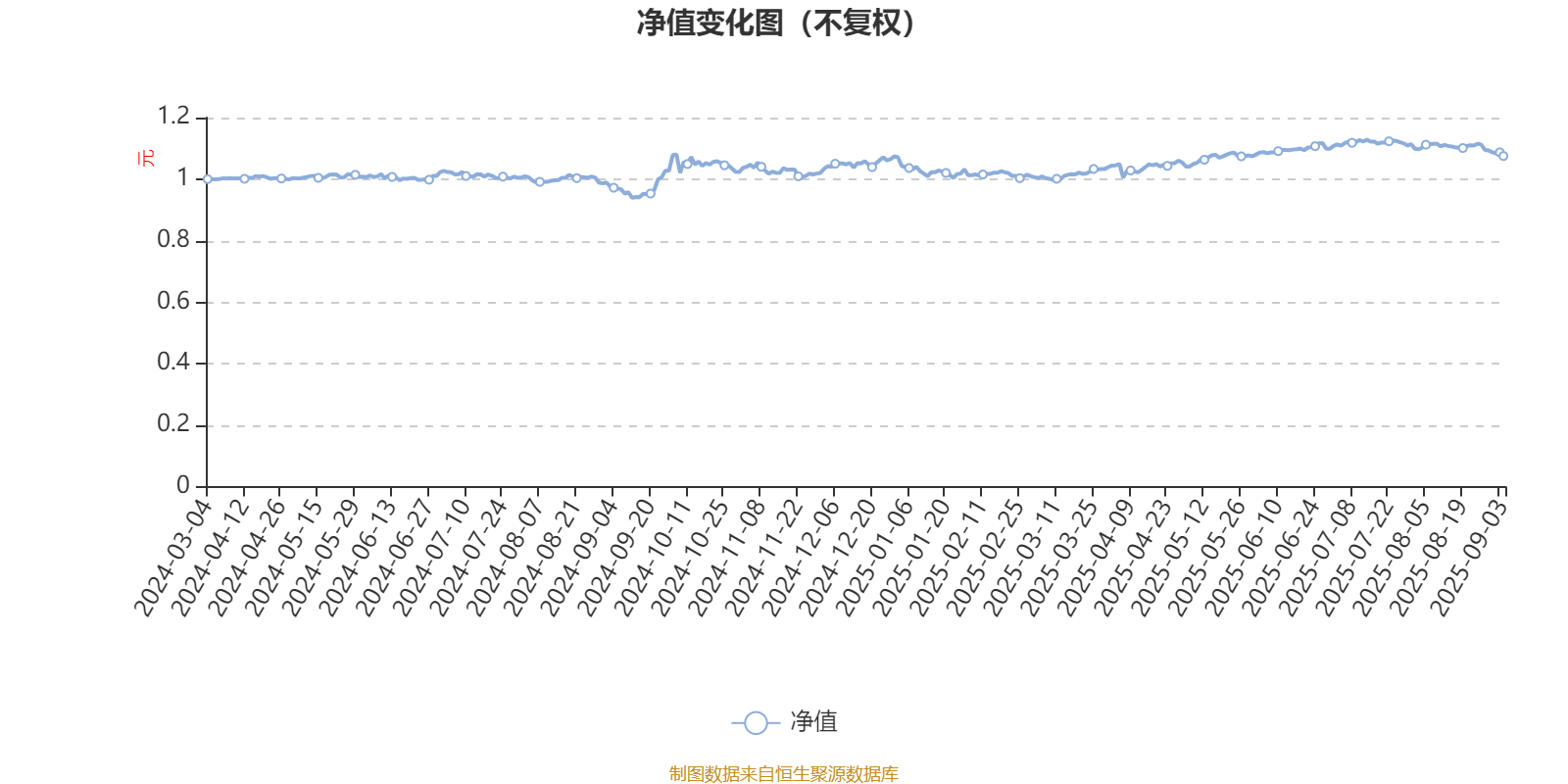
Group 1 - The core viewpoint of the news is the performance and outlook of the AI Fund Shangyin State-owned Enterprise Dividend Mixed Initiation A, which reported a profit of 51.1 thousand yuan in the first half of 2025, with a net value growth rate of 2.61% [3] - As of September 3, 2025, the fund's unit net value was 1.075 yuan, and the fund manager, Chen Bo, has managed six funds with positive returns over the past year [3][5] - The fund's net asset value growth rates over different periods are as follows: -0.99% over the last three months, 6.87% over the last six months, and 10.03% over the last year, ranking 75/82, 67/82, and 74/80 among comparable funds respectively [5] Group 2 - The fund's weighted average price-to-earnings ratio (TTM) is approximately 6.81 times, while the industry average is -1056.23 times; the weighted price-to-book ratio (LF) is about 0.66 times compared to the industry average of 1.55 times [9] - The weighted average revenue growth rate (TTM) for the stocks held by the fund is -0.03%, and the weighted average net profit growth rate (TTM) is 0.04% [15] - As of June 30, 2025, the fund's maximum drawdown since inception is 8.58%, with the largest quarterly drawdown occurring in Q1 2025 at 4.41% [27] Group 3 - The fund's total assets amounted to 16.82 million yuan as of the end of the first half of 2025 [32] - The fund's top ten holdings include major companies such as Industrial and Commercial Bank of China, Agricultural Bank of China, and China Mobile [40] - The fund has a turnover rate of approximately 50.78% over the last six months, which is consistently lower than the industry average [38]

底仓再审视(二):如何做到攻守兼备配底仓
Guoxin Securities· 2025-08-26 14:48
1. Report Industry Investment Rating No information about the industry investment rating is provided in the report. 2. Core Views - Layout of the bottom - position is as important as flexible offense. A basket of "high - dividend × low - volatility" dividend assets can provide a natural "shock absorber" for the portfolio, and the combination can withstand extreme market conditions by suppressing volatility with stable cash flows and low β and then capturing market mismatches with the remaining positions [3]. - To amplify returns in the dividend pool, a dual - screening approach is more reliable than relying solely on the "high - dividend" indicator. Adding a second filter such as low - volatility, earnings quality, or institutional holdings can eliminate potential risks and further increase the returns of general dividend assets [3]. - On top of the dividend bottom - position, there are systematic excess opportunities from the left - to - right shift of the industrial cycle. Priority should be given to companies with stable cash flows despite pressured profits. Industries such as cement, silicone, and phosphate chemicals are currently in the preferred range, while the photovoltaic chain is still in a state of "double losses in profit and cash flow". The overall allocation strategy involves initially establishing an observation position, increasing the position after confirming the leading indicators of the profit inflection point, and exiting when profits weaken again or the gross margin is inverted [3]. 3. Summary by Relevant Catalogs 3.1 Bottom - Position Allocation Necessity: "Pure Left" and "Pure Right" Are Not Desirable - In a market with an increasing industry rotation center, it is crucial to build a long - term core position first. A 15 - year quarterly rotation experiment on 31 Shenwan primary industries shows that both extreme left - side bottom - fishing and extreme right - side chasing result in single - digit annualized returns and significant drawdowns. In contrast, a dividend portfolio characterized by "high - dividend × low - volatility" can provide double - digit annualized returns and keep drawdowns within an acceptable range. Therefore, increasing the exposure of "high - dividend + low - β" in the bottom - position can provide a safety cushion for the portfolio [7]. - Dividend assets are the optimal core bottom - position in terms of return - to - drawdown. Historical stress tests show that the dividend index has shallower drawdowns, a stable 3 - year rolling Sharpe ratio, and does not require market timing in the long - term perspective. It also has higher probabilities of achieving positive returns in different holding periods compared to most broad - based and style indices [10][12][21]. 3.2 Dividend Yield Single - Factor Trap - Selecting stocks based solely on the "high - dividend" factor often leads to choosing high - volatility stocks with limited return increases and large drawdowns. Adding a second filter such as low - volatility or earnings quality can improve the overall cost - effectiveness. Statistical regression shows that the dividend yield alone has a weak explanatory power for future returns [29]. - Several case studies illustrate different types of "false high - dividend" traps. For example, some companies rely on one - time gains to support high dividends, some have high dividends due to falling stock prices rather than improved profitability, and some have high dividends at the peak of the business cycle or due to high leverage. To avoid these traps, specific financial and operational criteria need to be set [37][40][44]. 3.3 High - Dividend Smart - Beta's Distortion Risk - Modified dividend indices such as "Dividend Quality" and "Dividend Potential" have larger fluctuations and deeper drawdowns than the CSI Dividend Index. Their style drift and uncontrolled risk exposure lead to higher volatility, especially in bear markets. The main reasons are their high - concentration weighting, high - valuation requirements, and frequent chasing of market highs [60][64]. - The CSI Dividend Index selects 100 stocks based on a three - year dividend yield with a diversified weighting, while the Dividend Quality and Dividend Potential indices select 50 stocks by adding factors such as ROE and EPS growth, with a more concentrated and high - chasing weighting. As a result, they are more likely to suffer from double - kills of earnings and valuation when the market weakens [64]. 3.4 Potential Ways to Enhance Dividend Low - Volatility - **Dividend + Pricing Power Approach**: Traditional high - dividend indices have several drawbacks, including style drift, inclusion of high - risk high - dividend stocks, and right - side trading characteristics. A comprehensive scoring system based on pricing power, price - to - earnings ratio, and stability can be used to select the top 20 stocks for a portfolio. A ten - year back - test shows that this combination has better performance in terms of cumulative return, annualized return, and drawdown control compared to the CSI Dividend Index [83][84]. - **Considering Institutional Participation Rate**: Incorporating institutional holdings into high - dividend screening reveals that stocks with high institutional participation (≥20%) from stable - cash - flow industries have better risk - return profiles, including higher cumulative returns, greater upside potential, and controlled drawdowns. In contrast, stocks with low institutional participation (<20%) from cyclical industries perform less well. Therefore, combining high - dividends with institutional recognition can build a safer and more sustainable dividend portfolio [89]. 3.5 Bottom - Position Is Not Just Dividends: Quality Low - Volatility and Cash Cows - The "quality + low - volatility" dual - screened bottom - position established in June 2020 can achieve a balance between offense and defense. By filtering out high - leverage and low - resilience companies and compressing risk thresholds, it has achieved a five - year rolling net value increase of about 1.6 times, with stable single - digit annualized returns and significantly reduced volatility and drawdowns compared to ordinary low - volatility strategies [94]. - The long - term returns of dividend assets mainly come from stable dividends and profits rather than valuation increases. From 2014 - 2025, the annualized total returns of Dividend Low - Volatility and CSI Dividend after reinvestment were 13.9% and 13.2% respectively, with dividend contributions exceeding 9 percentage points and accounting for over 70% of the total returns [98]. - The cash - cow enhancement framework uses six dimensions to examine potential risks in high - dividend portfolios and provides corresponding enhancement measures. These measures include equal - weighting industries and quality sorting to address concentration risks, using free - cash - flow and growth thresholds to eliminate "high - dividend traps", and implementing valuation gates and hedging strategies to manage valuation risks [108]. 3.6 Industrial Cycle Reversal: From Left to Right - At the inflection point of the industrial cycle, multi - dimensional indicators such as fundamentals, inventory, price, valuation, and funds often show concurrent inflection points. The consistency in the industry dimension, from raw material prices to mid - stream production and downstream demand, can improve the reliability of inflection - point signals. For example, the anti - involution market rhythm is often in line with this "consistency chain" [111][112]. - At the company level, by dividing samples into leading, mid - stream, and tail companies, monitoring the second - order derivatives of 10 key indicators can help identify the acceleration of marginal improvements in demand, pricing, or cash flows. When at least three indicators in any two of the three sample layers show positive second - order derivatives, it can be regarded as a company - level consistency inflection point [114]. - The industrial cycle reversal framework uses a "three - light" approach to determine investment opportunities. When the three conditions of valuation repair, profit - cash flow resonance improvement, and completion of inventory reduction and demand expansion are met simultaneously, it indicates a three - dimensional resonance of supply - demand, profit, and sentiment, and investors can make aggressive investments. Otherwise, they should continue to hold the dividend bottom - position [115].
可转债周度追踪:以结构为重-20250810
ZHESHANG SECURITIES· 2025-08-10 13:47
1. Report Industry Investment Rating No investment rating for the industry is provided in the report. 2. Core Viewpoints - Since July, the convertible bond ETFs have significantly expanded. Investors share the returns of the equity market by betting on passive tools. Driven by the equity market and the inflow of fixed - income funds, the convertible bond index has reached a new high. At present, with both high prices and valuations, the anti - decline and protective properties of convertible bonds have weakened significantly. After the convertible bond index reaches new highs, it is recommended to adjust the structure instead of increasing the index position. Potential opportunities can be explored from three aspects: "anti - involution", underlying stock elasticity, and dividend allocation [1][2]. 3. Summary by Relevant Catalogs 3.1 1 转债周度思考 - In the past week, after adjustments, both the equity market and the convertible bond market rose again, and the convertible bond index reached a new high. The Shanghai Composite Index returned above 3600 points, the CSI Convertible Bond Index reached a new high, the Wind Convertible Bond Equal - Weighted Index rose 2.73% in the past week, and the underlying stock equal - weighted index of convertible bonds rose 3.00%. The median price of convertible bonds has exceeded 130 yuan, and the valuations of equity - like and balanced convertible bonds continue to expand [2]. - Since July, the convertible bond ETFs have significantly expanded. The share of two convertible bond ETFs has rapidly increased, with a 27% month - on - month increase compared to the end of June, and the scale has exceeded 5.72 billion yuan. Considering that some active funds are also making index - based layouts, the scale of index - based investment tools is expected to exceed 6.5 billion yuan. The holders of ETFs are mainly absolute - return funds such as banks and insurance companies, which invest in convertible bond ETFs to share the equity market's upward trend since late June and enhance returns by increasing positions in convertible bond indices [2]. - At present, with both high prices and valuations, the anti - decline and protective properties of convertible bonds have weakened significantly. Although the equity market is generally expected to be in a slow - bull state with a relatively low possibility of a large - scale pullback, the high point of the equity market within the year is unclear. After this round of increase, the price center of convertible bonds has generally risen, and the median has exceeded 130 yuan. With the continuous inflow of funds, the valuation has also been stretched. For some individual bonds in the 120 - 130 yuan price range that have risen with the market, the current median conversion premium rate is 40%, and the investment cost - effectiveness is average. Under the condition that the fundamentals of individual bonds cannot change significantly in the short term and the call - at - par - value - at - 130 clause is in place, the anti - decline and protective properties of these convertible bonds with a higher price center and premium rate have weakened significantly [2]. - After the convertible bond index reaches new highs, it is recommended to adjust the structure instead of increasing the index position. The state of convertible bonds in a relatively mild stock - bond market remains unchanged, and there are still opportunities for convertible bonds to perform. Since July, the number of callable convertible bonds has increased, and the supply - demand contradiction of convertible bonds still exists, which supports the valuation and performance of convertible bonds. Absolute - return funds can take partial profits or adjust the structure while keeping the overall position unchanged. It is recommended to explore opportunities along three lines: (1) Pay attention to industries where some backward production capacities are being cleared as "anti - involution" progresses in various industries; (2) Focus on equity - like and balanced convertible bonds with high - volatility and low - premium underlying stocks. Industries such as electronics and semiconductors are expected to experience marginal recovery due to tariff easing, and innovative drug convertible bond targets are scarce; (3) The allocation value of dividend assets remains high, and low - volatility bottom - position convertible bonds are worth attention [2]. 3.2 2 可转债市场跟踪 3.2.1 2.1 可转债行情方面 - The report provides the performance data of various convertible bond indices in different time periods, including the past week, two weeks, since July, one month, two months, half - year, and one year. For example, the Wind Convertible Bond Energy Index rose 2.60% in the past week, 6.81% since July, and 21.79% in the past year [12]. 3.2.2 2.2 转债个券方面 No specific analysis content for this part is provided in the text other than the section title. 3.2.3 2.3 转债估值方面 No specific analysis content for this part is provided in the text other than the section title. 3.2.4 2.4 转债价格方面 No specific analysis content for this part is provided in the text other than the section title.
申万公用环保周报:广东上调火电容量电价,债券征税提升红利资产配置价值-20250804
Shenwan Hongyuan Securities· 2025-08-04 07:44
Investment Rating - The report maintains a "Buy" rating for several companies in the power and gas sectors, including China Power, Huaneng International, and Kunlun Energy, among others [49][51]. Core Insights - The adjustment of capacity prices for coal and gas power plants in Guangdong is expected to improve profitability for gas power plants significantly, with capacity prices increasing by 65% to 296% depending on the type of gas plant [4][10]. - The rapid development of renewable energy installations in Guangdong has increased the reliance on coal power for flexible peak regulation, with renewable energy capacity reaching 59.13 million kW by the end of 2024, accounting for 26.6% of the total installed capacity [9][10]. - The report highlights the geopolitical factors affecting natural gas prices, with European gas prices experiencing a slight increase due to renewed geopolitical tensions, while U.S. gas prices remain stable [13][20]. Summary by Sections 1. Power Sector - Guangdong has raised the capacity price for coal power plants to 165 RMB per kW per year starting January 1, 2026, and for gas power plants, prices will range from 165 to 396 RMB per kW per year starting August 1, 2025 [8][10]. - The increase in capacity prices is expected to provide annual revenue boosts of 1.72 billion RMB for Guangdong Power A and 350 million RMB for Guangzhou Development [11]. 2. Gas Sector - As of August 1, 2025, the Henry Hub spot price is $3.00/mmBtu, while the TTF spot price in Europe is €32.95/MWh, reflecting a week-on-week increase of 2.74% [13][14]. - The report notes that the domestic LNG price is 4388 RMB per ton, showing a week-on-week decrease of 1.06% [32]. 3. Market Review - The gas sector outperformed the Shanghai and Shenzhen 300 index, while the public utility, power, and environmental sectors lagged behind [39]. 4. Company and Industry Dynamics - The National Energy Administration has released guidelines to enhance the management of natural gas pipeline transportation prices, promoting transparency and optimizing resource allocation [37]. - The report discusses the performance of key companies, including Huaneng International and Inner Mongolia Huadian, with varying revenue and profit trends [44].




红利类资产回调再现配置机会?恒生红利低波ETF(159545)盘中获净申购近亿份
Mei Ri Jing Ji Xin Wen· 2025-07-31 06:46
Core Viewpoint - The market is experiencing volatility and differentiation, with sectors such as banking, coal, and steel undergoing collective pullbacks. However, the Hang Seng Low Volatility ETF (159545) has seen significant net inflows, indicating strong investor interest in dividend-paying assets amid a low-interest-rate environment [1]. Group 1: Market Performance - The Hang Seng Low Volatility ETF (159545) has recorded nearly 100 million shares in net subscriptions during intraday trading, reflecting accelerated capital inflow into ETFs [1]. - The ETF has achieved a historical milestone with over 2.6 billion shares and a total scale exceeding 3.8 billion yuan, marking the highest growth rate among all dividend ETFs this year [1]. Group 2: Investment Trends - There is a noticeable trend of capital shifting from bonds to equity assets, driven by improved domestic economic expectations and stable macroeconomic policies [1]. - The decline in risk-free interest rates and favorable equity market performance are prompting investors to adjust their asset allocations towards dividend stocks [1]. Group 3: Dividend Focus - The peak season for annual dividend distributions has begun since June, making dividend yields a focal point for market participants [1]. - The Hang Seng High Dividend Low Volatility Index, which comprises 50 liquid stocks with consistent dividends and moderate payout ratios, currently offers a dividend yield of approximately 5.8% [2].
世界人工智能大会亮点纷呈,如何布局?
Datong Securities· 2025-07-29 07:59
Market Review - The equity market indices experienced significant gains last week, with the Sci-Tech 50 index leading at an increase of 4.63% [5][6] - The bond market saw both short and long-term interest rates rise, with the 10-year government bond yield increasing by 6.72 basis points to 1.732% [8][10] - The majority of the 31 sectors in the Shenwan index reported gains, particularly in the cyclical sectors such as construction materials (up 8.20%) and coal (up 7.98%) [5][6] Equity Product Allocation Strategy - Event-driven strategies include focusing on funds related to the "Promoting Agricultural Product Consumption Implementation Plan" and the "2025 World Artificial Intelligence Conference" [12][13] - The asset allocation strategy suggests a balanced core with a barbell approach, emphasizing dividend and technology sectors [16][17] - Recommended funds include those with a focus on dividend value, balanced styles, and technology growth [16][17] Stable Product Allocation Strategy - The central bank's net injection of 129.5 billion yuan indicates a shift from a tight to a loose monetary stance [18] - The July LPR remained unchanged at 3.0% for the one-year rate and 3.5% for the five-year rate, aligning with market expectations [18][19] - Focus on short-term bond funds while being cautious of high valuations in convertible bonds [19][23] Key Focus Products - Recommended funds include Nord Short Bond A and Huazheng Pure Bond A, with specific attention to their bond and stock allocations [24]
资金流入银行,ETF工具如何选择?
Sou Hu Cai Jing· 2025-07-28 09:14
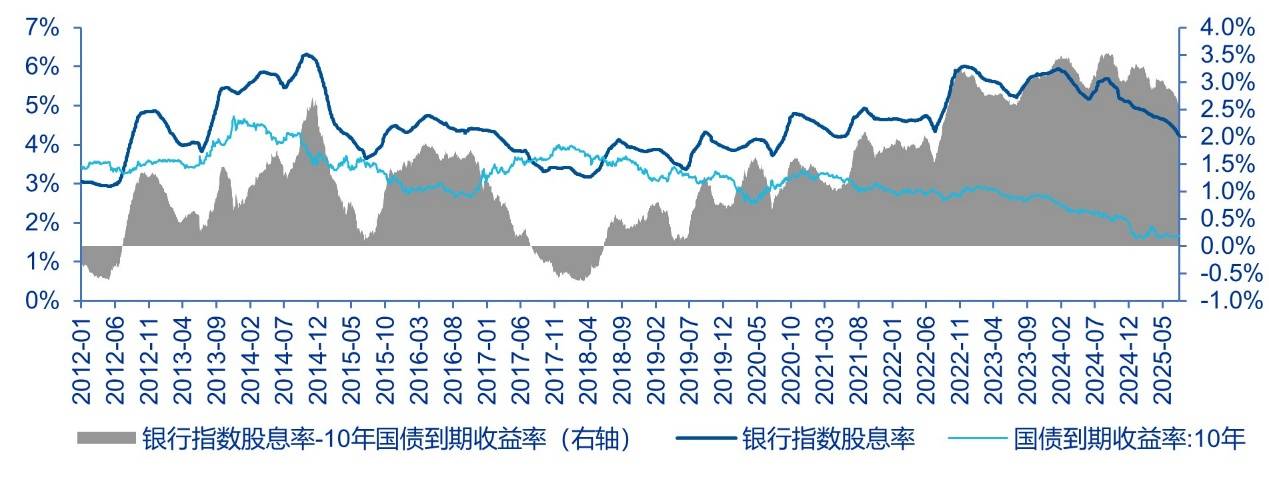
Core Viewpoint - The banking sector has seen a decline in stock prices, yet there has been a continuous inflow of funds into bank ETFs, indicating strong investor interest in dividend-yielding assets amidst a low-interest-rate environment [1][2]. Group 1: Investment Drivers - Insurance companies are increasingly attracted to bank stocks due to the "asset shortage" phenomenon, as they seek high-dividend assets to mitigate the pressure from declining interest rates and "interest margin losses" [2][5]. - The average dividend yield of the banking sector is currently around 4%, significantly higher than the approximately 1.7% yield of ten-year government bonds, providing a premium of over 200 basis points [3][5]. - New accounting standards (IFRS9 and IFRS17) will require non-listed insurance companies to optimize financial metrics, making low-volatility dividend stocks a primary consideration for asset allocation [5]. Group 2: Fund Allocation Trends - Public funds are expected to undergo reforms that will lead to a passive inflow of funds into the banking sector, as current allocations are significantly underweight compared to benchmarks like the CSI 300 and CSI 800 [6][7]. - Approximately 44% of actively managed and mixed equity funds are benchmarked against the CSI 300, while only about 4.89% of these funds are allocated to banks, indicating a substantial underweight position [6][7]. Group 3: ETF Performance - Among bank ETFs, the E Fund Bank ETF has demonstrated superior performance, achieving the highest excess returns compared to its peers over various time frames [10][11]. - The E Fund Bank ETF has a total scale of 2.072 billion yuan, with excess returns of 2.96% over the past three months, 5.64% over the past year, and 24.56% over the past three years, ranking first among similar ETFs [11].
垃圾焚烧、水务运营资产:险资持续举牌,长期配置价值凸显
Changjiang Securities· 2025-07-21 08:43
Investment Rating - The report maintains a "Positive" investment rating for the environmental protection industry [10] Core Insights - In 2023, insurance capital has collectively acquired stakes in five environmental companies, focusing on waste incineration and water utility state-owned enterprises, which exhibit stable operational performance and significant free cash flow improvement, indicating high dividend potential [2][6][7] - The report emphasizes the long-term investment value of waste incineration and water utility assets due to their high dividend potential and low valuation, recommending several companies in these sectors [8][38] Summary by Sections Insurance Capital Allocation - Insurance capital is increasingly allocating to equity investments due to declining net investment returns and the need for higher-yielding assets [6][18] - Policy changes and the expansion of long-term investment trials are encouraging insurance capital to invest in dividend and high ROE assets [24] Focus on Waste Incineration and Water Utility Assets - Insurance capital has targeted five environmental companies, primarily in waste incineration and water utility sectors, indicating a preference for stable operational assets [7][26] - The report highlights the potential for increased dividend payouts as the industry has passed its infrastructure peak, with a focus on long-term equity investments [37] Long-term Investment Value - Waste incineration and water utility assets are characterized by steady growth, improving cash flows, and increasing dividends, making them attractive for long-term investment [38][41] - The report identifies specific companies such as Huanlan Environment, Xingrong Environment, and others as key recommendations for investment [8][38] Financial Performance and Valuation - The report notes that the financial performance of waste incineration and water utility companies has shown resilience, with significant improvements in free cash flow and dividend payouts expected in the coming years [30][41] - Valuation metrics indicate that these companies are not overvalued, with PE ratios suggesting room for valuation recovery [34][41]


红利国企ETF(510720)昨日净流入超1.2亿,市场关注行业轮动与股息率稳定性
Mei Ri Jing Ji Xin Wen· 2025-07-16 02:15
Group 1 - The low interest rate environment highlights the value of dividend asset allocation, with the transportation industry showing high dividend yields above current government bond yields [1] - As of July 9, 2025, the dividend yields for various sectors are approximately 1.5% for highways, 1% for ports, and 5% for shipping [1] - The scale of dividend products has accelerated since 2024, exceeding 200 billion yuan by Q1 2025, with dividend ETFs contributing significantly to this growth [1] Group 2 - The Redundant State-Owned Enterprise ETF tracks the Shanghaizhengqun Dividend Index, which selects high-quality companies with stable dividend records listed on the Shanghai Stock Exchange [1] - These companies typically exhibit strong financial health and profitability, covering multiple industries but leaning towards mature and stable sectors [1] - The index aims to reflect the overall performance of quality listed companies that can provide investors with stable returns [1]