
绿色港口

Search documents
江苏港口智慧绿色转型和改造持续提速
Xin Hua Ri Bao· 2025-09-28 02:35
Core Insights - Jiangsu ports are undergoing rapid smart and green transformation, with significant upgrades in automation and efficiency [1][3][4] - The shift from traditional manual operations to automated systems has led to a substantial reduction in labor requirements and increased operational efficiency [2][3][5] - The ports are evolving from simple loading and unloading facilities to comprehensive service platforms that support high-value exports [6][8][9] Group 1: Automation and Efficiency - The automation at Taicang Port has allowed for a reduction in the number of operators needed, with 28 cranes now managed by just three to four people, improving efficiency by 20% and reducing personnel by over 80% [3][4] - Zhangjiagang Port is also advancing in automation, with the introduction of intelligent operations for bulk cargo, enhancing efficiency through smart conveyor systems and remote monitoring [4][5] - The overall operational efficiency at Taicang Port has increased by 15% due to smart upgrades, while energy consumption per container continues to decline [8][12] Group 2: Green Transformation - Taicang Port is focusing on achieving "zero carbon" goals, indicating a commitment to sustainable practices in port operations [3][4] - Zhangjiagang Port has made significant strides in green management and fully automated operations, aiming to reduce energy consumption and enhance environmental sustainability [5][10] - The ports are adapting to the demand for high-value goods, which require stable, efficient, and low-carbon supply chain solutions [8][10] Group 3: Industry Impact - The transformation of Jiangsu ports is facilitating the export of high-tech products, with a notable increase in the export of new energy vehicles and lithium batteries, which grew by 45% year-on-year [8][9] - The ports are becoming strategic assets in the global supply chain, moving beyond traditional roles to actively participate in logistics optimization for large manufacturing enterprises [11][12] - The shift towards smart and green ports is seen as a reflection of broader industrial upgrades, with ports acting as indicators of regional economic development [10][11]
江苏港口智慧绿色转型和改造持续提速枢纽连片升级,跨境物流“重新定义”
Xin Hua Ri Bao· 2025-09-27 23:21
Core Insights - The article highlights the rapid advancement of smart and green transformation in Jiangsu's ports, particularly focusing on the automation and efficiency improvements at Taicang Port and Zhangjiagang Port [1][3][5] Group 1: Automation and Efficiency - Taicang Port has implemented an automated container terminal, significantly enhancing operational efficiency, with a 20% increase in efficiency and an 80% reduction in personnel needed for operations [2][7] - The transition from traditional manual operations to automated systems allows for real-time monitoring and control, leading to a streamlined process for container handling [2][6] - Zhangjiagang Port is also advancing in automation, particularly in handling bulk cargo, with the introduction of intelligent conveyor systems and remote operation capabilities [3][4] Group 2: Green Initiatives - Taicang Port is initiating zero-carbon port construction, aiming for sustainable operations alongside its automation efforts [1][2] - Zhangjiagang Port has achieved over 85% water-to-water transfer for coal, significantly reducing energy consumption and enhancing operational efficiency [4] - The ports are focusing on reducing carbon footprints and improving energy efficiency, aligning with global trends towards sustainability [6][7] Group 3: Economic Impact and Industry Evolution - The transformation of ports from simple loading and unloading facilities to efficient service platforms is reshaping the logistics landscape, enhancing the competitiveness of Jiangsu's manufacturing exports [5][6] - The export of high-value products such as new energy vehicles and lithium batteries from Taicang Port has seen a 45% year-on-year increase, demonstrating the impact of smart and green upgrades [6][7] - The ports are evolving into strategic assets within global supply chains, emphasizing the importance of supply chain optimization over traditional metrics like throughput [9][10] Group 4: Future Directions - The future of port operations is expected to shift from single-point intelligence to collective intelligence, enhancing overall operational efficiency and capacity [10] - The integration of AI and advanced technologies in port operations is anticipated to mature over the next 2-3 years, further driving innovation and efficiency [9][10] - Jiangsu's ports are positioned to support high-quality development in the Yangtze River Economic Belt through improved logistics and supply chain capabilities [10]
出口创新高 码头焕新“绿”——探访“长江外贸第一大港”太仓港
Xin Hua She· 2025-09-18 13:53
Core Insights - The article highlights the significant growth and transformation of Taicang Port, emphasizing its role as a key hub for automobile and new energy exports, with a historical high in automobile exports recorded in 2023 [1][2]. Group 1: Trade and Export Growth - In the first eight months of 2023, Taicang Port exported 513,000 vehicles, marking a year-on-year increase of 64.3%, surpassing the total export volume of the previous year [1]. - The port has established itself as a major export base for new energy products, with over 500,000 standard containers of new energy vehicles, lithium batteries, and photovoltaic products exported, reflecting a 45% year-on-year growth [1][3]. Group 2: Infrastructure and Automation - Taicang Port has 18 various types of terminals and 99 berths, with a cargo throughput of nearly 300 million tons and container throughput exceeding 8 million TEUs last year [1]. - The port's fourth-phase container terminal features 28 automated cranes that operate autonomously, reducing the need for human labor by approximately 70% and increasing operational efficiency by 20% [2]. Group 3: Environmental Initiatives - The port has transitioned from heavy oil to electric power for its operations, with 131 shore power facilities installed, achieving 100% berth coverage, and reducing carbon dioxide emissions by over 4,000 tons in 2024 [2]. - Taicang Port has also constructed over 100 electric vehicle charging stations and a solar power station covering more than 100,000 square meters, contributing to effective pollution control and ecological improvement [3]. Group 4: Future Development Plans - By 2027, Taicang Port aims to achieve an annual container throughput of over 10 million TEUs and a cargo throughput exceeding 300 million tons, enhancing its status as a major maritime hub [3]. - The port is positioned to leverage its strategic location at the intersection of the "Belt and Road" initiative and the "Yangtze River Economic Belt" to become the largest automobile and parts export base along the Yangtze River and the leading port for new energy exports [3].
“我在‘十四五’这五年 上市公司在行动”系列报道 | 日照港“蝶变”:科技筑智慧标杆 绿色拓高质量新局
Zhong Guo Zheng Quan Bao· 2025-09-15 11:58
Core Viewpoint - The company has successfully transformed its port operations through technological innovation, achieving significant increases in throughput, efficiency, and green transformation during the 14th Five-Year Plan period [1][2]. Group 1: Technological Innovation - The automated container terminal at Rizhao Port allows one operator to control 10 rail cranes, improving efficiency by 50% [2]. - The port has adopted an innovative open shore design for its automated container terminal, significantly reducing renovation costs and enhancing operational safety through "5G + Beidou" technology [2][3]. - The integration of "Beidou + 5G" with the domestic terminal operating system (TOS) has achieved centimeter-level precision in equipment operation, enabling full-process automation from unloading to yard management [2][3]. Group 2: Industry Collaboration and Green Development - Rizhao Port is transforming its operations from "front port back factory" to "port + park + cluster," aiming to increase the share of port-related industrial output from 80% in 2023 to 85% in 2024 [4]. - The port has developed advanced industrial clusters in steel, automotive, and grain processing, and established high-level platforms such as a national comprehensive bonded zone [4]. - The introduction of fully automated grain unloading machines, with 100% domestic components, has led to international-leading unloading efficiency and reduced carbon emissions [4]. Group 3: Environmental Management - The port utilizes IoT and GIS technologies to create an environmental management platform that monitors air quality and controls dust suppression systems [5]. - The operational changes have transformed the port's environmental impact, promoting a harmonious coexistence of production and ecology [5]. Group 4: Social Responsibility and Employee Development - The company emphasizes social responsibility by engaging in community projects and providing training for employees transitioning to new roles due to automation [6]. - Employees can transition from traditional roles to remote operation positions with just 1-2 months of training, with further opportunities for advancement in technical and managerial roles [6]. Group 5: Financial Performance and Investor Relations - The company has maintained steady growth in cargo throughput, with iron ore and soybean volumes ranking among the highest in the country [7]. - The cash dividend payout ratio has increased from 16.67% to 40.39% of annual net profit, reflecting a commitment to shareholder returns [7]. - The company has received multiple accolades for its governance and information disclosure practices, enhancing investor confidence [7].

江苏苏州:苏州四星“绿港”全省第一
Su Zhou Ri Bao· 2025-09-15 03:07
Core Insights - Suzhou is accelerating the construction of green ports through comprehensive measures such as the establishment of shore power facilities, systematic management of port dust, and standardized disposal of ship pollutants, aligning with the "dual carbon" strategy to protect the environment [1][10] Group 1: Shore Power and Pollution Management - Shore power facilities are fully covered, providing clean energy to docked vessels, with each crane equipped with shore power piles for free use [3][11] - The port strictly enforces the reception process for ship pollutants, ensuring that vessels submit their waste data before unloading, which enhances environmental cleanliness [3][4] - From January to August this year, the total shore power usage in Suzhou's ports reached 11.58 million kilowatt-hours, a year-on-year increase of 5.4%, significantly reducing emissions of sulfur oxides and nitrogen oxides [4][11] Group 2: Smart Systems and Dust Control - Smart systems are being implemented at ports to enhance operational efficiency and reduce carbon emissions, with intelligent shore power devices and dust monitoring equipment installed [6][10] - A total of 426 dust-prone terminals have established dust suppression systems, achieving effective dust control [6] - The online monitoring system for dust has a stable online rate of 94.7% and an anomaly data handling rate of 98.1% as of August this year [6] Group 3: Logistics and Transportation Efficiency - The mature river-sea intermodal transport system reduces logistics costs and aids in emission reduction, with a single cargo ship capable of carrying over 120 containers, equivalent to more than 100 trucks [7] - Suzhou is enhancing its water transport system and high-grade waterway network, facilitating smooth connections between inland and coastal ports [7] Group 4: Green Port Development and Achievements - Suzhou has over 550 port terminal enterprises and has been promoting the evaluation and creation of green ports since 2020, with 16 provincial-level star-rated green ports established by the end of 2024 [10] - The city has implemented comprehensive pollution prevention measures, covering air, dust, water pollution, noise, and ship pollutant management [10][11] - All non-oil and gas chemical terminal enterprises in Suzhou have established shore power facilities, achieving 100% berth coverage and significantly reducing environmental risks [11]
苏州四星“绿港”全省第一
Su Zhou Ri Bao· 2025-09-13 00:44
Core Viewpoint - Suzhou is accelerating the construction of green ports through comprehensive measures such as the establishment of shore power facilities, systematic management of port dust, and standardized disposal of ship pollutants, aligning with the "dual carbon" strategy to protect the environment [1] Group 1: Shore Power and Pollution Management - Shore power facilities are fully implemented, providing clean energy to docked vessels, with 1,002 shore power facilities constructed, achieving 100% berth coverage [7] - The port has a strict process for receiving ship pollutants, ensuring that vessels must report their waste data before docking, and must transfer waste before unloading [2] - From January to August this year, the total shore power usage reached 11.58 million kilowatt-hours, a year-on-year increase of 5.4%, ranking first in the province [3] Group 2: Dust and Noise Control - The port has implemented intelligent systems for efficient and low-carbon operations, including dust suppression systems and noise monitoring devices [4] - A total of 426 dust-prone terminals have installed dust suppression networks or mist systems, effectively controlling dust emissions [4] - The online monitoring system for dust has a stable online rate of 94.7% and an abnormal data handling rate of 98.1% as of August this year [4] Group 3: Logistics and Transportation Efficiency - The mature river-sea intermodal system reduces logistics costs and aids in emissions reduction, with one cargo ship capable of carrying over 120 containers, equivalent to more than 100 trucks [5] - The port has opened multiple "public-to-water" container shipping routes, enhancing green intermodal transport and achieving an annual throughput capacity of 4.29 million tons [5] Group 4: Green Port Development and Regulation - Suzhou has created 16 provincial-level star-rated green ports, including 2 five-star, 7 four-star, and 7 three-star ports, leading the province in the number of four-star ports [6] - The city has implemented comprehensive pollution prevention regulations covering air, dust, water, noise, and ship pollutant management, with a dual approach of regulation and support for enterprises [6] - The port has received a total of 1,124.64 tons of ship waste and 49,070.4 cubic meters of sewage, with disposal rates exceeding 99% for both waste and sewage [7]
中国“智慧”助力上合合作加速向“新” 科技成果更好惠及各国人民
Yang Shi Wang· 2025-08-31 06:40
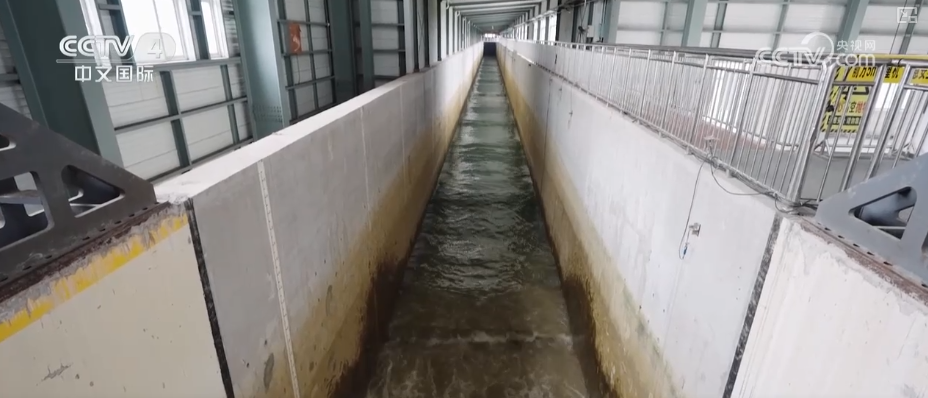
Core Viewpoint - Strengthening technological cooperation is a key aspect of collaboration between China and Shanghai Cooperation Organization (SCO) countries, with Tianjin leveraging its rich scientific and educational resources to advance frontier technology and technical cooperation with SCO nations [1][2][4]. Group 1: Technological Collaboration - The establishment of a joint laboratory for green ecological port construction between China and the UAE focuses on disaster prevention and mitigation in port coastal engineering and comprehensive environmental management [2]. - The Tianjin Water Transport Engineering Research Institute has developed a large-scale wave tank capable of simulating extreme weather conditions for testing the stability of port structures under various sea conditions [1][2]. - Recent projects include a 500,000-ton polypropylene project in Kazakhstan and a 1,600 MW combined cycle power plant in Uzbekistan, showcasing China's technological contributions to SCO member states [4]. Group 2: Future Directions - Tianjin aims to expand cooperation with SCO countries in smart technology, life sciences, and low-carbon technology, enhancing the breadth and depth of technological collaboration [7]. - The focus will be on ensuring that technological achievements benefit the peoples of all participating countries [7].

上合组织国家加强互联互通 从天津港这个智慧码头说起
Yang Shi Xin Wen Ke Hu Duan· 2025-08-30 23:21
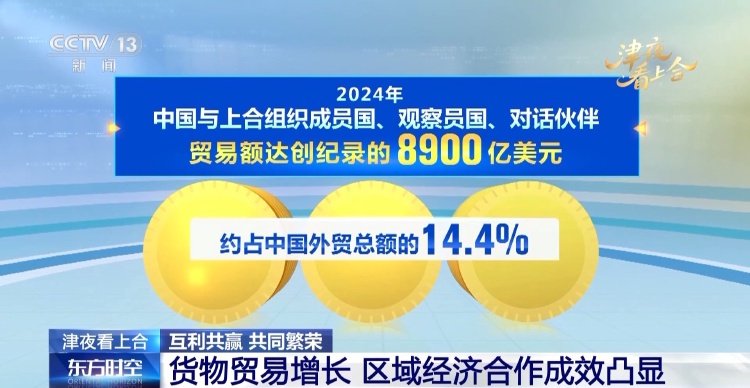
Group 1: Shanghai Cooperation Organization (SCO) Summit - The 2025 Shanghai Cooperation Organization Summit will be held in Tianjin from August 31 to September 1, marking China's fifth time hosting the summit and the largest since the organization's establishment [1] - The SCO has developed into a significant international organization over 24 years, representing about half of the world's population and a quarter of the global economy [3] - In 2024, trade between China and SCO member states, observer countries, and dialogue partners reached a record $890 billion, accounting for 14.4% of China's total foreign trade [3] Group 2: Tianjin Port as a Hub - Tianjin Port is actively playing its role as an international hub, with 11 container ships from SCO countries docking this week, making it a key gateway for trade with SCO nations [4] - The port has become a world-class international hub, showcasing its development achievements during the "World Mayors Dialogue - SCO Summit Cities" event [6] - The port's operations are now highly automated, utilizing AI transport robots and automated cranes, significantly reducing the need for manual labor and increasing efficiency [8][10] Group 3: Green and Smart Port Initiatives - Tianjin Port is recognized for its green initiatives, including wind and solar energy generation, with over 220 high-power charging stations and nearly 50 shore power systems for vessels [12][14] - The port's shore power is 100% sourced from renewable energy, contributing to its reputation as a green development model [14] Group 4: Trade Growth with SCO Countries - Trade between China and other SCO member states has been consistently increasing, with goods trade exceeding $290 billion in the first seven months of this year [17] - The port has established shipping trade relations with over 500 ports in more than 180 countries and regions, enhancing international logistics channels with SCO countries [15] Group 5: Agricultural Trade and Cooperation - Agricultural trade among SCO member states is becoming a new growth point, with China importing high-quality agricultural products from Kazakhstan [19][21] - The establishment of the "SCO Agricultural Technology Exchange Training Base" in Kazakhstan highlights the collaborative efforts in agricultural technology and trade [21] - In the first seven months of 2025, China's import and export volume with SCO countries via land transport reached 677.4 billion yuan, with a year-on-year increase of 7.4% [27]

上港集团上半年实现扣非净利润73.69亿元 拟每10股派0.5元
Zheng Quan Shi Bao Wang· 2025-08-28 13:08
Core Viewpoint - Shanghai Port Group reported a slight decline in revenue and net profit for the first half of 2025, but showed growth in cash flow and non-recurring net profit, indicating resilience in operations despite external challenges [1][3]. Financial Performance - The company achieved an operating revenue of 19.569 billion yuan, a year-on-year decrease of 1.35% [1]. - Net profit reached 8.040 billion yuan, down 4.47% year-on-year [1]. - Non-recurring net profit was 7.369 billion yuan, reflecting a year-on-year increase of 2.10% [1]. - Net cash flow from operating activities was 6.285 billion yuan, up 46.75% year-on-year, primarily due to increased cash receipts from sales and reduced tax payments [1]. Operational Highlights - The company's container throughput at its home port reached 27.065 million TEUs, a year-on-year increase of 6.1%, maintaining its position as the world's largest port for 15 consecutive years [1]. - The Yangshan Port area handled 14.056 million TEUs, a 7.5% increase, accounting for 51.9% of the total throughput [1]. - Total cargo throughput was 297 million tons, up 1.2% year-on-year, while bulk cargo throughput decreased by 8.9% to 40.193 million tons [1]. Strategic Initiatives - The company is focusing on "seeking progress while maintaining stability, strengthening fundamentals, innovating breakthroughs, and lean management" to drive business development [1]. - Significant progress in the construction of the logistics system, with a 19.4% increase in sea-rail intermodal transport, completing 510,000 TEUs [2]. - Major engineering projects are underway, including the second phase of the Luojing Port area renovation and the expansion of the Yangshan deep-water port [2]. Technological Advancements - The automation rate at Shanghai Port is improving, with the launch of the first fully automated terminal combining unmanned and manned operations [3]. - The company is advancing its digital transformation with projects like F5G ultra-remote control and smart heavy trucks, enhancing operational efficiency and safety [3]. - The company received multiple awards at the 8th Shanghai International Invention Exhibition, achieving a record high in participation and accolades [2]. Dividend Announcement - The company plans to distribute a cash dividend of 0.5 yuan per share (before tax), totaling 1.164 billion yuan [3]. Industry Outlook - Despite uncertainties in foreign trade, China's import and export activities remain stable, with continued growth in port throughput, particularly in foreign trade container volumes [3]. - Long-term, the global economic landscape is influenced by geopolitical conflicts and trade frictions, but the fundamentals of the Chinese economy remain strong, fostering new trade corridors and increasing regional trade importance [3].

政策护航 解锁中国港口高质量发展的“绿色密码”
Ren Min Wang· 2025-08-26 05:35
Core Viewpoint - The development of green ports in China is accelerating, driven by top-level design and a comprehensive policy framework, marking a significant shift towards smart and green transformation in the port economy [1][2][3]. Group 1: Policy and Framework - China's port economic growth logic has shifted from traditional throughput expansion to a dual drive of intelligence and greenness during the 14th Five-Year Plan period [1]. - A robust policy framework has been established, including the "Guiding Opinions on Building World-Class Ports" and the "14th Five-Year Plan for Green Transportation," which set clear development directions and goals [1][2]. - The construction of a green port evaluation standard system has been emphasized, with the revision of the "Green Port Level Evaluation Guidelines" in 2020 enhancing the active participation of ports in green transformation [2]. Group 2: Green Practices and Innovations - Various ports have implemented innovative practices, such as the intelligent container terminal at Tianjin Port, which has become a global benchmark for green ports [2]. - The Qingdao Port has achieved over 50% of its new energy equipment in electric loading and unloading, significantly reducing emissions [2]. - The Guangdong-Hong Kong-Macao Greater Bay Area is promoting the construction of green shipping corridors, showcasing regional collaborative emission reduction models [2]. Group 3: Transportation and Energy Structure - The annual growth rate of container rail-water intermodal transport at national ports is around 15%, with Hebei Port Group aiming for an 82.4% green transport ratio for iron ore by 2024 [3]. - Clean energy initiatives are being rapidly advanced, with the Yangtze River Economic Belt completing modifications for 3,900 shore power facilities, leading to a 54% year-on-year increase in shore power usage [3]. - Ports are increasingly utilizing self-generated green electricity through solar and wind power, contributing to a cleaner energy structure [3]. Group 4: Pollution Prevention and Ecological Harmony - A multi-layered governance network is being established for ecological pollution prevention, with various ports implementing systems for energy monitoring and wastewater recycling [4]. - As of now, 65 terminals and one port area have been recognized as star-rated "green ports," with several achieving five-star status, indicating a structured and tiered approach to green port development [4]. Group 5: Overall Impact and Global Positioning - Modern Chinese ports are exemplifying the integration of advanced technology and ecological considerations, contributing to the vision of a beautiful China [5]. - The successful implementation of green practices in Chinese ports is providing a model for global port development, showcasing China's unique charm and responsibility on the world stage [5].