
美元熊市

Search documents
价值股接过美股“反弹大旗”! 股息型防御策略受资金追捧 助力标普500指数四连阳
智通财经网· 2025-05-16 00:02
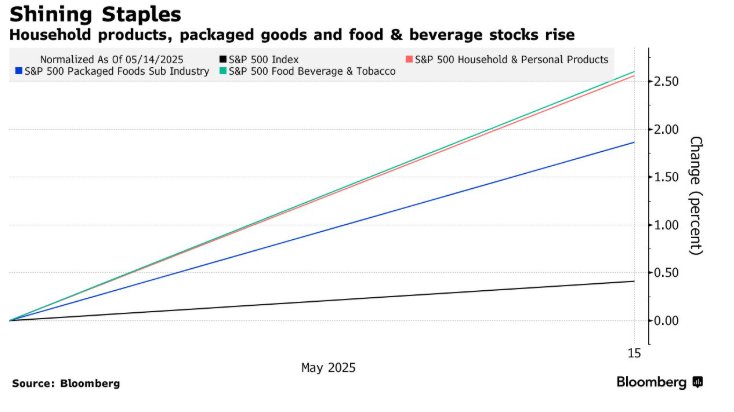
Market Performance - The S&P 500 index rose by 0.4% on Thursday, marking four consecutive days of gains, driven by strong performance in value stocks, particularly high-dividend stocks [1][2] - The Nasdaq 100 index only slightly increased by 0.1%, primarily due to declines in major tech stocks, which had previously led the market recovery [1] Sector Performance - Utility, consumer staples, and real estate sectors, characterized by relatively low valuations and stable dividends, led the market gains, with American Water Works, Campbell Soup Company, and Invitation Homes Inc. seeing significant stock price increases [2] - The consumer staples sector surged nearly 3%, real estate rose by 1.8%, and utilities increased by 2.1%, while technology and communication services sectors experienced declines of 0.7% and 0.4%, respectively [9] Economic Indicators - Weak retail sales and producer price data in April reinforced expectations for at least two interest rate cuts by the Federal Reserve this year, leading to a decline in U.S. Treasury yields [5] - Despite solid sales and profit growth, Walmart reported a drop in operating profit and warned of upcoming price increases due to rising tariff costs, resulting in a 0.5% decline in its stock price [5] Corporate Developments - Foot Locker's stock surged by 86% following news of its acquisition by Dick's Sporting Goods for approximately $2.4 billion, marking the largest single-day increase since at least 1980 [10] - Cisco provided a strong quarterly earnings outlook, driven by robust demand for AI network systems infrastructure, leading to a nearly 5% increase in its stock price [13] Trade Relations - Recent trade discussions between the U.S. and China resulted in a significant reduction of tariffs, with the new rates for most goods dropping from 145% to 30% [8] - Despite the positive trade developments, the average tariff rate in the U.S. remains at its highest level since 1934, indicating ongoing trade tensions [8]

对冲基金内部人士:美元将暴跌,市场对美元的信心已经“不可逆转的动摇”
Hua Er Jie Jian Wen· 2025-05-14 04:30
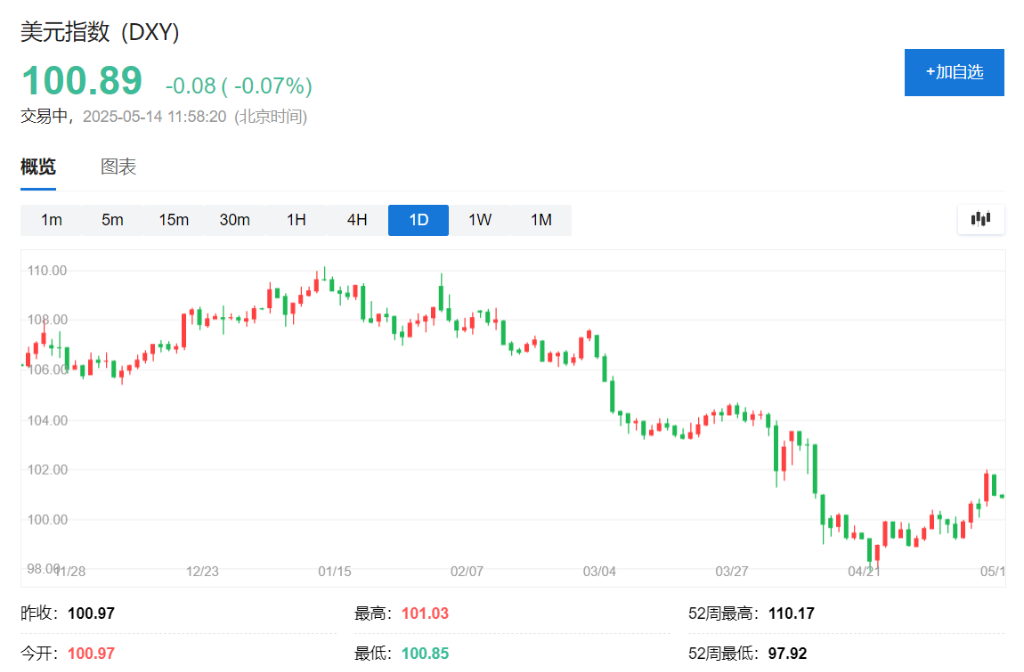
Core Viewpoint - The dollar bear market has just begun, with a large-scale sell-off expected in the coming months as institutional investors adjust their portfolios [1][5]. Group 1: Institutional Investor Behavior - Institutional investors are in the process of reallocating their portfolios, which may lead to significant dollar sell-offs [5]. - Many long-term investors are actively seeking opportunities to reduce their dollar exposure [5]. - The recent information suggests that the rebound of the dollar after the easing of U.S.-China trade tensions is likely a temporary phenomenon [5]. Group 2: Economic Context - The U.S. dollar has depreciated over 5% this year due to concerns over economic slowdown and rising inflation triggered by the trade war [2]. - Foreign holdings of U.S. securities have doubled over the past decade, reaching an unprecedented $32 trillion [6]. - A potential wave of dollar sell-offs could be triggered by foreign investors, particularly Asian exporters, as they liquidate accumulated dollar assets [6]. Group 3: Future Predictions - Jens Nordvig predicts that the dollar is facing a significant structural shift, suggesting a long-term decline [1][6]. - The combination of structural capital flows and the cyclical forces of the Federal Reserve is expected to lead to a substantial drop in the dollar's value [7]. - Investors are advised to prepare for potential increases in the euro and gold prices as the dollar weakens [8].
美元“小阳春”难挡漫长“熊途”! 对冲基金们警告关税政策将引爆美元抛售潮
Zhi Tong Cai Jing· 2025-05-14 02:59
Core Viewpoint - The recent rebound of the US dollar following the easing of US-China trade tensions is seen as temporary, with expectations of a prolonged "dollar bear market" emerging due to the chaotic economic policies of the Trump administration [1][4]. Group 1: Institutional Investor Sentiment - Many large hedge fund clients are indicating that they have not yet significantly reduced their dollar exposure, despite the ongoing trade tensions and market volatility [2]. - Institutional investors, who have invested trillions in US stocks and bonds over the past decade, are recalibrating their portfolios and reducing their dollar asset holdings, which is expected to exert significant selling pressure on the dollar [1][6]. Group 2: Economic Concerns and Market Reactions - The aggressive tariff policies initiated by the Trump administration have led to fears of "stagflation" or even a "deep recession" in the US economy, contributing to the decline in confidence in dollar assets [4][5]. - Following the recent trade truce between the US and China, the dollar index surged to a one-month high, but concerns about economic slowdown and rising inflation have led to significant sell-offs in US stocks and assets [5][6]. Group 3: Long-term Outlook for the Dollar - The total value of US securities held by foreign investors has doubled to a record $32 trillion over the past decade, and a large-scale sell-off of these assets could lead to a prolonged "super long-term bear market" for the dollar [6]. - Analysts predict a structural shift away from dollar assets, with expectations that the dollar's overvaluation will gradually correct as the advantages of US assets diminish [7]. Group 4: Predictions from Financial Institutions - Goldman Sachs and Deutsche Bank have both forecasted the end of the dollar bull market, citing factors such as reduced willingness to finance US deficits and a peak in US asset holdings [7]. - Deutsche Bank anticipates that the euro/dollar exchange rate will rise to 1.15 by the end of 2025 and further to 1.30, indicating a significant shift in global capital flows and economic policies in response to US trade policies [7].
资金流分析专家警告美元熊市到来,称:大型投资者在蓄势减持
news flash· 2025-05-13 18:19
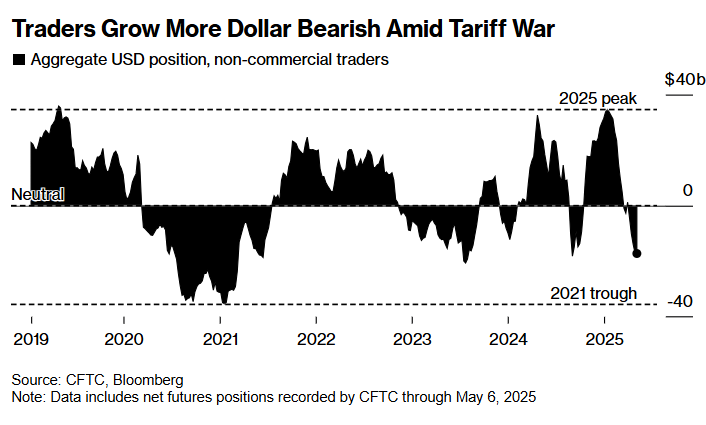
Core Viewpoint - The recent rebound of the US dollar following a de-escalation in trade tensions is perceived as temporary, with a long-term bear market for the dollar just beginning due to chaotic economic policies from the Trump administration that have disrupted global trade patterns [1]. Group 1 - Jens Nordvig, founder of Exante Data, maintains communication with major global investors, including hedge fund managers, corporate finance executives, pension funds, and sovereign wealth funds [1]. - The inconsistent and fragmented tariff policies have irreversibly undermined investor confidence in the US dollar [1].
金融危机预言家:美国最早在今年底衰退 美元跌势未结束
Jin Shi Shu Ju· 2025-05-09 07:20
来源:金十数据 尽管围绕贸易协议的乐观情绪日益增长,可能令投资者平静一些,但一位资深策略师认为,市场应为进 一步的痛苦做好准备。 前摩根士丹利首席全球策略师、Quantum Strategy负责人大卫·罗奇(David Roche)认为,未来五到十年 内,美元价值可能暴跌约15%-20%,并且美国经济可能在2025年底前遭遇更迫在眉睫的衰退。 罗奇是曾正确预测1997年和2008年金融危机的资深投资者。 罗奇的主要担忧是,特朗普的贸易冲突正在损害美国在全球金融市场的声誉,并导致投资者撤离美国资 产。 高盛集团(Goldman Sachs)估计,截至4月25日的两个月里,外国投资者卖出了价值约630亿美元的股 票。 罗奇暗示这一趋势可能持续,并补充说,考虑到外国投资者持有美国股市约18%的份额,630亿美 元"不算什么"。 美债也受到贸易冲突冲击,美债收益率在4月初市场波动高峰期螺旋式上升。这对美元价值不利,因为 随着对美国资产需求的减弱,美元会下跌。 罗奇基于实际有效汇率(REER,即根据两国贸易权重调整的货币价值)分析称,美元仍有下行空间。 国际清算银行数据显示,3月美国实际广义有效汇率指数约为112,较2 ...