能源

Search documents
投资打破国别,海外配置需求增加!国际资管巨头最新发声
Zheng Quan Shi Bao Wang· 2025-12-09 23:45
Core Insights - The article discusses the increasing demand for overseas investment among Chinese investors, highlighting the strategies employed by Swiss asset management giant Pictet Group to tap into this market [1][2]. Group 1: Investment Strategies - Pictet Group is leveraging mutual recognition funds, cross-border wealth management, QDII, and QDLP to expand its presence in the Chinese market [1][2]. - The mutual recognition fund launched by Pictet has seen significant inflows, with a reported net inflow of 9.57 million yuan in October, leading the market [2]. - The company emphasizes a gradual approach to market entry, focusing on providing diversified global asset allocation strategies to Chinese investors [2][3]. Group 2: Market Trends - The investment landscape has shifted from country-specific allocations to thematic or sector-based investments, with a focus on areas such as artificial intelligence, energy, healthcare, and supply chain reshoring due to trade tensions [4][5]. - Pictet Group believes that the traditional logic of country-based investment allocation is outdated, advocating for a focus on investment fields and sectors instead [4][5]. - The recent changes in mutual recognition fund regulations, allowing a more favorable asset allocation ratio, indicate a growing appetite for overseas investments among Chinese investors [3]. Group 3: Sector Focus - The most promising investment themes identified by Pictet include artificial intelligence, energy, healthcare, and sectors benefiting from global supply chain shifts [5][6]. - The firm is particularly optimistic about the Asian market, noting that advancements in technology and investment opportunities are increasingly attracting global capital [5][6]. - Concerns about potential bubbles in AI investments are mitigated by strong revenue growth in semiconductor companies, suggesting continued opportunities in this sector [6]. Group 4: Company Legacy and Management - Pictet Group, a private partnership with over 220 years of history, emphasizes long-term stability and prudent growth without pursuing aggressive short-term gains [7]. - The firm operates four main business lines: asset management, wealth management, alternative investments, and asset services, focusing on safeguarding and growing client wealth [7].
投资打破国别,海外配置需求增加!国际资管巨头最新发声
券商中国· 2025-12-09 23:29
Core Viewpoint - Swiss asset management giant Pictet Group, with over 220 years of history and an asset management scale of 736.8 billion Swiss francs, is expanding its presence in the Chinese market through mutual recognition funds, cross-border wealth management, QDII, and QDLP initiatives, capitalizing on the growing demand from mainland Chinese investors for overseas investments [1][4]. Group 1: Market Expansion and Strategies - Pictet's mutual recognition funds have seen strong inflows, with the Pictet Strategy Income Fund leading the market by attracting 957 million yuan in October [4]. - The firm has been operating in Asia for over 40 years and uses Hong Kong as a key hub to reach mainland China, participating in various cross-border investment programs [4][5]. - The recent regulatory changes allowing a 4:1 asset ratio for domestic and foreign funds indicate an increasing demand for overseas investments from mainland China, which aligns with Pictet's expertise in global fundraising [5]. Group 2: Investment Themes and Opportunities - Pictet emphasizes a shift from country-specific investment strategies to thematic or sector-based investments, identifying artificial intelligence, energy, healthcare, and supply chain reshoring as key investment themes [3][7]. - The firm believes that the development of AI is a global trend, with significant opportunities across various regions, including Asia, Europe, and North America [6][7]. - Pictet's investment strategy focuses on sectors rather than geographical allocations, as evidenced by the strong performance of technology stocks in both US and A-shares markets [6]. Group 3: Long-term Perspective and Market Confidence - Pictet maintains a long-term view on Asian markets, particularly China, and notes a growing confidence among global investors in the Chinese market, driven by technological advancements [7]. - The firm acknowledges the normal fluctuations in the Chinese A-share market over the years and sees a positive investment atmosphere emerging [7]. - Pictet's investment philosophy is rooted in long-term stability and prudent growth, avoiding aggressive strategies during market highs and seeking opportunities during downturns [9].


博盈特焊:截至2025年9月30日,公司的产品主要应用于垃圾焚烧发电行业,占比58.99%
Zheng Quan Ri Bao Zhi Sheng· 2025-12-09 14:13
Group 1 - The company operates in the industrial anti-corrosion and wear-resistant industry, with applications in various sectors including energy conservation, environmental protection, electricity, energy, chemicals, metallurgy, and papermaking [1] - As of September 30, 2025, the company's products are primarily used in the waste incineration power generation industry, accounting for 58.99% of its application [1] - Other significant sectors contributing to the company's revenue include chemicals, papermaking, coal-fired power generation, and gas turbines [1]
X @Yuyue
Yuyue· 2025-12-09 11:51
核心逻辑其实很简单,就是股市炒机器人题材的时候、股市炒 AI 板块的时候、股市炒能源的时候,币圈也要有能炒的标的能早期参与的路子目前看来似乎就是在 Fuse Energy 应用程序中连接家里现有的电动汽车充电器、太阳能电池板和电池,将能源使用转移到用电低谷时段。所以 @fuseenergy 解决了什么问题呢,解决了暂时币圈没有能源项目可以炒作的问题。别的什么数据就有点不那么重要了。比如据说已经为超过 20 万户家庭提供服务,创造了 3 亿美元的年度经常性收入……之类的。机构背景还可以,能上好点的交易所的话就有得玩,下课Fuse Energy (@fuseenergy):$ENERGY is the incentive layer of The Energy Network. Here’s how it works 👇1/ Register: Connect your home or existing EV chargers, solar panels, and batteries in the Fuse Energy app. No proprietary hardware required.2/ Shift ...
澳媒感叹:中国过去试图追赶西方,现在赶上了,但西方未来可能赶不上中国
Xin Lang Cai Jing· 2025-12-08 15:23
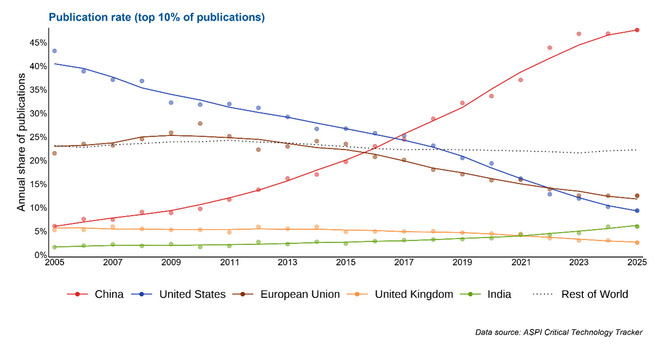
Core Viewpoint - China has achieved a dominant position in defining modern technologies, surpassing other regions in various fields such as artificial intelligence, defense, aerospace, energy, and biotechnology [3][8]. Group 1: Technological Advancements - A report by the Australian Strategic Policy Institute indicates that China leads in 66 out of 74 key technologies, while the U.S. maintains an advantage in only 8 [1]. - In the AI sector, China leads in 7 out of 8 technologies; in advanced materials and manufacturing, it leads in all 13 technologies; in defense, aerospace, robotics, and transportation, it leads in all 7 technologies; in energy and environment, it leads in 9 out of 10 technologies; and in biotechnology, genetics, and vaccines, it leads in 5 out of 9 technologies [1]. Group 2: Recent Technological Achievements - Recent months have seen China showcase remarkable technological feats, including a bionic robot the size of a mosquito for battlefield reconnaissance and the completion of the world's highest bridge [2]. - The DeepSeek team released a new AI model, DeepSeekMath-V2, which has demonstrated advanced theorem-proving capabilities, marking a significant breakthrough in deep reasoning [2]. Group 3: Investment and Policy - China's technological achievements are closely linked to substantial investments in strategic emerging industries, amounting to 8.6 trillion yuan since the start of the 14th Five-Year Plan [6]. - Analysts highlight the difference in national approaches, with China being characterized as an "engineering state" focused on practical solutions, while the U.S. is seen as a "lawyerly society" that often resorts to legal measures [6]. Group 4: Comparison with Other Countries - Australia's recent AI strategy, which includes a budget of 30 million AUD (approximately 140 million yuan) for AI safety research, is criticized as being less robust compared to China's comprehensive industrial policies [7]. - The speed of China's technological acceleration is noted as unprecedented compared to other regions, with implications that the West may struggle to catch up [8].
马斯克最新谈话:能源才是真正的货币
Sou Hu Cai Jing· 2025-12-05 14:46
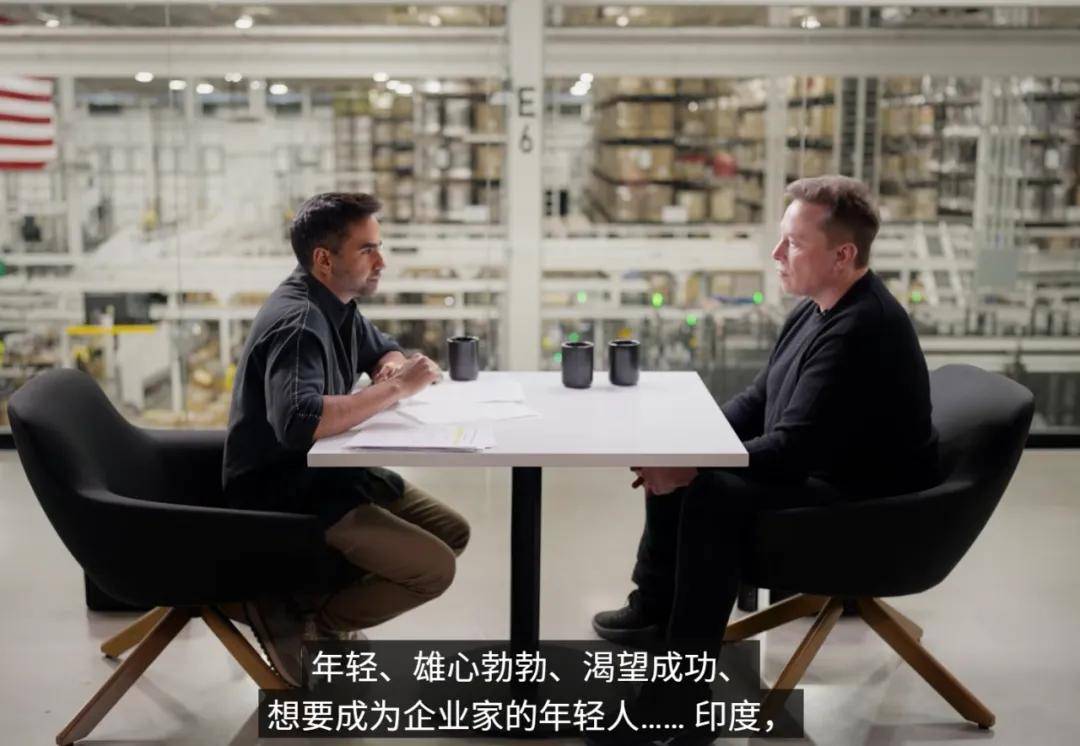
Group 1 - Musk discussed the potential of AI and robotics to significantly reduce labor costs, potentially bringing them close to zero as they create a closed-loop system for manufacturing and energy [3][4][8] - He believes that the traditional currency system will lose its significance as labor becomes nearly infinite, with energy becoming the primary value carrier [4][5][6] - Musk predicts that AI and robotics could help alleviate the massive debt problem in the U.S. and may lead to deflation, as the speed of goods and services production will outpace the growth of money supply within three years [2][9][10] Group 2 - Musk expressed that higher education may not be necessary for skills in a "post-work era," although he does not oppose attending university for social reasons [13][14][16] - He emphasized the importance of pursuing truth, beauty, and curiosity as frameworks for regulating AI [18][19] - When asked about investment opportunities, Musk mentioned Google and Nvidia as potential targets due to their strong AI capabilities and innovative business ventures [23][25] Group 3 - Musk shared insights from his experience with managing DOGE in the U.S. government, highlighting a tool that could save the government $100-200 billion by improving payment auditing [27][29] - He encouraged a focus on creating genuinely useful products and services, suggesting that money will follow naturally from value creation rather than being the primary goal [30][31][36] - Musk advised entrepreneurs to accept the possibility of failure while concentrating on producing value that exceeds the investment [33][36]
马斯克最新谈话:能源才是真正的货币
首席商业评论· 2025-12-05 14:26
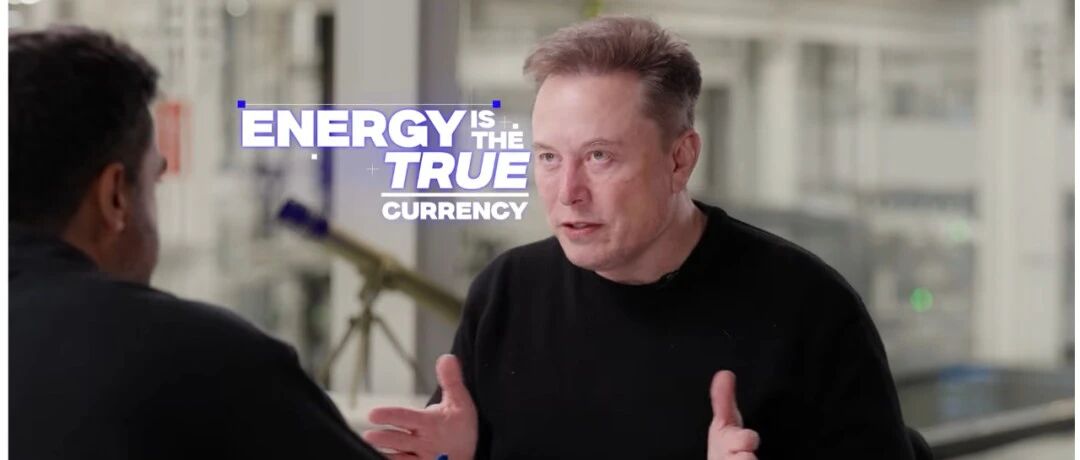
Group 1 - Musk believes that AI and robots will significantly reduce labor costs to near zero by creating a closed-loop system of manufacturing and energy [3][4][5] - He argues that when labor becomes nearly infinite, the traditional monetary system will lose its significance, and energy will become the primary value carrier [4][6] - Musk predicts that AI and robots could help alleviate the massive debt problem in the U.S. by creating deflation as the speed of goods and services production surpasses the growth of the money supply [8][9][10] Group 2 - Musk is a strong advocate for having children and suggests that social reasons justify attending college, although he believes skills learned may not be useful in a "post-work era" [13][14][16] - He outlines three value frameworks for regulating AI: truth, beauty, and curiosity, emphasizing the importance of pursuing truth [18][19] - When asked about investment opportunities, Musk mentions Google and Nvidia as potential targets due to their strong AI capabilities and innovative business ventures [20][22] Group 3 - Musk discusses his experience with managing DOGE in the U.S. government, highlighting a tool he proposed to improve payment tracking and save the government $100-200 billion [24][26] - He encourages focusing on creating genuinely useful products and services, suggesting that money will follow naturally rather than being the primary pursuit [28][31] - Musk emphasizes the importance of being a value creator and accepting the possibility of failure in entrepreneurship while focusing on value output exceeding input [29][31]
美媒:加拿大总理在G20峰会期间告诉记者,即使没有美国世界也可以运转
Huan Qiu Wang· 2025-11-24 01:41
在记者会上,卡尼详细阐述了加拿大加强与中国、南非、印度等国关系方面的努力。他表示。"我们将拓展贸易,推动与印太地区及欧洲在人工智 能、能源等领域的合作投资。" 报道称,卡尼竞选总统期间曾多次就特朗普对加拿大加征关税以及特朗普将加拿大描述为美国的一个州表示强烈不满。他执政后致力于降低加拿 大经济对美国的依赖。对于美加贸易谈判,卡尼23日表示,加方不会让特朗普主导其议程。"关键时刻我会再次与他沟通,但目前没有迫切需要与 美国总统讨论的议题。当美国希望重启贸易谈判时,我们随时准备对话。" G20领导人第二十次峰会22日在南非约翰内斯堡开幕。南非国际关系与合作部长罗纳德·拉莫拉在当天下午召开的记者发布会上表示,与会各方已 就会议核心议程达成共识,并通过《二十国集团领导人约翰内斯堡峰会宣言》。 【环球网报道】"卡尼说即使没有美国世界也可以运转",据彭博社报道,加拿大总理马克·卡尼当地时间11月23日表示,即使没有美国参与,国际 社会仍可在诸多议题上取得进展。他表示,尽管特朗普政府抵制了本次二十国集团(G20)峰会,但此次会议达成的共识仍具分量。 这是G20峰会首次于开幕当日通过联合宣言。会议前夕,美国驻南非大使馆照会南 ...

汽车企业的终局
汽车商业评论· 2025-11-18 23:08
Core Viewpoint - The article discusses the transformative changes in the Chinese automotive industry post-2020, highlighting the rise of new energy vehicles and the entry of tech companies into the automotive space, which poses significant challenges to traditional automakers [4][5]. Group 1: Industry Transformation - The penetration rate of new energy smart connected vehicles is rapidly increasing, while the traditional fuel vehicle market is shrinking [4]. - New entrants like NIO, Xpeng, and Li Auto, along with tech giants such as Huawei and Xiaomi, are reshaping the competitive landscape with an "ecosystem + technology" approach [5]. - GAC Group is initiating comprehensive reforms starting from the end of 2024, focusing on an integrated strategy called "Panyu Action" to address the challenges of transformation [6]. Group 2: GAC Group's Strategic Moves - GAC Group's product head, Zhang Xiong, emphasizes the need for automotive companies to understand their ultimate purpose in the industry [7]. - GAC has re-established and deepened its partnership with Huawei to create a new high-end smart electric vehicle brand called "Qijing," which will focus on the market above 300,000 yuan [10]. - The new collaboration with Huawei adopts an "embedded cooperation" model, where GAC handles manufacturing and service, while Huawei provides comprehensive smart solutions [10]. Group 3: Product Development and User-Centric Approach - GAC is reforming its product development process to be more user-centric, moving away from engineer-led definitions to a model that closely aligns with user needs [15]. - The company is actively engaging with users to gather feedback and improve products, demonstrating a commitment to listening to consumer voices [15]. - GAC is also repositioning its product lines to better meet the diverse and personalized demands of consumers [15]. Group 4: Future of Automotive Technology - The article discusses the critical role of battery technology in the automotive industry, with LFP batteries currently dominating the market due to their cost advantages [19]. - GAC is investing heavily in solid-state battery technology, which is seen as the next breakthrough in power batteries, although it faces challenges in industrialization [21]. - The integration of AI and smart manufacturing is highlighted as essential for the future of automotive companies, with GAC focusing on becoming a "technology-driven automotive group" [18]. Group 5: Autonomous Driving and AI Integration - GAC is making significant strides in autonomous driving, with plans to commercialize L3 and L4 level technologies, aiming for a large-scale rollout by 2026-2027 [27]. - The company is also working on integrating large models into vehicle systems to enhance user experience and operational efficiency [26]. - The future of automotive mobility is expected to shift towards more intelligent and shared transportation solutions, fundamentally changing traditional business models [28].


国泰海通|“启航新征程”2026年度策略会观点集锦(上)——总量、周期
国泰海通证券研究· 2025-11-04 12:09
Macro Overview - The core viewpoint is that China's economy has significant growth potential in the medium to long term, with a stable macroeconomic total in 2025 but noticeable structural differentiation, requiring policy solutions for weak domestic demand in 2026 [2] - Price stability is crucial for growth, as price indicators are central to understanding changes in domestic demand [2] Investment Strategy - The "transformation bull market" in China is expected to continue, with the stock market entering a significant growth cycle starting in 2025, driven by capital market reforms and economic structural transformation [7] - The Shanghai Composite Index reaching 4000 points again is a significant milestone, with further upward potential anticipated [8] - The underlying logic of the Chinese stock market is shifting, with three core factors that previously led to valuation discounts now being dismantled: improved confidence in handling US-China risks, a return to economic construction focus, and the end of the renminbi asset contraction cycle [8][9] Sector Analysis - Urbanization as a growth driver is fading, with reform and transformation becoming the primary focus [9] - The three main drivers of the "transformation bull market" include the decline of risk-free returns, capital market reforms enhancing market investability, and increased certainty in China's transformation development [9] - Investment opportunities are identified in technology growth sectors, manufacturing expansion, cyclical consumption, and financial stocks, with a focus on quality strategies over barbell strategies [10] Hong Kong Market Strategy - The Hong Kong stock market is positioned for upward potential, with a significant inflow of capital expected, particularly from foreign investors [13][14] - The technology sector is highlighted as a key focus for 2026, with opportunities in innovative drugs and brokerage firms [15] Fund Evaluation - The public fund industry is shifting towards a focus on equity, benchmarks, and long-term performance, with a growing emphasis on active equity funds and passive index funds [30][31] - The sales environment for public funds is evolving towards a model that prioritizes long-term client interests and diversified asset allocation [32] Fixed Income Strategy - The fixed income market is expected to experience a shift in macroeconomic anchors, with a focus on multi-asset investment opportunities in a low-interest-rate environment [35][36] Real Estate Outlook - The real estate market is anticipated to undergo changes, with a focus on marginal improvements and long-term growth potential [39][40] Transportation Sector - The aviation industry is expected to enter a "super cycle," driven by recovering demand and a favorable pricing environment [52][53] - The shipping industry is also poised for growth, with increasing demand for oil and dry bulk shipping [56][57] Coal Industry - The coal sector is expected to enter a new upward cycle, driven by recovering demand and supply constraints [74][75] Steel Industry - The steel industry is projected to stabilize, with demand recovering and supply constraints expected to support profitability [80][81]