
量化紧缩政策

Search documents
美联储10月降息稳了?摩根大通:鲍威尔已做出有力暗示
Sou Hu Cai Jing· 2025-10-15 01:10
Core Viewpoint - Federal Reserve Chairman Jerome Powell's recent speech indicates a strong possibility of a rate cut in October, highlighting significant downward risks in the U.S. labor market and suggesting a potential end to the quantitative tightening policy [1][2]. Group 1: Powell's Speech Insights - Powell emphasized that the U.S. labor market shows considerable weakness, with both supply and demand for labor declining significantly [2]. - He warned that delaying action could increase the risks associated with loosening monetary policy [2]. - Powell hinted at the potential cessation of the quantitative tightening policy, as initial signs of tightening in financial markets have emerged [2]. Group 2: Market Expectations - JPMorgan's report stated that Powell's comments have solidified market expectations for a rate cut at the upcoming Federal Reserve meeting on October 28-29 [3]. - The probability of a 25 basis point rate cut in October has reached 97.3%, according to the CME FedWatch Tool [3]. - Peter Cardillo from Spartan Capital Securities noted that while Powell acknowledges a robust economic foundation, he also recognizes existing issues, preparing the market for a series of rate cuts without implying they are guaranteed [3].

事关降息、缩表!鲍威尔最新发声;加密货币市值蒸发1500亿美元;刘强东放大招:卖“国民好车”!丨每经早参
Mei Ri Jing Ji Xin Wen· 2025-10-14 22:25
5 新修订的《中华人民共和国反不正当竞争法》 10月15日将正式施行 2025年10月15日 星期三 1 中国9月CPI、PPI数据将公布 2 欧元区8月工业产出数据公布 (3)美国10月纽约联储制造业指数公布 4 第138届广交会将于10月15日开幕 1 李强主持召开经济形势专家和企业家座谈会 中共中央政治局常委、国务院总理李强10月14日下午主持召开经济形势专家和企业家座谈会,听取对当前经济形势和下一步经济工作的意见建议。李强强 调,要加力提效实施逆周期调节,用足用好政策资源,以改革办法打通堵点卡点。要持续用力扩大内需、做强国内大循环,不断形成扩内需的新增长点。要 多措并举营造一流产业生态,综合治理行业无序、非理性竞争,着力构建创新生态圈。李强希望广大企业家持续开拓创新,为我国高质量发展多作贡献。希 望专家学者发挥专业优势,为做好经济工作和推动"十五五"发展积极建言献策。(央视新闻) 2 隔夜市场 美股三大指数收盘涨跌不一,道指涨0.44%,纳指跌0.76%,标普500指数跌0.16%,大型科技股多数下跌,英伟达跌超4%,博通跌超3%,特斯拉、亚马逊 跌超1%;半导体、加密储备概念股跌幅居前,英特尔跌超4 ...


鲍威尔:缩表或在未来几个月结束
Sou Hu Cai Jing· 2025-10-14 21:25
Core Viewpoint - The Federal Reserve, led by Chairman Powell, may soon conclude its long-standing efforts to reduce its balance sheet, known as quantitative tightening, to ensure sufficient liquidity in the financial system [1] Group 1: Federal Reserve's Actions - Powell indicated that the Fed is closely monitoring various indicators to determine if the goal of maintaining liquidity has been achieved [1] - Signs of tightening liquidity conditions have begun to emerge, including a general tightening of repo rates and noticeable but temporary liquidity pressures on specific dates [1] - The experience since 2020 suggests that the Fed can use its balance sheet more flexibly in the future [1]
IC外汇平台:流动性拐点将至?从联邦基金利率观察美联储的下一步
Sou Hu Cai Jing· 2025-09-24 09:21
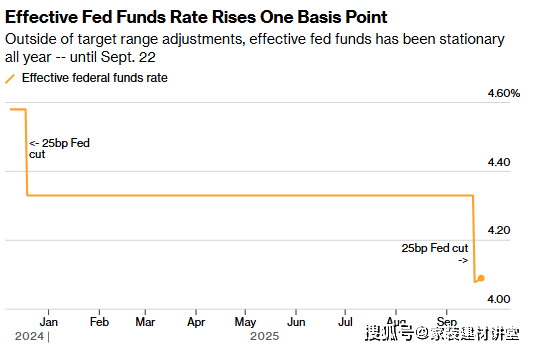
Group 1 - The effective federal funds rate has slightly increased to 4.09%, indicating a potential shift in the liquidity environment as it remains within the Federal Reserve's target range of 4% to 4.25% [1][4] - There is a notable consumption of excess reserves in the banking system, particularly with foreign financial institutions withdrawing funds, which suggests a diminishing market buffer and increased volatility in funding prices [1][4] - The recent rise in the effective rate is interpreted as an early signal of "stress testing," reflecting a higher sensitivity in the short-term market and necessitating attention from the Federal Reserve [4][5] Group 2 - The participation landscape in the federal funds market has shifted, with commercial banks opting to deposit funds directly with the Federal Reserve, leading to a concentration of trading among Federal Home Loan Banks and some foreign financial institutions [4] - Data indicates a continuous decrease in commercial banks' deposits at the Federal Reserve, alongside a significant decline in liquidity for foreign banks, highlighting a gradual reduction in marginal liquidity [4] - The demand for reverse repurchase agreements, which serve as a reservoir for excess funds, has fallen to a four-year low, further emphasizing the diminishing marginal liquidity [4]
预警信号闪现!美国联邦基金有效利率上行 市场流动性趋紧
智通财经网· 2025-09-24 03:35
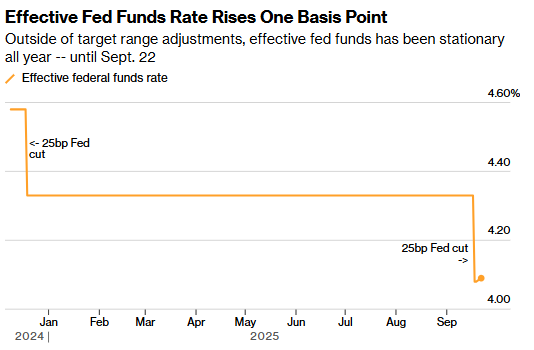
Core Insights - The effective federal funds rate has increased slightly to 4.09%, indicating potential tightening in the financial environment [1] - This rise in the rate has led to sell-offs in the futures market, suggesting a decrease in liquidity due to faster-than-expected reduction in excess reserves [1][2] - Analysts suggest that the current rate level is not alarming for the Federal Reserve, but highlights the need for close monitoring of short-term borrowing costs [3] Group 1 - The effective federal funds rate rose by 1 basis point from 4.08% to 4.09%, remaining within the Federal Open Market Committee's target range of 4% to 4.25% [1] - The increase in the rate is attributed to a faster reduction in excess reserves, particularly from foreign institutions, leading to liquidity concerns [1][2] - The trading volume for September federal funds futures dropped significantly, with nearly 300,000 contracts traded on the day of the rate increase [1] Group 2 - Analysts from various firms, including Wrightson ICAP LLC and Citigroup, had anticipated this rise, indicating early signs of pressure on the front end of the interest rate curve [1][2] - The current market dynamics show a decrease in the trading scale of the federal funds market, with banks holding fewer reserves at the Federal Reserve [2] - The demand for the Federal Reserve's overnight reverse repurchase mechanism has fallen to a four-year low, indicating reduced liquidity in the market [2]
美联储降息引发市场动荡,XBIT Wallet为数字资产钱包保驾护航创新交易新层面
Sou Hu Cai Jing· 2025-09-18 06:32
Group 1: Federal Reserve Impact on Markets - The Federal Reserve announced a 25 basis point cut in the federal funds rate to 4%-4.25% and hinted at an additional 50 basis points cut by year-end, which was expected to invigorate the market [1] - Despite the rate cut, the cryptocurrency market experienced a 1% decline, with total market capitalization dropping to approximately $4.1 trillion and Bitcoin falling to $114,940 [1] - Factors contributing to the cryptocurrency market's downturn include profit-taking by investors, ongoing quantitative tightening leading to liquidity issues, and weakened technical momentum in major cryptocurrencies [1] Group 2: Stock Market Performance - In contrast to the cryptocurrency market, the U.S. stock market, particularly small-cap stocks, saw a significant rise, with the Russell 2000 index increasing by 2.1% to 2453.36 points, marking a new closing high since November 2021 [3] - The rise in small-cap stocks is attributed to heightened risk appetite among investors and expectations of multiple rate cuts by the Federal Reserve this year, indicating growing confidence in economic recovery [3] Group 3: Digital Asset Wallets - Digital asset wallets are increasingly important for cryptocurrency investors to securely store and manage their assets, focusing on the management of private and public keys [4] - Private keys, essential for accessing digital assets, are complex and difficult to remember, leading to the widespread use of mnemonic phrases as readable backups [5] - XBIT Wallet stands out as a decentralized web3 wallet, offering multi-chain asset management, one-click exchange features, and seamless access to DeFi, NFTs, and blockchain games [7] Group 4: Security Measures in Digital Asset Management - Security remains a top priority for digital asset wallets, with XBIT Wallet emphasizing user control over private keys and local data encryption to mitigate risks associated with centralized platforms [8] - Users are advised to implement various security measures, such as using hardware wallets for large assets and avoiding long-term storage of private keys in browsers [8] - Regular system security checks and the use of trusted security software are recommended to prevent malware attacks [8] Group 5: Market Developments and Opportunities - Thumzup Media Corporation (TZUP) announced its first public market acquisition of Dogecoin at an average price of $0.2665, purchasing $2 million worth of 7.5 million Dogecoins [12] - The company plans to deploy 3,500 Dogecoin mining devices by year-end, reflecting traditional enterprises' interest in the cryptocurrency sector and the potential of digital assets [12] - In this evolving market environment, investors are encouraged to utilize professional and secure digital asset wallets like XBIT Wallet for effective asset management and protection against market volatility [12]

新周期来了吗?
Sou Hu Cai Jing· 2025-08-06 02:56
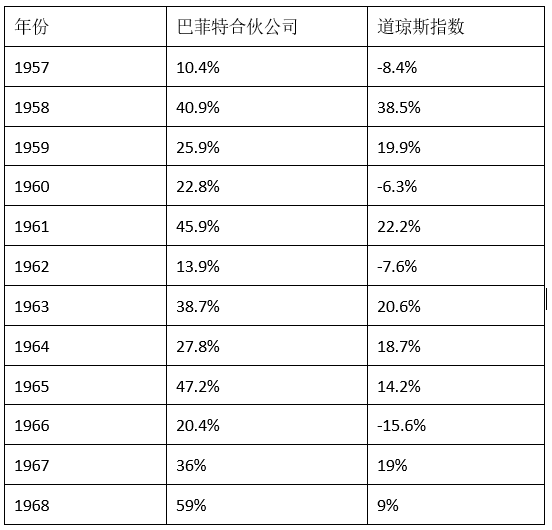
Core Insights - Buffett's early investment returns significantly outperformed the Dow Jones index from 1957 to 1968, showcasing his exceptional investment acumen during a "super cycle" in the stock market [1][2] - The "super cycle" periods are characterized by substantial wealth creation, with the most notable returns concentrated in these phases [2][4] Super Cycle Analysis - The first super cycle (1949-1968) was marked by explosive growth post-World War II, driven by the Marshall Plan and a baby boom that boosted demand [4] - The second super cycle (1982-2000) was fueled by the resolution of inflation issues, leading to a strong economic recovery and significant stock market returns, with the Dow Jones Industrial Average achieving an average annual real return of 15% [4] - The third super cycle (2009-2020) followed the global financial crisis, characterized by quantitative easing and zero interest rate policies, resulting in one of the longest bull markets in history [4] Characteristics of Super Cycles - Super cycles are driven by low or declining funding costs, initial low yields, strong economic growth, and regulatory reforms that lower market risk premiums [5][6] - The current economic environment is shifting towards a "post-modern cycle," influenced by geopolitical changes and new investment paradigms [9][10] Current Economic Cycle - The post-modern cycle is characterized by rising funding costs, slowing economic growth, a shift from globalization to regionalization, and increasing labor and commodity costs [11][12] - Geopolitical tensions and a move towards a multipolar world are expected to increase uncertainty and risk premiums in the market [13] Investment Opportunities and Challenges - The evolving economic landscape presents new investment opportunities and challenges, particularly in sectors related to carbon reduction, regional development, and artificial intelligence [9][10][14]
好书推荐 | 下一个超级周期什么时候来?
点拾投资· 2025-07-08 07:04
Core Viewpoint - The article discusses the concept of "super cycles" in the stock market, highlighting historical periods of significant economic growth and the factors that drive these cycles, as well as the current transition to a "post-modern cycle" characterized by new challenges and opportunities. Group 1: Historical Super Cycles - Buffett's early investment success was significantly higher than the Dow Jones index, particularly from 1957 to 1968, during a post-war bull market [1][2] - The period from 1982 to 2000 saw a modern cycle driven by the resolution of inflation, with the Dow Jones Industrial Average achieving an average annual real return of 15% [8][9] - The post-financial crisis cycle from 2009 to 2020 marked the longest bull market, influenced by quantitative easing and low interest rates, despite a significant drop in the S&P 500 index [10][11] Group 2: Characteristics of Super Cycles - Super cycles are characterized by three main factors: initial low valuations, declining or low funding costs, and low initial yields [11][12] - Strong economic growth and regulatory reforms contribute to reducing the risk premium in the stock market, enhancing market returns [12] Group 3: "Fat and Flat" Periods - The period from 1968 to 1982 experienced high inflation and low returns, with the S&P 500's nominal total return at -5% [15][16] - The 2000 to 2009 period was marked by a tech bubble burst and subsequent bear market, leading to low overall investor returns despite significant volatility [17][18] Group 4: Current and Future Cycles - The current "post-modern cycle" reflects characteristics of both classical and modern cycles, with rising costs of capital and a shift towards regionalization driven by geopolitical tensions [20][23] - Factors driving the post-modern cycle include rising funding costs, slowing economic growth, and increased government spending and debt [23][25][26] - The changing demographic landscape and geopolitical tensions are expected to create new investment opportunities and risks [26][27]

英国央行行长贝利:不认为量化紧缩政策正在导致收益率曲线变陡。
news flash· 2025-07-01 07:14
Core Viewpoint - The Governor of the Bank of England, Andrew Bailey, does not believe that the quantitative tightening policy is causing the yield curve to steepen [1] Group 1 - The Bank of England's stance on quantitative tightening suggests a focus on maintaining stability in the financial markets [1] - The current monetary policy environment is being closely monitored to assess its impact on interest rates and economic growth [1]
日本央行利率决议符合预期 市场焦点转向植田和男讲话
智通财经网· 2025-06-17 06:30
Core Viewpoint - The Bank of Japan maintains its target interest rate at 0.5%, aligning with market expectations, and will slow down its bond purchase reduction starting next fiscal year, which is seen as a move to reassure investors [1] Group 1: Interest Rate and Bond Purchase Strategy - The decision to keep the interest rate unchanged marks the third consecutive meeting without changes, indicating a cautious approach by the Bank of Japan [1] - Analysts express concern that maintaining the bond purchase reduction at 4 trillion yen could lead to rising yields on Japanese government bonds, particularly long-term bonds [1] - The Bank of Japan's plan to reduce bond purchases to 2 trillion yen quarterly starting April 2026 was anticipated by market participants, suggesting a careful strategy to manage the bond market [1][1] Group 2: Market Reactions and Analyst Insights - The announcement has provided a sense of reassurance to the stock market, despite a slightly delayed release and cautious tone [1] - Analysts are curious about the potential impact of geopolitical developments in the Middle East on Japan's economy and monetary policy [1] - The collaboration between the Japanese government and the Bank of Japan in managing the bond market is expected to mitigate risks of significant volatility in the yield curve due to supply-demand imbalances [1][1]