联邦基金期货

Search documents
里德尔跃居美联储主席最大热门 债市骤然掀起降息押注潮
Zhi Tong Cai Jing· 2026-01-27 23:56
Core Viewpoint - The increasing speculation around Rick Rieder, Chief Investment Officer of BlackRock, potentially becoming the next Federal Reserve Chair is leading bond futures traders to bet on a shift towards dovish monetary policy [1][4]. Group 1: Market Reactions - Bond futures market activity has accelerated significantly, with traders showing a strong demand for new positions that would benefit from a more aggressive rate cut path than currently priced [1]. - The one-month federal funds futures spread for July-August and the six-month SOFR futures spread for December recorded historical trading volumes [1]. - The interest rate swap market indicates that the Federal Reserve is expected to implement less than two 25 basis point rate cuts by 2026, while the SOFR options market shows a surge in bets for multiple rate cuts, targeting a federal funds rate of 1.5% by the end of 2026, significantly lower than the current swap market pricing of approximately 3.2% [4]. Group 2: Rieder's Policy Stance - Rieder is perceived to favor a market-centric policy approach, advocating for more aggressive rate cuts compared to the Fed's previous preference for smaller cuts [4]. - Economists from Evercore ISI suggest that Rieder's dovish stance could lead to three rate cuts by the Fed this year, based on his views on productivity, inflation dynamics, and labor market pressures [4]. - Predictions indicate that Rieder's dovish position is more pronounced than that of other candidates, with his odds of becoming Fed Chair rising to about 47% following a positive response to his recent interview with Trump [5]. Group 3: Options Market Activity - In the SOFR options market, there has been a notable increase in risk exposure for contracts with a strike price of 96.5625, with significant trading activity in call options expiring in March and June [9]. - The most concentrated open interest is observed in call options at the strike price of 96.50, reflecting strong demand through various option strategies [10]. - The risk premium for long-term U.S. Treasury options has shifted significantly towards put options, particularly as the 30-year Treasury yield surged to a high of 4.945% [13].


直线拉升!刚刚,美联储,降息大消息
中国基金报· 2026-01-13 15:14
Group 1 - The latest U.S. Consumer Price Index (CPI) data shows a year-on-year increase of 2.7% in December, unchanged from November [2] - The core CPI, excluding volatile food and energy prices, also rose by 2.6% year-on-year, consistent with November's figures [3] - Economists had previously anticipated a 2.7% increase in CPI and a 2.8% rise in core CPI for December [4] Group 2 - The seasonally adjusted CPI increased by 0.3% month-on-month in December, aligning with economists' expectations, while the core CPI rose by 0.2%, below the expected 0.3% [4] - Significant price increases were noted in household expenditure-related items such as groceries, dining out, housing costs, transportation services, and healthcare, while gasoline and used vehicle prices declined [4] - The report marks the first comprehensive assessment of inflation trends in months, following a government shutdown that affected data collection [4] Group 3 - Following the data release, traders increased bets that the Federal Reserve may not wait until Chairman Powell's term ends in May to lower interest rates, with a 42% probability of a rate cut in April, up from 38% before the data [5] - The Federal Funds futures market anticipates two rate cuts this year, each by 25 basis points, with the first expected in June and another in the fourth quarter [6] Group 4 - U.S. stock indices initially surged before slightly retracting, while gold and silver prices continued to rise, with silver reaching over $88 per ounce, marking a year-to-date increase of over 23% [7][9] - Despite the CPI data, it is unlikely to alter the Federal Reserve's current wait-and-see approach, as officials may want more evidence of stable and declining inflation before proceeding with rate cuts [11]

Ultima Markets:降息押注狂飙!交易员涌入联邦基金期货,12 月美联储降息概率飙升至 80%
Sou Hu Cai Jing· 2025-11-27 08:23
Group 1 - The market is increasingly betting on a rate cut by the Federal Reserve in December, with the probability of a 25 basis point cut now at approximately 80%, up from 30% just days prior [1] - The recent employment data released for September showed mixed results, leading to a shift in interest rate expectations [3] - New York Fed President John Williams indicated that there is still room for further rate cuts due to a softening labor market, which intensified the rate cut expectations [3] Group 2 - There is a significant divide within the Federal Reserve, but the dovish sentiment appears to outweigh the hawkish views, as indicated by various officials supporting a rate cut [4] - The net long positions in the bond market have reached their highest level in nearly 15 years, reflecting the dovish sentiment in the futures market [4] - The yield on the 10-year U.S. Treasury bond fell below 4% for the first time in a month, signaling a response to the dovish outlook [4]
市场预期逆转:美联储12月降息概率飙升至80%,债市多头押注创纪录
智通财经网· 2025-11-25 23:55
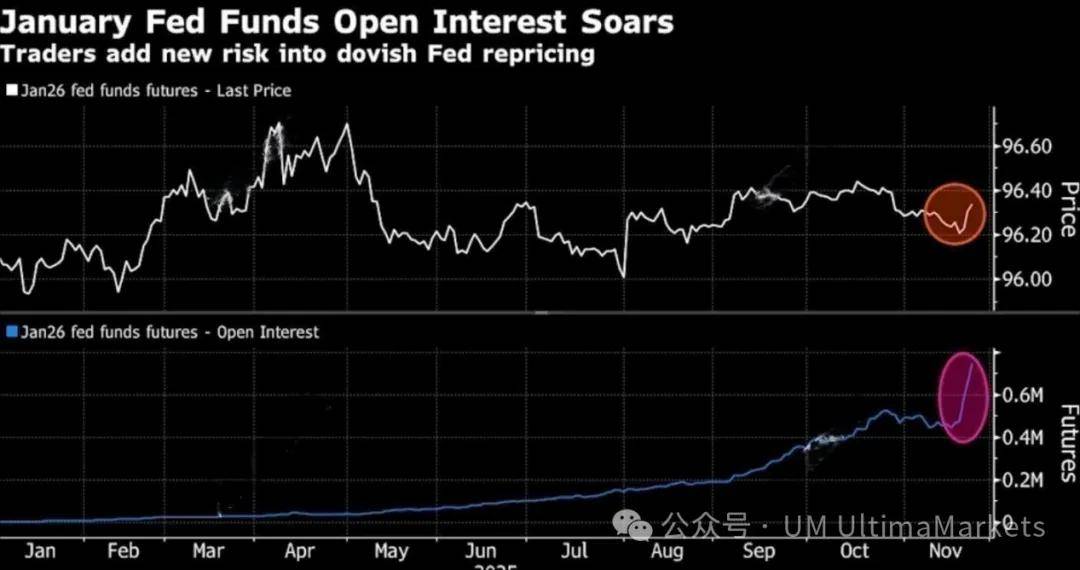
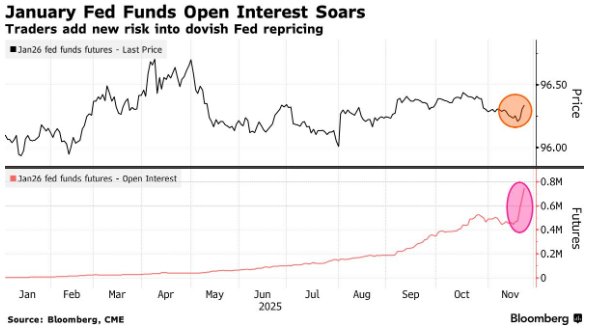
Core Viewpoint - Investors are significantly betting on the Federal Reserve's policymakers to cut interest rates again in the upcoming meeting next month, following a week where doubts about rate cuts have dissipated, laying the groundwork for a rise in U.S. Treasury bonds [1][3]. Market Sentiment - The shift in interest rate expectations began with the mixed September non-farm payroll data released last week, followed by comments from New York Fed President John Williams indicating potential room for rate cuts due to a weak labor market [3]. - The futures market reflects a dovish sentiment, with a recent survey from JPMorgan showing net long positions at their highest level in about 15 years [3]. Treasury Yield Movement - On Tuesday, the 10-year U.S. Treasury yield fell below 4% for the first time in a month, influenced by speculation regarding Kevin Hassett as a potential future Fed chair, which has heightened expectations for rate cuts over the next year [4]. Positioning in Futures Market - Since last Thursday, the total number of new positions in January federal funds futures has approached 275,000 contracts, indicating a significant increase in market positioning for a rate cut [5]. - The price of the January contract rose from a low of 96.18 to a high of 96.35, reflecting continued inflow of new long positions [5]. Divergence in Predictions - While most Wall Street strategists predict a rate cut in December, not all are as confident as traders. Morgan Stanley has removed its forecast for a rate cut, and JPMorgan leans towards maintaining rates next month, although the December decision remains close [6]. - Overall, the economic growth in the U.S. has been strong, but there are still downward risks in the labor market, and inflation remains above target levels [6]. Options Market Activity - In the SOFR options market, there has been a significant increase in open interest for contracts with a strike price of 96.25, primarily driven by a surge in bullish positions for December 2025 options [9][10]. - The premium for options used to hedge Treasury risks has remained near neutral levels, with a slight bias towards call options, indicating that traders are paying more to hedge against short- and medium-term contract price increases [13].
10-year yield holds near 4.1% range following Fed minutes
Youtube· 2025-11-19 19:45
Group 1 - The Federal Reserve appears to be divided in its conclusions despite having access to the same data, leading to confusion among analysts [1][2] - The term "likely not appropriate" was frequently used regarding a potential rate cut, indicating a cautious stance from the Fed [2] - Inflation has been persistent and largely unchanged over the past year, yet the Fed is currently focusing on it [2] Group 2 - There was a misconception in the media regarding a spike in interest rates, which did not occur as reported [3][4] - Fed fund futures indicate a decreasing probability of a rate cut, with a brief dip below 30% [3] - The 10-year yield has been fluctuating within a narrow range of 4.07% to 4.17% since the last rate cut in October, suggesting a period of stability [5]

美联储降息预期降温 美元指数静待非农考验
Jin Tou Wang· 2025-11-18 06:32
Group 1 - The US dollar index is stable around 99.50, with a slight decline of 0.06% as traders await delayed non-farm payroll data [1] - Federal Reserve officials express concerns about the labor market, with Vice Chairman Jefferson noting a "sluggish" state and hiring hesitance due to economic policy changes and AI [1][2] - The implied probability of a 25 basis point rate cut in December has decreased to 43%, down from 62% a week ago, indicating a significant cooling of rate cut expectations [1][2] Group 2 - Following the end of the longest government shutdown in US history, traders are looking for insights into Fed monetary policy, with key speeches expected from Fed officials [2] - Economists predict an increase of approximately 50,000 jobs in September, with the unemployment rate expected to remain at 4.3%; a weaker report could lead to selling pressure on the dollar [2] - Market expectations for a December rate cut have dropped significantly, with current probabilities likened to a coin toss, amid persistent inflation and a softening labor market [2][3] Group 3 - Technical analysis indicates that the dollar index faced resistance below 99.60 and support above 99.25, suggesting potential for upward movement if it stabilizes above 99.35 [4] - Short-term resistance levels for the dollar index are identified at 99.65-99.70, with important support levels at 99.15-99.20 [4]
流动性担忧加剧,交易员大举押注联邦基金利差
智通财经网· 2025-10-31 01:20
Core Insights - The market is increasingly concerned about liquidity, leading traders to record levels of activity in a specific segment of the U.S. interest rate futures market, betting on potential changes in overnight loan rate spreads if the Federal Reserve takes action to alleviate financing pressures [1][2] - The Chicago Mercantile Exchange Group reported that the trading volume of futures related to the Secured Overnight Financing Rate (SOFR) and the federal funds rate reached historical peaks, with over 400,000 contracts traded for the one-month SOFR-federal funds basis [1] - The current SOFR is 4.27%, while the effective federal funds rate is 4.12%, indicating a spread of 15 basis points [1] Group 1 - Recent market pressure signals have led some Wall Street strategists to believe that the Federal Reserve will take action to improve market liquidity, although no measures were announced by Chairman Jerome Powell [2] - The lack of direct action from the Federal Reserve regarding repo rates initially caused disappointment in the market, resulting in a new wave of activity in SOFR-federal funds basis trading, particularly for November contracts [2] - Traders are repositioning in anticipation of a potential policy shift from the Federal Reserve, while also aiming to mitigate risks amid ongoing financing pressures [2] Group 2 - The liquidity pressures are expected to persist into November, driven by the continued reduction of the Federal Reserve's balance sheet and the U.S. Treasury's issuance of more short-term debt, which will absorb significant cash from the market [2]
摩根大通 VS 花旗:华尔街掀 “融资暗战”,美国短期利率要涨至 2025?
Sou Hu Cai Jing· 2025-09-26 04:50
Core Viewpoint - The U.S. financing market is experiencing a "bull-bear divergence," with Wall Street strategists debating the potential for easing in the coming months, primarily driven by fluctuations in overnight borrowing costs [1] Group 1: Factors Driving Divergence - Multiple factors have contributed to the rise in U.S. short-term interest rates, creating the backdrop for the divergence. These include increased short-term bond issuance by the U.S. Treasury to rebuild cash reserves, which raises borrowing costs due to heightened demand for short-term funds [2] - The Federal Reserve's steady balance sheet reduction is tightening liquidity, further constraining the supply of funds [2] - The near-zero usage of the central bank's overnight lending facility indicates reduced reliance on the central bank, but also reflects uneven distribution of funds, potentially exposing some institutions to hidden gaps [2] Group 2: Contrasting Views from Major Banks - JPMorgan, led by Teresa Ho, advocates for easing, arguing that the market has overestimated the risks of rising financing costs, predicting a softening of overnight rates by the end of 2025. Their strategy involves buying December SOFR futures and selling equivalent federal funds futures, anticipating a narrowing of the current spread between SOFR (4.42%) and the 30-day federal funds rate (4.33%) [3] - Citigroup, under Jason Williams, takes a contrary stance, expecting financing costs to remain elevated or even rise by the end of 2025. Their strategy involves shorting December SOFR contracts relative to federal funds rates, predicting that SOFR will remain 4-5 basis points higher during favorable conditions [3][4] Group 3: Market Adjustments and Sentiments - Other institutions are also adjusting their positions, reflecting differing judgments. Barclays has shifted its stance, exiting a long position on SOFR relative to federal funds due to the normalization of rising financing costs [4] - Morgan Stanley remains optimistic, suggesting that liquidity pressures may ease by October, leading to a decline in financing costs, while American Bank adopts a flexible approach, closing short positions and recommending long positions on SOFR relative to federal funds for early 2026 [5] Group 4: Consensus on Liquidity Crisis - Despite significant divergence, there is a consensus among major banks that a liquidity crisis similar to the "cash crunch" of September 2019 is unlikely to recur. This is attributed to a more robust liquidity safety net, including the Federal Reserve's standing repo facility (SRF) and overall sufficient bank reserves [6][7] - The current banking system's buffer capacity is stronger than it was before the 2019 crisis, and improved policy communication has reduced market uncertainty, allowing the focus to shift to interest rate levels rather than potential crises [7]


降息交易(1):降息之后的资产定价机制
China Post Securities· 2025-09-25 07:17
Group 1 - The report highlights a strong expectation in the U.S. federal funds futures market for interest rate cuts, with traders anticipating a reduction of 85 basis points (bp) in the next 6 months and 125 bp in the next 12 months [3][15][16] - Following the Federal Reserve's recent 25 bp rate cut, market expectations for future policy paths remained unchanged, indicating that the cut was fully anticipated by the market [4][16] - The report suggests that the U.S. stock market is likely to benefit from the anticipated rate cuts, as historical trends show that such cuts can lead to upward movements in stock prices [4][23] Group 2 - In the context of the Chinese stock market, the report indicates that the Fed's rate cuts may provide a supportive backdrop for growth stocks, but the actual performance will depend on domestic policy triggers [4][59] - The report notes that the A-share market's structural growth opportunities are still present, driven by advancements in the AI industry, despite the lack of immediate policy stimulus [4][60] - The Hong Kong stock market is expected to be more sensitive to international liquidity, with historical patterns suggesting it may outperform the A-share market following rate cuts [4][59] Group 3 - The report discusses the gold market, indicating that after the initial rate cut, gold is likely to enter a more volatile phase, with its price movements increasingly influenced by geopolitical risks rather than interest rate expectations [5][41] - Historical data shows that gold prices have shifted from a strong negative correlation with interest rate expectations before the first rate cut to a more mixed pricing mechanism afterward [5][43] Group 4 - The report emphasizes that the dynamics of the copper and oil markets post-rate cut are complex, with price movements showing significant divergence and being influenced by demand expectations rather than solely by interest rate changes [5][62]
IC外汇平台:流动性拐点将至?从联邦基金利率观察美联储的下一步
Sou Hu Cai Jing· 2025-09-24 09:21
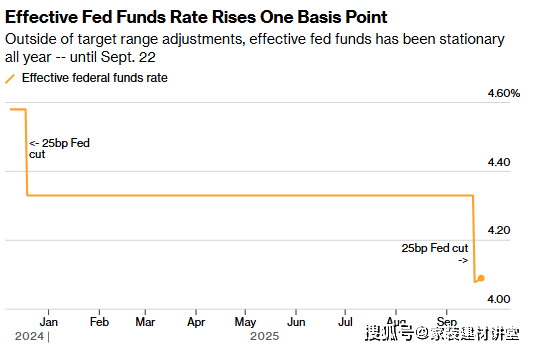
Group 1 - The effective federal funds rate has slightly increased to 4.09%, indicating a potential shift in the liquidity environment as it remains within the Federal Reserve's target range of 4% to 4.25% [1][4] - There is a notable consumption of excess reserves in the banking system, particularly with foreign financial institutions withdrawing funds, which suggests a diminishing market buffer and increased volatility in funding prices [1][4] - The recent rise in the effective rate is interpreted as an early signal of "stress testing," reflecting a higher sensitivity in the short-term market and necessitating attention from the Federal Reserve [4][5] Group 2 - The participation landscape in the federal funds market has shifted, with commercial banks opting to deposit funds directly with the Federal Reserve, leading to a concentration of trading among Federal Home Loan Banks and some foreign financial institutions [4] - Data indicates a continuous decrease in commercial banks' deposits at the Federal Reserve, alongside a significant decline in liquidity for foreign banks, highlighting a gradual reduction in marginal liquidity [4] - The demand for reverse repurchase agreements, which serve as a reservoir for excess funds, has fallen to a four-year low, further emphasizing the diminishing marginal liquidity [4]