AI向善

Search documents
给留守儿童的“AI信箱”,如何才能更“有爱”?
腾讯研究院· 2025-10-27 10:25
Core Viewpoint - The article emphasizes the importance of AI in providing emotional support and guidance for left-behind children and adolescents in rural areas, highlighting the need for innovative solutions to address their unique challenges [7][20][53]. Group 1: AI for Good Initiative - The "AI for Good" initiative aims to create a collaborative research platform that engages various stakeholders to explore how AI can positively impact vulnerable groups, particularly children [4][14]. - The first AI for Good corpus, focusing on elderly individuals, was launched in August 2024, gathering 8,047 Q&A pairs, and is now open for public organizations and non-profits [14]. - The second initiative, the AI for Good Assessment Board, focuses on evaluating AI's impact on marginalized groups, ensuring that AI provides professional and compassionate support [15][20]. Group 2: Focus on Left-Behind Children - The article presents alarming statistics from a report by the Chinese Academy of Sciences, indicating that 29.6% of rural students face mild to severe depression risks, with significant challenges in academic adaptation and psychological trauma [7]. - It discusses the emotional and developmental needs of left-behind children, emphasizing the necessity for emotional companionship and support rather than traditional educational approaches [8][20]. - The "AI mailbox" concept is introduced as a potential tool for addressing children's anxieties about academic performance and personal relationships, aiming to foster self-expression and self-acceptance [8][20]. Group 3: Expert Contributions - The program features a diverse lineup of experts, including child-friendly AI product designers, documentary filmmakers, and educators, who will share their insights and experiences related to the challenges faced by left-behind children [12][21]. - Notable contributors include He Siqian, who focuses on responsible AI design for children's welfare, and Jiang Nengjie, who has a background in documenting the lives of vulnerable groups [27][30]. - The initiative aims to create a supportive dialogue around the emotional needs of children, leveraging AI to build a nurturing environment for their growth [53].



华为2035趋势:AI智能体重构产业生态,开启“伙伴型”智能革命
Sou Hu Cai Jing· 2025-10-25 13:03
Core Insights - Huawei's report "Intelligent World 2035" predicts that by 2035, the number of global AI agents will exceed 900 billion, with over 90% of Chinese households adopting smart robots and an AI application rate of 85%, leading to a 60% increase in labor productivity [1] Group 1: AI Development Stages - The development of AI follows a three-stage path: perception, thinking, and action, with the perception stage focusing on computational intelligence, the thinking stage on reasoning and decision-making, and the action stage on autonomous decision-making capabilities [3] - The five-level capability ladder from L1 to L5 illustrates the evolution of AI, from basic chatbots to autonomous systems that can coordinate resources and achieve strategic goals [4] Group 2: Industrial Transformation - In the short term, AI agents significantly enhance operational efficiency, as demonstrated by a new consumer brand's AI handling 62% of user interactions, leading to increased conversion rates [5] - In the medium term, AI will deeply transform production methods, exemplified by a Ningbo clothing company reducing custom suit delivery time from 7 days to 24 hours using digital twin technology [5] - Long-term impacts include the reconstruction of product experiences through technologies like holographic interaction and digital financial avatars, with AI aiding in the prevention of over 80% of chronic diseases in healthcare [5] Group 3: Challenges and Future Outlook - The rapid advancement of AI brings ethical challenges, such as algorithmic bias affecting the hiring rates of female engineers and the misuse of AI for generating false information [6][7] - Huawei emphasizes the importance of "AI for all" and "AI for good," advocating for a human-machine collaborative governance framework to balance technological innovation with human oversight [7] - By 2025, AI is expected to evolve from its initial stages to become a core force reshaping sectors like healthcare, education, and energy, necessitating a deep integration of technological innovation and humanistic care for a transformative shift from an "AI big country" to an "AI strong country" [7]
「AI向善播播间」倒计时1天!关于「性」,那些跟爸妈张不开嘴的,能和AI聊吗?
腾讯研究院· 2025-10-20 09:33
Core Viewpoint - The article discusses the potential of AI in the field of education, particularly focusing on its role in addressing the needs of children and adolescents, including those with mental disabilities, and the importance of ensuring privacy and emotional support in these interactions [1][13][29]. Group 1: AI in Education - AI is being explored as a tool to provide emotional value and support to children, especially in sensitive topics such as sexual orientation and personal safety [1][13]. - The "AI for Children's Good" initiative aims to create a public corpus for AI training, focusing on vulnerable groups, with the first phase targeting the elderly and the second phase focusing on children in difficult situations [6][12]. Group 2: AI for Vulnerable Groups - The "AI for Children's Good" program emphasizes the need for AI to address the challenges faced by marginalized groups, including urban migrant children and low-income families [10][12]. - The initiative includes a live broadcast event featuring experts from various fields to discuss the current state and challenges of sex education for children and adolescents [13][32]. Group 3: Expert Contributions - The event will feature experts such as He Siqian, a designer focused on child-friendly AI products, who advocates for responsible and empathetic AI design [17][19]. - Zhang Yaohua, a practitioner in sex education, has successfully implemented programs in over 4,000 schools, benefiting more than 5 million young people [20][22]. - Zhang Zhen, a director at a community service center for individuals with mental disabilities, explores innovative applications of AI in addressing key issues such as mental health and sexual education for this demographic [25][27].

华为发布面向智能世界2035十大技术趋势
机器人圈· 2025-09-18 09:02
Core Insights - Huawei's "Intelligent World 2035" report outlines key technological trends and their impacts on various industries over the next decade, emphasizing the transformative potential of generative AI and the need for a forward-looking vision in technology [2][4]. Group 1: Key Technological Trends - Trend 1: AGI is expected to be the most transformative force in the next decade, but significant challenges must be overcome to achieve AGI breakthroughs [5]. - Trend 2: AI agents will evolve from execution tools to decision-making partners, driving industrial revolutions [5]. - Trend 3: Development models will change, with human-AI collaboration becoming mainstream, allowing humans to focus on design and innovation while AI handles coding tasks [5]. - Trend 4: Interaction methods will shift from graphical interfaces to natural language and multi-modal interactions, enhancing user experiences [5]. - Trend 5: Mobile apps will transition from standalone functions to AI-driven service nodes, providing users with seamless experiences [5]. - Trend 6: L4+ autonomous vehicles will become part of daily life, creating a "mobile third space" [5]. - Trend 7: By 2035, total computing power is projected to increase by 100,000 times, leading to disruptive innovations in computing architecture and paradigms [5]. - Trend 8: Data will become the "new fuel" for AI development, with storage needs expected to grow 500 times by 2025, accounting for over 70% of AI storage requirements [5]. - Trend 9: The number of connected entities will expand from 9 billion people to 900 billion intelligent agents, marking a shift from mobile internet to intelligent agent internet [5]. - Trend 10: Energy will be a critical factor for AI development, with renewable energy expected to surpass 50% of total generation by 2035 [5]. Group 2: Societal Impact and Governance - By 2035, AI is anticipated to help prevent over 80% of chronic diseases, shifting health management from reactive to proactive approaches [5]. - Over 90% of Chinese households are expected to have smart robots, indicating a shift towards immersive technological experiences in daily life [5]. - AI-driven autonomous decision-making organizations will reshape production paradigms, with AI application rates exceeding 85% and productivity improvements of 60% [5]. - The integration of "AI for all" and "AI for good" into governance frameworks is essential for humanity to maintain control over technology and build a human-centered intelligent world [6]. Group 3: Global Digitalization Index - Huawei has upgraded the Global Digital Index (GDI) to the Global Intelligence Index (GDII), which evaluates digital economic development through new production factors: data, ICT talent, and intelligent production tools [8]. - The GDII model includes key indicators such as data scale, application levels, network connectivity, computing power, and ICT skills, providing a comprehensive assessment for countries to navigate the digital economy [8]. - The report aims to offer insights for countries to develop precise industrial strategies and advance in the wave of digitalization [8].
亚洲三大顶级金融科技盛会之一 五年来在长坡厚雪步步登高 外滩大会:让金融科技融入日常
Jie Fang Ri Bao· 2025-09-11 01:48
Core Insights - The 2025 Bund Conference in Shanghai highlights the evolution of fintech from a novel concept to an integral part of daily life, focusing on Real World Assets (RWA), token economy, smart investment, and AI for good [1][3][8] Group 1: Fintech Integration - Fintech has become deeply integrated into urban life in Shanghai, moving beyond theoretical discussions to practical applications that benefit small businesses and the general public [1][3] - The financing of the Malu grape through a digital asset model at the Shanghai Data Exchange exemplifies the shift towards practical applications of fintech, where investors acquire rights across the entire agricultural value chain [2][3] Group 2: AI and Financial Services - Ant Financial's launch of the first financial reasoning large model in China signifies a major advancement in AI's role in the financial sector, enabling better understanding of complex semantics and user needs [2][4] - A Shanghai bank has implemented this AI model in its mobile banking system, enhancing customer satisfaction and increasing monthly active users by 25% [2][4] Group 3: Global Positioning - Shanghai is positioned as a global leader in fintech, with five cities in China ranking among the top 20 fintech centers worldwide, surpassing the United States [4][5] - The Shanghai Financial Technology Industry Alliance's report places Shanghai third in the global fintech center development index, indicating its competitive edge [4][5] Group 4: Policy and Innovation - The Shanghai government has introduced a comprehensive action plan with 31 policy measures to enhance the city's fintech competitiveness, reflecting a strong commitment to fostering innovation [4][6] - The city has seen significant advancements in AI applications across various financial institutions, with nine vertical large models already registered [5][6] Group 5: Grassroots Impact - Innovations like the "Dazhanque" system by MyBank demonstrate the grassroots impact of fintech, providing precise credit services to farmers, with a total credit issuance of 199 billion yuan [7][8] - The Bund Conference has evolved into one of Asia's top fintech events, showcasing the city's growing influence and attracting global attention [6][7]
全球AI领域科学家相聚总台《2025中国·AI盛典》,在上海共话相AI相生
Yang Shi Xin Wen Ke Hu Duan· 2025-07-31 15:02
Core Insights - The "2025 China AI Gala" held in Shanghai showcased the vibrant energy and limitless potential of the artificial intelligence (AI) sector, emphasizing China's international influence and open stance in AI development [1][5][6] Group 1: AI Talent Development - Experts discussed the international exchange and global cultivation of AI talent, proposing a new evolution model for talent development from "I-type" specialists to "T-type" and "π-type" talents, which combine depth and interdisciplinary breadth [3] - The dialogue highlighted the importance of addressing safety and ethical challenges in AI through technology, education, and legal frameworks, promoting a dual approach of offense and defense [3] Group 2: AI for Good - The discussion on "AI for Good" emphasized the need for global collaboration, open-source sharing, and ethical considerations, advocating for the establishment of technical standards and skill dissemination to ensure AI benefits humanity from its inception [4] - The "2025 Annual Release" segment recognized ten outstanding figures in AI, showcasing the strength of China's AI field and the continuity of scientific endeavors across generations [4] Group 3: Future Outlook - The event served as a significant platform for exchanging ideas and innovative approaches in AI development, reinforcing China's role as a leader in the global AI landscape [5][6]
一财社论:以敬畏之心锻造AI向善的力量
Di Yi Cai Jing· 2025-07-27 12:47
Group 1 - The core idea emphasizes that the global governance framework for artificial intelligence (AI) should not merely outline a roadmap but should incorporate human values and compassion to ensure a safe coexistence with AI [1][6] - The 2025 World Artificial Intelligence Conference highlighted the theme "Intelligent Era, Common Prosperity," focusing on the importance of global governance in AI and the need for innovation, cooperation, and shared governance [2][5] - AI is becoming a new engine for economic growth, deeply integrating with the real economy and transforming social structures and relationships [2][3] Group 2 - The relationship between humans and AI is evolving from a subject-object dynamic to a more equal partnership, where AI may surpass human intelligence in various measurable metrics [3][4] - Training AI with clean and benevolent data is crucial to ensure its safe development, as human flaws should not contaminate AI's learning environment [3][4] - Acknowledging the interdependent nature of humans and AI is essential for creating a safe AI era, where humility and respect for nature and markets are prioritized [4][5] Group 3 - An open and inclusive global order is necessary for harnessing the positive potential of AI, with international cooperation being vital for establishing a widely accepted governance framework [5][6] - The governance of AI should reflect a deep respect for natural laws and human nature, avoiding control and aggression, to allow AI to enhance human capabilities [6]
AI教父辛顿尖峰对话:各国应大量研究并分享让AI善良的技术
2 1 Shi Ji Jing Ji Bao Dao· 2025-07-27 06:30
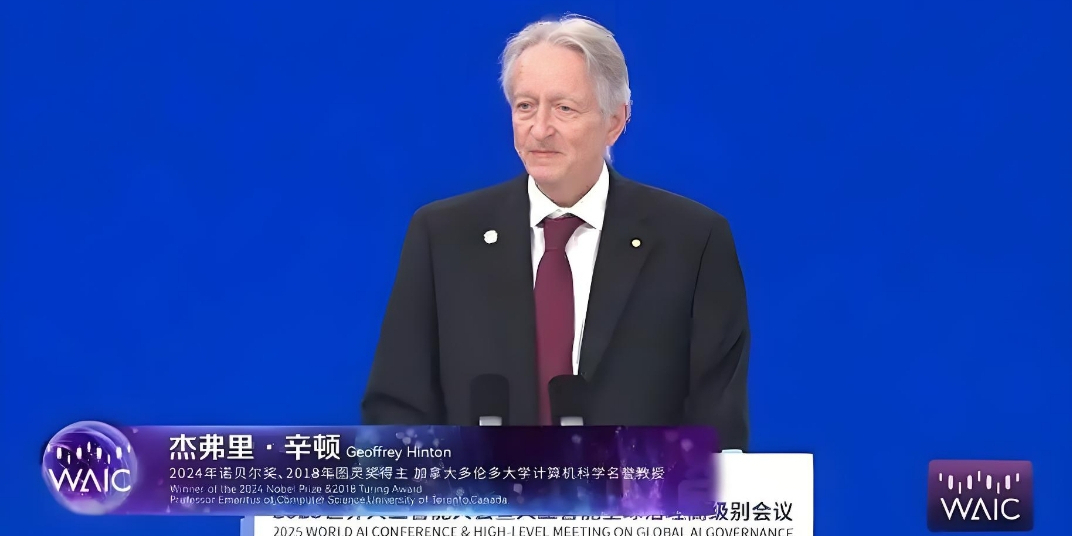
Core Insights - The dialogue between Geoffrey Hinton and Zhou Bowen at the World Artificial Intelligence Conference highlighted the advancements in AI, particularly in multimodal models and their potential consciousness [1][4][5] - Hinton emphasized the importance of training AI to be both intelligent and kind, suggesting that different techniques are required for each aspect [6][7] Group 1: AI Consciousness and Learning - Hinton argues that current multimodal chatbots possess a form of consciousness, challenging traditional definitions of subjective experience [4][5] - He believes that intelligent agents can learn from their own experiences, potentially acquiring knowledge beyond human capabilities [6][7] Group 2: Training AI for Kindness - Hinton suggests that while it is possible to develop AI that is both smart and kind, the methodologies for achieving these traits differ significantly [6][7] - He advocates for international collaboration in sharing techniques that promote AI kindness, even if countries are reluctant to share methods for enhancing intelligence [6][7] Group 3: Advice for Young Scientists - Hinton encourages young researchers to explore areas where "everyone is wrong," as this can lead to significant breakthroughs [2][10] - He stresses the importance of perseverance in pursuing new ideas, even in the face of skepticism from mentors [2][10] Group 4: AI's Role in Scientific Advancement - Hinton acknowledges the clear benefits of AI in scientific research, citing examples like protein folding and weather prediction where AI has outperformed traditional methods [8][9] - He believes that AI will continue to drive progress across various scientific fields, enhancing predictive capabilities [8][9]
【WAIC2025】AI教父杰弗里·辛顿:避免“养虎为患”,要训练“善良”的AI
Jing Ji Guan Cha Wang· 2025-07-27 04:00
Group 1 - The 2025 World Artificial Intelligence Conference (WAIC) opened in Shanghai, featuring prominent figures in the AI field, including Turing Award winner and 2024 Nobel Prize in Physics laureate Geoffrey Hinton [2] - Geoffrey Hinton emphasized the importance of original research and exploring areas where "everyone might be wrong" during his address to the audience [2] - Hinton stated that AI large language models possess "immortality," as the knowledge within them can be preserved even if the specific hardware is destroyed, contrasting this with the difficulty of achieving "immortality" for human knowledge [2] Group 2 - Hinton compared the current human condition in the AI era to "keeping a tiger as a pet," highlighting the necessity of either training AI to be non-threatening or facing dire consequences [3] - The discussion between Hinton and Zhou Bowen focused on how to train "benevolent" superintelligence, indicating a global consensus on the importance of AI ethics [3] - Hinton noted that while countries may be reluctant to share technologies that enhance AI intelligence, they could collaborate on technologies that promote AI benevolence [3]
AI时代没有旁观者|AI向善语料库开放发布会实录
腾讯研究院· 2025-07-11 07:20
Core Viewpoint - The rapid development of artificial intelligence (AI) has significantly improved industrial efficiency, but there is an urgent social issue regarding how AI can provide tangible help and empowerment to ordinary people, especially marginalized groups such as the elderly, disabled, and left-behind children [1][8]. Group 1: AI for Social Good Initiative - Tencent launched the "AI for Good Corpus" initiative in collaboration with hundreds of social organizations to create a specialized Q&A corpus aimed at vulnerable social groups [3][4]. - The initiative emphasizes the importance of high-quality training data for AI products, particularly for serving marginalized communities, which have historically been underrepresented in AI training datasets [8][19]. - The first thematic corpus focuses on elderly scenarios, containing 8,047 pairs of common questions and answers related to daily life, health, psychology, and relationships [8][19]. Group 2: Community Collaboration and Impact - The slogan "Co-create first, then share; love first, then AI" encapsulates the initiative's approach to building a public corpus through collaboration and returning to the original intent of public welfare [6][52]. - The AI for Good Corpus aims to enhance the AI capabilities of organizations serving vulnerable groups, thereby improving their ability to provide support and services [6][8]. - The initiative has received positive feedback from social workers, psychologists, and volunteers who participated in the co-creation process [4][6]. Group 3: Technological Advancements and Applications - The AI for Good Corpus has shown improvements in AI models' capabilities, particularly in emotional interaction, empathy, social adaptability, and cultural sensitivity when applied to elderly care scenarios [13][16]. - The "Elderly Wisdom Picture Book" project utilizes AI to create a warm emotional outlet for the elderly, enhancing their interaction experience and addressing feelings of loneliness [38][40]. - Research indicates that traditional methods of engaging with the elderly often overlook their true emotional needs, which the AI for Good Corpus aims to address by capturing genuine questions and concerns [44][46]. Group 4: Future Directions and Insights - The aging population in China is projected to exceed 400 million by 2035, highlighting the urgent need for innovative solutions in elderly care and the potential for AI to play a significant role in this sector [8][29]. - The initiative encourages a shift in product design from functionality-driven to dignity-experienced, addressing the complex needs of the elderly [50][52]. - The AI for Good Corpus serves as a bridge connecting technology with humanistic values, aiming to create an inclusive society for the aging population [52][59].