
AI应用商业化

Search documents
中概股大涨,阿里巴巴涨超5%,平头哥拟独立上市!港股互联网ETF(513770)低位揽金,逾14亿巨资进场
Xin Lang Cai Jing· 2026-01-23 01:16
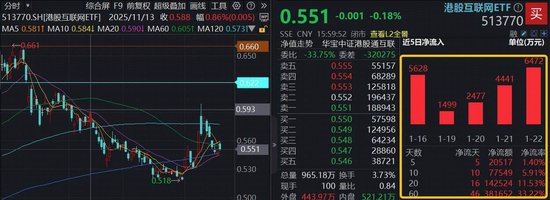
海外地缘冲突与贸易摩擦风险缓和,市场情绪明显修复。美股周四走高,中概股表现不俗,纳斯达克中 国金龙指数上涨1.58%,阿里巴巴大涨逾5%,哔哩哔哩上涨4.53%。 消息面上,媒体披露,阿里巴巴集团已决定支持旗下芯片公司平头哥未来独立上市。平头哥是阿里巴巴 集团旗下全资芯片公司,2018年成立以来,在行业中非常低调,是阿里雪藏多年的"核武器"。平头哥上 市不仅对阿里意义重大,也将对中国半导体产业产生深远影响。 港股方面,近日整体延续震荡,港股AI核心资产——港股互联网ETF(513770)昨日高开回落,场内 价格收跌0.18%。但资金坚定逆行,上交所数据显示,港股互联网ETF(513770)近20日累计获资金净 流入14.25亿元,做多力量持续进场。 从板块机会看,AI应用商业化进程提速,港股互联网作为核心受益标的,有望持续受到催化。阿里巴 巴旗下千问接入淘宝生态,打造一站式AI办事应用;快手旗下视频生成大模型可灵AI月活跃用户数量 突破1200万;美团APP更新升级AI搜索功能,为用户提供准确的本地生活信息服务等。 银河证券表示,AI应用催化密集,商业化具备广阔发展空间,建议关注AI投入不断增加的港股互联网 ...


大厂AI应用高频催化,增量资金持续进场,港股互联网ETF(513770)密集吸金13.6亿元
Xin Lang Cai Jing· 2026-01-22 12:17
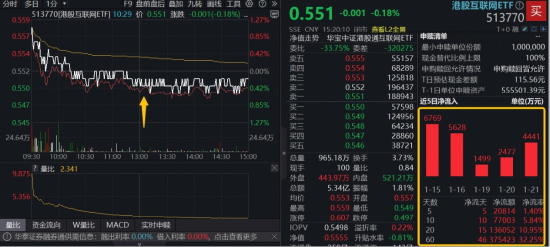
Market Overview - On January 22, Hong Kong stocks opened high but closed lower, continuing to fluctuate, with the Hang Seng Index and Hang Seng Tech Index slightly up [1][8] - The Hong Kong Internet ETF (513770) experienced a slight decline of 0.18% despite showing a wide premium throughout the day, indicating positive buying sentiment [1][8] - Over the past 20 days, the Hong Kong Internet ETF has seen a net inflow of 1.361 billion yuan, suggesting ongoing capital entry [1][8] AI Sector Developments - The commercialization of AI applications is accelerating, with Hong Kong Internet stocks as key beneficiaries [3][10] - Alibaba's Qianwen has integrated into the Taobao ecosystem to create a one-stop AI service application [3][10] - Kuaishou's AI model has achieved over 12 million monthly active users, while Meituan has upgraded its app to enhance local search functionalities [3][10] Capital Inflows and Stock Performance - Southbound funds are actively buying leading internet stocks, with Alibaba-W receiving a significant net purchase of 1.078 billion HKD on the latest trading day, marking its eighth consecutive day of increased holdings [3][10] - In the past week, Alibaba-W topped the net purchase list with 5.63 billion HKD, followed by Tencent Holdings, Xiaomi Group-W, and Kuaishou-W among the top ten [3][10] ETF Composition and Strategy - The Hong Kong Internet ETF (513770) tracks the CSI Hong Kong Internet Index, with Alibaba-W as the largest weight at 14.71%, and the top ten stocks collectively accounting for nearly 77% of the index [4][11] - For investors seeking to reduce volatility while maintaining exposure to technology, the Hong Kong Large Cap 30 ETF (520560) is recommended, combining high-growth tech stocks with stable dividend-paying companies [12]
万和财富早班车-20260121
Vanho Securities· 2026-01-21 01:43
Core Insights - The report highlights the acceleration of AI application commercialization, particularly through Google's Gemini business, which is expected to benefit related stocks such as Zhonggong Education and Jiuqi Software [5] - The next-generation data center power supply solutions are emerging as a new competitive arena in the capital market, with relevant stocks including Xinte Electric and Teruid [5] - OpenAI is set to launch its first device this year, indicating significant investment opportunities in AI edge innovation, with related stocks being Yingtong Communications and Lingyi Zhizao [5] Macro News Summary - The National Development and Reform Commission is planning to formulate an implementation plan for the expansion of domestic demand strategy from 2026 to 2030 [4] - The Ministry of Finance and other departments are implementing a special guarantee plan for private investment with a quota of 500 billion [4] - The Ministry of Finance has extended the fiscal interest subsidy policy for personal consumption loans until the end of 2026 [4] Industry Dynamics - Qianjiang Water Conservancy's core water supply technology has been included in the Ministry of Water Resources' key promotion directory, supporting rural revitalization and water security [6] - Artis has successfully defended its overseas intellectual property rights and is continuing its business restructuring in the U.S. [6] - Zhongwei Semiconductor is set to launch low-power storage chips, indicating a structural market trend in the semiconductor sector [6] - Weifu High-Tech's subsidiary has achieved mass production of the sixth-generation millimeter-wave radar products in collaboration with Bosch [6] Market Review and Outlook - On January 20, the three major indices collectively declined, with the ChiNext Index dropping over 2%. The total trading volume in the Shanghai and Shenzhen markets was 2.78 trillion, an increase of 69.4 billion from the previous trading day [7] - The chemical sector saw a surge, with over ten constituent stocks hitting the daily limit, while sectors like computing hardware and commercial aerospace faced significant declines [7] - The report suggests that after considerable market fluctuations, short-term risks have been somewhat alleviated, and the market may stabilize with a shift towards performance-based trends as the earnings forecast period approaches [7] - The report maintains a judgment that the short-term market should follow trends and actively seize the buying window from mid-December 2025 to early March 2026, with a focus on performance fundamentals [7]
港股收盘 | 三大指数集体调整 AI应用相关概念股领跌
Xin Lang Cai Jing· 2026-01-19 08:29
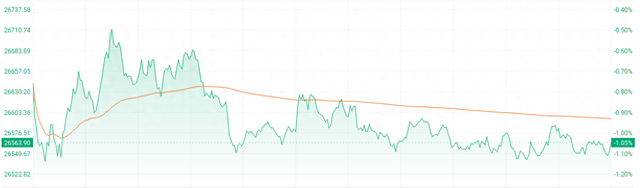
Market Overview - The Hong Kong stock market showed a weak performance today, with all three major indices closing lower. The Hang Seng Index fell by 1.05% to 26,563.90 points, the Tech Index dropped by 1.24% to 5,749.98 points, and the National Enterprises Index decreased by 0.94% to 9,134.45 points [1]. Aviation Sector - The aviation sector performed strongly today, with notable gains in airline stocks. China Eastern Airlines rose by 9.20%, China Southern Airlines increased by 6.29%, and Air China gained 3.76% [3][4]. - According to Huachuang Securities, the aviation industry is expected to show a clear recovery trend in 2025, with Spring Airlines reporting a 12.1% year-on-year increase in both capacity (ASK) and passenger turnover (RPK) [4]. Energy and Power Sector - The energy and power sector saw a collective rise, with companies like Dongfang Electric increasing by 6.38% and Harbin Electric by 5.46% [5]. - The market recognizes the value of power equipment companies as essential components of AI computing infrastructure, with significant investments expected in this sector by 2026 [5]. Pharmaceutical Sector - Pharmaceutical stocks generally retreated, with notable declines in companies such as Viva Biotech, which fell by 5.83%, and WuXi Biologics, which dropped by 4.83% [6][7]. - Despite the short-term pressure on stock prices, the fundamentals of the pharmaceutical research service industry are improving, with a double-digit growth in new orders for several CRO companies [7][8]. AI Application Sector - Stocks in the internet healthcare and AI application sectors continued to decline, with Ping An Good Doctor down by 4.41% and Ark Health by 3.75% [9][10]. - Analysts from CITIC Securities noted that the trend of accelerating commercialization in the AI application field remains unchanged, with ongoing product iterations indicating user growth and business model exploration [10]. Individual Stock Movements - Jinxin Fertility reported a 5.28% increase, attributed to continued improvement in its fourth-quarter operational data, with a narrowing decline in IVF cycles [12]. - New World Department Store China surged by 29.51% following recent personnel changes, including the appointment of new leadership [13].
ChatGPT测试广告-谷歌试水AI电商-AI应用商业化加速
2026-01-19 02:29
Summary of Conference Call Notes Industry and Company Involved - The discussion primarily revolves around the **AI application commercialization** in the **advertising** and **e-commerce** sectors, with key players including **OpenAI** and **Google**. - Domestic companies, particularly the **Qianwen APP**, are also highlighted for their innovative approaches in integrating AI with e-commerce functionalities. Core Points and Arguments - **OpenAI's Advertising Strategy**: OpenAI is testing advertisements in ChatGPT, targeting Free and Go users while ensuring that the objectivity of answers remains unaffected. This move aims to monetize its over **800 million monthly active users**, especially given the low subscription user ratio [2][4]. - **Google's Universal Commerce Protocol (UCP)**: Google has introduced the UCP to standardize interactions between AI agents and e-commerce systems, facilitating in-platform payments and shopping cart functionalities. Major retailers like **Walmart** and **Shopify** have already adopted this protocol, which is expected to significantly enhance e-commerce operations [2][4]. - **Shift in Traffic Dynamics**: The commercialization of AI applications is reshaping traffic patterns, moving from traditional search engines to AI-driven searches. This transition opens up new marketing opportunities and development space for service providers in the AI sector [4][6]. - **Investment Opportunities in 2026**: The advertising and marketing sector is projected to present substantial investment opportunities in 2026, driven by new advertising services and the emergence of new traffic sources due to AI [3][7]. - **Domestic Innovations**: The Qianwen APP has integrated features from platforms like **Taobao**, **Feizhu**, and **Gaode**, evolving from a conversational app to a smart agent capable of handling complex tasks such as shopping and itinerary planning [5][6]. Other Important but Potentially Overlooked Content - **Structural Opportunities**: The integration of AI in commercial scenarios is expected to create structural opportunities, with more service providers likely to establish shops on AI platforms [6][9]. - **Future of E-commerce Services**: E-commerce operation agencies and SaaS providers are anticipated to benefit from the evolving landscape, offering more efficient and intelligent solutions [9][10]. - **Broader Market Implications**: The ongoing changes in AI application commercialization not only provide new revenue streams for companies but also create a broader array of investment opportunities in the market [4][8]. Conclusion - The main themes to watch in 2026 include the advertising and marketing sectors, as well as e-commerce-related fields, with significant developments expected from both domestic and international players like OpenAI and Google [10].
银河证券:AI应用商业化拐点已至 国产算力与应用双主线共振
Zhi Tong Cai Jing· 2026-01-18 07:59
Group 1 - The core viewpoint is that by 2026, AI applications are expected to transition from being usable to being highly usable, creating a resonance with the domestic computing power industry chain, with a focus on dual investment opportunities in AI applications and domestic computing power [1] - The computer industry has shown a strong start, with an 18.04% increase in the computer industry index year-to-date, ranking third among SW primary industries, compared to a 3.96% increase in the Shanghai Composite Index and a 2.42% increase in the CSI 300 [1] - AI applications have become the main driving force behind the current upward trend in the computer sector, with the Wind AI application index rising by 19.25%, indicating a gradual formation of a closed loop in the commercialization logic of AI applications [1] Group 2 - The AI application sector is experiencing intensive catalysts, with significant performances from leading model companies like MiniMax and Zhiyun AI post-listing, and collaborations such as the $1 billion partnership between NVIDIA and Eli Lilly to advance AI-assisted drug discovery [2] - The commercialization logic of AI applications is expected to first explode in B-end applications, with a focus on sectors like AI+marketing, AI+industrial software, AI+healthcare, and AI+finance, while C-end applications are seen as long-term value investments [2] - The demand for data centers is expected to increase, with a recovery in domestic AIDC bidding starting in Q4 2025, and major internet companies accelerating their data center layouts in 2026, potentially leading to a new cycle for domestic computing power [3]
AI应用商业化提速与制造业融合愈发深入
Zheng Quan Ri Bao Zhi Sheng· 2026-01-15 16:38
Group 1 - The AI application sector in A-shares has seen a cumulative increase of 18.30% since the beginning of the year, indicating a significant market interest in AI technologies as they move towards large-scale commercialization by 2026 [1] - The transition from "concept validation" to "application training" is highlighted, with AI technology increasingly being integrated into various end products and industry scenarios, moving from centralized cloud-based deployment to distributed edge deployment [1] - The humanoid robot industry is experiencing accelerated commercialization, with expectations that humanoid robots will become the next generation of mass intelligent terminals following smartphones and automobiles [1] Group 2 - The "AI + Media" concept is gaining traction, with companies like Guangdong Guangzhou Daily Media Co., Ltd. actively implementing AI technologies in advertising and video production, leading to cost reductions and efficiency improvements [2] - According to research from Guojin Securities, 2026 is projected to be a pivotal year for AI's transition from technology validation to large-scale commercial promotion, with significant market opportunities arising from rapid AI application deployment [2] - Estimates suggest that by 2026, the AI penetration rates for smartphones and PCs could reach 45% and 62%, respectively, with the edge AI market expected to grow from 321.9 billion yuan in 2025 to 1.22 trillion yuan by 2029, reflecting a compound annual growth rate of 40% [2] Group 3 - A-share listed companies are beginning to report earnings that reflect the benefits of AI integration, with companies like Shenzhen Daotong Technology Co., Ltd. forecasting a net profit increase of 40.42% to 45.10% in 2025 due to their embrace of AI technologies [3] - Shenzhen Haopeng Technology Co., Ltd. is advancing its "All-in-AI" strategy, projecting a revenue increase of 11.58% to 17.45% and a net profit growth of 113.69% to 141.09% in 2025, showcasing the financial impact of AI on their operations [3] Group 4 - The Ministry of Industry and Information Technology has released an action plan for the high-quality development of industrial internet platforms, emphasizing the integration of AI into various industrial applications to enhance productivity and efficiency [4] - The plan aims to promote the dual empowerment of AI technology and manufacturing applications, facilitating the intelligent transformation of the manufacturing sector [4] Group 5 - Industry experts believe that policy support will drive deep integration of AI technologies with manufacturing, with a focus on specific vertical scenarios such as quality inspection and e-commerce tools, addressing clear industry pain points [5] - The shift in policy support from "framework guidance" to "scenario empowerment" is expected to lower initial commercialization costs for companies, while rapid advancements in intelligent computing infrastructure will further facilitate AI application deployment [5]
华银基金庞文杰:2026年或是AI应用的商业化元年
Zhong Zheng Wang· 2026-01-15 13:32
Group 1 - The long-term fundamental outlook for the AI industry is very clear, transitioning from "computing infrastructure" to "application implementation" [1] - 2026 is anticipated to be the commercialized year for AI applications, with gradual implementation in marketing, industrial, financial, and medical sectors [1] - Although there is currently high enthusiasm in the sector, the industry is still in the early stages of commercialization, with potential for innovative technologies and new business models to emerge [1] Group 2 - A standout application could quickly absorb valuations, highlighting the appeal of investing in the technology sector [1] - It is recommended to select segments and companies with high barriers to entry and real application scenarios, while diversifying investments [1]
招银国际:AI应用商业化快速落地 看好AI通用助手等细分赛道
Zhi Tong Cai Jing· 2026-01-15 06:28
Group 1: Market Overview - The global large model market is expected to reach $206.5 billion by 2029, with a CAGR of 80.7% from 2024 to 2029, driven by the iteration of large models and increased AI application penetration [1] - The large model application market is projected to be the main growth driver, with an estimated market size of $151.5 billion by 2029, reflecting a compound annual growth rate (CAGR) of 84.4% during the same period [1] Group 2: AI General Assistants - The AI general assistant sector is anticipated to see leading companies continue to consolidate the market, with OpenAI, Anthropic, Google, and xAI forming a first tier in overseas markets [2] - In the Chinese market, ByteDance, Tencent, Alibaba, and DeepSeek are expected to form a first tier, while smaller firms like Kimi and Minimax may face disadvantages in infrastructure and traffic acquisition as competition intensifies [2] - As of December 2025, active users for ByteDance's Doubao, DeepSeek, and Tencent's Yuanbao are projected to reach 155 million, 82 million, and 21 million respectively [2] Group 3: AI Entertainment Companions - The AI companionship applications are still in the early development stage, with rapid improvements in large model text and multimodal capabilities driving user penetration and consumption [3] - By 2030, the penetration rate of AI companionship applications among global internet users is expected to exceed 40%, with a projected annual revenue of approximately $70 billion, representing a CAGR of 200% from 2023 to 2030 [3] - Leading AI companionship applications include Character AI, Minimax Talkie AI, and ByteDance's Cat Box, with MAUs expected to reach 3.09 million, 2.35 million, and 470,000 respectively by December 2025 [3] Group 4: AI Visual Generation - The global AI visual generation application market is projected to reach $16.6 billion by 2027, with a CAGR of 66% from 2025 to 2027 [4] - Companies with leading model capabilities, product capabilities, and financial resources, such as Google Veo and Kuaishou's Keling, are expected to perform well in this sector [4] - Kuaishou's Keling AI is set to experience several catalysts, including the launch of new features and a revenue breakthrough of $20 million in December 2025, corresponding to an ARR of $240 million [4] Group 5: Minimax Valuation - Minimax completed its public offering in Hong Kong in January, increasing market attention on the AI application sector [5] - As of January 12, Minimax's valuation corresponds to approximately 222 times its estimated ARR for 2025 [5] - Kuaishou's Keling is conservatively estimated to have a valuation of $2.8 billion to $5.6 billion, representing about 6% to 18% of Kuaishou's market value, with a valuation discount of 70-90% compared to Minimax [5]


软件ETF(515230)连续3日净流入超13亿元,AI应用商业化兑现赋能软件板块
Mei Ri Jing Ji Xin Wen· 2026-01-15 04:05
Group 1 - The software sector is experiencing a bullish trend, with software ETFs (515230) seeing over 1.3 billion yuan in net inflows over three consecutive days, driven by the commercialization of AI applications [1] - By 2026, the commercialization of AI applications is expected to be a significant driver of revenue growth in the software industry, similar to the cloud computing era when new technology revenue surpassed 10% [1] - The current penetration of AI applications in the software industry is in its early acceleration phase, with some companies expected to disclose AI orders by 2025, marking the beginning of new technology applications [1] Group 2 - The software ETF (515230) tracks the software index (H30202), which reflects the overall performance of publicly listed companies in the software sector, focusing on system software and application software development and services [1] - The software industry in China is characterized by customized solutions, with software vendors accumulating significant industry know-how, which is crucial for the successful implementation of AI applications [1] - The most commercially viable AI application areas currently identified include AI Agents, multimodal applications, AI coding, and AI marketing, with AI's penetration in healthcare management also accelerating [1]