
平头哥芯片

Search documents
两个“零估值”,一个新阿里
远川研究所· 2026-03-25 13:03
Core Viewpoint - The latest quarterly report from Alibaba highlights AI as a central theme, with investment banks reassessing Alibaba's valuation logic amidst market anxieties [2][3]. Group 1: Financial Performance and Valuation - Alibaba's current market value is only 10 times the expected earnings from its domestic e-commerce business, indicating that investors are only recognizing the value of this single business [5]. - Morgan Stanley's report categorizes Alibaba as a "global AI winner," emphasizing its comprehensive AI strategy and vertical integration capabilities [22][24]. - The company aims for its cloud and AI commercialization revenue to exceed $100 billion in the next five years, representing a compound annual growth rate of over 40% [33][34]. Group 2: AI and Capital Expenditure - High capital expenditures (Capex) are a common concern among major tech companies, including Alibaba, as they invest heavily in AI infrastructure [9][10]. - Alibaba's recent quarterly capital expenditure reached 29 billion RMB, reflecting a significant acceleration in investment [18]. - The company plans to invest 380 billion RMB over three years for cloud and AI hardware infrastructure [19]. Group 3: AI Strategy and Infrastructure - Alibaba has established a four-layer vertical integration capability around AI, including self-developed chips and the largest cloud computing infrastructure in the Asia-Pacific region [21]. - The integration of self-developed AI chips and cloud services has allowed Alibaba to mitigate external supply chain challenges and maintain competitive pricing [25]. - The company has developed a business model that transforms raw computing power into high-margin cloud service revenue, leveraging its cost advantages [29][30]. Group 4: Organizational Changes and Market Position - Alibaba has formed the ATH business group to enhance collaboration between AI models and applications, addressing the need for tight integration in the Agentic era [35][42]. - The restructuring aims to overcome organizational silos that have historically hindered innovation and responsiveness in large companies [37][40]. - The company's strategic focus on AI and computing power is seen as a necessary evolution to capture new growth opportunities in a changing market landscape [52][53].



阿里巴巴-W(09988):FY2026Q3财报点评:电商短期承压,AI与即时零售打开中长期空间
Guohai Securities· 2026-03-21 11:20
Investment Rating - The investment rating for the company is "Buy" (maintained) [1][39] Core Insights - The report highlights that traditional e-commerce is under short-term pressure, while AI and instant retail open up long-term growth opportunities [2][7] - The company reported a revenue of 284.8 billion yuan for FY2026Q3, with a year-over-year growth of 2% and a quarter-over-quarter growth of 15% [6][12] - The adjusted EBITDA for the same period was 34.1 billion yuan, reflecting a year-over-year decline of 45% but a quarter-over-quarter increase of 97% [6][12] - The management expressed confidence in the recovery of consumer spending since Q1 2026, indicating significant improvements in e-commerce transactions and profitability [35] Summary by Sections Financial Performance - For FY2026Q3, the company achieved a net profit of 15.6 billion yuan, down 66% year-over-year and down 24% quarter-over-quarter [6][12] - The overall revenue for the Chinese e-commerce group was 159.3 billion yuan, with a year-over-year growth of 6% [14][35] - The cloud intelligence group reported a revenue of 43.3 billion yuan, up 36% year-over-year, driven by public cloud business growth [37] Business Segments - Traditional e-commerce is facing challenges due to macroeconomic factors, but instant retail is showing strong growth, with a revenue increase of 56% to 20.8 billion yuan [8][35] - The international digital commerce group saw a revenue increase of 4% to 39.2 billion yuan, with improved operational efficiency contributing to reduced losses [36] Future Outlook - The company expects revenue for FY2026-2028 to be 1,029.34 billion, 1,133.879 billion, and 1,271.125 billion yuan respectively, with corresponding net profits of 90.718 billion, 94.328 billion, and 130.883 billion yuan [11][38] - The target market capitalization for FY2027 is set at 2,996.7 billion yuan, with a target price of 157 yuan per share [11][38]
新一轮云涨价-狂潮
2026-03-20 02:27
Summary of Conference Call Records Industry Overview - The cloud service industry is experiencing a price increase wave, with Alibaba's PingTouGe chip prices rising by 34%, and expectations of 2-3 more rounds of price hikes in China by 2026 [1][5] - The core driving force has shifted from training to inference, with a surge in Token demand leading to frequent sellouts for companies like Zhipu AI, boosting the growth of computing power leasing businesses [1][2] Key Points and Arguments - The price increase in cloud services and AI computing power has exceeded market expectations in both scope and magnitude, initiated by North American giants like Amazon and Google, followed by domestic players such as UCloud and Alibaba [2] - The primary drivers of this price surge are robust supply and demand dynamics, particularly the explosive growth in Token demand, which has significantly increased the need for cloud services and large models [2][3] - Alibaba is restructuring its organization to focus on Token as a core strategy, aiming to integrate B-end and C-end business units with large model manufacturers to create synergies [4] - The increase in Alibaba Cloud's prices reflects strong AI inference demand, indicating a supply-demand imbalance in the market [4] Financial Indicators to Watch - Investors should focus on the growth rate of cloud business and profit margin changes in the upcoming financial reports, particularly comparing Q4 2025 and Q1 2026 data [4] Market Trends and Predictions - The current round of price increases is expected to be just the beginning, with continuous revenue and profit margin growth anticipated for major public cloud vendors in the domestic market [5] - The rise in Token prices is beneficial for the large model industry, with storage chip prices also increasing, positively impacting the entire computing power supply chain [6] Infrastructure and Technology Implications - The growth in AI inference demand is significantly impacting infrastructure, particularly in the IDC sector, with companies like GDS Holdings shifting from conservative to aggressive expansion strategies [7] - The demand for high-power cabinets is increasing, leading to potential structural price increases in specific regions with limited capacity [7] - The liquid cooling technology sector is also poised for growth, driven by new requirements from NVIDIA's Ruby series and interest from international giants like Google in domestic liquid cooling technology [6][7] Investment Opportunities - Identifying investment opportunities in the cloud computing supply chain involves understanding the sources and distribution of Tokens and profits across different segments [7] - Key players in the Token demand inflation include large model manufacturers like Zhipu AI and MiniMax, while cloud vendors are primarily focused on computing power cards, leading to investment opportunities in computing power leasing [7] - Companies deeply integrated with emerging model manufacturers, such as Digital China, are expected to gain more profits amid the cloud price increase wave [7]
大摩闭门会:中国AI GPU前景展望以及台积电最新资本支出预期; 上调阿里巴巴为互联网首选
2026-03-16 02:05
Summary of the Conference Call on China's AI GPU Outlook and TSMC's Capital Expenditure Industry Overview - The conference focused on the outlook for China's AI GPU market and the latest capital expenditure expectations from TSMC, highlighting the increasing importance of domestic chip production in the AI sector [1][2][3]. Key Points and Arguments 1. **AI Chip Ownership**: Companies like Alibaba are moving towards owning their chips to reduce reliance on third-party suppliers, similar to Google's strategy with TPU [5][6]. 2. **Customization and Flexibility**: Owning chips allows companies to tailor their products to specific applications and adjust capacity based on demand, which is crucial in the rapidly evolving AI landscape [7][8]. 3. **Performance Comparison**: Domestic chips are reportedly closing the performance gap with international counterparts, with some Chinese chips outperforming NVIDIA's A100 in inference tasks [9][10]. 4. **Market Positioning**: Alibaba is positioned as a leading player in the AI space due to its comprehensive supply chain, including its chip production (Pingtouge) and cloud services [12][13]. 5. **Demand Projections**: The demand for AI chips in China is expected to grow significantly, with projections estimating a market size of $67 billion by 2030, driven primarily by internet companies [14][15]. 6. **Supply Chain Dynamics**: The supply of AI chips is anticipated to increase, with domestic foundries like SMIC and Hua Hong playing key roles in supporting production [27][28]. 7. **Self-Sufficiency Goals**: The self-sufficiency rate of domestic AI chips is projected to rise from 33% in 2024 to 76% by 2030, indicating a strong push towards local production [27][28]. 8. **Valuation Insights**: Valuations for companies like Kunlun and Pingtouge were discussed, with estimates suggesting a market cap range of $20 billion to $61 billion for Kunlun based on a price-to-sales ratio of 26x [19][20]. Additional Important Insights - **Investment Recommendations**: Alibaba was highlighted as a preferred investment due to its strong position in the AI ecosystem and expected performance in upcoming earnings reports [21][22]. - **Global Competitive Landscape**: The conference noted that while domestic companies are gaining ground, competition remains fierce, particularly from state-owned enterprises like Huawei and Cambricon [16][17]. - **Technological Advancements**: The discussion included the importance of advancements in chip technology and packaging, with Chinese firms catching up in areas like 2.5D packaging and advanced process nodes [29][30]. - **Market Consolidation**: The AI chip market is expected to undergo consolidation, with a few key players dominating the landscape, which may lead to reduced margins for new entrants [17][37]. This summary encapsulates the critical insights from the conference call, emphasizing the strategic shifts in China's AI chip industry and the implications for investment and market dynamics.

武汉等十城领跑全国AI购物潮 千问发布《AI生活观察报告》
Sou Hu Cai Jing· 2026-02-12 10:47
Group 1 - The core viewpoint of the article highlights the rapid adoption of AI in consumer shopping, with significant engagement from users, as evidenced by 4 billion instances of "Qianwen help me" and over 120 million orders placed using AI in just six days [1][5][20] - The report indicates that cities like Wuhan are leading the AI shopping trend, showcasing a blend of technology and everyday life that creates a vibrant digital consumption landscape [1][20] - The "Qianwen please guest" campaign, which included promotions like "free milk tea," has driven substantial user engagement, resulting in the purchase of over 1,000 tons of eggs and thousands of fitness equipment and books [5][17] Group 2 - The report reveals that nearly 50% of orders are coming from county-level cities, indicating a broadening consumer base for AI shopping [17] - There is a notable increase in retail orders for New Year-related products, with some categories seeing growth of over 10 times since the campaign's launch [17] - The AI shopping experience has also attracted older demographics, with 156 million users aged 60 and above trying out flash purchase services for the first time, demonstrating the accessibility of AI technology [17][20]
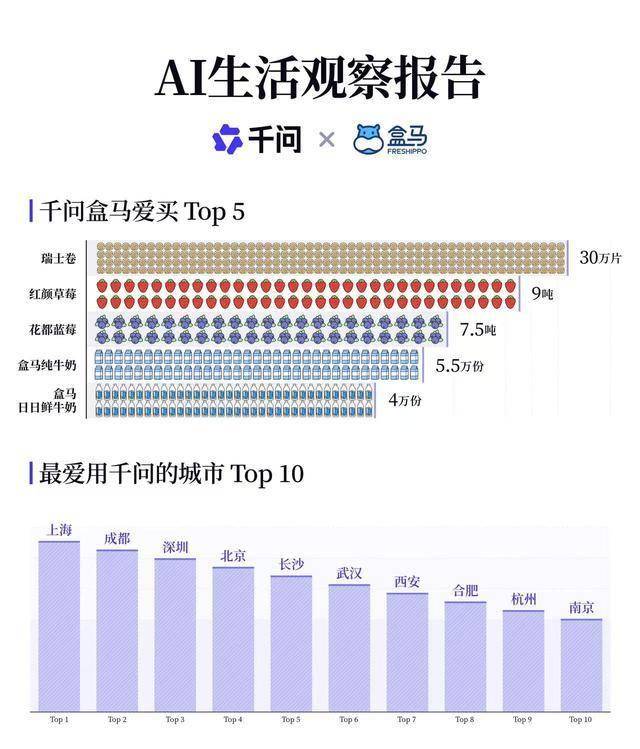
6天41亿声“千问帮我”,有156万名银发族首次用AI点单
Guang Zhou Ri Bao· 2026-02-12 10:45
Core Insights - Qianwen launched the "Spring Festival 3 Billion Free Order" campaign, achieving significant user engagement with 4.1 billion instances of "Qianwen help me" and over 120 million orders completed by AI in just six days [1][2] Group 1: User Engagement and Demographics - Nearly half of the AI orders originated from county and town areas, indicating a rise in AI consumption in these regions [1] - 1.56 million users aged 60 and above successfully placed their first food delivery orders using AI technology [1] Group 2: Product and Service Offerings - Users ordered over 1,000 tons of eggs, more than 2,300 fitness equipment items, and 1,500 books through the AI platform [1] - Beyond shopping, users engaged with Qianwen for various tasks such as writing Spring Festival couplets, creating New Year greetings, making PPTs, translating documents, and telling bedtime stories [2] Group 3: Technological Infrastructure - Qianwen is developed by Alibaba, leveraging self-developed chips from Pingtouge, Alibaba Cloud infrastructure, and open-source models [2] - Alibaba's ecosystem integrates various services including e-commerce, flash sales, travel, and entertainment into the AI framework, creating a comprehensive service network [2] Group 4: Market Position and Trends - Since its launch on February 6, Qianwen has consistently ranked first in the Apple App Store's free chart for six consecutive days [2] - The shift from active search in the PC era to algorithmic recommendations in mobile internet, and now to one-sentence command-based ordering, reflects a significant evolution in user interaction with technology [2]
利空来袭!寒武纪一个月暴跌30%、三只明星芯片股正在被市场抛弃
Sou Hu Cai Jing· 2026-02-06 01:24
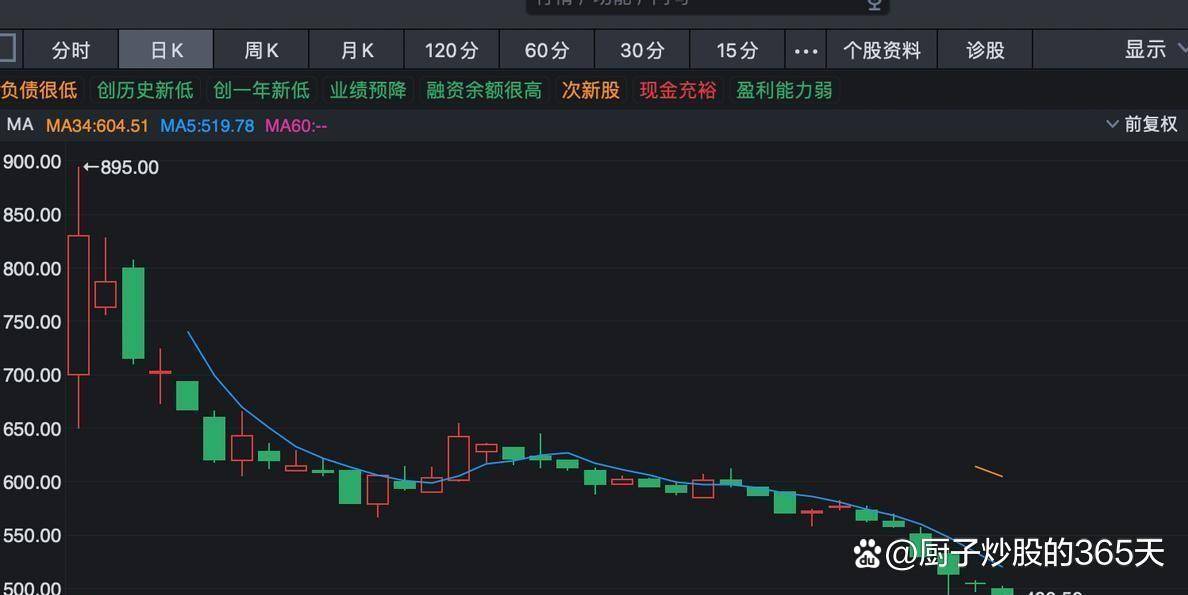
Core Viewpoint - The A-share technology sector, particularly in the chip and AI markets, is experiencing a significant downturn, with previously high-flying companies like Cambricon, Moore Threads, and Muxi falling sharply in stock prices, raising concerns about the end of the tech bull market [1][3]. Company Analysis - Cambricon was once a star in the AI chip sector, with its stock price peaking above 1500 yuan but has since dropped to 1058 yuan, a decline of over 30% in just one month [3]. - Moore Threads has seen its stock plummet from a high of 941 yuan to 539 yuan, a drop exceeding 40% [3]. - Muxi, which peaked at 895 yuan, is now nearing a 50% decline, currently at 490 yuan [3]. - The AI computing chip sector saw a net outflow of 2.454 billion yuan in a single day, indicating a significant withdrawal of capital [3]. Financial Performance - Cambricon projects revenues of 6 to 7 billion yuan by 2025, a growth of 4 to 5 times, and anticipates turning a profit [4]. - However, its net profit showed a decline in the fourth quarter, raising doubts about the sustainability of its earnings [4][6]. - Cambricon's revenue is heavily reliant on a few major clients, making it vulnerable to changes in their orders [6]. - Moore Threads and Muxi are facing even more severe challenges, with projected losses of 650 million to 798 million yuan and 950 million to 1.06 billion yuan, respectively, for 2025 [7]. Market Dynamics - The competitive landscape for domestic AI chips has intensified, with major players like Huawei and Alibaba capturing significant market shares, leaving smaller companies like Moore Threads and Muxi struggling to gain traction [10]. - The return of NVIDIA's high-end chips to the Chinese market poses a further threat to domestic chip companies, as clients may prefer more established products [10]. - The rapid pace of technological advancement in the chip industry necessitates continuous investment in R&D, which is costly and can lead to financial strain [11]. Investor Sentiment - The shift in market sentiment from speculative investments to a focus on tangible performance has led to a reevaluation of these companies' valuations, resulting in significant stock price declines [13]. - The AI computing chip sector experienced a net outflow of 2.454 billion yuan, highlighting the lack of investor confidence [13]. - Companies like Muxi and Moore Threads have high financing ratios, which could exacerbate stock price declines if they hit margin call thresholds [13]. Conclusion - The combination of weak financial performance, intense competition, and changing investor sentiment has created a perfect storm for these companies, leading to dramatic stock price declines [14]. - The market's focus has shifted from growth potential to survival, raising concerns about the future viability of these firms [14].

晚点独家丨阿里明确 “云 +AI+ 芯片” 战略,PPU 芯片出货已数十万片
晚点LatePost· 2026-01-30 02:02
Core Viewpoint - Alibaba is positioning itself as a leader in the AI sector by integrating its capabilities in large models, cloud computing, and chip development, referred to as the "Tongyun Ge" framework, which is seen as a strategic advantage for the company [3][4][6]. Group 1: AI Strategy and Vision - The "Tongyun Ge" concept emphasizes the synergy between large models, cloud services, and self-developed chips, which are crucial for Alibaba's technological strategy [3][4]. - Alibaba aims to democratize AI access for individuals and businesses, promoting a vision of a benevolent high-tech era that enhances everyday life [5][6]. - The company believes it is one of the few in China with full-stack AI capabilities, likening its ecosystem to that of Google, with self-developed chips, cloud services, and AI applications [5][6]. Group 2: Cloud Business Growth - Alibaba's cloud business is expected to see a quarterly revenue growth of 30% to 40%, driven by AI-related products, with significant stock price increases linked to AI developments [6][9]. - The company plans to increase its investment in AI infrastructure and cloud computing from 380 billion to 480 billion yuan over the next three years [9]. Group 3: Chip Development and Market Position - Alibaba's self-developed high-end AI chip, "Zhenwu 810E," has achieved significant market penetration, with cumulative shipments reaching hundreds of thousands, positioning it among the top domestic GPU manufacturers [5][10]. - The "Zhenwu" PPU is being commercialized, serving over 400 clients, including major companies like State Grid and Xpeng Motors, indicating a strong demand for its chip technology [10][11]. - The performance of the "Zhenwu 810E" chip is competitive within the domestic market, showing capabilities that can rival leading international products in specific scenarios [12][13].

深度丨港股连演“母公司退市+子公司上市” 传统巨头借“腾笼换鸟”转型升级
证券时报· 2026-01-28 23:53
Core Viewpoint - The "tenglong huan niao" model, characterized by "parent company delisting + subsidiary independent listing," is becoming a key capital path for traditional enterprises to transition into the new energy and technology sectors [1][4]. Group 1: Recent Developments - On January 28, the China Securities Regulatory Commission issued a notice for Lantu Automotive's overseas listing, which will be conducted through an introduction method on the Hong Kong Stock Exchange [3]. - Dongfeng Group and Skyworth Group are also adopting the "tenglong huan niao" model, with Skyworth planning to spin off its solar business for independent listing while delisting itself [3]. - The trend of spin-off listings is becoming more common in the Hong Kong market, with companies like Sunny Optical Technology and Alibaba considering similar strategies [3]. Group 2: Advantages of Spin-off Listings - Spin-off listings provide independent financing platforms for subsidiaries, facilitating rapid growth and enhancing the overall valuation of the parent company [4]. - The rise of new industries such as technology and biomedicine has made spin-off listings a crucial method for these companies to expand financing channels and enhance brand influence [4]. Group 3: Motivations Behind the Transition - The direct motivation for choosing the "tenglong huan niao" model is the significant valuation discount of traditional businesses in the Hong Kong market [6]. - Dongfeng Group and Skyworth Group opted for privatization due to their valuations being significantly below industry averages, with Dongfeng's price-to-book ratio at 0.33 and Skyworth's at 0.56 [7]. - The low market valuations hindered their capital needs for new business layouts, prompting the decision for capital operations [7]. Group 4: Strategic Implications - The "tenglong huan niao" model serves as a strategic transformation core, allowing companies to avoid traditional business drag on overall valuation and focus on value re-evaluation and resource concentration [8]. - Independent listings enable more flexible implementation of equity incentive plans, which is crucial for attracting and retaining talent, especially in technology-driven companies [8]. Group 5: Operational Significance - The "tenglong huan niao" model provides a replicable path for traditional enterprises' strategic transformation, helping to clarify the boundaries between core and new businesses [10]. - By separating high-growth, technology-driven new businesses, companies can better allocate resources and avoid conflicts between old and new business objectives [10]. - This model accelerates the marketization process of new businesses, allowing them to have financing platforms and valuation systems that match their development stages [10].

中泰国际每日晨讯-20260126
ZHONGTAI INTERNATIONAL SECURITIES· 2026-01-26 02:15
Market Overview - On January 23, Hong Kong stocks opened higher and fluctuated upwards, with the Hang Seng Index rising by 119 points (0.5%) to close at 26,749 points[1] - The Hang Seng Tech Index increased by 35 points (0.6%), closing at 5,798 points, with total market turnover reaching HKD 240.9 billion[1] - Southbound capital experienced a net outflow of HKD 1.6 billion[1] Regulatory Concerns - Chinese regulators are considering tightening the standards for mainland companies issuing shares in Hong Kong due to concerns over the quality of listed companies[1] - Potential measures may include setting a minimum market capitalization requirement for companies applying to list H-shares in Hong Kong[1] Sector Performance - The technology sector showed signs of recovery, with Alibaba (9988 HK) rising by 2.2%, Xiaomi (1810 HK) by 2.8%, and Kuaishou (1024 HK) by 2.7%[1] - The photovoltaic sector surged, with Xinyi Solar (968 HK) increasing by 11.1% and Fuyao Glass (6865 HK) by 10.4% following Tesla CEO Elon Musk's support for space photovoltaics[1] U.S. Market Dynamics - In the U.S., geopolitical tensions and conservative earnings guidance from Intel (INTC US) led to a decline in the Dow Jones Index by 285 points (0.6%) to 49,098 points[2] - The Nasdaq Index rose by 65 points (0.3%) to 23,501 points, while the S&P 500 Index increased by 2 points to 6,915 points[2] - Intel's stock fell by 17% due to supply constraints, while Nvidia (NVDA US) rose by 1.5% on news of Chinese approval for large tech firms to purchase H200 chips[2] Automotive Sector Highlights - The smart driving sector performed well, with Tesla's FSD system set to launch in China next month[3] - GAC Aion and Didi's Robotaxi R2 officially began mass production, and Cao Cao Mobility (2643 HK) plans to deploy 100,000 custom Robotaxis by 2030, with its stock rising by 10.2%[3] Healthcare Sector Insights - The Hang Seng Healthcare Index fell by 2.8% last week but rose by 1.1% on Friday[4] - Insilico Medicine (3696 HK) saw a rise after receiving FDA approval for its oral NLRP3 inhibitor for Parkinson's disease treatment[4] - Crystal Technology (2228 HK) reported significant advancements in CAR-T therapy, achieving a 100% complete response rate in lupus patients[4]