
AI(人工智能)

Search documents
10亿元红包开路 马化腾押注下一个10年
Mei Ri Jing Ji Xin Wen· 2026-01-27 13:10
Core Insights - Tencent's President, Liu Chiping, symbolically wrapped a red scarf with the classic penguin logo around CEO Ma Huateng, marking a significant moment in the company's AI strategy and social media identity [1] - The distribution of 1 billion yuan in cash red envelopes during the Spring Festival is seen as a strategic move to reinforce Tencent's position in the AI landscape and social media domain [2][4] Group 1: AI Strategy - The 1 billion yuan red envelope initiative is viewed as a substantial "bet" on AI strategy, aiming to address collective anxieties regarding technological advancements and competition from disruptive products like ChatGPT [3] - Ma Huateng emphasizes a strategic choice of a "slow" approach to AI development, focusing on foundational investments rather than aggressive expansion, which he believes aligns with Tencent's unique corporate rhythm [3] Group 2: Social Media and User Engagement - The red envelope distribution serves as a declaration of Tencent's "social sovereignty," aiming to attract users back to its platform rather than allowing them to drift towards search engines and productivity tools [4] - Ma Huateng's actions during the annual meeting, including throwing penguin dolls and singing, symbolize Tencent's commitment to maintaining a warm social environment for AI interactions [4] Group 3: Business Performance and Future Outlook - Tencent's cloud business is projected to achieve scalable profitability by 2025, which is a significant milestone for the company and a reassuring signal for the capital market [6] - The year 2026 is defined by Ma Huateng as a "year of struggle," indicating a focus on resilience and adaptability in the face of evolving technological landscapes [7]

马斯克的残酷预言
Xin Lang Cai Jing· 2026-01-25 00:31
马斯克又上头条了。 这次是达沃斯论坛,视频连线,讲了半个多小时。全球政商精英坐在台下,听一个不在现场的人侃侃而 谈。这个画面本身就挺魔幻的——达沃斯的存在感,似乎还不如马斯克的一个视频通话。 媒体铺天盖地报道的是那句"机器人数量将超过人类"。100亿到200亿台,听起来像科幻电影的设定。但 我反复看了几遍他的发言,觉得这个数字不是重点。 重点是他后面那句话,那句被很多媒体一笔带过的话:"当AI和机器人什么都能干的时候,人类需要思 考,我们存在的意义是什么。" 这才是马斯克真正想说的东西。翻译成更直白的表达就是:人这个物种,可能快要"没用"了。 一个正在兑现的时间表 马斯克的预测向来大胆,也向来不准时。他说过2020年实现全自动驾驶,说过2024年送人上火星,这些 都没兑现。所以很多人听他说话,习惯性打个对折。 但这次他给出的时间表,我觉得值得认真对待。 他说特斯拉的人形机器人Optimus,2026年会到5万至10万台,之后每年产量翻10倍。按这个速度推算, 2030年就是百万台级别,2035年就是上亿台。 你可能会说,这不还是在画饼吗? 区别在于,Optimus不是PPT,是已经在特斯拉工厂里干活的真机器。 ...


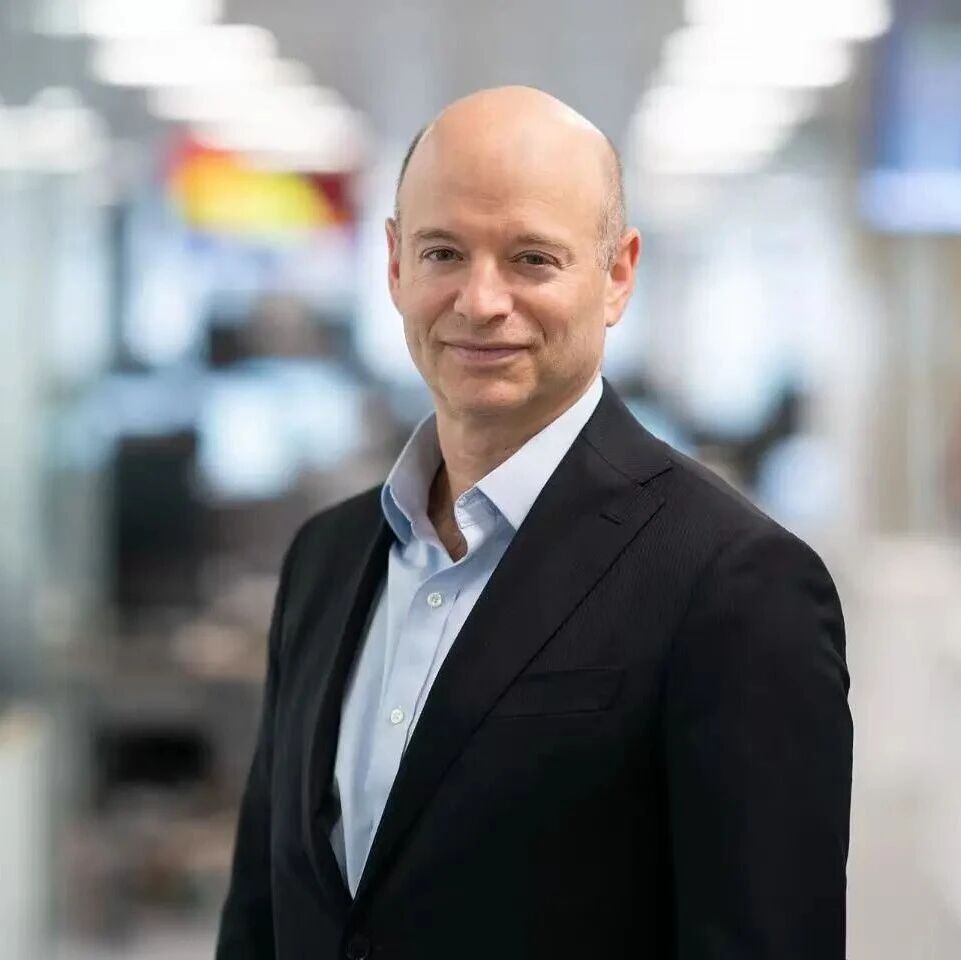
独家专访伦交所集团CEO施维默:全面融入AI革命,强力看好私募市场
第一财经· 2026-01-22 12:14
Core Viewpoint - The London Stock Exchange Group (LSEG) is transitioning from a traditional exchange to a diversified global financial market infrastructure and data services company, with a strong focus on data and analytics, which now accounts for approximately 50% of its £9 billion revenue [4][7]. Group 1: Transformation and Strategy - LSEG's CEO, David Schwimmer, emphasizes the importance of AI as a revolutionary opportunity for the financial industry, planning to integrate AI through three core strategies: enhancing product offerings, adapting data for AI compatibility, and implementing an "intelligent enterprise" strategy [4][11]. - The company has significantly increased its investment in private markets, launching the PISCES system to facilitate trading of private company equity, reflecting a shift in focus from public market IPOs to private capital [4][14][15]. Group 2: Market Insights and Growth - LSEG's team in China has grown to approximately 1,200 employees, actively engaging in data services, indices, and foreign exchange trading, with a positive outlook on the Chinese market due to improved geopolitical stability and market activity [5][6]. - The company is closely monitoring China's financial market reforms, such as the introduction of the Futures and Derivatives Law, which enhances the attractiveness of China's derivatives market to international participants [5][6]. Group 3: Revenue Structure and Business Model - LSEG's revenue structure is diversified, with 50% from data and analytics, 30% from trading and clearing services, and 20% from indices and risk insight services, indicating a departure from traditional exchange operations [7][8]. - The company aims to provide comprehensive services across the trading lifecycle, integrating market infrastructure with data and analytics to enhance client offerings [9][10]. Group 4: AI Integration and Competitive Advantage - LSEG is leveraging its data resources and partnerships with AI model providers to enhance its service offerings, allowing clients to access data through their preferred AI models [11][12]. - The integration of AI is seen as a unique advantage, enabling LSEG to reach traditional and new clients through innovative channels [13]. Group 5: Private Market Focus and PISCES System - The PISCES system allows private companies to trade equity while maintaining confidentiality and minimizing disclosure obligations, catering to the needs of firms that wish to protect sensitive information [15][17]. - This system is designed to facilitate flexible trading windows, enabling companies to connect with global institutional investors without the need for prior buyer identification [16][17].
TSMC(TSM) - 2025 Q4 - Earnings Call Transcript
2026-01-15 07:02
Financial Highlights - Fourth quarter revenue increased by 5.7% sequentially in NT$ and by 1.9% in U.S. dollar terms to $33.7 billion, slightly exceeding guidance [3] - Gross margin rose by 2.8 percentage points sequentially to 62.3%, driven by cost improvements and favorable foreign exchange rates [3] - Operating margin increased by 3.4 percentage points to 54%, with operating expenses at 8.4% of net revenue [3] - Full year 2025 revenue increased by 35.9% in U.S. dollar terms to $122 billion, with gross margin at 59.9% [9] Business Line Performance - 3 nm process technology contributed 28% of wafer revenue in Q4, while 5 nm and 7 nm accounted for 35% and 14% respectively [4] - High-Performance Computing (HPC) revenue increased by 48% year-over-year, accounting for 58% of total revenue in 2025 [6] - Smartphone revenue increased by 11% year-over-year, contributing 29% to total revenue [6] Market Data - HPC accounted for 55% of Q4 revenue, with smartphone at 32% and IoT at 5% [5] - Advanced technologies (7 nm and below) accounted for 77% of wafer revenue for the full year [4] Company Strategy and Industry Competition - TSMC plans to invest $52 billion to $56 billion in capital expenditures in 2026 to support growth in AI and other advanced technologies [14] - The company aims to maintain a long-term gross margin of 56% and higher through strategic pricing and operational excellence [17] - TSMC is expanding its global manufacturing footprint, including new fabs in Arizona and Japan, to meet increasing demand [26][27] Management Comments on Operating Environment and Future Outlook - Management expressed confidence in the sustainability of AI demand, indicating it is a megatrend that will drive growth [20][22] - The company anticipates a 14% growth in the Foundry 2.0 industry in 2026, with TSMC expected to outperform this growth [20] - Concerns about potential tariff policies and rising component prices were acknowledged, but management remains focused on fundamentals [19] Other Important Information - TSMC's effective tax rate for 2025 was 16%, expected to rise to between 17% and 18% in 2026 [10] - The company generated TWD 2.3 trillion in operating cash flow in 2025 and paid TWD 467 billion in cash dividends, up 28.6% year-over-year [9] Q&A Session Summary Question: Customer Demand and AI Bubble Concerns - Management confirmed strong customer demand for AI, with evidence of business growth from cloud service providers [36][38] - Concerns about a potential AI bubble were acknowledged, but management remains confident in the long-term growth of AI [39] Question: U.S. Expansion Plans - TSMC is accelerating its fab expansion in Arizona due to strong demand from AI customers, with plans for additional fabs [42][43] - The company aims to achieve 20% to 30% of its 2 nm capacity in the U.S. as part of its long-term strategy [40] Question: Power Supply for Data Centers - Management is actively evaluating power supply considerations for AI infrastructure, ensuring that silicon supply remains the primary bottleneck [48][49] Question: Non-AI Market Outlook - Management expects minimal unit growth in PC and smartphone markets due to rising memory costs, but demand for high-end products remains strong [56][68] Question: Competition from Intel Foundry - Management does not view Intel's foundry competition as a significant threat, citing the complexity and time required to develop advanced technologies [60]

TSMC(TSM) - 2025 Q4 - Earnings Call Transcript
2026-01-15 07:02
Financial Data and Key Metrics Changes - Fourth quarter revenue increased by 5.7% sequentially in NT$ and by 1.9% in U.S. dollar terms to $33.7 billion, slightly exceeding guidance [3] - Gross margin rose by 2.8 percentage points sequentially to 62.3%, driven by cost improvements and favorable foreign exchange rates [3] - Operating margin increased by 3.4 percentage points sequentially to 54% due to lower operating expenses [3] - Full year 2025 revenue increased by 35.9% in U.S. dollar terms to $1 billion, with gross margin up 3.8 percentage points to 59.9% [6][7] - Full year EPS increased by 46.4% to TWD 66.25 and ROE increased by 5.1 percentage points to 35.4% [7] Business Line Data and Key Metrics Changes - 3 nm process technology contributed 28% of wafer revenue in Q4, while 5 nm and 7 nm accounted for 35% and 14% respectively [4] - Advanced technologies (7 nm and below) accounted for 77% of wafer revenue for the full year, up from 69% in 2024 [4] - High-Performance Computing (HPC) revenue increased by 48% year over year, accounting for 58% of total revenue in 2025 [5] Market Data and Key Metrics Changes - HPC revenue increased by 4% quarter over quarter to account for 55% of Q4 revenue, while smartphone revenue increased by 11% to account for 32% [5] - Automotive revenue decreased by 1% to account for 5%, and Data Center Equipment (DCE) revenue decreased by 22% to account for 1% [5] - Overall, smartphone, IoT, and automotive segments saw year-over-year increases of 11%, 15%, and 34% respectively in 2025 [5] Company Strategy and Development Direction - TSMC plans to invest between $52 billion and $56 billion in capital expenditures for 2026, focusing on advanced process technologies [13] - The company aims to leverage manufacturing excellence to drive productivity and optimize capacity across nodes [10][16] - TSMC is committed to supporting customer growth while maintaining a disciplined approach to capacity planning [22][24] Management's Comments on Operating Environment and Future Outlook - Management expressed confidence in the AI megatrend, forecasting a 14% growth in the Foundry 2.0 industry for 2026, supported by robust AI-related demand [19] - Concerns about potential tariff policies and rising component prices were acknowledged, with a focus on prudent business planning [18] - Management expects 2026 to be another strong growth year, with full-year revenue projected to increase by close to 30% in U.S. dollar terms [19] Other Important Information - TSMC's cash and marketable securities totaled TWD 3.1 trillion or $98 billion at the end of Q4 [5] - The company plans to pay a cash dividend of TWD 23 per share in 2026, up from TWD 18 in 2025 [8] Q&A Session Summary Question: Insights on customer demand and AI-related growth - Management confirmed strong customer demand for AI, with evidence of growth in their businesses, indicating that AI is a real and growing trend [36][37] Question: U.S. expansion plans and capacity commitments - Management is accelerating fab expansion in Arizona due to strong demand from AI customers, with plans for additional fabs [41][42] Question: Evaluation of power supply for data centers - Management is actively assessing power supply needs for AI infrastructure, ensuring that silicon supply remains the primary bottleneck [46][47] Question: Advanced packaging revenue contribution and focus areas - Advanced packaging contributed about 8% of revenue in 2025, with expectations for growth in the next five years [50][51] Question: Non-AI market outlook and competition - Management expects strong demand in non-AI segments, particularly in high-end smartphones, despite rising memory costs [55][66] Question: Engineering talent and capacity planning - Management acknowledged challenges in developing engineering talent but emphasized productivity improvements as a focus for 2026-2027 [71][72]
TSMC(TSM) - 2025 Q4 - Earnings Call Transcript
2026-01-15 07:00
Financial Highlights - In Q4 2025, revenue increased by 5.7% sequentially in NT$ and by 1.9% in U.S. dollars to $33.7 billion, slightly exceeding guidance [3] - Gross margin rose by 2.8 percentage points sequentially to 62.3%, driven by cost improvements and favorable foreign exchange rates [3][9] - Operating margin increased by 3.4 percentage points to 54% due to operating leverage [3] - Full year 2025 revenue increased by 35.9% in U.S. dollars to $1 billion, and by 31.6% in NT dollars to TWD 3.8 trillion [7] - Full year EPS increased by 46.4% to TWD 66.25, and ROE increased by 5.1 percentage points to 35.4% [7] Business Line Performance - In Q4 2025, 3 nm process technology contributed 28% of wafer revenue, while 5 nm and 7 nm accounted for 35% and 14% respectively [4] - Advanced technologies (7 nm and below) accounted for 77% of wafer revenue for the full year, up from 69% in 2024 [4] - High-Performance Computing (HPC) revenue increased by 48% year-over-year, accounting for 58% of total revenue in 2025 [5] Market Performance - HPC revenue increased by 4% quarter-over-quarter to account for 55% of Q4 revenue, while smartphone revenue increased by 11% to account for 32% [5] - Automotive revenue decreased by 1% to account for 5%, and Data Center Equipment (DCE) revenue decreased by 22% to account for 1% [5] - Overall, HPC accounted for 58% of 2025 revenue, with smartphone at 29%, IoT at 5%, automotive at 5%, and DCE at 1% [5] Company Strategy and Industry Competition - TSMC plans to increase capital expenditures to $52 billion-$56 billion in 2026 to support growth in advanced process technologies [12] - The company aims to maintain a long-term gross margin of 56% and higher through the cycle, despite challenges from overseas expansion and rising manufacturing costs [15] - TSMC is focused on leveraging manufacturing excellence and optimizing capacity across nodes to support profitability [15] Management Commentary on Operating Environment and Future Outlook - Management expressed confidence in the AI megatrend, forecasting a 14% growth in the Foundry 2.0 industry in 2026, supported by robust AI-related demand [18] - TSMC expects full-year revenue to increase by close to 30% in U.S. dollar terms in 2026 [18] - The company is committed to supporting customer growth and addressing the structural increase in long-term market demand [19] Other Important Information - TSMC's cash and marketable securities reached TWD 3.1 trillion ($98 billion) at the end of Q4 2025 [5] - The company generated TWD 726 billion in cash from operations and spent TWD 357 billion on capital expenditures in Q4 2025 [6] - TSMC plans to pay a cash dividend of TWD 23 per share in 2026, up from TWD 18 in 2025 [8] Q&A Session Summary Question: Customer Demand and AI Bubble Concerns - Management reassured that customer demand for AI is real, with evidence of growth and financial returns from cloud service providers [33][34] - Concerns about a potential AI bubble were acknowledged, but management remains confident in the long-term growth driven by AI [35] Question: U.S. Expansion Plans - TSMC is accelerating its fab expansion in Arizona to meet strong AI demand, with plans for multiple fabs and a Gigafab cluster [39][40] Question: Power Supply for Data Centers - Management confirmed that power supply considerations are factored into planning, and customers have been proactive in addressing power needs for AI infrastructure [44][46] Question: Non-AI Market Outlook - Management expects strong demand in high-end smartphones and PCs, which are less sensitive to memory price increases [52][68] Question: Competition from Intel Foundry - Management expressed confidence in TSMC's competitive position, noting that technology complexity and time to market are significant barriers for new entrants [60]
马斯克:太阳能是唯一答案!
Sou Hu Cai Jing· 2026-01-14 01:15
Core Insights - Elon Musk predicts that Starlink will transport 300 to 500 GW of solar photovoltaic components to space annually for AI computing, potentially exceeding the total computing power of the United States within two years [1] - Musk emphasizes the rapid advancement of AI, forecasting that by 2030, AI intelligence will surpass the combined intelligence of all humans [3] - He asserts that within three years, robotic surgeons will outperform top human surgeons, rendering medical school obsolete [4][5] Group 1: AI Advancements - Musk describes the exponential growth of AI, stating that breakthroughs occur so rapidly that he is frequently astonished [3] - He predicts the arrival of AGI (Artificial General Intelligence) by 2026, with AI intelligence surpassing human capabilities by 2030 [3] - The potential for robotic doctors to provide superior medical care is attributed to three factors: AI capability growth, chip performance improvements, and mechanical dexterity advancements [4] Group 2: US-China AI Competition - Musk highlights that China is set to surpass other regions in AI computing power, citing three main advantages: significant electricity generation capacity, diminishing chip performance gaps, and unmatched execution speed of Chinese engineers [5][6][7] - By 2026, China's electricity generation is expected to reach three times that of the US, with a substantial portion derived from solar energy [6] - The decline of Moore's Law indicates that the performance gap in chip technology is narrowing, making it easier for China to catch up [6] Group 3: Economic Predictions - Musk suggests that in 10 to 20 years, traditional concepts of money may become irrelevant, as AI and robotics will drastically reduce production costs, leading to a new economic paradigm of "Universal High Income" [8] - He warns of a tumultuous transition period over the next 3 to 7 years, characterized by radical changes and societal upheaval [8] Group 4: Energy Solutions - Musk advocates for solar energy as the key to human energy independence, proposing a three-step plan: improving existing grid efficiency, launching solar AI satellites into space, and establishing satellite manufacturing facilities on the Moon [9][10][11] - He emphasizes the vast potential of solar energy, arguing that utilizing solar power from space is more efficient than terrestrial nuclear fusion [9] Group 5: Future of Currency - Musk concludes that the future of currency will fundamentally be energy, as it will drive AI and enable the production of goods [13]


Suplay+MiniMax双响炮!米哈游投资狂飙,从二次元、脑机接口到AI,游戏业未来将变天
Sou Hu Cai Jing· 2026-01-09 09:30
Core Viewpoint - The capital market in early 2026 was notably impacted by the IPOs of two companies, MiniMax and Suplay, both of which have significant ties to the gaming company miHoYo, highlighting miHoYo's successful investment strategy and its influence beyond the gaming industry [1][5][6]. Investment Performance - MiHoYo's investment in Suplay, which began with an $800 million investment in 2021, has led to a dramatic increase in revenue, with Suplay's income rising from 146 million RMB in 2023 to an estimated 3 billion RMB in 2024, marking a 92.5% year-on-year growth [6][7]. - MiHoYo holds a 11.86% stake in Suplay and a 7.34% stake in MiniMax, showcasing its strategic investment approach [1][5]. Strategic Collaborations - MiHoYo's partnership with MiniMax began with angel round financing in 2022, and the collaboration has led to the integration of MiniMax's AI technology into MiHoYo's games, enhancing user experience [8][9]. - The dual investment strategy of MiHoYo combines financial backing with IP licensing, creating a synergistic relationship that benefits both the gaming and technology sectors [5][8]. Evolution of Investment Strategy - MiHoYo's investment strategy has evolved from focusing on the two-dimensional ecosystem to exploring cutting-edge technologies such as brain-computer interfaces and nuclear fusion, indicating a shift towards a "cultural creation + technology" dual-driven investment model [10][12][15]. - The company has also invested in the AI-driven social platform Soul, further diversifying its investment portfolio [9][10]. Market Challenges - Despite the successful investment outcomes, MiHoYo's core gaming business faces increasing competition and market pressures, with its revenue ranking dropping from the top three in the global mobile game publisher list [16][18]. - The company is experiencing challenges with its flagship products, as user growth for Genshin Impact has plateaued, and newer titles have not achieved the same level of success [18][19].
EDC(EDUC) - 2026 Q3 - Earnings Call Transcript
2026-01-08 22:32
Financial Data and Key Metrics Changes - In the third quarter, net revenues decreased to $7 million from $11.1 million year-over-year, while year-to-date revenues fell to $18.7 million from $27.6 million [5][6] - Average active brand partners dropped to 5,100 in Q3 from 12,400, and year-to-date average active brand partners decreased to 6,200 from 13,300 [5][6] - Earnings before income taxes improved to $10.6 million from a loss of $1.1 million in Q3 last year, while year-to-date earnings before income taxes were $7.4 million compared to a loss of $5.3 million [5][6] - Net earnings for the quarter were $7.8 million compared to an $800,000 loss last year, and year-to-date net earnings were $5.4 million compared to a $3.9 million loss [5][6] - Earnings per share rose to $0.91 from a loss of $0.10 in Q3 last year, and year-to-date earnings per share increased to $0.63 from a loss of $0.47 [5][6] Business Line Data and Key Metrics Changes - The company launched the Gathered Goods fundraising program, which allows for custom products and better margin control, marking a strategic shift from the previous Cards for a Cause program [8][10] - The Book Friday promotion was highlighted as a significant marketing strategy, driving customer engagement despite a decline in brand partner count [9][10] Market Data and Key Metrics Changes - The company reported a decrease in inventory levels from $44.7 million at the beginning of fiscal year 2026 to $39.1 million at the end of November, generating $5.6 million in cash flow from inventory reductions [6][7] - The company maintained a cash position of $3.4 million and had no bank debt following the sale of the Hilti Complex [6][7] Company Strategy and Development Direction - The company aims to return to growth and profitability in fiscal 2027, focusing on increasing brand partner counts and launching new products to energize sales [3][12] - A refreshed marketing strategy targeting Gen Z is being developed to attract new brand partners [13][14] - The company is exploring AI applications to automate tasks and enhance operational efficiency [15] Management's Comments on Operating Environment and Future Outlook - Management expressed optimism about the future, citing a committed leader base and more productive brand partners as key factors for growth [11][12] - The management acknowledged the challenges faced in recent years due to bank restrictions but is now positioned for growth following the sale of the Hilti Complex [12][16] Other Important Information - The company has a 17-acre tract of excess land beside the Hilti Complex, which is being held for potential future development or sale [32] Q&A Session Summary Question: Has the sale of the building reinvigorated the salesforce? - Management noted increased activity in leader promotions and excitement among brand partners following the sale, indicating a positive shift [18][19] Question: Is there a new credit line in place? - Management is in discussions with banks for a new banking relationship but currently maintains a sufficient cash position [20][22] Question: Is the inventory fully insured? - The inventory is insured at replacement cost, ensuring that the value on the books matches the insurance coverage [23][24] Question: What percentage of inventory could be out of date? - Management stated that historically, they have not written down inventory and do not typically offload titles, indicating confidence in inventory value [25][26] Question: What is the status of the relationship with Usborne Publishing? - There has been no negative change in the relationship, and Usborne is eager for the company to resume ordering titles [30][31] Question: What are the plans for the excess land beside the Hilti Complex? - The land is currently being held with potential for development or sale, and there has been interest from external parties [32]

A股2025年收官:沪指全年上涨18.41%,创指暴涨49.57%
Xin Lang Cai Jing· 2025-12-31 07:22
Market Performance - The three major A-share indices opened higher on December 31, but experienced fluctuations, with the ChiNext Index dropping over 1% [1] - By the close, the Shanghai Composite Index rose 0.09% to 3968.84 points, while the ChiNext Index fell 1.23% to 3203.17 points [1][2] Stock Movement - A total of 2470 stocks rose, while 2768 stocks fell, with 221 stocks remaining flat [3] - The total trading volume in the Shanghai and Shenzhen markets was 20,451 billion yuan, a decrease of 972 billion yuan from the previous trading day [3] Sector Performance - The defense and military sector continued to rise significantly, with multiple stocks hitting the daily limit or increasing over 10% [5] - The real estate sector also performed well, with several stocks reaching the daily limit and others increasing over 5% [5] - AI application concept stocks surged, with notable gains in media stocks, indicating a strong market interest in AI-related investments [5] Market Outlook - Dongguan Securities suggests that the A-share market is entering a slow bull phase, driven by improved liquidity expectations and institutional support [7] - Debon Securities maintains that the slow bull market remains intact, with the Shanghai Composite Index approaching 4000 points and a stable trading volume around 20 trillion yuan [8] - Zheshang Securities anticipates that the focus will shift to policy expectations and industry trends in early 2026, with a potential active performance in small and mid-cap growth stocks [9]