RWA

Search documents
Web3行业周报:加密市场大幅转冷,中国证监会发布RWA监管指引
SINOLINK SECURITIES· 2026-02-08 10:45
Investment Rating - The report suggests a cautious approach to the cryptocurrency market due to the current low sentiment and advises focusing on companies with strong earnings reports or those transitioning to AI data centers [4][24]. Core Insights - The cryptocurrency market has seen a significant decline, with a total market capitalization of $2.17 trillion, down 23.6% from the previous week. Bitcoin's lowest price during the week was $60,074, and Ethereum's was $1,749 [1][10]. - The average holding price for Bitcoin is approximately $55,174, which is lower than the short-term investors' cost basis, indicating a bearish sentiment in the market. The Fear and Greed Index is at 8, reflecting "extreme fear" [11][1]. - Global cryptocurrency trading volume increased by 60.2% week-on-week, with Coinbase's spot trading volume rising by 113.9% [15][16]. Global Policy and Industry News - The China Securities Regulatory Commission issued guidelines for the issuance of asset-backed securities tokens overseas, which will be regulated by different authorities based on the type of asset [2][17]. - Tether reported record highs in Q4 2025, with a market cap of $187.3 billion and a user base of 535 million, marking significant growth [21][2]. - Ondo launched a platform for real-time trading of U.S. stocks post-IPO, allowing global users to trade major stocks and ETFs with leverage [21][2]. Company News - Bullish reported a record digital asset sales figure of $64.3 billion for Q4 2025, despite a net loss of $560 million. The company has become the second-largest Bitcoin options trading platform [22][3]. - Gemini announced a 25% workforce reduction and will focus on the U.S. market, exiting the UK and European markets [22][3]. - Cipher Mining plans to issue senior secured notes to raise $2 billion for data center construction [23][3]. - Bitfarms is transitioning from Bitcoin mining to developing high-performance computing and AI data centers, relocating its headquarters to the U.S. [23][3]. Investment Recommendations - Given the current market conditions, the report recommends maintaining caution and focusing on companies that are performing well during earnings season or those transitioning to AI data centers, such as Applied Digital and IREN Limited [4][24].
Web3行业周报:加密市场大幅转冷,中国证监会发布RWA监管指引-20260208
SINOLINK SECURITIES· 2026-02-08 08:26
Investment Rating - The report suggests a cautious approach in the current cryptocurrency market due to low sentiment and recommends focusing on companies with strong earnings during the earnings season or those transitioning from mining to AI data centers [4][24]. Core Insights - The cryptocurrency market has seen a significant decline, with a total market capitalization of $2.17 trillion, down 23.6% from the previous week. Bitcoin's lowest price during the week was $60,074, and Ethereum's was $1,749. The fear and greed index indicates extreme fear at a score of 8 [1][10][11]. - Tether reported record highs in its Q4 2025 report, with a market capitalization of $187.3 billion and a user base of 535 million, marking an increase of over 30 million users for eight consecutive quarters [21]. - The decentralized telecom network World Mobile has expanded its coverage to over seven countries, with more than 3 million daily active users and over 100,000 AirNodes deployed [17][18]. Market Review - The cryptocurrency market capitalization decreased by 23.6% this week, with Bitcoin and Ethereum prices dropping by 16.1% and 23.6%, respectively [10][14]. - The average holding price for Bitcoin is approximately $55,174, which is below the short-term investors' cost basis [11][12]. - Global cryptocurrency trading volume increased by 60.2% week-on-week, with Coinbase's spot trading volume rising by 113.9% [15][16]. Company News - Bullish reported a record digital asset sales figure of $64.3 billion for Q4 2025, with a net loss of $560 million and an adjusted EBITDA of $44.5 million [22]. - Gemini announced a 25% workforce reduction and plans to focus solely on the U.S. market, exiting the UK, EEA, and Australia [22]. - Cipher Mining plans to issue senior secured notes to raise $2 billion for data center construction [23]. Investment Recommendations - The report advises maintaining caution in the current market and suggests monitoring companies that perform well during earnings season or those transitioning to AI data centers, such as HUT 8 and IREN Limited [4][24].
律师:中国加密资产新规暗藏哪些行业隐秘细节?
Xin Lang Cai Jing· 2026-02-07 15:36
Core Viewpoint - The recent regulatory documents regarding cryptocurrency in China indicate a tightening of the market, particularly affecting the survival of crypto assets and Web3-related businesses, while also introducing a framework for Real World Asset (RWA) tokenization, albeit with strict conditions [2][3][4]. Regulatory Framework - The documents define the attributes of RWA tokenization, marking a significant regulatory stance on the matter, which has been a topic of extensive discussion in the context of crypto asset regulation in China [3][4]. - The regulatory focus is primarily on preventing illegal financial activities associated with RWA, particularly concerning domestic assets and their tokenization [7][16]. Market Implications - The global landscape for RWA includes various types, with the U.S. market leading in traditional financial asset tokenization, while Hong Kong serves as a platform for qualified investors to access these assets [5][6]. - The regulatory documents emphasize the need for collaboration among various government departments to ensure a unified approach to crypto asset regulation, addressing inconsistencies in legal interpretations across regions [8]. Risk Management - The documents highlight the importance of preventing capital outflow through crypto assets, particularly via stablecoins, and outline measures to track and manage these flows [9]. - There is a clear warning against engaging in activities related to RWA in mainland China without proper regulatory approval, as this could lead to significant legal risks [10][16]. Industry Practices - The documents explicitly prohibit the use of virtual currencies as collateral or in insurance products, indicating a comprehensive approach to regulating crypto-related financial products [10][12]. - The regulatory stance against crypto mining remains firm, with a reiteration of the ban on mining activities and the sale of mining equipment within mainland China [14][15]. Future Directions - The framework allows for the possibility of RWA token issuance outside of China, provided that domestic entities comply with regulatory requirements and obtain necessary approvals [16][17]. - The documents suggest that only large, financially robust companies or established firms may be able to navigate the regulatory landscape to engage in RWA activities, indicating a high barrier to entry for smaller players [18][19].
老板必看!香港Web3定调了,虚拟资产风口真的来了
Sou Hu Cai Jing· 2026-02-07 11:55
Core Insights - The total market value of Hong Kong's virtual asset spot ETFs has surged to $920 million, reflecting a 217% increase since their launch, signaling a clear industry explosion [2] - The recent joint document issued by Hong Kong's Financial Services and the Treasury Bureau and the Securities and Futures Commission marks a significant shift in the regulatory landscape for virtual assets, moving from a "testing phase" to a "defined development phase" [2][3] Regulatory Changes - The focus of regulation has shifted from merely monitoring virtual asset trading platforms to a comprehensive oversight of the entire industry chain, emphasizing the nature of financial activities rather than the type of company [3] - Compliance requirements have become more stringent, with a focus on the actual segregation of client assets and the implementation of risk controls, rather than just maintaining documentation and processes [3][4] - Virtual assets are now recognized as integral members of the financial system, moving away from being seen as outsiders [4] Compliance and Business Opportunities - The regulatory framework is not a blanket tightening but a "precise loosening," categorizing businesses into three levels based on risk: core financial activities, quasi-financial activities, and technology and infrastructure services [5][6] - The Real World Asset (RWA) market is identified as a significant opportunity, with a projected annual growth rate of 178% in Hong Kong by 2025 and a global market size expected to exceed $16 trillion by 2030 [8] - Successful case studies in Hong Kong demonstrate the potential of RWA, such as the transformation of innovative drug IP into RWA tokens and the financing of solar power projects through tokenization [8] Market Dynamics - Regulatory upgrades are seen as a market reshuffle, favoring institutions with traditional financial backgrounds that are willing to invest in long-term compliance [9] - The current environment in Hong Kong's digital port has attracted over 300 blockchain companies, with an annual growth rate of 25%, indicating a clear market trend [10]

RWA 政策点评:RWA 的严监管时代——证监会 2026 年 1 号文点评
Guoxin Securities· 2026-02-07 08:16
Investment Rating - The investment rating for the industry is "Outperform the Market" (maintained) [1] Core Insights - The recent regulatory framework established by the China Securities Regulatory Commission (CSRC) marks the end of the "regulatory vacuum" in the realm of domestic assets issued overseas as asset-backed securities tokens (RWA). This framework is centered around a "filing system" and aims to provide a clear path for compliant institutions to participate in global RWA innovation, benefiting the industry's healthy development in the long term [2][3] - The new guidelines will transition RWA business from "wild growth" to "compliant competition," promoting the exit of non-compliant projects in the short term while laying a sustainable development foundation for the industry in the long term [3][5] - The guidelines emphasize the importance of asset quality and compliance capabilities, shifting market competition from mere concept speculation to a focus on asset selection, structural design, and compliance operations [5][6] Summary by Sections Regulatory Framework - The guidelines clearly define the concept of "domestic assets issued overseas as asset-backed securities tokens," establishing the regulatory scope and including RWA tokenization under securities regulation [4] - A "filing system" is the core mechanism, requiring domestic entities to file with the CSRC before conducting business, ensuring compliance and transparency [4] - A negative list is established, detailing six scenarios under which related businesses cannot operate, thus providing clear boundaries for market participants [4] Impact on RWA Business - The guidelines are seen as a milestone for the nascent RWA business in China, with short-term market clearing and uncertainty reduction expected [5] - Long-term, successful filings will enhance investor confidence and attract traditional financial institutions and asset management companies, leading to increased capital inflow [5] - The core competitiveness of businesses will shift towards asset quality and compliance capabilities, with institutions that can identify and integrate quality underlying assets standing out [5] Implications for Financial Institutions - Investment banks and securitization service providers will benefit from new core business lines, particularly those with cross-border securitization experience [6] - Financial technology and compliance technology companies will find new market opportunities, especially in providing solutions for information disclosure and compliance monitoring [6] - The main challenges include rising compliance costs and the scarcity of professionals who understand both traditional securitization and blockchain technology [6] Investment Recommendations - The implementation of RWA regulatory rules is expected to catalyze investment opportunities in the non-bank financial sector. The report highlights the increasing value of non-bank financial institutions, particularly recommending Citic Securities and Guotai Junan as beneficiaries of the improved market environment and policy implementation [7]
八部门重申虚拟货币非法
2 1 Shi Ji Jing Ji Bao Dao· 2026-02-07 03:12
Core Viewpoint - The recent notification issued by the People's Bank of China and eight other departments emphasizes that virtual currency and tokenization of real-world assets (RWA) are illegal financial activities, aiming to prevent risks and maintain national security and social stability [1][2][9]. Group 1: Virtual Currency Regulations - Virtual currencies do not have the same legal status as fiat currencies and should not be circulated in the market [1][2]. - The notification prohibits any domestic entity or individual from issuing stablecoins pegged to the Renminbi without approval from relevant authorities [1][9]. - Financial institutions are barred from providing services related to virtual currencies, including account opening, fund transfers, and the issuance of financial products [6][9]. Group 2: RWA Tokenization Regulations - The notification defines RWA tokenization and states that conducting RWA-related activities domestically is considered illegal financial activity [4][5]. - Any intermediary or technical services related to RWA tokenization without approval are also deemed illegal [5][6]. - The notification emphasizes that foreign entities must not provide RWA tokenization services to domestic subjects [5][9]. Group 3: Enforcement and Compliance - The notification outlines strict measures to shut down existing virtual currency mining projects and prohibits the establishment of new ones [1][5]. - It highlights the need for cross-departmental collaboration to monitor and manage risks associated with virtual currencies and RWAs [5][10]. - Violations of the notification will result in penalties, and criminal liability may be pursued for serious offenses [9][10]. Group 4: Public Awareness and Education - The notification calls for increased public education on the risks associated with virtual currencies and RWA tokenization [10]. - It encourages various departments and industry associations to raise awareness through legal interpretations and case studies [10].

【金融街发布】人民银行等八部门联合印发通知 重申虚拟货币相关业务活动属于非法金融活动
Zhong Guo Jin Rong Xin Xi Wang· 2026-02-06 13:06
Core Viewpoint - The People's Bank of China and several regulatory bodies issued a notification to further prevent and address risks associated with virtual currencies and real-world asset (RWA) tokenization, reiterating that activities related to virtual currencies are illegal financial activities [1][2]. Group 1: Notification Structure and Content - The notification consists of six parts and nineteen articles, focusing on the nature of virtual currencies, RWA, and related business activities, as well as establishing a collaborative working mechanism [2]. - It emphasizes risk monitoring, prevention, and management requirements, including the regulation of intermediary institutions, internet content management, and the registration of business entities [2][3]. - The notification aims to strengthen the regulatory framework for domestic entities and their overseas operations concerning virtual currencies and RWAs [2][3]. Group 2: Key Revisions Compared to Previous Regulations - The notification reaffirms the prohibition of virtual currencies in China, clarifying that they do not hold legal currency status and that related business activities are illegal [3]. - It specifies that stablecoins linked to legal currencies cannot be issued abroad without approval from relevant authorities, emphasizing the importance of currency sovereignty [3]. - The notification outlines a clear definition of RWA and stresses that conducting RWA business domestically or providing related intermediary services is considered illegal financial activity [3]. Group 3: Measures Against Virtual Currency Mining - The notification reiterates the ban on virtual currency mining in China, with the National Development and Reform Commission leading the strict control of mining activities [4]. - Provincial governments are held responsible for the oversight and rectification of mining activities within their jurisdictions, following existing regulations [4]. - It emphasizes the need for inter-departmental collaboration to maintain a high-pressure stance against illegal activities related to virtual currencies and RWAs [4].

彻底崩盘!睿盛环球Golden Link40万会员数10亿资金灰飞烟灭!
Sou Hu Cai Jing· 2026-02-01 23:23
Group 1 - The platform "Gold Link" operates as a Ponzi scheme, promising high returns without actual business activities or investments in real projects [2][4] - The scheme relies on new investments to pay returns to earlier investors, creating a cycle of dependency on continuous new funding [2][4] - The platform has recently announced a transition to "RWA" (Real World Assets) to give the illusion of legitimacy, but this is seen as a deceptive tactic [4] Group 2 - The scheme has affected approximately 400,000 members, with total involvement amounting to billions, leading to widespread financial loss [4][7] - Victims are now collecting evidence and initiating legal actions, but the chances of recovering lost funds are minimal [7] - The situation serves as a warning against high-return promises and the importance of due diligence in investment decisions [7][8]

过去一年链上 RWA 持有人数增长近 10 倍,目前已接近 80 万
Xin Lang Cai Jing· 2026-01-31 07:07
Core Insights - The number of on-chain Real World Asset (RWA) holders has increased nearly tenfold over the past year, approaching 800,000 [1] - Tokenized stocks and commodity assets account for the majority of holders, with approximately 294,000 and 206,000 holders respectively, but together they represent only about 25% of the total market capitalization of RWA [1] - At the current growth rate, the number of RWA holders is expected to surpass 1 million within a few months [1]
1.30日加密市场暴跌,比特币以太坊行情简析
Sou Hu Cai Jing· 2026-01-30 09:59
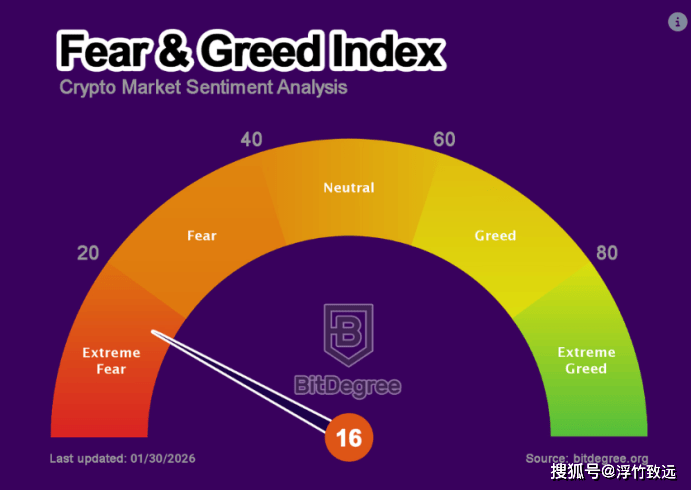
Market Overview - The cryptocurrency market experienced a significant downturn, with the total market capitalization shrinking to approximately $2.82 trillion, reflecting a 5.11% decline over 24 hours, and a trading volume of about $70 billion [1] - Bitcoin fell over 5%, dropping below the $85,000 mark, while other major cryptocurrencies like Ethereum and SOL saw declines exceeding 6% [1] - Over 227,000 traders faced liquidation, with a total liquidation amount of approximately $1.014 billion [1] - The Fear and Greed Index plunged to 16, indicating "extreme fear" among investors, leading to widespread sell-offs [1] Fundamental Analysis - Bitcoin (BTC) faces short-term collapse pressure, with economic risks in the U.S. and over $500 million in liquidations resulting in a market cap loss of about $10 billion [3] - There was a net outflow of $11.37 million from ETFs, indicating a slowdown in institutional demand, although long-term holders are increasing supply, providing some buffer [3] - Ethereum (ETH) shows weak fundamentals, with a rise in active addresses but a slowdown in DeFi and Real World Asset (RWA) adoption; staking withdrawals have cleared, and institutional staking reached $170 million [3] Policy Environment - Uncertainty in the policy landscape has increased, as the Federal Reserve announced on January 28 to maintain interest rates, aligning with expectations [4] - The focus is shifting to the new Fed chair and the 2026 policy outlook, amid geopolitical risks, such as fears of Trump attacking Iran, which are causing market anxiety [4] - There is a risk of a U.S. government shutdown, as federal funding is set to expire on January 30, which could exacerbate market volatility if Congress fails to pass a new budget [4] Technical Analysis - Bitcoin is currently consolidating around $83,000, having touched a low of approximately $81,000 earlier in the day before rebounding [5] - The cryptocurrency is in a downward trend on a weekly basis, with short-term support at the $80,000 level; a drop below this could see it fall to the $76,000 mark, a previous strong support level [5] - For Ethereum, a drop below $2,600 could lead to a decline towards the $2,000 level [5] Operational Strategy - The recommended approach is to focus on defense and observation, waiting for market panic to subside and clearer stabilization signals to emerge [7] - Short-term trading for Bitcoin can be considered within the $81,000 to $86,000 range, while Ethereum can be traded between $2,600 and $2,800, with a strict position control of 10% and proper stop-loss measures [7]