稳定币

Search documents
【独家】前 Uber 早期成员创立 Jarsy,让普通人也可以合规投资优秀创业公司
投资实习所· 2025-12-10 04:44
Core Viewpoint - The article discusses the increasing demand for secondary market transactions of old shares in the primary market, especially as many high-quality startups remain unlisted due to significant valuation adjustments in the IPO market. This has led to the establishment of Jarsy, a platform aimed at democratizing access to investments in top startups like OpenAI and SpaceX, allowing participation with a minimum investment of just $10 [1][3]. Group 1: Jarsy Overview - Jarsy recently completed a $5 million Pre-seed funding round led by Breyer Capital, which previously invested in Circle, indicating strong investor confidence in their model [3]. - The platform combines blockchain technology and stablecoins to ensure regulatory compliance while providing transparency and ease of transactions [3][6]. - Jarsy allows users to purchase fractional shares, starting from a minimum investment of $10, making it accessible to a broader audience [6][13]. Group 2: Tokenization and Trading Mechanism - Jarsy tokenizes real equity assets held in a Special Purpose Vehicle (SPV) in the U.S., ensuring asset transparency and real-time transaction visibility [6]. - Users only hold financial rights to the tokenized shares, which cannot be exchanged for actual stock, thus avoiding classification as securities and lowering investment barriers [7]. - The platform acts as a market maker, purchasing old shares before tokenizing and selling them to retail investors, with a structured buyback mechanism post-IPO [7][10]. Group 3: Investment Opportunities and User Growth - Jarsy offers three modes of investment: real-time private equity, private equity pre-sale, and post-IPO trading, covering the entire lifecycle of share transactions [9][10]. - The platform has attracted around 10,000 users from over 50 countries, with a monthly growth rate of approximately 200%, focusing on user education and trust-building rather than aggressive marketing [14]. - Jarsy aims to simplify the traditionally complex investment process, making it as easy as buying stocks, while ensuring compliance with U.S. regulations for qualified investors [13][14].


稳定币持有1250亿国债禁止付息,XBIT平台USDT资金费率定价逻辑改变
Sou Hu Cai Jing· 2025-12-10 02:07
Core Viewpoint - The implementation of the "Genius Act" has fundamentally altered the pricing mechanism of the stablecoin market, shifting from an "interest-anchored" model to a "liquidity premium" model, as stablecoin issuers are prohibited from paying interest to users [1]. Group 1: Market Dynamics - Tether holds approximately $125 billion in U.S. Treasury bonds, but the new law prevents interest payments to users, creating a significant yield disparity where issuers benefit from stable income while USDT holders face rising opportunity costs [3][4]. - The correlation between USDT funding rates and traditional interest rates is weakening, indicating that even with potential interest rate cuts by the Federal Reserve, USDT holders will not receive direct benefits due to the prohibition on interest payments [6][10]. Group 2: Financial Performance - Tether reported a reserve of $181 billion against liabilities of approximately $174.45 billion, resulting in a surplus of nearly $6.8 billion, with a profit of $10 billion in the first three quarters of the year, making it one of the most profitable companies in the sector [3][12]. - Despite the projected growth of stablecoins by $1.5 trillion over the next five years, this amount is relatively small compared to the U.S. national debt, which exceeds $30 trillion [12][13]. Group 3: User Behavior and Market Trends - In a zero-interest environment, users are shifting their focus from interest income to other cost factors such as transaction fees and transfer speeds, as evidenced by a significant inflow of $931.7 million into Tron stablecoins [9]. - The transition of funds from centralized exchanges to decentralized finance (DeFi) lending markets indicates a search for alternative yield opportunities in the absence of interest payments on USDT [9]. Group 4: Regulatory and Economic Implications - The "Genius Act" mandates that stablecoin issuers maintain 100% reserves in short-term Treasury bonds and cash equivalents, enhancing system security but limiting market flexibility [13]. - Analysts express skepticism about the ability of stablecoins to significantly alleviate national debt issues, emphasizing that while they may not solve debt problems, they do not provide a pathway out of fiscal deficits [12][13].
Coinbase Global (NasdaqGS:COIN) Conference Transcript
2025-12-09 22:22
Summary of Coinbase Global Conference Call (December 09, 2025) Industry Overview - **Industry**: Cryptocurrency and Digital Assets - **Company**: Coinbase Global (NasdaqGS:COIN) Key Points and Arguments Regulatory Environment - The regulatory landscape is evolving with the introduction of the Genius Act, which has provided market rules around stablecoins, leading to increased market activity in this area [5][6] - The Clarity Act, also known as the Market Structure Act, aims to clarify asset taxonomy and delineate regulatory oversight between the SEC and CFTC, fostering innovation in the U.S. crypto market [5][6][7] - Bipartisan support for regulatory clarity is noted, with optimism for progress in early 2026 [7] Market Activity and Performance - A significant sell-off in the crypto market has been observed, with industry trading volumes down 27% quarter-to-date annualized, compared to a 25% decline in the first three quarters of the year [8][9] - Coinbase maintained operational stability during market volatility, highlighting effective risk management and robust controls [9][10] Competitive Landscape - The competitive environment for retail trading has intensified, with more fintech and traditional financial services entering the crypto space [12][13] - Despite increased competition, Coinbase remains confident in its diverse product offerings and customer trust, which are key factors for consumer choice [15][16] Revenue Diversification - Coinbase has focused on diversifying revenue streams, with non-trading revenue growing significantly from 4% of total revenue at IPO to over 50% in some quarters [17] - The company is actively expanding its subscription and services revenue, particularly in staking, lending, and digital asset treasuries [28][30] Derivatives and Product Integration - The integration of Deribit is expected to enhance Coinbase's derivatives trading capabilities, with plans to offer a unified interface for spot, futures, and options trading [20][21] - The company is optimistic about the growth potential of derivatives, particularly in the U.S. market [25] Staking and New Opportunities - Staking has become a $700 million business for Coinbase, with opportunities for further growth as new blockchains and regulatory approvals emerge [28][29] - The company is also exploring the potential of tokenized equities, although regulatory clarity is still needed [49][50] Base Layer 2 Protocol - The Base protocol aims to provide a fast, low-cost infrastructure for transactions, with over $15 billion of USDC already on the platform [33][34] - Coinbase is focused on reducing transaction fees to encourage adoption and increase volume, similar to the evolution of texting services [34][35] Future Outlook - Coinbase anticipates a transformative 2026, with expanded product offerings and continued regulatory clarity [57][58] - The integration of AI and crypto is seen as a significant opportunity for efficiency and innovation [58][59] Upcoming Developments - A product announcement event is scheduled for December 17, 2025, where Coinbase will unveil new asset categories and updates to its platform [51] Additional Important Insights - The Coinbase Card is viewed as a customer acquisition tool, offering unique Bitcoin rewards and driving engagement on the platform [45][46] - The company is committed to customer-led initiatives, aiming to list safe and legal assets while adapting to market demands [39][40] This summary encapsulates the key discussions and insights from the Coinbase Global conference call, highlighting the company's strategic direction, market dynamics, and future opportunities in the cryptocurrency space.

新财观 | 国际货币体系的历史演变、影响因素与改革方向
Xin Hua Cai Jing· 2025-12-09 11:53
Core Viewpoint - The international monetary system has evolved through various phases, including the gold standard, the Bretton Woods system, and the Jamaica system, each with its own characteristics and challenges. The current system, characterized by sovereign credit currencies, faces calls for reform to enhance stability, efficiency, and fairness in response to geopolitical tensions and market innovations [1][2]. Historical Evolution of the International Monetary System - The international monetary system has transitioned through different stages influenced by both monetary and non-monetary factors, with each phase revealing its own issues and providing lessons for future reforms [2]. - The gold standard was characterized by a singular monetary system that lacked true systemic formation, lasting from the 15th century until the early 20th century, with gold and silver serving as the primary international currencies [3][4]. - The Bretton Woods system, established in 1944, marked a significant shift towards collective monetary governance, creating institutions like the IMF and World Bank, and establishing a dollar-gold peg that lasted until 1971 [5][6]. - The Jamaica system, established in 1976, introduced a more diversified approach to currency reserves and exchange rates, allowing for greater flexibility in international payments [6][7]. Challenges of the Jamaica System - The Jamaica system, while promoting a more flexible monetary framework, has been criticized for lacking a hard anchor, leading to potential over-issuance of sovereign credit currencies and exacerbating global financial imbalances [7][8]. - The dominance of the US dollar within the Jamaica system raises concerns about the implications of US monetary policy on global financial stability, as evidenced by the significant US national debt [7][8]. - The governance structure of international financial institutions like the IMF and World Bank is seen as inequitable, with the US holding disproportionate control, complicating effective global monetary governance [7][8]. Factors Influencing Reform of the International Monetary System - The internal dynamics of the international monetary system are increasingly driven by the need for reform, as historical reliance on sovereign currencies has led to recurring financial crises [9][10]. - Geopolitical tensions and the rise of emerging economies are reshaping the global monetary landscape, prompting countries to seek alternatives to the dollar and explore bilateral and regional currency cooperation [11][12]. - Technological innovations in finance, particularly the rise of stablecoins and digital currencies, are challenging traditional monetary systems and pushing for reforms to enhance efficiency and security in cross-border payments [12][13]. Directions for Reforming the International Monetary System - Future reforms should aim to create a more robust international monetary system that maintains stability while allowing for flexibility in currency use and exchange [14][16]. - Enhancing the role of Special Drawing Rights (SDRs) as a super-sovereign currency could address the inequities of relying solely on sovereign credit currencies [17][18]. - Promoting a competitive environment among a limited number of strong sovereign currencies may provide a more balanced approach to international monetary functions, reducing over-reliance on any single currency [18].
价值超1300万虚拟币待认领,警方:六个月无人认领将上缴国库
21世纪经济报道· 2025-12-09 08:43
Core Viewpoint - The article discusses the seizure of 1.9 million USDT (Tether) worth over 13 million yuan by the police in Hubei Province, highlighting the legal implications and the nature of virtual currencies in criminal cases [1][3][5]. Group 1: Seizure of Virtual Currency - The Hubei police announced the seizure of approximately 1.9 million USDT during investigations into extortion and personal information infringement cases, with the original owner currently unidentified [3][5]. - The announcement allows the rightful owner to claim the virtual currency within six months by providing legal proof and identification [3][6]. Group 2: Legal Implications - The police's announcement serves as a typical criminal asset disposal action, aimed at clarifying ownership and ensuring lawful handling of seized assets [6][7]. - The announcement also acts as a reminder for potential victims to come forward if they have evidence related to the crimes [7]. Group 3: Nature of Virtual Currency - USDT is a stablecoin pegged to the US dollar, with its value typically fluctuating around 1 USDT ≈ 1 USD; the current market value of 1.9 million USDT is approximately 13.4 million yuan based on exchange rates [6][7]. - Virtual currencies are recognized as having property value but do not possess legal tender status in China, meaning losses from illegal trading activities are self-borne risks [8]. Group 4: Law Enforcement and Regulation - The police's actions reflect a balance between strict regulation of illegal financial activities involving virtual currencies and the legal protection of potential victims [8][9]. - The case illustrates that virtual currencies can be traced and that attempts to conceal illegal gains using them will face legal repercussions [9]. Group 5: Practical Guidance for Claiming Assets - To reclaim the seized USDT, the rightful owner must provide three types of core evidence: transaction records of USDT purchases, proof of fund sources, and documentation of forced transfers due to criminal activities [9]. - Legal provisions exist for the return of assets that are unrelated to the case, emphasizing the importance of clear ownership in asset recovery [9].

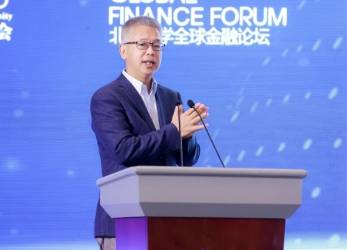
金融学家黄益平:兼具政策影响力与学术权威的数字货币研究者|数字货币专家赋能
Sou Hu Cai Jing· 2025-12-09 08:37
Core Viewpoint - Digital currency is not a short-term trend but a significant variable that is reshaping the rules of payment, clearing, and reserve assets globally [3] Group 1: Digital Currency and Its Impact - Over 90% of virtual asset transactions are completed using stablecoins, with 90% of these stablecoins pegged to the US dollar, creating a new dollar clearing chain led by private institutions [3] - China must actively participate in the rule-making process to avoid being passively involved in future currency competition [3] Group 2: Digital Renminbi (e-CNY) Challenges - The digital renminbi must address three key pain points: safety, inclusivity, and convenience compared to existing mobile payment systems [4] - A dynamic reserve requirement mechanism should be introduced to incentivize commercial banks to promote the digital renminbi [4] - Privacy protection and offline experience need further optimization to ensure users perceive distinct advantages [4] Group 3: Stablecoins and CBDCs - Stablecoins and central bank digital currencies (CBDCs) are not zero-sum; they can complement each other in different scenarios [5] - CBDCs focus on legal tender and regulatory control, suitable for large, cross-border, and public payments, while compliant stablecoins cater to retail and on-chain ecosystem needs [5] - A pilot program for stablecoins linked to offshore renminbi should be initiated in Hong Kong to provide on-chain settlement tools for offshore renminbi assets [5] Group 4: Regulatory Approach - A balance must be struck between visible risks and innovation retention in regulation, moving from prohibition to observable openness [6] - Establishing rules for stablecoin issuers to disclose reserve assets and transaction counterparties is essential [6] - Creating compliance sandboxes in offshore markets like Hong Kong and Hainan can allow institutions to experiment with asset tokenization and stablecoin businesses in a controlled environment [6] Group 5: Internationalization of Renminbi - Digital currency can aid in the internationalization of the renminbi by expanding offshore renminbi liquidity through a cross-border payment system [7] - Increasing the scale of central bank currency swaps and providing liquidity in digital renminbi can create a closed loop for trade partners [7] - The digital currency era is irreversible, and China must maintain financial security while fostering innovation through a balanced approach [7]
价值超1300万泰达币待认领!警方:六个月无人认领将上缴国库
2 1 Shi Ji Jing Ji Bao Dao· 2025-12-09 05:32
Core Viewpoint - The article discusses the seizure of 1.9 million Tether (USDT) worth over 13 million yuan by the police in Hubei Province, highlighting the legal implications and the nature of virtual currency in criminal cases [1][3]. Group 1: Legal Implications - The police announcement regarding the unclaimed virtual currency is a typical action for handling criminal case assets, aimed at clarifying ownership and ensuring lawful processing of seized items [3]. - The announcement serves a dual purpose: it seeks to identify the rightful owner while also encouraging potential victims to report or provide evidence related to the crimes [4]. - The legal status of virtual currencies in China is that they are recognized as having property value but do not possess legal tender status, meaning losses from illegal trading activities are self-borne and not covered by law [6]. Group 2: Regulatory Environment - The Chinese government maintains a strict stance against illegal financial activities involving virtual currencies, emphasizing a "zero tolerance" policy towards such activities [6]. - The case illustrates the increasing capability of law enforcement to trace virtual currencies, countering the notion that they can be used to evade legal accountability [6]. - The regulatory framework is evolving to balance strict oversight of illegal financial activities with the protection of potential victims' rights in cases involving virtual currencies [6]. Group 3: Practical Guidance for Claimants - To reclaim the seized USDT, claimants must provide three core types of evidence: transaction records of USDT purchases, proof of the source of funds, and documentation showing they were forced to transfer funds due to criminal actions [7]. - Legal provisions exist to ensure that property unrelated to the case is returned promptly, and rightful owners can reclaim their assets after proper evaluation [7]. - The use of stablecoins like USDT in financial crimes complicates judicial investigations, but the current case demonstrates the traceability and accountability of virtual currencies in legal contexts [7].

别轻信“造富神话”!多方警示虚拟货币交易炒作风险
Sou Hu Cai Jing· 2025-12-09 03:43
Core Viewpoint - The rise in virtual currency investment is accompanied by significant risks, prompting regulatory bodies in China to issue warnings against virtual currency trading and speculation [1][4]. Group 1: Regulatory Actions - A joint risk warning was issued by seven associations, including the China Internet Finance Association, stating that virtual currencies cannot be used as currency within China and that no tokenization activities have been approved [1]. - The People's Bank of China and other departments have reiterated that virtual currency-related activities are illegal financial activities, specifically naming stablecoins as a form of virtual currency with inherent risks [4][5]. - Regulatory measures have been in place since 2013, prohibiting financial institutions from engaging in activities related to Bitcoin and other cryptocurrencies, highlighting the need for stricter enforcement against illegal trading [5]. Group 2: Market Dynamics - The virtual currency market has seen a resurgence in speculative activities, with social media platforms being used to attract new users with promises of high returns [2]. - Reports indicate that Bitcoin's price has experienced significant volatility, with a drop below $89,000 and a total liquidation amounting to $1.11 billion affecting nearly 100,000 market participants [2][3]. - The allure of quick profits has led many investors to suffer substantial losses, with some reporting complete account depletion due to market fluctuations [3]. Group 3: Investor Awareness - Investors are advised to avoid speculative trading in virtual currencies and to choose legitimate investment channels to protect their assets [8]. - The public is encouraged to remain vigilant against virtual currency-related activities and to report any suspicious activities to regulatory authorities [8]. - The importance of not falling for the "get rich quick" myth is emphasized, along with the need to safeguard personal information and avoid facilitating illegal transactions [8].

马克龙在一场采访中,罕见地提及了货币政策和美国
凤凰网财经· 2025-12-08 14:15
Group 1 - Macron calls for a shift in the European Central Bank's (ECB) monetary policy to focus on economic growth and employment alongside inflation control, breaking the norm of leaders avoiding comments on central bank policies [1][3] - The ECB's current core mission is to maintain medium-term inflation close to 2%, differing from the dual mandate of the Federal Reserve which includes maximizing employment [1] - Macron has previously suggested broadening the ECB's policy objectives to include economic growth and decarbonization goals [1] Group 2 - Macron highlights financial stability risks due to the U.S. relaxing regulations on crypto assets and stablecoins, urging Europe to maintain its status as a stable and credible investment zone [2] - He supports the issuance of European common debt to create more high-liquidity, safe assets, thereby enhancing the euro's status as an international reserve currency [2] - Macron criticizes the ECB's ongoing policy of selling government bonds, suggesting it could lead to higher long-term interest rates, suppress economic activity, and strengthen the euro [3]