
太空数据中心

Search documents
地球快养不起 AI 了,谷歌英伟达被逼上太空,结果便宜了马斯克
Sou Hu Cai Jing· 2025-11-05 07:22
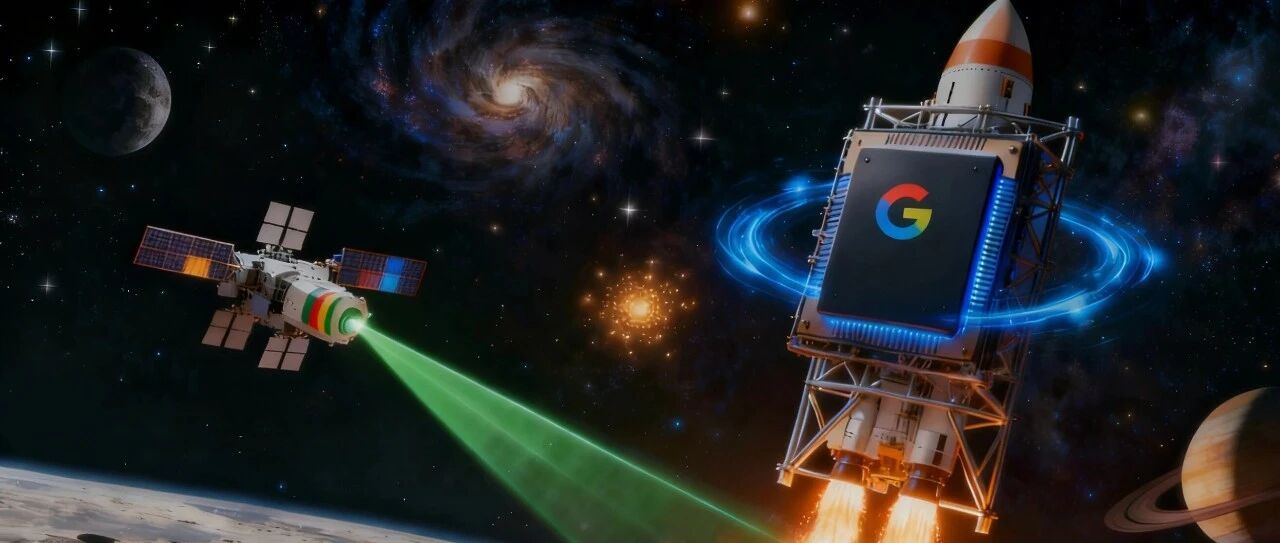
Core Viewpoint - Google has officially launched its lunar data center initiative named Project Suncatcher, aiming to establish a solar-powered AI infrastructure in space to alleviate resource competition on Earth [2][5]. Group 1: Project Overview - The initiative seeks to create a scalable AI infrastructure powered by solar energy in space, addressing the increasing demand for energy and resources for AI operations on Earth [5][9]. - The project is a response to the challenges faced by AI companies regarding energy supply and data center capacity, as highlighted by OpenAI and Microsoft CEOs [5][9]. Group 2: Technical Advantages - Space offers significant advantages for data centers, including: 1. **Efficiency**: Solar panels in space can achieve 8 times the efficiency compared to those on Earth [11]. 2. **Continuous Power Supply**: Unlike Earth, space provides uninterrupted solar energy without the interference of night or clouds [11]. 3. **Resource Conservation**: Space data centers would not consume Earth's limited land or water resources for cooling [12] . Group 3: Technical Challenges - Google identifies three major challenges for the space-based AI data center: 1. **Local Network**: High bandwidth and low latency are required for AI training, which Google plans to achieve through close formation flying and laser communication between satellites [14][15]. 2. **Radiation**: The harsh space environment poses risks to sensitive chips, but Google’s TPU chips have shown surprising resistance to radiation [20][21]. 3. **Data Transmission**: Efficiently transmitting data back to Earth remains a significant challenge, with current ground-to-space communication bandwidth being insufficient for the needs of a space AI data center [24][26]. Group 4: Economic Considerations - The cost of launching payloads into space is a critical factor; Google estimates that if launch costs drop to $200/kg by 2035, the cost of power in space could become competitive with terrestrial data centers [27][32]. - SpaceX is positioned as a key player in making this vision feasible, with its launch cost reduction strategy potentially supporting Google's economic model for space data centers [28][32]. Group 5: Industry Implications - The emergence of space-based data centers could shift the competitive landscape, with companies like SpaceX potentially dominating the space computing market, similar to how NVIDIA dominates the terrestrial GPU market [34][39]. - The recent launch of NVIDIA's H100 GPU into space signifies the growing interest and investment in space-based computing capabilities [34][39].




AI算力竞赛卷上太空!谷歌英伟达竞相押注“太空数据中心”
AI前线· 2025-11-05 05:09
Core Insights - The article discusses the increasing demand for computing power in the AI era, highlighting a "computing power famine" faced by tech giants like Microsoft due to power shortages in data centers [2] - Google has proposed an innovative "AI Computing Moonshot Plan" called "Project Suncatcher," aiming to deploy Tensor Processing Units (TPUs) in space to create a scalable AI computing cluster [2][5] - The initiative is seen as a potential solution to the limitations of terrestrial data centers, which are projected to consume as much electricity as Japan by 2030 [6][11] Group 1 - Google's plan involves launching satellites powered by solar energy to form a computing network in space, which could significantly reduce land and water resource consumption on Earth [5][12] - The expected energy efficiency in space is highlighted, with solar panels potentially capturing eight times more energy than ground-based systems, while also eliminating the need for water cooling [11][12] - The project aims to improve energy utilization by keeping computing in space rather than transmitting energy back to Earth, thus enhancing overall efficiency [13] Group 2 - Google plans to launch the first two satellites of the project by 2027, with a focus on controlling launch costs to ensure commercial viability [15][16] - The anticipated reduction in launch costs to below $200 per kilogram by the mid-2030s is crucial for the project's success [16] - The article also mentions NVIDIA's recent launch of its H100 GPU into space, marking a significant step in the development of "space computing" [19][20] Group 3 - The H100 GPU is expected to perform various tasks in space, including real-time analysis of Earth observation data, showcasing the potential for on-orbit computing [23][26] - The initiative could lead to a tenfold reduction in carbon emissions compared to terrestrial data centers, while also enabling efficient real-time monitoring [26] - The article concludes with a reflection on the implications of moving computing power to space, suggesting a redefinition of AI's boundaries [31][32]
英伟达发射了首个太空AI服务器,H100已上天
3 6 Ke· 2025-11-04 03:39
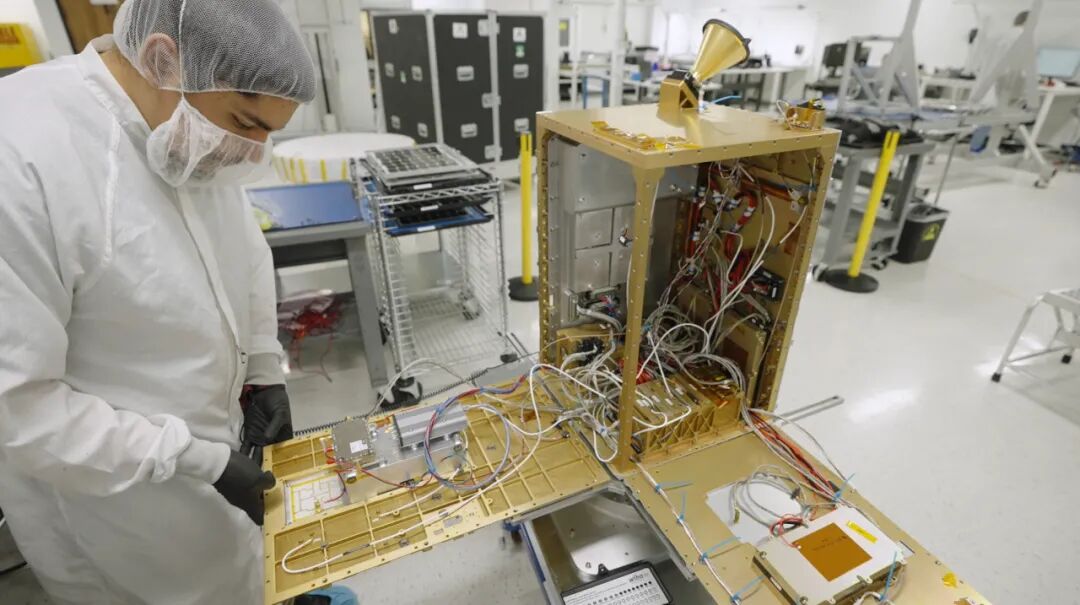
Core Insights - The launch of NVIDIA's H100 GPU into space marks a significant step towards establishing space data centers, which could drastically reduce energy costs and environmental impact compared to terrestrial data centers [2][3][6] Group 1: Space Data Center Advantages - Space data centers are projected to have energy costs only one-tenth of those on Earth, with a significant reduction in carbon emissions over their lifecycle [3][6] - The use of solar energy in space allows for continuous power generation without the need for battery storage, with solar panels in space generating eight times the energy of their Earth counterparts [7][8] - The anticipated launch costs for space data centers are expected to decrease significantly with advancements in rocket technology, potentially reaching as low as $10 to $150 per kilogram [8][10] Group 2: Technological Developments - The Starcloud-1 satellite, equipped with the H100 GPU, will process data from Earth observation satellites in real-time, significantly reducing the amount of data that needs to be transmitted back to Earth [5][10] - Starcloud plans to launch a more powerful data center, Starcloud-2, with ten times the capabilities of Starcloud-1, utilizing NVIDIA's next-generation Blackwell GPU [10][12] - The company envisions a future where nearly all new data centers will be established in space due to limitations on terrestrial energy resources [6][12] Group 3: Industry Context - Starcloud is part of a growing trend among companies exploring the potential of space-based computing, with other firms like Axiom Space and Lonestar Holdings also pursuing similar initiatives [12]
英伟达发射了首个太空AI服务器,H100已上天
机器之心· 2025-11-04 03:13
Core Viewpoint - The article discusses the potential of space-based data centers, highlighting that their energy costs could be only one-tenth of those on Earth, while also significantly reducing carbon emissions during their operational lifecycle [1][5]. Group 1: Space Data Center Development - NVIDIA's H100 GPU has been sent to space for the first time, marking a significant step in the development of space data centers [2][3]. - Starcloud's Starcloud-1 satellite will test various AI processing applications in orbit, paving the way for commercial services as early as next year [3][10]. - The satellite will operate in a low Earth orbit approximately 350 kilometers from Earth, processing data from Capella's synthetic aperture radar satellites [5][10]. Group 2: Environmental and Economic Benefits - Space data centers can utilize nearly unlimited low-cost renewable energy, reducing carbon emissions by a factor of ten compared to terrestrial data centers [5][8]. - The anticipated advancements in rocket technology, particularly from SpaceX, are expected to lower the costs of deploying large-scale computing infrastructure in space [7][8]. - Starcloud predicts that nearly all new data centers will be built in space within the next decade due to limitations on terrestrial energy resources [8]. Group 3: Data Processing Efficiency - The satellite is expected to handle 10GB of data per second, allowing for significant reductions in the amount of data that needs to be transmitted back to Earth [6][10]. - By processing data in orbit, only critical information needs to be sent back, drastically reducing the volume of data transmission [6][10]. Group 4: Future Plans and Projections - Starcloud plans to launch a more powerful data center, Starcloud-2, next year, which will utilize NVIDIA's next-generation Blackwell GPU [10]. - A larger 100kW satellite is projected to be launched by 2027, with plans for a 40MW data center in space by the early 2030s, matching the data processing costs of Earth-based centers [10].
知名机器人公司副总裁突发疾病去世,年仅49岁;千万粉丝车评人陈震回应开劳斯莱斯发生车祸;2025年国庆档电影票房破11亿丨邦早报
创业邦· 2025-10-05 01:09
Group 1 - The passing of Zeng Yu, Vice President of Yuejiang Technology, at the age of 49 due to a sudden illness, highlights the impact of leadership changes in tech companies [2] - The total box office for the 2025 National Day film season has exceeded 1.1 billion, setting a new record [3] - The sales of Dongfeng Motor in September reached 231,000 vehicles, a year-on-year increase of 6.2%, with new energy vehicle sales growing by 20.4% [8] Group 2 - OpenAI CEO Sam Altman is actively seeking partnerships for funding and computing power to support the company's extensive infrastructure plans [14] - The number of artificial intelligence companies in China has surpassed 5,300, with the industry scale exceeding 900 billion yuan, reflecting a 24% year-on-year growth [22] - The UK saw a record high in electric vehicle sales in September, with 72,000 units sold, marking a growth of over 30% year-on-year [22]

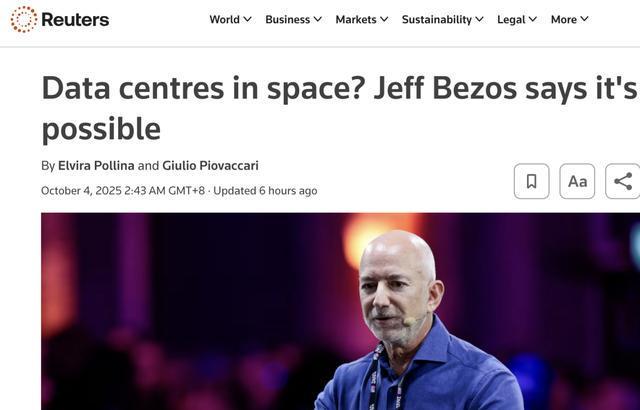
贝索斯称太空数据中心有望在未来10-20年成为现实
Sou Hu Cai Jing· 2025-10-04 08:31
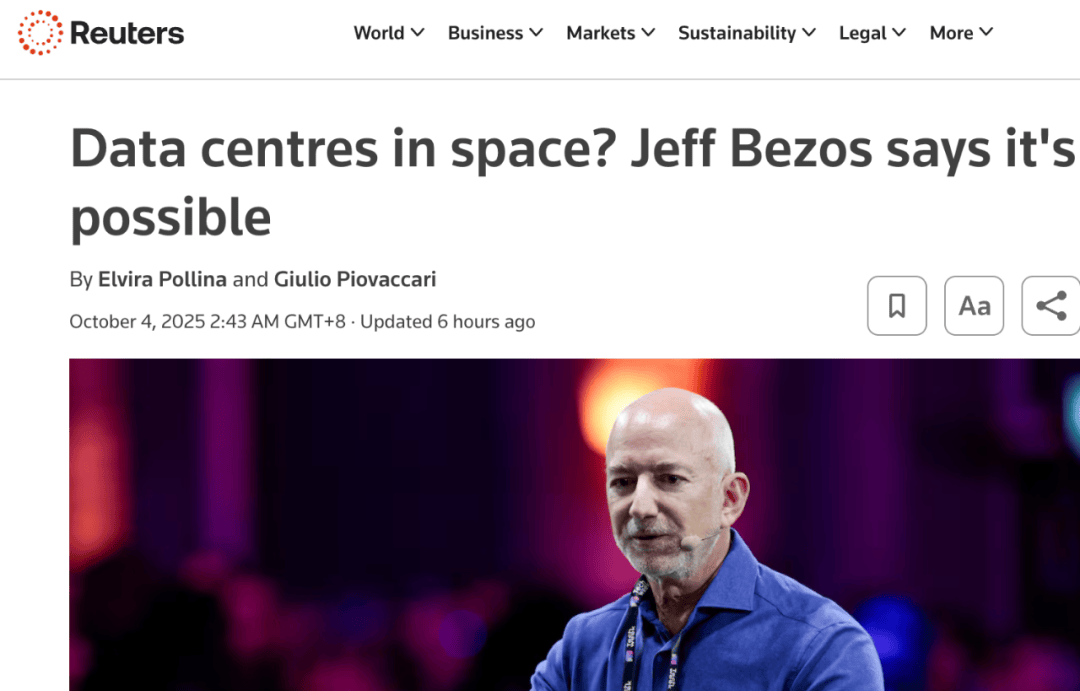
10月4日消息,据路透社报道称,由于地球上的数据中心对用于冷却服务器的电力和水的需求增加,轨道数据中心的概念得到了科技巨头的青睐。日前亚 马逊创始人杰夫·贝索斯预测,未来 10 到 20 年内在太空建造千兆瓦级数据中心。 贝索斯表示:"这些大型训练集群最好建在太空,因为那里有太阳能,全天候供电。那里没有云,没有雨,没有天气变化。未来几十年内,我们将能够降 低太空数据中心的成本。" 谈及当前AI投资热潮,贝索斯表示,"我们应该非常乐观地认为,人工智能对社会产生的积极影响,就像我们25 年前的互联网一样,是真实存在的,并且 会持续下去。重要的是要将潜在的泡沫及其可能发生或不发生的破裂后果与实际情况区分开来。" ...

外媒:贝索斯称太空数据中心有望在未来10-20年成为现实
Huan Qiu Wang Zi Xun· 2025-10-04 05:57
来源:环球网 【环球网科技综合报道】10月4日消息,据路透社报道称,由于地球上的数据中心对用于冷却服务器的 电力和水的需求增加,轨道数据中心的概念得到了科技巨头的青睐。日前亚马逊创始人杰夫·贝索斯预 测,未来 10 到 20 年内在太空建造千兆瓦级数据中心。 贝索斯表示:"这些大型训练集群最好建在太空,因为那里有太阳能,全天候供电。那里没有云,没有 雨,没有天气变化。未来几十年内,我们将能够降低太空数据中心的成本。" 谈及当前AI投资热潮,贝索斯表示,"我们应该非常乐观地认为,人工智能对社会产生的积极影响,就 像我们 25 年前的互联网一样,是真实存在的,并且会持续下去。重要的是要将潜在的泡沫及其可能发 生或不发生的破裂后果与实际情况区分开来。"(青云) ...
中美欧太空竞赛!成都老板完成全球首发,深圳神秘富豪力挺
Sou Hu Cai Jing· 2025-09-04 06:04
Core Viewpoint - The article discusses the emergence of Chengdu Guoxing Aerospace Technology Co., Ltd. (Guoxing Aerospace) as a significant player in the commercial space sector, aiming to become the first commercial aerospace stock in Hong Kong, with a focus on AI satellite technology and space computing capabilities [2][21]. Company Overview - Guoxing Aerospace has submitted its listing application to the Hong Kong Stock Exchange, targeting to be the "first commercial aerospace stock" in the market [2]. - The company is one of the few in China that covers the entire satellite value chain, including design, manufacturing, launch, and operation [2]. - It successfully launched the world's first space computing constellation in May 2023, marking a significant milestone in the industry [2]. Market Position - According to data, Guoxing Aerospace ranks second among Chinese private commercial aerospace companies managing the complete satellite value chain, with a market share of 22.1% based on projected 2024 revenue [2][11]. - The company leads in the number of AI satellites launched, having deployed 27 satellites, 21 of which are AI satellites, making it the top private aerospace firm in this category in China [6][11]. Technological Advancements - Guoxing Aerospace focuses on two types of AI satellites: AI application satellites and AI computing satellites, the latter serving as powerful computing resources in space [6]. - The company has launched the first AI application satellite in December 2018 and the first AI computing satellite in February 2024 [6]. - The recently launched AI computing constellation consists of 12 satellites, each with a maximum computing power of 744 TOPS, collectively achieving 5 POPS of space computing capability [7]. Financial Performance - The company has shown rapid revenue growth, with projected revenues of 1.77 billion yuan in 2022, 5.08 billion yuan in 2023, and 5.53 billion yuan in 2024, reflecting a compound annual growth rate of 76.6% [21]. - Despite the growth in revenue, the company has reported net losses of 909 million yuan in 2022, 1.39 billion yuan in 2023, and 1.77 billion yuan in 2024, indicating it is still in a critical development phase [24]. Investment and Financing - Guoxing Aerospace has completed ten rounds of financing since its establishment, raising nearly 2 billion yuan, with a significant increase in valuation from 95 million yuan to 6.7625 billion yuan over seven years [12][16]. - The company has attracted investments from notable entities, including Hongtai Fund and Xinghe Group, which have a background in real estate [12][16]. Industry Context - The commercial space sector in China is expected to exceed 600 billion yuan by 2028, driven by favorable policies and market conditions [21]. - The global competition in space computing is intensifying, with major players like the U.S. and Europe investing heavily in space data centers and AI capabilities [25][30].

中美欧太空竞赛!成都老板完成全球首发,深圳神秘富豪力挺
创业邦· 2025-09-04 03:37
Core Viewpoint - The article highlights the emergence of Chengdu Guoxing Aerospace Technology Co., Ltd. as a leading player in the commercial aerospace sector, particularly in the development and launch of AI satellites, positioning itself for a significant role in the future of space computing and technology [4][28]. Company Overview - Guoxing Aerospace has submitted its listing application to the Hong Kong Stock Exchange, aiming to become the first commercial aerospace company listed in Hong Kong [3]. - The company is one of the few in China that covers the entire satellite design, manufacturing, launch, and operation chain, having successfully launched the world's first space computing constellation in May 2023 [3][4]. Market Position - According to data, Guoxing Aerospace ranks second among Chinese private commercial aerospace companies managing the complete satellite industry value chain, with a market share of 22.1% based on projected 2024 revenue [4][13]. - The company leads in the number of AI satellites launched, having deployed 27 satellites, of which 21 are AI satellites, making it the top private commercial aerospace firm in this category in China [8][13]. Technological Advancements - Guoxing Aerospace has developed two types of AI satellites: AI application satellites that can autonomously analyze and process data, and AI computing satellites that deploy powerful computing capabilities in space [8]. - The company successfully launched the world's first AI computing satellite constellation in May 2023, consisting of 12 satellites, which collectively provide a space computing capability of 5 petaflops (POPS) [9]. Financial Performance - The company has shown rapid revenue growth, with projected revenues of 1.77 billion yuan in 2022, 5.08 billion yuan in 2023, and 5.53 billion yuan in 2024, reflecting a compound annual growth rate of 76.6% [29]. - Despite the growth in revenue, Guoxing Aerospace is currently in a loss-making phase, with net losses of 909 million yuan in 2022, 1.39 billion yuan in 2023, and 1.77 billion yuan in 2024 [32]. Strategic Initiatives - The "Star Computing" plan aims to establish a space-based computing network consisting of 2,800 AI satellites, which will provide low-cost, sustainable computing resources for both space and ground applications [8][11]. - The company has received approval for a plan to launch an additional 60 satellites by February 2025, marking the first phase of its "Star Computing" initiative [11]. Industry Context - The commercial aerospace sector in China is expected to exceed 600 billion yuan by 2028, driven by favorable policies and market demand [28]. - Chengdu is positioning itself as a core hub for the aerospace industry, with initiatives aimed at creating a comprehensive satellite industry ecosystem [28].
顺灏股份(002565) - 顺灏股份投资者关系活动记录表--2025年8月21日
2025-08-21 09:44
Group 1: Company Overview - Shanghai Shunhao New Materials Technology Co., Ltd. focuses on "environmental low-carbon new materials + biological health" dual development strategy [2] - The company operates four main business areas: special environmental paper, printing products, industrial hemp processing, and new tobacco products [2][3] - The special anti-counterfeit environmental paper business includes vacuum aluminum paper and laser anti-counterfeit materials, primarily serving specific consumer goods and social consumer goods industries [2][3] Group 2: Business Performance - The printing business relies on bidding projects to secure orders, offering high customization and stability compared to other printing products [3] - The company has maintained stable revenue and profit levels in its core businesses over recent years [3] - New tobacco business has developed through subsidiaries, generating significant business revenue [3] Group 3: Industrial Hemp and International Expansion - The industrial hemp business focuses on CBD extraction and product export, with a subsidiary in the U.S. offering products like Vitaldiol—R series [3] - The company has plans for international product offerings that emphasize natural health [3] Group 4: Recent Investments and Financial Insights - The company invested 110 million RMB for a 19.30% stake in Beijing Rail Space Technology Co., Ltd. [3] - In the first half of 2025, pre-receipts increased by 2.6125 million RMB, accounting for only 0.10% of total assets [3] Group 5: Regulatory Compliance - The company adhered to regulations during investor relations activities, ensuring no undisclosed significant information was leaked [4]
