
创新药出海

Search documents
百济神州打赢了关键一战
经济观察报· 2025-10-11 08:31
Core Viewpoint - The voluntary withdrawal of the lawsuit by both parties marks a significant victory for BeiGene and represents a shift for Chinese innovative pharmaceutical companies from "defensive outbound" to "rule-based outbound" strategies [1][16]. Summary by Sections Patent Dispute Conclusion - The two-year patent battle concluded with BeiGene successfully defending its position as AbbVie decided not to appeal the final decision of the U.S. Patent and Trademark Office [2][3]. - The resolution clears the patent obstacles for Zanubrutinib in the U.S. market, which is the first innovative drug approved in the U.S. from China and has generated over $6.4 billion in revenue for BeiGene [3][4]. Strategic Importance of Zanubrutinib - Zanubrutinib is crucial for BeiGene, contributing over 70% of its sales, and serves as a key product for entering the U.S. and global markets [12]. - The drug has achieved significant market share, surpassing its competitor Ibrutinib in the BTK inhibitor field by mid-2025 [3][13]. Legal Strategy and Tactics - A pivotal moment in the patent battle was BeiGene's proactive approach in initiating a Post Grant Review (PGR) process, leading to the invalidation of AbbVie's patent [6][8]. - This strategy shifted the focus from infringement to the validity of the patent itself, allowing BeiGene to take the initiative rather than merely defending against claims [9][10]. Implications for Chinese Pharmaceutical Companies - The outcome is viewed as a landmark victory for Chinese innovative pharmaceutical companies in navigating the U.S. intellectual property landscape [4][16]. - The case serves as a reference model for other Chinese companies facing complex patent disputes abroad, emphasizing the importance of understanding U.S. patent law and utilizing various procedural tools [17][18]. Future Considerations - Despite the victory, the competitive landscape remains challenging, and Chinese pharmaceutical companies must continue to innovate and comply with international regulations [14][16]. - Establishing a robust global intellectual property strategy is essential for both defensive and offensive maneuvers in future patent disputes [18].


“高效研发+成本优势”获认可 创新药出海热潮涌动
Zhong Guo Zheng Quan Bao· 2025-10-10 20:58
Core Insights - The collaboration between Innovent Biologics and Zenas marks a significant global licensing agreement exceeding $2 billion, highlighting the trend of Chinese innovative drugs entering international markets [1] - The increasing number and value of overseas licensing agreements reflect the global recognition of China's R&D capabilities in the innovative drug sector [4][5] Group 1: Global Licensing Agreements - The recent licensing agreements by domestic companies are expected to accelerate the global development and commercialization of their products [2] - Innovent Biologics' agreement will expedite the global development of its drug, Oubatinib, and other pipeline products, enhancing its international competitiveness [2] - In September, several companies, including Heng Rui Medicine, secured overseas licensing deals, indicating a growing trend in the industry [2][3] Group 2: Market Recognition and Trends - By the first half of 2025, the total value of China's innovative drug licensing agreements reached nearly $66 billion, indicating increasing global acceptance [4] - The core drivers for overseas licensing include establishing trust through clinical validation and the need for efficient capital recovery in the long R&D cycles of innovative drugs [4][6] - The impending patent cliff for major pharmaceutical companies is driving them to seek innovative drug assets globally, further boosting the demand for Chinese innovations [4] Group 3: Policy Support and Market Dynamics - The development of innovative drugs in China is supported by government policies aimed at enhancing health insurance and promoting collaboration between health services and pharmaceutical companies [7] - The introduction of a commercial health insurance directory for innovative drugs is expected to expand the market, with projected payouts reaching approximately 12.4 billion yuan in 2024 [7] - The dual-driven model of R&D and commercialization is emerging, with leading companies leveraging their differentiated pipelines to enter profitability [8]

“高效研发+成本优势”获认可创新药出海热潮涌动
Zhong Guo Zheng Quan Bao· 2025-10-10 20:57
Core Insights - The recent global licensing agreement between Innovent Biologics and Zenas has a potential total transaction value exceeding $2 billion, marking a significant milestone for Chinese innovative drugs entering international markets [1] - The trend of increasing overseas licensing agreements reflects the global recognition of China's innovative drug development capabilities, driven by effective research and cost advantages [1][3] Group 1: Global Licensing Agreements - The agreement is expected to accelerate the global development and commercialization of drugs like Orelabrutinib, enhancing the company's international competitiveness [1] - In September, several Chinese pharmaceutical companies, including Heng Rui Medicine, secured overseas licensing deals, indicating a growing trend in the industry [1][2] - Heng Rui Medicine's agreements with Glenmark Specialty and Braveheart Bio aim to expand the overseas market for their innovative drugs, further enhancing their international performance [2] Group 2: Market Dynamics and Trends - By the first half of 2025, the total value of China's innovative drug licensing agreements approached $66 billion, showcasing the increasing acceptance of Chinese innovative drugs in the global market [2][3] - The core drivers for overseas licensing include establishing trust through clinical validation and the need for rapid capital recovery due to the lengthy and costly drug development cycles [3] - The impending patent cliff for major pharmaceutical companies is prompting them to seek innovative drug assets globally, further driving demand for Chinese innovations [3] Group 3: Long-term Industry Impact - The trend of increasing licensing agreements is expected to create a positive cycle of "R&D-licensing-reinvestment," providing financial support for ongoing innovation [4] - Chinese innovative drug companies are becoming integral to the global research ecosystem, enhancing their positioning in the global value chain [4] Group 4: Policy Support - The development of innovative drugs in China is supported by government policies, including recent guidelines aimed at promoting high-quality health insurance and collaboration between health insurance and pharmaceutical companies [4][5] - The establishment of a commercial health insurance directory for innovative drugs is expected to expand the market, with projected total compensation for innovative drugs reaching approximately 12.4 billion yuan in 2024 [5] - The evolving payment systems for innovative drugs are anticipated to create a positive feedback loop, encouraging insurance companies to include more innovative drugs in their coverage [5]
港股投资双视角:AI+创新药|2025招商证券“招财杯”ETF实盘大赛
Quan Jing Wang· 2025-10-10 13:30
Group 1 - The core viewpoint of the articles emphasizes the positive outlook for the Hong Kong stock market, particularly in sectors like AI and innovative pharmaceuticals, which are experiencing valuation premiums due to their growth potential [2][3][5] - The Hong Kong stock market has shown signs of recovery since 2024, driven by low valuations, a stable interest rate environment from the Federal Reserve, and strong inflows from southbound capital [3][4] - The AI sector is revitalizing the technology segment in the Hong Kong market, with significant investments from major internet companies in AI infrastructure and applications [4][11] Group 2 - The innovative pharmaceutical sector has seen a remarkable increase, with the index for innovative drugs rising over 110% this year, supported by demographic trends, policy reforms, and payment system improvements [18][19] - The demand for innovative drugs is bolstered by an aging population, with projections indicating that by 2024, approximately 15.6% of China's population will be over 65 years old, leading to increased healthcare spending [18][19] - The trend of Chinese pharmaceutical companies going global is enhancing their valuation and stock price stability, with significant upfront payments from international partnerships [20][22] Group 3 - The AI sector is expected to reshape investment logic, with opportunities arising from hardware, software, and application layers, particularly in industries like gaming, finance, and healthcare [11][12] - The performance of the Hang Seng Technology Index, which has risen over 30% this year, is closely tied to the advancements in AI technology and its commercial applications [12][17] - The innovative drug sector's growth is also supported by favorable policies aimed at expediting clinical trials and approvals, enhancing the market's attractiveness for investors [19][24] Group 4 - The influx of southbound capital into the Hong Kong market is expected to continue, driven by the relative valuation advantages of Hong Kong-listed technology and biopharmaceutical companies compared to their A-share counterparts [6][8] - The unique characteristics of the Hong Kong market, including the presence of many high-quality internet and innovative pharmaceutical companies, provide diverse investment opportunities for mainland investors [6][8] - The ongoing development of AI technologies is seen as a new engine for corporate performance, moving beyond the narrative of merely being a costly investment [13][14]

如何理解诺诚健华20亿美元出海大单?
2 1 Shi Ji Jing Ji Bao Dao· 2025-10-10 10:55
Core Viewpoint - The collaboration between domestic biotech company InnoCare (诺诚健华) and US-based Zenas BioPharma is a significant licensing deal, valued at over $2 billion, aimed at advancing InnoCare's autoimmune pipeline products internationally, particularly the core product Obexelimab [1][8]. Group 1: Financial Aspects - The total deal value exceeds $2 billion, including an upfront payment and near-term payments totaling approximately $294 million, which consists of $100 million in cash and 7 million shares of Zenas stock valued at around $194 million [8][10]. - InnoCare is also entitled to receive additional milestone payments based on clinical development, registration, and commercialization achievements, with potential royalties on net sales reaching up to 19% [8][10]. Group 2: Strategic Rationale - InnoCare chose Zenas due to its strong alignment in the autoimmune disease space, particularly in multiple sclerosis, which complements the development of Obexelimab [3][4]. - Zenas's leadership, particularly CEO Lonnie Moulder, brings extensive experience in clinical development and commercialization, enhancing the potential for successful international product development [5][6]. - The collaboration is seen as a strong partnership that could significantly increase the chances of success for Obexelimab in global Phase III clinical trials and expand its application to more autoimmune indications [4][5]. Group 3: Market Reception - Analysts from Goldman Sachs have maintained a "Buy" rating for InnoCare, raising the price targets for its Hong Kong and A-shares by 21.7% and 54.6%, respectively, indicating strong market confidence in the deal [2][1]. - Zenas has received a "Strong Buy" rating from Wall Street analysts, with an average target price of $33.25, reflecting positive sentiment regarding its potential in the autoimmune sector [6][7]. Group 4: Industry Impact - This licensing agreement sets a new record for external licensing in China's autoimmune sector, showcasing InnoCare's ability to attract international partnerships and recognition for its innovative drug pipeline [8][12]. - The successful international collaboration is viewed as a testament to the growing strength of Chinese biotech firms in the global market, enhancing confidence in the internationalization of China's biopharmaceutical industry [12].



诺诚健华放弃巨头背书,奥布替尼二次出海换2.8亿美元“首付+股权绑定”
Tai Mei Ti A P P· 2025-10-09 15:15
Core Viewpoint - The recent licensing agreement between Nuo Cheng Jian Hua and Zenas has led to a significant market reaction, with Nuo Cheng Jian Hua's stock dropping while Zenas's stock surged, indicating a divergence in market sentiment regarding the deal's value and potential [1][2]. Summary by Sections Licensing Agreement Details - Nuo Cheng Jian Hua has licensed its BTK inhibitor, Oubutini, for multiple sclerosis and other autoimmune diseases to Zenas, receiving an upfront payment of $100 million, milestone payments, and 7 million shares of Zenas stock, with a total potential deal value exceeding $2 billion [1][2]. - The upfront payment and stock value combined amount to $280 million, which is considered reasonable compared to industry standards, where the average upfront payment ratio is around 8% [3]. Market Reaction and Sentiment - The market's cautious sentiment towards the deal stems from two main concerns: the upfront payment not meeting expectations and the perceived lack of recognition of Zenas as a partner [2][5]. - Nuo Cheng Jian Hua's stock fell by 6.24% in A-shares and 11.64% in Hong Kong shares, while Zenas's stock rose by 24.22% following the announcement [1]. Strategic Considerations - Nuo Cheng Jian Hua had previously engaged with multinational corporations (MNCs) but ultimately chose Zenas due to smoother communication and Zenas's strong clinical development capabilities, particularly in the field of multiple sclerosis [5][10]. - Zenas, founded in 2019 and listed on NASDAQ in 2024, currently has no commercial products but has a promising pipeline, including a dual-function monoclonal antibody that complements Oubutini [7][8]. Industry Context - The collaboration reflects a shift in the global innovation drug landscape from one-time licensing deals to deeper collaborative models, where local pharmaceutical companies can retain equity in new ventures [12]. - Nuo Cheng Jian Hua's previous partnership with Biogen ended after about 18 months, highlighting the challenges in securing long-term collaborations in the industry [11]. Future Outlook - The partnership aims to advance the development of Oubutini in treating primary and secondary progressive multiple sclerosis, with significant market opportunities projected in the U.S. alone [8]. - The success of this collaboration will depend on Zenas's ability to progress its pipeline and the overall market performance of its shares [12].
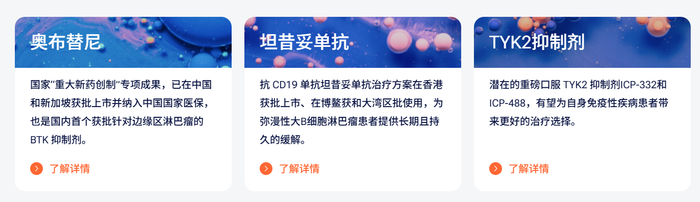
诺诚健华核心产品重新出海,创始人回应为何没选大药企
Xin Lang Cai Jing· 2025-10-09 11:25
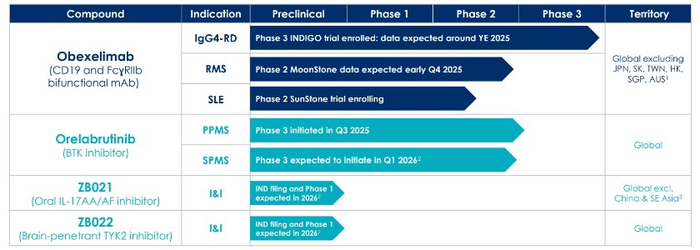
Core Viewpoint - The domestic innovative drug company, Nuo Cheng Jian Hua, has re-entered the international market with its BTK inhibitor, Obexelimab, through a licensing agreement with Nasdaq-listed Zenas, with a total transaction value exceeding $2 billion [1][2]. Group 1: Licensing Agreement Details - Nuo Cheng Jian Hua has signed a licensing agreement with Zenas, granting exclusive global rights for Obexelimab in multiple sclerosis (MS) and other indications outside Greater China and Southeast Asia [1]. - The agreement includes an upfront payment of $100 million and milestone payments, along with 7 million shares of common stock from Zenas, representing approximately 9.3% of Zenas' issued and outstanding shares [1][2]. - Zenas plans to initiate a Phase 3 study for secondary progressive MS (SPMS) in Q1 2026 and advance the IL-17 and TYK2 inhibitors into clinical stages in 2026 [2]. Group 2: Market Potential and Product Pipeline - The commercial opportunity for SPMS and primary progressive MS (PPMS) in the U.S. is estimated to exceed $12 billion, with SPMS and PPMS accounting for 20% and 10-15% of all MS subtypes, respectively [4]. - Obexelimab is a key product for Nuo Cheng Jian Hua, which has already been approved in China for various hematological malignancies since December 2020 [3][4]. Group 3: Strategic Considerations - Nuo Cheng Jian Hua's choice of Zenas as a partner was influenced by Zenas' clinical development capabilities in the autoimmune field and the successful entrepreneurial background of Zenas' founder, Lonnie Moulder [5][6]. - The collaboration is expected to facilitate the rapid advancement of Obexelimab and other products into international markets, leveraging Zenas' resources and influence [6][7]. Group 4: Financial Performance - In the first half of 2025, Nuo Cheng Jian Hua reported revenue of 731 million yuan, a year-on-year increase of 74.26%, with Obexelimab sales reaching 637 million yuan, up 52.84% [8]. - The company had a cash and cash equivalents balance of 4.701 billion yuan as of mid-2025 [9].
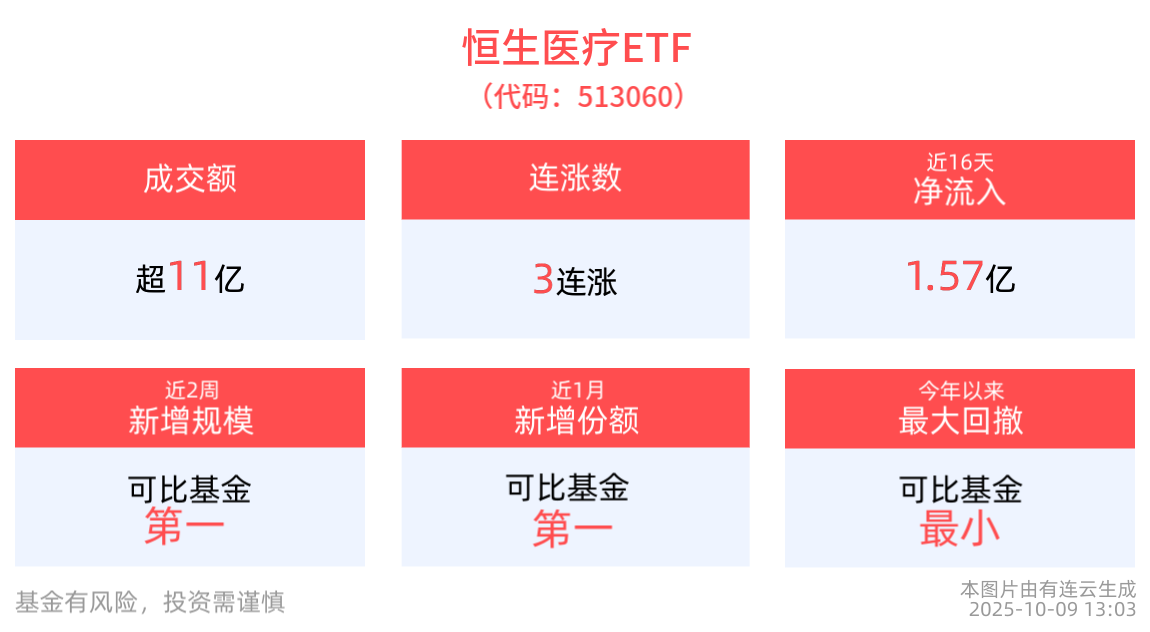
诺诚健华与Zenas达成超20亿美元授权协议,恒生医疗ETF(513060)冲击3连涨,备受资金青睐
Xin Lang Cai Jing· 2025-10-09 05:24
截至2025年10月9日 13:04,恒生港股通创新药精选指数下跌4.58%。成分股方面涨跌互现,石四药集团领涨3.12%,华润医药上涨1.23%,山东新华制药股份 上涨0.99%;诺诚健华领跌9.73%,荣昌生物下跌9.36%,科伦博泰生物-B下跌8.31%。港股创新药精选ETF(520690)下跌0.49%,最新报价1.02元。拉长时间 看,截至2025年9月30日,港股创新药精选ETF近2周累计上涨1.09%。 流动性方面,港股创新药精选ETF盘中换手19.17%,成交8400.15万元,市场交投活跃。拉长时间看,截至9月30日,港股创新药精选ETF近1月日均成交1.58 亿元。 截至2025年10月9日 13:03,恒生医疗保健指数下跌3.31%。成分股方面涨跌互现,脑动极光-B领涨7.79%,心泰医疗上涨3.52%,同仁堂国药上涨3.37%;诺 诚健华领跌9.78%,科伦博泰生物-B下跌8.23%,四环医药下跌7.69%。恒生医疗ETF(513060)上涨0.14%, 冲击3连涨。最新价报0.74元。拉长时间看,截至 2025年9月30日,恒生医疗ETF近2周累计上涨1.24%。 流动性方面,恒生医 ...
首付款1亿美元,潜在总交易金额超20亿美元 诺诚健华宣布年内第二笔BD授权,转让3款自免管线
Mei Ri Jing Ji Xin Wen· 2025-10-09 00:04
Core Viewpoint - The company announced a licensing agreement with Zenas for its core product, Orelabrutinib, in the field of multiple sclerosis and other non-oncological treatments, while retaining rights in oncology [1][2]. Group 1: Licensing Agreement Details - The agreement includes a $100 million upfront payment and potential milestone payments, with a total deal value exceeding $2 billion [1]. - Zenas will also issue 7 million shares of common stock to the company, with additional payments tied to clinical development and commercialization milestones [1]. - The agreement allows Zenas to develop and commercialize Orelabrutinib globally for multiple sclerosis and other non-cancer indications [1][2]. Group 2: Product and Market Insights - Orelabrutinib is currently approved for three indications in hematological cancers in China, with ongoing clinical trials for multiple sclerosis [2]. - The company retains exclusive global rights for Orelabrutinib in oncology, establishing a dual strategy of self-research in oncology and licensing in autoimmune diseases [2]. - The new oral IL-17 AA/AF inhibitor and the brain-penetrant oral TYK2 inhibitor are in preclinical stages, targeting autoimmune diseases like psoriasis and psoriatic arthritis [3]. Group 3: Market Context and Future Prospects - The global market for multiple sclerosis treatments is significant, particularly in Europe and North America, where the disease has a higher prevalence [5]. - The company’s Orelabrutinib shows advantages in kinase selectivity and binding affinity, indicating strong clinical development potential [5]. - The oral IL-17 AA/AF inhibitor addresses the challenge of injection-based therapies, which may improve patient compliance [5]. Group 4: Financial Position - As of June 30, 2025, the company holds approximately 7.68 billion yuan in cash and equivalents, indicating a strong financial position within the biotech sector [6].
潜在交易额超20亿美元诺诚健华达成重磅对外授权协议
Shang Hai Zheng Quan Bao· 2025-10-08 18:14
Group 1 - The core point of the article is that Nocare Biopharma has entered into a significant global licensing agreement with Zenas BioPharma, with a potential total transaction value exceeding $2 billion, focusing on the development of Obutinin for multiple sclerosis and other autoimmune diseases [1][2] Group 2 - Nocare Biopharma will receive an upfront payment of $100 million, milestone payments, and 7 million shares of common stock from Zenas, along with potential future milestone payments and royalties of up to 10% from annual net sales of the licensed products [2] - Obutinin is the first CNS-penetrant BTK inhibitor to enter Phase III clinical trials globally, with trials for primary progressive multiple sclerosis (PPMS) starting in Q3 2025 and secondary progressive multiple sclerosis (SPMS) trials expected to begin in Q1 2026 [2] Group 3 - Obutinin has already been approved for lymphoma treatment and shows significant potential for treating autoimmune diseases, with its design initially aimed at addressing such conditions [3] - The drug has been approved for four hematological indications in China, with three included in medical insurance, and is expected to gain additional indications in 2025, enhancing its market presence [3] Group 4 - The company is also focusing on strengthening its drug discovery platform to develop first-in-class and/or best-in-class autoimmune disease pipelines, addressing unmet medical needs both in China and globally [4]