
绿色化

Search documents
500亿元大单!两大央企,签了!
券商中国· 2025-12-09 08:41
券中社 × 券商中国 券 中 社 扫码下载券中社APP 扫码关注券商中国公众号 quanshangcn qzs.stcn.com 舞中 券中社APP 券 商 中 国 是 证 券 市 场 权 威 媒 体 《 证 券 时 报 》 旗 下 新 媒 体 , 券 商 中 国 对 该 平 台 所 刊 载 的 原 创 内 容 享 有 著 作 权 , 未 经 授 权 禁 止 转 载 , 否 则 将 追 究 相 应 法 律 责 任 。 责编: 汪云鹏 校对: 陶谦 百万用户都在看 突然!美国决定:撤销! 杀疯了!半小时500亿元!刚刚,重磅利好彻底引爆! 周末,利好来了!两部门,重磅发布! 突发公告!重大资产重组,股价提前异动! 违法和不良信息举报电话:0755-83514034 邮箱:bwb@stcn.com 昨天(8日), 中船集团 与中国远洋海运集团在上海完成了新造船项目的合作签约,金额超500亿元人民币 , 这是我国船企签订的国内单次合作签约最高金额的订单。 在签约的新造船项目订单中,新造船合作涉及各型船舶87艘。 中船集团相关负责人表示,随着全球能源技术革命、5G物流网基础设施完善以及AI人工智能的叠加作用,当 前, ...



橡胶履带领军企业今日开启申购 元创股份即将登陆深主板
Zheng Quan Ri Bao· 2025-12-09 05:40
Core Viewpoint - Yuan Chuang Technology Co., Ltd. (stock code: 001325.SZ) has officially launched its IPO, with 19.6 million shares being offered at a price of 24.75 yuan per share, representing 25% of the total post-issue share capital [1] Group 1: Company Overview - Yuan Chuang Technology specializes in the research, production, and sales of rubber track products, including agricultural and engineering machinery rubber tracks [1] - The company has established strong partnerships with well-known manufacturers in the agricultural and engineering machinery sectors, such as Wode Agricultural Machinery and SANY Heavy Industry, and has built a global sales network covering multiple continents [2] Group 2: Financial Performance - The company's revenue from 2022 to the first half of 2025 is projected to be 1.261 billion yuan, 1.141 billion yuan, 1.349 billion yuan, and 652.54 million yuan, respectively [1] - The net profit before and after non-recurring gains and losses for the same period is expected to be 137 million yuan, 176 million yuan, 150 million yuan, and 72.56 million yuan, respectively, indicating stable revenue and profit performance [1] Group 3: Technological Innovation - Yuan Chuang Technology has participated in drafting national standards for rubber tracks and has obtained a total of 38 patents, including 12 invention patents, 24 utility model patents, and 2 design patents [2] - The company has received multiple industry honors, reinforcing its reputation as a leading enterprise in the rubber track sector [2] Group 4: Future Outlook - The funds raised from the IPO will be primarily allocated to production base construction, technology center development, and working capital supplementation, aimed at enhancing production intelligence and optimizing product structure [3] - The company plans to focus on the rubber track business while adapting to trends in manufacturing, such as smart, green, and international development, to strengthen its core competitiveness [3]
研判2025!中国无线电探空仪行业分类、产业链及市场规模分析:技术市场双轮驱动,智能化绿色化发展巩固全球领先地位[图]
Chan Ye Xin Xi Wang· 2025-12-09 03:31
Industry Overview - The Chinese radiosonde industry is currently experiencing a dual drive of technological upgrades and market expansion, with a projected market size of approximately 2.914 billion yuan in 2024, representing a year-on-year growth of 12.29% [1][8] - The frequency coding method has become mainstream, with BeiDou/GPS integration achieving comprehensive ground-to-air IoT coverage, detecting altitudes of 60-70 km and reaching international advanced precision levels [1][8] - Future developments are expected to lead the industry towards intelligent, green, and global directions, reinforcing China's leading position in global radiosonde technology and supporting high-quality development in meteorological warning, climate research, and low-altitude economy [1][8] Market Size - The market size of the Chinese radiosonde industry is projected to reach approximately 2.914 billion yuan in 2024, with a year-on-year growth of 12.29% [1][9] - The industry is driven by technological advancements, particularly the adoption of frequency coding and BeiDou/GPS integration, which enhances detection capabilities and precision [1][9] Industry Chain - The upstream of the radiosonde industry includes raw materials and components such as sensors, conversion circuits, encoding devices, radio transmitters, and power supplies [6] - The midstream involves the production and manufacturing of radiosondes, while the downstream focuses on applications in meteorological forecasting, aerospace, and military sectors [6] Key Enterprises - The competitive landscape of the Chinese radiosonde industry is characterized by a concentration of leading players driven by technology [9] - Shanghai Changwang, established in 1930, leads the market with its GTS1 digital radiosonde, producing 150,000 units annually and supplying 90 meteorological stations [10] - China Huayun Meteorological Technology Group, a subsidiary of the China Meteorological Administration, holds a significant market share in P-band and L-band systems and is a leader in the BeiDou radiosonde field [9][10] Development Trends 1. **Accelerated Technological Upgrades**: The industry is transitioning from electronic to intelligent digital radiosondes, with BeiDou/GPS dual-mode positioning technology expected to be fully implemented by 2025, enhancing wind measurement precision [11] 2. **Expansion of Low-altitude Economy**: The low-altitude economy in China is projected to reach 670.25 billion yuan in 2024, opening new growth avenues for radiosondes in various applications beyond traditional meteorological observation [11] 3. **Accelerated Domestic Substitution**: The core components of radiosondes are increasingly being domestically produced, with the BeiDou radiosonde system achieving 100% autonomy, and advancements in temperature detection precision [12]

大国品牌担当,赋能家具革新!左右沙发董事长黄华坤亮相CCTV2
Sou Hu Cai Jing· 2025-12-08 12:49
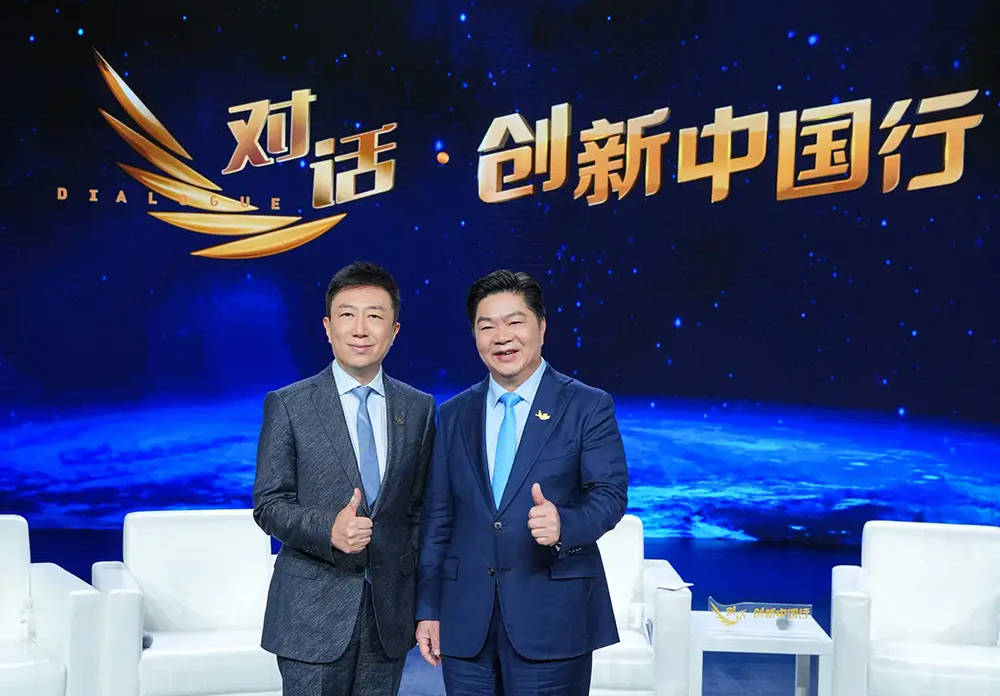
Core Viewpoint - The "14th Five-Year Plan" emphasizes the acceleration of emerging pillar industries and the promotion of consumption, presenting opportunities for industrial upgrades and brand innovation [1] Group 1: Company Strategy - The company, Zuo You Sofa, aims to respond to national strategies by developing in the directions of high-end, intelligent, and green products [7][9] - Zuo You Sofa is recognized as a benchmark in the Chinese furniture industry, showcasing a transition from product competition to cultural value [1][27] Group 2: Product Innovation - The company is breaking traditional limitations of sofas by creating smart sofas that offer multi-functional interactions, including voice control for different modes like watching movies and relaxation [7] - Zuo You Sofa emphasizes ergonomic design, focusing on three heights (seat, armrest, back), two dimensions (width and depth), and one angle (backrest angle) to enhance comfort [9] Group 3: Quality Standards - The company adheres to a "six high and one good" standard, establishing itself as an industry benchmark and promoting green development [16][20] - Zuo You Sofa has achieved multiple environmental certifications, including ENF level and F★★★★ level, and has a 100% compliance rate with national standards [16] Group 4: Brand Philosophy - The brand integrates "happiness" into its core philosophy, promoting a culture of happiness among employees and customers [20] - The company has initiated the "Happiness Project" and established a happiness fund to enhance employee well-being [20] Group 5: Sustainability Initiatives - Zuo You Sofa participates in environmental initiatives, such as planting a tree for every sofa sold, contributing to the "Million Forest Plan" [21][24] - The company has been recognized for its contributions to carbon neutrality and sustainable development, receiving a nomination from the United Nations Industrial Development Organization [24] Group 6: Future Outlook - Zuo You Sofa plans to continue its dual focus on quality and brand, aiming to become a globally recognized leader in green and happy home furnishings [27] - The company will further its role as an industry benchmark, promoting collaborative innovation across the supply chain to elevate the Chinese furniture industry from a manufacturing powerhouse to a brand stronghold [27]
超500亿元人民币!我国船企签约最高金额订单
中国能源报· 2025-12-08 11:04
Group 1 - The core viewpoint of the article highlights that China Shipbuilding Group and China COSCO Shipping Group have signed a new shipbuilding project contract exceeding 50 billion RMB, marking the highest single domestic cooperation contract amount for Chinese shipbuilding companies [1][3]. - The new shipbuilding project involves the cooperation on 87 vessels of various types, indicating a significant scale of collaboration in the industry [3]. - The collaboration is driven by trends such as the global energy technology revolution, the improvement of 5G logistics infrastructure, and the integration of AI, leading the shipping and shipbuilding industry towards green and intelligent development [3]. Group 2 - The partnership aims to deepen cooperation in areas such as technological innovation, green low-carbon initiatives, and smart vessels, which are essential for providing safer, more efficient, and greener transportation solutions for global trade [3].
超500亿!我国船企签订国内单次合作签约最高金额订单
Yang Shi Xin Wen· 2025-12-08 10:28
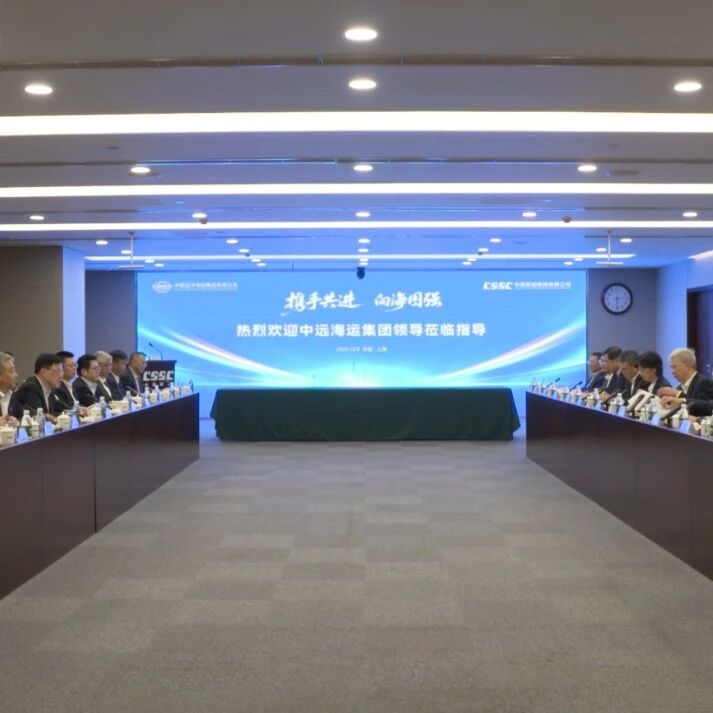
今天(8日),中船集团与中国远洋海运集团在上海完成了新造船项目的合作签约,金额超500亿元人民币,这是我国船企签订的国内单次合作签约最高金额 的订单。 在今天签约的新造船项目订单中,新造船合作涉及各型船舶87艘。 中船集团相关负责人表示,随着全球能源技术革命、5G物流网基础设施完善以及AI人工智能的叠加作用,当前,航运和造船业正朝着绿色化、智能化融合 发展。接下来,中国船舶集团将与中国远洋海运集团在科技创新、绿色低碳、智能船舶等领域开展更深层次的合作,为全球贸易提供更安全、高效、绿色的 运输保障。 ...

超500亿元人民币!我国船企签订国内单次合作签约最高金额订单
Yang Shi Xin Wen· 2025-12-08 08:52
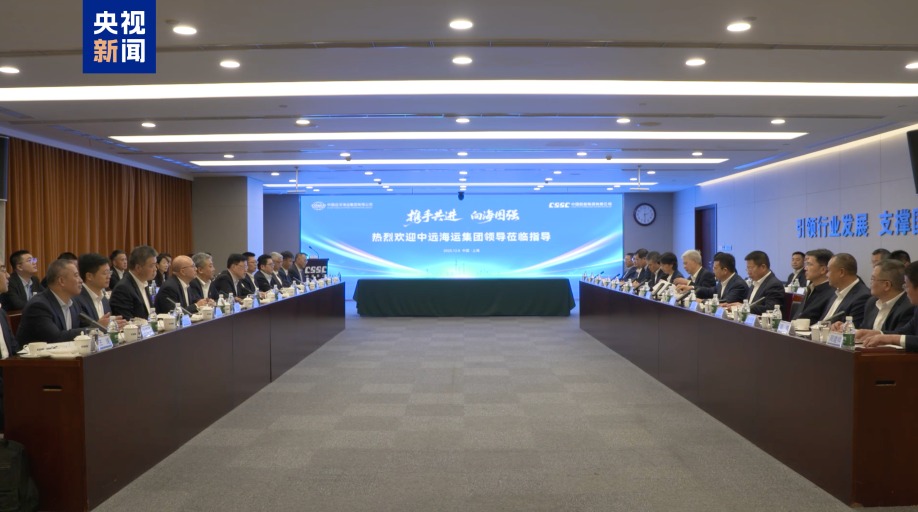
中船集团相关负责人表示,随着全球能源技术革命、5G物流网基础设施完善以及AI人工智能的叠加作用,当前,航运和造船业正 朝着绿色化、智能化融合发展。接下来,中国船舶集团将与中国远洋海运集团在科技创新、绿色低碳、智能船舶等领域开展更深 层次的合作,为全球贸易提供更安全、高效、绿色的运输保障。 (文章来源:央视新闻) 今天(8日),中船集团与中国远洋海运集团在上海完成了新造船项目的合作签约,金额超500亿元人民币,这是我国船企签订的 国内单次合作签约最高金额的订单。 在今天签约的新造船项目订单中,新造船合作涉及各型船舶87艘。 ...
英威腾(002334) - 2025年11月25日至12月3日投资者关系活动记录表
2025-12-05 10:08
Group 1: Company Overview - The company focuses on industrial automation and energy power sectors, with four main business segments: industrial automation, network energy, new energy power, and photovoltaic energy storage [2][3] - The industrial automation segment provides core components and integrated solutions, widely applied in various industries including compressors, lifting machinery, and semiconductor equipment [3] - The network energy segment offers products like micro-module data centers and intelligent monitoring solutions, serving industries such as cloud computing and finance [3] Group 2: Industry Outlook - The industrial automation industry is expected to grow due to policy support, technological innovation, and market demand, with a shift towards intelligent, green, and service-oriented solutions [3][4] - The domestic replacement process is deepening, creating opportunities for local companies to fill gaps in high-end automation equipment [3] Group 3: Business Growth Strategies - Future growth points for industrial automation include consolidating low-voltage inverter advantages, enhancing servo and PLC products, and transitioning to integrated scenario-based solutions [4] - The company aims to deepen operations in strategic industries and expand overseas market presence to leverage global growth potential [4][5] Group 4: Network Energy Business - The network energy business primarily consists of UPS products, which account for approximately 70% of sales, with precision air conditioning becoming the second-largest product [5] - The company is focusing on data centers and intelligent computing centers, with plans for product innovation and market expansion [5] Group 5: New Energy Vehicle Business - The new energy vehicle segment has seen significant revenue growth, particularly in commercial vehicles, leading to improved profit margins [6] - The management is confident in the profitability potential of this segment, emphasizing product competitiveness and market share expansion [6] Group 6: Overseas Market Strategy - The company has been active in overseas markets for nearly 20 years, with industrial automation and network energy as the main revenue sources [7][8] - Future plans include strengthening global operations through local subsidiaries and enhancing service capabilities to increase market share [8]

SHEIN(希音)赋能跨境电商+产业带出海,巩固提升传统企业全球竞争力
Sou Hu Cai Jing· 2025-12-05 05:10
Core Viewpoint - The recent "14th Five-Year Plan" emphasizes the support for the development of new business models like cross-border e-commerce and the enhancement of traditional industries, particularly textiles, to strengthen their global competitiveness and promote digital transformation in manufacturing [1] Group 1: Cross-Border E-Commerce Growth - In the first nine months of this year, driven by leading companies like SHEIN, Guangzhou's cross-border e-commerce import and export value reached 169.12 billion, contributing to a 12.5% growth in the city's foreign trade, with clothing exports surging by 18.8% year-on-year [1] - The 138th Canton Fair showcased over 310,000 overseas buyers and set multiple historical records, highlighting the global appeal of Chinese manufacturing and positioning cross-border e-commerce as a key driver of new productivity [1] Group 2: SHEIN's Supply Chain and Infrastructure Investment - SHEIN has accelerated its domestic supply chain network over the past three years, focusing on Guangzhou and surrounding cities, with a total investment exceeding 15 billion in building a comprehensive smart system covering R&D, production, warehousing, and logistics [3] - The Bay Area Supply Chain Project in Guangzhou, with a total investment of 10 billion, aims to create a modern supply chain center that will support SHEIN's global sales network and is expected to attract 100,000 industry talents upon completion [3][6] - The Bay Area Smart Industrial Park in Zhaoqing, operational since July, is designed to meet supply chain needs and stimulate local employment and growth in related sectors [3] Group 3: Digital and Green Transformation - SHEIN's model integrates cross-border e-commerce with local industrial clusters, leveraging over 10 billion in infrastructure investments to facilitate the digital and green transformation of small and medium-sized enterprises in domestic industrial belts [5] - The "small order quick response" flexible supply chain system introduced by SHEIN has reduced the average inventory rate from 30% to single digits, while also shortening payment cycles to enhance supplier focus on production [6] - SHEIN has implemented over 650 energy-saving measures by the end of 2024, significantly reducing resource consumption and providing comprehensive support for suppliers to achieve carbon reduction [6] Group 4: Talent Development and Employment - SHEIN established a training and certification base in Guangzhou to enhance the skill level of digital garment technology, addressing structural employment issues and fostering continuous innovation in the domestic fashion industry [6][8] - The company's successful practices in digitalization, intelligence, and sustainability have created millions of high-quality jobs and improved the export competitiveness of products from 400 cities across the country [8]

“十五五”化工新材料积蓄创新新动能
Zhong Guo Hua Gong Bao· 2025-12-05 02:21
Core Insights - The "14th Five-Year Plan" period has seen rapid development in China's chemical new materials industry, with continuous expansion of industry scale and enhancement of technological innovation capabilities. The "15th Five-Year Plan" will focus on three key paths: pursuing high-end development, promoting green intelligence, and facilitating collaboration [1] Pursuing High-End Development - There is a significant imbalance in the development of chemical new materials in China, necessitating enhanced R&D for high-end materials. The self-sufficiency rate for engineering plastics is improving, but high-end products like optical-grade PC and medical polyether ether ketone have a domestic production rate of less than 30% [2] - The electronic chemicals sector faces challenges with insufficient high-end products. While mature processes have achieved domestic production for certain chemicals, the overall domestic production rate for advanced process chemicals remains low, indicating a critical area for future development [2] Promoting Green Intelligence - Green transformation is becoming a global imperative. The engineering plastics industry is encouraged to transition towards a "green circular" model, focusing on bio-based alternatives, recycling, and clean production methods [4] - The synthetic rubber industry is directed towards "green symbiosis" and "intelligent integration," emphasizing the development of bio-based and green materials, as well as the application of artificial intelligence to optimize production processes [4] Facilitating Collaboration - Collaborative innovation is essential for overcoming industry development bottlenecks. The engineering plastics sector is advised to establish a comprehensive collaborative innovation system, integrating various stages from monomer synthesis to application verification [5] - Standardization is highlighted as a crucial support for the electronic chemicals industry, with a need for a complete standard system to enhance consensus between chemical producers and downstream chip manufacturers [6]