量子计算

Search documents
半导体,最新预测
半导体行业观察· 2026-01-07 01:43
Core Insights - The article discusses the rapid evolution of the semiconductor industry, particularly in the context of artificial intelligence (AI) and custom chip development, predicting significant changes by 2026 [1][2]. Group 1: AI and Custom Chips - By 2026, the shipment of custom-designed chips (ASICs) is expected to surpass that of GPUs, driven by the need for data center operators to invest heavily to avoid falling behind [1]. - The performance metrics for chips will evolve beyond just floating-point operations to include interconnects, memory, and compilers, which will determine overall performance [1]. - The demand for AI-driven virtual twin simulations and model-based systems engineering (MBSE) will enable companies to optimize designs digitally, reducing reliance on physical prototypes [2]. Group 2: Market Dynamics and Trends - The global semiconductor sales reached $772 billion in the previous year, with a projected growth of 26% to $975 billion by 2026, and some analysts predicting a stronger annual growth rate of 30% [5]. - The AI data center market is expected to grow to $1.2 trillion by 2030, with a significant portion of this growth (approximately $900 billion) coming from AI accelerator chips like GPUs and custom processors [5]. Group 3: Competitive Landscape - NVIDIA currently holds a dominant position in the AI chip market with an estimated market share of 90%, and this is unlikely to change significantly by 2026 [2][3]. - AMD may become more competitive with the release of its MI400 series and the maturation of its ROCm software stack, but its success remains uncertain [3]. - The pricing of GPUs is on a downward trend, yet the increasing demand for AI workloads means that the total cost of AI infrastructure will continue to rise [3]. Group 4: Interconnect Technologies - High-speed interconnect technologies will gain renewed focus in modern data centers to support AI and machine learning workloads [3][4]. - Co-packaged optics (CPO) technology, developed by NVIDIA and Broadcom, is crucial for high bandwidth density interconnects in AI-driven architectures [4].



地缘技术|“武士精神”正在重回硅谷
Xin Lang Cai Jing· 2026-01-06 23:41
Core Insights - Palantir Technologies, founded by Peter Thiel, has established itself as a significant player in the U.S. military-industrial complex, surpassing traditional defense contractors like Raytheon [3] - The company signed a $10 billion long-term contract with the U.S. Army in August 2025 to provide data support and software services over the next decade, marking the largest digital military contract awarded to a tech company [3] - The relationship between Silicon Valley and U.S. military security strategy has deep historical roots, with technological advancements often driven by military needs [5][6] Group 1: Company Overview - Palantir is a software and big data technology company based in Silicon Valley, co-founded by Peter Thiel, who is also known for his book "Zero to One" [1] - The CEO, Alexander Karp, is a notable figure with a Ph.D. from Goethe University and has been actively involved in public debates on technology and ethics [3] Group 2: Military Contracts and Collaborations - The $10 billion contract with the U.S. Army is a significant milestone for Palantir, emphasizing its role in modern military operations [3] - The U.S. Department of Defense has increasingly relied on Silicon Valley for technological advancements, with companies like Palantir benefiting from military contracts [6][7] Group 3: Technological Innovation and Defense Strategy - The emergence of new technologies such as artificial intelligence and quantum computing is central to U.S. military strategy, particularly in response to China's advancements [8][9] - The U.S. military is focusing on creating a "data-driven, AI-enabled army" to counter challenges posed by China, with initiatives like the "Replicator" project aimed at deploying low-cost autonomous systems [8][9] Group 4: Impact of Global Conflicts - The ongoing Russia-Ukraine conflict has accelerated the adoption of emerging technologies in military operations, benefiting companies like Palantir and Anduril [10] - The U.S. Department of Defense's Project Maven aims to leverage AI for military applications, with Palantir playing a crucial role in developing the necessary data integration platforms [12] Group 5: Geopolitical Context - The U.S. government's strategic focus on countering China's military capabilities has led to increased investments in defense technology, with Palantir positioned to capitalize on this trend [14] - The narrative of a "China threat" is being utilized by Silicon Valley companies to secure funding and contracts, with Palantir's software being used to monitor Chinese activities [14]

玄武区国际化活力中心城区创新发展大会召开
Xin Lang Cai Jing· 2026-01-06 16:24
(来源:南京晨报) 围绕"生态优化"核心目标,玄武区打出引才、育才、留才"组合拳",全力打造青年发展型城区标杆。区 委人才办重磅发布《深入推进新时代人才强区建设行动方案(2026—2028年)》,紧扣南京市人才政策 2.0版精神,推出新一轮更具竞争力的人才政策包,涵盖生活补贴、安居保障、创业扶持等全维度支持 举措。 转自:南京晨报 现场重大产业项目签约仪式同步举行,融通无人航空产业相关项目、傅利叶具身智能机器人项目、喆塔 科技泛半导体AI创新研发总部项目等三个高质量项目分批次落户玄武,覆盖未来航空、智能机器人、 半导体AI等前沿领域,为区域产业发展注入全新核心动力。 在"创新高地"环节,大会为一批优秀企业和高能级平台集中授牌揭牌。现场为荣获国家专精特新"小巨 人"、省级专精特新中小企业、省级独角兽(潜在独角兽)、瞪羚企业称号的企业授牌,表彰其在细分 领域的创新突破与发展成就。 校地、政企合作共建的高能级平台也集中亮相。东南大学统计与数据科学学院与江苏国际数据港共建的 学生创新实践基地、东南大学-玄武区卓越工程师联合培养基地正式落地,将深化产教融合,培养数据 科学与工程技术领域专业人才;南京量子研究院宣布成立, ...
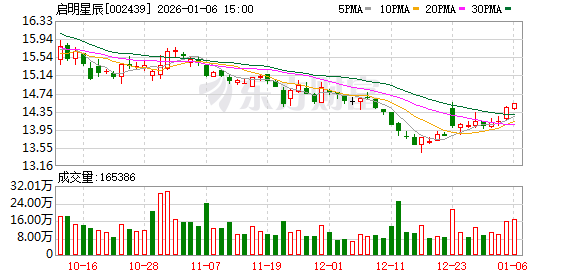
启明星辰:2025年前三季度公司实现毛利率61.8%
Zheng Quan Ri Bao· 2026-01-06 14:13
(文章来源:证券日报) 证券日报网讯 1月6日,启明星辰在互动平台回答投资者提问时表示,2025年前三季度公司实现毛利率 61.8%,体现了公司产品与服务的强大市场竞争力。去年以来出现亏损,主要源于两方面因素:一方 面,公司在融入中国移动体系后,积极布局新兴技术领域,主动加大对AI安全、数据安全、量子计算 等前沿领域的研发投入,这部分战略性支出短期内影响了利润;另一方面,传统网络安全业务短期内增 速受限,相关产品和服务增长承压,也对利润产生了影响。目前,公司管理层正全力推动与中国移动的 深度协同,优化业务结构,并已看到现金流改善等积极迹象。为构筑长期技术壁垒和增长动能,公司仍 将坚持科技自主创新,随着新质安全需求的增长和协同效应的释放,公司利润将逐渐改善。 ...

Coinbase 研究主管警告量子计算威胁比特币安全,称约三分之一 BTC 或面临风险
Xin Lang Cai Jing· 2026-01-06 12:16
(来源:吴说) Coinbase 全球投资研究主管 David Duong 警告称,随着量子计算进展加速,比特币长期安全性正面临结 构性风险,约 三分之一的比特币因相关钱包公钥已公开,可能在未来量子攻击中处于脆弱状态。其指 出,量子威胁已从理论问题演变为现实风险,核心隐患在于签名安全而非挖矿效率。今年 5 月, BlackRock 亦在其 iShares Bitcoin Trust 的招股文件中将量子计算明确列为风险因素。(DL News) ...

天亿马:低代码开发技术是公司核心技术之一
Zheng Quan Ri Bao Wang· 2026-01-06 11:42
Group 1 - The core technology of the company includes low-code development technology, which is frequently used in its software development business for delivery [1] - The low-code platform is widely applied in the company's proprietary products [1] - The company will maintain a strategy of continuous attention and follow-up in the field of quantum computing [1]
天河区布局超8000亿投资,2026年力推203个重大产业项目
Sou Hu Cai Jing· 2026-01-06 07:54
Group 1 - The core focus of the meeting in Tianhe District is the planning of over 500 major projects with a total investment scale exceeding 800 billion yuan, aiming for fixed asset investment to surpass 90 billion yuan in 2026, achieving a continuous increase of 10 billion yuan annually for three consecutive years [1][3] - In 2025, fixed asset investment in Tianhe District is expected to reach a new level of 80 billion yuan, with 16 road projects completed and an additional 5 projects partially completed, adding 30.64 kilometers of new road [3] - The district plans to focus on building a "12126" modern industrial system, with a forward-looking layout in quantum computing and new materials, and aims to promote 203 major industrial projects with an annual investment plan of 67 billion yuan [3] Group 2 - The investment strategy includes a gradient development of strategic industrial clusters, consisting of 16 projects at the 10 billion yuan level, 22 at the 5 billion yuan level, and 65 at the 1 billion yuan level [3] - Key projects under construction include the China Artificial Intelligence (Guangzhou) Industrial Park, China People's Insurance Guangzhou International Financial Center, and a new urban landmark integrating high-end industries, cultural leisure, and public spaces [3]
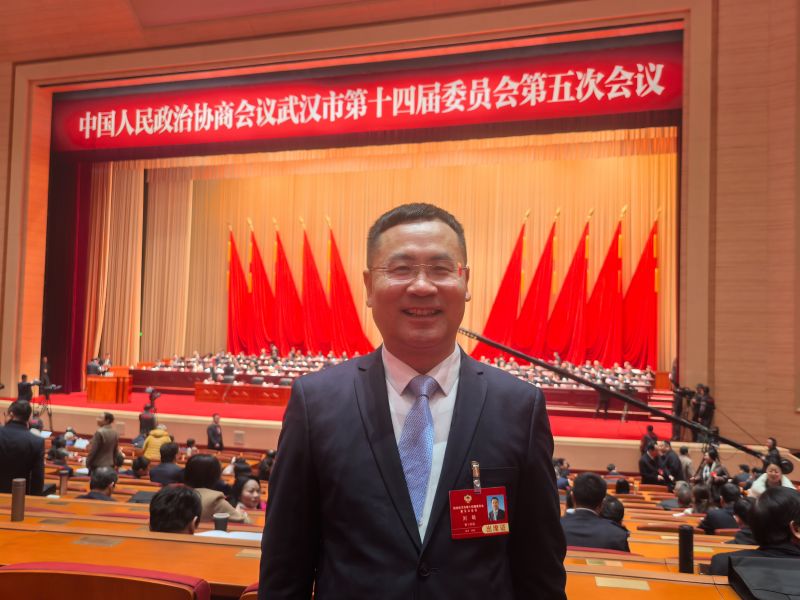
武汉市政协委员刘萌:四举措加快推动量子计算“汉产汉研汉用”
Zhong Guo Fa Zhan Wang· 2026-01-06 06:38
Core Viewpoint - Wuhan is actively promoting quantum computing as a future industry, with a focus on local research, development, and application, as highlighted by Liu Meng's four key suggestions during the 2026 Two Sessions [1][3]. Group 1: Suggestions for Quantum Computing Development - Increase R&D efforts in areas such as neutral atom quantum bits, quantum error correction technology, and quantum cloud platform applications to address challenges in development, adaptation, and usage [3]. - Accelerate the construction of a hybrid computing platform that integrates quantum and classical computing, providing efficient computing services [3]. - Initiate pilot applications of quantum computing in key industries in Wuhan, such as biomedicine, new materials, automotive manufacturing, and financial risk management, to validate technology feasibility and application effectiveness [3]. - Build a quantum computing ecosystem by collaborating with local universities and research institutions to establish training bases and promote the use of quantum cloud platforms [3]. Group 2: Current Status and Future Potential - Wuhan has established a solid foundation in quantum computing, particularly in neutral atom quantum computing, with significant progress in developing hundred-bit machines and cloud platforms [4]. - Quantum computing, as a core branch of quantum technology, offers parallel processing capabilities that surpass classical computing, promising disruptive breakthroughs in complex system simulations and optimization solutions [4]. - The national "14th Five-Year Plan" emphasizes the strategic importance of quantum technology, positioning it as a key area for future economic growth and innovation [5].
刚刚,沪指再创10年新高!
Zheng Quan Shi Bao· 2026-01-06 02:31
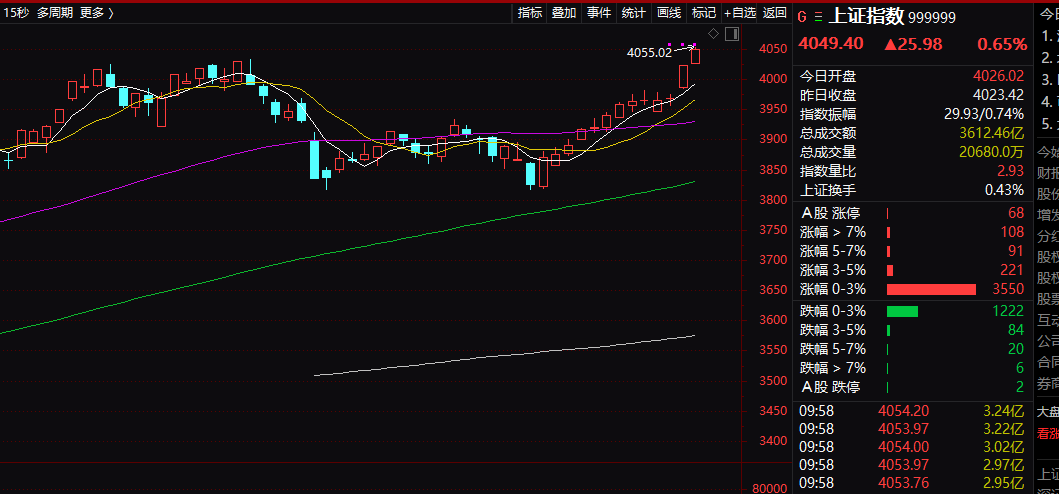
1月6日,上证指数早盘走势强劲,突破2025年11月的高点,再创10年新高。 上证指数再创10年新高 机构普遍看好 1月6日开盘后不久,上证指数突破2025年11月的高点,再创10年新高。 从主要行业板块和赛道来看,若按照申万一级行业划分,有色金属板块领涨,板块盘中涨幅接近3%,贵研铂业(600459)、宏创控股(002379)、华友 钴业(603799)等多股盘中涨幅超过7%,另有多股跟涨。 综合、电子、基础化工、计算机等板块涨幅居前。 概念板块方面,脑机接口、外骨骼机器人、钛金属、存储芯片、锂矿等多个概念均大幅上涨。 "牛市旗手"快速拉升 非银金融板块盘中快速拉升,其中被视为"牛市旗手"或"市场风向标"的券商股强劲上行,华林证券(002945)快速冲上涨停,华安证券(600909)、华泰 证券等纷纷跟涨。互联网券商龙头东方财富(300059)亦出现明显上行趋势,盘中涨幅超过3%。 此外,非银金融板块中的多只保险股亦走强,其中新华保险(601336)盘中涨幅超过4%,此前一个交易日该股大涨8.87%。 展望2026年,多数机构依旧看好后市。 兴业证券指出,市场有望从科技、媒体、通信领域(TMT)一枝独秀的结 ...
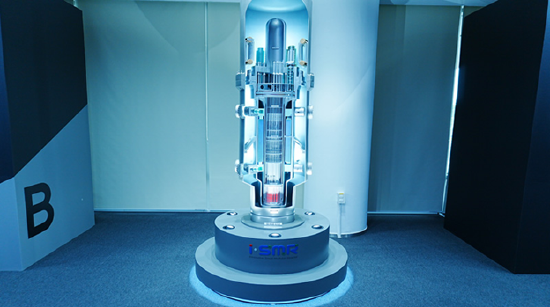
韩国公司展示全球首部小型核电站|直击CES
Xin Lang Cai Jing· 2026-01-05 18:09
Group 1 - The core focus of the news is the unveiling of the world's first small modular reactor (SMR) by Korea Electric Power Corporation (KEPCO) at CES 2026, addressing the urgent need for clean and stable energy sources due to the explosive growth in demand from AI, quantum computing, and cloud technologies [2][5]. - SMRs are designed to be safer, more flexible, and easier to deploy compared to traditional nuclear power plants, marking a shift in nuclear energy from large infrastructure to deployable technology products [2][5]. - KEPCO and Korea Hydro & Nuclear Power (KHNP) showcased the compact design of SMRs, which are significantly smaller than traditional reactors, featuring a passive safety system that can automatically cool down without external power [2][5]. Group 2 - The Korean delegation at CES demonstrated how nuclear energy can serve as a clean and stable baseload power source, providing 24/7 electricity support for future high-energy AI computing centers [2][5]. - In addition to nuclear energy solutions, Korean startups have also won multiple innovation awards in areas such as AI safety, bionic robots, and next-generation fuel cells [6]. - Gary Shapiro, CEO of CTA, expressed concerns about the sufficiency of energy to support AI operations rather than worrying about an AI bubble, highlighting the timely emergence of small nuclear solutions from Korea [6].