世界模型

Search documents
大晓机器人将于12月18日正式对外亮相,商汤王晓刚出任董事长
Xin Lang Cai Jing· 2025-12-05 00:42
Core Viewpoint - DaXiao Robotics is set to officially unveil its open-source "Kairos 3.0" world model on December 18, marking it as the first domestically open-source world model with commercial applications [1] Group 1: Product Launch - The Kairos 3.0 model is the first domestic open-source world model that has achieved commercial application [1] - Alongside the Kairos 3.0, DaXiao Robotics will release the A1 embodiment super brain module, which features a pure visual end-to-end VLA embodiment intelligence model with autonomous navigation capabilities [1] Group 2: Leadership Changes - Wang Xiaogang, co-founder and executive director of SenseTime, will serve as the chairman of DaXiao Robotics [1] - World-class AI scientist Tao Dacheng has been appointed as the chief scientist of DaXiao Robotics [1]

另辟蹊径赴欧洲创办新AI公司,杨立昆:硅谷不是AGI的土壤
3 6 Ke· 2025-12-05 00:04
Core Insights - Yann LeCun, the outgoing Chief AI Scientist at Meta, plans to establish a new startup in Europe that will pursue a different AI path compared to the generative models dominated by tech giants like OpenAI and Google [1][2] - The new company, named Advanced Machine Intelligence (AMI), aims to develop systems that understand the physical world rather than just generating text, with a focus on creating a significant revolution in AI capabilities [2][3] Group 1 - Yann LeCun announced his departure from Meta to focus on creating his own company, emphasizing the need for AI development outside of Silicon Valley [1][2] - The startup will be a "global entity" with multiple research bases worldwide, particularly in Europe, to harness local talent [2] - LeCun criticized current text-based language models for lacking essential capabilities that would allow AI to perform tasks comparable to a five-year-old child [2] Group 2 - The goal of AMI is to enable systems to understand the physical world, possess long-term memory, reason, and plan complex actions [2] - The new company will adopt a "non-generative" AI architecture to perceive environments and understand the physical world, opening up new application possibilities [2] - Meta will collaborate with AMI and provide access to its innovative technologies, but will not invest in the startup [2][3]

端到端时代下的自动驾驶感知
自动驾驶之心· 2025-12-05 00:03
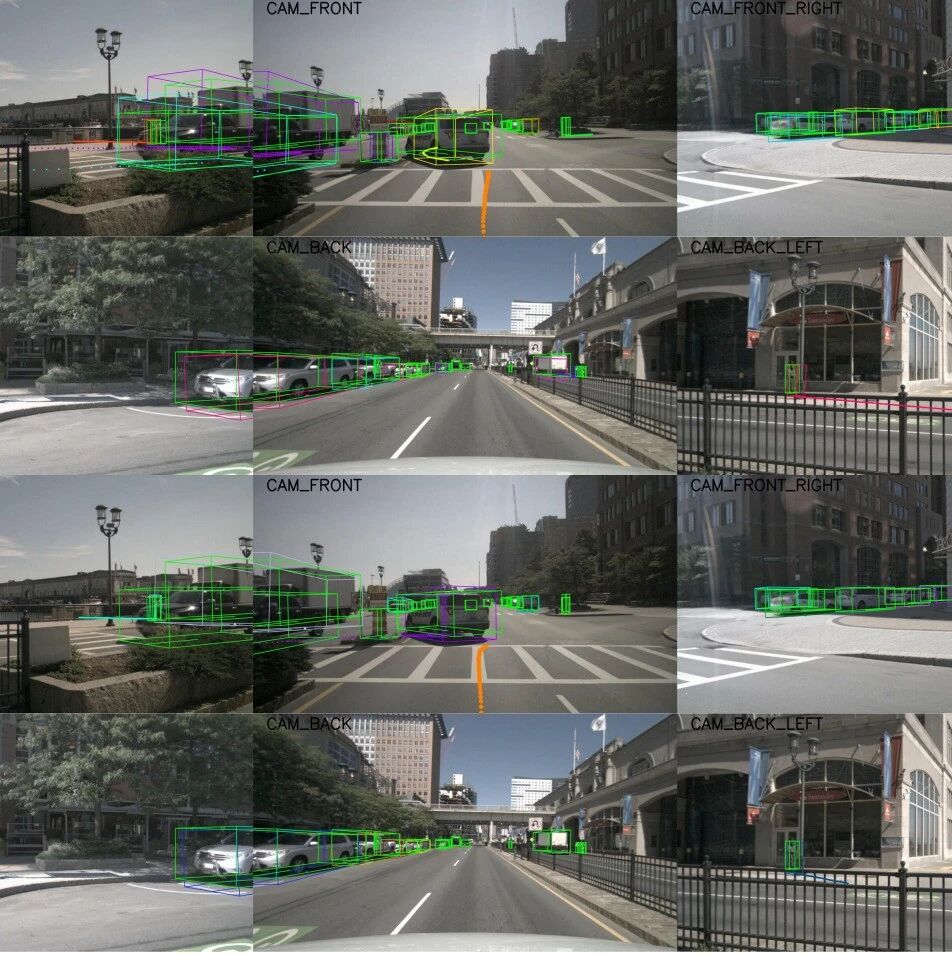
Core Insights - The article discusses the resurgence of end-to-end (E2E) perception in the autonomous driving industry, highlighting its impact on the field and the shift from traditional modular approaches to more integrated solutions [4][5][9]. Group 1: End-to-End Revival - End-to-end is not a new technology; it was initially hoped to directly use neural networks to output trajectories from camera images, but stability and safety were issues [9]. - The traditional architecture of localization, perception, planning, and control has been the mainstream approach, but advancements in BEV perception and Transformer architectures have revived end-to-end methods [9]. - Companies are now exploring various one-stage and two-stage solutions, with a focus on neural network-based planning modules [9]. Group 2: Perception Benefits in End-to-End - In traditional frameworks, perception aimed to gather as much accurate scene information as possible for planning, but this modular design limited the ability to meet planning needs [11]. - Current mainstream end-to-end solutions continue to follow this approach, treating various perception tasks as auxiliary losses [13]. - The key advantage of end-to-end is the shift from exhaustive perception to "Planning-Oriented" perception, allowing for a more efficient and demand-driven approach [14][15]. Group 3: Navigation-Guided Perception - The article introduces a Navigation-Guided Perception model, which suggests that perception should be guided by navigation information, similar to how human drivers focus on relevant scene elements based on driving intent [16][18]. - A Scene Token Learner (STL) module is proposed to efficiently extract scene features based on BEV characteristics, integrating navigation information to enhance perception [18][19]. - The SSR framework demonstrates that only 16 self-supervised queries can effectively represent the necessary perception information for planning tasks, significantly reducing the complexity compared to traditional methods [22]. Group 4: World Models and Implicit Supervision - The article discusses the potential of world models to replace traditional perception tasks, providing implicit supervision for scene representation [23][21]. - The SSR framework aims to enhance understanding of scenes through self-supervised learning, predicting future BEV features to improve scene query comprehension [20][21]. - The design allows for efficient trajectory planning while maintaining consistency for model convergence during training [20]. Group 5: Performance Metrics - The SSR framework outperforms various state-of-the-art (SOTA) methods in both efficiency and performance, achieving significant improvements in metrics such as L2 distance and collision rates [24]. - The framework's design allows for a reduction in the number of queries needed for effective scene representation, showcasing its scalability and efficiency [22][24].

字节端侧AI进展交流
2025-12-04 15:36
Summary of ByteDance's AI and Mobile Strategy Conference Call Company Overview - **Company**: ByteDance - **Focus**: AI development, hardware ecosystem expansion, and mobile technology Key Points on AI Strategy - ByteDance is focusing on three main areas in AI: General AI (AGI), embodied intelligence, and world models, managed by four teams: C team, Follow team, Stone team, and Cici team [1][2] - The C and Follow teams are responsible for 80% of product and model development, with over 1,200 and 1,000 personnel respectively [2] - The company aims to generate revenue primarily from B-end business by providing AI solutions, custom development, and private deployment, rather than direct monetization from C-end traffic [1][7] Financial Projections and Capital Expenditure - ByteDance expects capital expenditure to reach CNY 160 billion in 2025, with CNY 90 billion allocated for GPU purchases, primarily from NVIDIA (75%) and domestic suppliers [1][5][6] - The total computing power is equivalent to 1.1 million H100D GPU cards, with a current total computing power of 147.5 billion FLOPS [7] - For 2026, the projected capital expenditure is CNY 220 billion, with 70% for GPU purchases and 30% for building supercomputing centers [5] AI Mobile Phone Development - ByteDance plans to launch an AI phone in collaboration with ZTE and Nubia, targeting a production volume of over 1 million units by Q1 or Q2 of 2026 [1][9][11] - The AI phone aims to penetrate the global AI mobile market, projected to reach 80 million units in 2026, with a target market share of 5% (500,000 units) [3][15] - The phone will utilize a Snapdragon 8 chip with a computing power of 400 TOPS, and the production model is expected to reach 800 TOPS [3][25] Competitive Landscape and Market Positioning - Volcano Engine, ByteDance's cloud service, aims to differentiate itself from Alibaba Cloud by focusing on diverse AI processing solutions and computing services, with expected revenue exceeding CNY 50 billion in 2025 [8] - The AI phone is part of a broader strategy to enhance user experience and integrate AI technology into daily life, aiming to change user habits from touch to voice interaction [9][24] Technical Challenges and User Feedback - ByteDance faces several technical challenges, including low semantic understanding, high latency in edge models, and issues with cross-application operations [16][18] - User feedback highlights concerns over semantic understanding, multi-turn dialogue coherence, and hardware resource consumption [18] - The company is actively addressing over 3,400 bugs and releasing updates every two days [18] Future Outlook - ByteDance's AI assistant aims to reshape the mobile operating system's traffic entry points, potentially disrupting existing platforms by providing services without the need for app installations [27] - The competitive landscape for AI mobile phones remains uncertain, with major players like Alibaba, Xiaomi, Huawei, and Tencent also vying for market share [28] Conclusion - ByteDance is strategically positioning itself in the AI and mobile markets through significant investments, innovative product development, and a focus on B-end revenue generation, while navigating technical challenges and competitive dynamics in the industry.
我们身处波涛汹涌的中心|加入拾象
海外独角兽· 2025-12-04 11:41
Core Insights - The article emphasizes the importance of understanding AI and foundation models, highlighting the company's focus on investment research in the AI sector and its commitment to identifying significant technological changes [5][6]. Investment Philosophy - The company believes that the investment landscape will evolve similarly to frontier research labs, driven by curiosity to identify crucial technological shifts and using capital to foster positive global changes [8]. - The strategy involves concentrating on a few key companies willing to make continuous investments, while avoiding distractions from less significant opportunities [8]. - High-quality information is prioritized to enhance decision-making and increase success rates in investments [8]. - Long-term relationships are valued, as the investment industry relies heavily on trust and collaboration with founders and researchers [8]. Team and Culture - The team is characterized by a young, high-density talent pool that promotes transparency and open discussions, fostering a culture of curiosity and ownership [6]. - The company seeks individuals who are passionate about AI, possess strong curiosity, and have a good taste in identifying promising companies [6]. Recruitment Focus - The company is looking for AI investment researchers who have experience in AI research, engineering, or as research-driven tech investors, and who can articulate investment opportunities arising from changes in the AI landscape [12][13]. - Candidates should be able to conduct thorough research on specific industry issues or companies and effectively communicate their insights [13]. Brand and Community Engagement - The company emphasizes open-source cognition to contribute to the AI ecosystem and build its brand, which reflects the trust between the company and founders [9]. - There is a focus on creating high-quality community discussions around AI, engaging with researchers and builders to foster collaboration [15].

第八届GAIR全球人工智能与机器人大会,议程正式公布
雷峰网· 2025-12-04 10:04
Core Insights - The article emphasizes the transformative impact of AI technology on education, industry paradigms, and computational frameworks, highlighting the upcoming GAIR 2025 conference as a pivotal event for discussing these changes [2][22]. Event Overview - The GAIR 2025 conference will take place on December 12-13, 2025, at the Sheraton Hotel in Shenzhen, featuring a new agenda and deeper industry discussions [2][22]. - The conference will offer 20 free tickets to loyal readers, available on a first-come, first-served basis [2][22]. Conference Agenda Highlights - The conference will include specialized sessions on topics such as the redefinition of education through AI, paradigm shifts in various fields, and advancements in AI computational power [7][17][25]. - Notable speakers include prominent figures from academia and industry, such as Zhao Wei, Guo Yike, and Kazuhiro Kosuge, who will present on various AI-related topics [27][31][32]. Key Themes - The themes of the conference will focus on AI in education, paradigm reconstruction, world models, and AI chips and computational power [25][22]. - The event aims to gather over 50 academicians, 300 young scholars, and 1000 industry elites to explore the future of AI [25].
世界太小,不够世界模型们用了
3 6 Ke· 2025-12-04 09:29
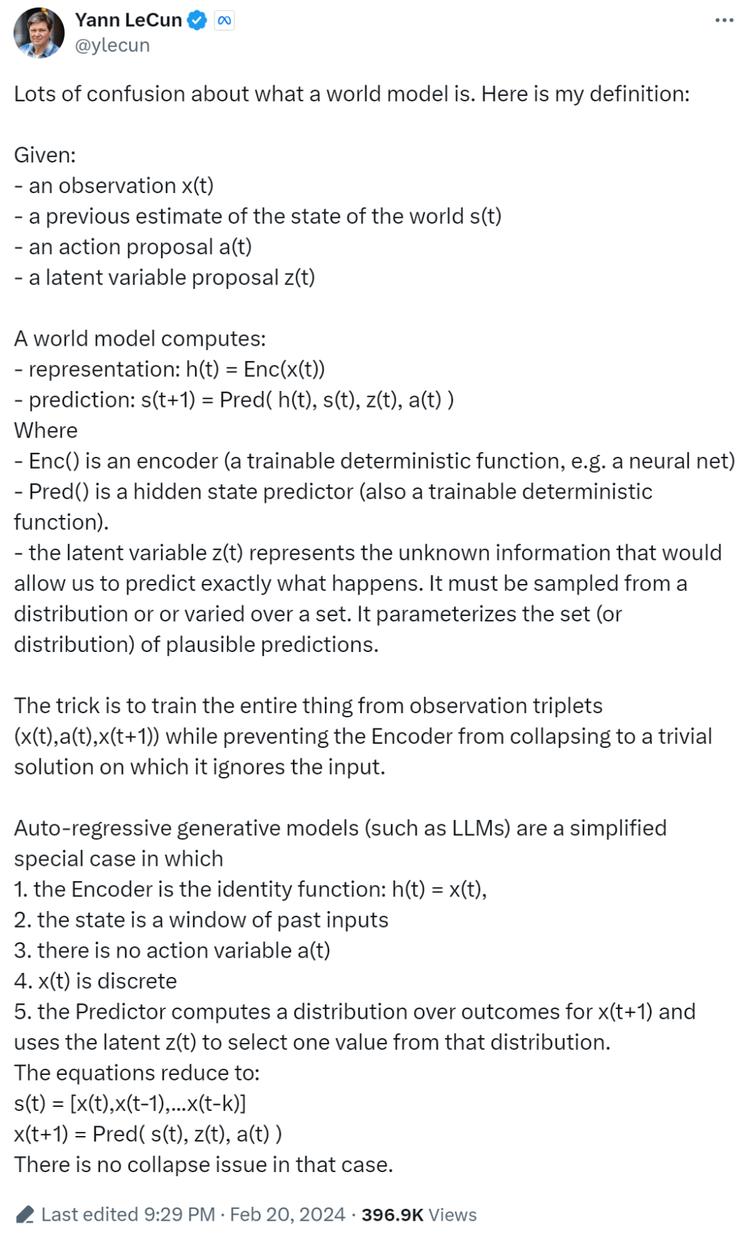
Core Insights - The AI industry is experiencing a chaotic evolution of "world models," with various interpretations and definitions emerging from leading figures in the field, all agreeing that world models are essential for achieving AGI [2][20][22] - The concept of world models has expanded significantly, encompassing a wide range of technologies and applications, from embodied intelligence to video generation and 3D modeling [18][20] Group 1: Definition and Evolution of World Models - The term "world model" refers to the ability of AI to understand external world rules and predict changes, rather than a specific technical path [3][6] - The idea of world models dates back to 1943 with Kenneth Craik's "mental models," which posited that the brain constructs miniature models of the external world for prediction [4] - The modern framework for neural network world models was established by Jürgen Schmidhuber in 2018, defining a structure that includes visual and memory components [4] Group 2: Different Approaches to World Models - Current world models can be categorized into two main schools: the Representation school, which focuses on abstract state predictions, and the Generation school, which aims to reconstruct and simulate visual worlds [6][13] - Yann LeCun represents the Representation school, emphasizing a minimalist approach that predicts abstract states rather than visual details [7][9] - The Generation school, exemplified by OpenAI's Sora, focuses on creating visual simulations and understanding physical laws through video generation [13][14] Group 3: Emerging Technologies and Concepts - Interactive Generative Video (IGV) represents an advanced form of the Generation school, allowing real-time user interaction with generated environments, as seen in Google DeepMind's Genie 3 [14] - Li Fei-Fei's concept of "Spatial Intelligence" aims to create a persistent, downloadable 3D environment, represented by the Marble project, which focuses on high-precision physical accuracy [16] - The rise of world models is driven by a collective anxiety in the AI industry regarding the limitations of large language models (LLMs) and a shift towards understanding and simulating the physical world [23][20]

碾压π0.5,复旦团队首创「世界模型+具身训练+强化学习」闭环框架
机器之心· 2025-12-04 08:18
Core Viewpoint - The Vision–Language–Action (VLA) strategy is becoming a crucial technological pathway for robots to achieve general operational intelligence, enabling simultaneous processing of visual perception, language instructions, and generation of continuous control signals [2]. Group 1: Challenges in Current VLA Approaches - Most current VLA methods rely heavily on imitation learning, which can lead to error accumulation and task failure when there are distribution shifts or changes in task forms [3][11]. - Implementing online reinforcement learning (RL) on real robots is costly and limited by the need for extensive human intervention and monitoring, making large-scale deployment impractical [12]. - Traditional physics engines struggle to balance realism, scene diversity, and engineering usability, complicating the use of RL in simulated environments [13]. Group 2: ProphRL Framework - The research team proposed the ProphRL framework, utilizing a large-scale pre-trained world model called Prophet as a video-level simulator to optimize VLA strategies through online RL algorithms [4]. - This approach allows for significant reductions in real-world interaction costs while maintaining physical credibility, facilitating the practical implementation of large model VLA strategies [4]. Group 3: Experimental Results - ProphRL demonstrated a success rate improvement of 5–17% across various VLA models in public benchmarks, with real robot experiments showing a substantial success rate increase of 24–30% [8]. - The Prophet model achieved leading performance in visual fidelity and action consistency across multiple datasets, showcasing its ability to generalize across new scenes and tasks with minimal fine-tuning [31]. Group 4: Innovations in RL Algorithms - The research introduced FA-GRPO and FlowScale, RL algorithms tailored for flow-based action heads, enhancing training stability and performance by reorganizing gradient signals and balancing contributions from different steps [26][27]. - A video-language reward model was developed to evaluate task success based on the entire trajectory, moving away from manually designed geometric distances [26]. Group 5: Real-World Validation - The ProphRL framework was validated on real robots, achieving significant improvements in task success rates across various complex tasks, indicating the effectiveness of the world model and RL integration in practical applications [38].

从 LLM 到 World Model:为什么我们需要能理解并操作世界的空间智能?
海外独角兽· 2025-12-03 12:05
Core Insights - The article emphasizes the necessity of spatial intelligence and world models as the next key direction in AI development, moving beyond the limitations of language models (LLMs) [2][3] - It highlights the importance of understanding and interacting with the physical world through spatial reasoning, which is essential for achieving artificial general intelligence (AGI) [4][8] Group 1: Importance of Spatial Intelligence - Spatial intelligence is defined as the ability to reason, understand, move, and interact within three-dimensional space, complementing linguistic intelligence [4][5] - The evolution of human intelligence shows that visual and spatial capabilities have been optimized over 540 million years, while language has a much shorter history of about 500,000 years [7][8] - Ignoring the evolutionary significance of visual and spatial processing in favor of language-based models is deemed unreasonable for developing AGI [8][10] Group 2: World Labs and Marble - World Labs, founded by Fei-Fei Li and Justin Johnson in 2024, aims to create large world models that can perceive, generate, and interact with three-dimensional environments [15][16] - Marble is introduced as the first high-fidelity 3D world generation model, designed to push the development of spatial intelligence and provide practical value in industries like gaming and visual effects [17][20] - Marble allows for multimodal input and interactive editing, enabling users to generate and modify 3D scenes based on text or images, thus enhancing user control and experience [20][21] Group 3: Technical Innovations - The technology stack for Marble focuses on achieving a balance between high fidelity, real-time rendering efficiency, and physical realism [23][24] - Gaussian Splats are utilized as the fundamental unit for representing 3D worlds, allowing for rapid and high-quality scene reconstruction without traditional mesh models [24][25] - The challenge of ensuring physical realism in generated 3D scenes is addressed through the integration of traditional physics engines and the potential for assigning physical properties to Gaussian Splats [27][28] Group 4: Applications and Future Potential - Marble is positioned as a horizontal technology with applications across various industries, including creative fields, interior design, and robotics [31][34] - In robotics, Marble serves as a powerful simulator, generating synthetic data to train robots in complex environments, thus addressing the data scarcity issue [34][35] - The potential for Marble to become a foundational infrastructure for embodied intelligence is highlighted, suggesting its significance in the future of robotics [35]

赛道分化加剧,2026年人工智能最强风口来袭
3 6 Ke· 2025-12-03 08:57
Core Insights - The article emphasizes that 2026 will be a pivotal year for artificial intelligence (AI), marking a shift from "AI+" to "AI native," where AI fundamentally redefines system architectures and operational logic [1][3]. Group 1: AI Native Revolution - AI native signifies a complete redesign of systems with AI as the core logic and capability, leading to a comprehensive transformation across technology architecture, business processes, organizational roles, and value creation methods [3][4]. - The transition from "AI+" to "AI native" is not merely an enhancement but a fundamental restructuring that makes intelligence an inherent attribute of applications rather than an added feature [3][4]. - Key characteristics of a true AI native system include natural language interaction, autonomous learning and adaptation, and the ability to complete tasks independently based on large language models and knowledge bases [4][5]. Group 2: Development Trends and Tools - The rise of low-code/no-code platforms allows individuals without programming skills to create custom AI tools, fostering a surge in "one-person company" models [8]. - Major companies like Microsoft and ByteDance are embedding AI agents into office suites, creating end-to-end workflows that enhance productivity [8]. - The development of AI native applications requires a productized approach to various tools, such as platforms for deploying large models and automated fine-tuning tools, which are essential for widespread adoption [8]. Group 3: Physical AI Integration - By 2026, AI will extend beyond screens into physical environments like cities, factories, hospitals, and homes, marking the era of Physical AI [10][11]. - Physical AI is characterized by its ability to connect digital and physical worlds, enabling actions based on real-time data and physical interactions [10][11]. - The evolution of AI has progressed through three stages: perceptual AI, generative AI, and now Physical AI, which can reason, plan, and act like humans [10][11]. Group 4: World Models and Their Impact - World models are becoming crucial for AI's integration into the real world, allowing AI to shift from data-driven to rule-driven approaches, enabling predictive decision-making [19][21]. - These models enhance generalization capabilities, allowing AI to apply learned knowledge to new, unseen scenarios, which is vital for applications like autonomous driving [22][23]. - The development of world models involves understanding physical laws and simulating environments, which can significantly improve the performance of AI systems in complex real-world situations [24][25]. Group 5: Multimodal AI Capabilities - The emergence of multimodal large models (MLLMs) will redefine industries by enabling AI to process and integrate various data types, such as text, images, and audio [15][17]. - MLLMs will enhance cross-modal understanding and generation, allowing for more sophisticated content creation and problem-solving capabilities [15][16]. - By 2026, MLLMs are expected to drive significant advancements across various sectors, including cultural heritage preservation, security, and intelligent driving [17][18].