
东数西算

Search documents
从通信基石到AI算力先锋
Zheng Quan Shi Bao· 2025-12-17 19:33
Core Insights - The company has evolved from a technical foundation in telecommunications to a diversified business model, including security and AI computing power, reflecting its adaptability to market demands and technological advancements [1][2] Group 1: Company Development - Established in 1996, the company focused on telecommunications planning and network construction, gaining trust from operators in Xinjiang [1] - In 2008, the company expanded into the security sector, experiencing significant growth due to its technical expertise and management experience, leading to a broader business footprint across several provinces [1] - The company went public on the Shenzhen Stock Exchange in January 2017, leveraging capital markets for further diversification into Internet Data Centers (IDC) and value-added services [1] Group 2: Strategic Transformation - The rise of AI technologies, particularly with the advent of ChatGPT, has prompted the company to strategically pivot towards AI computing power, recognizing the importance of computational capabilities in the AI landscape [2] - The company is capitalizing on national strategies such as "East Data West Computing" by establishing computing power centers in regions like Sichuan and Guangzhou, positioning itself to benefit from the AI era [2] - Future plans include continued business expansion, capital operations, and innovation to ensure sustainable growth in the AI sector [2]



立昂技术董事长王刚: 从通信基石到AI算力先锋
Zheng Quan Shi Bao· 2025-12-17 19:16
Core Viewpoint - The company has evolved from a telecommunications design firm to a diversified technology enterprise, focusing on AI and data center services, leveraging its historical strengths in communication and security sectors [1][2]. Group 1: Company History and Development - In 1985, the company began its journey in the Xinjiang Postal and Telecommunications Design Institute, witnessing the transition of communication networks from manual to automated and from analog to digital [1]. - In 1996, the company was founded with a commitment to integrity and quality, establishing itself as a trusted partner for operators in the Xinjiang communication market [1]. - The company entered the security sector in 2008, experiencing significant growth due to its technical expertise and management experience, expanding its operations to provinces like Sichuan, Qinghai, and Guizhou [1]. - The company went public on the Shenzhen Stock Exchange's Growth Enterprise Market in January 2017, using capital market resources to diversify into Internet Data Centers (IDC) and value-added services for operators [1]. Group 2: Strategic Shift and Future Outlook - The rise of AI, particularly with technologies like ChatGPT, has prompted the company to strategically pivot towards AI computing power, capitalizing on its foundation in communication and digital city services [2]. - The company is establishing computing power centers in locations such as Jianyang, Sichuan, and Nansha, Guangzhou, to align with national strategies like "East Data, West Computing" [2]. - The company aims to leverage business expansion, capital operations, and continuous innovation to navigate the AI era and write a new chapter in its development [2].

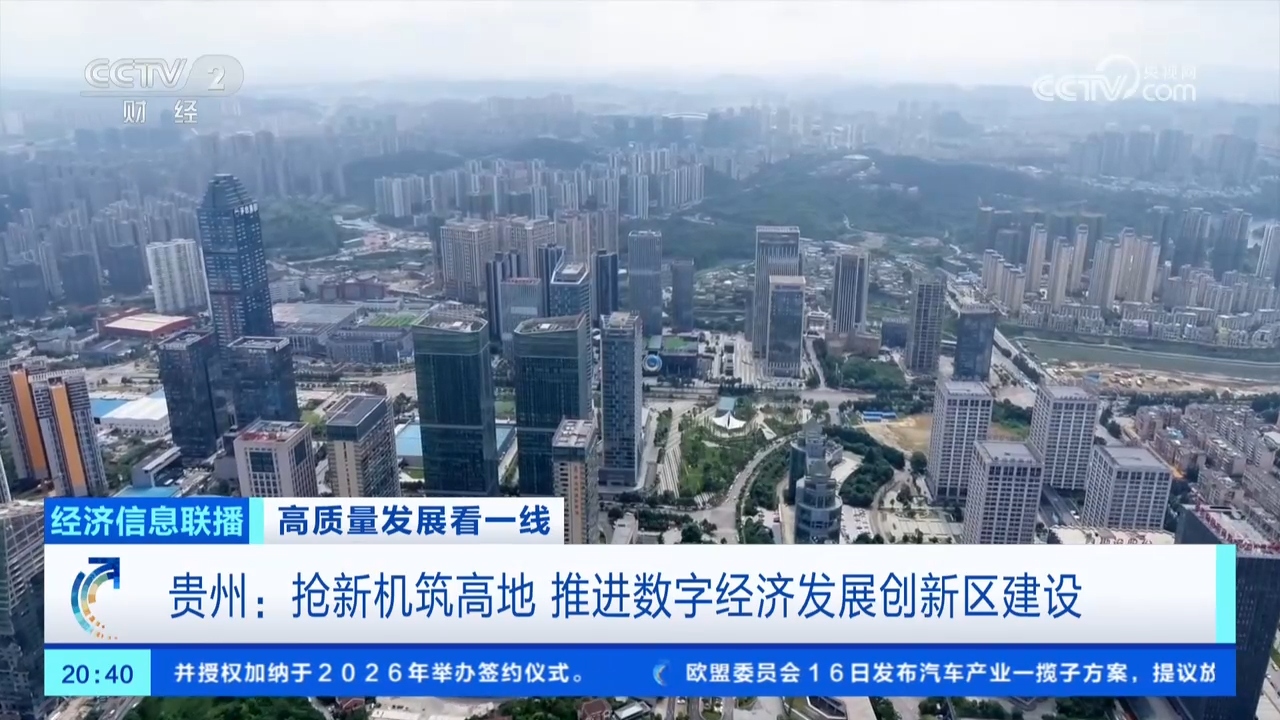
“十五五”即将开局 贵州大数据产业如何再启新程?
Yang Shi Wang· 2025-12-17 16:46
Core Insights - During the "14th Five-Year Plan" period, Guizhou's digital industry achieved an average annual growth rate of 16.2%, with software and information services revenue growing at an impressive 32.1%, effectively quadrupling in scale [1] - As the "15th Five-Year Plan" approaches, Guizhou aims to leverage its digital economy to drive high-quality development and explore new opportunities in the big data sector [1][3] Group 1 - Guizhou is focusing on computing power, data, applications, and industries to enhance multi-dimensional collaboration and accelerate the construction of intelligent industrial clusters, transforming "data dividends" into tangible development momentum [3] - The Guizhou Provincial Big Data Development Administration reports that there are currently 67 data annotation companies, with the workforce expected to exceed 10,000 this year. The province's intelligent computing accounts for over 90%, and domestic computing power also exceeds 90%, aligning with the national "East Data West Computing" strategy [5] - Guizhou is targeting high-value application scenarios in 24 key industries, including cultural tourism, coal mining, and non-ferrous metals, to create over a hundred typical scenarios and promote large-scale applications of big models [7] Group 2 - The focus during the "15th Five-Year Plan" will be on three main areas: industry, livelihood, and governance, aiming to strengthen the artificial intelligence industry ecosystem and continuously improve public service platforms, funding, and talent support [7] - The goal is to ensure that applications are implemented effectively and industries grow robustly, allowing Guizhou to accelerate its development in the new arena of artificial intelligence [7]
2025年,看大国重器如何上天入海!
Jin Rong Shi Bao· 2025-12-17 13:47
Core Insights - The financing leasing industry in China is experiencing significant growth, with a focus on integrating financing and physical assets to support various sectors, including aviation, maritime, and computing [1][2][4]. Aviation Sector - The Chinese aircraft leasing industry has evolved significantly since its inception in 2009, with over 2,400 aircraft delivered and a market position as the second-largest globally, holding nearly 20% of the market share [2][4]. - Major Chinese leasing companies, such as ICBC Leasing and CDB Leasing, are now among the top 10 global leasing firms, reflecting the industry's rapid development and systemic breakthroughs [2][4]. - Policy support, including tax incentives and special funds, has been crucial in fostering the growth of the aviation leasing market, as seen in Guangzhou's initiatives that led to a 560% year-on-year increase in aircraft imports [2][3]. Maritime Sector - Financial leasing companies are actively involved in the maritime industry, supporting the construction and operation of eco-friendly vessels, including LNG carriers and zero-carbon ships [6][7]. - The "14th Five-Year Plan" emphasizes the importance of marine technology innovation, with leasing companies providing funding for various maritime projects, thereby enhancing operational efficiency for shipping enterprises [6][7][8]. Computing and Data Infrastructure - The demand for computing power in China is surging, driven by initiatives like the "East Data West Computing" project, with the total computing capacity expected to reach 280 EFLOPS by 2024 [9]. - Financing leasing is emerging as a solution for companies to access computing resources, helping to reduce costs and support green transformation in the industry [9][10]. - Several leasing companies are implementing innovative financing models, such as "financing + intelligence," to facilitate the procurement of computing equipment for data centers and tech firms [9][10].
引爆全球危机!美国停电时长暴涨80%,中国却早已布局47年
Sou Hu Cai Jing· 2025-12-17 13:42
Group 1 - The average power outage duration for U.S. users is projected to increase by 80% in 2024, reaching approximately 662.6 minutes, or nearly 11 hours, compared to the previous year [3][6] - In Virginia and Texas, the outage durations have increased by 228% and 176% respectively, with Texas experiencing a more than 700% increase compared to a decade ago [3][6] - The average retail electricity price in the U.S. is expected to rise by 13% from 2022 to 2025, with typical household electricity costs increasing from $1,683 to $1,902 annually [6][8] Group 2 - Nearly 80 million Americans are now forced to choose between paying electricity bills and other essential expenses, making electricity costs the second-largest energy expenditure after vehicle fuel [8][11] - The aging U.S. power grid is a significant issue, with an average service life of about 40 years and 70% of transformers exceeding their 25-year design life [8][11] - AI is projected to consume nearly 11.7% of U.S. electricity by 2030, up from 4% in 2023, with significant energy demands from data centers [11][13] Group 3 - The U.S. is facing challenges in power generation, with a rapid exit from coal, aging nuclear plants, and insufficient growth in renewable energy sources [13][21] - By 2030, the U.S. is expected to retire 94 GW of power generation capacity, while only adding 260 GW of new sources, leading to a dangerous gap in supply [13][21] - In contrast, China's power generation capacity has surged to 3.35 billion kilowatts by the end of 2024, a 58-fold increase since 1978 [21][26] Group 4 - China has implemented a systematic approach to power generation and distribution, including the "East Data West Computing" initiative, which directs data centers to energy-rich western regions [23][31] - The average electricity price in China is approximately $0.08 per kilowatt-hour, significantly lower than the U.S. average of $0.13 [26][31] - China's renewable energy capacity is projected to exceed 1.4 billion kilowatts by the end of 2024, with significant investments in wind and solar power [21][33] Group 5 - The differences in the energy landscape between the U.S. and China stem from varying development models and institutional designs, with the U.S. lacking a unified national energy strategy [26][31] - China's centralized planning allows for large-scale projects like ultra-high voltage transmission lines, while the U.S. struggles with fragmented state policies [31][35] - The U.S. faces inefficiencies in its power system due to outdated regulatory frameworks, while China has maintained continuous investment in modernizing its grid [35][41]

协创数据:拟投建光芯片光模块研发生产项目,适配AI算力中心等高端场景
Zheng Quan Shi Bao Wang· 2025-12-17 13:14
Core Viewpoint - The company, Xiechuang Data, has signed a cooperation agreement with the Guangzhou Development Zone Management Committee to invest in the research and production of optical chips and modules, targeting high-end applications such as AI computing centers and supercomputing centers [1] Group 1: Investment and Market Demand - The investment will focus on developing ultra-low power optical modules using self-developed chips, driven by the rapid growth in AI computing demand [1] - The optical module market is expected to maintain significant growth until 2026-2027, supported by the ongoing expansion of AI computing and the "East Data West Computing" project [1] Group 2: Strategic Partnerships - The strategic partners, Guangjia Technology and Guangwei Technology, are leaders in product development and technology accumulation in the optical chip and module sector [2] - Guangwei Technology's products meet the highest performance requirements for national supercomputing centers and are recognized as a sole procurement source [2] Group 3: Company Growth and Performance - Xiechuang Data's AI-related business has become a core growth engine, with intelligent computing services generating approximately 1.22 billion yuan in revenue in the first half of 2025, marking a 100% year-on-year increase [1] - The collaboration aims to create a leading technological advantage in the industry and target the high-speed optical module market [2]

协创数据拟在广州开发区投资光芯片、光模块项目
Zheng Quan Shi Bao Wang· 2025-12-17 11:35
Core Viewpoint - The company, Xiechuang Data, has signed a cooperation agreement with the Guangzhou Development Zone Management Committee to invest in the research and production of optical chips and modules, targeting high-end applications such as AI computing centers and supercomputing centers. This move is driven by the rapid growth in AI computing demand, which is expected to expand the market for high-performance optical modules significantly by 2026-2027 [1][2]. Group 1 - The cooperation agreement aims to leverage previous strategic partnerships to facilitate Xiechuang Data's entry into the optical chip and module industry, while also helping its partners expand production and market reach [1]. - The optical chip and module sector represents a new field for Xiechuang Data, with the company citing the increasing demand for AI computing as a key driver for this investment [1][2]. - The market for optical modules is projected to maintain considerable growth, supported by initiatives like the "East Data West Computing" project and applications in industrial internet, autonomous driving, and robotics [1]. Group 2 - Xiechuang Data has established a foundation in the computing power sector, which supports its entry into the optical module market through collaboration with industry leaders [2]. - The core team at Guangjia Technology, a partner, consists of experts in optical chips and modules, enhancing the technical capabilities of the collaboration [2]. - Guangwei Technology, another partner, is recognized as a national-level specialized enterprise with a strong track record in the optical module industry, having developed numerous leading products that address key technical challenges [2]. Group 3 - The collaboration among Xiechuang Data, Guangjia Technology, and Guangwei Technology is expected to create a complementary advantage, enhancing their competitive position in the high-speed optical module market [3]. - Xiechuang Data has successfully transitioned from a hardware manufacturer to a provider of comprehensive AI computing solutions, with AI-related business becoming a core growth driver [3]. - The company reported significant revenue growth in its AI-related services, with intelligent computing services generating approximately 1.22 billion yuan in the first half of 2025, a 100% year-on-year increase [3].
收评:创业板指放量大涨3.39% 算力硬件股集体爆发
Xin Lang Cai Jing· 2025-12-17 08:11
盘面上,能源金属、CPO、铜缆高速连接板块涨幅居前,海南自贸区、海南、种植业与林业板块跌幅居前。 12月17日消息,指数早间窄幅震荡,午后爆拉,三大股指集体反弹。沪深两市成交额1.81万亿,较上一个交易日放量870 亿。板块方面,CPO板块持续走强,奕东电子、联特科技双双20cm涨停,光迅科技、中瓷电子、长飞光纤等多股涨停;金融股 午后拉升,华泰证券涨幅居前;有色金属板块走强,中钨高新涨超9%领涨;存储芯片概念局部异动,开普云20cm涨停,香农 芯创、江波龙等跟涨;下跌方面,军工板块大面积飘绿,航天长峰、银河电子跌停;海南板块调整,京粮控股、海南瑞泽跌 停。总体来看,两市个股涨多跌少,上涨个股超3600只。 截至收盘,沪指报3870.28点,涨1.19%;深证成指报13224.51点,涨2.40%;创指报3175.91点,涨3.39%。 消息面: 1、【重庆:推动本地高性能智能算力基础设施建设持续提质扩容重庆(新疆)算力基地】重庆市人民政府办公厅印发 《重庆市推动"人工智能+"行动方案》,构建重庆数据中心集群与跨域共享协同发展的算力供给体系。推进"东数西算"工程, 以重庆数据中心集群起步区为重点,推动本地高性 ...

CPO持续领衔上涨!通信设备ETF(159583)盘中涨幅达5%
Mei Ri Jing Ji Xin Wen· 2025-12-17 06:52
Core Viewpoint - The communication sector is experiencing significant growth, driven by supportive policies and advancements in technology, particularly in the areas of 6G, satellite internet, and optical communication devices [1][3]. Group 1: Market Performance - The communication equipment ETF (159583) saw an intraday increase of 5%, while the AI ETF (159246) rose by 4.96% [1]. - Notable stocks within the communication equipment ETF include LianTe Technology, which hit the daily limit up, and Guangxun Technology and Changfei Optical Fiber, both also reaching the daily limit up [1]. - Other significant performers include Xinyi Technology and Tianfu Communication, both with gains exceeding 8%, and Zhongji Xuchuang, which increased by over 5% [1]. Group 2: Policy Support - Recent policies in the communication sector have been intensifying, with the Ministry of Industry and Information Technology's meeting on December 12 highlighting 6G, satellite internet, and satellite communication as key policy areas [1]. - The high-quality development action plan for the communication industry aims to increase the self-sufficiency rate of optical communication devices to 80% and supports the large-scale application of advanced technologies such as CPO and silicon photonic modules [1]. Group 3: Industry Trends - Institutional analysis indicates that ongoing policies like the "East Data West Calculation" project and the top-level design for computing power infrastructure are accelerating the construction of high-speed optical networks and enhancing the self-controllable process of the domestic CPO supply chain [1]. - In the long term, the transition from 1.6T to 3.2T technology is expected to expand application scenarios from large-scale AI training clusters to supercomputing centers and edge computing [1]. Group 4: Investment Opportunities - The communication equipment ETF (159583) tracks the CSI Communication Equipment Theme Index (931271), which has a high proportion of leading optical module and computing hardware companies, accurately reflecting the development trends in these industries [2]. - Investors without on-site accounts can explore investment opportunities through linked funds (Class A 021933; Class C 021934) [2].
协创数据:再加码90亿采购服务器,积极拓展光模块光芯片赛道
Zheng Quan Shi Bao Wang· 2025-12-17 06:37
Core Insights - Company announced plans to invest up to 9 billion yuan in server procurement to enhance cloud computing service capabilities [1] - Strategic collaboration established with Guangwei Technology and Guangjia Technology to enter the optical chip and module market [2] - Company is positioned as a certified partner of NVIDIA, providing a competitive edge in resource acquisition and networking capabilities [1] Group 1: Investment and Growth - The server procurement will be entirely dedicated to providing cloud computing services, with over 20 billion yuan already invested in server purchases this year [1] - Fixed assets reached nearly 6.2 billion yuan by Q3 2025, a significant increase from over 700 million yuan in the same period last year [1] - The company is expanding its infrastructure rapidly to support the high growth of cloud computing business [1] Group 2: Strategic Partnerships - Collaboration with Guangwei Technology and Guangjia Technology focuses on technology cooperation and market expansion in the optical chip and module sectors [2] - The partnership aims to leverage the strengths of each company, with Guangwei specializing in optical chip production and Guangjia in high-end optical modules [2] - The demand for AI computing is driving the expansion of the optical module market, with significant growth expected between 2026 and 2027 [2] Group 3: Future Outlook - The company is set to benefit from the increasing demand for AI computing, supported by ongoing rental orders and multi-track strategies [2] - A loan of up to 500 million yuan will be secured from the controlling shareholder to support operational development and project implementation [2] - The strategic moves indicate a shift from AIoT to becoming a core player in computing infrastructure [2]