国产GPU

Search documents
摩尔线程顺利过会,“国产GPU第一股”即将诞生
3 6 Ke· 2025-09-27 04:01
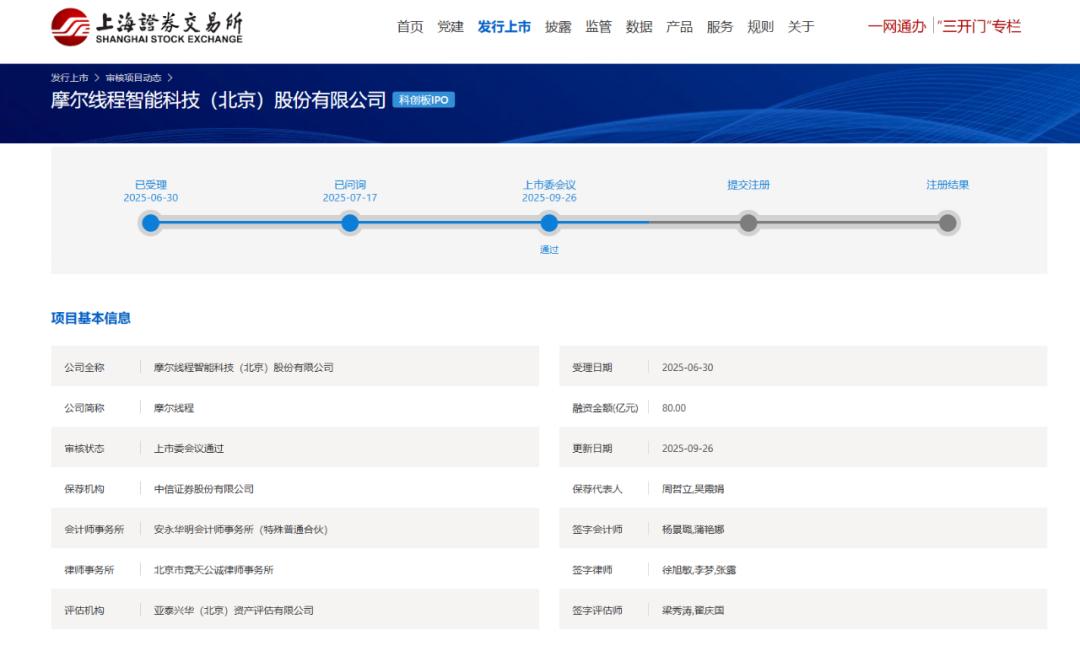
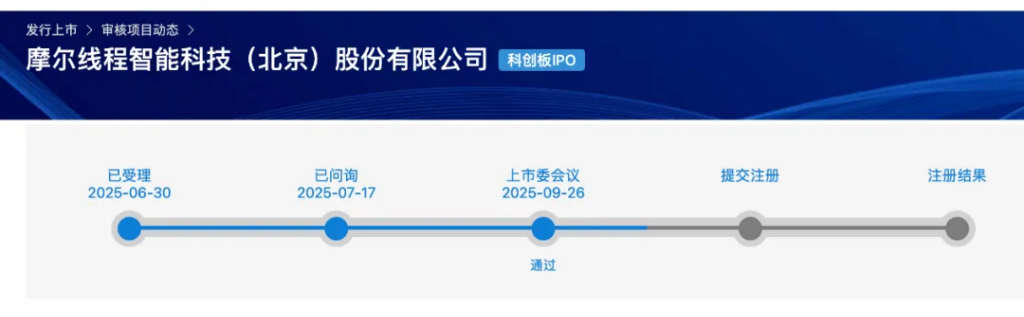
Core Viewpoint - The domestic GPU startup Moore Threads has successfully passed the review by the Shanghai Stock Exchange, marking a significant step towards its goal of becoming the first domestic GPU company to go public on the Sci-Tech Innovation Board [1][5]. Group 1: Company Overview - Moore Threads was founded in 2020 and focuses on the design of fully functional GPU chips [3]. - The founder, Zhang Jianzhong, previously worked at NVIDIA for 14 years, where he significantly increased NVIDIA's market share in China from less than 50% in 2008 to over 80% by 2020 [3]. Group 2: IPO Details - Moore Threads' IPO application was accepted on June 30, 2025, and it completed two rounds of inquiries before passing the review in less than three months [1][2]. - The company plans to raise 8 billion yuan through its IPO, which is the largest IPO currently under review on the Sci-Tech Innovation Board this year [1][2]. Group 3: Investment and Valuation - Prior to the IPO application, Moore Threads had backing from numerous well-known investment institutions, raising over 10 billion yuan in total [4]. - The last round of financing valued Moore Threads at approximately 29.845 billion yuan, with a reported valuation of 31 billion yuan in the Hurun Research Institute's 2025 Global Unicorn List [4]. - The company does not have a single shareholder owning more than 30% of its shares, with Zhang Jianzhong holding 11.06% directly and controlling a total of 36.36% through agreements and employee stock platforms [4]. Group 4: Market Expectations - There are high expectations for Moore Threads as a domestic GPU startup, with other GPU startups like Muxi, Suiruan Technology, and Birun Technology also pursuing IPOs [5]. - The approval of Moore Threads' listing has led to a rise in stock prices for companies that have invested in it [5].

摩尔线程科创板IPO过会,冲刺“国产GPU第一股”
Nan Fang Du Shi Bao· 2025-09-26 11:01
Core Viewpoint - Moer Thread has successfully passed the IPO review meeting and is expected to become the first domestic GPU stock, with the entire process taking less than three months from application to approval [1][3]. Group 1: IPO Process and Market Reaction - Following the IPO approval, Moer Thread needs to submit registration to the China Securities Regulatory Commission and obtain approval for the IPO registration [3]. - The A-share market has seen the emergence of "Moer Thread concept stocks," with over ten listed companies disclosing investments or business collaborations with Moer Thread, leading to significant stock price increases [3]. Group 2: Financial Performance - In the first half of 2025, Moer Thread achieved revenue of 702 million yuan, surpassing the total revenue of 438 million yuan for the entire year of 2024, attributed to increased demand for large model training, inference deployment, and GPU cloud services [4]. - The net loss for the first half of 2025 was 271 million yuan, a decrease of 56.02% year-on-year and 69.07% quarter-on-quarter, with cumulative net losses from 2022 to 2024 totaling approximately 5 billion yuan, showing a trend of decreasing losses [4]. - Moer Thread anticipates achieving consolidated profitability by 2027, with government subsidies contributing to the expected profits [4]. Group 3: Product Lines and Market Position - Moer Thread focuses on full-function GPU development, with product lines categorized into AI computing, graphics acceleration, and intelligent SoC for edge computing [5]. - The company has launched four generations of chips since its establishment in October 2020, with a shift towards AI computing products starting from the "Quyuan" chip in 2023 [5]. - The latest "Pinghu" architecture chip S5000 supports FP8 precision and has a memory bandwidth of 800 GB/s, compared to NVIDIA's H20 chip with 900 GB/s bandwidth [5]. Group 4: AI Computing and Graphics Acceleration Products - AI computing products accounted for 94.85% of revenue in the first half of 2025, up from 77.63% in 2024, with significant sales of AI computing clusters [6]. - The company is negotiating projects worth over 1.7 billion yuan in the AI computing sector, primarily focused on the Pinghu series [6]. - In contrast, the graphics acceleration products are facing challenges, with revenue share dropping to 4.68% in the first half of 2025 from 22.06% in 2024, as the first two generations of graphics GPUs reach the end of their lifecycle [7]. Group 5: Competitive Landscape - Moer Thread faces intense competition in the domestic AI chip market, with NVIDIA, Huawei HiSilicon, and AMD holding market shares of 54.4%, 21.4%, and 15.3% respectively, while Moer Thread's share is below 1% [8]. - The company is experiencing homogenization in the mid-to-low-end market due to increased competition from both domestic and international players, making it difficult to quickly increase market share [9]. - Moer Thread has been placed on the U.S. "Entity List," which has disrupted its supply chain and limited access to advanced manufacturing processes and key components, impacting its production and R&D capabilities [9].
国产GPU第一股来了!摩尔线程IPO成功过会,半年营收超过往3年!
Hua Er Jie Jian Wen· 2025-09-26 10:38
Core Viewpoint - Moole Technology has successfully passed the IPO application review by the Shanghai Stock Exchange, marking it as the first domestic GPU company to go public [1][3]. Group 1: IPO Details - The company plans to raise 8 billion RMB through its IPO, which is the largest fundraising project in the A-share market this year and the largest IPO in the semiconductor sector [3]. - The funds will primarily be allocated to the research and development of next-generation AI training and inference chips, graphics chips, and AI SoC chips, aiming to strengthen its leading position in high-performance computing [3][5]. Group 2: Financial Performance - Moole Technology's revenue reached 702 million RMB in the first half of 2025, surpassing the total revenue of the previous three years, with a compound annual growth rate exceeding 208% over the last three years [3][4]. - The company's gross margin improved significantly from -70.08% in 2022 to 70.71% in 2024, indicating a substantial increase in market recognition of its products [3][4]. Group 3: Product Development and Market Position - Established in 2020, Moole Technology has invested heavily in R&D, totaling 4.3 billion RMB, with over 75% of its workforce dedicated to this area [4]. - The company has launched four generations of GPUs, covering various application scenarios, and its products are competitive with international standards, with some metrics approaching NVIDIA's RTX 3060 [4][5]. - Moole Technology is the first domestic manufacturer to mass-produce DirectX 12 graphics acceleration, which broadens compatibility with mainstream development toolchains [4]. Group 4: Future Outlook and Challenges - Despite rapid growth, the company faces challenges, including cumulative losses of 1.478 billion RMB as of June 30, 2025, and a market share of less than 1% in its respective segments [6]. - The company plans to continue product development and matrix layout, with the "Yangtze" SoC chip targeting automotive smart cockpits expected to be introduced and mass-produced by 2026 [6]. - The Chinese AI computing GPU market is projected to reach 1,033.34 billion RMB by 2029, with a compound annual growth rate of 56.7% during the period [6].
A股大消息!摩尔线程IPO过会,国产GPU第一股来了
中国基金报· 2025-09-26 10:21
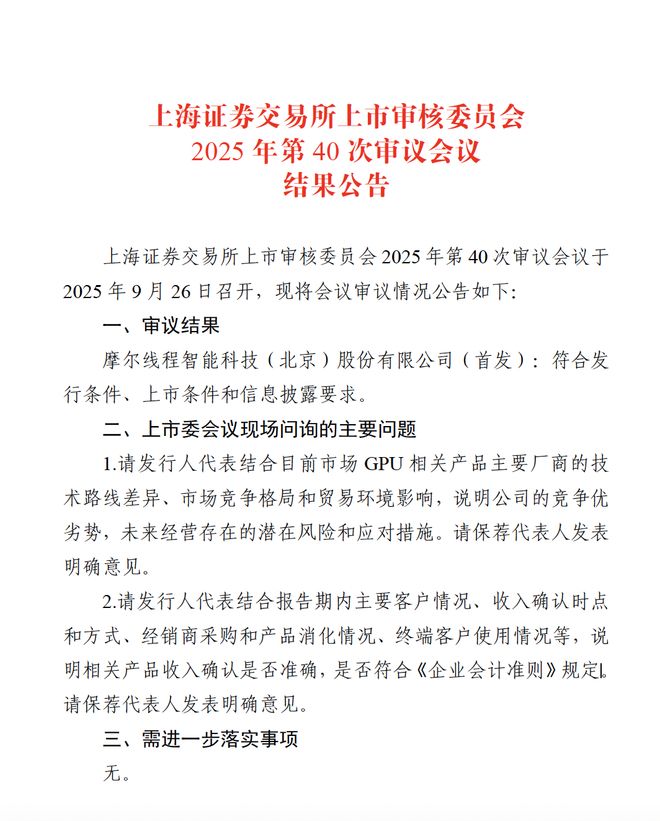
【导读】 " 国产GPU第一股 " 摩尔线程IPO 成功过会 中国基金报记者 卢鸰 从 IPO申请获 受理到 成功 过会,摩尔线程 用 时仅88天。 据上海证券交易所官网披露,上海证券交易所上市审核委员会2025年第40次审议会议于9月26日召开 。 会议审议结果显示, 摩尔线程的 IPO符合发行条件、上市条件和信息披露要求。 上市委会议现场问询的主要问题包括:结合目前市场GPU相关产品主要厂商的技术路线差异、市场竞争格局和贸易环境影响,说明公司的 竞争优劣势,未来经营存在的潜在风险和应对措施;结合报告期内主要客户情况、收入确认时点和方式、经销商采购和产品消化情况、终 端客户使用情况等,说明相关产品收入确认是否准确,是否符合《企业会计准则》规定。 摩尔线程此次IPO速度相当快,从6月30日正式 获得 受理到9月26日 上交所 上市委会议审核通过, 用 时仅88天。这给市场传递了鲜明的 信号。 "今天恰逢证监会科创板'1+6'改革政策发布后的第100天。"在市场人士看来,科创板"1+6"改革政策发布后,科创板审核质效显著提升, 体现了服务"国之大者"的科创板速度,反映出对科技创新企业的支持力度。 摩尔线程是国内 ...

“中国英伟达”投资人,赚翻了
投中网· 2025-09-26 08:27
Core Viewpoint - The article discusses the rapid rise and upcoming IPO of Moore Threads, a domestic GPU company in China, which is being compared to Nvidia and is expected to create significant wealth for its investors and stakeholders [3][4][10]. Company Overview - Moore Threads was founded in June 2020 with the goal of creating the best full-function GPU in China, led by Zhang Jianzhong, a former senior executive at Nvidia [6][8]. - The company has successfully developed multiple generations of GPU architecture and has launched several products, including the MUSA architecture and various GPU chips [9][10]. Financial Performance - Moore Threads' revenue has seen substantial growth, increasing from less than 50 million yuan in 2022 to over 1.23 billion yuan in 2023, and projected to reach 4.38 billion yuan in 2024 [10]. - By the first half of 2025, the company's revenue is expected to exceed 700 million yuan [10]. Investment and Valuation - The company has attracted significant investment, raising over 10 billion yuan from various investors, including Sequoia China and Tencent, making it a unicorn within a short period [12][15]. - As of the latest reports, Moore Threads has a valuation of 31 billion yuan, with its founder's stake valued at nearly 4 billion yuan [16]. Industry Context - Moore Threads is part of a group of companies referred to as the "Four Little Dragons" of domestic GPUs in China, which includes Muxi Technology, Birran Technology, and Suiruan Technology [19][21]. - The domestic GPU market has gained importance due to increasing competition and the need for advanced computing capabilities in AI and other sectors [19][22]. IPO Plans - Moore Threads is preparing for an IPO on the Sci-Tech Innovation Board, aiming to raise 8 billion yuan primarily for product development [22]. - The company has already completed its pre-IPO financing and is expected to be the largest IPO project of the year [15][22].

摩尔线程还没上市,“概念股”已经抢飞了
3 6 Ke· 2025-09-23 11:10
Core Viewpoint - The focus is on the upcoming IPO of domestic GPU company Moore Threads, which is expected to raise 8 billion yuan and potentially become the "first domestic GPU stock" [1][8]. Group 1: IPO and Market Reaction - Moore Threads is set to undergo IPO review on September 26, with an expected fundraising of 8 billion yuan [1]. - Several stocks related to Moore Threads have experienced significant price increases, with companies like Heertai and Lianmei Holdings seeing consecutive trading limits [3]. - The market's enthusiasm has led to other companies, such as Zhangjiang Hi-Tech and Ultrasonic Electronics, clarifying their lack of investment in Moore Threads [3]. Group 2: Industry Background - The domestic GPU industry, including Moore Threads, emerged around seven years ago, primarily due to U.S. sanctions against Chinese tech companies, which created a shortage of high-end GPU chips [6]. - Notable figures from international companies like NVIDIA and AMD have returned to China to contribute to the development of domestic GPU firms [6][4]. Group 3: Company Development - Moore Threads was founded by Zhang Jianzhong, a former key figure at NVIDIA China, who quickly assembled a team of top talents from various tech giants [4]. - The company has raised over seven rounds of financing since its inception, with early investors like Heertai participating in seed funding [8][9]. Group 4: Financial Performance and Future Outlook - Moore Threads has reported cumulative losses of approximately 5 billion yuan from 2022 to 2024, with expectations to achieve profitability by mid-2027 [13]. - The overall GPU market is experiencing a surge in demand, driven by the rapid growth of artificial intelligence, as evidenced by NVIDIA's market valuation increasing 15 times in just 24 months [6][8].
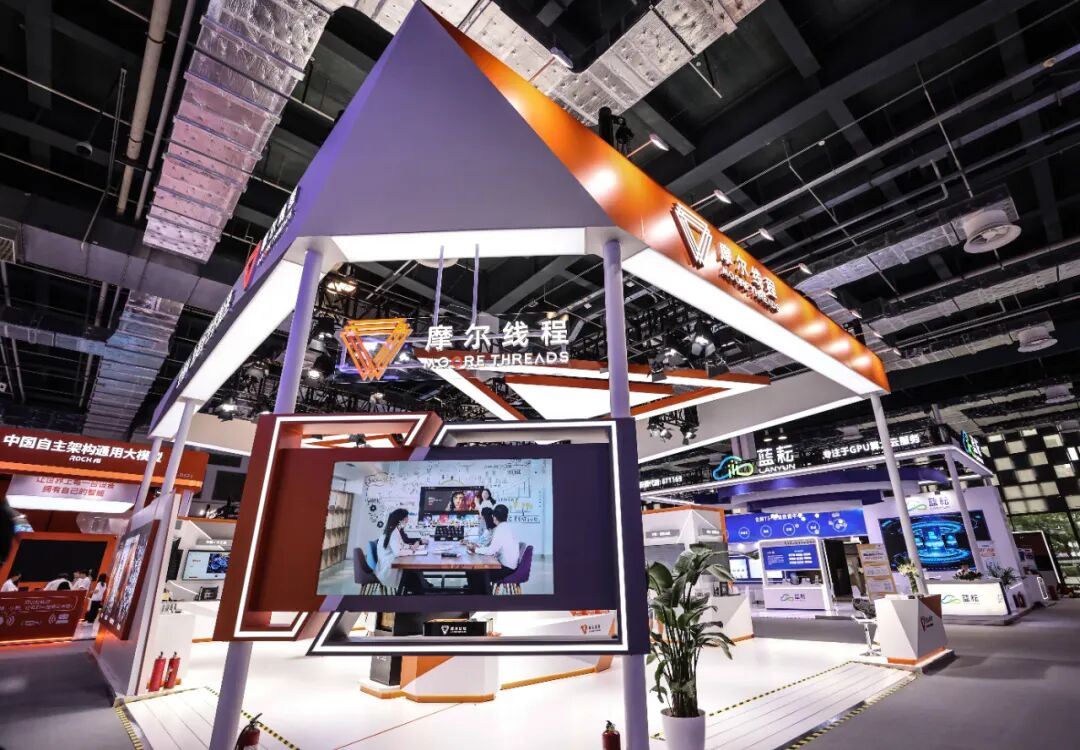
中国版英伟达摩尔线程IPO的资本赌局与国产算力突围
3 6 Ke· 2025-09-22 23:21
Core Viewpoint - Moole Technology is set to undergo an IPO review on the Sci-Tech Innovation Board, marking a record speed in the IPO process in less than three months, with a fundraising target of 8 billion yuan and a valuation of 25.5 billion yuan, reshaping the valuation system for tech companies in the A-share market [1][11][13]. Group 1: Company Overview - Moole Technology is recognized as a leading enterprise in the domestic full-function GPU sector, often referred to as "China's NVIDIA" due to its executive team's extensive experience at NVIDIA [3][4]. - The company has developed the MUSA architecture, achieving significant technological breakthroughs that support AI computing acceleration, graphics rendering, and more [4][7]. Group 2: Financial Performance - From 2022 to 2024, Moole Technology's revenue grew from 46 million yuan to 438 million yuan, with a compound annual growth rate of 208.44%, and the first half of 2025 saw revenue of 702 million yuan, surpassing the total revenue of the previous three years [4][5]. - Despite high revenue growth, the company reported substantial losses, with net profits of -1.84 billion yuan in 2022, -1.67 billion yuan in 2023, and -1.49 billion yuan in 2024, totaling an unrecouped loss of 1.21 billion yuan [5][6]. Group 3: Market Impact and Strategy - The IPO is expected to inject strong momentum into the domestic GPU industry, facilitating the development of a collaborative ecosystem and driving technological advancements [8][10]. - Moole Technology's dual strategy of "compatibility + open-source" aims to adapt to the existing CUDA ecosystem, enhancing its product's marketability [7][10]. Group 4: Capital Market Effects - The IPO is anticipated to activate the tech sector's vitality and reshape valuation logic, providing a template for other high-growth tech companies seeking to go public [11][13]. - The successful listing of Moole Technology could attract more capital into the sector, benefiting related companies and enhancing market activity [10][14]. Group 5: Future Outlook - The IPO represents a pivotal moment for the domestic high-end chip technology landscape, influencing investor confidence in the GPU industry and the broader AI computing ecosystem [15][16].

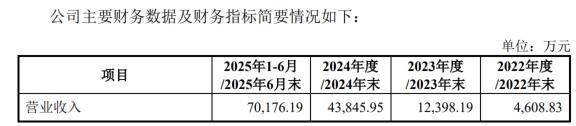
摩尔线程冲击国产GPU第一股
Bei Jing Shang Bao· 2025-09-22 16:31
Group 1 - The core point of the article is that Moer Thread is rapidly advancing towards its IPO, aiming to become the first domestic GPU company to go public, with a significant fundraising target of 8 billion yuan [1][5][9] - Moer Thread's IPO application was accepted on June 30, 2025, and it will be reviewed on September 26, 2025, marking a swift process of less than three months [3][4] - The company has developed a full-stack technology breakthrough with its self-developed MUSA GPU architecture, achieving compatibility with over 150 industry software and mainstream frameworks [3][5] Group 2 - Moer Thread plans to use the raised funds for the development of next-generation AI training chips, graphics chips, and AI SoC chips, as well as to supplement working capital [5] - The company has invested approximately 4.366 billion yuan in R&D over three and a half years, with a significant portion of its workforce (77.81%) dedicated to R&D [6][7] - Moer Thread's revenue has shown rapid growth, with reported revenues of approximately 46.09 million yuan in 2022, 124 million yuan in 2023, and 438 million yuan in 2024, while continuing to reduce net losses [6][7] Group 3 - The domestic GPU market is heating up, with Moer Thread's upcoming IPO contributing to a surge in stock prices for other GPU-related companies [10][11] - The overall outlook for the domestic GPU industry is positive, as it transitions from the "0 to 1" stage to the "1 to N" phase of growth, driven by increasing demand for AI computing power [11]

“国产GPU第一股”即将诞生?芯片ETF天弘(159310)一度涨超5%,科创综指ETF天弘(589860)涨超2%
Xin Lang Cai Jing· 2025-09-22 06:28
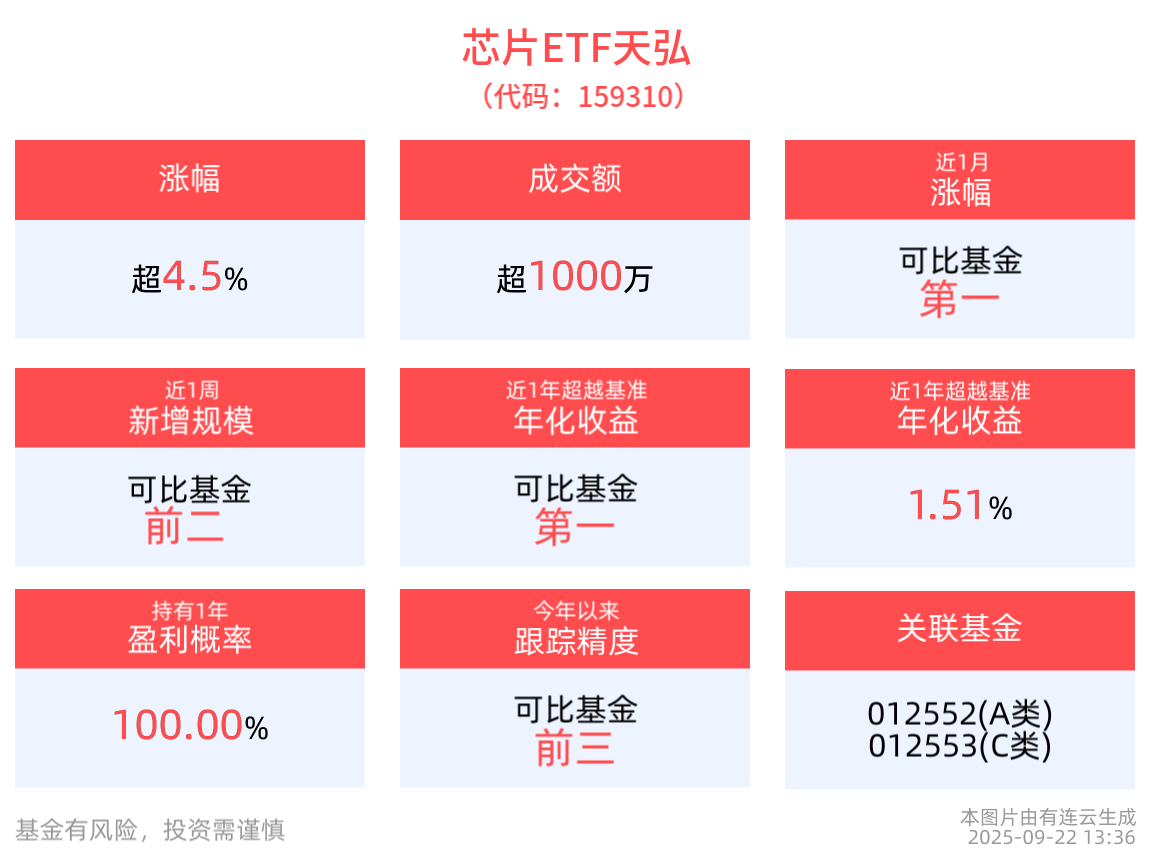
Group 1: Chip ETF Performance - The Chip ETF Tianhong (159310) saw a peak increase of over 5%, currently up 4.53%, with a transaction volume of 18.4087 million yuan [3] - The ETF's net asset value has increased by 123.20% over the past year, ranking first among comparable funds [3] - Key component stocks such as Chip Yuan Co. (688521) rose by 18.02%, Haiguang Information (688041) by 14.17%, and Shengke Communication (688702) by 11.33% [3] Group 2: Sci-Tech Index ETF Performance - The Sci-Tech Index ETF Tianhong (589860) increased by 2.11%, with a turnover rate of 18.23% and a transaction volume of 59.0919 million yuan, indicating active market trading [4] - Major component stocks like Honglida (688330) surged by 20.00%, and Zhongke Lanyun (688332) by 19.02% [4] Group 3: Product Highlights - The Chip ETF Tianhong (159310) tracks the CSI Chip Industry Index, with top holdings including SMIC, Northern Huachuang, and Haiguang Information, with the estimated weight of Cambrian Technology at 12.26% [5] - The Sci-Tech Index ETF Tianhong (589860) covers 97% of the Sci-Tech board's market value, with over 80% allocation to strategic emerging industries such as semiconductors, AI, and biomedicine [5] Group 4: Market News - Moer Thread's IPO on the Sci-Tech board is scheduled for September 26, aiming to raise 8 billion yuan for AI and graphics chip development [5] - Xiaomi's fund has invested in Qichip Microelectronics, marking its fourth investment in the company, which has begun mass production of automotive-grade MCU products [5] - OpenAI and Luxshare Precision have agreed to jointly produce AI hardware devices, with prototypes in development [6]




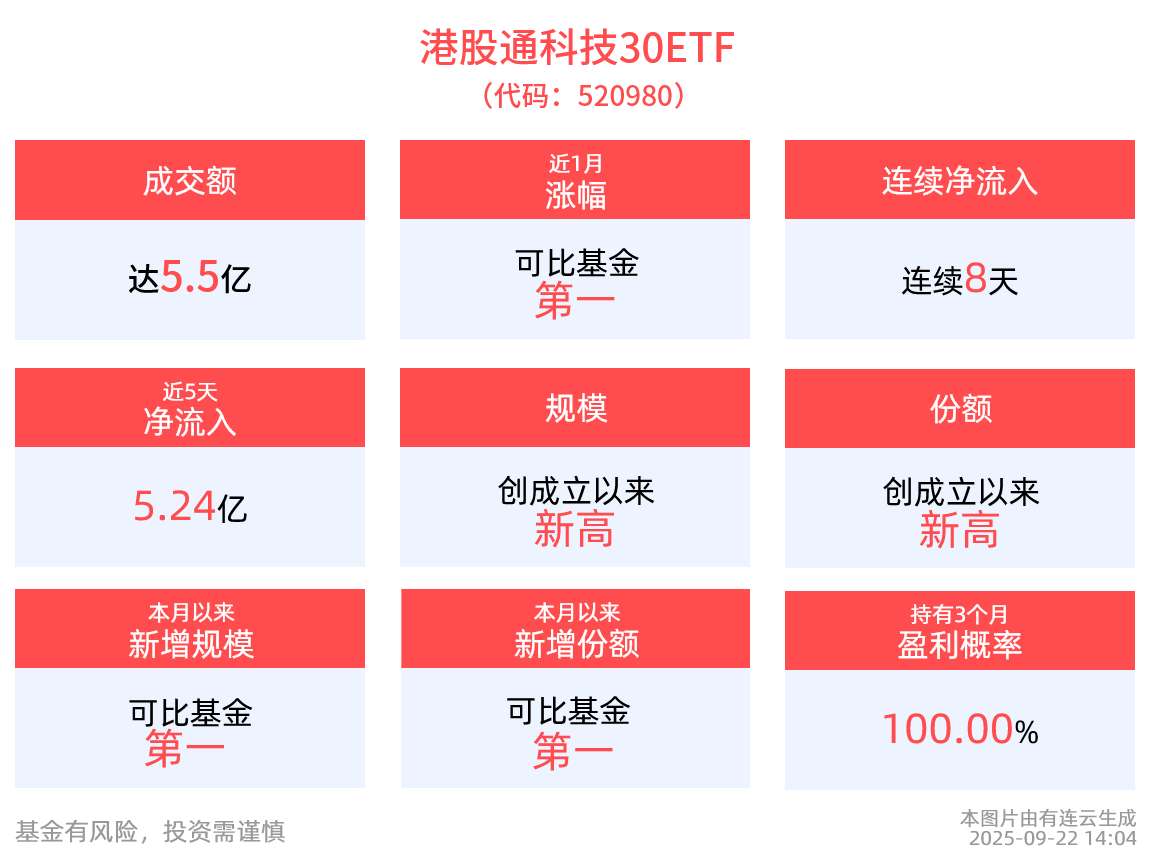
港股科技走强,中芯国际涨近6%,硬科技含量拉满的港股通科技30ETF(520980)涨近1%,连续8日“吸金”,规模创新高!
Xin Lang Cai Jing· 2025-09-22 06:26
Core Viewpoint - The Hang Seng Stock Connect China Technology Index (HSSCT) experienced a slight decline of 0.31% as of September 22, 2025, with mixed performance among constituent stocks, indicating a volatile market environment for technology stocks in Hong Kong [1] Market Performance - The Hang Seng Technology 30 ETF (520980) saw a near 1% increase at one point, currently up 0.24%, with a latest price of 1.26 yuan. Over the past week, the ETF has accumulated a 4.32% increase, ranking in the top half among comparable funds [1] - The ETF recorded a turnover rate of 12.15% during trading, with a transaction volume of 550 million yuan, reflecting active market trading. The average daily transaction volume over the past week was 689 million yuan [1] - The latest scale of the ETF reached 4.492 billion yuan, marking a new high since its inception, and it ranks in the top half among comparable funds [1] - The ETF's latest share count reached 3.565 billion shares, also a new high since inception, ranking in the top half among comparable funds [1] Fund Inflows - The Hang Seng Technology 30 ETF has seen continuous net inflows over the past eight days, with a single-day net inflow of 311 million yuan last Friday. The total net inflow over the last eight trading days reached 565 million yuan, averaging 70.61 million yuan per day [2] Company News - The Shanghai Stock Exchange announced that Moore Threads' IPO will be reviewed on September 26, aiming to raise 8 billion yuan for AI and graphics chip development. The company is backed by major shareholders including Tencent and ByteDance [4] - Goldman Sachs recently raised the target price for Semiconductor Manufacturing International Corporation (SMIC) H-shares by 15%, driven by optimism regarding China's IC design demand and AI trends, which are expected to support SMIC's production and average selling prices [4] - Huatai Securities noted that the recent rebound in Hong Kong technology stocks is attributed to accelerated domestic AI developments, with the Hang Seng Technology Index and the Hang Seng Stock Connect Technology Index rising nearly 20% since July's low [4] Investment Strategy - Zhongtai Securities suggests that the Hong Kong market is likely to continue its structural rise in the short term, supported by improving sentiment in the A-share market and ongoing demand for AI. The technology sector is highlighted as a promising investment direction [5] - The Hang Seng Technology 30 ETF is recommended for investors seeking exposure to pure technology attributes, focusing on the TMT sector without the influence of pharmaceuticals or consumer goods, thus aligning better with current technology trends [5]