价值投资

Search documents
顶流财经大V认怂!
Xin Lang Cai Jing· 2026-01-09 09:00
Core Viewpoint - The popular financial influencer "Teng Teng Ba" has had his secondary account temporarily suspended due to regulatory actions against illegal stock recommendations, highlighting the increasing scrutiny on unlicensed financial advisors in China [2][5][12] Group 1: Account Suspension and Regulatory Context - Teng Teng Ba announced on January 7 that his account, operational for six years, was suspended for at least one month, expressing regret over the situation [2][14] - The suspension is attributed to his lack of a license and certification while publicly recommending stocks and sharing investment operations, which is against the regulations [5][17] - The regulatory environment has become stricter, with other prominent influencers also facing penalties for similar violations, indicating a trend towards tighter control over financial advice [5][12] Group 2: Background and Influence - Teng Teng Ba built his reputation through various platforms, including Baidu Tieba, Weibo, and WeChat, and authored books that positioned him as a "value investment mentor" [6][18] - His dual identity as a public servant and a financial influencer is unique, as he has advanced in his government career while promoting investment strategies [7][19] - Despite his influence, his investment performance has been criticized, particularly for past recommendations that led to significant losses for his followers [9][21] Group 3: Investment Performance and Criticism - Followers of Teng Teng Ba experienced substantial losses, with stock prices of recommended companies like Vanke and China Ping An dropping significantly, leading to a decline of nearly 85% for Vanke [9][21] - Teng Teng Ba's own investment in Vanke was minimal, with his holdings dropping below the threshold for public disclosure, raising concerns about the disparity between his advice and personal investment strategy [10][22] - His reported investment returns over various periods show a mix of high and low performance, with a notable 39.49% return over the last three years, but this contrasts sharply with the losses experienced by his followers [10][22][23] Group 4: Industry Implications - The case of Teng Teng Ba reflects a broader issue in the financial influencer industry, where many lack the necessary qualifications and exploit their followers for personal gain [12][24] - The increasing regulatory scrutiny is seen as a positive development for protecting investors from unlicensed financial advice, emphasizing the need for caution among retail investors [12][24]


投资的15条底层逻辑,战略性思维很重要!
雪球· 2026-01-09 07:57
Group 1 - The article emphasizes the importance of modifying the underlying logic of investors to achieve success in the stock market, suggesting that learning from successful investors is not enough [2] - It advocates for dedicating significant time to studying investment, recommending reading over 100 books on value investing and prioritizing financial freedom [2] - Understanding oneself and recognizing personal weaknesses is crucial, as these weaknesses can be magnified in the stock market [3] Group 2 - The article encourages independent thinking and breaking away from herd mentality, stating that the majority is often wrong in the stock market [4] - It highlights the importance of recognizing correlations rather than seeking causation in market movements, as causation is difficult to establish [4][5] - Investors should rely on statistical principles and probability rather than intuition, as emotional responses can lead to poor decision-making [5] Group 3 - Strategic thinking is deemed essential, with a focus on long-term perspectives and historical context to avoid being swayed by short-term market fluctuations [6] - The article asserts that mindset plays a significant role in investment success, with a stable mindset being more beneficial than high cognitive ability [7] - Acknowledging one's flaws and being open to learning from others is crucial for improvement in investment practices [8] Group 4 - Gaining family support and understanding in investment endeavors is important, as societal biases against investors can create challenges [9] - The article stresses the need to focus on important matters and people, avoiding distractions from trivial issues [9] - It discusses the significance of recognizing cycles in the market and the inevitability of fluctuations, emphasizing the need for a cyclical perspective in investment [9][10] Group 5 - The article warns against complacency and advocates for maintaining a humble and diligent approach to investing, as comfort can lead to poor performance [11] - It encourages maintaining passion for investment and curiosity for knowledge, which are essential for continuous learning and success [11]

荣誉|泰康资产荣获“长钱长投卓越团队奖”等五项荣誉!
Jin Rong Jie Zi Xun· 2026-01-09 03:28
2025 建设会融站国 创新实践 养老金融案例 坚定养老金战略定位 赋能养老金融高质量发展 泰康资产管理有限责任公司 12月26日,"证券日报•金骏马奖"评选揭晓,泰康资产摘得"长钱长投卓越团队奖"。本届"金骏马奖"评选进一步优化了奖项设置和评价体系,更加注重数 据作为评选标准,并与国家政策呼应,评选倡导"耐心资本",投资价值挖掘。 同日,金融界第十四届"金智奖"年度评选揭晓,泰康资产荣获"杰出保险资管公司奖"。该评选旨在推动行业健康发展,坚持服务实体经济,高度肯定优秀 机构为行业发展所作的努力与贡献。 当天,《泰康资产打造大模型智能投研平台,推动投研能力迭代升级》案例成功入选《金融时报》举办的2025年度金龙·金融力量"金融'五篇大文章'"案例 名单。本次评选从实用性、创新性、影响力等方面进行综合评估,汇集一批有参考性、有借鉴意义的实践案例,助力金融强国建设。 12月30日,人民网揭晓"2025建设金融强国创新实践案例","泰康资产坚定养老金战略定位,赋能养老金融高质量发展"荣获"养老金融案例奖"。本活动旨 在发现梳理一批金融强国建设过程中的创新举措、务实成果,总结形成一批富有示范意义的方法路径、参考经验。 ...

政策优势与新资本市场为投资者树立了强烈的投资信心
Sou Hu Cai Jing· 2026-01-09 03:24
Group 1 - The global capital market's focus on Chinese assets is increasing, with foreign capital returning and market confidence being significantly restored due to policy dividends and the deepening of new capital market construction [2][3] - Coordinated macro policies, directional industrial policies, and stable regulatory policies create a policy advantage that injects lasting confidence into the market, with a focus on economic and market stability [3][4] - The Chinese stock market is expected to benefit from policy support, with predictions of a 14% profit growth for the MSCI China Index and the CSI 300 Index in 2026, significantly higher than the previous year's growth [4][5] Group 2 - The capital market is enhancing its institutional resilience and optimizing the balance of investment and financing, creating a more inclusive and adaptable market ecosystem that boosts investor confidence [5][6] - Institutional innovations are addressing traditional market pain points, focusing on long-term investment and improving asset quality, which supports the development of new productive forces [10][11] - The capital market's adaptability to new economic growth opportunities, particularly in technology and green development, is providing investors with significant value creation potential [7][10] Group 3 - The influx of domestic and foreign capital is driving a positive feedback loop in market confidence, with foreign investors actively increasing their positions in Chinese assets [8][9] - Long-term capital, such as insurance funds, is steadily increasing its allocation to equity assets, enhancing the stability of the market [9][10] - The shift in investor mindset from "embracing uncertainty" to "embracing certainty" is attributed to the certainty of policies, visibility of performance, asset valuation advantages, and the long-term nature of capital [9][10]

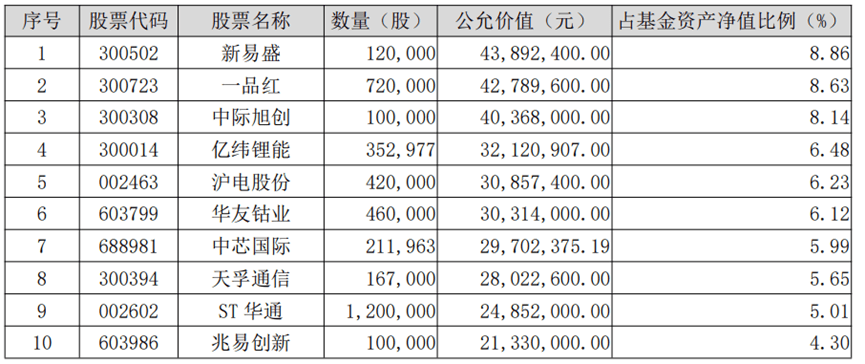
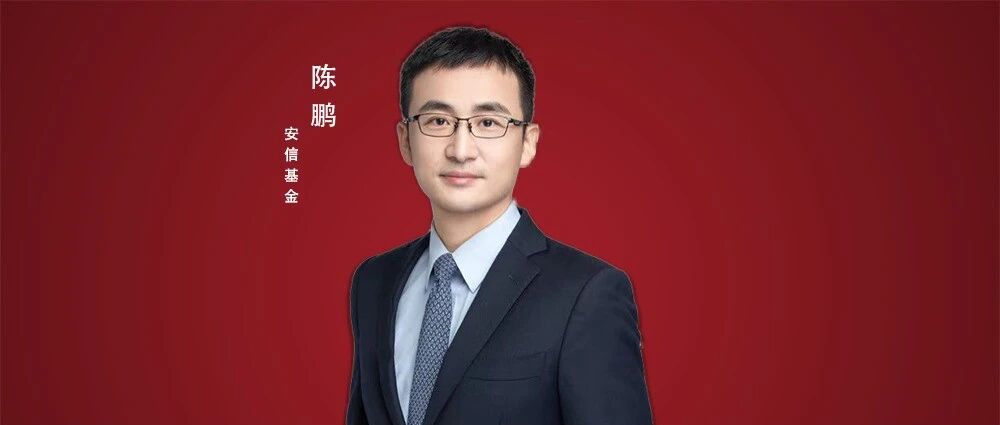
3只基金2025年收益翻倍,他用价值理念磨砺成长锐度
Sou Hu Cai Jing· 2026-01-09 01:36
Core Insights - 2025 is marked as a year where actively managed equity funds outperformed broad market indices, with the Wind偏股混合指数 rising by 33.19% compared to the 17.66% increase in the沪深300 index [1] - Active equity funds have shown a tendency to overweight growth factors, leading to significant excess returns during structural bull markets favoring growth styles [1] - Notably, Chen Peng from Anxin Fund achieved impressive performance without relying on popular sectors like innovative drugs, robotics, or AI, demonstrating that balanced allocation can yield substantial returns [2] Performance Comparison - Active equity funds outperformed the沪深300 index for three consecutive years from 2019 to 2021 during periods favoring growth, while they underperformed from 2022 to 2024 when value styles dominated [1] - In 2025, funds that performed well were predominantly characterized by a growth style [1] Investment Philosophy - Chen Peng's approach to growth investing is rooted in value principles, focusing on fundamental analysis rather than speculative trends [4][11] - He emphasizes the importance of understanding a company's future profitability and avoids conflating delayed earnings realization with speculative investments [4] Risk Management - Chen Peng's investment strategy features a balanced industry allocation, avoiding concentration in single sectors, which helps mitigate risks associated with market downturns [5][7] - His risk control measures include analyzing systemic risks, selecting high-quality growth stocks, and maintaining a diversified portfolio across different industry life cycles [7] Team and Research Strength - Anxin Fund has established a robust research team focused on fundamental analysis, which supports both value and growth investment strategies [13][14] - Chen Peng's leadership in building the research team has contributed to the development of a culture centered on long-term profitability and effective collaboration [13] Experience and Adaptability - Chen Peng's extensive experience through multiple market cycles has equipped him with a unique perspective on growth investing, allowing him to adapt his strategies over time [10][12] - His investment framework has evolved through three distinct phases, reflecting changes in market dynamics and economic conditions [10] Commitment to Investors - Chen Peng emphasizes the importance of trust and responsibility towards investors, aligning the goals of fund managers with the interests of fund holders [16] - His investment philosophy is driven by a commitment to ethical practices and a focus on delivering sustainable returns to investors [16]
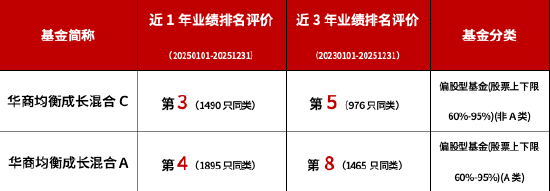
华商基金张明昕管理 华商均衡成长混合C近1年、3年业绩同类前五
Xin Lang Cai Jing· 2026-01-09 01:27
Core Viewpoint - During the "14th Five-Year Plan" period, China's economic strength, technological capabilities, and overall national power have reached new heights, leading to a vibrant capital market. Huashang Fund remains committed to prioritizing the interests of its investors, adhering to active management, and pursuing high-quality development [1][10]. Performance Summary - As of December 31, 2025, Huashang Fund's actively managed equity funds achieved a five-year absolute return of 90.58%, ranking 5th among 139 comparable companies. Over seven years, the absolute return reached 341.72%, placing it 4th among 121 peers [10]. - The company's actively managed fixed-income funds recorded a five-year absolute return of 45.22%, ranking 1st among 126 comparable firms, and a seven-year absolute return of 100.14%, also ranking 1st among 112 peers [10]. - In December 2025, Huashang Fund was awarded the "Active Equity Investment Golden Bull Fund Company Award" by China Securities Journal for its outstanding long-term performance [10]. Fund Specifics - The Huashang Balanced Growth Mixed Fund, managed by Zhang Mingxin, has shown remarkable performance, with the Huashang Balanced Growth Mixed C fund ranking 3rd in its category over the past year and 5th over the past three years [2][11]. - The Huashang Balanced Growth Mixed A fund ranked 4th in the past year and 8th over the past three years among its peers [11]. Management Philosophy - Zhang Mingxin, the General Manager of the Equity Investment Department at Huashang Fund, emphasizes that value investing is undoubtedly a sustainable investment approach. He advocates for a comprehensive value assessment and reasonable pricing to provide a good margin of safety, which is fundamental to investment [5][13]. - The company believes that only industries in an upward economic cycle can consistently reach new highs, and thorough cross-industry comparisons and in-depth research of the industrial chain are essential for identifying alpha assets that can achieve significant returns [5][13]. Future Outlook - Looking ahead, Huashang Fund will continue to prioritize the interests of its investors, adhere to the essence of the industry, deepen active management, and maintain a long-term perspective. The company aims to optimize resource allocation and fulfill its mission in the context of high-quality development [14].
3只基金2025年收益翻倍,他用价值理念磨砺成长锐度
点拾投资· 2026-01-09 01:00
Core Viewpoint - 2025 is a year where actively managed equity funds outperformed broad market indices, with the Wind Active Equity Fund Index rising by 33.19% compared to the CSI 300 Index's 17.66% [1] Performance Comparison - The performance of specific funds managed by Chen Peng at Anxin Fund is notable, with Anxin New Return A, Anxin Insight Growth A, and Anxin Growth Selection A achieving returns of 111.86%, 106.91%, and 104.80% respectively, significantly outperforming the CSI 300 and Shanghai Composite Index [2][3] Investment Strategy - Chen Peng's investment approach emphasizes balanced stock selection, which has proven to yield sharp performance without relying on popular sectors like innovative drugs, robotics, or AI [3][9] - The strategy focuses on fundamental analysis and long-term growth potential rather than speculative trends, ensuring a more stable risk profile [6][7] Risk Management - Chen Peng's investment framework includes a diversified portfolio across various sectors, which helps mitigate risks associated with market volatility and sector-specific downturns [7][9] - The approach involves dynamic adjustments based on the quality and valuation of holdings, maintaining a controlled risk exposure [8] Experience and Philosophy - Chen Peng's extensive experience through multiple market cycles has shaped his investment philosophy, emphasizing the importance of understanding one's capabilities and maintaining a long-term perspective on value creation [10][14][15] - His commitment to the interests of fund holders reflects a strong sense of responsibility and integrity in investment management [21] Research and Team Development - Anxin Fund has established a robust research team focused on fundamental analysis, which supports the growth investment strategy led by Chen Peng [19][20] - The team structure allows for effective collaboration and continuous improvement in identifying high-quality growth companies [19]
A股回购增持潮涌 去年规模超2200亿元,产业资本传递信心
2 1 Shi Ji Jing Ji Bao Dao· 2026-01-08 23:08
Core Viewpoint - The A-share market in 2025 shows a positive trend, with the Shanghai Composite Index returning to 4000 points and total trading volume reaching a historical record of 420 trillion yuan, indicating a recovery in market confidence [2] Group 1: Market Performance - In 2025, nearly 80% of listed companies saw their stock prices rise, contributing to the overall positive market sentiment [2] - The total repurchase and increase in shareholding by industrial capital reached 2266.58 billion yuan, providing strong momentum to the market [2][4] Group 2: Share Buybacks and Increases - A total of 1494 listed companies conducted share buybacks in 2025, with a total amount of 1427.36 billion yuan, while 534 companies announced shareholding increases with a maximum proposed amount of 839.22 billion yuan [2] - Notably, Midea Group led the buybacks with a total amount of 115.45 billion yuan, making it the only company to exceed 10 billion yuan in buybacks for the year [4][5] Group 3: Policy Support and Financing - The People's Bank of China optimized policies for stock repurchase and increase loans, reducing the self-funding ratio requirement from 30% to 10% and extending the loan term from 1 year to 3 years [7] - By the end of 2025, the total amount of special loans for stock repurchase and increases reached 1606.20 billion yuan, with 789 companies or major shareholders obtaining loan commitments [7][8] Group 4: Industry Leaders and Trends - Leading companies such as Kweichow Moutai and CATL also engaged in significant buybacks, with Kweichow Moutai repurchasing 60 billion yuan worth of shares [6] - The trend of share buybacks and increases is becoming normalized, supported by both policy guidance and companies' proactive actions to boost market confidence [4][6]

大盘股渐成投资者新宠
Bei Jing Shang Bao· 2026-01-08 15:57
近年来,A股投资者对于大盘股的热情持续升温。因业绩稳定性和市场表现韧性更强,预计大盘股仍将 受到资金的青睐,这也是价值投资市场的重要特点。 投资者对大盘股喜爱程度远超以往,是市场环境与投资者认知共同作用的结果。过去,小盘股凭借其高 波动性和潜在的高收益,吸引了不少追求短期暴利的投资者。然而,随着A股市场不断成熟,投资者逐 渐认识到小盘股的高风险性。小盘股业绩波动大,受行业周期、政策变化等因素影响明显,股价容易出 现"过山车"走势,投资者难以把握。 相比之下,大盘股多为行业龙头,在市场中占据主导地位,拥有稳定的客户群体和市场份额。其业绩表 现相对稳定,能够为投资者提供较为稳定且具有吸引力的分红回报,而价值投资者也最看重上市公司对 股东的回报。 从价值投资的角度来看,大盘股受青睐是价值投资理念深入人心的重要体现。价值投资强调对上市公司 基本面的分析,寻找那些被市场低估、具有长期增长潜力的股票。大盘股通常具备完善的管理体系、先 进的技术和强大的品牌影响力,这些优势构成了其坚实的内在价值。 随着投资者教育的不断深入,越来越多的投资者开始摒弃投机思维,转向理性投资。越来越多的投资者 认识到,只有基于公司基本面进行的投资 ...
Is Catalyst Pharmaceuticals (CPRX) Stock Undervalued Right Now?
ZACKS· 2026-01-08 15:40
Core Viewpoint - The article emphasizes the importance of value investing and highlights Catalyst Pharmaceuticals (CPRX) as a strong value stock based on its financial metrics and Zacks Rank [2][3][6] Group 1: Company Overview - Catalyst Pharmaceuticals (CPRX) currently holds a Zacks Rank of 2 (Buy) and has received an "A" grade in the Value category, indicating it is among the strongest value stocks available [3] - CPRX has a PEG ratio of 0.72, significantly lower than the industry average of 1.90, suggesting it may be undervalued compared to its peers [4] - The stock's PEG ratio has fluctuated between a high of 3.40 and a low of 0.63 over the past year, with a median of 1.06 [4] Group 2: Financial Metrics - CPRX has a P/CF ratio of 10.23, which is below the industry average of 13.88, further indicating potential undervaluation [5] - The P/CF ratio for CPRX has ranged from a high of 25.41 to a low of 10.16 in the past year, with a median of 13.48 [5] - These financial metrics contribute to CPRX's strong Value grade and suggest that the stock is likely undervalued at present [6]